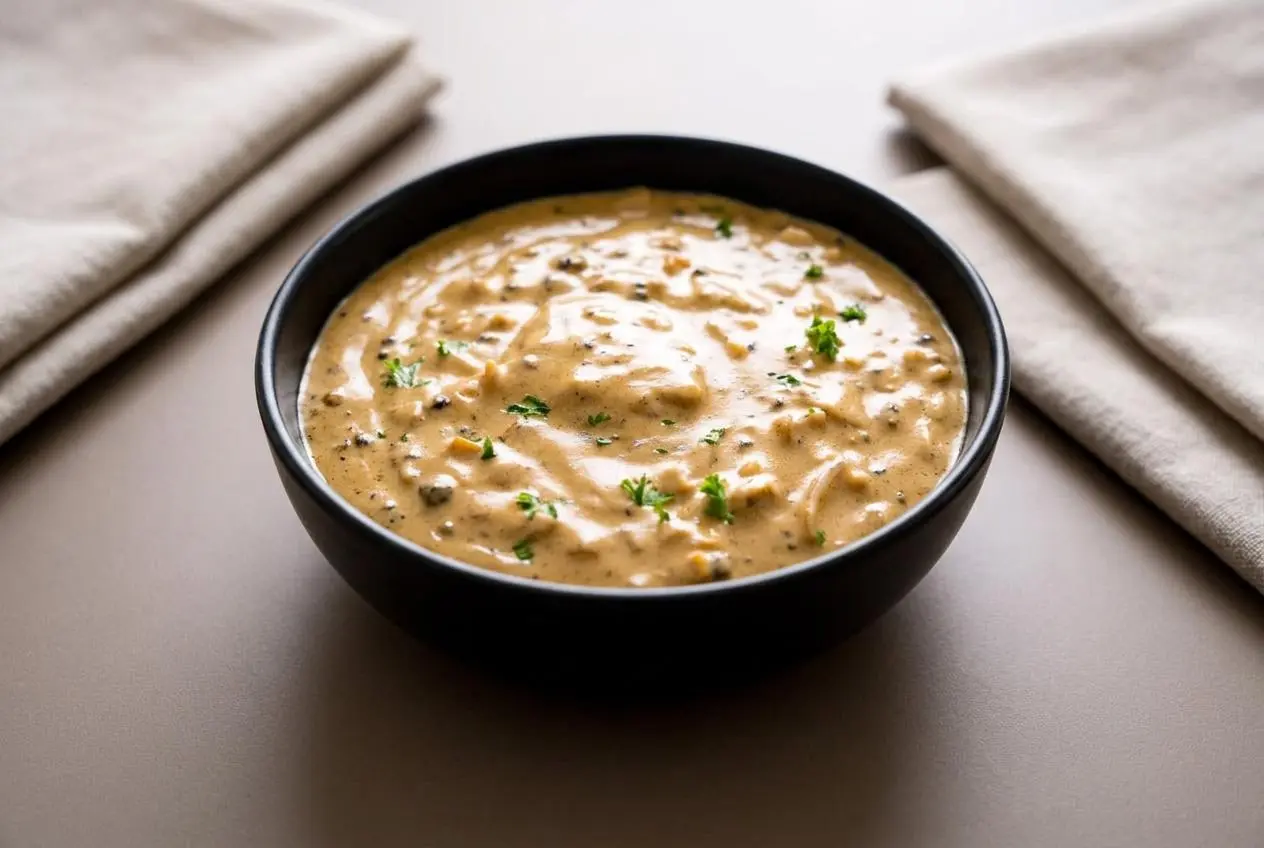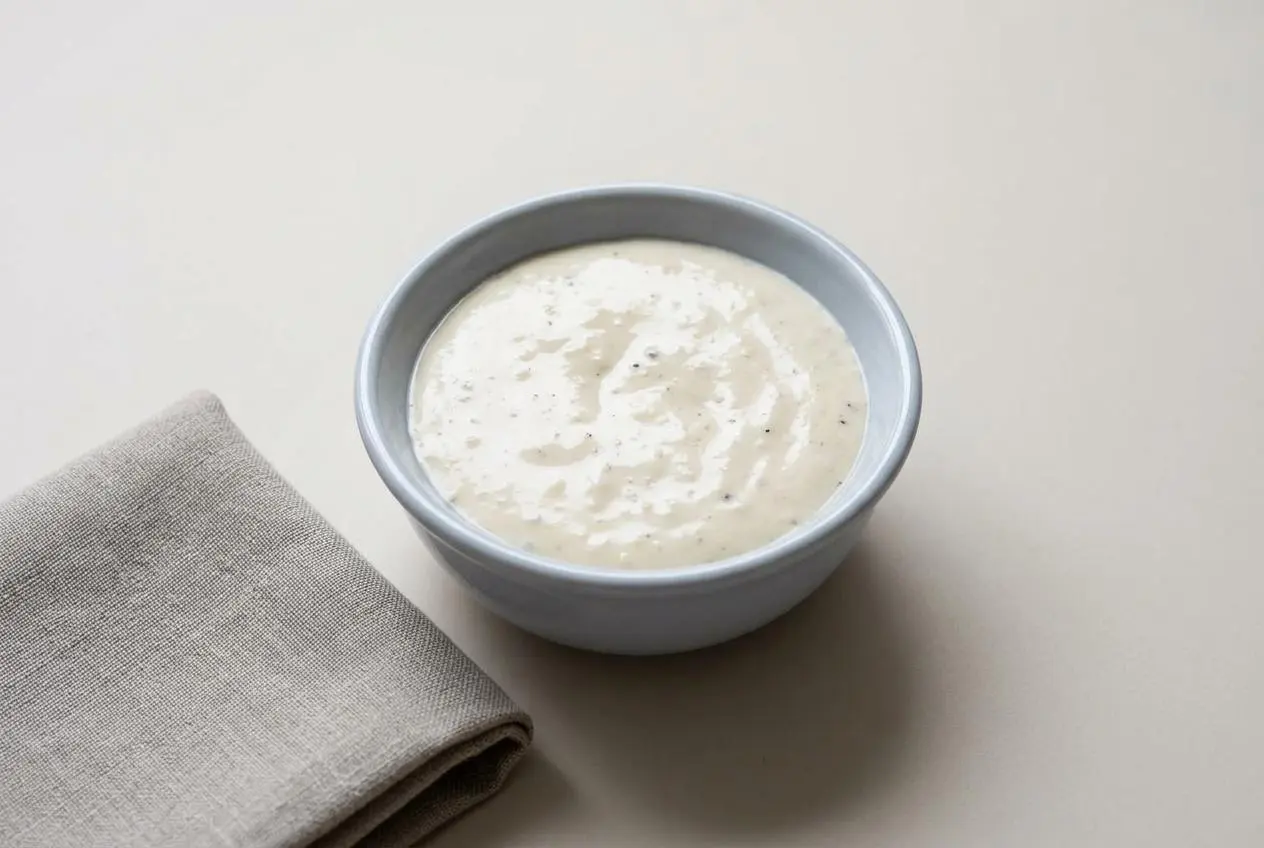
You can make a creamy, restaurant-style Caesar dressing in 5 minutes by whisking mayonnaise, fresh lemon juice, olive oil, Dijon mustard, Worcestershire sauce, grated garlic, and Parmesan until smooth and glossy.
A good Caesar dressing should cling to romaine, taste bright instead of heavy, and have enough savory depth to wake up the whole salad.
This version keeps things fast with mayonnaise, but it still has that garlicky, citrusy, Parmesan-packed flavor people want. The little texture cues make all the difference.
Use a microplane for the garlic and cheese if you can, because the finer texture helps the dressing blend smooth instead of slightly gritty.
Essential Ingredients and Their Roles in This Caesar Dressing Recipe
Each ingredient has a real job here, from building a stable emulsion to sharpening the flavor and giving the dressing its creamy, clingy finish.
Ingredient List
- 1/2 cup mayonnaise
- 2 Tablespoons olive oil
- 2 Tablespoons fresh lemon juice
- 1 teaspoon Dijon mustard
- 1 teaspoon Worcestershire sauce
- 1 garlic clove, grated
- Freshly ground black pepper to taste
- 1/4 cup finely grated Parmesan cheese
Mayonnaise is the shortcut that makes this dressing fast and stable. Because it is already emulsified, it gives you that rich body without dealing with raw egg yolks in the main version.
Dijon mustard does two things at once. It brings a gentle sharpness, and it helps the oil stay suspended with the lemon juice instead of separating into a puddle.
Fresh lemon juice matters more than it looks like it should. It cuts through the richness, adds aroma from the citrus oils, and tastes brighter than bottled juice, which can come across flat or slightly harsh.
Worcestershire sauce adds the savory backbone. It gives depth that makes the dressing taste more like Caesar and less like plain lemon mayo.
Parmesan cheese brings saltiness, nuttiness, and body. Freshly grated Parmigiano-Reggiano melts into the dressing much more smoothly than bottled or pre-shredded cheese, which often contains anti-caking agents that keep the texture from turning silky.
Garlic is small but powerful here. Grated garlic spreads through the dressing much more evenly than chopped garlic, but it can taste sharp if it goes straight in. Letting it sit in the lemon juice for a minute softens that raw edge. If you have garlic confit, you can use that mellow flavor as an optional twist outside the base recipe.
I always grate my Parmesan on a microplane so it disappears into the dressing instead of sitting in tiny chewy bits.
How to Make Quick Caesar Dressing
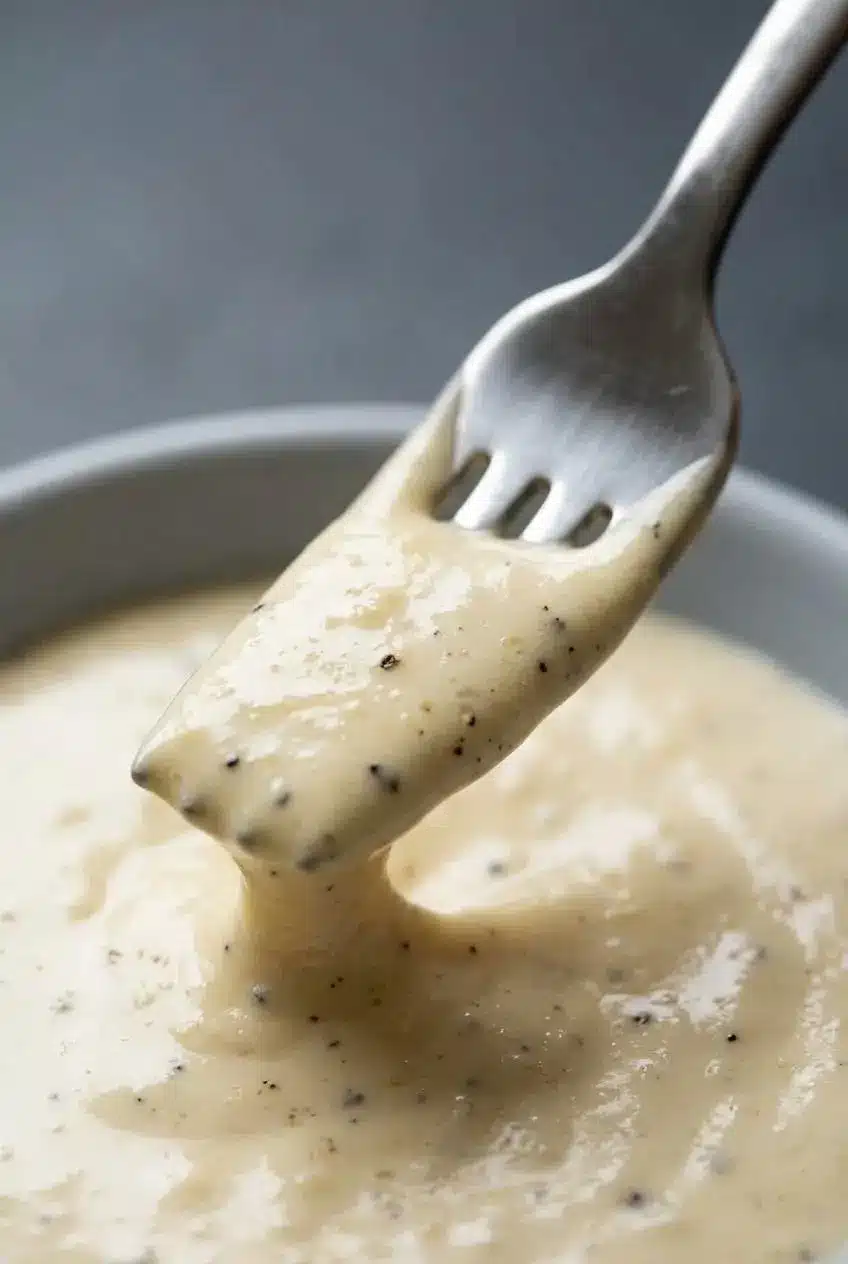
- Whisk the mayonnaise, olive oil, fresh lemon juice, Dijon mustard, Worcestershire sauce, grated garlic, and black pepper in a measuring cup or small bowl until fully blended.
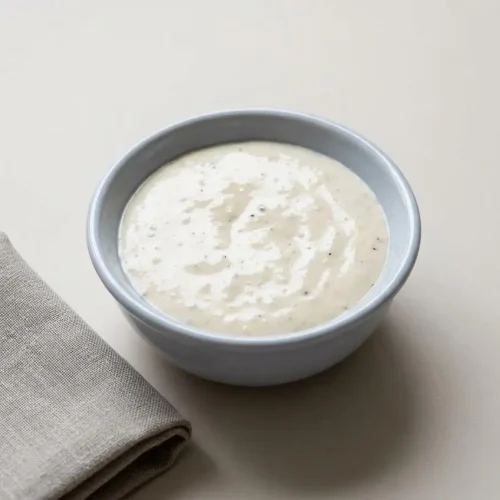
The mixture should look smooth and glossy, with no oily streaks floating on top. - Stir in the finely grated Parmesan cheese, then taste and adjust the seasoning; if the dressing feels too thick, stir in 1 teaspoon of water.
Once the cheese goes in, the texture will shift from loose and shiny to thicker and slightly creamier, and 1 teaspoon of warm water will loosen it without thinning the flavor too much.
If you want the best texture, let the grated garlic sit in the lemon juice briefly before whisking everything together. That quick pause takes some sting off the raw bite while still keeping the dressing lively.
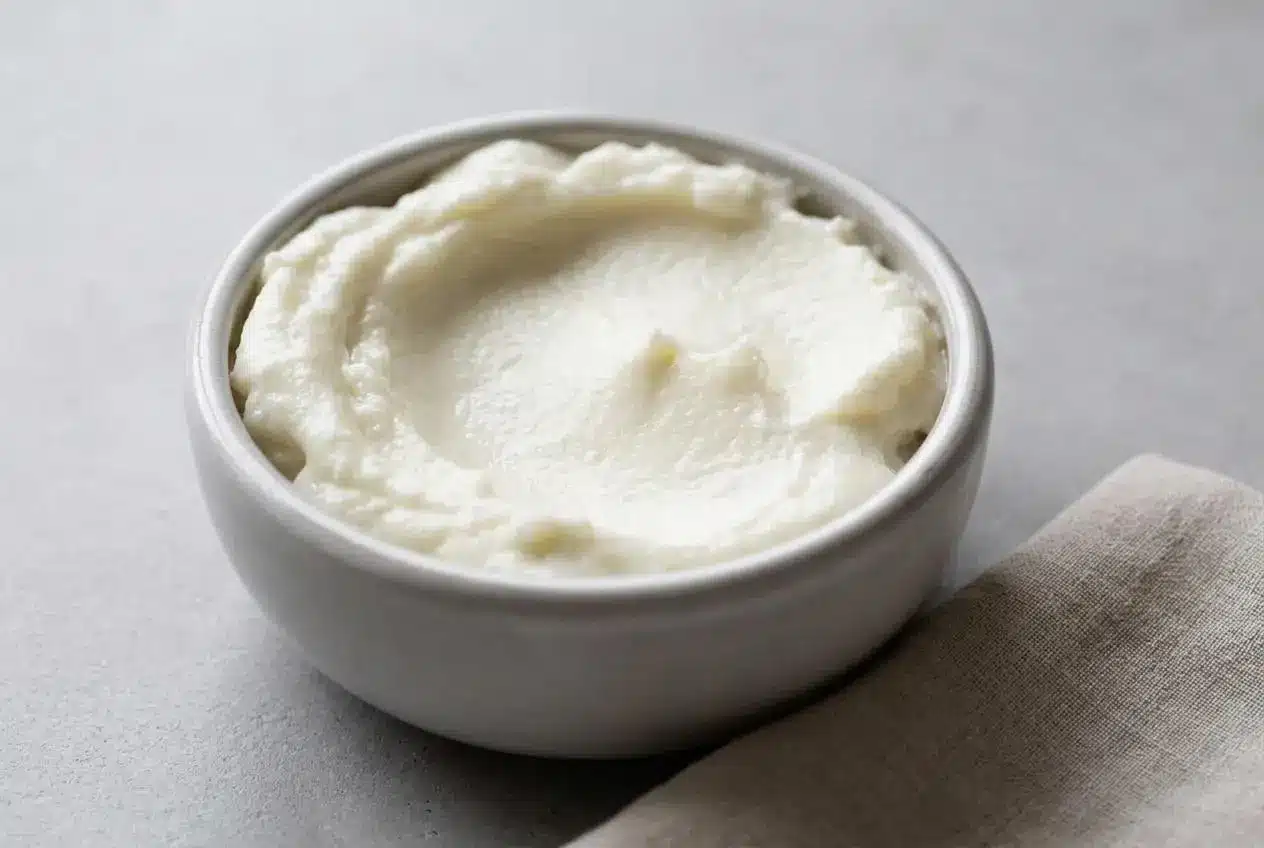
Whisking the creamy base and acids together first helps the dressing come together evenly. When it is properly emulsified, it will have a soft sheen and coat the back of a spoon instead of sliding off like seasoned oil.
Stir the Parmesan in rather than aggressively whisking it at the end. Stirring keeps the cheese suspended and slightly thickens the dressing, while over-whisking can make it feel heavier than it needs to.
This dressing is classic on a classic Caesar salad, and the thicker texture also works well as a spread for a chicken Caesar wrap.
The Authentic Way: Traditional Yolk and Anchovy Method
If you want the old-school version, the process is different but the goal is the same: a stable emulsion with big savory flavor and a thick, creamy finish.
Start by mashing anchovy fillets and garlic together on a cutting board until they form a smooth paste. This matters because visible chunks of anchovy or garlic will not disappear neatly into the dressing, and bigger garlic pieces taste much harsher than finely mashed ones.
In a bowl, whisk egg yolks with your acid and seasonings first, then begin drizzling in olive oil very slowly while whisking constantly. At the start, a few drops at a time really matters. Once the emulsion catches, you can add the oil in a thinner steady stream.
The visual cue is clear. The yolks start deep yellow and loose, then gradually turn paler, thicker, and creamier as the oil disperses into tiny droplets. That change is the emulsion doing its job. Oil and acid naturally want to separate, so steady whisking plus a slow oil stream gives the mixture structure.
Because this version uses raw or undercooked yolk, caution matters. For Caesar dressing made this way, it is better to use pasteurized eggs, especially for anyone avoiding extra risk from raw eggs, as noted here for safe handling of shell eggs and dishes made with undercooked eggs.
The payoff is a slightly more delicate, traditional flavor. It tastes less overtly creamy than the mayo version and more layered, with the anchovy and yolk working together instead of one rich base carrying everything.
Dressing Troubleshooting Guide
Most Caesar dressing problems are easy to fix once you know what went wrong.
- The traditional dressing split. This usually means the oil went in too fast. Whisk a fresh yolk with a teaspoon of water in a clean bowl, then slowly whisk the broken dressing into that new base until it comes back together.
- The garlic tastes too harsh. Raw grated garlic is intense, especially when it is freshly cut. Let it sit in the lemon juice a little longer next time, or soften the edge now with a bit more mayonnaise.
- The dressing is too salty. Parmesan, Worcestershire, and anchovy can stack up quickly. Add a small splash of fresh lemon juice to rebalance it, and if needed, a tiny pinch of sugar can round out the sharp salty edge.
- The texture feels grainy. Pre-grated cheese is usually the culprit. Use finely grated Parmesan so it blends in rather than floating around in sandy little bits.
- The dressing tastes flat. It usually needs either more black pepper or a better acid balance. Fresh lemon juice wakes it up much faster than extra salt.
- The dressing is too thick. Add warm water 1 teaspoon at a time and whisk well after each addition. Water loosens the texture without making the lemon or salt levels jump too quickly.
Dressing Substitutions and Variations
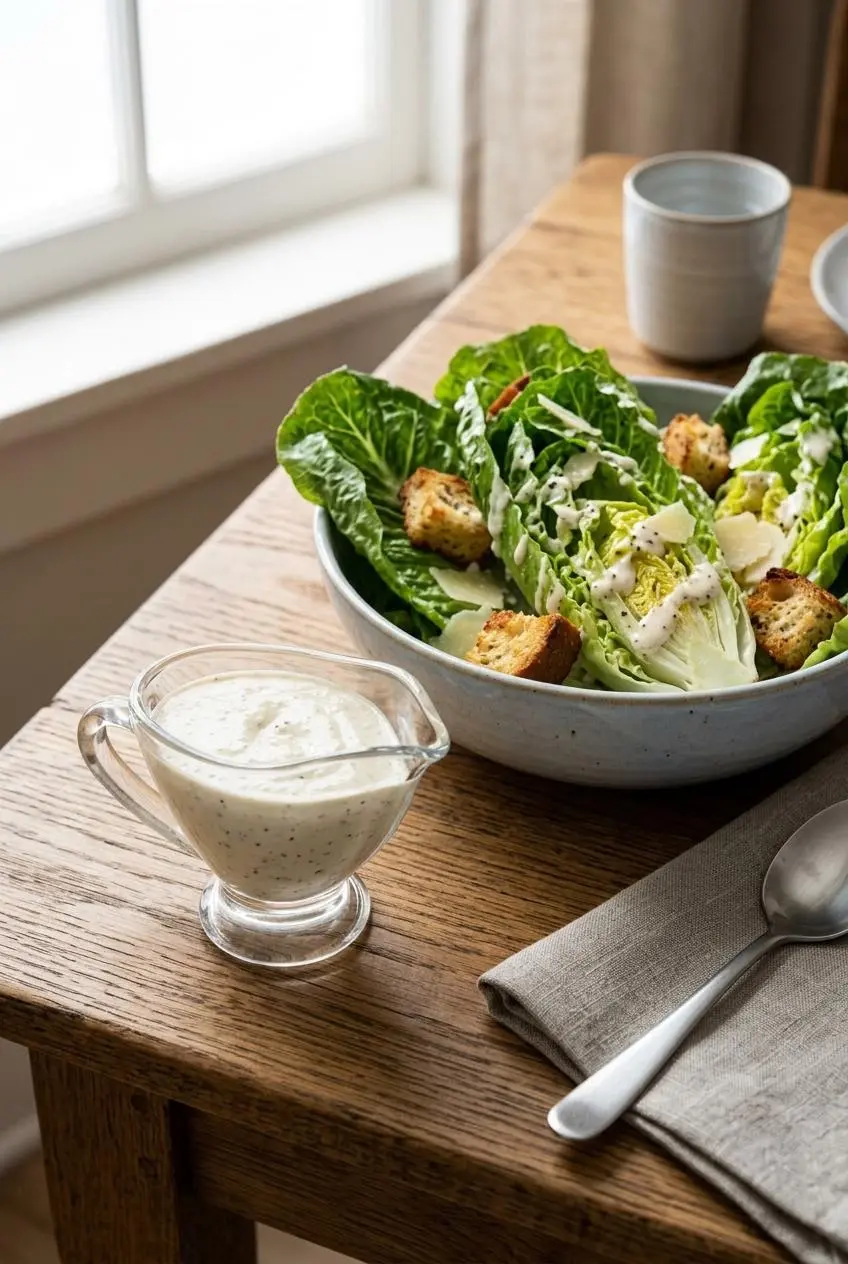
These are optional ways to shift the flavor or texture without changing the main quick recipe.
Anchovy-Free Caesar Dressing
You can make a Caesar-style dressing without whole anchovies or anchovy paste and still keep the savory depth. Worcestershire sauce helps, and capers or white miso paste can fill in some of that salty umami note.
One thing to watch carefully: Worcestershire sauce usually contains anchovies, so it is not the best choice for a seafood allergy. For a fish-free version, capers or white miso are the safer direction.
Greek Yogurt Caesar Dressing
For a lighter version, swap some or all of the mayonnaise for full-fat Greek yogurt. The dressing will taste tangier and a little less rich, with a looser body unless you stir it well.
Because yogurt brings its own tartness, reduce the lemon juice slightly so the dressing stays balanced. This variation works especially well for cold salads and a hearty Caesar pasta salad.
Storage and Make-Ahead Instructions
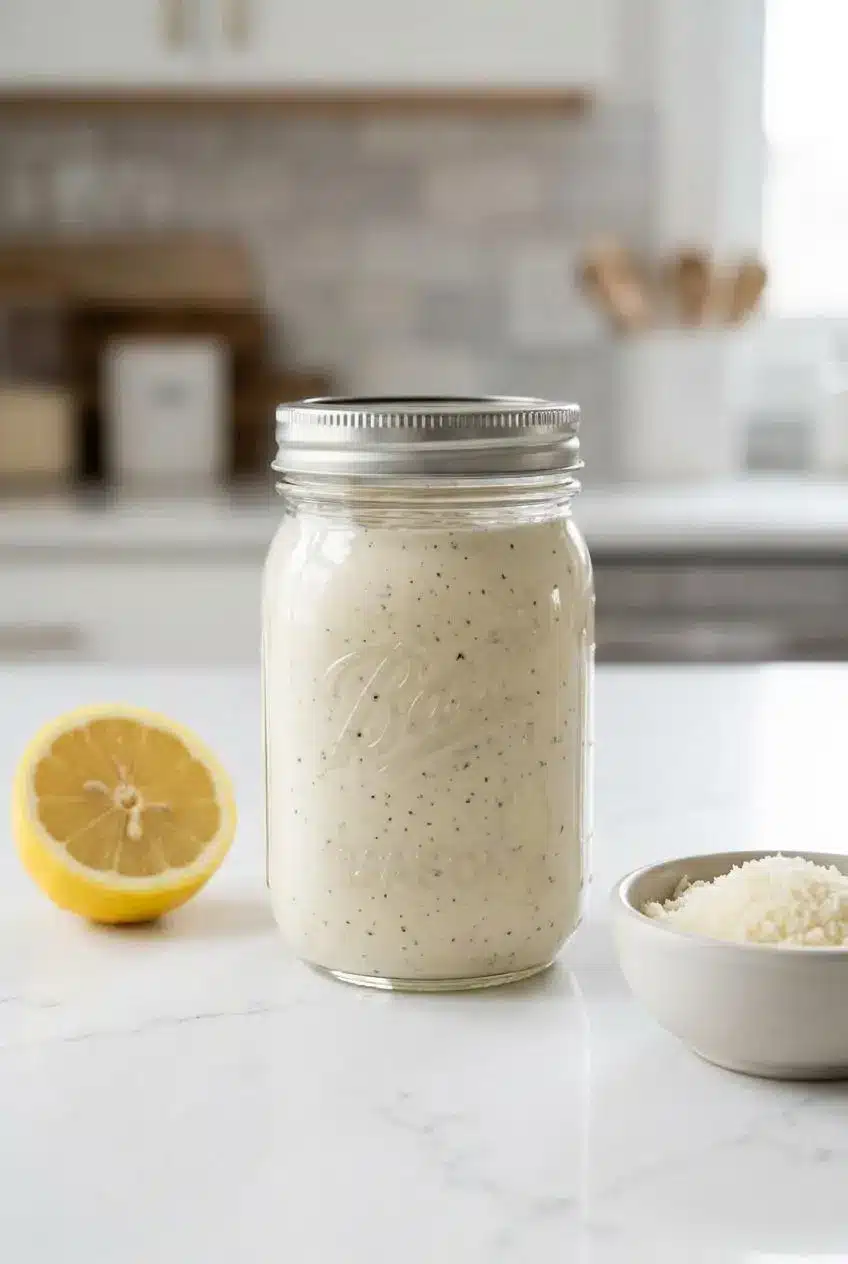
Store the dressing in a tightly sealed jar or covered container in the refrigerator and give it a good shake or stir before serving, since separation can happen as it sits.
The traditional yolk-based version is more delicate than the mayonnaise version, so it is best treated with extra care and kept well chilled. If you are making a raw egg dressing, pasteurized eggs are the better choice, and some groups need extra caution with foods made from raw or undercooked eggs, including Caesar dressing, as explained here for raw or undercooked egg foods that need extra caution.
Freezing is not a great fit for Caesar dressing. The emulsion tends to break when thawed, and the texture usually turns separated or grainy rather than creamy.
If you want to prep ahead for dinner, make the dressing before serving time and keep the greens dry and separate. Wet lettuce is the fastest way to a watery Caesar.
Conclusion
This quick version gives you the classic Caesar flavor without fuss, and it comes together fast enough to make on a weeknight. Fresh lemon juice and real Parmigiano-Reggiano do most of the heavy lifting.
Once you know what glossy, balanced dressing looks like, you can adjust the thickness and sharpness exactly the way you like it. That is when homemade Caesar really starts to win.
FAQ
How long does homemade Caesar dressing last?
The exact storage time depends on which version you make. The mayonnaise-based dressing keeps better than a raw yolk version when stored covered in the refrigerator. The traditional raw egg dressing is more perishable, so keep it very cold and use it promptly.
Can I make Caesar dressing without anchovies?
Yes. You can leave them out and still build savory flavor with Worcestershire sauce, capers, or white miso paste. If you need the dressing to be fish-free, skip Worcestershire too, since it commonly contains anchovies.
Is Worcestershire sauce necessary for Caesar dressing?
No, but it is very helpful. It adds the dark, savory depth that makes Caesar dressing taste rounder and more complex. If you leave it out, capers or white miso can help replace some of that umami character.
How do I thin out a thick Caesar dressing?
Add warm water 1 teaspoon at a time and whisk after each addition. If the dressing also tastes a little flat, a small splash of fresh lemon juice can loosen it while brightening the flavor. Stop when it coats the back of a spoon instead of sitting in a stiff mound.
Caesar Dressing Recipe

Equipment
- Measuring cup
- Whisk
- Grater
Ingredients
- 1/2 cup mayonnaise
- 2 Tablespoons olive oil
- 2 Tablespoons fresh lemon juice
- 1 teaspoon Dijon mustard
- 1 teaspoon Worcestershire sauce
- 1 clove garlic grated
- Freshly ground black pepper to taste
- 1/4 cup finely grated Parmesan cheese
Instructions
- Whisk the mayonnaise, olive oil, fresh lemon juice, Dijon mustard, Worcestershire sauce, grated garlic, and black pepper in a measuring cup or small bowl until fully blended. The mixture should look smooth and glossy, with no oily streaks floating on top.
- Stir in the finely grated Parmesan cheese, then taste and adjust the seasoning; if the dressing feels too thick, stir in 1 teaspoon of water. Once the cheese goes in, the texture will shift from loose and shiny to thicker and slightly creamier, and 1 teaspoon of warm water will loosen it without thinning the flavor too much.