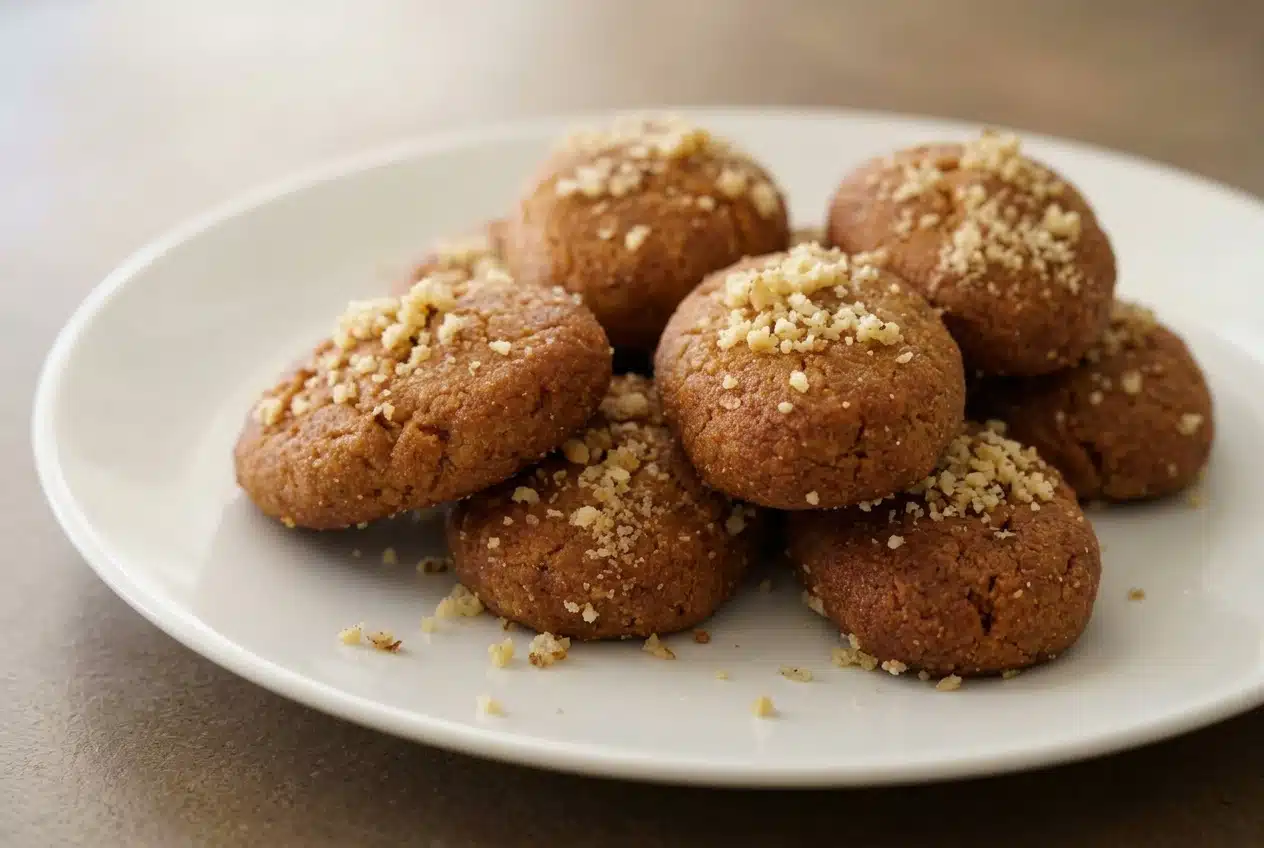
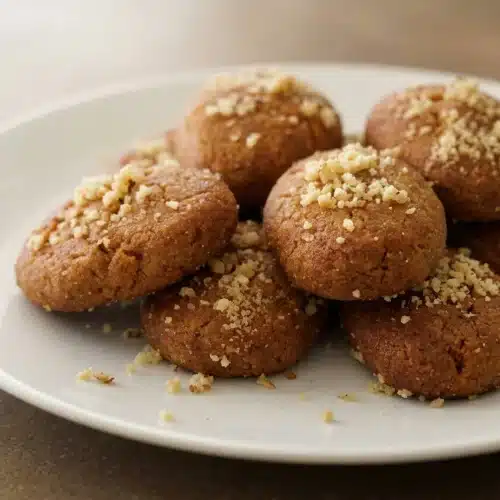
Melomakarona are Greek Christmas cookies made with oil, orange, warm spices, and fine semolina, then soaked in honey syrup and topped with walnuts. Mix the dough gently, bake until evenly browned, and dip the hot cookies into completely cooled syrup for a tender, honey-drenched finish.
This melomakarona recipe brings together fragrant orange zest, cinnamon, cloves, and honey in soft-centered oval cookies. Fine semolina gives their crumb a distinctive texture, while chopped walnuts add crunch against the syrupy surface.
The dough needs a light hand rather than vigorous kneading, and the syrup comes first so it has time to cool. That contrast matters at dipping time. Watch for the foam first.
Keep a slotted spoon beside the cooled syrup before the first batch finishes baking.
Key Ingredients for Traditional Melomakarona
Semolina and flour build the crumb, oils provide richness, and citrus lifts the warm spices. Sugar and honey sweeten both dough and syrup, leaveners lighten the cookies, and walnuts supply a crunchy finish.
- 150g fine semolina (5.3 ounces, half a cup)
- 500g flour (soft) (17.6 ounces, 4 cups)
- 1/2 tbsp baking powder
- 100g orange juice (3.5 ounces, 1/3 cups)
- 3 tbsps cognac
- 100g sugar (3.5 ounces, 1/3 cups)
- 1 flat tbsp powdered cinnamon
- 1/3 tsp nutmeg (powder)
- 1/3 tsp clove (powder)
- 1 tsp vanilla extract
- 1/2 tbsp baking soda
- 90g water (3.2 ounces, 1/3 cups)
- 125g olive oil (4.4 ounces, 1/2 cups)
- 125g vegetable/sunflower oil (4.4 ounces, 1/2 cups)
- 50g honey (1.8 ounces, 3 tbsp)
- zest of 2 oranges
- 300g water (10 ounces, 1 1/4 cups)
- 600g sugar (20 ounces, 2 3/4 cups)
- 2 cinnamon sticks
- 3 whole cloves
- 1 orange, cut in half
- 200g honey (7 ounces, 10 tbsp)
- 200g chopped walnuts (7 ounces, 1 2/3 cups)
- powdered cinnamon (optional)
- powdered clove (optional)
Semolina and soft flour: Fine semolina contributes a slightly sandy, absorbent crumb; soft flour gives the cookies their structure. Use fine semolina rather than assuming a coarser product will behave identically.
Olive and neutral oils: Olive oil adds fruity character, while vegetable or sunflower oil keeps that flavor from dominating the orange and spices. This is an oil dough, so it should not feel like firm butter-cookie dough.
Citrus and aromatics: Orange juice supplies liquid and reacts visibly with the baking soda. Zest adds concentrated orange fragrance, supported by cinnamon, nutmeg, cloves, vanilla, and cognac.
Honey and walnuts: Honey rounds out the sugar syrup with its characteristic aroma. Floral or thyme honey offers an optional flavor direction; walnuts bring a pleasantly earthy contrast to the sweetness.
I’d use softness, not a completely dry surface, as the stopping cue when mixing this dough.
How to Make Melomakarona Step by Step
Start with the syrup, then organize the baking and dipping as one continuous process. The cookies go into the syrup straight from the oven, not after cooling on the trays.
Recipe details: Prep time: 30 minutes. Cook time: 20 minutes. Listed total time: 50 minutes. Yield: 50 pieces. Greek dessert.
Before baking: An oven temperature is not specified for this recipe. Confirm the setting before starting; the baking time alone is not enough to determine it.
- Bring the syrup water, sugar, cinnamon sticks, whole cloves, and halved orange to a boil in a pot, cook for 3–4 minutes, then take the pot off the heat and stir in the syrup honey.
The sugar should have dissolved before the honey goes in; leave the finished syrup to cool completely. - Whisk the fine semolina, soft flour, and baking powder together in a bowl.
The mixture should look uniform, without concentrated patches of baking powder. - Combine the orange juice, cognac, sugar, powdered cinnamon, nutmeg, clove, and vanilla in a separate large bowl, then add the baking soda and whisk immediately for 5–10 seconds.
Visible foam signals that the soda is reacting with the juice as it dissolves. - Whisk the dough water, olive oil, vegetable or sunflower oil, orange zest, and dough honey into the foamy mixture.
The liquids should come together with the zest distributed throughout. - Work the dry mixture into the wet mixture gently with your hands, stopping as soon as the dough comes together.
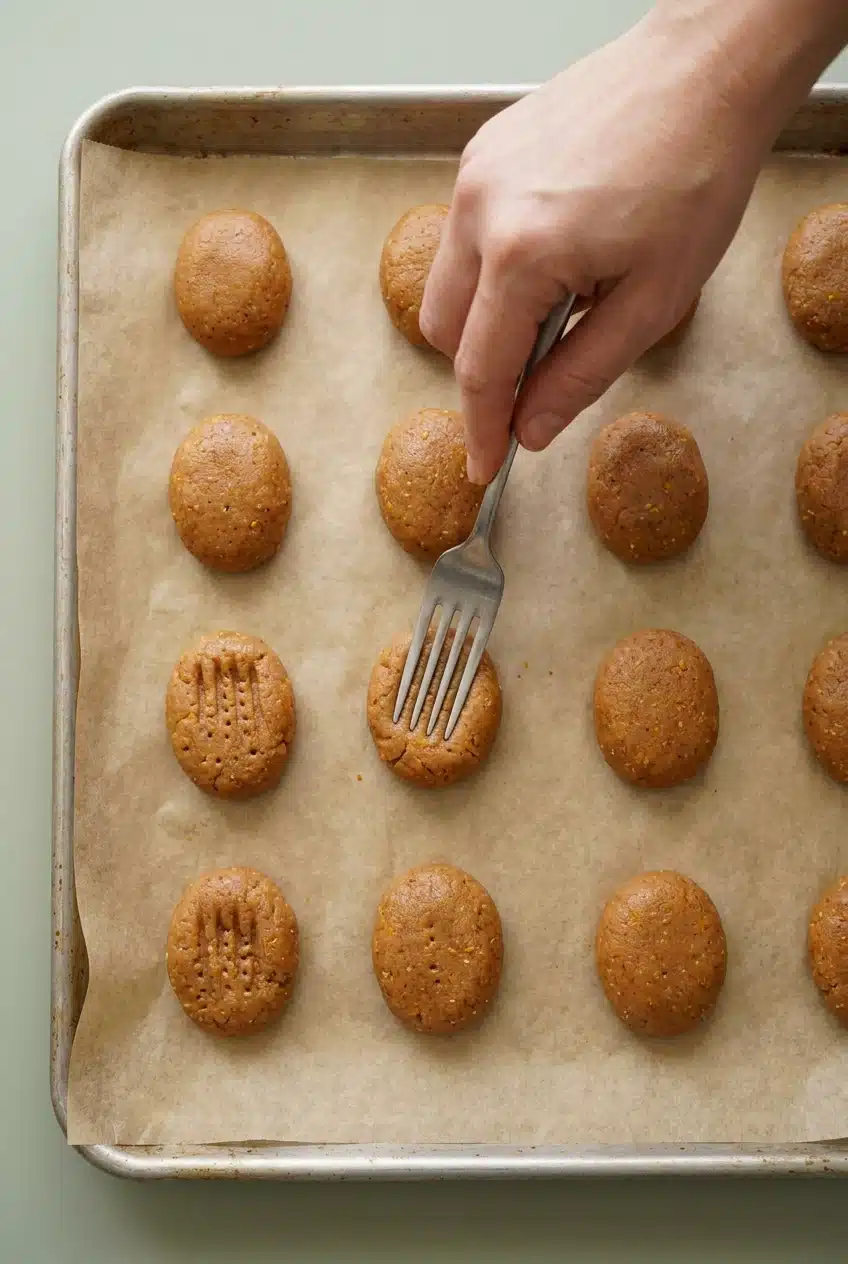
A soft, smooth dough with a slightly tacky surface is the goal, rather than a firm dough that needs more kneading. - Line 4 large baking trays with parchment, shape walnut-sized portions of about 30g / 1oz into smooth ovals, and lightly press each top with a fork before piercing it three times about halfway through.
Keep the portions similar in size, with visible fork marks across their tops. - Bake the first two prepared trays if your oven accommodates them, allowing approximately 15–20 minutes and longer for larger cookies.
Look for light, even browning and cookies that have cooked through. - Immerse the freshly baked cookies immediately in the cold syrup for approximately 10–20 seconds, turning them with a slotted spoon, then lift them onto a platter and scatter chopped walnuts over them.
Choose the shorter or longer end of the dipping range according to how syrupy you want the cookies. - Put the remaining two trays into the oven while dipping the first batch, and set a timer for the next bake.
Check the next batch for the same light, even browning before repeating the syrup dip.
Tips and Troubleshooting for Tender, Syrup-Soaked Cookies
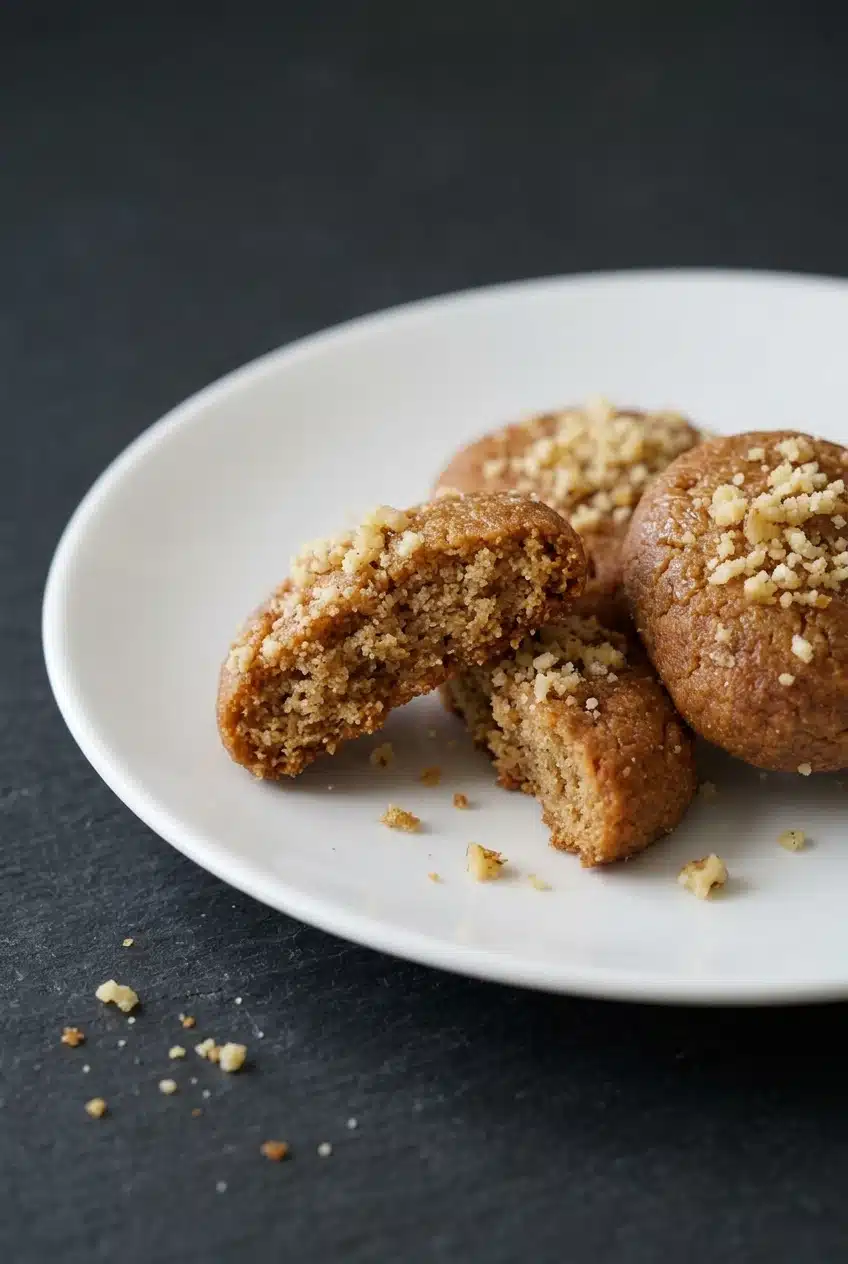
The most useful checks happen before you try to correct anything: feel the dough, check the browning, and keep track of which batch is ready for syrup.
Preventing Oil Separation During Mixing
- Oily dough: Overworking is a likely contributor when an oil-rich dough loses its cohesive feel; stop mixing once it holds together instead of kneading harder to force it smooth.
- Slight stickiness: A tacky surface matches the intended dough texture, so don’t automatically treat it as a flour shortage.
- Tough cookies: Excessive handling can make the finished crumb firm; use gentle hand-mixing and stop at the soft-dough stage.
- Questions about chilling: Chilling is not part of this method and is not a prescribed fix for oiliness or stickiness.
Mastering Syrup Temperature Contrast
- Dry centers: Cookies that cool while waiting for their dip depart from this method; arrange the syrup station before baking so each batch can go straight into it.
- Excessive softness: Too much soaking may give you a wetter result than you want; stay within the listed dipping range and handle the cookies gently.
- Uneven absorption: Missing the turn can leave the two sides differently soaked; use the slotted spoon to turn each cookie during its dip.
- Cookies breaking apart: Check that they baked through and avoid rough handling; a syrup bath cannot correct an underbaked center.
Some preparations use cooled cookies and warm syrup. That belongs to a different method, not an interchangeable step here. Keep this version consistent: freshly baked cookies, completely cooled syrup, and a brief dip.
Fork Patterns and Lightly Toasted Spiced Walnuts
A crosshatch pattern and lightly toasted walnuts offer an optional finishing style. Cinnamon and clove, both optional garnish accents, add a warmer spice impression. These are flavor and presentation choices rather than fixes for dough or syrup problems.
Popular Melomakarona Variations and Substitutions
Choose variations for the flavor or dietary direction you want, while keeping them separate from the ingredient amounts and method above. Changes to flour, fat, or syrup can affect more than taste.
Without Semolina (All-Purpose Flour Only)
Flour-only melomakarona have a finer-textured crumb than semolina-enriched versions. Fine semolina contributes a more granular texture and helps define the syrup-soaked character of these cookies. For a flour-only batch, use a recipe developed for that dough rather than assuming a direct replacement.
Traditional Olive Oil vs. Butter-Based Adaptations
Oil-based cookies emphasize citrus, spice, and the fruity character of olive oil. Butter-based adaptations move toward a richer, buttery flavor, sometimes with eggs as well. The recipe above keeps its olive-and-neutral-oil combination; butter is not an automatic equivalent.
Chocolate-Covered Melomakarona
Chocolate-covered melomakarona offer a festive contrast between a cocoa-rich exterior and sweet honey-orange interior. Bittersweet chocolate gives a less sweet flavor impression than milk chocolate. Walnut-stuffed regional styles are another variation, distinct from the unfilled ovals made here.
Sesame Seed and Pistachio Toppings
Sesame offers a seed-topped direction with a toasty flavor, while pistachios provide a separate nut topping with green color and a sweeter nuttiness. Pistachios are not a nut-free alternative. A topping change alone should not be treated as an allergy-safety guarantee.
Honey-Free and Alcohol-Free Options
- Honey-free: Maple syrup suggests a deeper maple flavor, while a sugar-syrup direction removes honey’s floral character; either changes the syrup profile.
- Alcohol-free: An orange-juice direction instead of cognac emphasizes citrus rather than the spirit’s aroma.
- Strict plant-based preferences: Consider both the dough honey and syrup honey, rather than changing only the final dip.
Dietary Context and Greek Lenten Traditions
Pronounce melomakarona approximately “meh-loh-mah-KAH-roh-nah,” with the strongest stress on “KAH.” The name is commonly connected with meli, meaning honey, and makaria, an older name associated with bread preparations.
Greek holiday baking includes egg-free and dairy-free oil doughs associated with fasting traditions, though individual religious practices vary. This dough contains neither eggs nor dairy, but the finished cookies contain honey. For someone who excludes honey, the unchanged recipe does not meet that preference.
Finikia and melomakarona are overlapping regional names, not a universal baked-versus-fried distinction. Some finikia traditions involve frying; others use the name for baked honey cookies much like these.
Storage and Holiday Batch Planning
Keep the finished melomakarona in an airtight container at room temperature. That storage direction does not establish a verified shelf life, so avoid treating a holiday-sized batch as a promise of indefinite keeping.
For planning, distinguish baked, unsoaked cookies from finished syrup-soaked cookies. The method here connects baking directly to dipping, so organize the trays, syrup, slotted spoon, and platter around that sequence rather than scheduling an unsupported delayed-soaking stage.
How to Serve and Gift Melomakarona
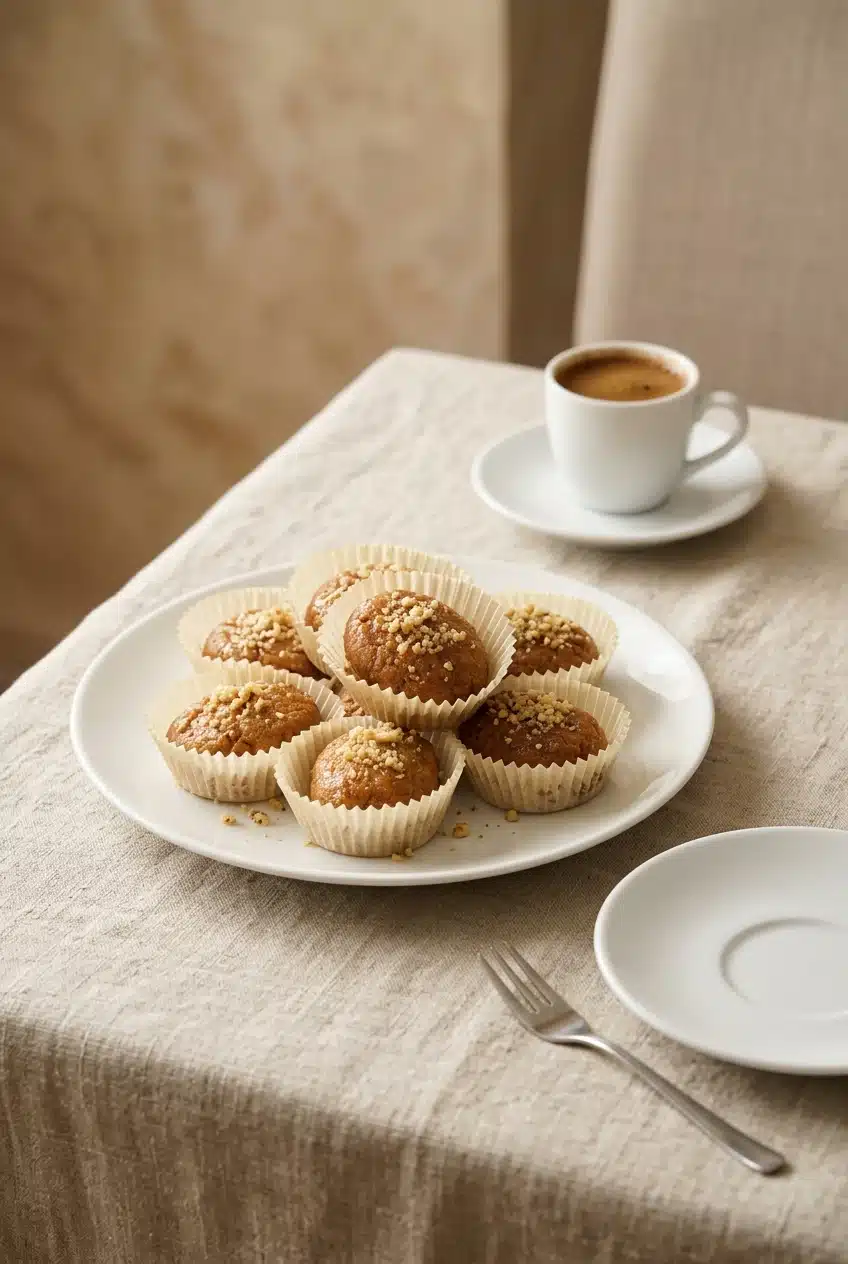
Individual paper liners make these sticky cookies easier to offer and lift from a platter. Keep presentation choices separate from storage decisions.
- For a dessert platter: Arrange the cookies in mini paper cupcake liners so guests can pick them up neatly.
- For coffee or tea: Greek coffee or black tea provides a pleasing contrast to the honey sweetness.
- For a holiday assortment: Pair them with kourabiedes and koulourakia for contrasting textures, or nestle lined cookies into a gift box for presentation.
Bringing Traditional Greek Melomakarona to Your Holiday Table
Orange, warm spices, honey, and walnuts give melomakarona their unmistakable holiday character. Gentle mixing preserves the soft dough texture that sets the batch on the right path.
Watch for even browning, then keep the hot-cookie and cooled-syrup sequence moving. A prepared dipping station makes that final, fragrant stage much easier.
Frequently Asked Questions
What Is the Difference Between Finikia and Melomakarona?
The names overlap in some regions and families. Some finikia preparations are fried, while these melomakarona are baked before soaking.
Should Melomakarona Be Made With or Without Semolina?
Both styles exist; this version uses fine semolina with soft flour. Semolina gives a slightly granular, absorbent crumb, while flour-only versions have a finer texture.
Why Are Hot Melomakarona Dipped in Cold Syrup?
This method pairs freshly baked cookies with cooled syrup for a controlled, brief soak. Follow that pairing consistently rather than combining it with instructions intended for cooled cookies and warm syrup.
Are Melomakarona Vegan?
This recipe has no eggs or dairy, but it does contain honey in both dough and syrup. It is not suitable unchanged for someone following a diet that excludes honey.
Why Did My Melomakarona Dough Separate or Turn Oily?
Overworking is a likely contributor; extra kneading is not the solution. Stop when the dough becomes cohesive, soft, and slightly tacky, and don’t use chilling as an assumed repair.
How Should You Store Melomakarona for the Holidays?
Use an airtight container at room temperature for the finished cookies. No verified storage duration is established here, so plan the batch around serving rather than assuming an extended shelf life.
Melomakarona Recipe

Equipment
- Pot
- Mixing Bowls
- Whisk
- Baking trays
- Parchment Paper
- Fork
- Slotted spoon
Ingredients
- 150 g fine semolina 5.3 ounces, half a cup
- 500 g flour (soft) 17.6 ounces, 4 cups
- 1/2 tbsp baking powder
- 100 g orange juice 3.5 ounces, 1/3 cups
- 3 tbsps cognac
- 100 g sugar 3.5 ounces, 1/3 cups
- 1 flat tbsp powdered cinnamon
- 1/3 tsp nutmeg (powder)
- 1/3 tsp clove (powder)
- 1 tsp vanilla extract
- 1/2 tbsp baking soda
- 90 g water 3.2 ounces, 1/3 cups
- 125 g olive oil 4.4 ounces, 1/2 cups
- 125 g vegetable/sunflower oil 4.4 ounces, 1/2 cups
- 50 g honey 1.8 ounces, 3 tbsp
- zest of 2 oranges
- 300 g water 10 ounces, 1 1/4 cups
- 600 g sugar 20 ounces, 2 3/4 cups
- 2 cinnamon sticks
- 3 whole cloves
- 1 orange cut in half
- 200 g honey 7 ounces, 10 tbsp
- 200 g chopped walnuts 7 ounces, 1 2/3 cups
- powdered cinnamon optional
- powdered clove optional
Instructions
- Bring the syrup water, sugar, cinnamon sticks, whole cloves, and halved orange to a boil in a pot, cook for 3–4 minutes, then take the pot off the heat and stir in the syrup honey. The sugar should have dissolved before the honey goes in; leave the finished syrup to cool completely.
- Whisk the fine semolina, soft flour, and baking powder together in a bowl. The mixture should look uniform, without concentrated patches of baking powder.
- Combine the orange juice, cognac, sugar, powdered cinnamon, nutmeg, clove, and vanilla in a separate large bowl, then add the baking soda and whisk immediately for 5–10 seconds. Visible foam signals that the soda is reacting with the juice as it dissolves.
- Whisk the dough water, olive oil, vegetable or sunflower oil, orange zest, and dough honey into the foamy mixture. The liquids should come together with the zest distributed throughout.
- Work the dry mixture into the wet mixture gently with your hands, stopping as soon as the dough comes together. A soft, smooth dough with a slightly tacky surface is the goal, rather than a firm dough that needs more kneading.
- Line 4 large baking trays with parchment, shape walnut-sized portions of about 30g / 1oz into smooth ovals, and lightly press each top with a fork before piercing it three times about halfway through. Keep the portions similar in size, with visible fork marks across their tops.
- Bake the first two prepared trays if your oven accommodates them, allowing approximately 15–20 minutes and longer for larger cookies. Look for light, even browning and cookies that have cooked through.
- Immerse the freshly baked cookies immediately in the cold syrup for approximately 10–20 seconds, turning them with a slotted spoon, then lift them onto a platter and scatter chopped walnuts over them. Choose the shorter or longer end of the dipping range according to how syrupy you want the cookies.
- Put the remaining two trays into the oven while dipping the first batch, and set a timer for the next bake. Check the next batch for the same light, even browning before repeating the syrup dip.