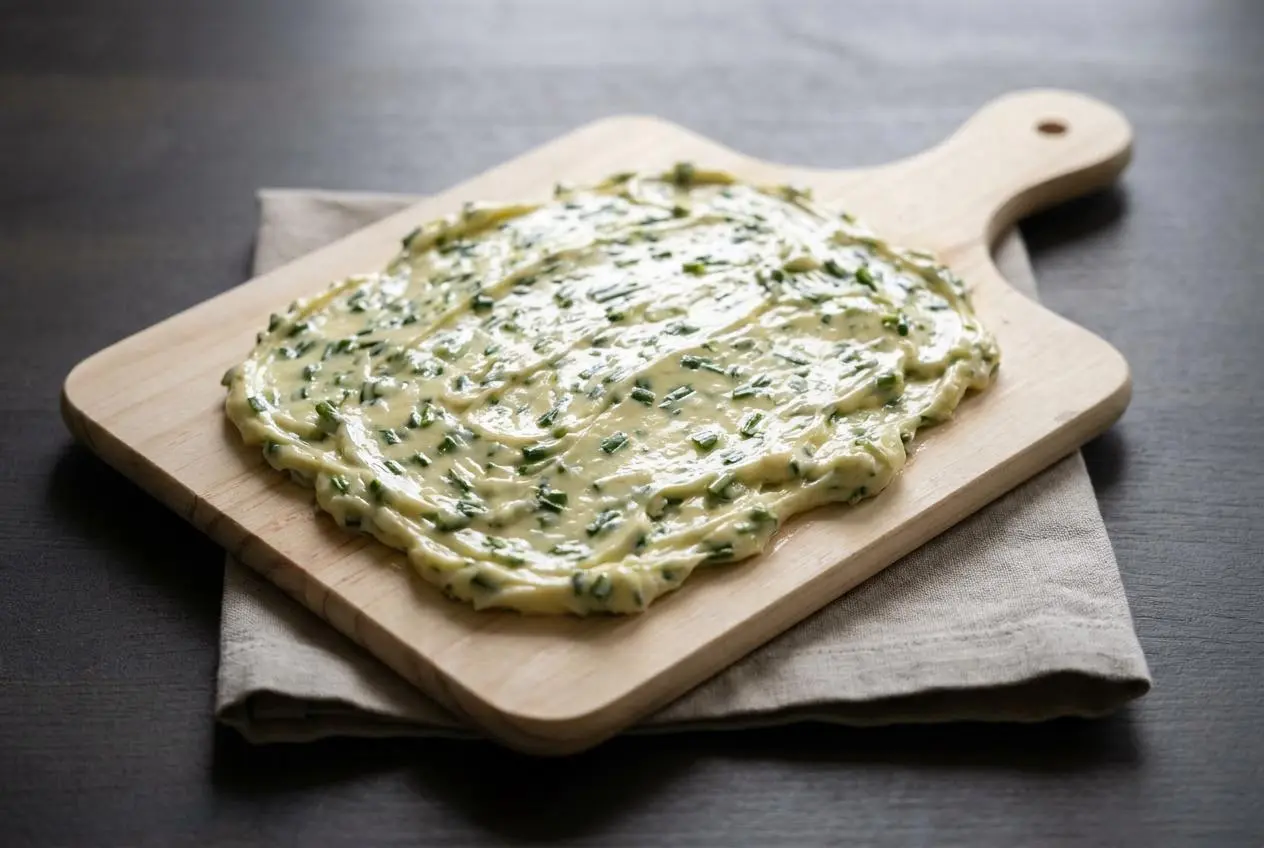
Garlic scapes are the curly green shoots of hardneck garlic plants. They taste mildly garlicky, with sweet green notes, and they’re great in butter, pesto, sautés, and on the grill once the woody ends are trimmed.
Early summer farmers markets are usually where garlic scapes first catch your eye, piled in bright green curls that smell fresh and lightly sweet. This guide shows you how to prep them, cook them, and turn them into a quick butter in 10 minutes.
They’re useful well beyond one recipe because you can treat them like a gentler garlic clove, a green vegetable, or an herby finishing ingredient. The quick blanching trick makes a big difference.
Choose stalks that feel firm and snap cleanly rather than bend limply, and skip any that look yellowed, dry, or split.
Ingredients for Easy Garlic Scape Butter
Each ingredient has a real job here, from carrying aroma to balancing richness and sharpening the sweet green flavor of the scapes.
Garlic Scape Butter
- 1 pound butter, room temperature
- 1 cup chopped garlic scapes
- Salt to taste
Butter is the base that captures the fresh allium aroma and turns it into a spreadable compound butter with a smooth, rich texture. Garlic scapes bring mild, sweet, herbaceous garlic notes and a natural pale green color. Salt wakes up the flavor and helps the scapes taste brighter instead of grassy.
If you want a small twist, a pinch of smoked paprika or a little fresh lemon zest can cut through the richness nicely, but keep those as optional finishing ideas rather than part of the core butter.
I look for scapes with a tight curl and a crisp snap because older stalks can get fibrous fast, especially near the base.
How to Blend Easy Garlic Scape Butter
Instructions
- Add the chopped scapes to a food processor and pulse until the pieces are very fine.
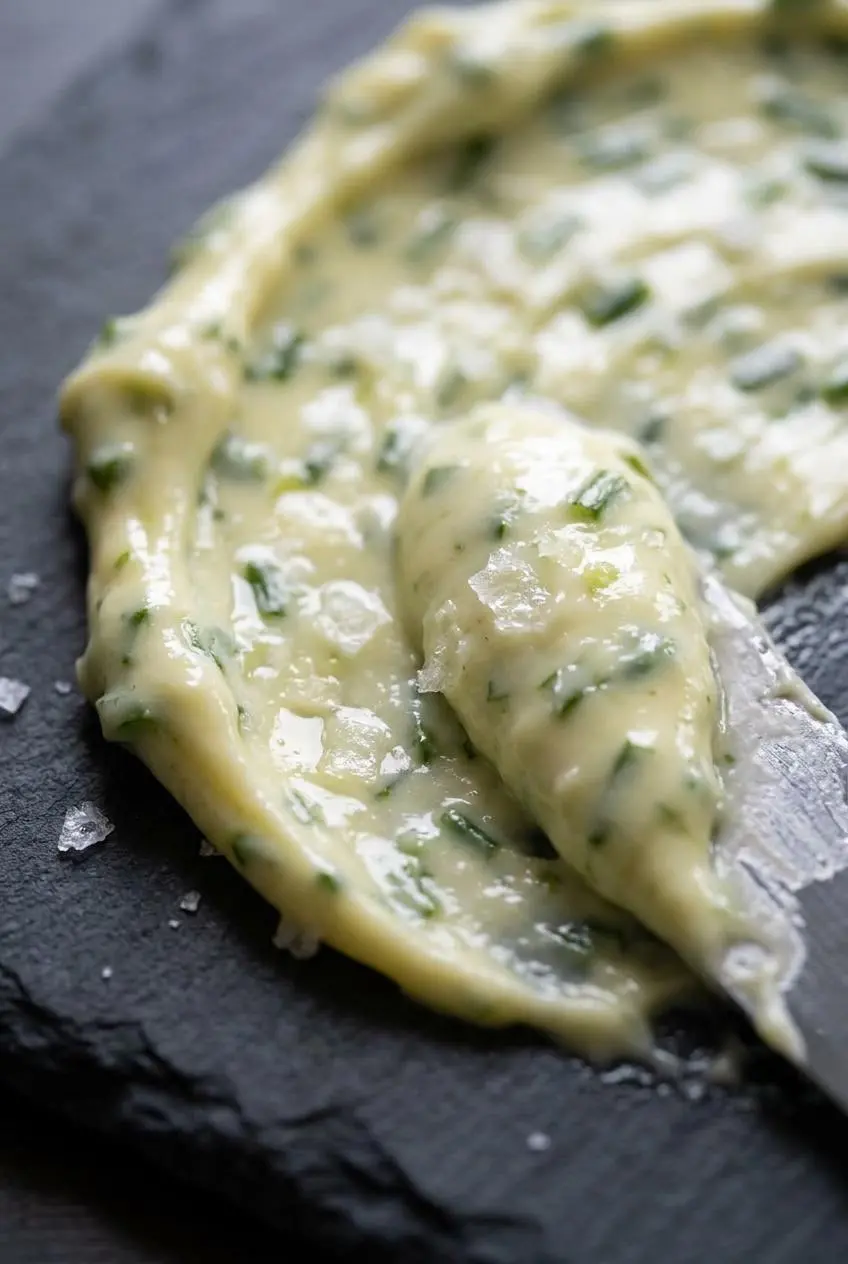
The butter blends more evenly this way, so you do not end up with long green bits throughout the spread. - Add the room temperature butter and process until the mixture turns smooth and evenly green, then taste and season with salt as you like.
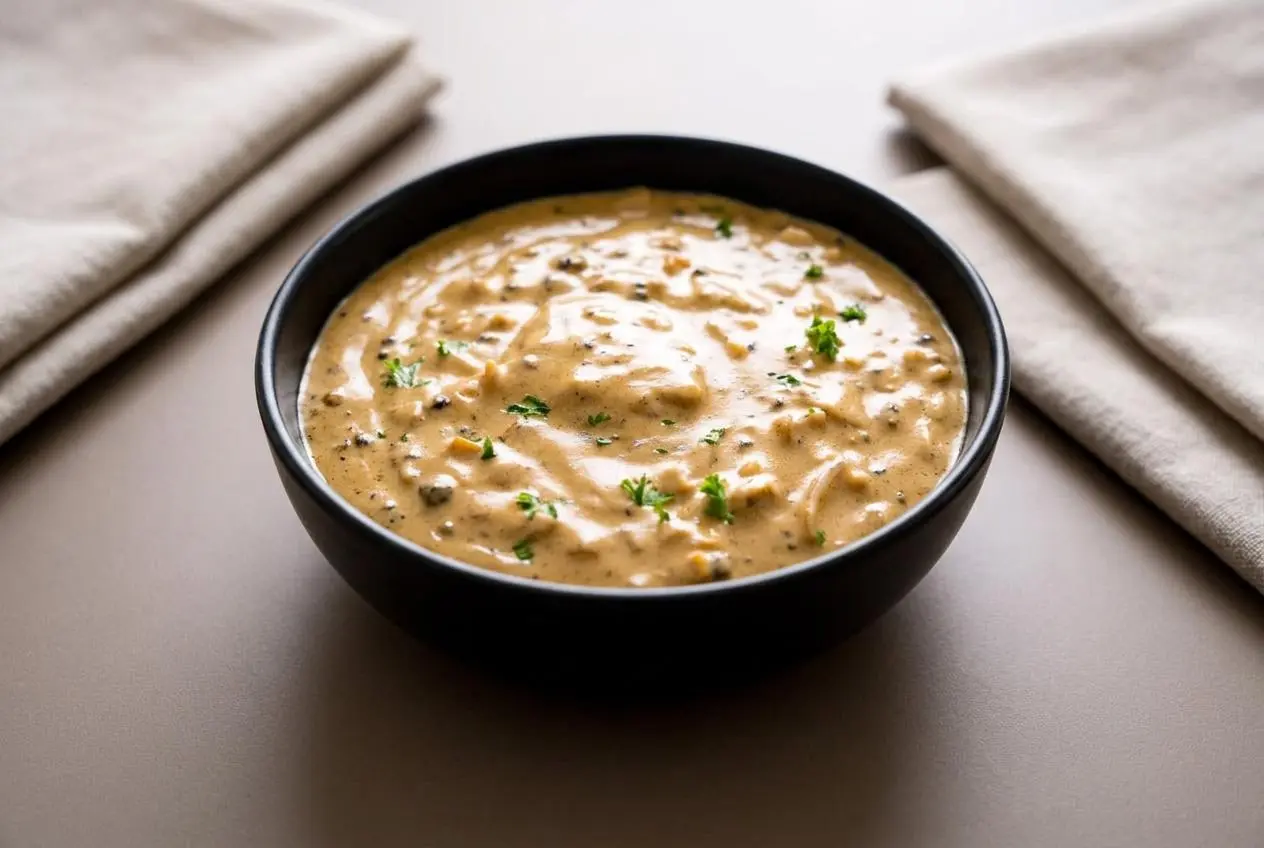
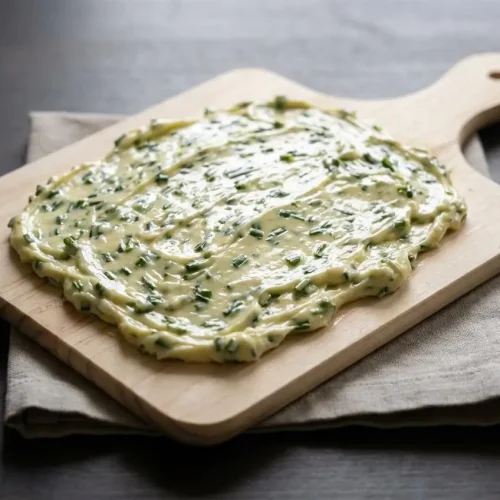
It should shift from speckled and chunky to a soft, pale green butter with a fresh garlic aroma. - Spoon the finished butter into a Mason jar and refrigerate it.
Once chilled, it firms up into a spreadable compound butter that is easy to scoop or slice.
Processing the scapes first matters because firm pieces can stay stringy if they hit the butter too soon. Once everything blends properly, the mixture looks creamy, light green, and evenly flecked instead of rough and patchy.
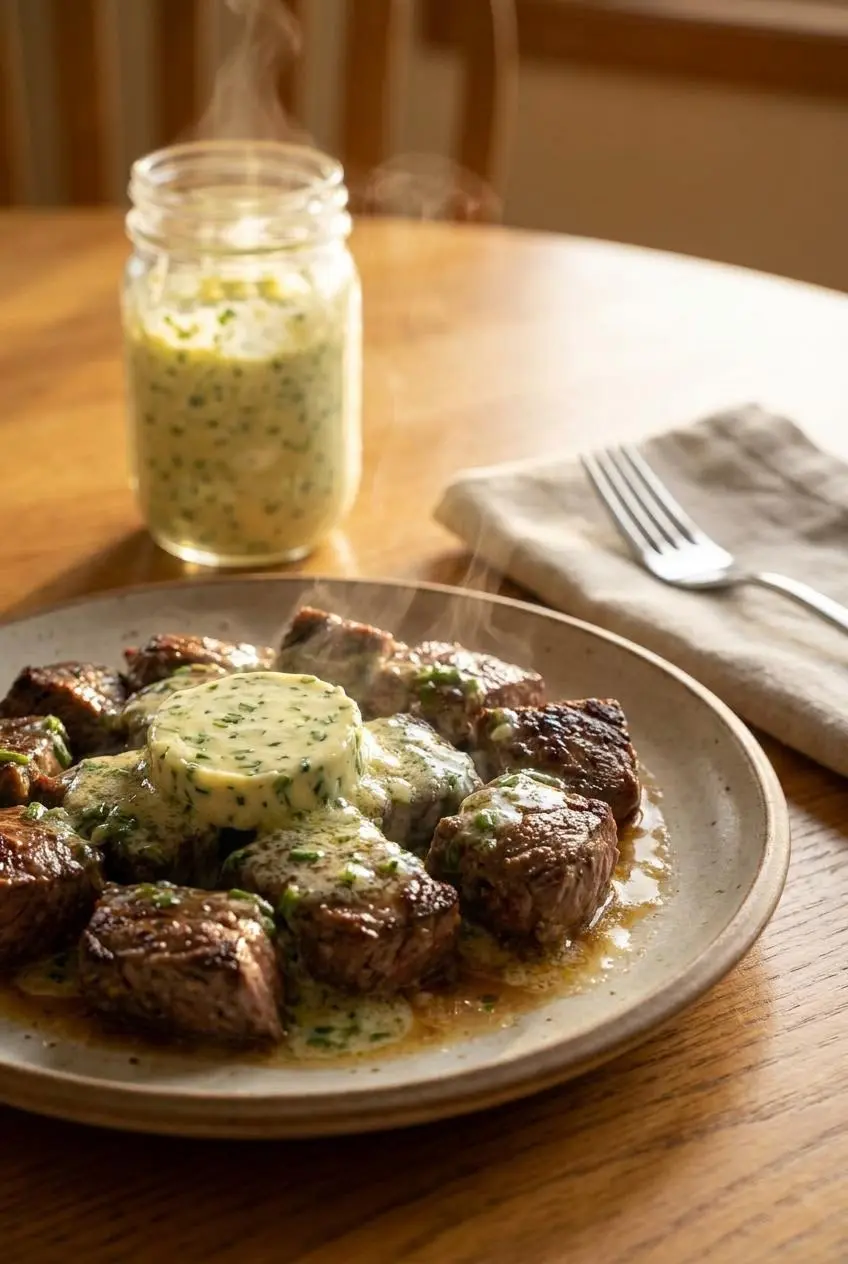
This butter is especially good melted over grilled vegetables, corn, or a hot pan of garlic butter steak for a fast dinner upgrade.
What Are Garlic Scapes and What Do They Taste Like?
Garlic scapes are the curly green shoots that grow from hardneck garlic plants. If you have ever wondered why some garlic plants send up looping stems and others do not, that is the big distinction between hardneck and softneck garlic. Hardneck varieties produce scapes. Softneck varieties usually do not.
The flavor is milder than a garlic clove but still clearly garlicky. You get sweet, green, herbaceous notes that land somewhere between garlic, green onion, and chives. Raw scapes have more bite. Cooked scapes taste rounder, sweeter, and softer.
Growers cut scapes so the plant can redirect energy back into the underground bulb. That usually helps the garlic bulb size up instead of putting effort into the flowering stalk.
In the kitchen, think of them as part vegetable and part seasoning. They can stand in for garlic cloves in many dishes, but they can also behave like a tender green once trimmed and cooked properly.
How and When to Harvest Garlic Scapes
The best time to harvest is in early summer, when the stalk has formed one full loop but has not yet stretched tall and straight. That is the sweet spot for tenderness and flavor.
To pick them, follow the scape down to the base of the upper leaves and cut or snap it off cleanly. A ready scape feels crisp and juicy, with a clean pop rather than a bendy pull. If it resists and feels leathery, it is already getting tougher.
Harvesting at the loop stage matters because older stalks become more fibrous. The bud at the top is still edible, but the lower stem is the part that tends to turn woody first.
If you grow your own garlic, check the patch every couple of days once the scapes start curling. They move quickly from perfect to a bit too mature.
How to Harvest and Prep Garlic Scapes
Good prep is what keeps garlic scapes pleasant instead of stringy. Start by rinsing them well, especially around the bud where grit can hide.
Then trim away the tough, woody bottom section, much like you would with asparagus. The exact amount varies by stalk, so use feel more than a ruler. If the base looks pale, dry, or rigid, cut above that point. You can also trim off the thin, thread-like tip above the flower bulb if it looks wiry.
You can eat most of the green stem and the closed flower bud. What you want to skip is the dry lower section and any damaged parts.
If you harvest from the garden, check each stalk for leek moth larvae damage before bringing it into the kitchen. Warning signs include:
- small entry holes in the stalk
- tunneling inside the stem
- dark debris or frass tucked into the hollow areas
- soft, collapsed sections around the bud or upper stem
If you spot damage, discard the affected stalks or cut away damaged portions generously. Do not compost pest-infected stems, since that can keep the problem cycling in the garden.
How to Cook Garlic Scapes (Grilling, Sautéing, and More)
Garlic scapes can be used raw or cooked, but cooking smooths out their texture and sweetness. If you plan to grill or puree them, a quick blanch first is the move that saves you from stringy or tacky results.
Drop trimmed scapes into salted boiling water for 60 seconds, then drain. The color brightens from deep matte green to a more vivid, glossy green, and the stalks relax slightly. That short blanch helps soften the cell walls so the scapes grill more tenderly and puree more cleanly.
For garlic-clove substitutions, use this quick kitchen guide:
- 1 average scape equals roughly 1 clove of garlic for general savory cooking.
- Thinly sliced raw scapes work well in dressings, dips, and compound butter when you want a greener flavor.
- Chopped scapes can replace garlic in sautés, stir-fries, and pan sauces with a softer finish.
You can also slice them thin and use them raw, but older scapes can be chewy. For the best texture raw, cut them very finely and use them more like an herb than a vegetable.
The Classic Garlic Scape Pesto Alternative
A classic pesto version works beautifully with trimmed scapes, pine nuts, olive oil, and Parmigiano Reggiano. The key is restraint. Pulse just until the mixture turns into a loose paste, because overprocessing raw scapes can make the texture sticky and a little tacky.
If you want to keep the flavor bright, blanch the scapes briefly first, then cool and dry them before blending. That softens the sharp raw edge and helps the puree stay smoother.
Toss that pesto with hot linguine, spoon it onto grilled chicken, or stir a little into warm grains. If you want to preserve pesto for later, portion it in small airtight containers so you can thaw only what you need.
Quick Sautéed Garlic Scapes
For the easiest everyday use, chop the scapes into pieces similar in size to green beans or asparagus tips, then sauté them in olive oil or butter. Even sizing matters because it keeps the pieces tender at the same time instead of giving you a mix of soft tops and chewy bottoms.
Cook them until they turn bright green and just tender, then use them anywhere you would normally use a green vegetable with a garlicky edge. They fit especially well in stir-fries, egg dishes, rice bowls, and warm pasta. Fold them into garlic butter pasta for an easy seasonal meal.
Grilled Garlic Scapes
For grilling, blanch first, then pat the scapes dry and toss them with olive oil and salt. Set them over an open flame until they pick up light char marks and the flavor turns sweeter and a little smoky.
Do not grill them raw if you want a tender bite. Blanching first gives you a better texture and helps prevent a fibrous chew.
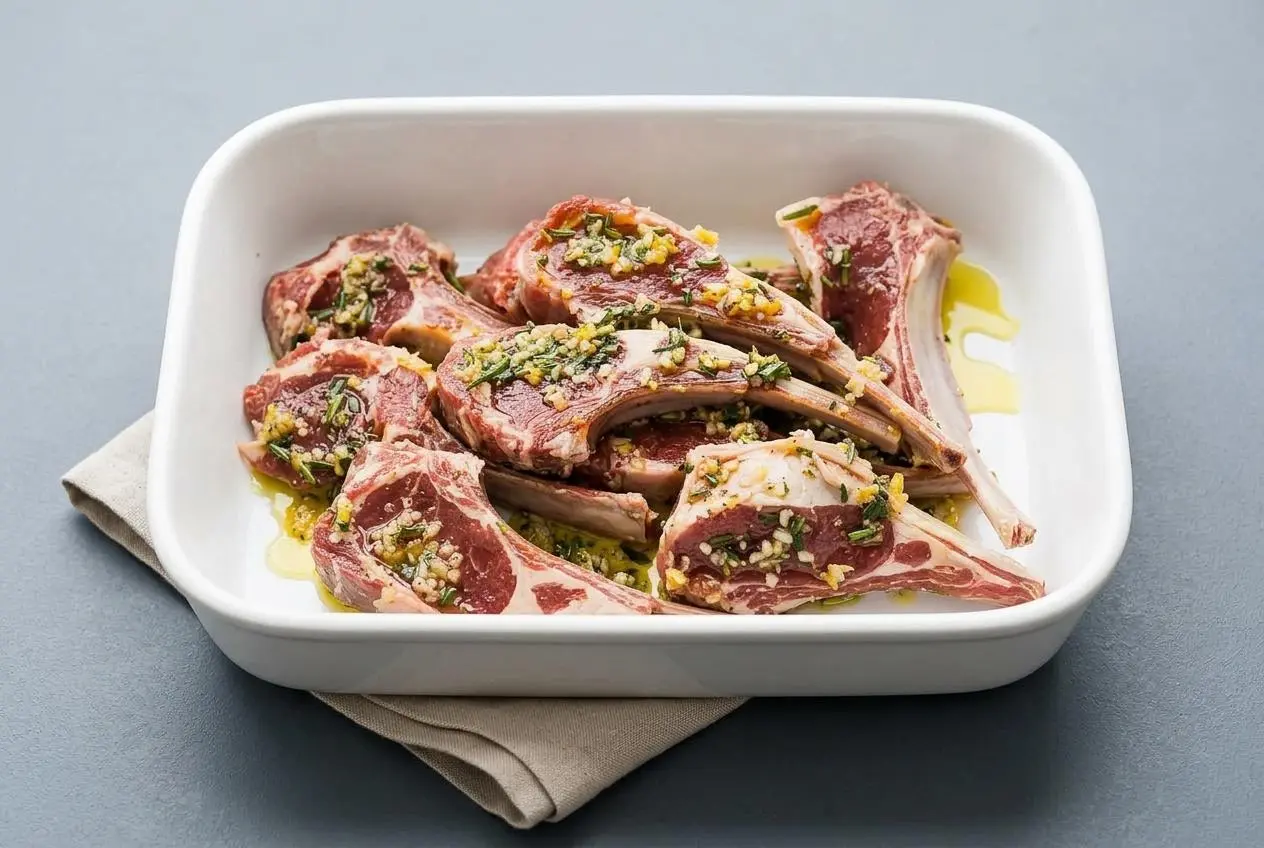
Finish grilled scapes with lemon juice and serve them beside grilled meats or roasted lamb chops. They also pair naturally with garlic steak kebabs when you want a strong summer dinner plate.
Storing and Freezing Garlic Scapes
Fresh scapes keep best when they stay cool and slightly protected from drying out. Store them in the refrigerator in an unsealed plastic bag with a damp paper towel, ideally in the crisper drawer.
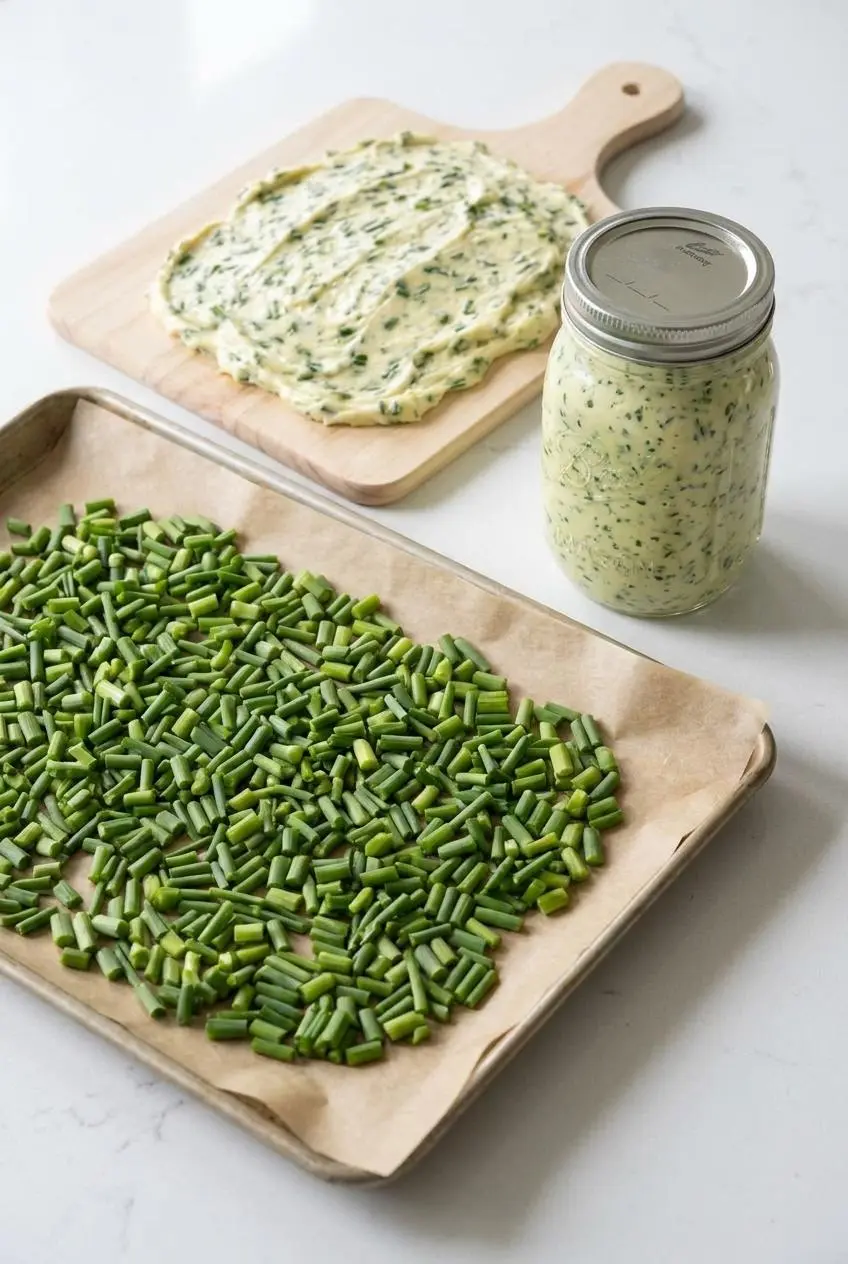
If you want to save them for later cooking, chop them first rather than freezing the whole curly stalks. Spread the pieces in a flat layer on a sheet tray until firm, then transfer them to an airtight freezer bag. That keeps the pieces loose and helps reduce clumping and freezer burn.
Pickling and fermenting are also useful preservation paths if you like a tangy finish, but those methods work best when you follow a tested formula rather than improvising. For the butter itself, keep it refrigerated and use clean utensils so the flavor stays fresh.
For best texture, use preserved scapes in cooked dishes, pestos, or blended sauces rather than expecting the same crisp bite they had when fresh.
Conclusion
Garlic scapes are one of the easiest seasonal ingredients to bring from garden or market to the table. Once you know where to trim and how to tame the texture, they become useful in everything from butter to pasta to the grill.
The two biggest tricks are simple: cut away the woody ends and blanch before grilling or pureeing when tenderness matters. That small bit of prep pays off fast.
Frequently Asked Questions
What Part of the Garlic Scape Do You Actually Eat?
You can eat the green stem and the closed flower bud. Trim and discard the tough, woody bottom section. If the thin tip above the bud feels dry or stringy, trim that off too.
Can You Eat Garlic Scapes Raw?
Yes, raw scapes are edible and have a sharper, punchier flavor. Slice them very thinly so they are easier to chew. They work well in dips, compound butter, salads, and pesto.
How Do You Preserve Garlic Scapes for Winter?
Chop them first, then freeze the pieces flat before bagging them. That shape is easier to portion than whole curly stalks. Pickling and fermenting are also good options if you want a tangy flavor.
Why Are My Garlic Scapes Tough After Cooking?
The woody lower stem probably was not trimmed away. Older scapes naturally get more fibrous, especially if harvested late. If you grilled or sautéed them without blanching first, they can stay chewy.
Garlic Scapes

Equipment
- Food processor
- Mason jar
Ingredients
Garlic Scape Butter
- 1 pound butter room temperature
- 1 cup chopped garlic scapes
- Salt to taste
Instructions
Instructions
- Add the chopped scapes to a food processor and pulse until the pieces are very fine. The butter blends more evenly this way, so you do not end up with long green bits throughout the spread.
- Add the room temperature butter and process until the mixture turns smooth and evenly green, then taste and season with salt as you like. It should shift from speckled and chunky to a soft, pale green butter with a fresh garlic aroma.
- Spoon the finished butter into a Mason jar and refrigerate it. Once chilled, it firms up into a spreadable compound butter that is easy to scoop or slice.