Skip to content
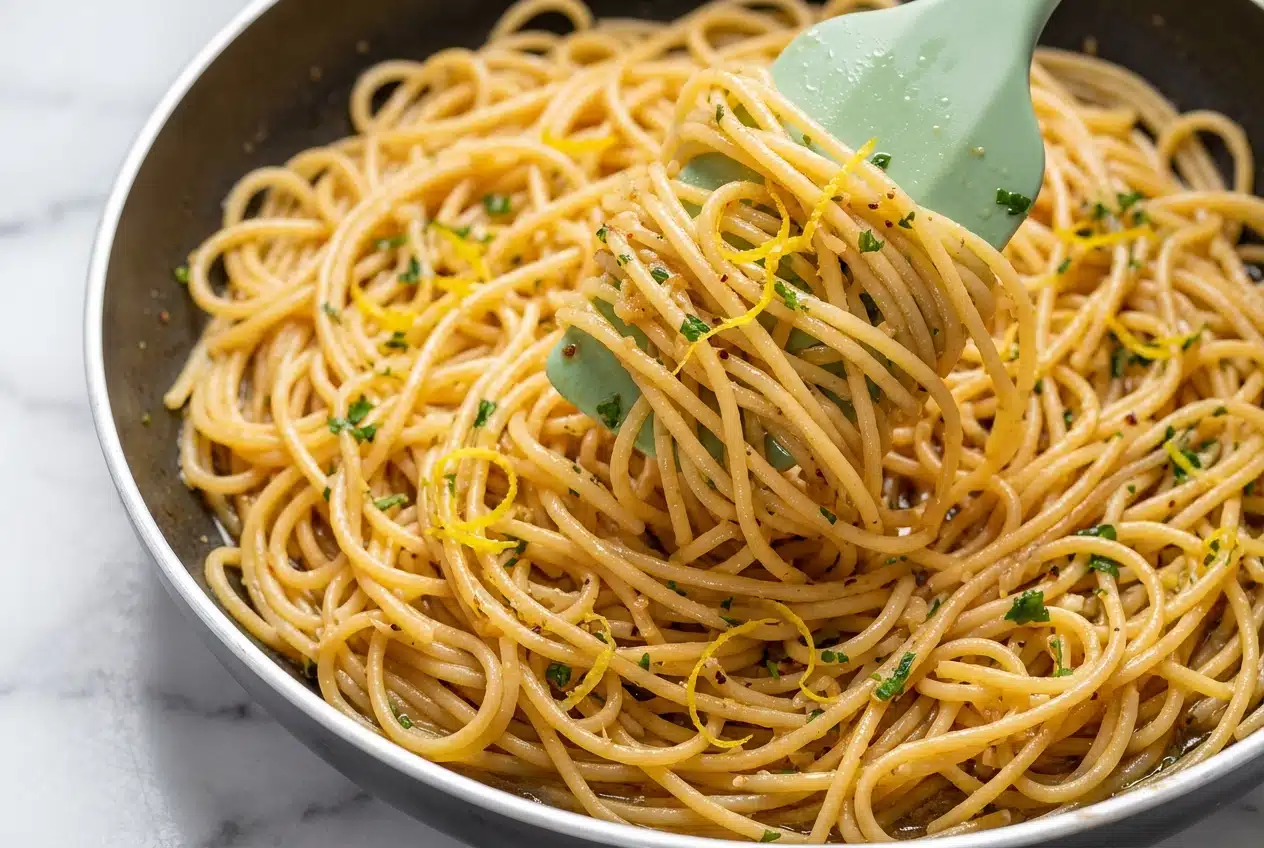
In my American kitchen, there are nights when dinner needs to feel like a soft hoodie, warm, familiar, and impossible to overthink. That is exactly where garlic butter pasta shines, a simple bowl of spaghetti that can taste like a little luxury if you treat it right.
The ingredients are pantry staples, but the technique is the glow-up. When you brown the butter until it smells nutty, then finish with bright lemon zest, you get a silky, aromatic sauce that clings instead of pooling.
Why You Will Love This Recipe
The Beurre Noisette Factor: In my kitchen, browning unsalted butter turns basic richness into toasted, hazelnut-like depth, the kind of flavor that makes spaghetti taste restaurant-level.
Zesty Balance: A little lemon zest at the end wakes everything up, cutting through the butter so each bite tastes vibrant instead of heavy.
Simple Yet Sophisticated: This is weeknight comfort food with real chef logic, a few smart moves that make minced garlic and parsley feel downright elegant.
Perfect Texture: With starchy pasta water and good tossing, emulsification happens, and the sauce becomes glossy and creamy without cream.
Ingredients and Substitutions
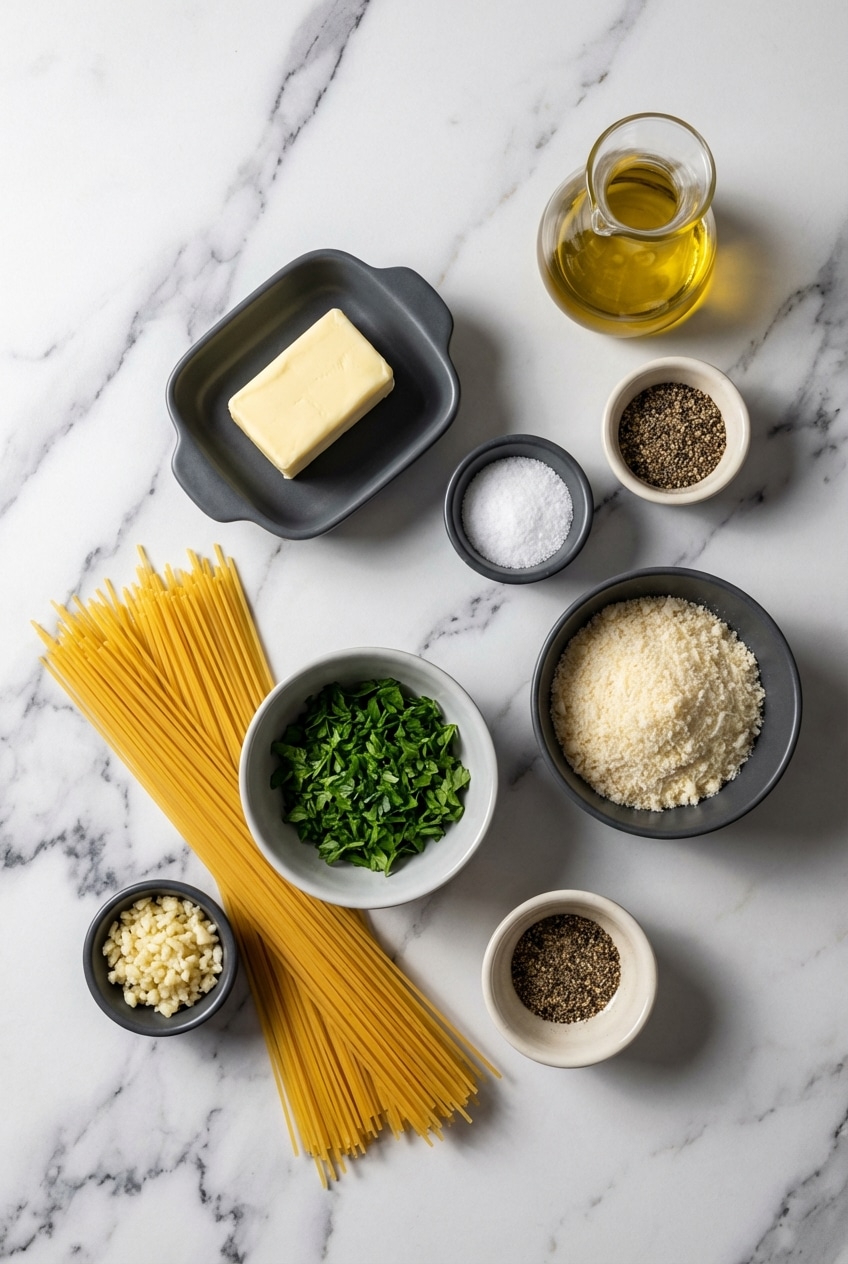
These are humble staples, but each one has a job. The butter builds body, garlic brings the aromatic backbone, and Parmesan plus pasta water turn everything silky and cohesive.
Ingredients
- 8 ounces spaghetti
- 1/2 cup unsalted butter (1 stick)
- 8 cloves garlic (minced)
- 1/3 cup fresh parsley (chopped)
- 1/2 cup freshly grated Parmesan cheese (divided)
- Salt (to taste)
- Black pepper (to taste)
- 1 Tablespoon olive oil
Ingredient Notes & Substitutions
Fresh garlic vs. jarred: Fresh cloves are non-negotiable here, jarred garlic can taste sharp or metallic once warmed in butter, and that’s the last thing you want in a simple sauce.
Parmigiano Reggiano: A block you grate yourself melts smoother because it’s not coated in anti-caking agents, and the flavor is cleaner and nuttier. For the curious, the FDA’s official standards for Parmesan cheese explain why texture and aging matter.
Spaghetti choice: Bronze-die cut spaghetti is my favorite for butter sauces because the surface is slightly rough, which helps the sauce cling. The idea is backed by how pasta structure holds sauce, and this review explains why a porous surface is the best vehicle for that glossy coating.
Salted vs. unsalted butter: Unsalted butter gives you control, especially once Parmesan enters the pan, because the cheese brings its own salinity and can push the sauce over the edge fast.
Gluten-free pasta: It works, but watch the pot closely and pull it at true al dente, then finish in the skillet so it doesn’t turn fragile. Keep extra starchy pasta water ready since gluten-free noodles often need a little more help emulsifying.
How to Make garlic butter pasta
Boil the pasta, and save the magic water
- Bring a large pot of salted water to a rolling boil, then drop in the spaghetti and stir for the first minute so it doesn’t clump.
- Cook according to the package instructions until al dente, it should still have a faint bite in the center. Before draining, reserve some starchy pasta water, then drain and keep the pasta close by.
Build the browned butter base, then gently perfume it
- Set a large skillet over medium heat and let it warm up, then add the butter and let it melt. Stay nearby as it foams, then the color shifts to golden with tiny browned specks, and the aroma turns nutty and toasted.
- Lower the heat so the pan calms down, then add the minced garlic and chopped parsley. Sauté, stirring often, for about 1 1/2 to 2 minutes, just until the garlic smells sweet and fragrant, never browned.
Toss, emulsify, and finish with cheese and sheen
- Add the cooked spaghetti to the skillet and toss until every strand looks glossy and coated. Splash in a little reserved pasta water as needed, then toss vigorously until the sauce looks creamy and unified, not oily.
- Sprinkle in half the Parmesan and keep tossing until it melts into a silky cloak around the noodles.
- Season with salt and black pepper to taste, then drizzle the olive oil over the top and toss one final time for a polished, restaurant-style shine.
The Science of a Silky Velvety Sauce
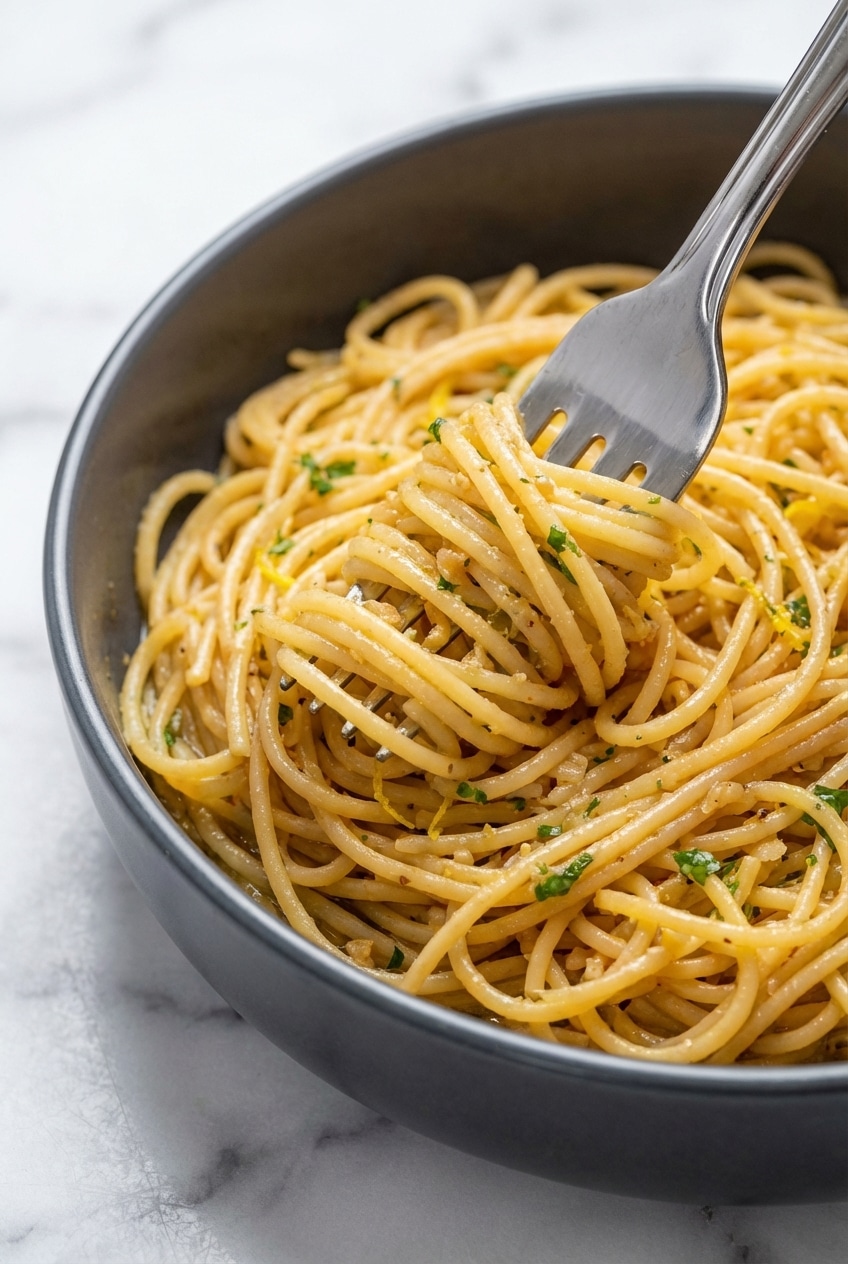
Butter and water do not want to be friends, but starchy pasta water plays matchmaker. That starch helps emulsification, so the sauce clings to the spaghetti instead of sliding off into a greasy puddle.
Browning butter is about timing, not speed. When the foam rises and then starts to settle, the milk solids are toasting, and that is where the flavor blooms, the same chemistry discussed in the Maillard reaction in milk solids.
Al dente matters because the pasta finishes cooking in the sauce. That last minute of tossing lets garlic butter flavor migrate into the noodle, not just sit on the outside.
Pro Tips & Troubleshooting
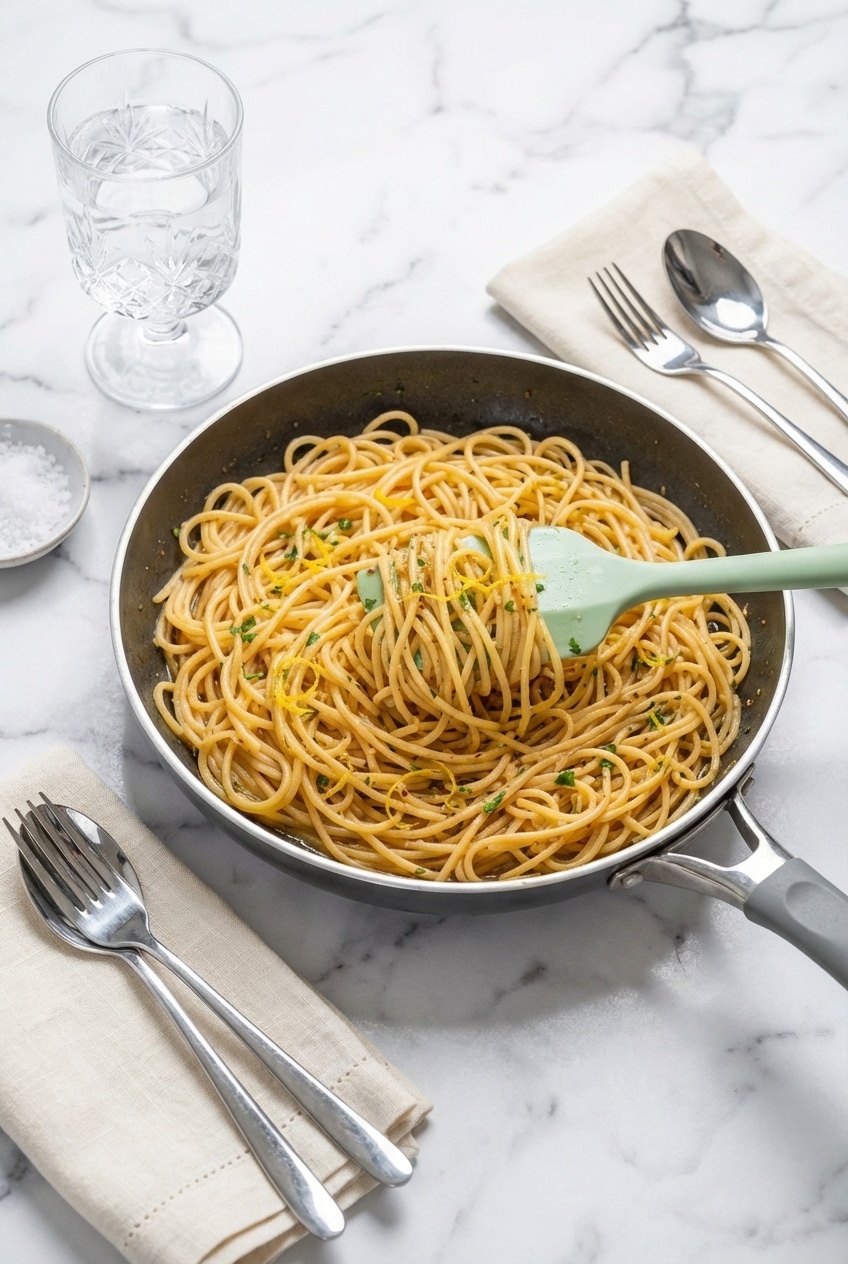
Pro Tips
- Salt the pasta water until it tastes like the sea, that is how you season from within.
- Reserve about 1/2 cup of starchy pasta water before draining, even if you think you will not need it.
- Keep the garlic gentle and low, it should soften and perfume, not brown.
- Let the finished pasta sit in the pan for 2 to 3 minutes before serving so the sauce fully hugs the noodles.
- Grate your own cheese for the smoothest melt and the glossiest finish.
Common Mistakes to Avoid
- Rinsing the pasta after draining, it washes away the starch that helps the sauce cling.
- Cranking the heat when the garlic goes in, burned garlic turns bitter and dominates everything.
- Skipping the vigorous toss, the sauce needs motion to emulsify and turn creamy.
- Over-salting early, Parmesan brings salt, so taste at the end.
Troubleshooting a broken sauce
If the sauce looks separated or oily, do not panic. Add 1 tablespoon of hot reserved pasta water, then toss hard until it turns glossy again, that quick starch boost often pulls the emulsion back together.
Garlic is beloved for flavor and also studied for its compounds, but I treat it as a delicious ingredient first. Neutral summaries like the NIH review on therapeutic effects of garlic are a reminder that fresh garlic’s aroma comes from real chemistry.
Serving & Storage
Creative Serving Ideas
This garlic butter pasta is a dreamy side for pan-seared scallops, grilled chicken, or crispy bacon bits. For a steakhouse-style plate, a buttery bite like garlic butter steak brings big savory contrast alongside the noodles.
I love something bright on the side, like an arugula salad with lemon vinaigrette and shaved Parmesan. A warm, crunchy companion such as cheesy garlic bread is perfect for catching every last glossy strand.
Storage and Reheating Guidelines
Store leftovers in an airtight container for up to 3 days. Butter-based sauces firm up in the fridge, so the pasta will look a little tight and matte when cold.
Reheat in a skillet over low heat with a splash of water or broth, stirring gently until the sauce loosens and turns shiny again. Avoid high heat, it can cause the fats to separate and the sauce to “break” into oily patches.
Garlic Butter Pasta

Equipment
- Large Pot
- Large Skillet
- Colander
- Cheese grater
Ingredients
- 8 ounces spaghetti
- 1/2 cup unsalted butter (1 stick)
- 8 cloves garlic (minced)
- 1/3 cup fresh parsley (chopped)
- 1/2 cup freshly grated Parmesan cheese (divided)
- Salt (to taste)
- Black pepper (to taste)
- 1 Tablespoon olive oil
Instructions
Boil the pasta, and save the magic water
- Bring a large pot of salted water to a rolling boil, then drop in the spaghetti and stir for the first minute so it does not clump.
- Cook according to the package instructions until al dente, it should still have a faint bite in the center. Before draining, reserve some starchy pasta water, then drain and keep the pasta close by.
Build the browned butter base, then gently perfume it
- Set a large skillet over medium heat and let it warm up, then add the butter and let it melt. Stay nearby as it foams, then the color shifts to golden with tiny browned specks, and the aroma turns nutty and toasted.
- Lower the heat so the pan calms down, then add the minced garlic and chopped parsley. Sauté, stirring often, for about 1 1/2 to 2 minutes, just until the garlic smells sweet and fragrant, never browned.
Toss, emulsify, and finish with cheese and sheen
- Add the cooked spaghetti to the skillet and toss until every strand looks glossy and coated. Splash in a little reserved pasta water as needed, then toss vigorously until the sauce looks creamy and unified, not oily.
- Sprinkle in half the Parmesan and keep tossing until it melts into a silky cloak around the noodles.
- Season with salt and black pepper to taste, then drizzle the olive oil over the top and toss one final time for a polished, restaurant-style shine.
Notes
Nutrition
Conclusion
Once you taste garlic butter pasta made with browned butter and that bright lemon zest finish, plain melted-butter noodles feel a little sleepy. Trust the al dente bite, lean on starchy pasta water for emulsification, and you will get that silky, aromatic coating every time.
If you like the garlic and butter combo in other weeknight dinners, the same flavor logic shows up in garlic butter chicken, which makes an easy pairing when you want something heartier.