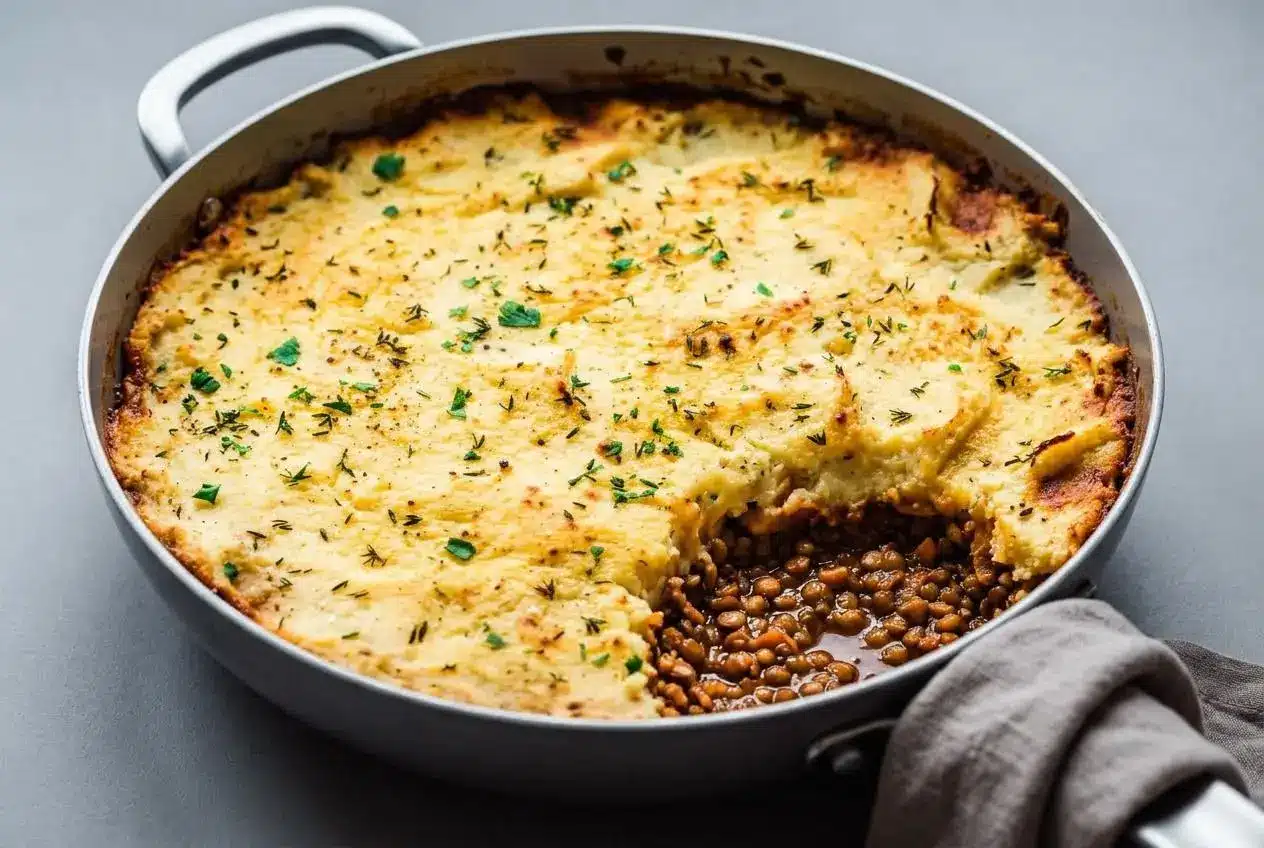
This comforting casserole layers tender brown or green lentils in a savory herb and red wine gravy beneath fluffy potato-cauliflower mash, then bakes until bubbling and golden.
This vegan shepherd’s pie recipe fills the kitchen with the warm scent of caramelized onions, thyme, rosemary, and tomato paste. The lentil filling is hearty enough to hold its shape, while the topping stays velvety rather than wet.
A brief rest after baking helps every serving slice cleanly instead of sliding across the plate. Those crisp potato ridges are worth the extra minute.
Keep a clean dish towel nearby for drying the boiled potatoes and squeezing moisture from the cauliflower before mashing.
Essential Ingredients for a Rich Vegan Shepherd’s Pie
Each ingredient has a job here: onions and herbs build aroma, lentils provide structure, tahini adds richness, and the potato-cauliflower topping creates a soft interior with a crisp finish.
Lentil Filling
- 2 tablespoons (28g) olive oil
- 3 large yellow onions, diced (2 lbs / 900g diced onions)
- Diamond Crystal kosher salt & freshly cracked black pepper
- 8 cloves garlic, finely chopped (~1 oz / 28g)
- 1 tablespoon (2-3g) fresh thyme leaves, roughly chopped
- 2 teaspoons (2g) fresh rosemary leaves, roughly chopped
- 3 tablespoons (45g) tomato paste
- 1/2 cup (120 mL) dry red wine, such as Pinot Noir or Malbec
- 1 1/2 cups (10 ounces / 285g) green or brown lentils
- 3 3/4 cups (900 mL) vegetable broth
- 2 bay leaves
- 1 1/2 teaspoons sweet or hot paprika
- 1/4 cup (56g) smooth or well-stirred tahini
- 1 tablespoon tamari or soy sauce
- 1 tablespoon aged balsamic vinegar
- 2 teaspoons vegan Worcestershire sauce (optional)
Mashed Potato Topping
- 20 ounces (680g) Russet potatoes
- 16 ounces (450g) cauliflower, cut into large florets
- 1 1/2 teaspoons Diamond Crystal kosher salt, plus more to taste
- 1 fresh rosemary sprig (optional)
- 1/4 cup (56g) vegan butter, softened at room temperature (or olive oil)
- 1/2 cup (120 mL) lite coconut milk
- 1 tablespoon nutritional yeast
Optional finishes and garnishes
- Extra virgin oil for baking and finishing
- Chopped flat-leaf parsley
The onions become the sweet foundation of the gravy, while garlic, thyme, rosemary, and paprika bring warmth. Nutritional yeast gives the mash savory depth, and coconut milk loosens it into a creamy, spreadable topping.
I prefer smooth, well-stirred tahini here because separated tahini can leave oily streaks instead of blending smoothly into the lentils.
The Best Lentils for Hearty Texture
Choose green or brown lentils because they stay distinct and pleasantly firm after simmering and baking. Red lentils cook down much faster, so they can turn the filling soft and thick like a puree rather than giving it the hearty bite expected from a shepherd’s pie.
The lentils should be just tender before assembly, not falling apart. They will continue softening slightly in the oven as the filling bubbles beneath the mash.
Savory Umami Boosters That Replace Meat Flavor
Tomato paste, red wine, tamari, balsamic vinegar, tahini, and optional vegan Worcestershire create depth in layers. First, the tomato paste darkens in the olive oil and develops a roasted aroma. Wine then loosens the browned bits from the pan, while tamari and Worcestershire add salinity.
Balsamic vinegar keeps the filling from tasting heavy, and tahini turns the broth into a creamy gravy that clings to the lentils. Skip the acid and the filling can taste flat, even when it is well seasoned.
Selecting and Preparing the Potatoes
Russet potatoes are high in starch and relatively dry, which makes them ideal for a fluffy dairy-free mash. Yukon Gold potatoes make a richer, more buttery-tasting topping, but their extra moisture creates a softer finish.
Cauliflower lightens the topping, but it carries a great deal of water after boiling. Drain it thoroughly and squeeze it dry before mashing so it supports the lentils rather than turning loose around the edges.
Step-by-Step Cooking Method and Assembly
Build flavor in the skillet before the lentils go in, then keep the topping dry and airy. The finished filling should be thick enough to stay level when you draw a spoon through it.
Make the Lentil Filling
- Warm the olive oil in a 12-inch ovenproof sauté pan over medium-high heat until it shimmers.
Use a baking dish later if the pan cannot go into the oven. - Add the onions with a couple pinches of salt and cook for 10 to 12 minutes, stirring now and then.
Most of the onions should be browned; add a splash of water and lower the heat slightly if they color too quickly. - Stir in the garlic, thyme, and rosemary for 2 minutes.
The herbs should smell fragrant and the garlic should soften without browning. - Add the tomato paste and cook for 2 to 3 minutes, stirring frequently.
Lower the heat to medium if needed; the paste should deepen to a rusty brick-red color. - Pour in the red wine and scrape the browned bits from the pan as it cooks for 3 to 4 minutes.
Continue until most of the liquid has evaporated and the sharp alcohol aroma fades. - Add the vegetable broth, lentils, bay leaves, and paprika, then bring the mixture to a boil.
Reduce to a rapid simmer with steady bubbles across most of the pan and cook for about 30 minutes, until the lentils are just tender and most liquid is absorbed. - Lower the heat and stir in the tahini, tamari or soy sauce, balsamic vinegar, and vegan Worcestershire sauce (if using).
The filling should look creamy and thick; season generously with salt and black pepper to taste.
Make the Mashed Potato Topping
- Peel the potatoes, rinse them under cold water, and cut each potato into eighths.
Even pieces cook at the same pace and mash more smoothly. - Cover the potatoes and cauliflower with water in a large saucepan or Dutch oven, add 1 1/2 teaspoons kosher salt, and place the rosemary sprig on top.
Boil for about 15 minutes, until both vegetables are very soft and yield easily to a fork. - Drain the vegetables thoroughly and discard the rosemary sprig.
Pat the potatoes dry, then squeeze excess moisture from the cauliflower through a fine-mesh sieve or clean dish towel. - Return the vegetables to the warm pan or move them to a large bowl, then add the softened butter, coconut milk, and nutritional yeast.
Mash with a potato masher or immersion blender until smooth, then season with salt and pepper to taste.
Assemble and Bake
- Heat the oven to 375°F/190°C and level the lentil filling in the ovenproof skillet or a large 3 quart/3 liter baking dish.
Spoon the mashed topping over the filling and spread it to cover the surface completely. - Drizzle the top with extra virgin olive oil and add a few pinches of salt and pepper.
Drag fork tines across the mash to form ridges that will brown under the broiler. - Bake for 20 minutes, until the filling bubbles around the topping.
Switch on the broiler and cook for a few minutes until the peaks become golden brown. - Finish with more olive oil and chopped flat-leaf parsley, if desired, then let the pie rest for at least 20 minutes.
The filling firms as it rests, making portions neater and easier to serve.
Pro Tips for Fluffy Mash and Crisp Golden Edges
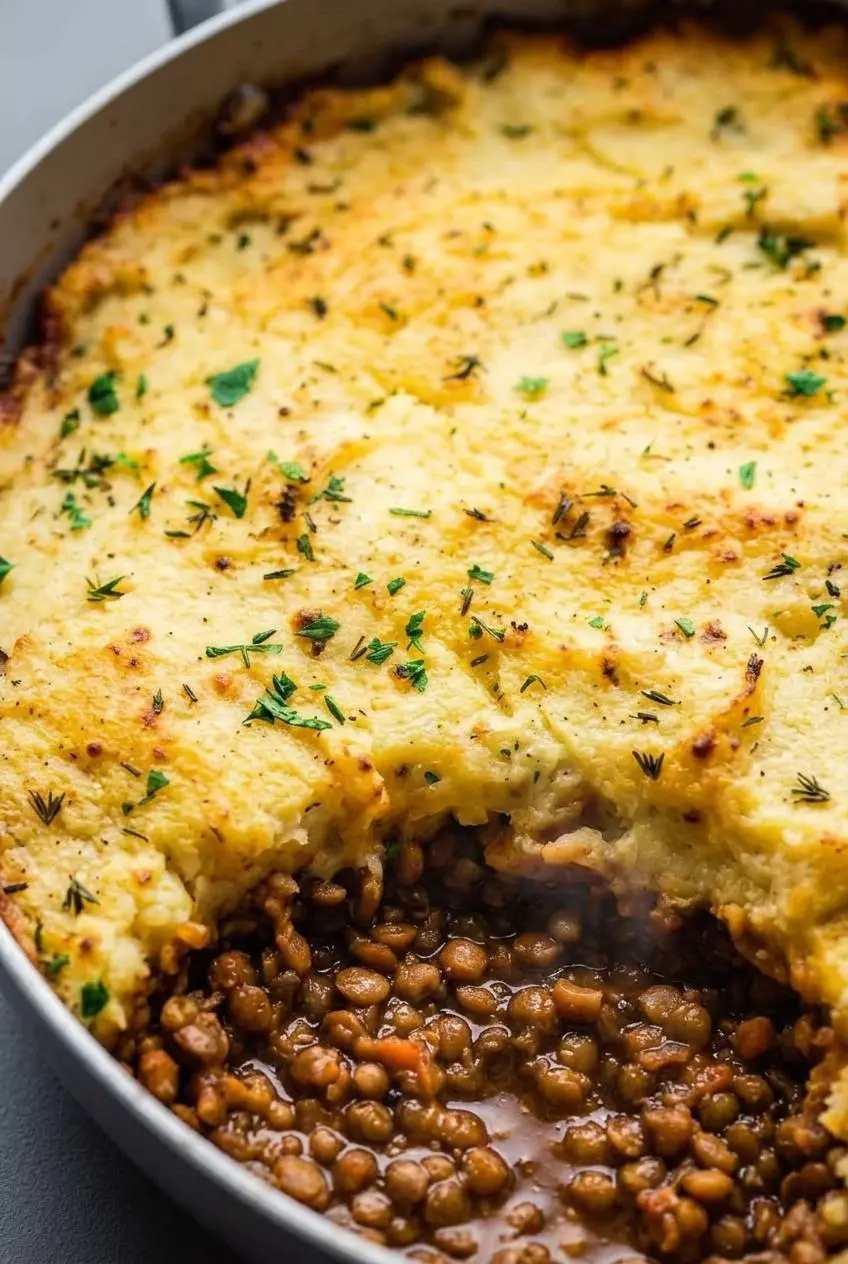
A few small choices keep the topping high, fluffy, and ready to brown instead of sinking into the lentils.
- Cool the filling slightly: Let the lentils settle briefly after simmering before adding the mash. A fiercely bubbling filling can pull the soft topping downward.
- Dry both vegetables: Pat the potatoes dry and squeeze the cauliflower firmly. Excess water is the main cause of a loose, slumping mash.
- Mash gently: Use a masher or immersion blender and stop once the topping is smooth. A food processor can overwork potatoes into a gummy paste.
- Make rough ridges: Fork marks create raised edges that catch the broiler’s heat and turn crisp while the valleys stay creamy.
- Rest before serving: Give the casserole 20 minutes after baking so the lentil gravy thickens and each portion holds together.
Flavorful Variations to Try
These changes are optional and belong outside the main method, so you can adapt the flavors without losing the rich lentil-and-mash structure.
Plant-Based Ground Meat Shepherd’s Pie
For a more traditional meat-like texture, swap the lentils for plant-based ground meat such as Beyond or Impossible. Brown the crumbles first, then add the onions and aromatics. These products release their own fat, so use less added oil if the skillet already looks glossy.
This version leans closer to a classic cottage pie, with a savory, browned filling beneath the same golden topping.
Mushroom and Lentil Umami Blend
For extra earthy chew, add finely chopped cremini or portobello mushrooms with the onions. Cook them until their moisture evaporates before adding the garlic and herbs. Their deep savoriness works especially well with brown lentils and the tang of balsamic vinegar.
Sweet Potato or Cauliflower Mash Alternative
Sweet potatoes or parsnips bring an earthy sweetness to the topping, while using more cauliflower makes it lighter and more vegetable-forward. Keep the same moisture-control habits: drain thoroughly, squeeze cauliflower dry, and spread the mash only over a thick filling.
Gluten-Free and Soy-Free Adjustments
Use certified gluten-free tamari when needed, and check the label on vegan Worcestershire sauce. For a soy-free direction, coconut aminos can replace tamari or soy sauce, though the filling may taste slightly sweeter and less salty.
Troubleshooting Common Vegan Shepherd’s Pie Issues
Most texture problems can be corrected before the casserole reaches the oven.
- The lentil filling is too thin: Keep it over the heat and simmer uncovered for an extra 5 minutes. If needed, stir in a spoonful of the prepared mash to help it thicken before assembly.
- The lentils are still firm: Add an extra splash of vegetable broth, cover the pan, and continue simmering until tender. Do not bake tough lentils expecting the oven to fix them.
- The mash looks watery: Return the drained potatoes and cauliflower to a dry, warm pot for 2 minutes so steam can escape, then mash again.
- The topping sank into the filling: The filling was likely too loose or too hot. Simmer it until thick, let it settle briefly, and spread the mash from the outer edge toward the center.
- The gravy tastes heavy: Taste after adding tahini and tamari, then use the balsamic vinegar to bring back brightness. A little acidity makes the herbs and tomato paste taste clearer.
Make-Ahead, Storage, and Reheating
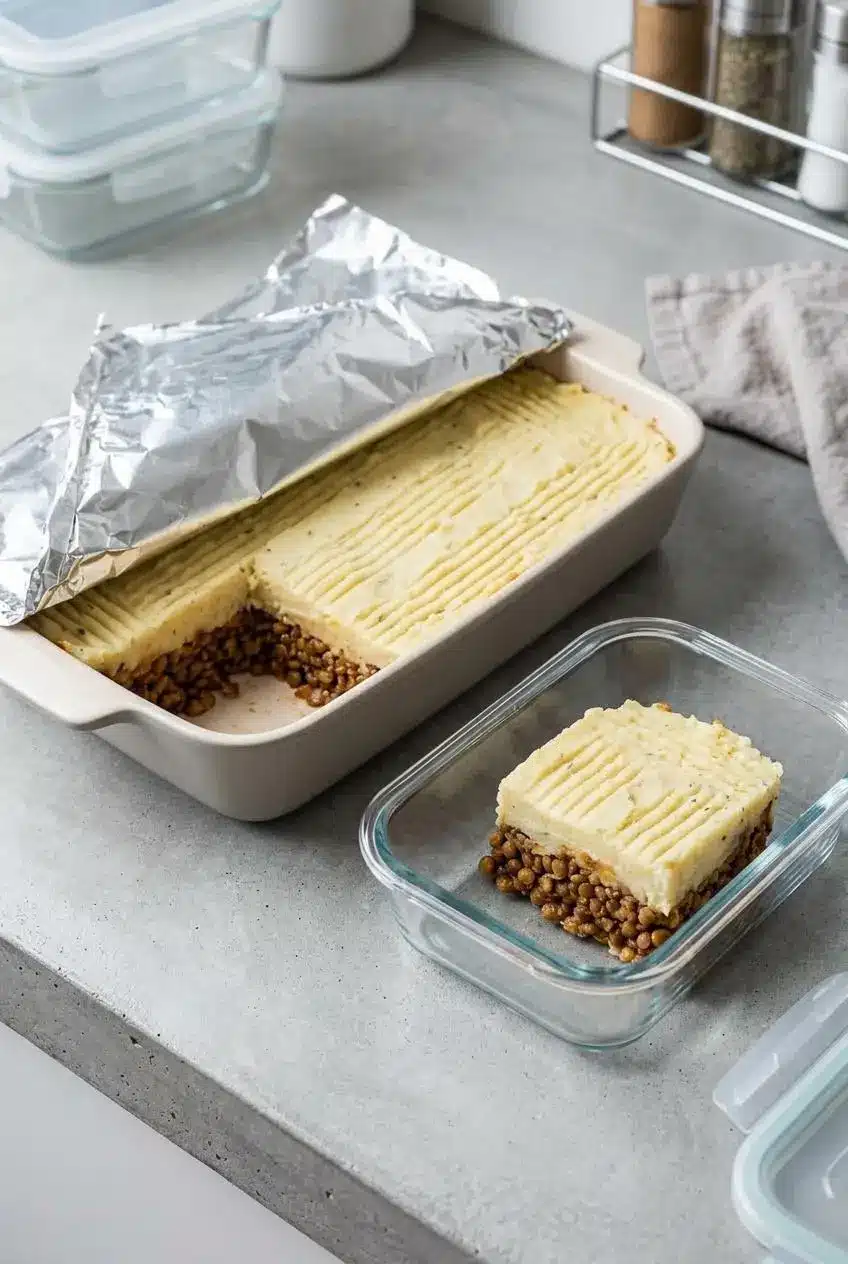
For advance prep, make the lentil filling and mashed topping separately, cool them completely, then cover and chill them until you are ready to assemble. Keeping the components separate helps the mash stay firmer and prevents steam from softening the surface.
Refrigerator Prep and Make-Ahead
Assemble the casserole only after both layers have cooled, then cover it tightly and keep it chilled. Before baking, let the dish lose some of its refrigerator chill so the center heats more evenly and the topping does not dry out before the filling bubbles.
Transfer leftovers to an airtight container and keep them chilled. Reheat covered in the oven until hot throughout, then uncover near the end if the potato ridges need fresh crispness.
Freezing and Reheating Without Sogginess
This casserole can be frozen after it has cooled completely. Wrap the dish tightly to limit freezer burn, then thaw it in the refrigerator before reheating so the potato topping warms more evenly.
Cover the dish while reheating to protect the mash from drying, then remove the cover near the end and use the broiler briefly to bring back the golden peaks. The official method allows leftovers to be frozen for up to 3 months.
Serving Suggestions for a Complete Meal
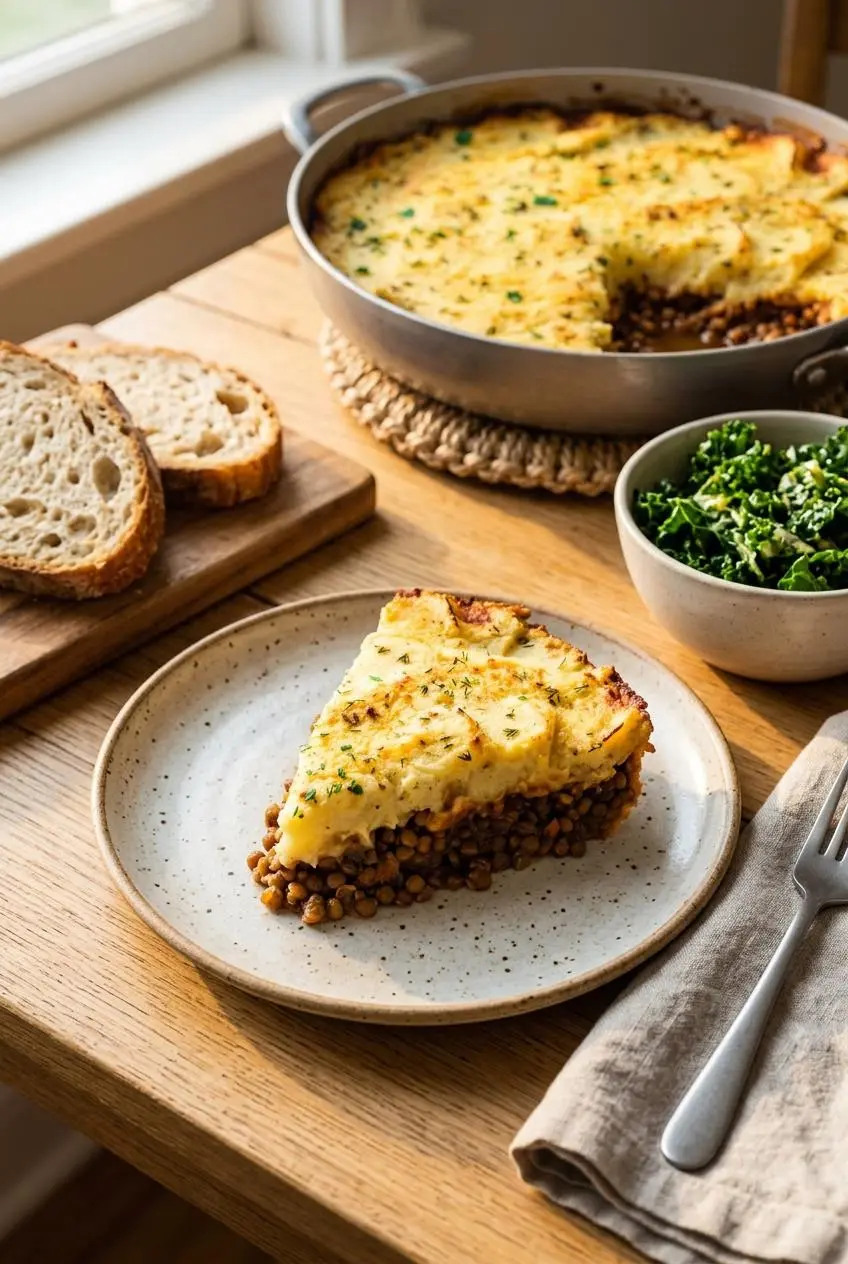
Balance the rich, savory filling with something crisp and bright. A winter kale salad with lemon vinaigrette cuts through the creamy topping, while roasted balsamic Brussels sprouts add a pleasantly sharp edge.
- Serve warm crusty sourdough bread for scooping up the thick lentil gravy.
- Add garlicky green beans for a fresh, snappy side.
- Finish each portion with parsley and a final drizzle of extra virgin olive oil for a little freshness.
Conclusion
This cozy casserole earns its hearty texture by simmering green or brown lentils until tender, pressing moisture from the vegetables, and broiling the fork-marked topping until golden.
Let it rest for 20 minutes before serving, then enjoy the contrast of velvety mash and deeply savory lentils. For extra depth, try optional white miso in the mash or smoked paprika in the gravy.
Frequently Asked Questions
What Can I Use Instead of Meat in Shepherd’s Pie?
Brown or green lentils are the best whole-food option because they stay firm and absorb the savory gravy. Finely chopped cremini mushrooms add chewy depth, while plant-based ground meat gives a more traditional meat-like texture.
How Do I Prevent the Mashed Potatoes From Sinking Into the Filling?
Simmer the lentil filling until thick rather than soupy, then let it settle briefly before topping it. Spread the mash from the outer edges inward and avoid pressing hard into the filling.
Can I Make Vegan Shepherd’s Pie Ahead of Time and Freeze It?
Yes. Cool the casserole completely before wrapping it tightly for freezing, then thaw it in the refrigerator before reheating. Cover it while warming, then uncover near the end and broil briefly to refresh the crisp potato ridges.
What Can I Substitute for Red Wine in the Lentil Gravy?
Use vegetable broth to deglaze the pan, then rely on the balsamic vinegar and optional vegan Worcestershire sauce already in the filling for tangy depth. The result will be less wine-forward but still savory and balanced.
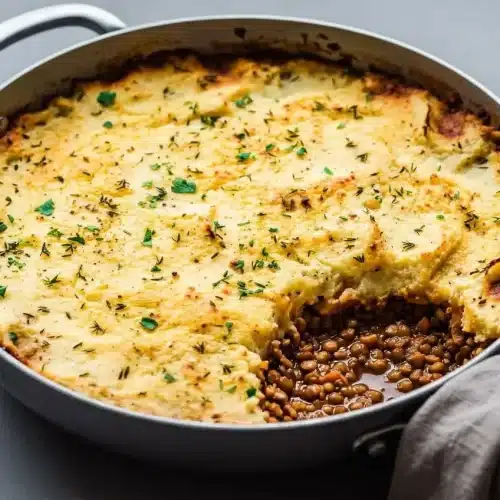
Vegan Shepherd’s Pie Recipe

Equipment
- 12-inch ovenproof sauté pan
- Dutch oven or large saucepan
- Colander
- Potato masher or immersion blender
- Fine-Mesh Sieve
Ingredients
Lentil Filling
- 2 tablespoons olive oil 28g
- 3 large yellow onions, diced 2 lbs / 900g diced onions
- Diamond Crystal kosher salt & freshly cracked black pepper
- 8 cloves garlic, finely chopped ~1 oz / 28g
- 1 tablespoon fresh thyme leaves, roughly chopped 2-3g
- 2 teaspoons fresh rosemary leaves, roughly chopped 2g
- 3 tablespoons tomato paste 45g
- 1/2 cup dry red wine, such as Pinot Noir or Malbec 120 mL
- 1 1/2 cups green or brown lentils 10 ounces / 285g
- 3 3/4 cups vegetable broth 900 mL
- 2 bay leaves
- 1 1/2 teaspoons sweet or hot paprika
- 1/4 cup smooth or well-stirred tahini 56g
- 1 tablespoon tamari or soy sauce
- 1 tablespoon aged balsamic vinegar
- 2 teaspoons vegan Worcestershire sauce optional
Mashed Potato Topping
- 20 ounces Russet potatoes 680g
- 16 ounces cauliflower, cut into large florets 450g
- 1 1/2 teaspoons Diamond Crystal kosher salt, plus more to taste
- 1 fresh rosemary sprig optional
- 1/4 cup vegan butter, softened at room temperature (or olive oil) 56g
- 1/2 cup lite coconut milk 120 mL
- 1 tablespoon nutritional yeast
Optional finishes and garnishes
- Extra virgin oil for baking and finishing
- Chopped flat-leaf parsley
Instructions
Make the Lentil Filling
- Warm the olive oil in a 12-inch ovenproof sauté pan over medium-high heat until it shimmers. Use a baking dish later if the pan cannot go into the oven.
- Add the onions with a couple pinches of salt and cook for 10 to 12 minutes, stirring now and then. Most of the onions should be browned; add a splash of water and lower the heat slightly if they color too quickly.
- Stir in the garlic, thyme, and rosemary for 2 minutes. The herbs should smell fragrant and the garlic should soften without browning.
- Add the tomato paste and cook for 2 to 3 minutes, stirring frequently. Lower the heat to medium if needed; the paste should deepen to a rusty brick-red color.
- Pour in the red wine and scrape the browned bits from the pan as it cooks for 3 to 4 minutes. Continue until most of the liquid has evaporated and the sharp alcohol aroma fades.
- Add the vegetable broth, lentils, bay leaves, and paprika, then bring the mixture to a boil. Reduce to a rapid simmer with steady bubbles across most of the pan and cook for about 30 minutes, until the lentils are just tender and most liquid is absorbed.
- Lower the heat and stir in the tahini, tamari or soy sauce, balsamic vinegar, and vegan Worcestershire sauce (if using). The filling should look creamy and thick; season generously with salt and black pepper to taste.
Make the Mashed Potato Topping
- Peel the potatoes, rinse them under cold water, and cut each potato into eighths. Even pieces cook at the same pace and mash more smoothly.
- Cover the potatoes and cauliflower with water in a large saucepan or Dutch oven, add 1 1/2 teaspoons kosher salt, and place the rosemary sprig on top. Boil for about 15 minutes, until both vegetables are very soft and yield easily to a fork.
- Drain the vegetables thoroughly and discard the rosemary sprig. Pat the potatoes dry, then squeeze excess moisture from the cauliflower through a fine-mesh sieve or clean dish towel.
- Return the vegetables to the warm pan or move them to a large bowl, then add the softened butter, coconut milk, and nutritional yeast. Mash with a potato masher or immersion blender until smooth, then season with salt and pepper to taste.
Assemble and Bake
- Heat the oven to 375°F/190°C and level the lentil filling in the ovenproof skillet or a large 3 quart/3 liter baking dish. Spoon the mashed topping over the filling and spread it to cover the surface completely.
- Drizzle the top with extra virgin olive oil and add a few pinches of salt and pepper. Drag fork tines across the mash to form ridges that will brown under the broiler.
- Bake for 20 minutes, until the filling bubbles around the topping. Switch on the broiler and cook for a few minutes until the peaks become golden brown.
- Finish with more olive oil and chopped flat-leaf parsley, if desired, then let the pie rest for at least 20 minutes. The filling firms as it rests, making portions neater and easier to serve.