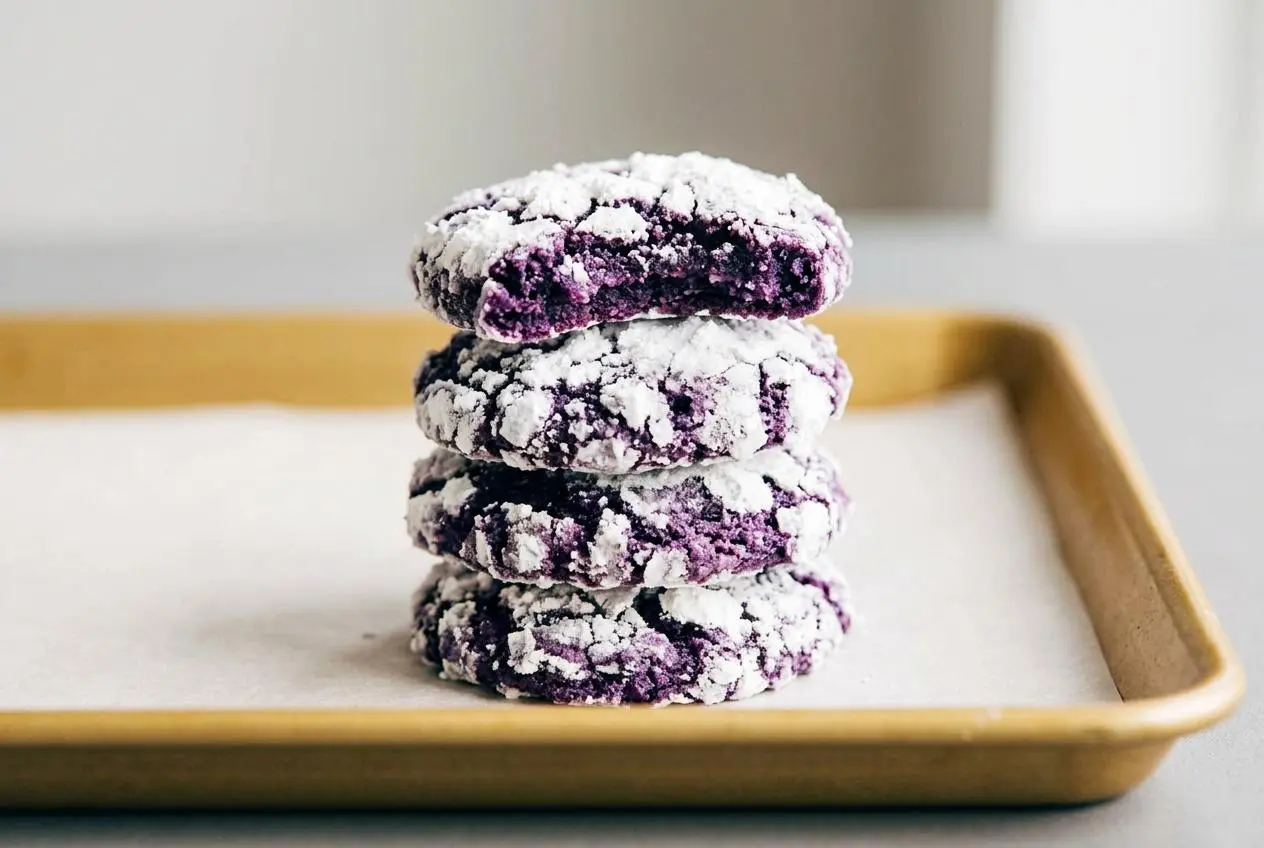
For soft, cakey ube crinkles with a bold purple center and sharp white cracks, use both ube halaya and ube extract, cream the butter and sugar well, and coat the dough generously so the crinkle finish stays visible after baking.
This Ube Crinkle Cookies Recipe makes pillowy cookies with vanilla-nutty ube flavor, a vivid purple crumb, and that classic powdered sugar finish that breaks open as they bake.
If you want a batch that looks dramatic on the tray but stays tender in the middle, the sugar coating trick does the heavy lifting. The dough color alone is worth it.
If the dough feels sticky and warm, pause before scooping and chill it until it firms up enough to roll cleanly.
Understanding Ube as an Ingredient
Ube is the reason these cookies taste and smell different from standard crinkles. It brings a mellow vanilla-nutty flavor, a striking purple color, and a soft texture that fits especially well in a cakey cookie.
Ube halaya has deep roots in Filipino celebrations, where it shows up as a beloved purple yam jam in all kinds of desserts. In cookie dough, it turns the mixture tacky, plush, and vividly purple, and the oven fills with a sweet aroma that leans vanilla with a light pistachio note.
Ube Yam vs Purple Sweet Potato
These two get mixed up all the time, but they do not behave the same in baking.
- Ube is a true purple yam. Its flavor is gentler and more floral, with a nutty vanilla quality that makes these cookies taste distinctly ube.
- Purple sweet potato tastes more like, well, sweet potato. It is denser and its moisture profile is different, which can push the dough toward a heavier, less balanced texture.
- Ube also has a drier character once cooked, while sweet potato puree can make cookies feel pastier or flatter if swapped in without other adjustments.
If you want the flavor these cookies are known for, reach for real ube products rather than assuming any purple root vegetable will work the same way.
Selecting Ube Halaya Jam and Extracts
For this recipe, the best result comes from using both ube halaya and ube extract. The jam adds sweetness, body, and moisture. The extract adds a more concentrated ube note and helps push the color from lavender into that bright crinkle-cookie purple.
You can usually find both at Asian grocery stores, especially Filipino markets, in the baking aisle or near jarred dessert spreads. Look for labels that clearly say ube halaya, ube jam, or purple yam jam, and check that the extract is actually ube rather than a generic purple flavoring.
Some extracts are more natural in color than others. If you prefer a less intense hue, choose a dye-free extract when available and expect a softer purple tone rather than electric violet.
Essential Ingredients for Authentic Ube Crinkles
Each ingredient earns its spot here, from the flour that gives structure to the ube jam and extract that build moisture, aroma, color, and that soft crinkle-cookie bite.
Ingredients to Use
For the Ube Crinkle Cookies
- 1 ¾ cups (7.85 ounces or 223 grams) all-purpose flour
- 1 teaspoon baking powder
- ¼ teaspoon kosher salt
- 1 cup (7 ounces or 198 grams) granulated sugar
- ½ cup (4 ounces or 113 grams) unsalted butter, at room temperature
- 1 large egg, at room temperature
- ½ cup (4 ounces or 113 grams) ube halaya jam, at room temperature
- 1 teaspoon purple food coloring
- 1 teaspoon ube extract
- ½ teaspoon pure vanilla extract
- 1 cup (4 ounces or 113 grams) confectioners’ sugar
I like to scrape every bit of the ube halaya out of the measuring cup with a small spatula, because that thick jam loves to cling to the sides.
The flour, baking powder, and salt create the cookie’s structure and keep the crumb from turning gummy. That weight measurement on the flour is especially helpful if your cookies have ever come out too puffy or too flat.
Room temperature butter matters because it creams properly with the sugar, trapping air that helps the cookies rise and crack. Room temperature egg matters for the same reason. Cold egg added to soft butter can make the mixture look split or curdled, which makes the dough harder to smooth out.
Ube halaya and ube extract do different jobs. The jam brings moisture and body, which is why these bake up soft and cakey rather than dry. The extract brings a cleaner, stronger ube flavor and supports the purple color. Vanilla rounds everything out so the flavor tastes fuller rather than one-note.
The confectioners’ sugar is what gives the cookies their snowy finish, but it needs help from good dough texture and heavy coating. If you want a stronger barrier against melting, roll each dough ball lightly in granulated sugar first, then coat it generously in confectioners’ sugar.
Because this dough includes raw egg, avoid tasting it before baking and clean bowls, beaters, and hands well after handling it to reduce food safety risks from raw eggs in cookie dough.
The Chemistry of the Perfect Crinkle Coating
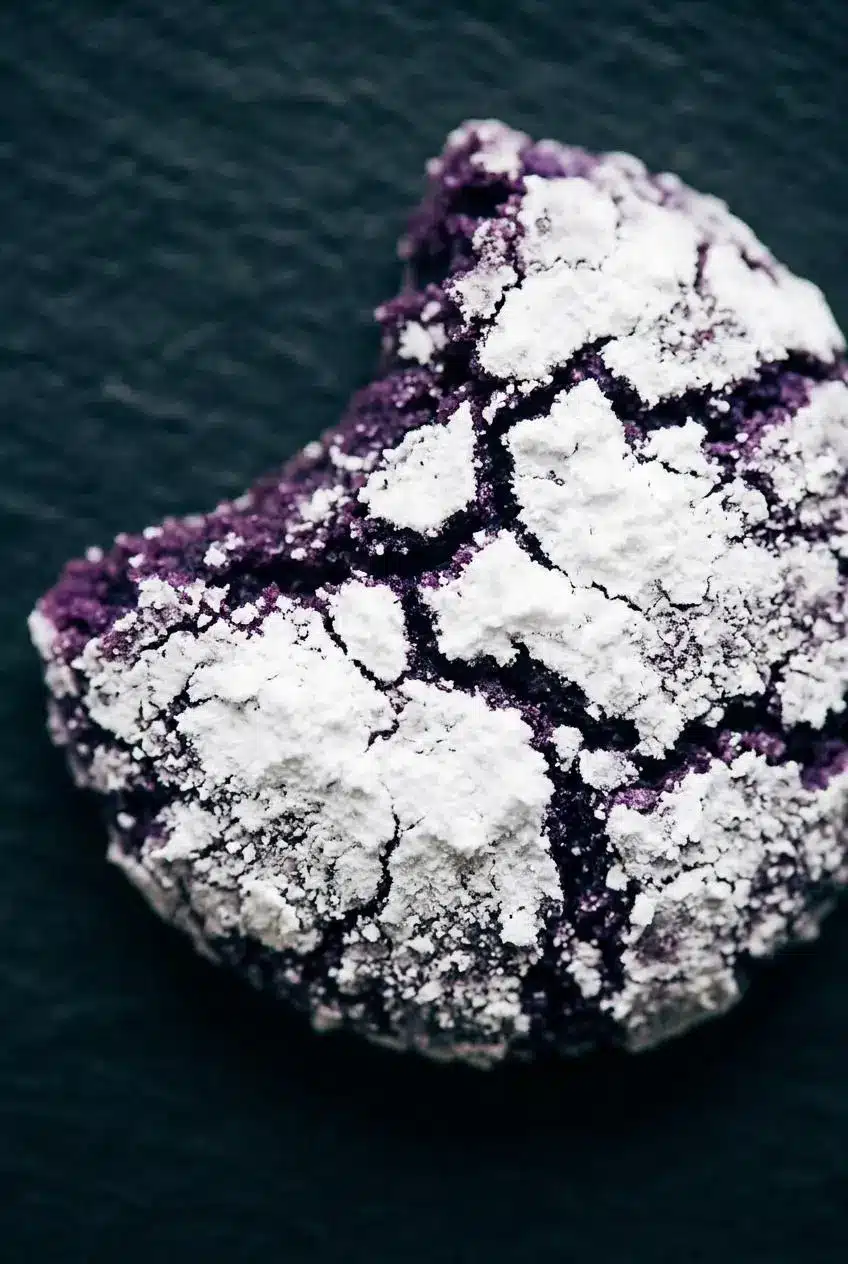
If your powdered sugar ever seems to vanish in the oven, moisture is usually the reason. Crinkle cookies need a dry outer layer that can stay visible while the dough underneath expands.
As the cookies bake, the soft center pushes outward and the surface shell splits. That contrast is what creates the dramatic white cracks over the purple dough. It is similar to what happens in other sugar-coated cookies, including snickerdoodle cookies, but here the color contrast makes the effect even more obvious.
The Dual-Sugar Rolling Technique
This is the most useful trick in the whole recipe if you want a strong crinkle.
- Portion the dough first, then roll each piece lightly in granulated sugar. That first coat acts like a barrier and absorbs some surface moisture.
- After that, coat the dough heavily in confectioners’ sugar. Do not be shy here. A thin dusting tends to melt in.
- Place the coated dough on the sheet pan with enough space around each ball. As the cookies spread and rise, the white shell pulls apart and reveals the purple dough underneath.
- Do not roll warm dough. Warm, sticky dough dissolves the coating faster and gives a weaker crackle.
Humidity can also work against you. On a damp day, move quickly once the dough is coated so the sugar does not start absorbing moisture before the cookies even hit the oven.
How to Make Ube Crinkle Cookies
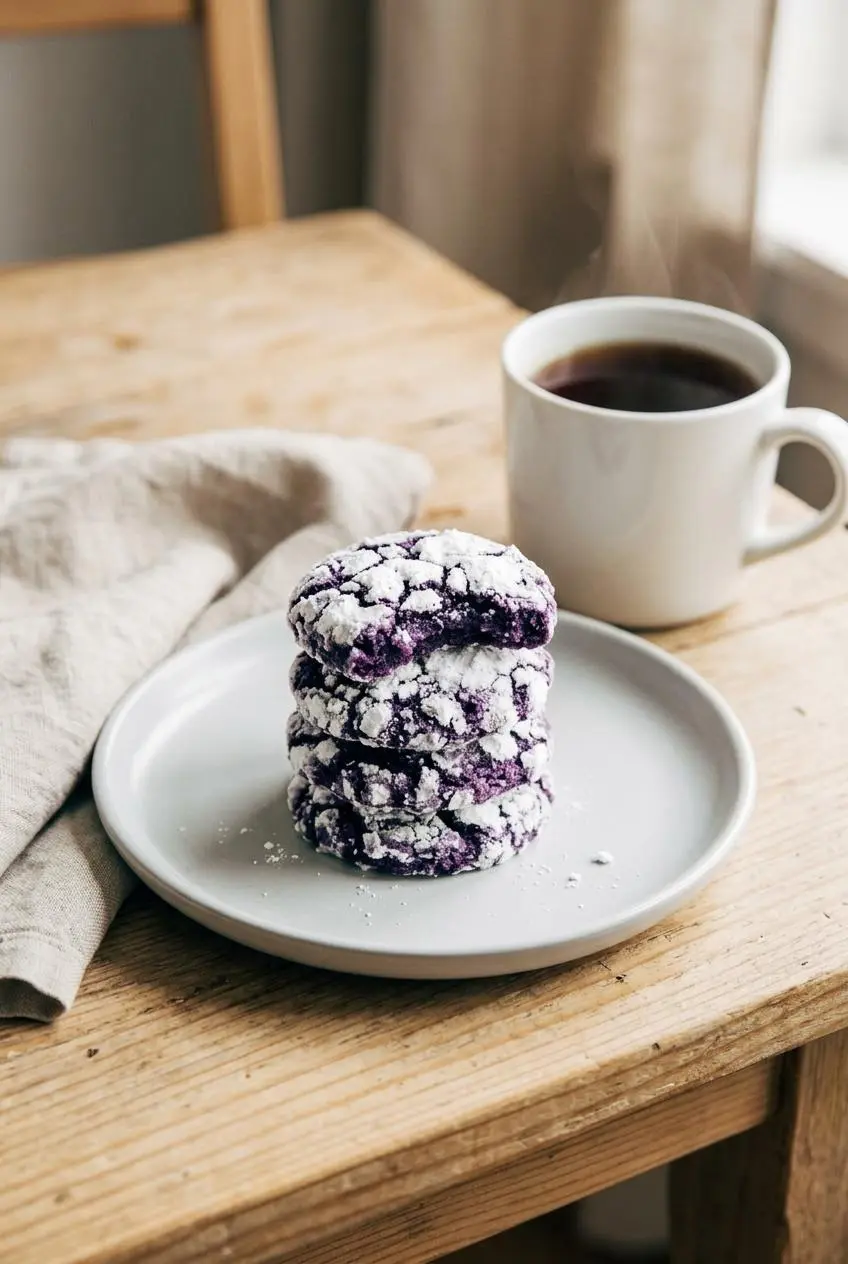
This method is straightforward, but a few details make the difference between dramatic crinkles and flat purple rounds. Focus on proper creaming, gentle mixing, and baking just until the edges set.
Baking Steps
For the Ube Crinkle Cookies
- Set a rack in the center of the oven and heat it to 350°F, then line two half sheet pans with parchment paper.
The centered rack helps the cookies bake evenly, and the parchment keeps the bottoms from sticking or coloring too fast. - Whisk the flour, baking powder, and salt together in a medium bowl.
Mix until the dry ingredients look evenly distributed with no streaks of baking powder left behind. - Beat the butter and granulated sugar in a stand mixer with the paddle on medium-high for 3 to 5 minutes.
Stop when the mixture looks paler, fluffier, and noticeably fuller in volume. - Turn the mixer to low, add the egg, and mix only until it comes together, then scrape the bowl well with a rubber spatula.
The mixture should look smooth and thick, not broken or lumpy around the edges. - Add the ube halaya jam, purple food coloring, ube extract, and vanilla extract with the mixer on low, and mix for 1 to 2 minutes.
Keep going until the dough turns fully purple and the jam is evenly blended in. - Add the dry mixture gradually and mix on low just until combined, then scrape the bowl again and mix 30 seconds more on low.
Stop as soon as no dry pockets remain so the dough stays soft instead of getting tough. - Put the confectioners’ sugar in a shallow bowl and scoop the dough into balls with a 3-Tablespoon cookie scoop, dropping each ball into the sugar.
The dough will feel tacky and soft, which is normal for this style of cookie. - Coat each dough ball generously in the sugar and arrange them at least 3 inches apart on the prepared sheet pans.
The coating should look thick and white all over, with no purple dough peeking through. - Bake one pan at a time for 12 to 15 minutes.
Pull the cookies when the edges feel set but the centers still look soft, because they will finish settling as they cool. - Serve warm or let them cool to room temperature before storing in an airtight container or zip-top bag at room temperature for up to 3 days.
The tops stay prettiest when the cookies are fully cool before they are packed away.
The dough should look plush and sticky before baking, not dry or stiff. Once baked, the edges will feel lightly set if you nudge one with a fingertip or a thin spatula, while the middle still gives a little. That soft center is the goal.
Do not overbake these. A minute too long can turn them from tender and cakey to hard once cool, especially because the sugar coating makes them look more done than they really are.
Creaming the Butter and Sugar
This stage builds the cookie’s structure. Beating the butter and sugar for the full 3 to 5 minutes adds air, which helps the cookies lift in the oven instead of baking dense and squat.
You want the mixture to look lighter in color and almost fluffy enough to cling to the paddle in soft ridges. If it still looks heavy and grainy, give it a little more time before adding the egg.
Folding and Chilling the Dough
Once the flour goes in, keep the mixer on low and stop as soon as the dough comes together. Overmixing develops gluten and can make the finished cookies tougher and less pillowy.
If your kitchen runs warm and the dough feels too sticky to scoop or roll cleanly, chill it for at least 4 hours before portioning. Cold dough holds its shape better, takes the sugar coating more evenly, and spreads less in the oven.
Troubleshooting Flat or Cakey Cookies
When these cookies go off track, the problem is usually dough temperature, leavening, or coating. The fixes are very manageable once you know what to look for.
- Cookies spread too much: the butter may have been too soft, or the dough got too warm. Chill the dough until it feels firmer, then bake one sheet at a time.
- Cookies look pale and puffy without strong cracks: the sugar coating may have been too light. Use a thicker coat of confectioners’ sugar and add the granulated sugar barrier first.
- Cookies came out hard: they likely baked too long. Pull them when the edges are set and the centers still look soft.
- Dough feels impossible to handle: warm weather can do that. Scoop it, chill it, or lightly chill the full bowl before rolling.
- Cookies turned flat and dull: check your baking powder. Drop a pinch into warm water. If it does not bubble actively, replace it.
If you like very soft, rich cookies, looking at the structure of gooey butter cookies can also help you picture how extra moisture and fat change spread and tenderness.
Sugar Barrier Application Checklist
- Make sure the dough is cool enough to scoop without sticking heavily to your hands.
- Roll each portion in granulated sugar first if you want the coating to stay brighter and more defined.
- After that, coat generously in confectioners’ sugar until the dough is fully covered.
- Bake as soon as the dough balls are coated so the sugar does not start dissolving on the surface.
- Use parchment-lined pans and give each cookie enough room to expand and crack cleanly.
Choosing Your Fat: Butter vs Oil
This recipe uses butter for a reason. Butter helps create a softer, cakier, pillowy structure, especially when it is properly creamed with sugar. That trapped air supports lift and gives you a more classic crinkle-cookie shape.
Oil behaves differently. It usually makes cookies flatter, denser, and chewier because it cannot hold air the way creamed butter can. If you want that richer, fudgier direction, save it for a variation rather than swapping it into the main recipe without other changes.
Working with Fresh or Frozen Grated Ube
If you want to use real grated ube instead of jarred halaya, treat it as a moisture issue first and a flavor issue second. Fresh or thawed grated ube usually holds more loose water than jam, so adding it straight to the dough can flatten the cookies.
Cook and cool it first if needed, then squeeze or strain off excess moisture before mixing it in. You still want a thick, concentrated purple yam component rather than a wet puree. The flavor can be wonderful, but the dough should stay tacky and scoopable, not loose.
Chewy vs Cakey: Texture Adjustments
The base cookie is soft and cakey. If you want something denser and chewier, you can nudge the formula in that direction without changing the identity of the cookie.
- For a fudgier variation, reduce the flour to 1.75 cups and reduce the baking powder to 1 teaspoon. The center will bake up denser and a little chewier, closer to the style people expect from fudgy brownie cookies.
- For a richer tang, replace half the butter with cream cheese. That gives the cookies a softer, slightly chewier texture and a subtle tang that pairs well with ube.
- If you skip the ube jam, increase the ube extract to 1.5 teaspoons. The flavor still reads clearly as ube, but the texture becomes a bit lighter and more sugar-cookie-like.
Dietary Swaps and Gluten-Free Options
A cup-for-cup gluten-free flour blend can work here, but choose one designed for cookies rather than bread-like baking. The best blends for this style usually give enough structure to hold the cracks without making the centers chalky.
Watch the dough texture closely. Gluten-free dough can spread more easily or bake up more fragile, so chilling is especially helpful. If the dough feels too loose to coat well, give it more time in the refrigerator before scooping.
Storing and Make-Ahead Instructions
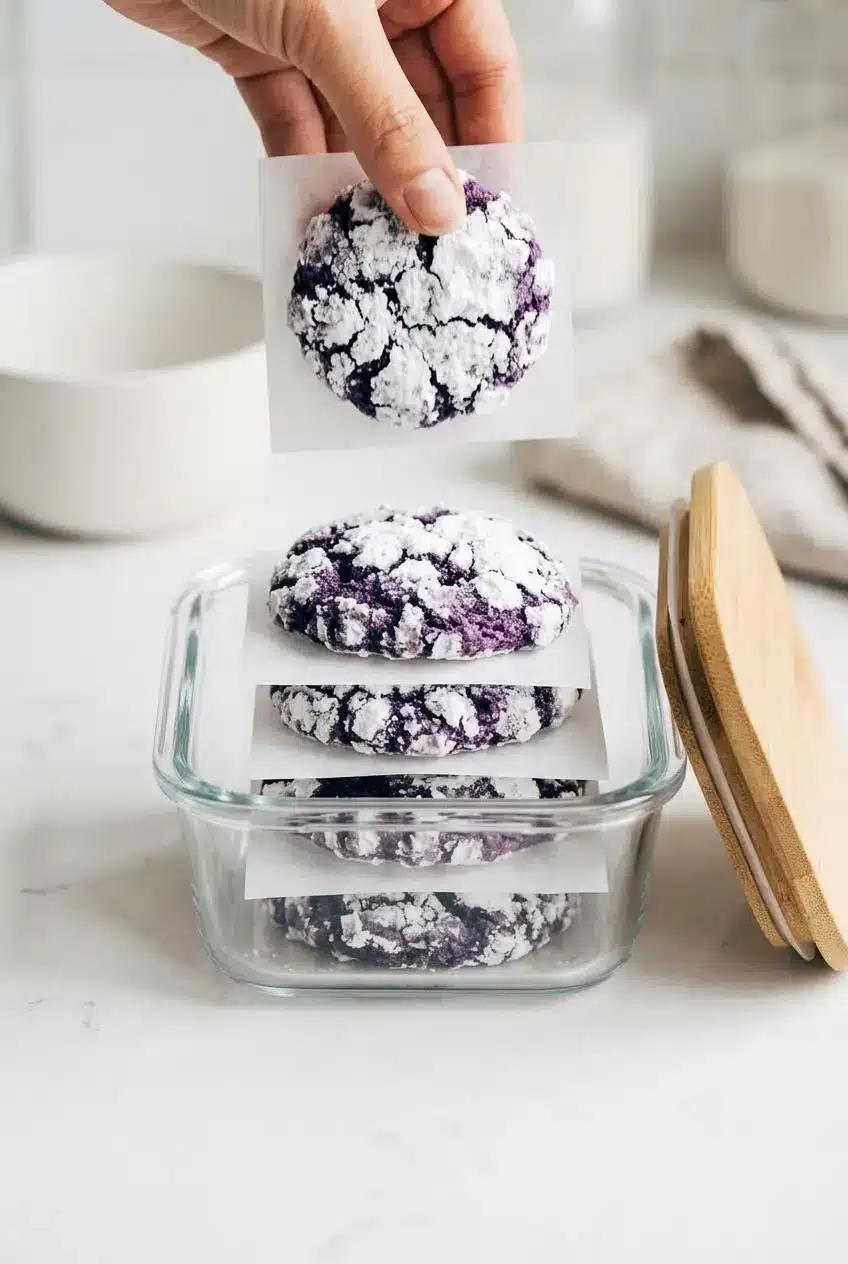
These cookies keep best once fully cool and packed away from humidity. Moisture is the main enemy of the powdered sugar finish, so airtight storage matters as much for appearance as it does for texture.
The recipe’s storage note is straightforward: keep the baked cookies in an airtight container or zip-top bag at room temperature for up to 3 days. For make-ahead baking, you can mix the dough in advance and chill it until it is easier to scoop and coat.
Storing with Parchment Barriers
If you stack the cookies, place sheets of parchment paper between the layers. That small step helps keep the powdered sugar from sticking to the cookie above it and slows down surface moisture from softening the white finish.
Try not to pack the cookies while they are still warm. Warmth creates condensation, and condensation is exactly what makes a pretty crinkle top look patchy later.
Conclusion
These ube crinkles stand out for their bright color, soft cakey center, and that dramatic crackled sugar top. The mix of ube halaya and extract gives them real depth instead of just purple color.
If you remember one thing, make it the sugar barrier trick and avoid overbaking. Bake them just until the edges set, and you will get the tender texture that makes this cookie worth repeating.
Frequently Asked Questions
Can I make these cookies without ube jam?
Yes. You can leave out the jam and increase the ube extract to 1.5 teaspoons. The cookies will still have ube flavor and purple color, but the texture will be a little lighter and less cakey. Think of it as closer to a soft sugar cookie than a plush jam-enriched crinkle.
Why did the powdered sugar dissolve on my cookies?
The dough likely had too much surface moisture, or the coating was too light. Roll the dough in granulated sugar first, then coat it heavily in confectioners’ sugar. Also make sure the dough is not warm when you coat it, because warmth melts the finish faster.
Can I freeze the ube cookie dough?
Yes. Scoop the dough into balls, freeze them uncoated on a tray, then transfer them to a freezer bag for up to 3 months. Roll them in sugar right before baking so the coating stays dry and visible. If the dough softens while you work, chill it again before coating.
What is the difference between ube and purple sweet potato?
Ube is a purple yam with a mild vanilla-nutty flavor and a baking profile that suits desserts like this. Purple sweet potato tastes denser and more potato-like, with a different moisture balance. That difference affects both flavor and texture, so they are not interchangeable here without adjustments.
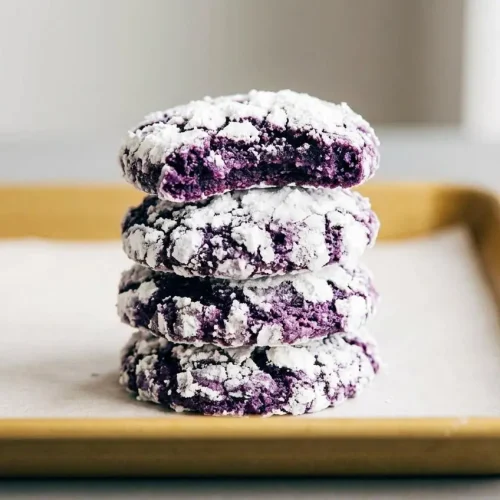
Ube Crinkle Cookies Recipe

Equipment
- Stand mixer with paddle attachment
- 3-Tablespoon cookie dough scoop
- Half sheet pans
- Parchment Paper
Ingredients
For the Ube Crinkle Cookies
- 1 3/4 cups all-purpose flour 7.85 ounces or 223 grams
- 1 teaspoon baking powder
- 1/4 teaspoon kosher salt
- 1 cup granulated sugar 7 ounces or 198 grams
- 1/2 cup unsalted butter at room temperature, 4 ounces or 113 grams
- 1 large egg at room temperature
- 1/2 cup ube halaya jam at room temperature, 4 ounces or 113 grams
- 1 teaspoon purple food coloring
- 1 teaspoon ube extract
- 1/2 teaspoon pure vanilla extract
- 1 cup confectioners’ sugar 4 ounces or 113 grams
Instructions
For the Ube Crinkle Cookies
- Position a rack in the center of the oven and preheat the oven to 350°F. Line two half sheet pans with parchment paper.
- In a medium bowl, whisk together the flour, baking powder, and salt.
- In the bowl of a stand mixer fitted with the paddle attachment, combine the sugar and butter. Beat on medium-high until light, fluffy, and doubled in volume, 3 to 5 minutes.
- Reduce the mixer to low and add the egg; beat until just combined. Use a rubber spatula to scrape down the bottom and sides of the bowl.
- With the mixer on low, add the ube halaya jam, purple food coloring, ube extract, and vanilla extract, beating until combined and completely purple, 1 to 2 minutes.
- Gradually add the dry ingredients and beat until just combined. Scrape down the bottom and sides of the bowl once more, and beat on low for an additional 30 seconds.
- Place the confectioners’ sugar in a medium, shallow bowl. Use a 3-Tablespoon cookie dough scoop to portion the cookie dough into balls, dropping them directly into the bowl with confectioners’ sugar.
- Toss until the cookie dough balls are completely and generously coated. Place the cookie dough balls at least 3 inches apart on the prepared sheet pans.
- Bake one pan at a time for 12 to 15 minutes, or until the edges have set but the centers are still soft.
- Serve warm, or at room temperature. The cookies can be stored in an airtight container or zip-top bag at room temperature for up to 3 days.