Tuscan white bean soup is a rustic Italian-style vegetable soup with cannellini beans, aromatics, greens, and seasoned broth, naturally thickened by blending part of the beans.
This tuscan white bean soup starts with garlic, olive oil, and earthy herbs gently warming in the pot. The result is deeply savory, velvety, and filling without heavy cream or flour.
Sweet carrots, tender beans, and kale give each bowl plenty of character. The partial-blend trick is where the cozy texture happens.
Keep the heat moderate while the vegetables cook so the garlic stays fragrant rather than turning bitter.
Essential Ingredients for Tuscan White Bean Soup
Each ingredient supports the soup’s flavor, body, color, and balance, from the silky beans and savory broth to the aromatic vegetables, herbs, and bright kale.
- 3 15 ounce cans cannellini beans (drained and rinsed)
- 1 yellow onion (finely chopped)
- 4 cloves garlic (minced)
- 2 tablespoons olive oil
- 2 large carrots (peeled and chopped)
- 1 stalk celery (diced)
- 1/3 cup white wine (I used pinot grigio)
- 2 cups chopped kale (stems removed, finely chopped)
- 2 1/2 – 4 cups vegetable or chicken broth
- 1 tablespoon tomato paste
- 1 teaspoon salt (or to taste)
- 1/4 teaspoon black pepper (or to taste)
- 1/4 teaspoon red pepper flakes (omit if you don’t like spice)
- 1/4 teaspoon Italian seasoning
- 2 bay leaves
- 1 teaspoon dried thyme
- 1/2 teaspoon dried oregano
Olive oil carries the flavor of the onion and garlic through the whole pot. Tomato paste gives the broth a darker, savory edge, while vegetable or chicken broth provides the liquid base and lets you control the final thickness. Draining and rinsing the beans removes excess canning liquid, so the broth tastes cleaner and is easier to season.
I rinse canned beans thoroughly until the water runs clear because it removes excess starch and helps the finished broth stay polished rather than murky.
Choosing the Right White Beans
Cannellini beans are the best fit here because their thin skins and creamy centers blend into a smooth, velvety puree while leaving the unblended beans tender but intact. They give the soup its signature plush texture without dairy.
Great northern beans work well when you prefer a slightly firmer bite. Navy beans are smaller and can make the soup feel thicker and more rustic, though they break down more quickly. Butter beans are another good option for a particularly soft, rich texture.
If using dried cannellini beans, cook them fully until tender before adding them to the soup. They should crush easily between your fingers, with no firm center, before you measure them for this recipe.
Building the Sofrito Flavor Base
Onion, carrot, and celery form the soup’s soffritto, the aromatic foundation that makes the broth taste rounded rather than flat. Cook them slowly in olive oil until the onion is translucent and the carrots smell sweet, with a little golden color around the edges.
That gentle browning matters. It develops the vegetables’ natural sweetness, which balances the earthy beans, tomato paste, and peppery herbs. A Dutch oven works especially well because it holds steady heat and leaves flavorful browned bits on the bottom of the pot.
Selecting Fresh Versus Dried Herbs
Dried thyme, oregano, Italian seasoning, and bay leaves bring a warm herb flavor that has time to infuse the broth as it simmers. When the herbs hit the warm oil and liquid, they develop a glossy sheen and a fuller aroma.
Fresh herbs can be used as an optional finish, but the dried herbs listed above provide the core flavor. Remove both bay leaves before blending so their woody texture does not end up in the soup.
How to Make Tuscan White Bean Soup Step by Step
The method moves from a gently browned vegetable base to a light simmer, then finishes with blended beans and bright kale. Give the aromatics time early on, and the whole pot tastes more layered later.
- Warm the olive oil in a large pot or Dutch oven, then cook the finely chopped onion until it begins to soften and take on light golden edges.
The onion should smell sweet and mellow rather than sharp. - Add the garlic, celery, and carrots, then cook for about 10 minutes while stirring often.
The vegetables should soften, smell sweeter, and show slight browning without letting the garlic darken. - Pour in the white wine and scrape the bottom of the pot as it cooks for about 5 minutes.
Gentle steam will rise as most of the wine evaporates and the browned bits dissolve into the vegetables. - Stir in the cannellini beans, broth, tomato paste, salt, black pepper, red pepper flakes, Italian seasoning, bay leaves, dried thyme, and dried oregano.
The tomato paste should disperse completely so the broth looks evenly seasoned. - Bring the soup to a boil, cover the pot, reduce the heat to low, and simmer for 15 minutes.
Keep the liquid at a light bubble so the beans absorb the herbal flavor without breaking apart. - Remove the bay leaves, then carefully blend about 2 1/2 – 3 cups of the soup until smooth.
The blended portion should look creamy and thick, with no visible bean pieces. - Return the puree to the pot and stir until it disappears into the broth, adding more broth if the soup feels thicker than you like.
The finished base should coat a spoon lightly while still flowing easily around the beans. - Stir in the chopped kale and simmer for a few minutes, then taste and adjust the seasoning as desired.
The kale should become tender while staying bright green, and a squeeze of lemon juice can lift the rich bean flavor. - Ladle the soup into bowls and serve while hot.
The beans should be tender, the broth velvety, and the kale soft enough to eat easily.
Texture and Pureeing Secrets
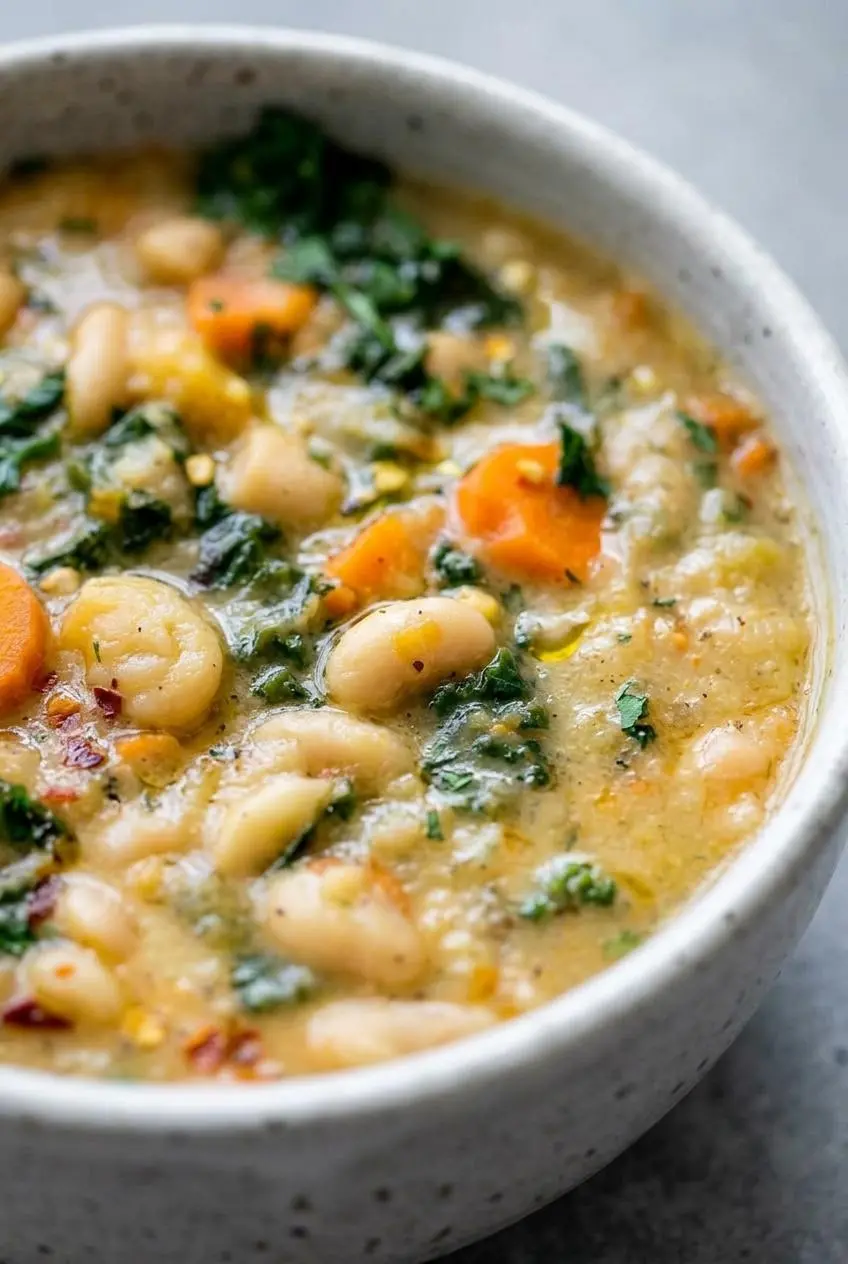
Partial blending gives this soup its creamy body without cream, milk, flour, or cornstarch. As the simmered cannellini beans are pureed, their natural starches thicken the broth and create a smooth, cohesive texture.
For the best balance, blend about 2 1/2 cups of soup rather than the entire pot. You want enough puree to make the broth velvety, while keeping plenty of whole beans for a satisfying bite. Blending every bean can make the soup feel pasty and erase the appealing contrast between creamy broth and intact beans.
- Countertop blender: Transfer the hot soup in batches, leave room for steam to escape, and loosely cover the lid with a kitchen towel. Blend until smooth, then return it to the pot.
- Immersion blender: Pulse directly in the pot for more control. This is handy if you prefer a slightly textured broth with visible bits of carrot and bean.
- Potato masher: Mash the beans against the side of the pot for a chunkier, rustic result. It will thicken the soup, though less smoothly than a blender.
After blending, avoid a hard boil. Stir over low heat instead, especially as the soup thickens, so the starch-rich base does not catch on the bottom of the pot.
Delicious Recipe Variations
The main soup is satisfying as written, but optional additions can take it in a heartier or brighter direction without changing the core method.
Adding Italian Sausage for a Hearty Dinner
For a meatier bowl, brown mild or spicy Italian sausage in the Dutch oven before cooking the onion. Drain off excess grease, then continue with the aromatics and stir the cooked sausage back in during the final simmer. It adds savory richness and turns the soup into a more substantial dinner.
If you enjoy that combination, this sausage white bean soup is another cozy option for a bean-forward meal.
Sun-Dried Tomato and Lemon Brightness
Stir in chopped oil-packed sun-dried tomatoes for concentrated tang and a deeper tomato flavor. Fresh lemon zest and a pinch of crushed fennel seed add a fragrant Mediterranean lift that works especially well with the creamy beans and kale.
Finish with lemon juice only after tasting. The acid should sharpen the soup’s flavor, not make it taste sour.
Slow Cooker and Instant Pot Adaptations
- Slow cooker: Cook the onion, carrot, celery, garlic, and wine on the stovetop first for the fullest flavor. Transfer everything except the kale, cook until the vegetables are tender, blend part of the soup, then add kale near the end.
- Instant Pot: Use the sauté setting for the aromatics and wine, then cook the soup until the flavors have combined and the vegetables are tender. Remove the bay leaves, blend a portion, and wilt the kale after pressure cooking.
Serving Suggestions and Pairings
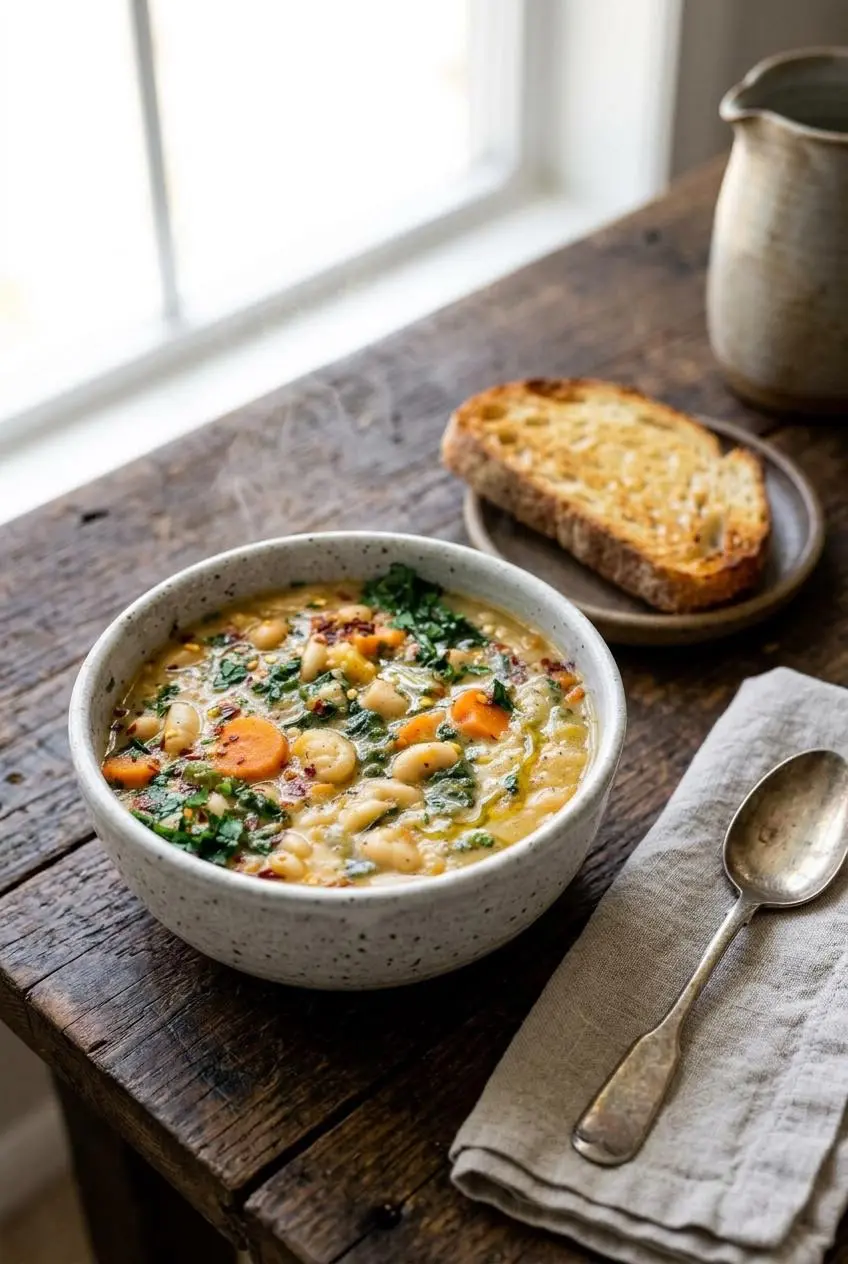
This soup is made for bread that can catch every bit of creamy broth. Serve it with warm garlic focaccia, toasted sourdough, or crusty country bread rubbed lightly with raw garlic.
- Finish each bowl with a drizzle of extra virgin olive oil for peppery richness.
- Add freshly grated Parmesan cheese if you want a salty, nutty finish.
- Use cracked black pepper for extra warmth and aroma.
- Set out marinated white beans with bread as a bright, tangy side for a fuller Italian-style meal.
Troubleshooting Common Soup Issues
A few small adjustments can rescue the broth without changing its character. Taste after blending, since the bean puree can soften the impact of salt and herbs.
- The soup tastes flat: The beans may need acidity to balance their richness. Stir in a small squeeze of fresh lemon juice or a splash of red wine vinegar, then taste again.
- The soup is too thick: Beans continue releasing starch as the soup sits. Warm some broth separately and stir it in gradually until the texture loosens.
- The broth tastes too salty: Add unsalted broth or more rinsed, unsalted beans to dilute the seasoning. Do not reduce the soup further, since that concentrates the salt.
- The garlic tastes harsh: It likely browned too quickly. Keep the heat moderate and add the liquid before the garlic turns dark.
- The kale turns dull or bitter: It cooked too long. Add it only near the end, just long enough to wilt and soften.
- The texture feels grainy: The blended portion may need more time in the blender. Blend until fully smooth, then stir it back into the pot over low heat.
Storing and Reheating Leftovers

Cool leftover soup before transferring it to airtight containers and refrigerate it promptly. The beans absorb broth as the soup rests, so the texture will naturally become thicker after chilling.
Reheat gently over medium-low heat, stirring often so the starchy base warms evenly. Add a splash of broth or water as needed to return the soup to its original spoonable consistency. Reheat only the portion you plan to serve when possible, which helps the kale keep a better texture.
If you want to prepare components ahead, chop the onion, carrots, celery, garlic, and kale separately, then keep them chilled until cooking. Add the kale only at the end so it stays green and tender.
Conclusion
This comforting soup turns cannellini beans, vegetables, herbs, and broth into a bowl with deep rustic flavor and a naturally velvety finish. The slow-cooked soffritto and partial bean puree do the heavy lifting.
Ladle it up with crusty bread, a drizzle of rich olive oil, and plenty of cracked pepper. A warm bowl like this makes dinner feel settled.
Frequently Asked Questions
What Makes Tuscan White Bean Soup Thick and Creamy?
Pureeing about 2 1/2 – 3 cups of the simmered soup releases starch from the cannellini beans. Stirring that puree back into the pot thickens the broth naturally. Keeping some beans whole gives the soup a creamy texture without making it uniform or pasty.
Which White Bean Variety Works Best for This Recipe?
Cannellini beans are ideal because they have a smooth skin and creamy interior. Great northern beans work well when you prefer a slightly firmer bean. Navy beans can be used, though they are smaller and tend to break down more quickly. Butter beans are another good choice for a softer, richer texture.
Can I Make This Soup Ahead of Time or Freeze It?
You can prepare the vegetables ahead and keep them chilled until you are ready to cook. Store cooked leftovers in airtight containers after the soup has cooled. The soup thickens as it rests, so loosen it with broth or water while reheating.
What Can I Substitute for White Wine in the Broth?
Use the same amount of vegetable or chicken broth in place of the wine. Add a small squeeze of fresh lemon juice or a splash of white wine vinegar after cooking to bring back the wine’s bright acidity. Taste before adding more acid so the broth stays balanced.

Tuscan White Bean Soup

Equipment
- Large pot or Dutch oven
- Blender
Ingredients
- 3 cans cannellini beans 15 ounce cans, drained and rinsed
- 1 yellow onion finely chopped
- 4 cloves garlic minced
- 2 tablespoons olive oil
- 2 large carrots peeled and chopped
- 1 stalk celery diced
- 1/3 cup white wine pinot grigio recommended
- 2 cups chopped kale stems removed, finely chopped
- 2 1/2 – 4 cups vegetable or chicken broth
- 1 tablespoon tomato paste
- 1 teaspoon salt or to taste
- 1/4 teaspoon black pepper or to taste
- 1/4 teaspoon red pepper flakes omit if you do not like spice
- 1/4 teaspoon Italian seasoning
- 2 bay leaves
- 1 teaspoon dried thyme
- 1/2 teaspoon dried oregano
Instructions
- Warm the olive oil in a large pot or Dutch oven, then cook the finely chopped onion until it begins to soften and take on light golden edges. The onion should smell sweet and mellow rather than sharp.
- Add the garlic, celery, and carrots, then cook for about 10 minutes while stirring often. The vegetables should soften, smell sweeter, and show slight browning without letting the garlic darken.
- Pour in the white wine and scrape the bottom of the pot as it cooks for about 5 minutes. Gentle steam will rise as most of the wine evaporates and the browned bits dissolve into the vegetables.
- Stir in the cannellini beans, broth, tomato paste, salt, black pepper, red pepper flakes, Italian seasoning, bay leaves, dried thyme, and dried oregano. The tomato paste should disperse completely so the broth looks evenly seasoned.
- Bring the soup to a boil, cover the pot, reduce the heat to low, and simmer for 15 minutes. Keep the liquid at a light bubble so the beans absorb the herbal flavor without breaking apart.
- Remove the bay leaves, then carefully blend about 2 1/2 – 3 cups of the soup until smooth. The blended portion should look creamy and thick, with no visible bean pieces.
- Return the puree to the pot and stir until it disappears into the broth, adding more broth if the soup feels thicker than you like. The finished base should coat a spoon lightly while still flowing easily around the beans.
- Stir in the chopped kale and simmer for a few minutes, then taste and adjust the seasoning as desired. The kale should become tender while staying bright green, and a squeeze of lemon juice can lift the rich bean flavor.
- Ladle the soup into bowls and serve while hot. The beans should be tender, the broth velvety, and the kale soft enough to eat easily.