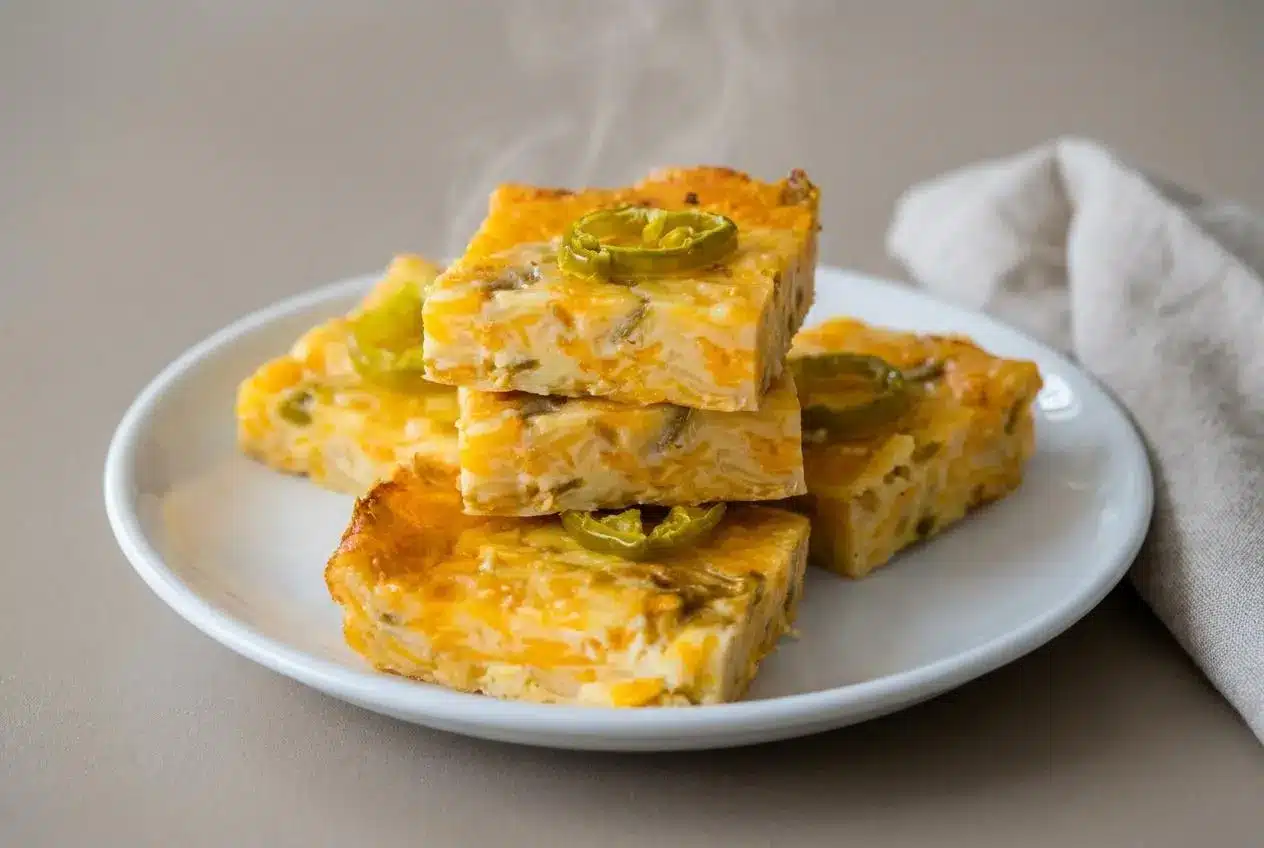
Texas Fudge is a savory Tex-Mex appetizer made with eggs, evaporated milk, flour, shredded cheese, and green chiles, then baked until it cuts into dense, quiche-like squares.
There is no chocolate or sugar here. Instead, you get a rich cheese bake with a gentle custard texture, roasted chile aroma, and just enough heat to keep each bite interesting. The key is in the rest.
Shred the cheese from blocks before you begin, and drain the green chiles thoroughly so the finished squares stay creamy rather than watery.
What Is Texas Fudge?
Texas Fudge is a regional Tex-Mex favorite that sits somewhere between a crustless quiche and a cheesy casserole. It is baked in a dish, cut into squares, and served warm as a savory appetizer rather than a sweet dessert.
The name comes from the texture. Once the eggs, evaporated milk, flour, and cheese set together, the bake becomes rich, dense, and sliceable, much like the firm squares associated with traditional fudge. The comparison stops there: this version contains no chocolate and no sugar.
Unlike a soufflé, Texas Fudge is not meant to puff dramatically and collapse. Unlike a standard quiche, it has no crust and leans heavily into melted cheese. The ideal center should hold its shape while staying soft enough to offer a slight, gentle jiggle when the pan comes out of the oven.
Key Ingredients and Substitutions
Every ingredient has a job here: the eggs and flour provide structure, evaporated milk supplies moisture and richness, the cheeses create the creamy body, and green chiles bring savory heat and color.
- 2 large eggs
- 1 (5 oz) can evaporated milk
- 1/2 teaspoon garlic powder
- 1/2 teaspoon onion powder
- 1/2 teaspoon kosher salt
- 1/2 cup all-purpose flour
- 2 cups sharp cheddar cheese, grated
- 2 cups Monterey Jack cheese, grated
- 1 (4 oz) can diced green chiles, drained
- Sliced jalapeños, for topping
Evaporated milk: Its concentrated dairy flavor gives the custard a thick, dense finish without adding the extra water found in regular milk. Swapping in regular milk directly can leave the bake loose and soggy, so keep the evaporated milk for the intended texture.
Cheese: Sharp cheddar brings a deeper, tangy flavor, while Monterey Jack melts smoothly and softens the cheddar’s edge. Shred both cheeses from blocks. Bagged pre-shredded cheese often contains anti-caking starches that can make the melt less creamy and may encourage grease separation.
Chiles and jalapeños: The canned diced green chiles flavor the custard throughout. The sliced jalapeños on top add a brighter pepper bite. For less heat, leave off the jalapeño topping or use a mild pepper option such as sweet diced bell pepper as an optional variation.
I always grate the cheese while it is cold, because firm shreds fall into the batter more evenly and melt with a smoother finish.
How to Make Texas Fudge
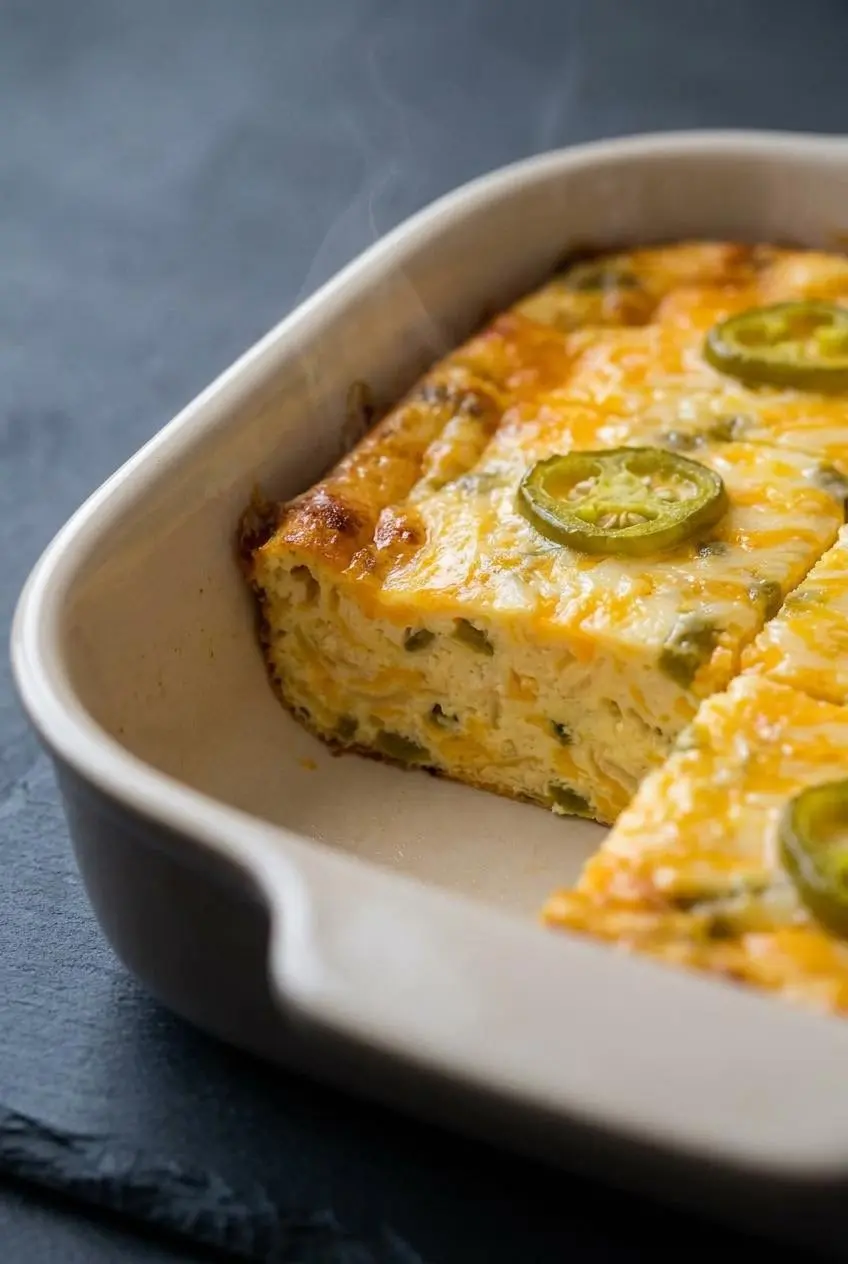
The batter comes together quickly, but the order matters. Mix the liquid ingredients and flour until smooth before adding the cheese, then bake just until the edges color and the center settles.
- Heat the oven to 350°F and coat a 7×11-inch baking dish lightly with butter or nonstick spray.
The prepared dish should have an even film of fat so the set cheese squares release more easily. - Whisk the eggs, evaporated milk, garlic powder, onion powder, and kosher salt in a medium bowl, then work in the flour until the mixture looks uniform.
Keep whisking until no dry pockets or flour lumps remain before adding anything else. - Fold the grated cheddar, Monterey Jack, and drained green chiles into the smooth batter, then spread it in the prepared dish and arrange the sliced jalapeños over the top.
Bake for 25 to 30 minutes, until the edges are lightly browned, the cheese smells rich and savory, and the center has only a small gentle jiggle. - Set the hot dish aside for 5 to 10 minutes before cutting it into squares.
The brief rest lets the custard firm up, so the pieces stay together instead of slumping onto the serving plate.
Start checking near the shorter end of the baking range. The center should not look liquid, but baking until the entire surface is stiff can produce dry, crumbly edges. The aroma of baked cheese and green chiles is another helpful cue that the dish is close.
Troubleshooting Common Mistakes
Most texture problems come from cheese choice, flour mixing, or cutting too soon. These small adjustments protect the creamy, sliceable structure.
- Greasy surface: Pre-shredded cheese or very aggressive baking can cause the fat to separate. Use freshly grated block cheese and remove the dish when the edges are lightly browned and the center has just set.
- Lumpy batter: Cheese added before the flour is fully blended can hide dry pockets. Whisk the flour into the egg and milk mixture until smooth, then fold in the cheese and chiles.
- Loose squares: Cutting immediately can make even a properly baked custard fall apart. Give the pan the full 5 to 10 minute rest before slicing.
- Dry or crumbly edges: The bake has likely stayed in the oven too long. Look for light browning rather than a deeply colored top, and begin checking as the 25-minute mark approaches.
- Watery texture: Excess liquid from the chiles can thin the batter. Drain the canned green chiles well before folding them into the cheese mixture.
Storage, Make-Ahead, and Reheating
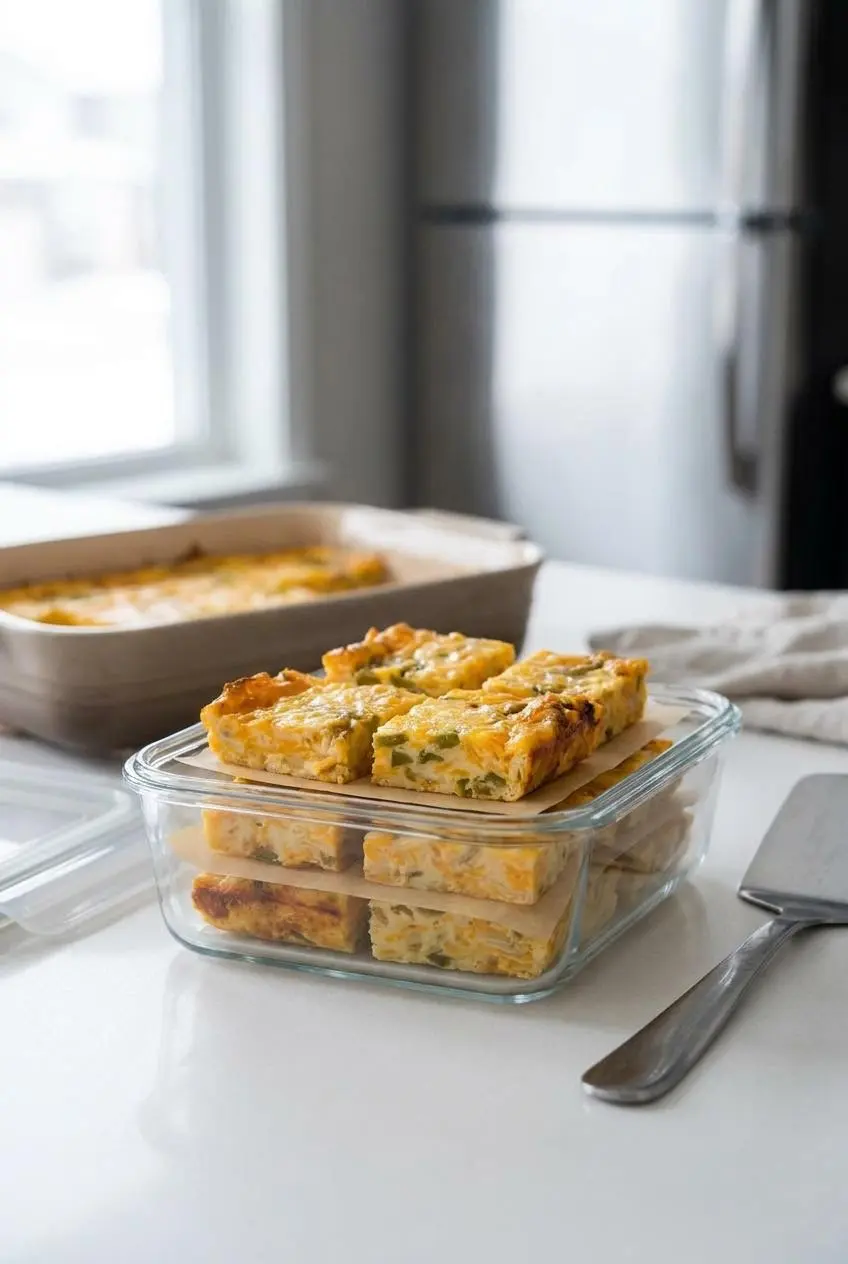
For party preparation, Texas Fudge can be baked ahead, cooled completely, and kept covered and chilled until it is time to serve. Cooling before covering helps prevent trapped steam from softening the surface.
Store leftover squares in an airtight container in the refrigerator. Keep them in a single layer when possible, or place parchment between layers so the cheese topping does not stick.
For the best texture, reheat portions gently in the oven rather than warming a large batch aggressively. A covered baking dish helps prevent the edges from drying, while a short uncovered finish can bring back some of the roasted cheese aroma. Serve once the squares are warm throughout.
Individual portions are easier to handle than one large slab when preparing food for a gathering. Cut the cooled bake cleanly, arrange the squares in a heatproof dish, and warm only what you expect to serve.
Delicious Variations and Serving Ideas
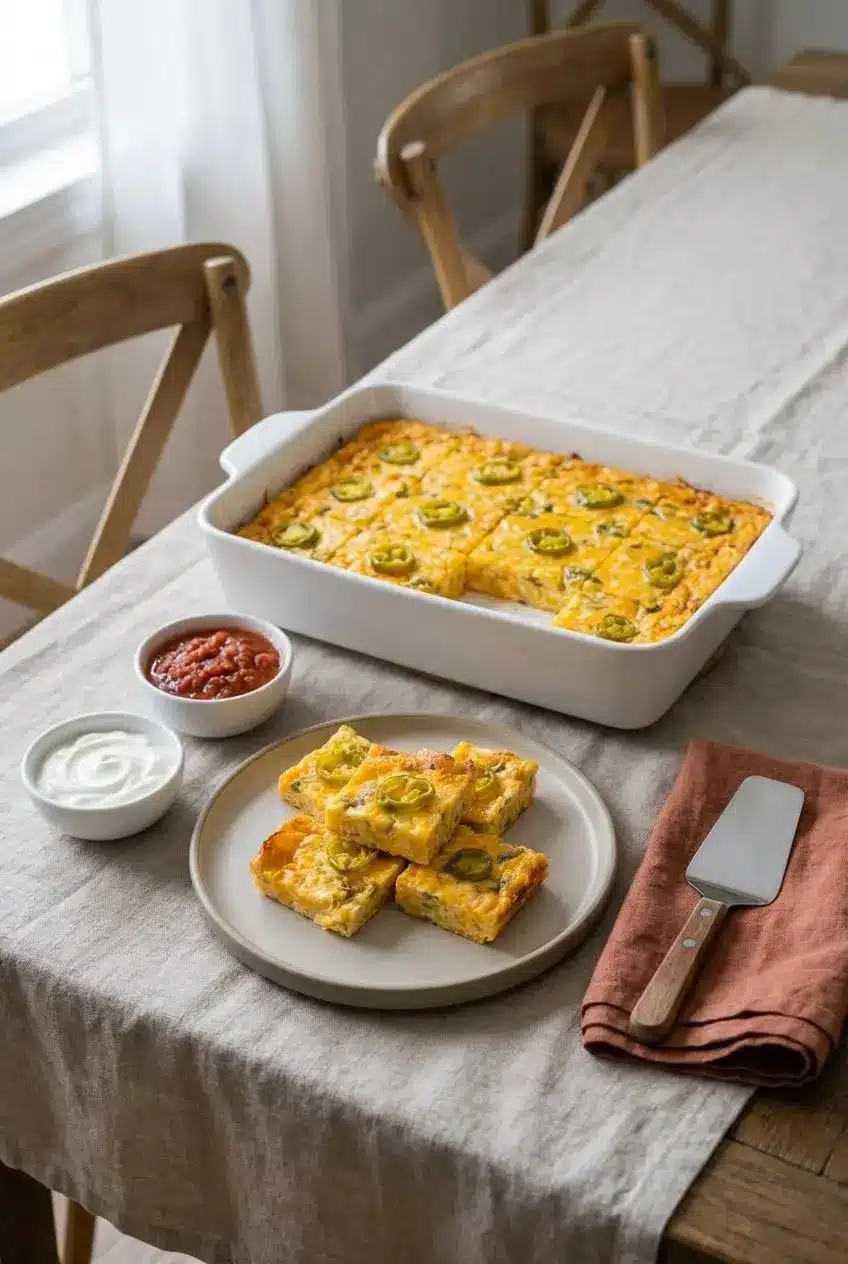
Cut Texas Fudge into small squares for a party platter, especially when guests will be eating it alongside other appetizers. Salsa and sour cream balance the rich cheese, while a bright dip such as fresh mango salsa adds cool fruitiness against the green chiles.
For brunch, serve larger squares beside hash browns or fresh fruit. The bake is rich enough to anchor the plate, while fresh or crisp sides keep the meal from feeling too heavy.
Bacon Jalapeño Texas Fudge
For an optional smoky variation, scatter crispy crumbled bacon and sliced jalapeños over the top before serving. Add a light drizzle of hot honey immediately after the resting period for a sweet heat finish that contrasts with the salty cheese.
Cook the bacon until it is genuinely crisp, then drain it well before crumbling. Soft or greasy bacon can make the topping feel heavy and may soften as it sits on the warm custard.
Mild Green Chile Fudge
To keep the flavor savory while lowering the heat, use mild canned green chiles and replace the fresh jalapeño topping with sweet diced bell peppers. The peppers add color and a gentle crunch without changing the main cheese-and-custard character.
If you enjoy pepper flavor but not much heat, remove the jalapeño seeds before slicing or simply leave the topping off. The canned green chiles still provide the signature Southwestern character inside the bake.
Conclusion
Texas Fudge is a rich, cheesy Tex-Mex appetizer with the satisfying structure of a quiche and the convenient shape of a party square. Freshly shredded cheese, well-drained chiles, and a smooth flour batter give it its best texture.
Let the pan rest before slicing, then serve the squares warm with bright salsa or cool sour cream. That short pause is what turns a bubbling cheese bake into tidy, shareable pieces.
Frequently Asked Questions
Why Is This Savory Cheese Dish Called Texas Fudge?
It is called fudge because the finished bake is rich, dense, and easy to cut into squares. The name describes the texture and shape, not the flavor, so there is no chocolate or sugar in the dish.
Can I Make Texas Fudge Ahead of Time?
Yes. Bake it ahead, let it cool fully, cover it, and keep it chilled until serving. Warm it gently in the oven so the squares retain their structure, then cut or serve once heated through.
Can I Substitute Regular Milk for Evaporated Milk?
It is best not to substitute regular milk directly. Regular milk adds more water to the mixture, which can leave the custard loose and prevent the dense, sliceable texture that defines Texas Fudge.
How Do I Store and Reheat Leftover Texas Fudge?
Cool the squares, place them in an airtight container, and keep them chilled. Reheat them gently in a covered oven-safe dish rather than using strong heat, which can dry the edges or separate the cheese.

Texas Fudge

Equipment
- 7×11-inch baking dish
- Medium mixing bowl
- Whisk
- Box grater
Ingredients
- 2 large eggs
- 1 can evaporated milk 5 oz
- 1/2 teaspoon garlic powder
- 1/2 teaspoon onion powder
- 1/2 teaspoon kosher salt
- 1/2 cup all-purpose flour
- 2 cups sharp cheddar cheese grated
- 2 cups Monterey Jack cheese grated
- 1 can diced green chiles 4 oz, drained
- Sliced jalapeños for topping
Instructions
- Heat the oven to 350°F and coat a 7×11-inch baking dish lightly with butter or nonstick spray. The prepared dish should have an even film of fat so the set cheese squares release more easily.
- Whisk the eggs, evaporated milk, garlic powder, onion powder, and kosher salt in a medium bowl, then work in the flour until the mixture looks uniform. Keep whisking until no dry pockets or flour lumps remain before adding anything else.
- Fold the grated cheddar, Monterey Jack, and drained green chiles into the smooth batter, then spread it in the prepared dish and arrange the sliced jalapeños over the top. Bake for 25 to 30 minutes, until the edges are lightly browned, the cheese smells rich and savory, and the center has only a small gentle jiggle.
- Set the hot dish aside for 5 to 10 minutes before cutting it into squares. The brief rest lets the custard firm up, so the pieces stay together instead of slumping onto the serving plate.