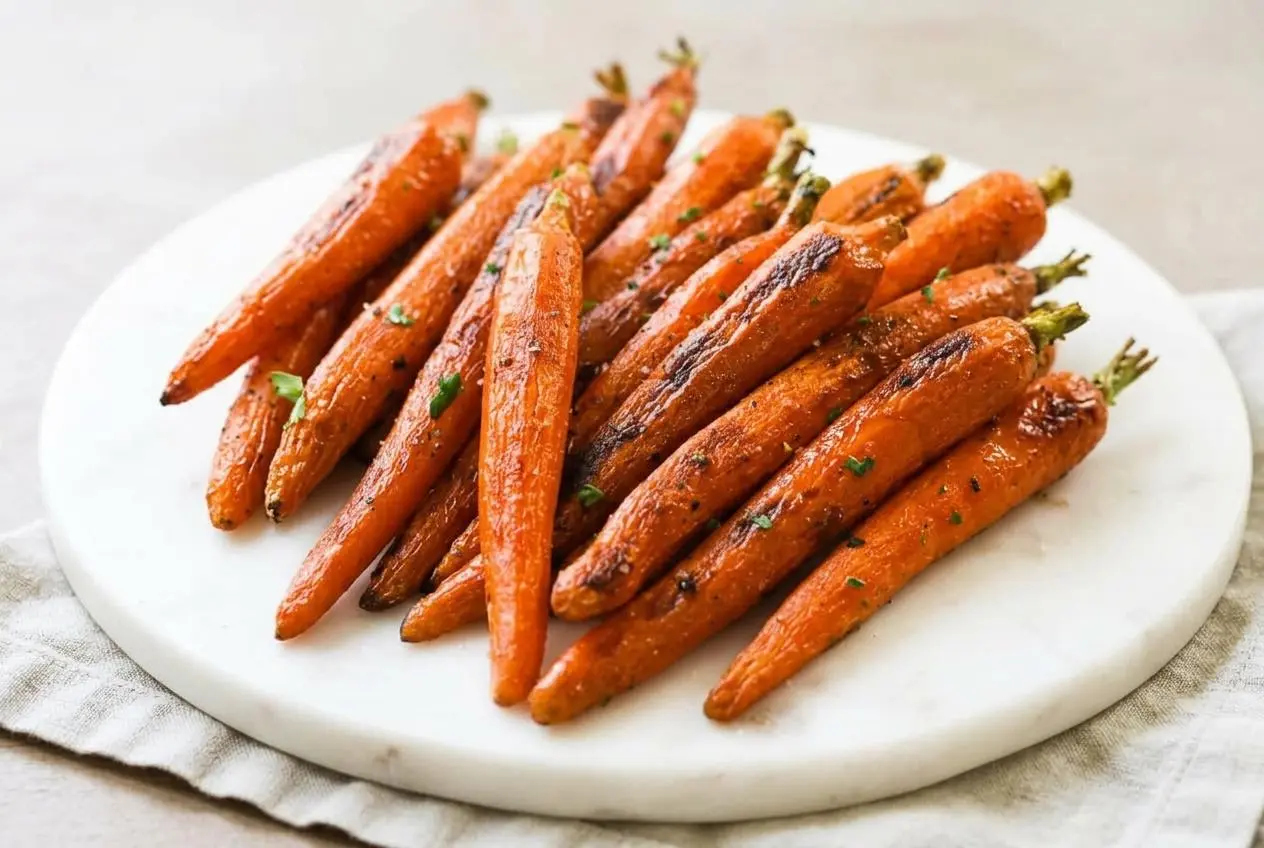
Toss carrots with olive oil, kosher salt, and black pepper, then roast in a single layer at 425°F until tender and caramelized, about 18 to 30 minutes depending on their size.
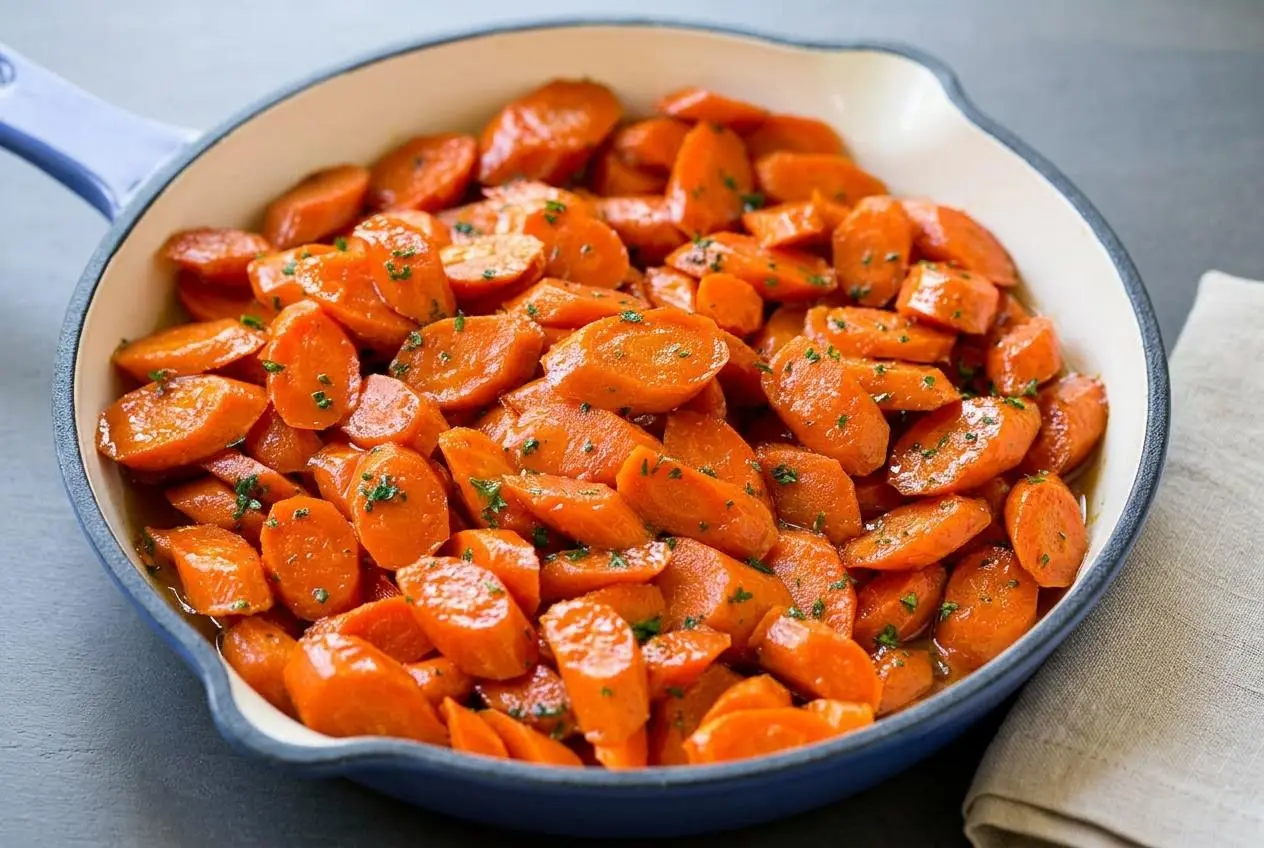
This roasted carrots recipe turns an everyday vegetable into a deeply sweet, golden side dish with lightly crisp edges and soft centers. High heat concentrates the carrots’ natural sugars instead of leaving them pale or watery.
As they roast, the kitchen fills with that warm, sweet aroma that signals real browning. The key is giving every piece room on the pan.
Dry the carrots well after washing so surface moisture does not slow down browning.
Ingredients and Essential Seasonings
Each ingredient supports the final texture and flavor: carrots provide sweetness, olive oil encourages browning, salt balances the sugars, pepper adds warmth, and parsley brings fresh contrast.
- 2 pounds carrots (washed, peeled and cut if large)
- 2 tablespoons olive oil
- 1 teaspoon kosher salt
- ¼ teaspoon black pepper (plus additional to taste, as needed)
- chopped fresh parsley (for garnish, optional)
Choose firm carrots with smooth skin and bright color. Standard orange carrots roast beautifully, while rainbow carrots add color and a slightly more earthy flavor. Very thick carrots need cutting so their dense centers can soften before the narrow tips become too dark.
Olive oil coats the carrot surfaces and helps heat move evenly across them, which promotes glossy browning and caramelized edges. Kosher salt seasons the interior while pulling a little surface moisture toward the outside, helping the carrots roast rather than taste flat. Black pepper gives the sweetness a gentle savory edge. Finish with parsley for a clean herbal lift against the rich roasted flavor.
I prefer carrots that feel firm and heavy for their size, since limp carrots tend to roast up dry before they develop much color.
How to Roast Carrots Step by Step
A hot oven, even cutting, and open space on the baking sheet create the tender, browned finish that makes roasted carrots so satisfying.
- Heat the oven to 425°F and cover a baking sheet pan with parchment paper.
The parchment keeps cleanup easy while the hot pan environment encourages browning. - Place the carrots in a bowl and coat them with the olive oil, kosher salt, and black pepper.
Every piece should look lightly glossy rather than dry or heavily slicked with oil. - Spread the seasoned carrots across the prepared baking sheet in one even layer.
Leave gaps between pieces so you hear a gentle sizzle instead of moisture quietly pooling beneath them. - Roast baby or garden carrots for 18 to 20 minutes, and roast larger store-bought carrots for 25 to 30 minutes.
The carrots are ready when a fork slides into the thickest piece easily and the edges are browned. - Transfer the carrots to a serving dish and add parsley if desired.
Serve while warm, when the centers are tender and the browned edges are at their best.
Peeling Versus Scrubbing the Skin
Peeling is optional. Peel thick, older carrots when the skin looks rough, dry, or deeply ridged, since removing it gives the finished carrots a smoother, sweeter bite. Thin-skinned carrots can simply be scrubbed thoroughly, especially when you want a more rustic look and a little extra texture.
Trim any dry stem ends either way. If you keep the skins on, give the carrots extra attention around the grooves near the tops, where dirt tends to collect.
Cutting for Uniform Cooking
Cut large carrots into similar-size diagonal slices, aiming for pieces with matching thickness rather than identical lengths. Diagonal cuts give more surface area for browning and make thick carrots feel less bulky on the plate.
For especially tapered carrots, split the thick upper ends lengthwise before slicing. This prevents the skinny ends from scorching while the wide centers are still firm. Baby carrots can remain whole, while thick whole carrots need more time and are less likely to cook evenly with this timing.
Pan Spacing and Parchment Paper
Use a rimmed baking sheet large enough to hold the carrots without stacking them. If the pieces touch in a crowded pile, they release moisture into the same small area and steam each other instead of caramelizing.
Parchment paper keeps the carrots from sticking and makes cleanup easier, but it does not replace good spacing. The carrots still need direct exposure to the oven’s dry heat. A matte orange surface will gradually turn glossy, then develop darker golden patches around the edges.
Critical Roasting Tips and Texture Troubleshooting
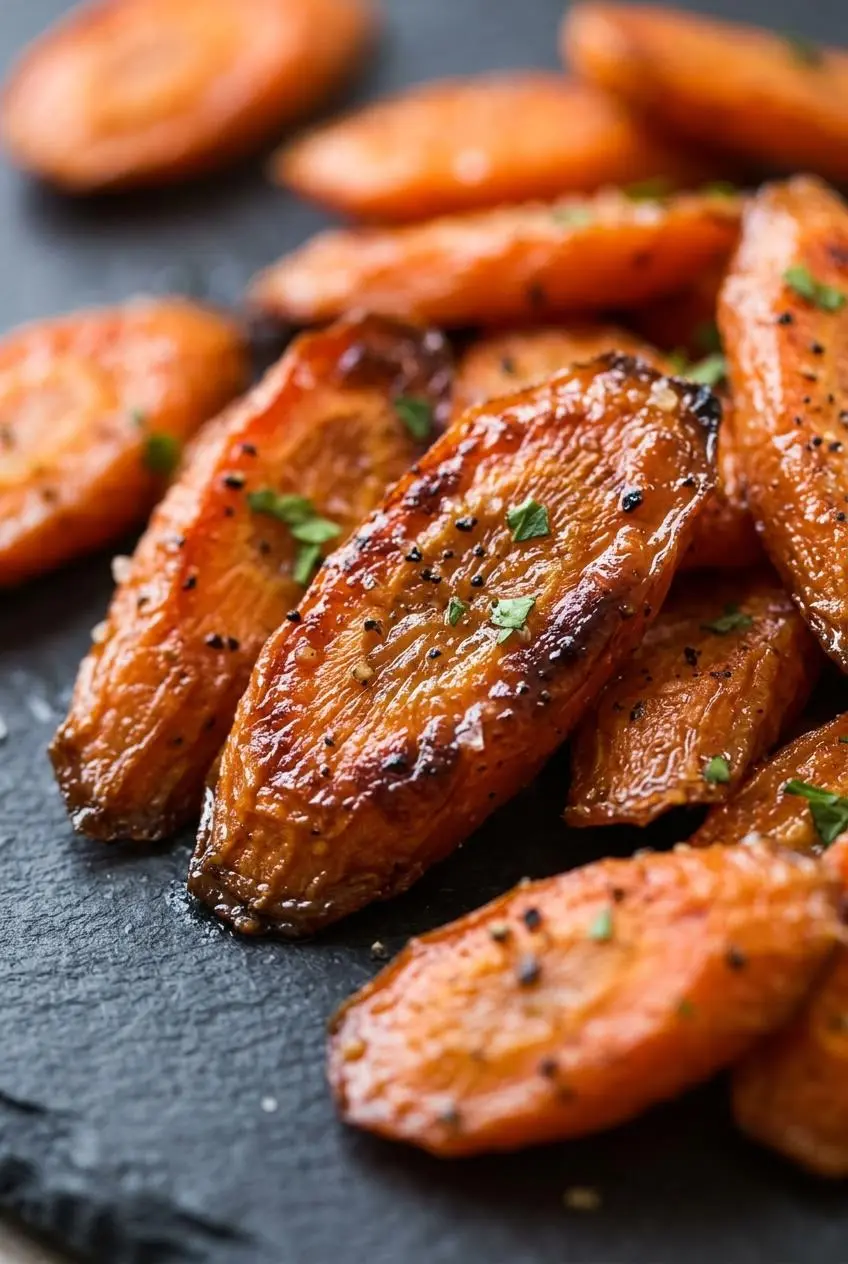
Roasting at 425°F gives carrots enough heat to evaporate moisture quickly and brown their natural sugars before the interiors turn overly soft. At 375°F, they tend to cook slowly and stay paler. At 400°F, they can work well, but they generally need more time to reach the same caramelized finish.
- Carrots look pale: The oven may not be fully heated, or the pan may be crowded. Keep the oven at 425°F and give the carrots open space.
- Carrots are soft but lack browning: Moisture likely stayed on the carrots or collected on the pan. Pat the carrots dry and use a second baking sheet for a larger batch.
- Thin tips taste bitter: Uneven cutting caused small pieces to cook too fast. Keep slices similar in thickness and halve wide carrot tops lengthwise.
- Carrots are dry: They roasted past fork-tender. Check the thickest piece near the earlier end of the stated cooking range.
- Carrots stick or steam: Avoid covering the pan with foil. Foil traps moisture, while parchment allows the exposed surfaces to brown.
Preventing Sogginess and Trapped Steam
Wet carrots are the most common reason a tray turns steamy. After washing, dry them with a clean towel before adding oil and seasonings. Water has to evaporate before browning can begin, so even a small amount can delay that deep roasted color.
For a larger batch, divide the carrots between two baking sheets rather than crowding one. Rotate the pans if both are in the oven, and keep the carrots in a single layer on each pan. Once the edges begin to wrinkle slightly and smell sweet, browning is underway.
Air Fryer Roasting Method
For an optional air fryer version, prepare the carrots with the same oil and seasonings, then arrange them in an uncrowded basket. Air fry at 380°F for 14 to 18 minutes, shaking the basket halfway through so the pieces color evenly.
The air fryer works especially well for a smaller portion because circulating heat can blister the edges quickly. Cook until the carrots are fork-tender with browned spots, and avoid packing the basket tightly or they will soften before they crisp.
Flavor Variations: Sweet Glazes and Savory Herbs
Keep the main method exactly as written, then use one of these optional finishes to steer the carrots toward a holiday side or a savory weeknight plate.
Honey and Maple Glaze Additions
For a sweet glaze, add honey or pure maple syrup during the final five minutes of roasting. Adding it near the end lets the syrup cling to the hot carrots without spending too long on the baking sheet, where sugars can darken too quickly.
Watch closely once the glaze goes on. The carrots should look lacquered and golden, not blackened around the edges. For more sweet roasted vegetable ideas, try these maple roasted vegetables.
Garlic Herb and Parmesan Style
Toss the hot roasted carrots with minced garlic, dried thyme, and freshly grated Parmesan right after they leave the oven. The residual heat softens the garlic and helps the cheese cling to the carrots, creating a savory, nutty finish.
This variation shifts the dish away from sweetness and toward a richer, more dinner-friendly side. If that combination is calling your name, these parmesan garlic roasted carrots offer another flavorful direction.
Finishing With Butter and Fresh Dill
For a richer finish, drizzle warm carrots with browned butter just before serving and add fresh orange zest. The butter brings toasted, nutty depth, while orange zest keeps the flavor bright rather than heavy.
Fresh dill can replace parsley when you want a softer, grassy herbal note. Add delicate herbs after roasting so they stay fragrant and green instead of drying out on the pan.
Storage, Make-Ahead, and Reheating Directions
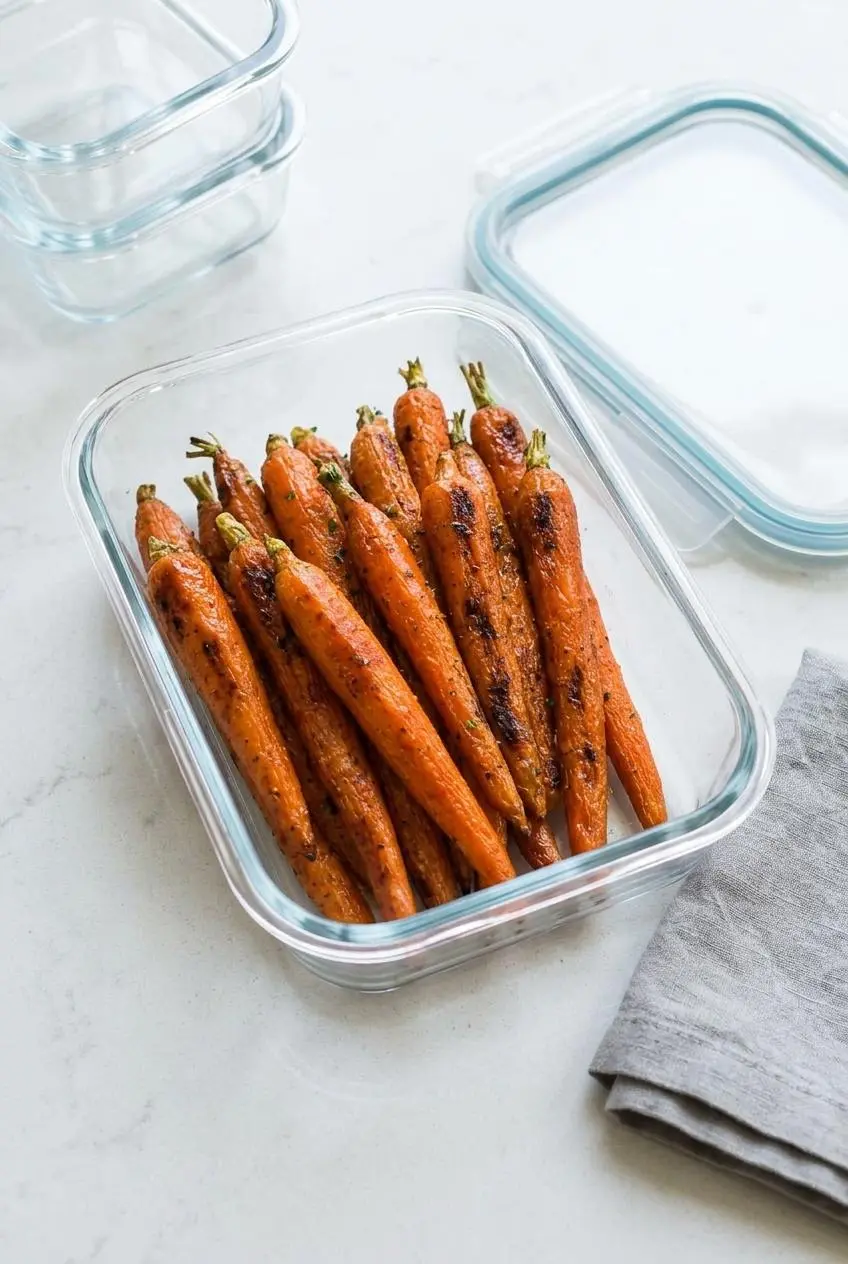
Cool leftover carrots promptly, then place them in an airtight container and keep them chilled. For the best texture, reheat only the portion you plan to serve rather than warming the entire batch repeatedly.
For holiday prep, roast the carrots until they are slightly firm rather than fully soft, cool them, and refrigerate them in a covered container. Reheat them on a hot baking sheet in a 400°F oven until warmed through and the edges regain some color. A microwave is convenient, but it softens the browned exterior.
An air fryer also works well for reheating: place the carrots in a loose layer and warm them until hot with lightly crisped edges. Add parsley, dill, cheese, citrus zest, or any finishing butter after reheating so those flavors stay fresh.
Serving Suggestions for Weeknights and Holidays
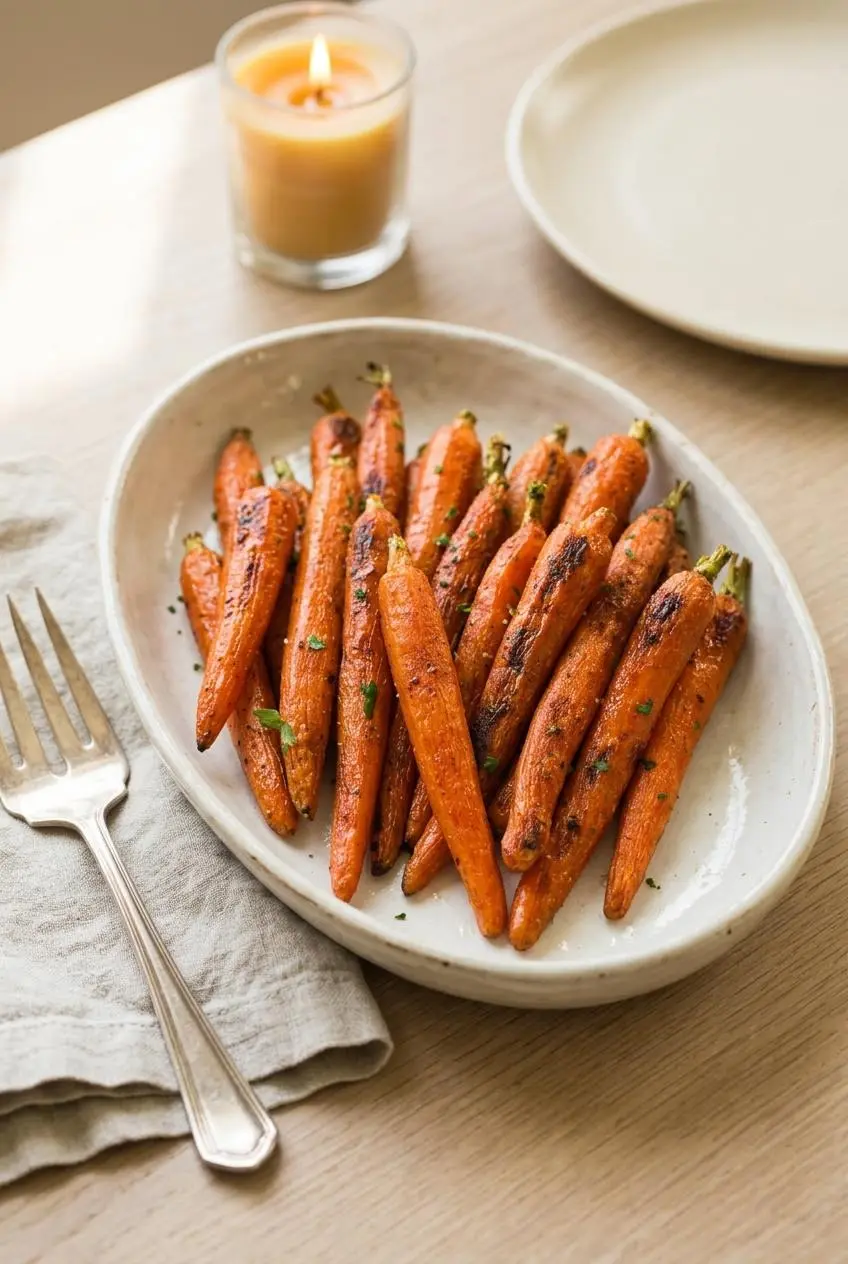
These carrots fit almost anywhere you want a sweet, savory side with a little color. Their caramelized edges pair especially well with foods that have rich sauces, gravy, or salty seasoning.
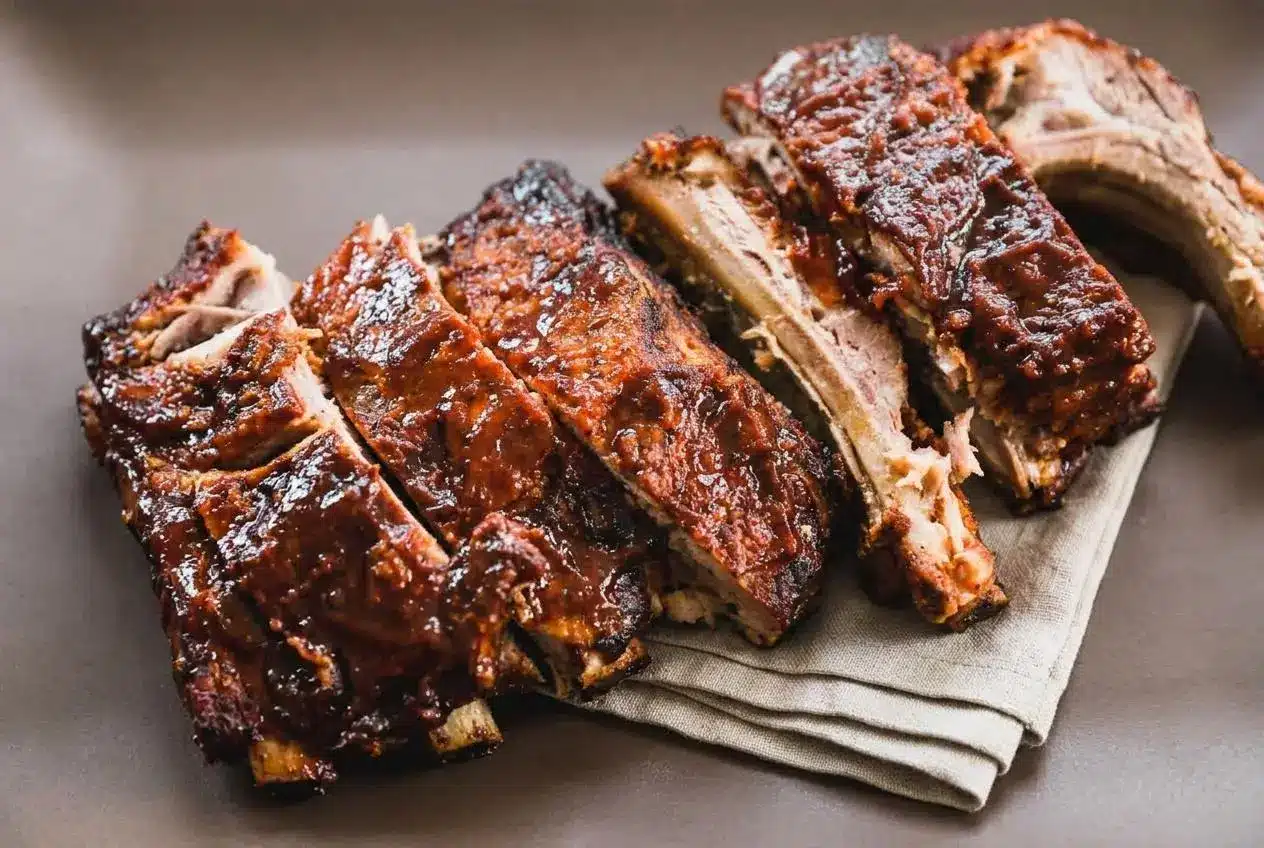
- Serve them beside roasted chicken or pork chops, where the carrots’ sweetness balances savory pan juices.
- Add them to a holiday table with turkey, stuffing, mashed potatoes, and gravy for a bright contrast to the richer dishes.
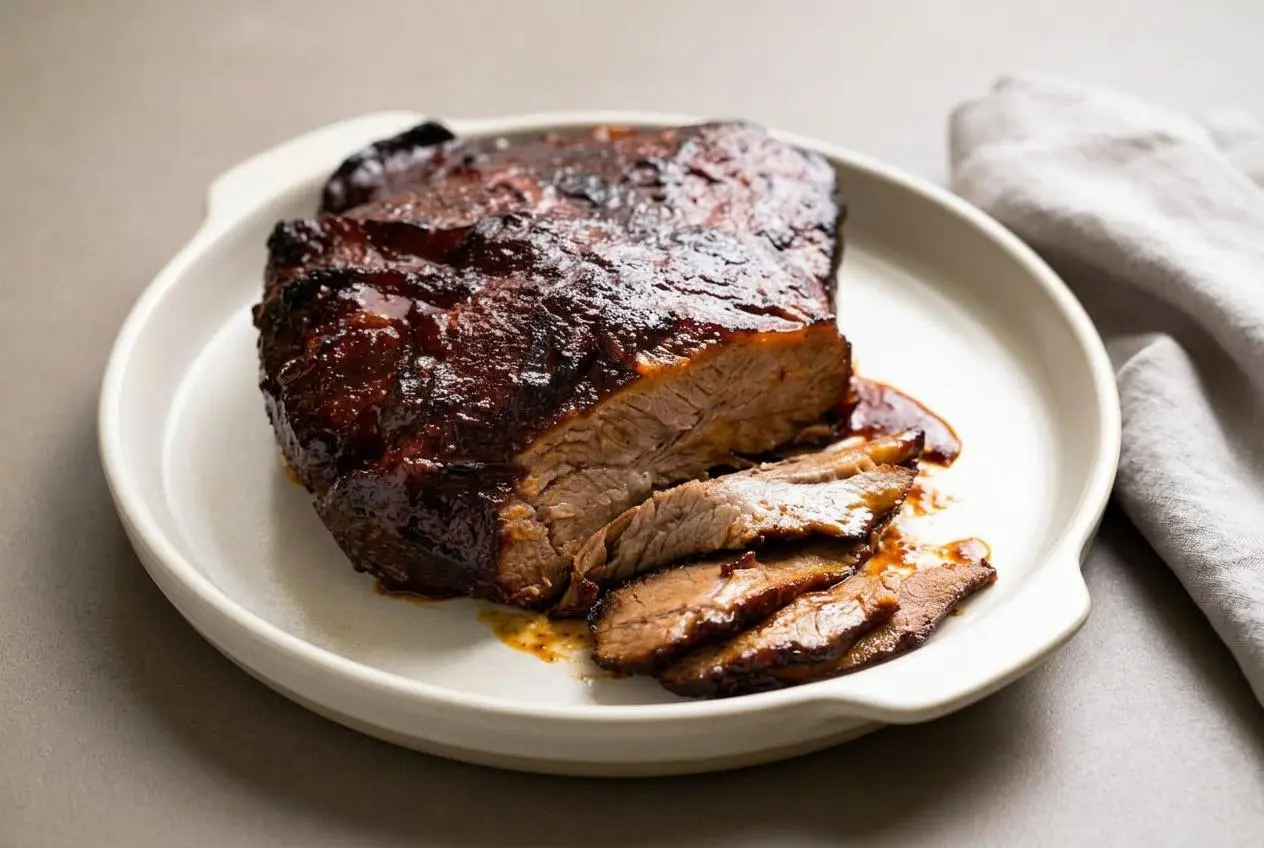
- Pair them with braised pot roast, where tender carrots bring freshness and a lightly sweet counterpoint to deeply savory beef.
- Turn leftovers into quinoa bowls with toasted seeds and tangy whipped feta. These roasted veggie glow bowls make an easy next meal when you want something hearty but not heavy.
Conclusion
High heat turns carrots tender, sweet, and deeply caramelized without needing complicated seasoning. The 425°F oven gives you browned edges while keeping the centers pleasantly soft.
Cut the pieces evenly, dry them well, and leave room between them on the baking sheet. That little bit of space makes all the difference.
Frequently Asked Questions
Should I Roast Carrots at 400°F or 425°F?
Choose 425°F when you want deeper caramelization and crisp-tender edges. The higher heat evaporates moisture faster, helping the carrots brown before they become overly soft. Carrots can roast at 400°F, but they usually need longer and may stay lighter in color. Keep the pan uncrowded at either temperature.
Do You Need to Peel Carrots Before Roasting Them?
No. Thoroughly scrubbed thin-skinned carrots can be roasted with the peel on for a rustic texture and earthy flavor. Peel thick or rough-skinned carrots when you prefer a smoother, more uniform bite. Both approaches work well at 425°F.
Why Did My Roasted Carrots Turn Out Mushy?
Mushy carrots usually mean trapped moisture. Overcrowding the pan, roasting at too low a temperature, or covering the pan with foil can all create steam. Dry the carrots thoroughly, keep them in a single layer, and roast at 425°F. Use two baking sheets for a larger batch instead of piling everything together.
Can I Roast Carrots Ahead of Time and Reheat Them?
Yes. Roast them until slightly firm, cool them, and refrigerate them in an airtight container. This helps them hold their shape for reheating. Warm them on a hot baking sheet in a 400°F oven until heated through and the edges regain color. Finish with fresh parsley after reheating for the best flavor.
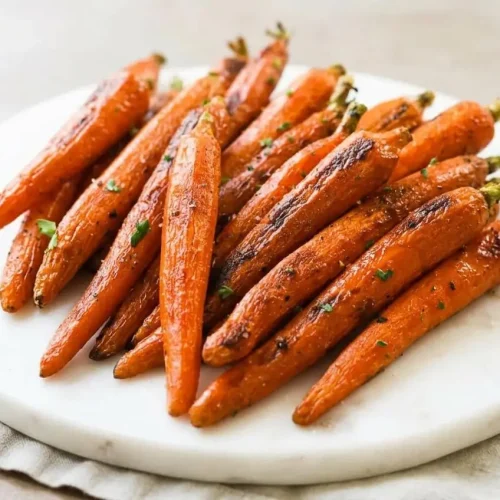
Roasted Carrots Recipe

Equipment
- baking sheet pan
- Parchment Paper
Ingredients
- 2 pounds carrots washed, peeled and cut if large
- 2 tablespoons olive oil
- 1 teaspoon kosher salt
- ¼ teaspoon black pepper plus additional to taste, as needed
- chopped fresh parsley for garnish, optional
Instructions
- Heat the oven to 425°F and cover a baking sheet pan with parchment paper. The parchment keeps cleanup easy while the hot pan environment encourages browning.
- Place the carrots in a bowl and coat them with the olive oil, kosher salt, and black pepper. Every piece should look lightly glossy rather than dry or heavily slicked with oil.
- Spread the seasoned carrots across the prepared baking sheet in one even layer. Leave gaps between pieces so you hear a gentle sizzle instead of moisture quietly pooling beneath them.
- Roast baby or garden carrots for 18 to 20 minutes, and roast larger store-bought carrots for 25 to 30 minutes. The carrots are ready when a fork slides into the thickest piece easily and the edges are browned.
- Transfer the carrots to a serving dish and add parsley if desired. Serve while warm, when the centers are tender and the browned edges are at their best.