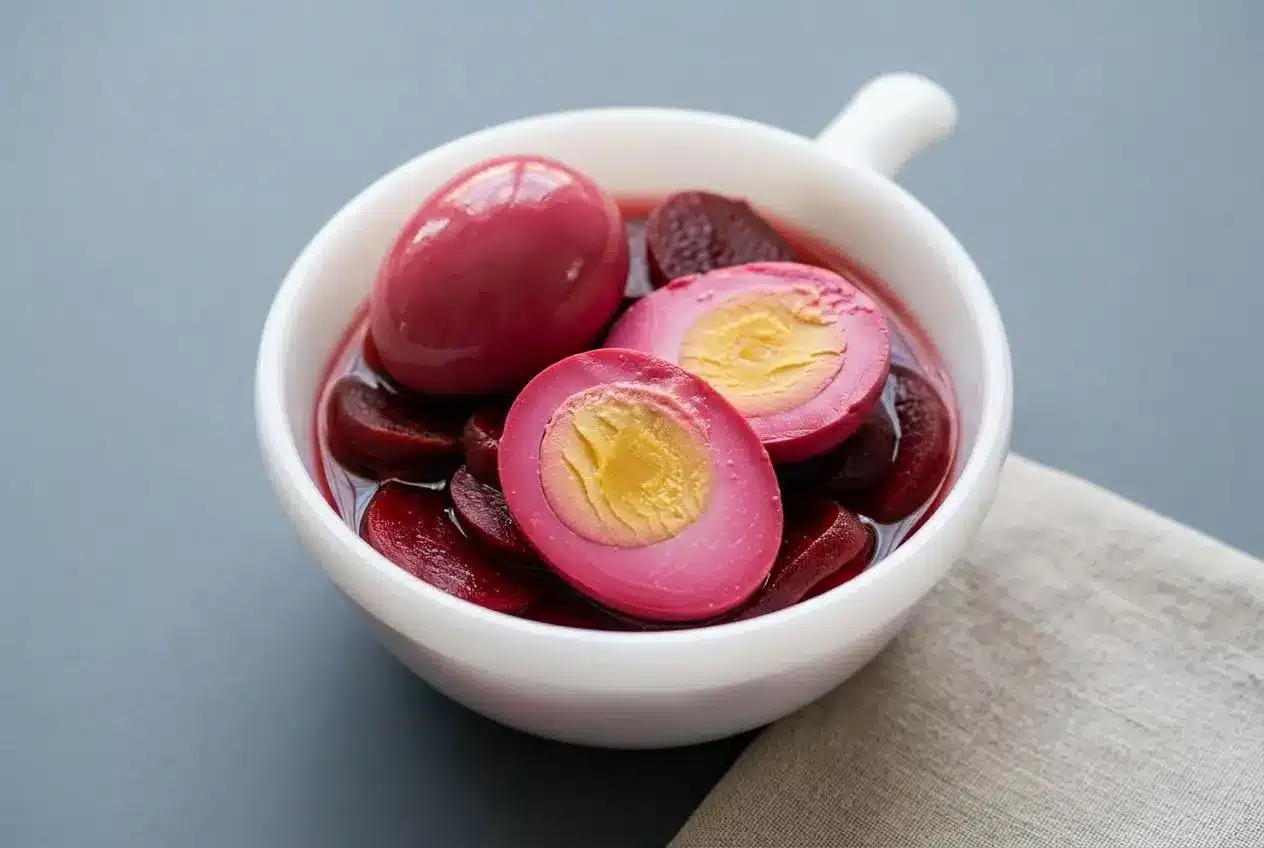
Red beet eggs are hard-boiled eggs steeped in a sweet-tart beet and vinegar brine until their whites turn vivid magenta and pleasantly firm.
This red beet eggs recipe captures the classic Pennsylvania Dutch combination of earthy beets, bright vinegar, and a touch of sugar. The eggs become tangy around the edges first, then gradually take on a ruby-colored ring.
As the brine simmers, the kitchen fills with a sweet vinegar aroma and the liquid turns a deep jewel red. The wait is what brings the color and flavor together.
Use a clean glass jar with a snug lid so the eggs stay fully covered by the beet brine.
Essential Ingredients for Authentic Red Beet Eggs
Each ingredient shapes the finished eggs: beets provide color and earthiness, vinegar brings tang, sugar softens the sharp edges, and salt rounds out the brine.
- 1/2 dozen hard boiled eggs
- 1 can small sliced beets (15 oz)
- 1/3 cup white vinegar
- 1/3 cup cider vinegar
- 2 tablespoon sugar
- 1/2 teaspoon salt
Canned sliced beets and their concentrated juice give these eggs their deep red color and gentle earthy sweetness. Keep the beet slices for the jar because they continue to perfume the eggs as they chill.
The equal blend of white vinegar and cider vinegar matters. White vinegar brings a clean, sharp tang, while cider vinegar adds a faint fruitiness that softens the brine without making it heavy. Sugar balances that acidity so the flavor stays sweet-tart rather than harsh.
Salt helps the brine taste rounded instead of flat and encourages its flavor to move into the outer egg white. The vinegar gradually firms that outer layer, giving the finished eggs a pleasantly dense bite.
I find that eggs that are several days old peel more cleanly when gently cracked and rolled under cool running water, leaving a smoother white for even coloring.
How to Make Perfect Red Beet Eggs Step-by-Step
The key is to cool and peel the eggs cleanly, simmer the brine long enough for the sugar to dissolve, and avoid pouring it over the eggs while it is boiling hot.
The Ice-Bath Boil for Effortless Peeling
For smooth pickled eggs, start with eggs that are about 5 to 10 days old when possible. Lower them into gently boiling water, cook until hard-boiled, then move them straight into an ice-water bath for 10 minutes. The quick cooling helps the egg white pull slightly away from the shell, which limits pits and tears during peeling.
Simmering the Sweet-Tart Beet Brine
The beet liquid, two vinegars, sugar, and salt need a brief simmer to become one cohesive brine. At first, the surface may look lightly foamy and purple. After simmering, the foam settles and the liquid becomes clearer, darker, and ruby toned.
- Cook the eggs until hard-boiled, cool them completely, and peel away the shells.
Keep the egg whites as smooth as possible so the beet color can develop evenly. - Drain the liquid from the canned beets into a small saucepan and reserve the beet slices.
The dark beet juice will become the foundation of the pickling brine. - Add the white vinegar, cider vinegar, sugar, and salt to the saucepan.
Stir until the sugar and salt begin to disappear into the red liquid. - Bring the brine to a boil, then let it simmer for 5 minutes.
The finished brine should smell sweet, sharp, and earthy with no visible sugar granules. - Arrange the peeled eggs in a clean glass jar and place the reserved beet slices over them.
Leave enough room for the brine to surround every egg. - Let the brine cool slightly, then pour it over the eggs and beets until everything is submerged.
Warm brine is gentler on the egg whites than steaming-hot liquid and helps prevent a rubbery exterior. - Cover the jar and refrigerate it for at least 2 days before serving.
The egg whites will begin developing a pale pink edge as the beet brine works inward.
Jarring and Submerging for Even Color
Use glass rather than a reactive metal container, since vinegar can affect some metals. If an egg rises above the brine, gently reposition the contents so every surface stays covered. A fully submerged egg colors more evenly and develops a cleaner sweet-sour flavor.
Pickling Timeline: When Are Red Beet Eggs Ready?
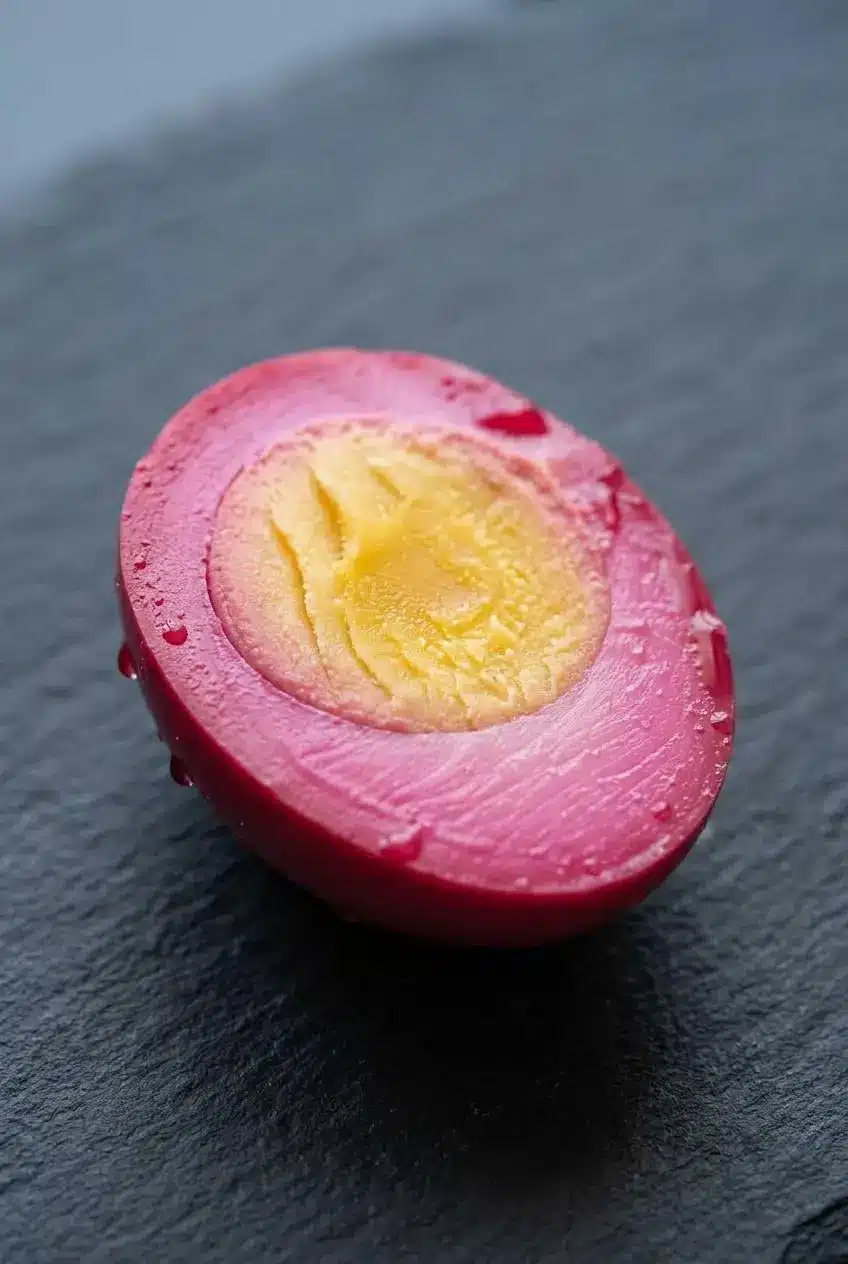
Color develops from the outside in because the beet pigments slowly travel through the egg white. The longer chill gives you a bolder flavor and a thicker magenta ring.
- Days 1 to 2: Expect a light pink rim, a mild vinegar tang, and a mostly white interior around the yolk.
- Days 3 to 4: The ruby ring becomes more defined, with the classic Pennsylvania Dutch sweet-and-sour balance.
- Days 5 to 7: The color moves closer to the yolk and the flavor becomes fuller, tangier, and more beet-forward.
Gently tilt or invert the sealed jar every couple of days, then return it to the refrigerator. This moves the brine around the eggs and helps prevent pale contact spots where eggs press against one another.
Cut one egg in half when you are ready to check the color. A thin pink ring means a lighter pickle, while a broad magenta edge signals a deeper beet flavor.
Safe Refrigerator Storage and Shelf Life Rules
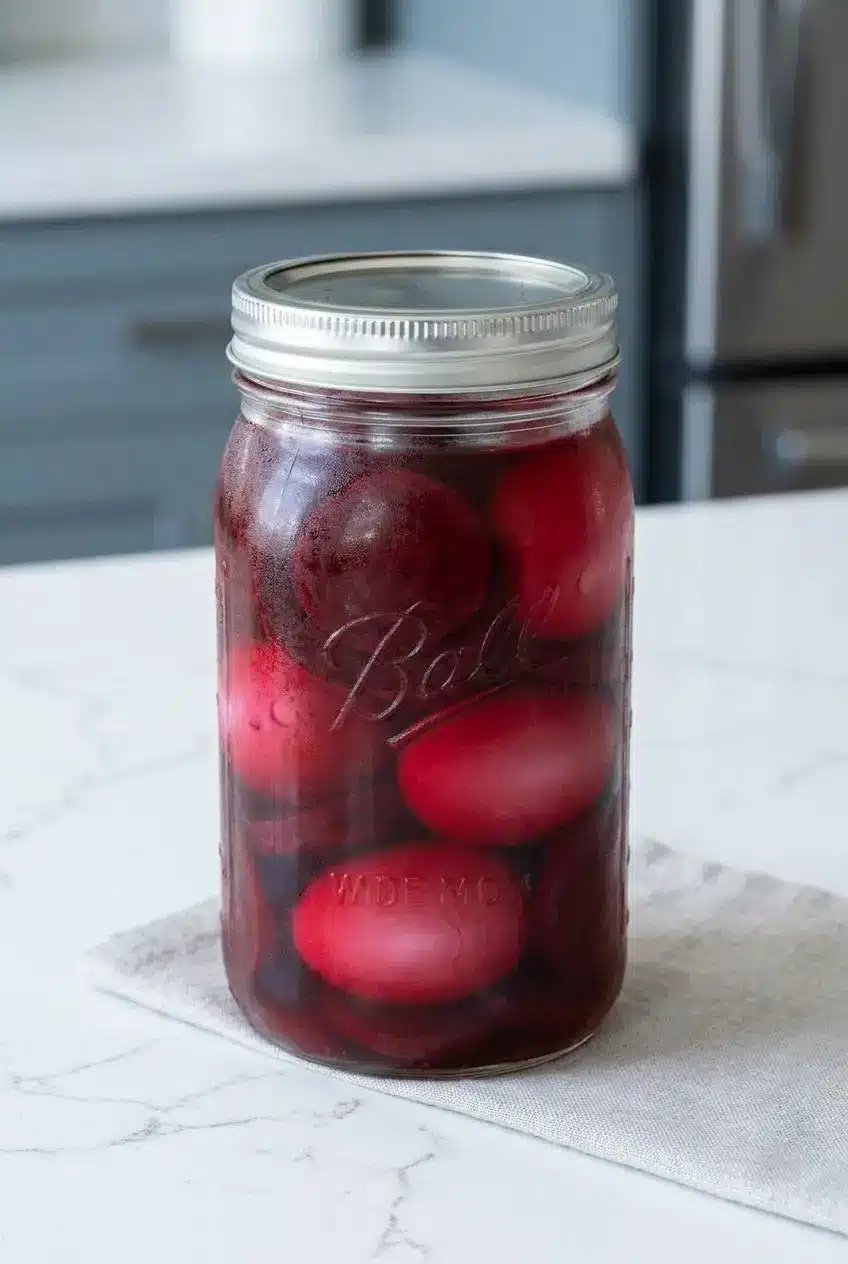
These are refrigerator pickles, so keep the covered jar chilled from the moment the brine is added. Proper egg refrigeration and careful handling help reduce foodborne illness risk, especially when using egg refrigeration and safe handling practices.
Do not leave homemade pickled eggs on the counter or treat them as shelf-stable canned food. This preparation is designed for chilled storage, not water-bath canning. Keep the eggs covered with brine in a clean glass jar, and discard the remaining brine once the eggs are gone rather than using it for another batch.
If the brine becomes unusually cloudy, develops an off odor, or the eggs show a concerning change in texture, discard the batch. Fresh brine gives each batch the best flavor and a more dependable pickling environment.
Flavor Variations and Fresh Beet Adaptations
The classic brine stands beautifully on its own, but optional add-ins can nudge it warmer, more savory, or more garden-forward without changing the main preparation.
Fresh Beets vs. Canned Beets: How to Adapt the Recipe
Fresh beets create a more earthy, vegetable-forward result than canned beets. Boil or roast whole beets until fork-tender, let them cool enough to handle, then rub away the skins and slice them. Reserve the deep red cooking liquid when boiling beets, then use it as the liquid foundation for a fresh beet brine with the vinegars, sugar, and salt.
Roasted beets offer a deeper, slightly sweeter flavor, while boiled beets provide cooking liquid that is ready to use. Either option works as an optional adaptation, though canned beets remain the easiest route to the familiar Pennsylvania Dutch color and taste.
Spiced Lancaster County Blend
For a warmly spiced jar, simmer the brine with optional whole cloves, a cinnamon stick, a strip of orange peel, and a pinch of cracked mustard seed. The cloves and cinnamon bring gentle warmth, while orange peel brightens the earthy beet aroma. Remove the larger spices before pouring the brine into the jar if you prefer a cleaner finish.
Sweet Onion and Garlic Variation
For a savory barbecue-style direction, layer thinly sliced sweet onion and lightly smashed garlic cloves between the eggs and beet slices. The onion adds mellow sweetness as it pickles, while garlic gives the brine a sharper savory edge. Keep these additions optional so the classic sweet beet flavor remains the focus.
Troubleshooting Common Pickled Egg Mistakes
- Rubbery egg whites: Very hot brine can tighten the outside of cold eggs too quickly. Let the brine stand briefly after simmering so it is warm rather than scalding before pouring.
- Blotchy pink color: Eggs that stay pressed together can develop pale patches. Keep them submerged and gently turn the sealed jar occasionally.
- Torn or pitted whites: Very fresh eggs and rushed peeling often damage the surface. Use slightly older eggs, cool them in ice water, and peel patiently under running water.
- Uneven hard-boiled eggs: A cleanly cooked egg gives the brine a smoother surface to color. For another dependable peeling approach, try Instant Pot hard-boiled eggs before pickling.
- Brine tastes too sharp at first: The flavor settles as the eggs chill with the beet slices. Give the jar time before judging the finished balance.
Creative Ways to Serve Pickled Beet Eggs
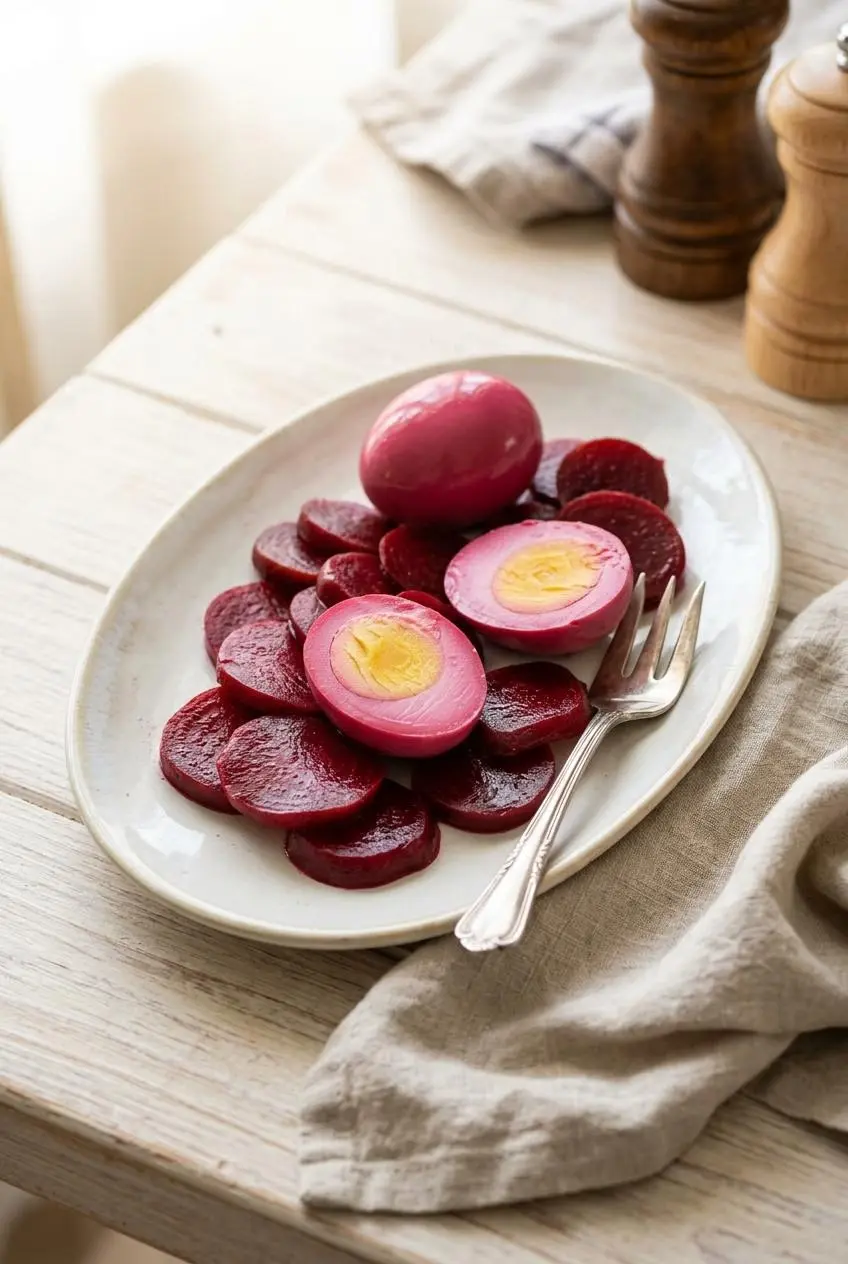
These bright eggs bring color and tang wherever plain hard-boiled eggs might feel a little sleepy.
- Slice them in half for a spring brunch platter, letting the fuchsia ring frame the golden yolk.
- Mash the whites and yolks into pink deviled eggs with Dijon mustard for a tangy party bite.
- Dice them over green salads or spoon them onto warm potato salad for sweet-sour contrast.
- Add halved eggs to a classic Cobb salad in place of plain hard-boiled eggs.
- Serve them with aged cheddar and whole-grain mustard on a snack board.
- Layer slices over avocado sourdough toast with sea salt and cracked pepper for a colorful lunch.
Conclusion
Red beet eggs bring together earthy beets, sweet-tart vinegar, and firm hard-boiled eggs in a classic Pennsylvania Dutch jar pickle. Canned beets make the brine richly colored and deeply flavorful with very little fuss.
Give the eggs time to chill until the pink ring reaches the depth you like, then enjoy them as a snack, salad topper, or platter favorite. A warm spice variation is an easy way to make the jar your own.
Frequently Asked Questions
How Long Do Red Beet Eggs Need to Sit Before They Are Ready to Eat?
Let the eggs chill for at least 2 days before eating so the brine can begin coloring and flavoring the whites. After 3 to 4 days, expect a more defined ruby ring and a balanced sweet-sour flavor. For color that reaches close to the yolk, allow 5 to 7 days in the refrigerator.
Can I Store Homemade Red Beet Eggs at Room Temperature?
No. Keep homemade red beet eggs refrigerated in a covered glass jar. Do not leave the jar on the counter or use water-bath canning for this preparation. Keep the eggs covered in brine and discard leftover brine after the batch is finished.
What Kind of Vinegar Works Best for Red Beet Eggs?
A half-and-half blend of distilled white vinegar and apple cider vinegar gives the most balanced flavor. White vinegar keeps the brine bright and sharply tangy. Cider vinegar adds a subtle fruity note that pairs especially well with earthy beets.
Can I Reuse the Leftover Beet Brine for a Second Batch of Eggs?
No. Make a fresh batch of brine for new eggs. The first batch of eggs and beets changes the brine as it sits. Freshly simmered brine gives the next jar better color, cleaner flavor, and more reliable handling.
How Do I Prevent Rubbery Egg Whites When Pouring Hot Brine?
After the 5-minute simmer, remove the brine from the heat and let it cool slightly before pouring. Pour warm brine over the eggs rather than liquid that is still steaming aggressively. This gentler temperature helps the egg whites stay firm and tender instead of tough.
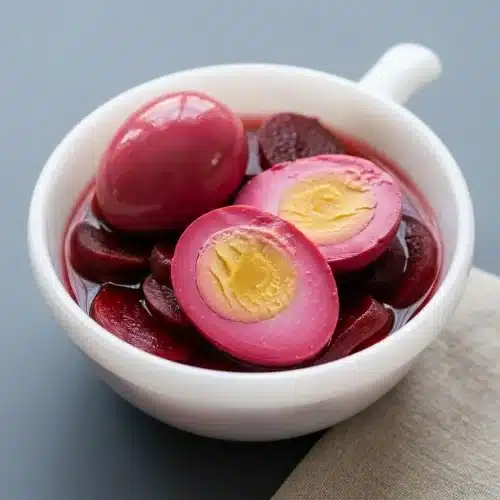
Red Beet Eggs Recipe

Equipment
- 24 oz mason jar
- Small saucepan
Ingredients
- 1/2 dozen hard boiled eggs
- 1 can small sliced beets (15 oz)
- 1/3 cup white vinegar
- 1/3 cup cider vinegar
- 2 tablespoon sugar
- 1/2 teaspoon salt
Instructions
- Cook the eggs until hard-boiled, cool them completely, and peel away the shells. Keep the egg whites as smooth as possible so the beet color can develop evenly.
- Drain the liquid from the canned beets into a small saucepan and reserve the beet slices. The dark beet juice will become the foundation of the pickling brine.
- Add the white vinegar, cider vinegar, sugar, and salt to the saucepan. Stir until the sugar and salt begin to disappear into the red liquid.
- Bring the brine to a boil, then let it simmer for 5 minutes. The finished brine should smell sweet, sharp, and earthy with no visible sugar granules.
- Arrange the peeled eggs in a clean glass jar and place the reserved beet slices over them. Leave enough room for the brine to surround every egg.
- Let the brine cool slightly, then pour it over the eggs and beets until everything is submerged. Warm brine is gentler on the egg whites than steaming-hot liquid and helps prevent a rubbery exterior.
- Cover the jar and refrigerate it for at least 2 days before serving. The egg whites will begin developing a pale pink edge as the beet brine works inward.