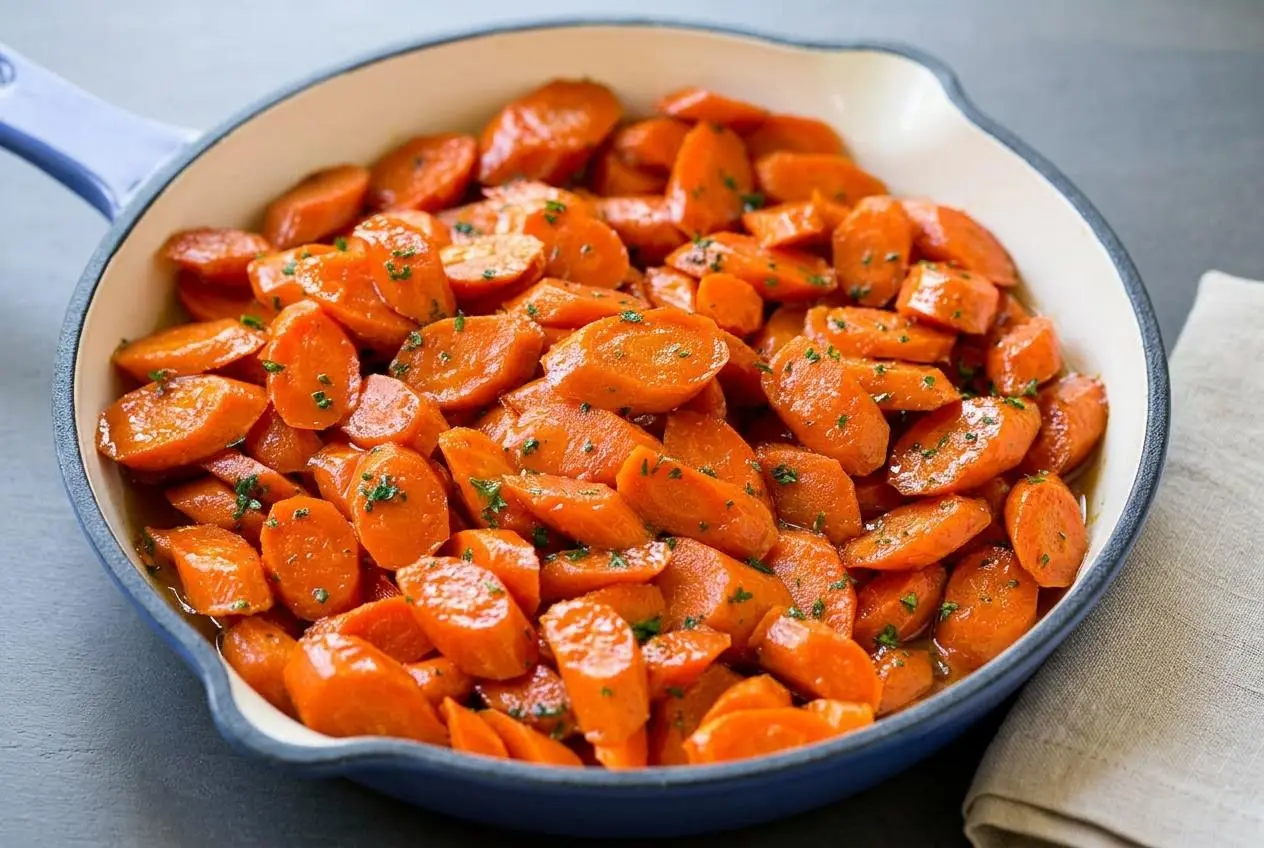
Classic glazed carrots are made by simmering sliced carrots until tender-crisp, draining all cooking liquid, then cooking them with butter, brown sugar, and salt until a glossy glaze coats every piece.
This glazed carrots recipe turns everyday carrot coins into a warm, buttery side with a sweet brown sugar finish. The key is keeping the carrots pleasantly firm before the glaze goes into the pan.
As the butter and brown sugar bubble together, the skillet fills with a cozy caramel aroma. The shine comes from one small move: drain well, then swirl.
Cut the carrot slices to an even 1/2-inch thickness so they soften at the same pace.
Ingredients and Flavor Chemistry
Each ingredient shapes the finished dish: carrots bring sweetness and bite, butter adds richness, brown sugar builds a glossy coating, salt keeps the flavor balanced, and parsley adds fresh contrast.
- 1 1/2 lbs carrots (peeled and cut into 1/2 inch thick slices)
- 1/4 cup butter
- 1/4 cup brown sugar
- 1/4 teaspoon salt
- 1 tablespoon chopped parsley (optional)
Butter gives the glaze a rich, smooth body. Unsalted butter is especially helpful when you want precise control over the final seasoning, though the listed salt still matters because it keeps the sweetness from tasting flat.
Brown sugar melts into the butter and forms the caramel-like coating. Light brown sugar gives a gentle sweetness, while dark brown sugar has more molasses flavor and makes the glaze taste deeper. The optional parsley adds a clean, grassy finish that cuts through the buttery sweetness.
I prefer firm, smooth whole carrots for this dish because they hold their shape well and develop a cleaner natural sweetness than pre-cut carrots.
Choosing Between Whole Carrots and Baby Carrots
Whole carrots sliced into uniform rounds are the most dependable choice. Their even size helps each coin become tender at the same time, and the cut surfaces give the brown sugar glaze plenty to cling to.
Bagged baby carrots can work when convenience matters, but they often release more moisture. Give them extra attention during the simmering stage, then drain the pan thoroughly before adding butter and sugar. If the pieces are thick, they may need a little longer to reach tender-crisp.
Brown Sugar vs Honey Flavor Balances
Brown sugar creates the thickest, most classic glaze because it melts quickly and reduces into a caramel-like syrup. Light brown sugar tastes mild, while dark brown sugar adds a more pronounced molasses note.
Honey offers floral warmth and maple syrup adds a woodsy sweetness, but both can brown more quickly than brown sugar. Keep the heat gentle if using either one, and watch the pan closely once the glaze starts bubbling.
How to Make Glazed Carrots
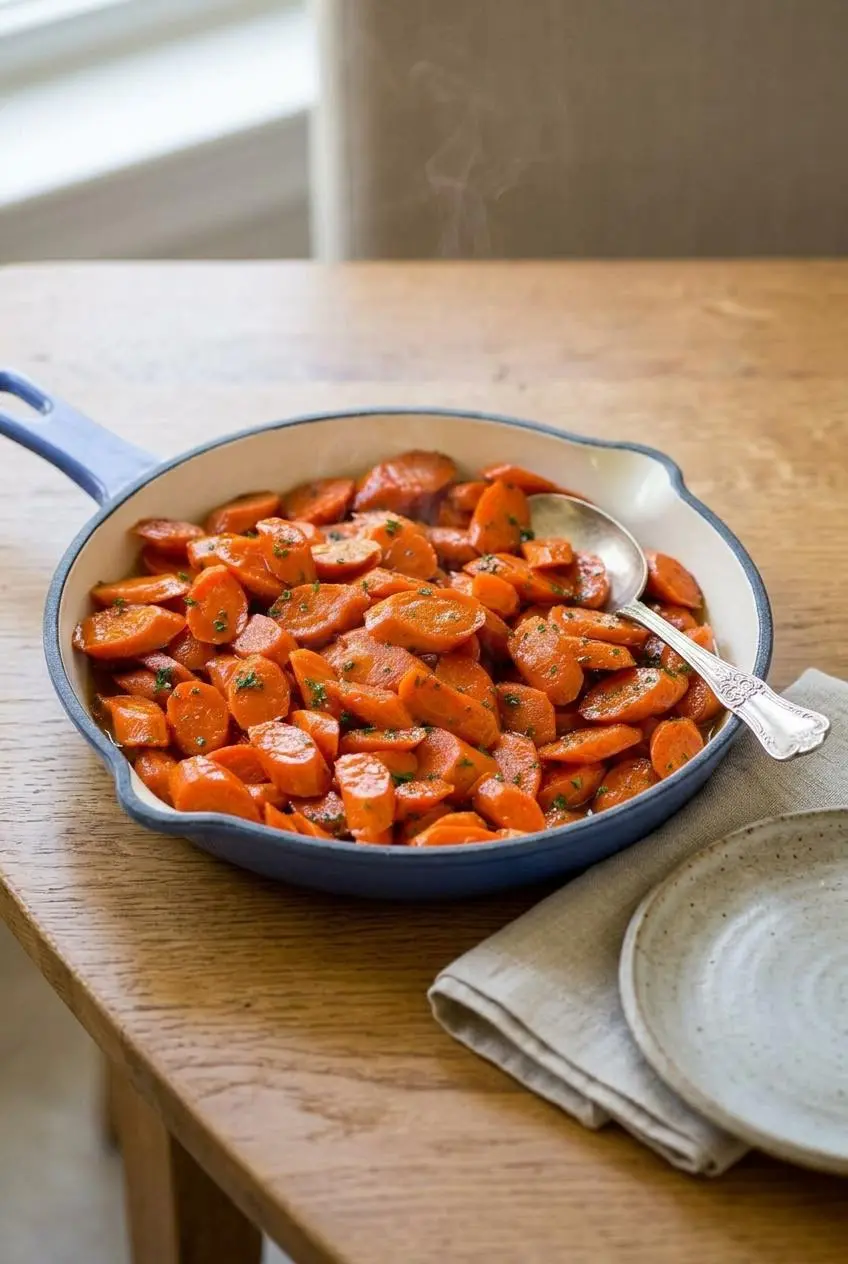
The stovetop method works quickly because the carrots first soften in water, then finish in a concentrated butter sauce reduction. Keep the heat around medium during the glaze stage so the sugar thickens without scorching.
- Put the sliced carrots in a large pan, pour in 1 1/2 cups of water, and bring the pan to a steady simmer.
The water should bubble gently around the carrot coins rather than boil aggressively. - Simmer the carrots for 8 to 10 minutes, then pour off every bit of remaining water.
A paring knife should enter a thick slice with slight resistance, not slide through like butter. - Return the drained pan to the burner and add the butter, brown sugar, and salt, turning the carrots to coat them.
The butter will melt around the carrots and the sugar will begin to dissolve into a syrup. - Cook for 4 to 5 minutes, stirring occasionally and swirling the pan between stirs.
Look for small, slow bubbles and a shiny glaze that lightly coats the back of a spoon. - Top with parsley if desired and serve the carrots while the glaze is warm.
The finished carrot coins should look glossy and remain intact rather than soft or broken.
Parboiling to Tender-Crisp Perfection
The initial simmer is where texture is decided. Pull the carrots as soon as the knife tip meets only a little resistance in the center. They will continue cooking during the final glaze stage, so fully soft carrots can turn mushy fast.
Drain the pan completely before adding the butter and brown sugar. Leftover simmer water dilutes the sugar, preventing the sauce from reducing properly and leaving the carrots in a thin, watery puddle instead of a glaze.
Reducing the Butter and Sugar Glaze
Once the pan is drained, medium heat gives the butter and sugar time to come together into a glossy coating. Stir occasionally, but also swirl the pan by its handle. That movement helps the melted butter stay blended with the sugar syrup instead of separating into greasy pools.
Listen for the sound to change from active watery bubbling to a quieter sizzle. When the bubbles become slower and glossier, the syrup has concentrated enough to cling to the carrots. Remove the pan from the heat before the sugar smells sharp or looks dark at the edges.
Tips for a Flawless Glossy Finish
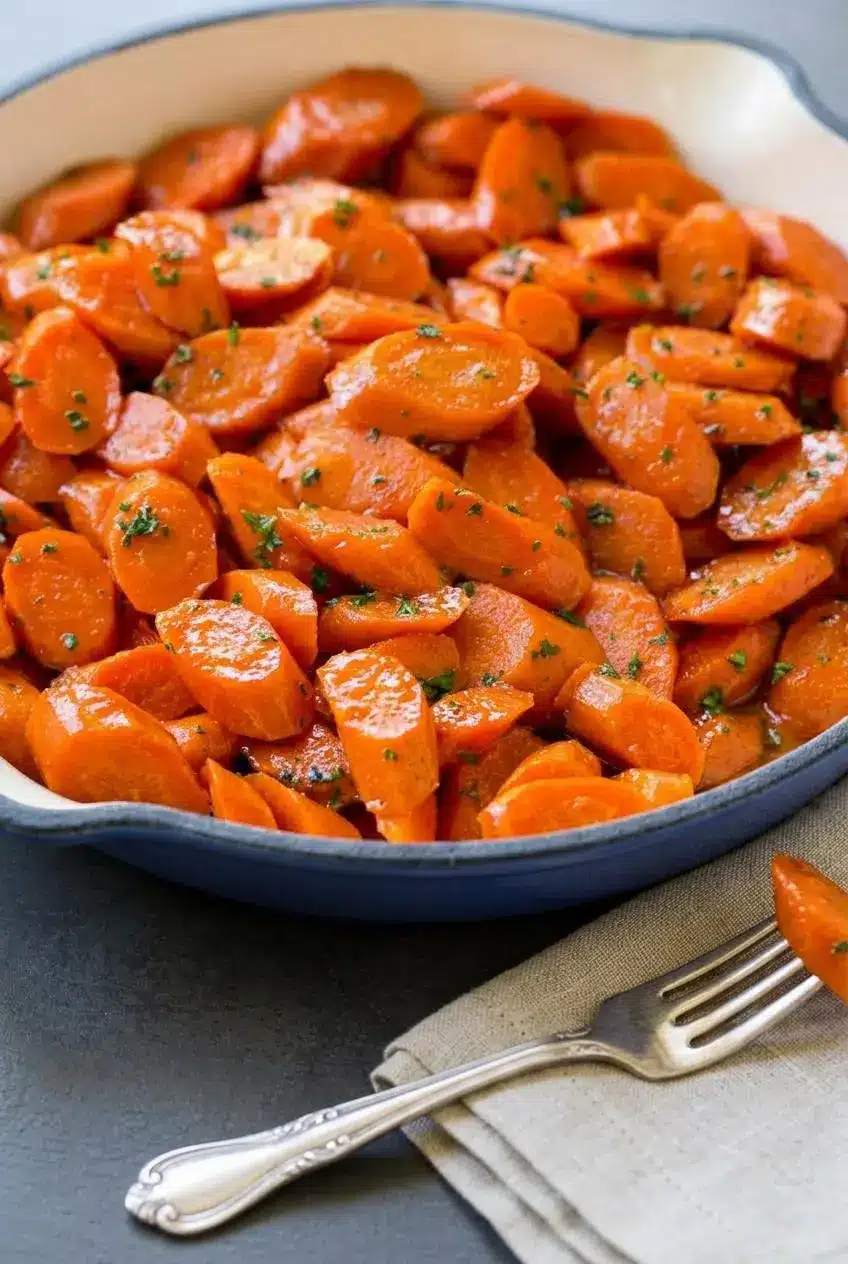
A good glaze should cling in a thin, shiny layer without hiding the carrots. These quick checks help you correct common stovetop problems before serving.
- Watery glaze: Residual simmer water is usually the cause. Keep the carrots in the pan over medium heat and swirl until excess moisture evaporates and the syrup thickens.
- Mushy carrots: The carrots simmered too long before glazing. Next time, stop when a knife meets slight resistance and let the final butter-and-sugar cook finish the job.
- Scorched sugar: The heat is too high. Lower the burner as soon as the butter melts, especially if the edges of the glaze start darkening faster than the center.
- Separated sauce: Take the pan off the burner, add a small splash of warm water, and swirl steadily until the butter and syrup come back together.
- Dull flavor: Make sure the salt is fully dissolved in the glaze. That small amount sharpens the carrot flavor and balances the brown sugar.
For a more polished finish, avoid overcrowding the pan. The carrot coins need room for moisture to cook away, especially when making a larger batch for a holiday meal.
Popular Variations With Roasted, Honey, and Spiced Carrots
These optional changes keep the same sweet-savory character while giving you a different texture or flavor direction. Use them when you want caramelized edges, a softer floral sweetness, or a warmer holiday profile.
Oven-Roasted Method for Caramelized Edges
For browned edges and a less saucy finish, toss carrot slices with melted butter, brown sugar, and salt, then spread them on a rimmed baking sheet. Roast at 400 °F for 25 to 30 minutes, turning the carrots partway through, until they are tender and browned around the edges.
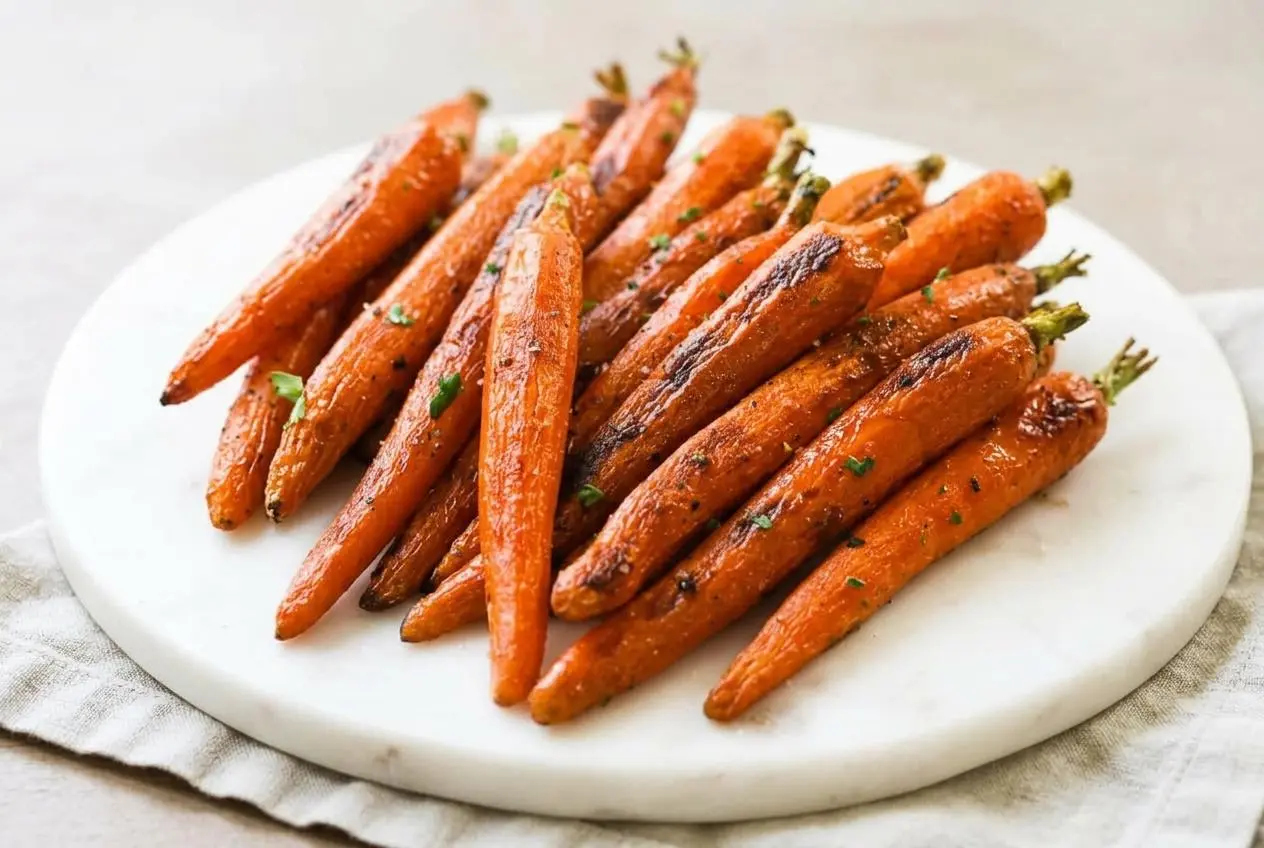
Roasting gives the carrots a more concentrated flavor and slightly firmer exterior than the stovetop version. For a savory sheet-pan direction rather than a sweet glaze, try these garlic roasted carrots.
Honey and Herb Adaptations
Replace the brown sugar with an equal amount of honey or pure maple syrup for a different kind of sweetness. Honey tastes floral and warm, while maple syrup brings a deeper, woodsy edge. Both work especially well with roasted turkey, baked chicken breast, glazed ham, or pot roast.
Add fresh thyme or rosemary during the final two minutes of cooking for an herb-forward finish. Keep the herbs optional and light-handed so they support the carrots rather than overpower their natural sweetness.
Ginger, Orange, and Cardamom Flavor
For a bright, warming version, stir in fresh orange zest as the glaze thickens, then add either a pinch of ground cardamom or freshly grated ginger. Orange brings fresh citrus oils, cardamom adds gentle perfume, and ginger gives the sweetness a lively savory edge.
- Use ginger when serving richer mains because its gentle heat keeps the plate from tasting overly sweet.
- Choose cardamom for holiday meals when you want a soft, aromatic spice.
- Add orange zest at the end so its fresh flavor stays noticeable.
Make-Ahead, Storage, and Reheating
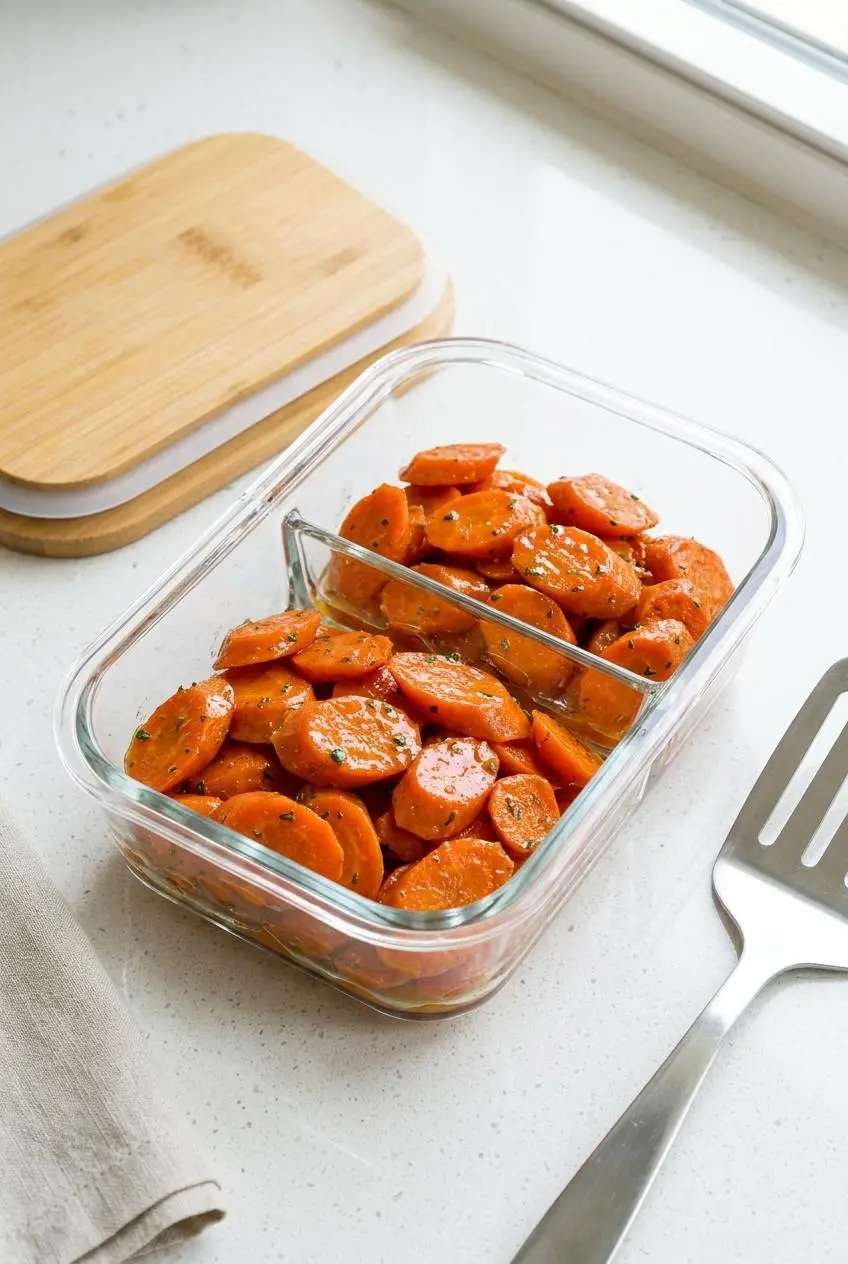
For a busy dinner, simmer the carrot coins until just tender-crisp, drain them well, and chill them in a covered container until you are ready to finish the dish. Cook the butter, brown sugar, and salt with the chilled carrots shortly before serving so the glaze stays shiny and the carrots keep their bite.
Store leftovers in an airtight container in the refrigerator. Reheat a portion in a skillet over low heat with a small splash of water, then swirl the pan until the glaze loosens and coats the carrots again. Gentle heat protects their texture better than blasting them until soft.
Wash and peel whole carrots before cutting, and keep the work surface and utensils clean while handling produce. Good fresh produce handling practices help reduce contamination during prep.
Conclusion
These glazed carrots deliver tender-crisp texture, buttery richness, and brown sugar sweetness in about 20 minutes. Thorough draining and gentle pan swirling turn the melted butter and sugar into the glossy finish that makes the dish feel special.
Scatter the optional parsley over the top just before serving for a fresh pop of color and flavor. It is a warm, dependable side for weeknight dinners and holiday plates alike.
Frequently Asked Questions
What Is the Best Way to Glaze Carrots?
Simmer evenly sliced carrots until tender-crisp, then drain the pan completely. Add butter, brown sugar, and salt, and cook over medium heat until a glossy syrup clings to the carrots. Swirl the pan as the sauce reduces to keep the glaze smooth.
What Is the Secret to Perfect Glazed Carrots?
Do not cook the carrots until mushy during the first simmer. Test them with a paring knife, drain away all the water, and let the butter and sugar reduce gently. Medium heat and steady swirling create the shiniest glaze.
Can You Make Glazed Carrots Ahead of Time?
Yes. Cook the carrot coins only until tender-crisp, drain them thoroughly, and chill them in a covered container. Finish them with butter, brown sugar, and salt in a skillet shortly before dinner so the glaze is fresh and the carrots do not soften too much.
Can I Use Baby Carrots Instead of Whole Carrots?
Yes, though whole carrots usually give you more control over thickness and texture. Baby carrots may hold extra moisture, so make sure they are fully drained before glazing. Cook them only until tender-crisp, then reduce the glaze until it coats their surface.
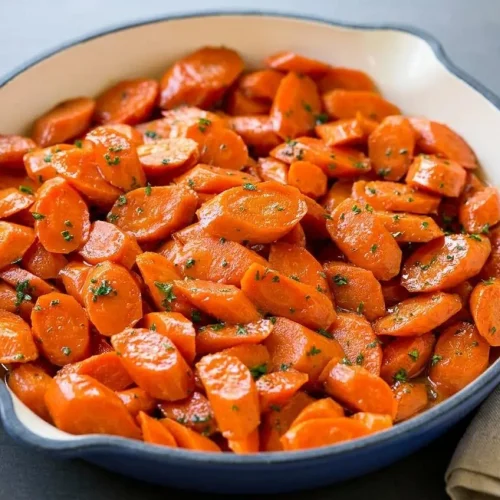
Glazed Carrots Recipe

Equipment
- Large pan
Ingredients
- 1 1/2 lbs carrots peeled and cut into 1/2 inch thick slices
- 1/4 cup butter
- 1/4 cup brown sugar
- 1/4 teaspoon salt
- 1 tablespoon chopped parsley optional
Instructions
- Put the sliced carrots in a large pan, pour in 1 1/2 cups of water, and bring the pan to a steady simmer. The water should bubble gently around the carrot coins rather than boil aggressively.
- Simmer the carrots for 8 to 10 minutes, then pour off every bit of remaining water. A paring knife should enter a thick slice with slight resistance, not slide through like butter.
- Return the drained pan to the burner and add the butter, brown sugar, and salt, turning the carrots to coat them. The butter will melt around the carrots and the sugar will begin to dissolve into a syrup.
- Cook for 4 to 5 minutes, stirring occasionally and swirling the pan between stirs. Look for small, slow bubbles and a shiny glaze that lightly coats the back of a spoon.
- Top with parsley if desired and serve the carrots while the glaze is warm. The finished carrot coins should look glossy and remain intact rather than soft or broken.