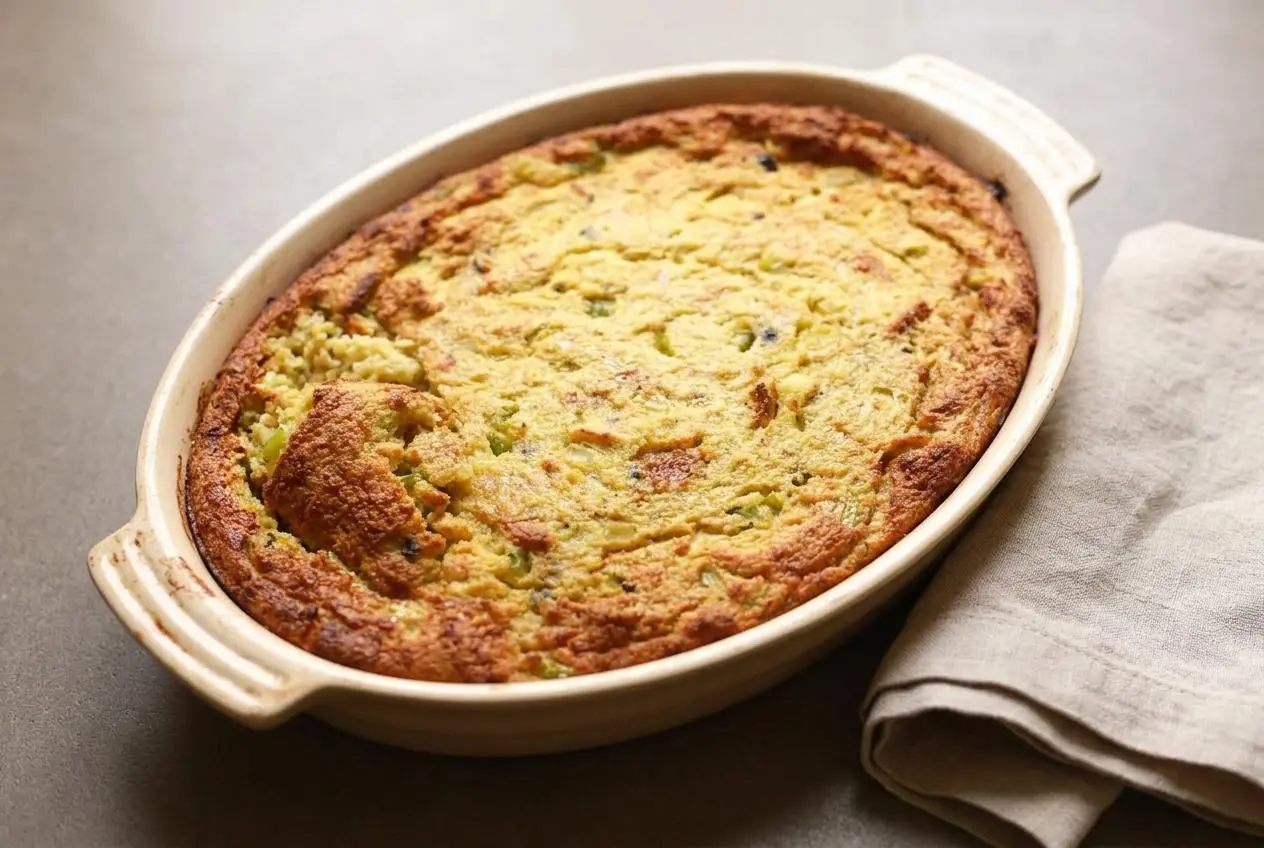
Cornbread dressing is a classic Southern baked side dish made with savory crumbled cornbread, white bread cubes, buttery onions and celery, broth, eggs, and seasoning for a moist, custardy center.
This cornbread dressing fills the kitchen with the warm scent of butter, celery, onions, and poultry seasoning. It bakes into a golden casserole with crisp edges and a tender interior.
The key is controlling the moisture before it reaches the baking dish. That spoon test makes all the difference.
Use a large bowl so the bread can absorb the broth evenly without being crushed as you fold.
Key Ingredients and Flavor Foundations for Cornbread Dressing
Each ingredient has a job: the breads create structure, butter and vegetables build savory aroma, broth brings moisture, and eggs set the dressing into tender, scoopable portions.
- 6 cups cornbread, crumbled
- 1/2 cup butter
- 1 1/2 cup chopped onions
- 1 1/2 cup chopped celery
- 4 eggs
- 2 1/2 cups chicken broth
- 4 slices white bread, cubed
- 1 tbsp poultry or Creole seasoning
- 1 can mushroom soup
- 1 tbsp Kosher salt
- 1/2 tsp pepper
Crumbled cornbread gives the casserole its unmistakable corn flavor, while eggs bind the moist crumbs so each serving holds together. Chicken broth softens the bread without making it heavy, and mushroom soup helps the mixture stay cohesive and richly savory instead of separating into greasy pockets.
I prefer cornbread that has cooled completely and dried slightly before crumbling because it soaks up broth more evenly and keeps a pleasant crumb.
Savory Cornbread vs Sweet Mixes
Choose unsweetened cornbread for dressing. Sweet, cake-like mixes can push the finished casserole toward dessert territory and compete with the savory butter, celery, poultry seasoning, and mushroom soup.
White or yellow cornmeal both work well when the finished cornbread is firmly baked and not overly sweet. If you need a dependable foundation, use savory skillet cornbread with a sturdy crumb that will hold up once broth and eggs are added.
The Structural Importance of White Bread
The 6 cups of cornbread bring flavor and tenderness, while the 4 slices of cubed white bread provide elasticity. White bread has enough gluten structure to absorb broth and help the mixture set without letting the cornbread dissolve into a soft paste.
Dry or lightly toasted bread works especially well. Fresh, soft bread can soak up liquid too quickly, which makes it harder to judge whether the bowl needs more broth or more dry crumbs.
Butter and Aromatic Vegetables
The equal amounts of onion and celery create the classic savory backbone. Butter carries their flavor through the whole dish, and cooking the vegetables first removes the sharp raw bite that can feel out of place in a soft dressing.
Give the vegetables time in the skillet. The onions should look glassy and smell sweet, while the celery should be tender enough to yield easily when pressed with a spoon.
How to Make Cornbread Dressing
Build the dressing in layers: prepare the pan, soften the aromatics, whisk the eggs separately, then fold everything together gently so the bread retains some texture.
- Heat the oven to 350 °F, then generously grease or spray a 9 X 11 baking dish.
The coating should cover the bottom and corners so the browned crust releases cleanly. - Place the crumbled cornbread in a large mixing bowl and break up any large pieces with clean hands.
Leave some small uneven crumbs for a more interesting, tender texture after baking. - Melt the butter in a skillet and cook the onions and celery for about 8 minutes, then whisk the eggs in a small bowl.
The vegetables should be fully translucent, soft, and sweet-smelling before they meet the bread. - Fold the cooked vegetables, eggs, chicken broth, white bread cubes, poultry or Creole seasoning, mushroom soup, salt, and pepper into the cornbread, then transfer the mixture to the prepared dish and bake for 35 – 40 minutes.
The top should turn golden, and the center should gently spring back when pressed with a spoon.
Add the broth gradually as you fold rather than pouring it into one spot. The mixture should feel moist and heavy, with soft resistance under the spoon, but there should not be a puddle collecting at the bottom of the bowl.
Essential Secrets for the Perfect Texture
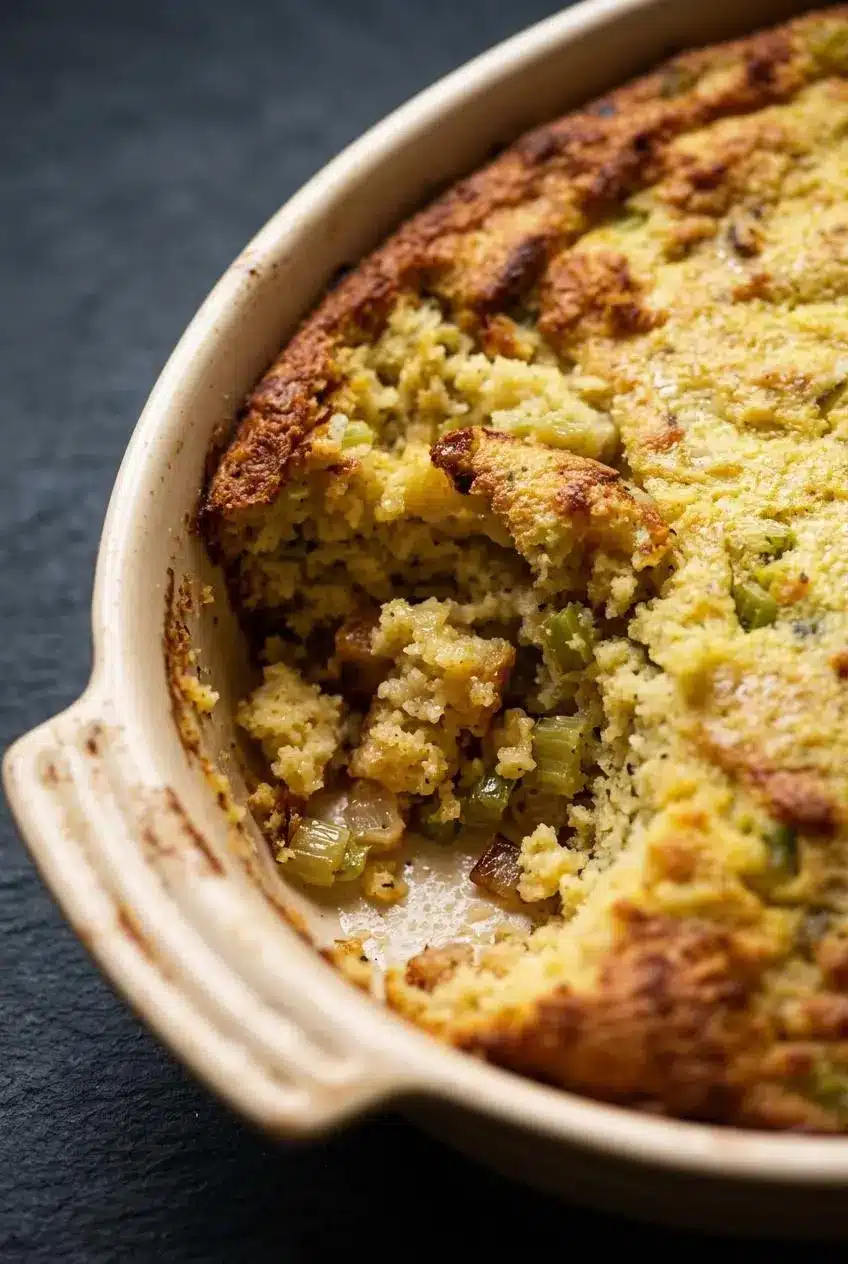
A great dressing has a moist, custardy crumb beneath a browned top, not a wet center or dry pile of crumbs. The bread needs enough liquid to hydrate fully, while still keeping its shape.
- Check for wet-sand texture. Before filling the dish, squeeze a spoonful gently. It should hold together like damp sand and look thoroughly moistened without leaking broth around the edges.
- Start with dry bread. Day-old cornbread and dried white bread cubes absorb broth gradually. If your bread is very fresh, dry it briefly in a low oven until the surface feels dry before mixing.
- Use the full width of the baking dish. A 9 X 11 dish spreads the dressing into a layer that can develop golden corners while the middle stays soft and steaming.
- Fold instead of mashing. Stir until the ingredients are evenly distributed, then stop. Aggressive mixing breaks down the cornbread and can make the interior gummy.
Mushroom soup also helps here. Its creamy consistency distributes seasoning and moisture throughout the bread mixture, so the casserole bakes as one cohesive dish rather than as dry crumbs floating in broth.
Common Mistakes and How to Avoid Them
Most dressing problems start in the bowl, which is good news because you can correct the texture before the pan goes into the oven.
- The mixture looks dry and crumbly. The bread has not absorbed enough broth. Add a little warm broth at a time, folding after each addition, until the crumbs clump together and the mixture feels evenly damp.
- The mixture is loose or soupy. Too much broth may have gone in too quickly, or the bread may have been too fresh. Gently fold in additional dried bread cubes until excess liquid disappears and the mixture holds its shape on a spoon.
- The celery stays crunchy. The aromatics were rushed. Cook the onions and celery until completely tender and translucent before adding them to the bread mixture.
- The corners darken too fast. Cover the dish loosely with foil once the top has reached a deep golden color, then continue baking until the center is set.
- The center remains wet. Bake uncovered until the center no longer looks glossy or sloshes when the dish is moved. For a casserole containing poultry additions, use a thermometer and cook the center to a minimum internal temperature of 165 °F.
Salt deserves a quick taste check before baking because chicken broth, poultry seasoning, Creole seasoning, and condensed soup can all bring salt to the bowl. If using a salty broth, season with a lighter hand until you know how the mixture tastes.
Make-Ahead and Reheating Instructions
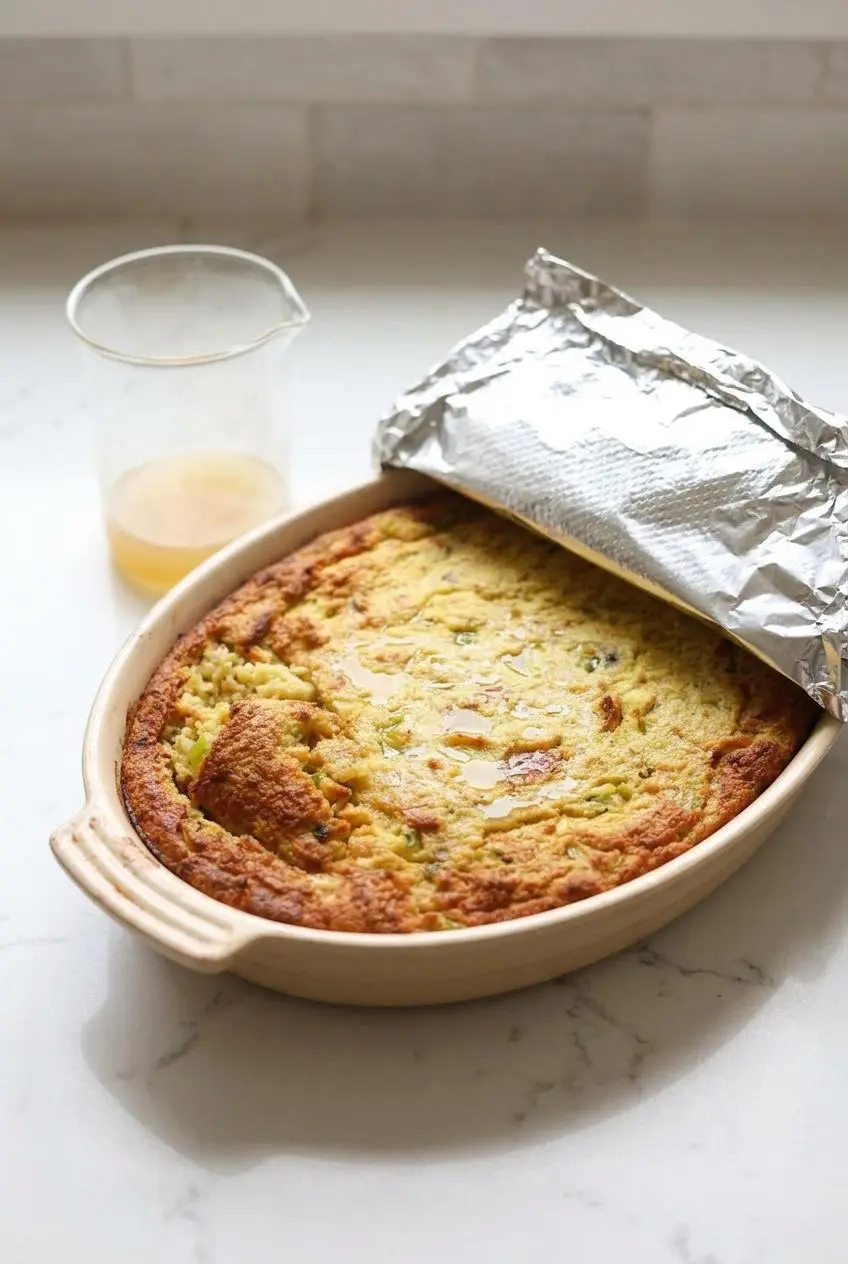
Holiday cooking is easier when the bread and vegetables are handled ahead, while the wet mixture is combined close to baking time. Crumble the cornbread, cube the white bread, and cook the celery and onions in advance, then keep the components chilled separately.
For an unbaked casserole, avoid combining the wet and dry ingredients far in advance. Mix the dressing, transfer it to the dish, and place it in the oven promptly so the bread does not become overly saturated while it sits.
Cool baked dressing promptly, cover it well, and keep it chilled. Reheat portions covered loosely with foil and add a small splash of warm chicken broth if the surface looks dry. Warm until the center is steaming hot, then uncover near the end if you want to refresh the browned top.
For leftovers containing poultry or eggs, refrigerate them within two hours and reheat thoroughly before serving. Prompt chilling and thorough reheating for stuffing help reduce food-safety risks.
Flavor Variations and Add-Ins
Keep the main mixture as written, then use these optional additions when you want a different holiday flavor profile.
Meat-Folded Soul Food Dressing
Fold in cooked shredded roasted chicken, turkey, browned breakfast sausage, or chopped giblets for a heartier dressing. Drain sausage thoroughly first so rendered fat does not weigh down the bread mixture or make the surface greasy.
If adding turkey or chicken, use moist shredded meat and distribute it gently through the bowl. Large clumps can create dry pockets and make slicing less neat.
Herb-Forward Traditional Southern Dressing
For a more herbaceous dish, add extra rubbed sage, fresh thyme leaves, and cracked black pepper. Sage brings the familiar earthy holiday flavor, while thyme adds a fresher lift that works especially well alongside roast poultry.
Season carefully if using Creole seasoning, since it may already contain herbs, pepper, and salt. The goal is a fuller aroma, not a seasoning blend that overwhelms the buttery corn flavor.
Quick-Prep Pantry Dressing and Custom Add-Ins
- Use prepared store-bought savory cornbread cubes when time is tight, choosing an unsweetened style for the best savory balance.
- Swap the mushroom soup for condensed cream of celery or condensed cream of chicken soup if you prefer either flavor.
- Stir browned sage butter and toasted chopped pecans into the dressing before baking for a nutty aroma and gentle crunch.
- For a little heat, begin with spicy jalapeno cornbread and keep the remaining seasonings balanced so the peppers do not dominate the casserole.
Holiday Serving Ideas and Classic Pairings
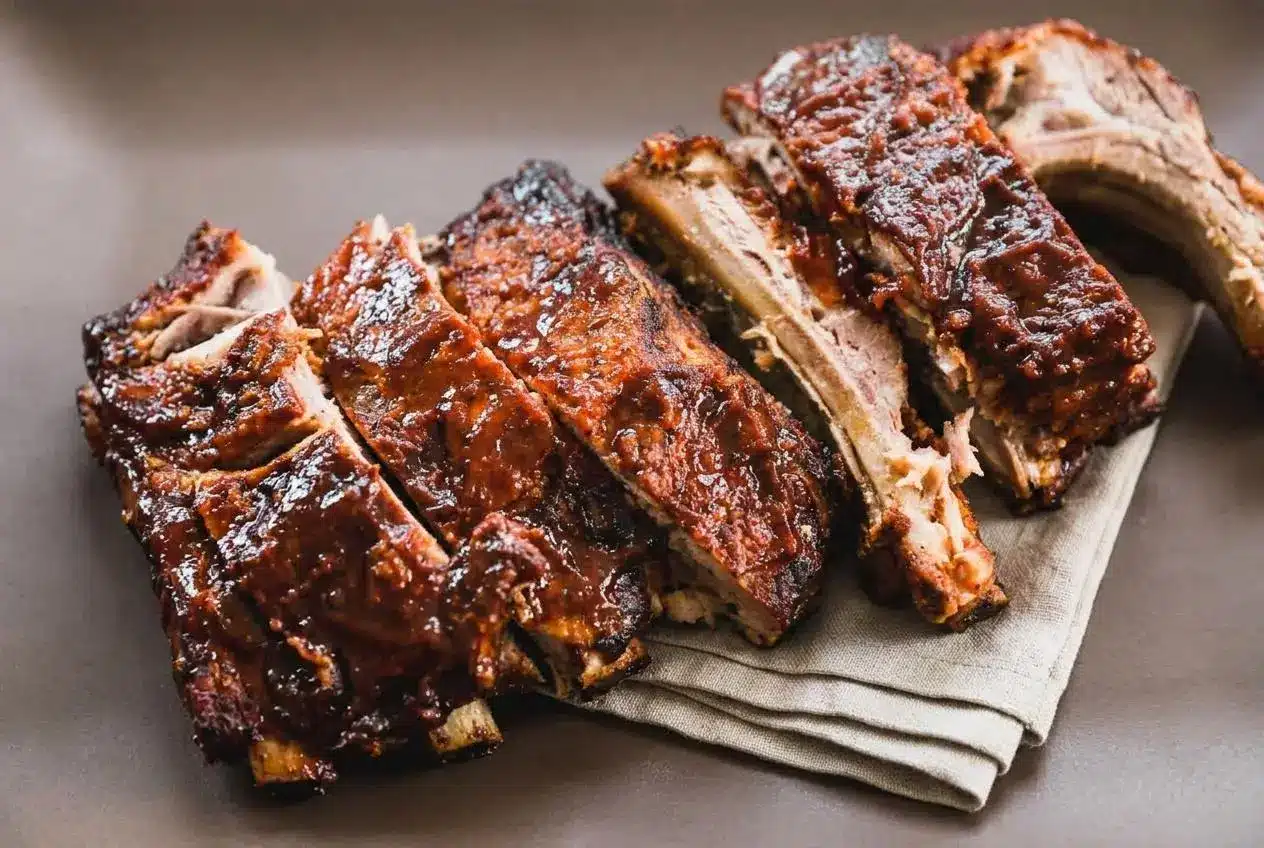
Serve the dressing hot, especially when the top is crisp and the center is still tender. Spoon warm giblet gravy or roasted turkey gravy over the browned corners for a classic Thanksgiving-style plate.
- Pair it with tart cranberry sauce to brighten the rich butter and savory broth.
- Serve it beside roasted turkey or roast chicken, where the dressing can catch the pan juices.
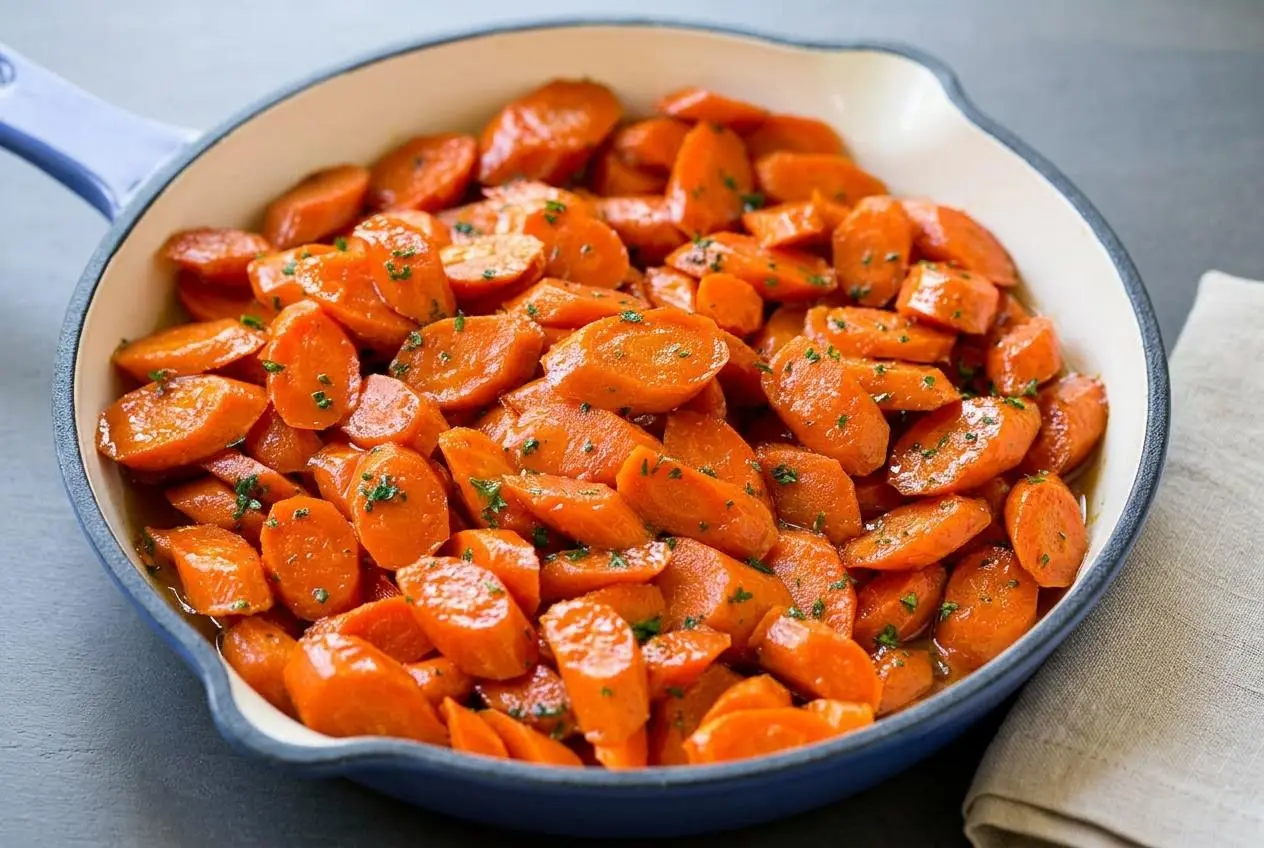
- Add braised collard greens for a savory, slightly bitter contrast.
- Include sweet potato casserole for a sweet and creamy counterpoint without adding another bread side.
A generous spoonful of gravy is especially useful if the dressing has been resting for a while. It softens the top just enough while keeping the browned edges satisfying.
Conclusion
This cornbread dressing delivers the comforting flavor of buttery aromatics, savory seasoning, and golden cornbread in every scoop. The blend of cornbread and white bread gives it both tenderness and enough structure to serve neatly.
Watch the moisture in the bowl before baking, and you will be rewarded with a soft center and crisp top. For a personal touch, add browned sage butter and toasted pecans to bring extra warmth to the holiday table.
Frequently Asked Questions
What Is the Secret to Good Cornbread Dressing?
Use savory, slightly dry cornbread and combine it with cubed white bread for structure. Add the broth gradually until the mixture resembles wet sand: moist, cohesive, and heavy, but never pooled with liquid.
Should You Put Eggs in Cornbread Dressing?
Yes. Whisked eggs bind the bread mixture and help it bake into sliceable portions instead of loose, crumbly stuffing. Whisk them separately before folding them into the cooled bread mixture.
Why Is My Cornbread Dressing Too Wet or Soupy?
This usually happens when broth is added too quickly or the bread was too fresh and soft. Fold in more dried bread cubes before baking, then bake uncovered until the center is set and no longer glossy.
Can I Make Cornbread Dressing the Day Before Thanksgiving?
Prepare the dry bread mixture and cooked aromatics ahead, keeping them chilled separately. Combine the wet and dry ingredients shortly before baking so the bread stays structured and does not become overly saturated.
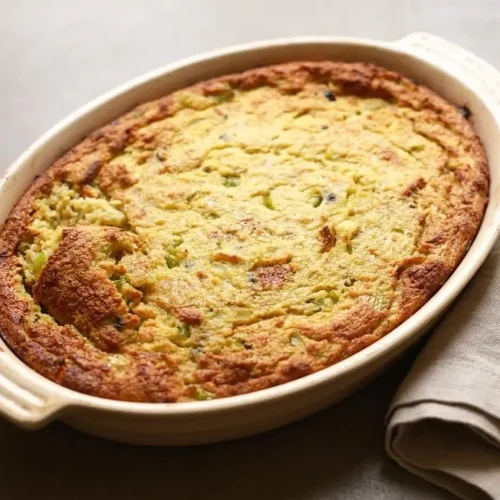
Cornbread Dressing

Equipment
- 9 X 11 baking dish
- Skillet
- Large Mixing Bowl
- Small bowl
Ingredients
- 6 cups cornbread, crumbled
- 1/2 cup butter
- 1 1/2 cup chopped onions
- 1 1/2 cup chopped celery
- 4 eggs
- 2 1/2 cups chicken broth
- 4 slices white bread, cubed
- 1 tbsp poultry or Creole seasoning
- 1 can mushroom soup
- 1 tbsp Kosher salt
- 1/2 tsp pepper
Instructions
- Heat the oven to 350 °F, then generously grease or spray a 9 X 11 baking dish. The coating should cover the bottom and corners so the browned crust releases cleanly.
- Place the crumbled cornbread in a large mixing bowl and break up any large pieces with clean hands. Leave some small uneven crumbs for a more interesting, tender texture after baking.
- Melt the butter in a skillet and cook the onions and celery for about 8 minutes, then whisk the eggs in a small bowl. The vegetables should be fully translucent, soft, and sweet-smelling before they meet the bread.
- Fold the cooked vegetables, eggs, chicken broth, white bread cubes, poultry or Creole seasoning, mushroom soup, salt, and pepper into the cornbread, then transfer the mixture to the prepared dish and bake for 35 – 40 minutes. The top should turn golden, and the center should gently spring back when pressed with a spoon.