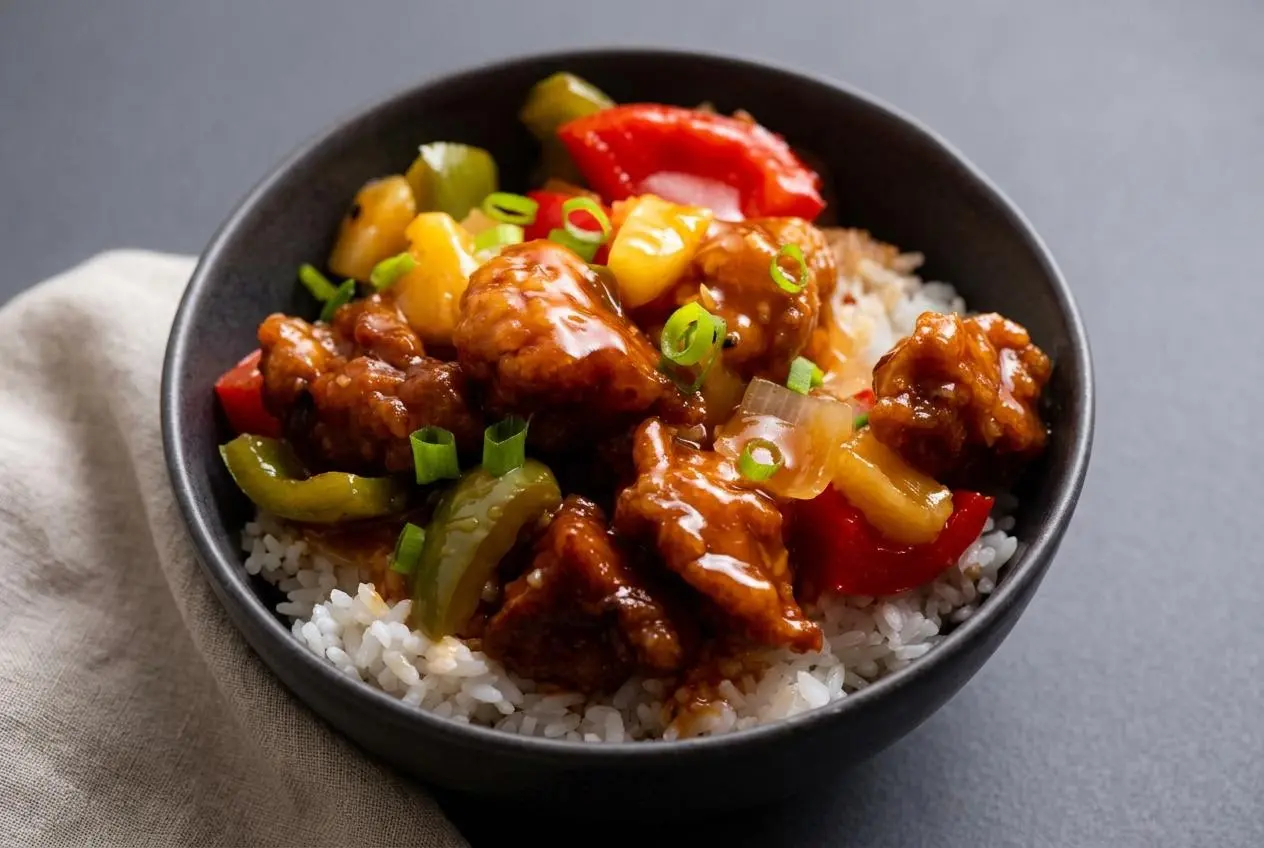
Authentic sweet and sour pork gets its crunch from baking soda-tenderized pork, a double cornstarch coating, two frying stages, and a fast 10-second toss in hot sauce.
This sweet and sour pork recipe delivers juicy pork with a crackly golden coating, bell peppers, pineapple, and a tangy ketchup-vinegar glaze.
The first fry gives a steady bubble, while the second fry brings a sharper sizzle and deep bronze crust. That last quick toss is where the magic happens.
Set out the sauce, vegetables, rack, and serving platter before frying begins, because the final stir-fry moves very quickly.
Essential Ingredients for Authentic Sweet and Sour Pork
Each ingredient earns its place: pork provides richness, aromatics build savory depth, cornstarch creates crunch, and pineapple, vinegar, sugar, and ketchup shape the sweet-tangy balance.
Tenderised Marinated Pork
- 400g/14oz pork scotch roast (aka pork neck, collar butt) or shoulder / butt, cut into 2cm / 4/5′ cubes
- 1/2 onion, finely grated
- 1 tsp garlic, finely grated
- 1 tsp ginger, finely grated
- 3/8 tsp baking soda (bi-carb)
- 2 tsp cornflour/cornstarch
- 2 tbsp light soy sauce, or all purpose
For frying
- 5 tbsp cornflour/cornstarch – for mixing in
- 1/2 cup cornflour/cornstarch – for Coating
- 2 – 3 cups vegetable or canola oil
Sweet & Sour Sauce
- 1/3 cup white sugar
- 1/3 cup apple cider vinegar (or 1/4 cup normal white vinegar)
- 3 tbsp pineapple juice (from a 227g/8oz can pineapple pieces in juice, preferably no added sugar)
- 3 tbsp ketchup (or Aussie tomato sauce)
- 1/2 tsp Worcestershire sauce
- 1 tbsp soy sauce, light
- 1 tsp Oyster Sauce
- 4 tsp cornflour/corn starch
- 1/2 cup water
Stir Frying
- 1 tbsp oil
- 1 garlic clove, finely chopped
- 2 tsp ginger, finely chopped
- 1 onion (medium), cut into 2.5cm/ 1′ cubes (brown, white, yellow)
- 1/2 red capsicum/bell pepper (large), cut into 2.5cm / 1′ cubes
- 1/2 green capsicum/bell pepper (large), cut into 2.5cm / 1′ cubes
- 1 cup pineapple pieces (from the can of pineapple under Sauce)
Pork collar and shoulder butt have enough marbling to remain juicy through high-heat frying. Finely grated onion, garlic, and ginger season the meat from the start, while soy sauce adds savory depth. The sauce combines sugar, apple cider vinegar, pineapple juice, and ketchup for a bright glaze rather than a flat sugary coating.
I prefer pork collar when it is available because its fine marbling keeps the center succulent even after the crisp second fry.
Selecting the Best Pork Cut
Pork scotch roast, also called collar or pork neck, is an excellent choice because it has evenly distributed fat and a tender texture. Pork shoulder butt works well for the same reason and is often easier to find.
Lean pork loin can become dry and chewy under this style of frying. If loin is your only option, velvet it carefully with the measured baking soda and avoid overcooking it. Pork tenderloin is better saved for the unbattered stir-fry variation below.
The Role of Baking Soda Velveting
Baking soda gently changes the surface of the pork so the muscle fibers stay more tender during cooking. The small measured amount matters: it improves tenderness without leaving a noticeable alkaline or bitter flavor.
Give the pork the full 18 to 24 hours in the marinade. The grated aromatics and soy sauce have time to season the meat, while the baking soda helps turn a budget-friendly cut into tender bite-size pieces.
Why Pure Cornstarch Beats Flour
Pure cornstarch forms a thin, crisp shell that turns light and glassy once fried. Flour creates a more bready coating, which can absorb sauce faster and lose its crunch sooner.
The first cornstarch layer becomes tacky after resting, helping the second dry layer cling evenly. That double coating is the foundation for the crisp, craggy pork associated with restaurant-style sweet and sour dishes.
Crafting the Perfect Sweet and Sour Sauce
A balanced sauce should taste bright first, sweet second, and savory underneath. Sugar softens the sharpness of apple cider vinegar, while pineapple juice and ketchup bring fruity acidity, color, and body.
Light soy sauce, Worcestershire sauce, and oyster sauce prevent the glaze from tasting one-dimensional. For more ideas on balancing acidity and thickness in a sweet and sour sauce, focus on adjusting flavor before the cornstarch thickens it.
Mix the sauce ingredients thoroughly before cooking so the cornstarch disperses evenly. Add the water only after the other ingredients are combined. Once the sauce reaches a rapid simmer, it thickens into a glossy coating that clings to the vegetables and pork.
The best consistency test is simple: drag a spoon or spatula across the bottom of the skillet. A clear path should remain visible for about two seconds before the sauce closes over it. If the trail disappears instantly, simmer a little longer. If it looks gluey, loosen it with small splashes of hot water.
Fresh Versus Canned Pineapple Balancing
Canned pineapple packed in juice gives dependable sweetness and provides the juice needed for the sauce. Fresh pineapple can be brighter and more tart, but its flavor varies widely from fruit to fruit.
If using especially sweet canned pineapple, taste the sauce before adding the pork and use the vinegar option that best keeps the finish lively. If fresh pineapple tastes very tart, let the sugar, ketchup, and pineapple flavor settle together before making any adjustment. Rice vinegar gives a gentler tang than apple cider vinegar, while distilled white vinegar tastes sharper.
How to Make Crispy Sweet and Sour Pork
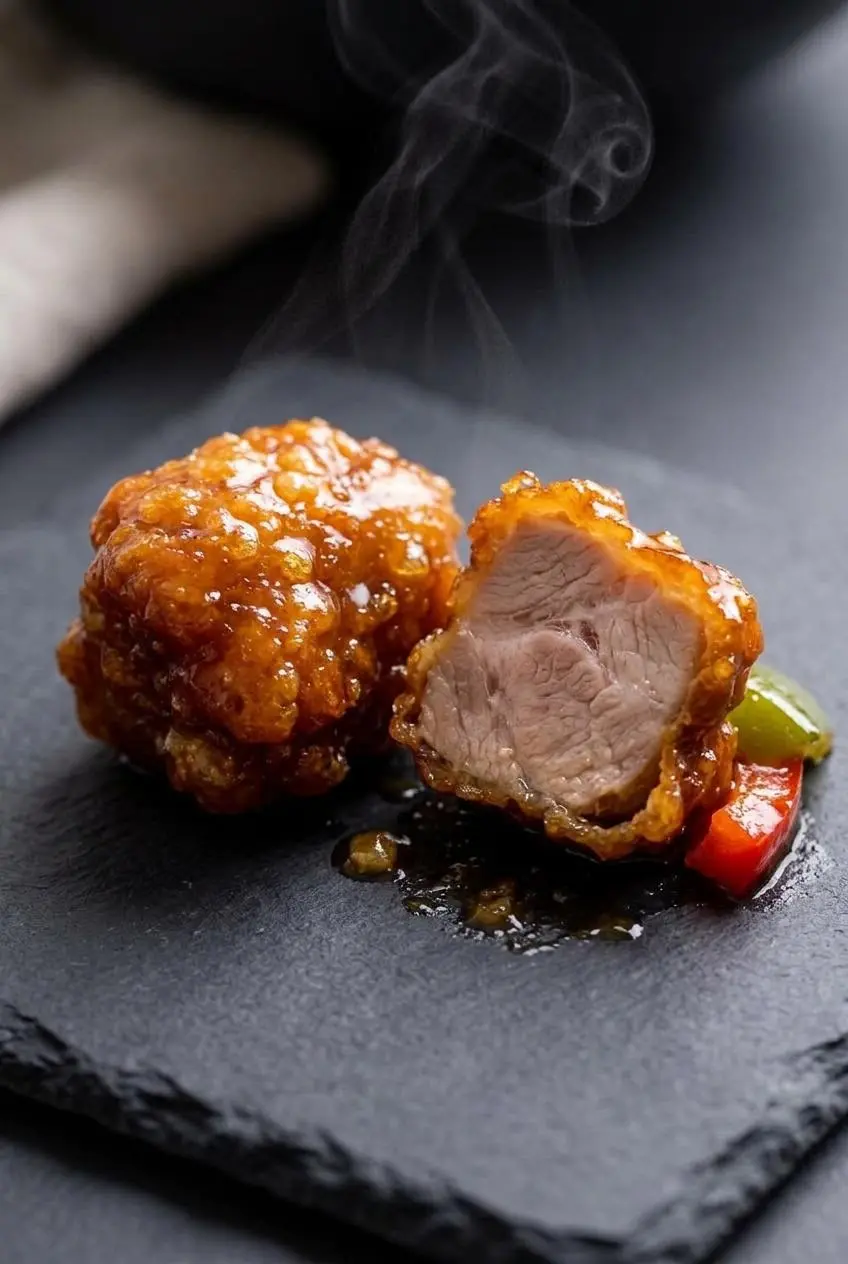
The method works because each stage has one job: tenderize the pork, build a dry coating, cook the center, crisp the shell, then sauce everything quickly.
Marinade Pork
- Combine the pork with the grated onion, garlic, ginger, baking soda, 2 tsp cornflour/cornstarch, and soy sauce, then refrigerate for 18 to 24 hours.
The pork should look evenly coated with the aromatic marinade before chilling.
Preparation
- Heat the oven to 80°C/175°F and place a wire rack over a baking tray.
This warm resting spot keeps fried batches elevated so their coating stays drier. - Whisk all sauce ingredients except the water in a large jug or small bowl, then stir in the water.
The mixture should look smooth, with no dry cornstarch sitting at the bottom. - Arrange the sauce mixture, pineapple, aromatics, onion, and bell peppers beside the stove before frying.
Everything should be within reach because the pork needs to be sauced immediately after its second fry.
Double dredge
- Work 5 tbsp cornflour/cornstarch into the marinated pork and leave it for 5 minutes.
The initially white coating will turn damp, tacky, and slightly glossy as it absorbs moisture. - Spread the 1/2 cup cornflour/cornstarch in a shallow bowl, then coat each piece and shake away loose excess.
The pork should still look at least half white with dry starch when it goes into the oil, so dust again if needed.
Fried Crispy Pork
- Pour vegetable or canola oil into a large saucepan or small pot to a depth of 2.5cm / 1′, then heat it to 180°C/350°F.
A test piece should begin sizzling immediately without the oil smoking. - Fry the pork in uncrowded batches for 3 minutes, then transfer each batch to the rack.
This first fry cooks the pork and gives the coating a pale golden finish rather than deep browning. - Raise the oil to 200°C/390°F and fry the coolest pork first, working in two batches for 1 1/2 minutes each.
The sizzle becomes sharper and the pieces turn deep golden brown with a firm, blistered crust. - Return the twice-fried pork to the rack and keep it warm in the oven while finishing the stir-fry.
Keeping the pieces in a single layer helps steam escape instead of softening the crust.
Sauce & Stir Fry
- Heat 1 tbsp oil in a very large skillet over high heat, then stir-fry the garlic, ginger, and onion for 1 1/2 minutes before adding the bell peppers for 2 minutes.
The aromatics should smell fragrant and the vegetables should stay bright with crisp edges. - Pour in the prepared sauce and pineapple, then bring the mixture to a rapid simmer for 2 minutes.
The sauce is ready when it turns glossy and a dragged spoon leaves a brief path across the skillet. - Add the hot fried pork and toss it through the sauce for no more than 10 seconds.
Every piece should pick up a thin shiny coating while the crust still sounds crisp against the skillet. - Transfer the pork and vegetables to a serving platter immediately.
The coating is at its crunchiest straight away and gradually softens once it meets the sauce.
The Two-Stage Starch Dredge
Do not rush the 5-minute rest after the first cornstarch addition. That pause lets the starch pull moisture from the pork, creating the sticky surface that holds the second coating in place.
After the dry dredge, avoid stacking the pork too tightly while waiting to fry. A loose pile is fine, but crowded pieces can rub off the coating before they reach the oil.
First Fry: Cooking the Meat Through
The 350°F first fry cooks the pork without scorching the cornstarch shell. Keep batches small enough that the oil continues to bubble actively around every piece.
If the oil cools too much, the coating absorbs more oil and becomes heavy instead of crisp. Let the oil return to temperature between batches, and keep hands and utensils dry around hot oil to reduce splattering.
Second Fry: Blistering the Crisp Shell
The 390°F second fry takes only 90 seconds, but it transforms the texture. The hotter oil drives off surface moisture and turns the exterior a deep golden bronze with a brittle crunch.
Start with the coolest first-fried pork, then move finished pieces to the wire rack in the warm oven. The rack matters because a plate traps steam underneath the pork.
The 10-Second High-Heat Wok Toss
Once the sauce has thickened, the final toss is a race against sogginess. Add the pork off the heat if the skillet is fiercely hot, then turn it through the sauce quickly and plate it without delay.
Ten seconds is enough to glaze every piece. Letting the pork simmer in sauce will soften even a well-fried crust.
Troubleshooting Common Mistakes and Texture Issues
- The coating turned soft: The pork likely sat in sauce too long or was held on a plate where steam collected. Keep it on a rack after frying, toss only at the end, and serve immediately.
- The pork tastes greasy: The oil temperature probably dropped during the first fry. Use an instant-read thermometer, fry smaller batches, and wait for the oil to recover before adding more pork.
- The oil fell below 325°F: Pause frying and let the oil heat back up before continuing. Adding more pork while the oil is cool will worsen the problem.
- The pork is tough: Lean pork or an abbreviated marinade can cause chewiness. Choose collar or shoulder when possible and give the baking soda marinade its full chilling time.
- The sauce looks thick and gluggy: The cornstarch has reduced too far. Stir in small splashes of hot water until the sauce flows smoothly and coats the back of a spoon.
- The sauce tastes too sweet: Add a small splash of the vinegar already used in the dish, then taste again. The goal is a clean tang that balances the pineapple and ketchup.
Smart Storage, Make-Ahead Prep, and Reheating
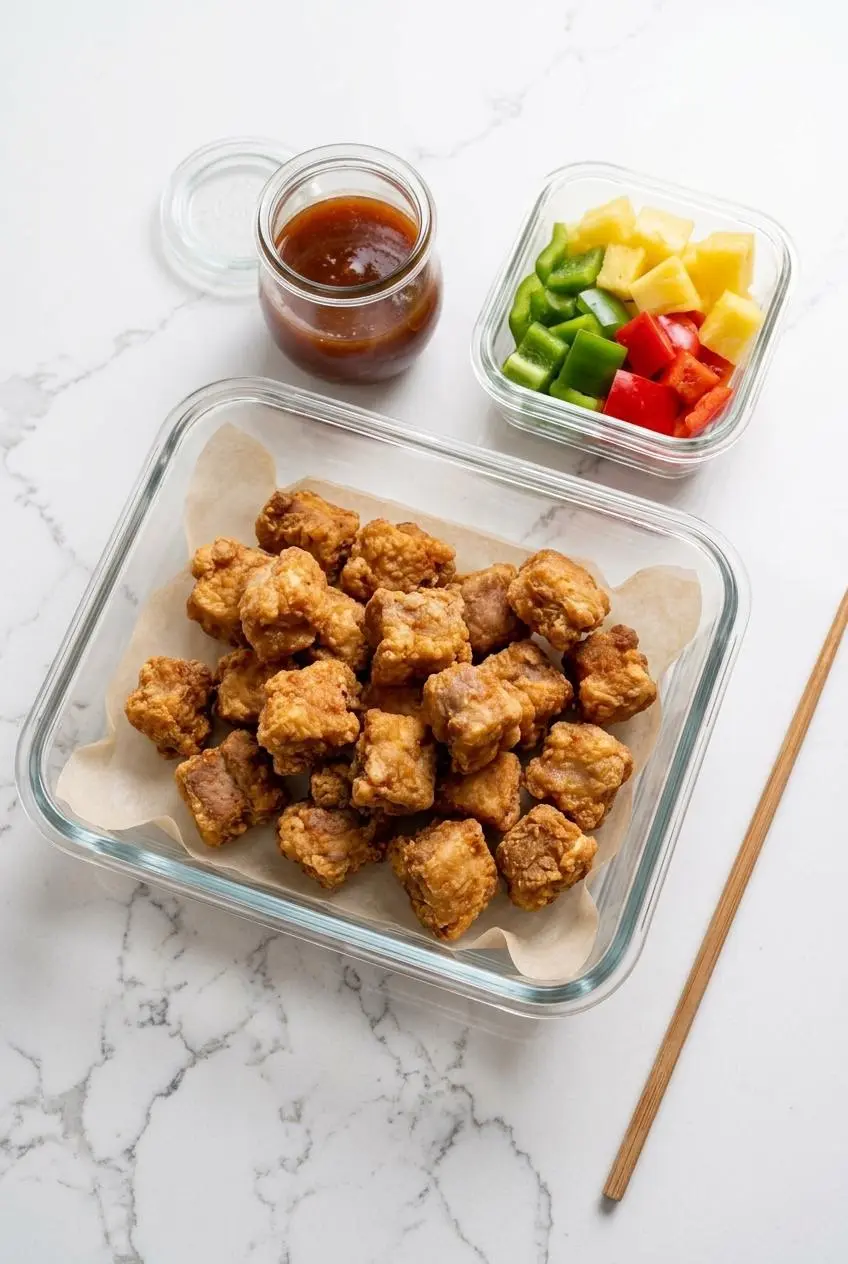
For the best texture, keep fried pork, sauce, and vegetables in separate airtight containers once cooled, then combine them only when ready to eat. Refrigerate components promptly and keep them chilled.
The pork can marinate for the stated 18 to 24 hours, and the vegetables can be cut before cooking so the final stir-fry stays fast. Mix the sauce ahead if helpful, but keep it separate from the fried pork until serving.
Avoid microwaving battered pork if you want to preserve its crust. Re-crisp it in a hot oven or air fryer, warm the sauce separately, then give the pork a quick toss just before serving.
After frying, let the oil cool completely. Strain out loose cornstarch crumbs through a fine sieve, store the clarified oil in a clean covered container, and discard it if it smells stale, appears unusually dark, or smokes sooner than expected.
Delicious Variations: Air Fryer, Baked, and Lighter Options
These options change the cooking method, not the flavor profile. They are useful when you want less oil or a faster weeknight approach, though deep frying still gives the most dramatic crust.
Air Fryer Method for Easy Cleanup
For air fryer sweet and sour pork, coat the marinated pieces as directed and lightly mist them with neutral oil spray. Arrange them in one layer and cook at 400°F (200°C) for 8 to 10 minutes, shaking the basket halfway through.
The exterior will brown and crisp, though it will be less blistered than double-fried pork. Toss the pieces with hot sauce immediately before serving. If you prefer poultry, this sweet and sour chicken variation uses the same lively flavor direction.
Crispy Oven-Baked Pork
For an oven version, briefly sear the battered pork in a lightly oiled skillet first. Move the pieces to a wire rack set over a baking sheet, then bake at 430°F (220°C) for 15 minutes until browned and cooked through.
The sear starts the crust, while the rack allows heat to circulate around the pork. This version has a firmer baked crunch rather than the delicate, shattery texture of the double fry.
Unbattered Weeknight Tenderloin Stir-Fry
For a lighter option, slice pork tenderloin thinly and sear it directly in a hot wok or large skillet. Add bell peppers, onion, pineapple, and the prepared sauce, then cook only until the pork is done and the vegetables remain crisp-tender.
This variation skips the cornstarch shell, so expect a saucy stir-fry instead of crispy takeout-style pork. It is especially good when served quickly over hot rice.
Finishing Touches and Flavor Additions
If you want a more aromatic finish, add a light splash of toasted sesame oil and thinly sliced scallion whites during the final toss. Keep the addition restrained so the vinegar, pineapple, and ketchup remain the main flavors.
What to Serve with Sweet and Sour Pork
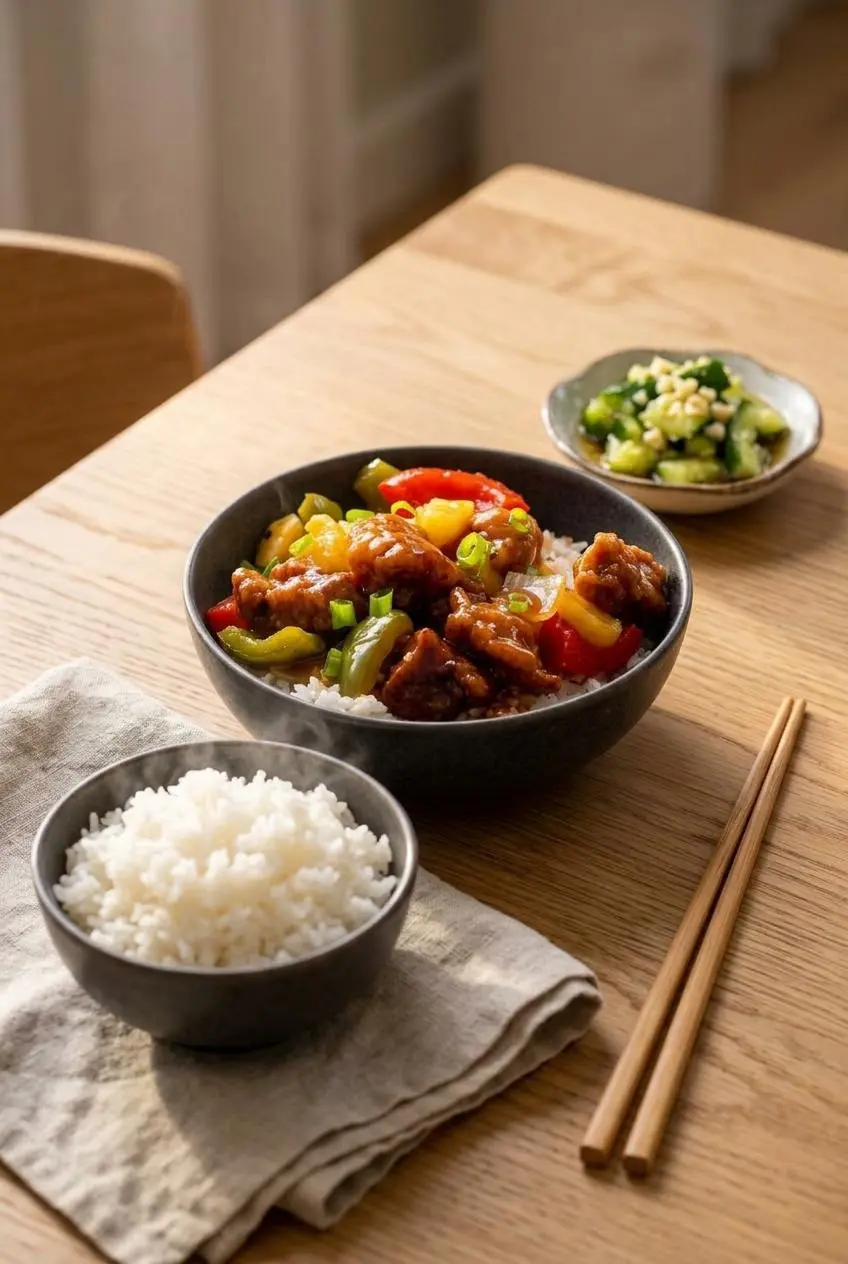
Steamed jasmine rice is the classic partner because it absorbs extra sauce without competing with the pork. Golden egg fried rice is another satisfying choice when you want a fuller takeout-style spread.
- Serve with smashed garlic cucumber salad for a cool, crisp contrast to the warm glaze.
- Add steamed gai lan with oyster sauce for a savory green vegetable alongside the pineapple and peppers.
- Use plain steamed rice when the pork is the star and you want every crispy bite to stand out.
Conclusion
Restaurant-style sweet and sour pork is absolutely possible at home when the pork is tenderized with baking soda, coated in pure cornstarch, and fried twice at the right temperatures.
Keep the sauce glossy, the vegetables crisp, and the final toss to 10 seconds. Serve it hot, and enjoy that crackly first bite.
Frequently Asked Questions
What Cut of Pork Makes the Juiciest Sweet and Sour Pork?
Pork collar, pork scotch roast, and pork shoulder butt are the juiciest choices. They contain marbling that protects the meat during frying. They become especially tender after the baking soda marinade. Lean pork loin can work, but it needs careful velveting and can dry out more easily.
How Do Chinese Restaurants Keep Sweet and Sour Pork So Crispy?
The crunch comes from a few tightly timed steps. Use pure cornstarch in two layers, with a 5-minute rest after the first layer. Fry first at 350°F, then again at 390°F for a crisp shell. Toss the pork in thickened sauce for only 10 seconds and serve immediately.
Can Sweet and Sour Pork Be Prepared Ahead of Time?
Yes, prep the components while keeping texture-sensitive parts separate. Marinate the pork for 18 to 24 hours. Chop the vegetables and mix the sauce before cooking. Fry the pork close to serving time, then sauce it at the last minute for the best crunch.
Can I Make This Sweet and Sour Pork Recipe in an Air Fryer?
Yes. Coat the pork, mist it lightly with oil, and air fry at 400°F (200°C) for 8 to 10 minutes in a single layer. Shake the basket halfway through for more even browning. Work in batches rather than crowding the basket. Toss the hot pork with hot sauce right before serving.

Sweet and Sour Pork Recipe

Equipment
- Large saucepan or small pot for deep frying
- Wire cooling rack with baking tray
- Very large skillet or wok
Ingredients
Tenderised Marinated Pork
- 400 g pork scotch roast (aka pork neck, collar butt) or shoulder / butt 14oz, cut into 2cm / 4/5′ cubes
- 1/2 onion finely grated
- 1 tsp garlic finely grated
- 1 tsp ginger finely grated
- 3/8 tsp baking soda (bi-carb)
- 2 tsp cornflour/cornstarch
- 2 tbsp light soy sauce or all purpose
For frying
- 5 tbsp cornflour/cornstarch for mixing in
- 1/2 cup cornflour/cornstarch for Coating
- 2 – 3 cups vegetable or canola oil
Sweet & Sour Sauce
- 1/3 cup white sugar
- 1/3 cup apple cider vinegar or 1/4 cup normal white vinegar
- 3 tbsp pineapple juice from a 227g/8oz can pineapple pieces in juice, preferably no added sugar
- 3 tbsp ketchup or Aussie tomato sauce
- 1/2 tsp Worcestershire sauce
- 1 tbsp soy sauce, light
- 1 tsp Oyster Sauce
- 4 tsp cornflour/corn starch
- 1/2 cup water
Stir Frying
- 1 tbsp oil
- 1 clove garlic finely chopped
- 2 tsp ginger finely chopped
- 1 medium onion cut into 2.5cm/ 1′ cubes (brown, white, yellow)
- 1/2 large red capsicum/bell pepper cut into 2.5cm / 1′ cubes
- 1/2 large green capsicum/bell pepper cut into 2.5cm / 1′ cubes
- 1 cup pineapple pieces from the can of pineapple under Sauce
Instructions
Marinade Pork
- Combine the pork with the grated onion, garlic, ginger, baking soda, 2 tsp cornflour/cornstarch, and soy sauce, then refrigerate for 18 to 24 hours. The pork should look evenly coated with the aromatic marinade before chilling.
Preparation
- Heat the oven to 80°C/175°F and place a wire rack over a baking tray. This warm resting spot keeps fried batches elevated so their coating stays drier.
- Whisk all sauce ingredients except the water in a large jug or small bowl, then stir in the water. The mixture should look smooth, with no dry cornstarch sitting at the bottom.
- Arrange the sauce mixture, pineapple, aromatics, onion, and bell peppers beside the stove before frying. Everything should be within reach because the pork needs to be sauced immediately after its second fry.
Double dredge
- Work 5 tbsp cornflour/cornstarch into the marinated pork and leave it for 5 minutes. The initially white coating will turn damp, tacky, and slightly glossy as it absorbs moisture.
- Spread the 1/2 cup cornflour/cornstarch in a shallow bowl, then coat each piece and shake away loose excess. The pork should still look at least half white with dry starch when it goes into the oil, so dust again if needed.
Fried Crispy Pork
- Pour vegetable or canola oil into a large saucepan or small pot to a depth of 2.5cm / 1′, then heat it to 180°C/350°F. A test piece should begin sizzling immediately without the oil smoking.
- Fry the pork in uncrowded batches for 3 minutes, then transfer each batch to the rack. This first fry cooks the pork and gives the coating a pale golden finish rather than deep browning.
- Raise the oil to 200°C/390°F and fry the coolest pork first, working in two batches for 1 1/2 minutes each. The sizzle becomes sharper and the pieces turn deep golden brown with a firm, blistered crust.
- Return the twice-fried pork to the rack and keep it warm in the oven while finishing the stir-fry. Keeping the pieces in a single layer helps steam escape instead of softening the crust.
Sauce & Stir Fry
- Heat 1 tbsp oil in a very large skillet over high heat, then stir-fry the garlic, ginger, and onion for 1 1/2 minutes before adding the bell peppers for 2 minutes. The aromatics should smell fragrant and the vegetables should stay bright with crisp edges.
- Pour in the prepared sauce and pineapple, then bring the mixture to a rapid simmer for 2 minutes. The sauce is ready when it turns glossy and a dragged spoon leaves a brief path across the skillet.
- Add the hot fried pork and toss it through the sauce for no more than 10 seconds. Every piece should pick up a thin shiny coating while the crust still sounds crisp against the skillet.
- Transfer the pork and vegetables to a serving platter immediately. The coating is at its crunchiest straight away and gradually softens once it meets the sauce.