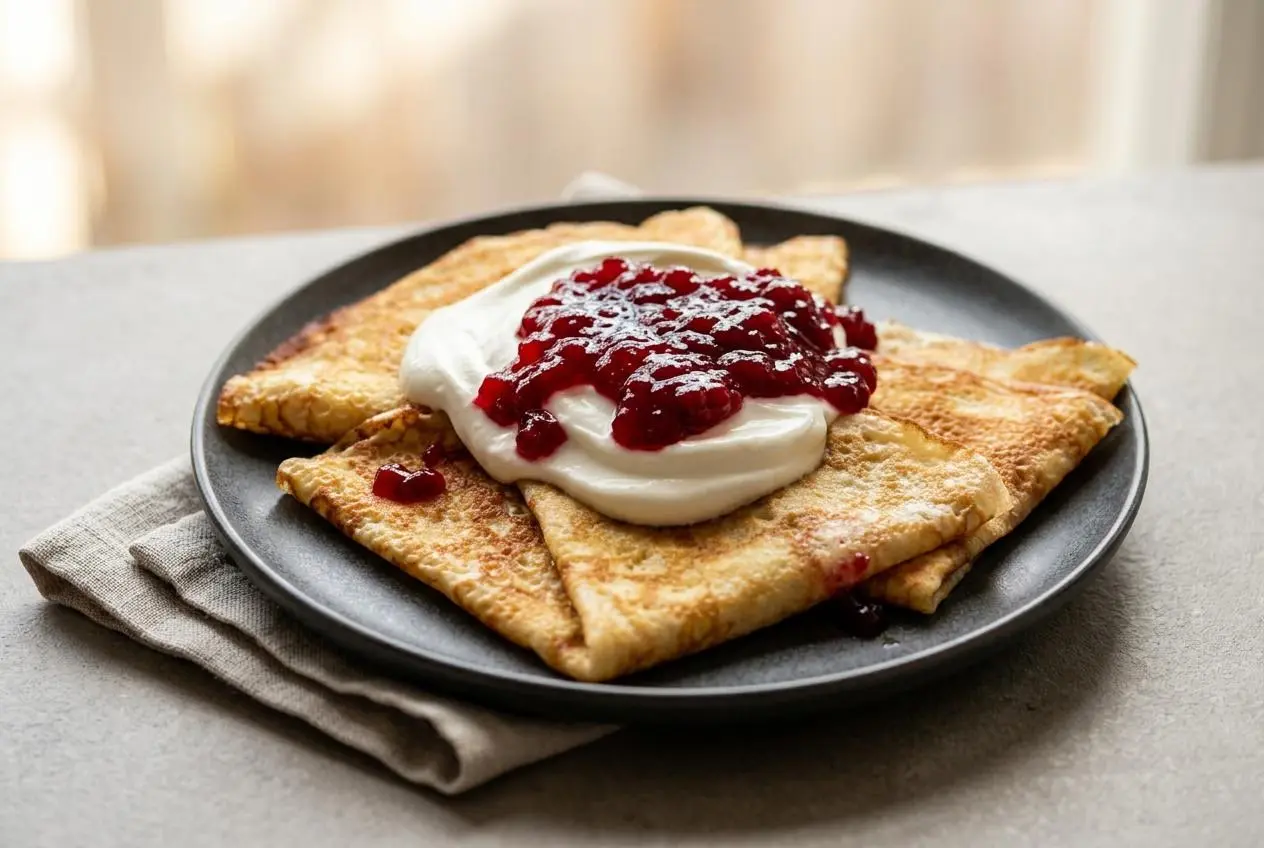
Swedish pancakes are thin, buttery, egg-rich pancakes with soft, flexible centers and delicate lacy edges. They cook flatter than American pancakes and feel richer and softer than crepes.
swedish pancakes are known in Sweden as pannkakor, and their charm comes from a pourable batter, plenty of eggs, and no leavening. The result is tender, bendable, and just chewy enough to roll or fold.
They’re quick to make, but the details matter: a fully heated pan, a light hand with grease, and a short batter rest. That’s where the lacy edges show up.
Warm the skillet before the first pour, and keep the greasing light so the batter can grip the surface instead of sliding around.
Understanding the Authentic Swedish Pancake
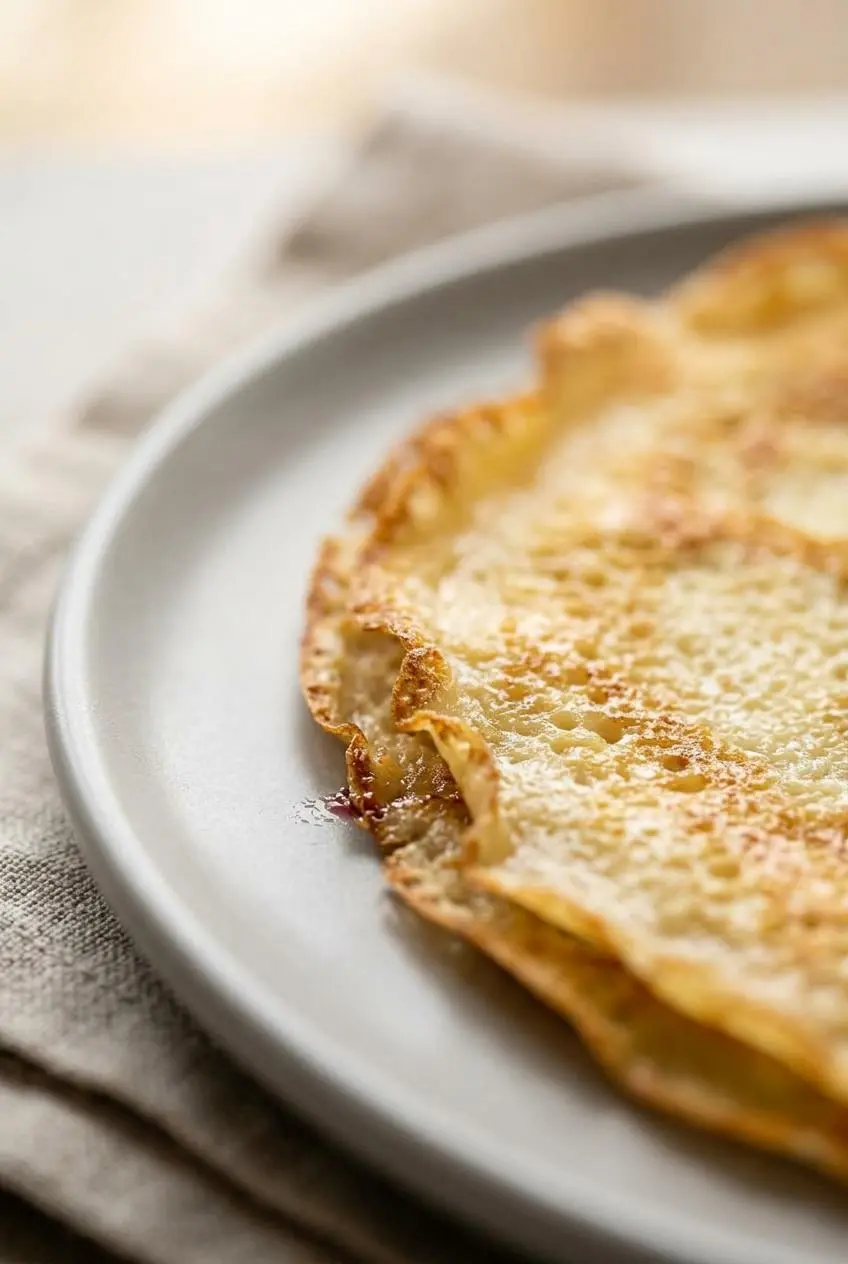
A true Swedish pancake is all about texture. It should be thin, soft, and lightly chewy, with edges that turn delicate and lacy in the pan rather than thick and cakey.
What makes that happen is the structure of the batter. There’s a high ratio of liquid to flour, plenty of eggs, and no baking powder or baking soda. That means the batter pours easily, spreads fast, and cooks into a flexible pancake instead of a fluffy stack.
In Swedish cooking, these pancakes are often called pannkakor. Those pretty, browned edges are not a flaw. They’re part of the appeal, and they signal that the pan was hot enough and the batter spread thinly enough to cook the way it should.
The Role of Eggs and Milk
Eggs do most of the structural work here. They help the pancakes hold together even though the batter is very thin, and they give the finished pancake that custardy softness in the middle.
Milk loosens the batter so it can spread quickly across the skillet. Whole milk also adds enough fat to round out the flavor and encourage that buttery, supple texture. When the ratio leans heavily toward eggs and milk, the pancake stays pliable instead of turning dry or brittle.
That’s one big reason these feel different from fluffy German pancakes, which use a similar egg-rich idea but puff dramatically in the oven rather than staying flat in the skillet.
Why There Is No Baking Powder
If you expect a tall breakfast pancake, this batter will surprise you. There’s no leavening here, so nothing pushes the pancake upward as it cooks.
Instead, the batter sets into a thin sheet with a gentle chew and tender bite. That’s the opposite of thick fluffy pancakes, where baking powder or baking soda creates height and a cake-like crumb. Swedish pancakes should stay flat, flexible, and easy to fold.
Swedish Pancakes vs. French Crepes
These two are close cousins, but they are not exactly the same. Swedish pancakes are usually eggier, richer, and a little softer because the batter includes a generous amount of milk and eggs compared with the flour.
French crepes tend to be slightly sturdier and more elastic. They often use a bit less liquid, so the batter sets into a pancake that can carry heavier fillings without feeling as delicate.
The eating style is different too. Swedish pancakes are most often folded or rolled with jam, yogurt, or whipped cream, while crepes are commonly used for both sweet fillings and heartier savory combinations.
If you want the simplest kitchen distinction, think of Swedish pancakes as softer and more buttery, with less structural toughness than a classic crepe. They drape rather than stand up to a heavy pile of filling.
Essential Equipment: Choosing the Right Pan
The pan matters more here than almost any fancy add-on. A lightweight 8 to 10-inch skillet makes the pan-tilt motion easy, which is what helps the batter spread into a thin round before it sets.
A nonstick skillet is the easiest option for most home cooks. It gives you a little grace when you lift that fragile edge with a spatula, especially during the first pancake when you’re testing the heat.
A well-seasoned cast iron skillet also works beautifully, but it behaves differently. It holds heat more aggressively, so once it’s hot, it browns quickly and gives strong lacy edges. The trade-off is that it can be less forgiving if the pan gets too hot.
A traditional Scandinavian plett pan is designed for small pancakes rather than large foldable ones. It’s fun if you already own one, but there’s no need to buy specialty equipment for this recipe.
No matter which pan you choose, give it time to preheat fully over medium heat before the first pour. A cold pan leads to pale, heavy pancakes with weak edges, and that first pancake will tell on you immediately.
Ingredients
Each ingredient has a job here, from structure and richness to browning, aroma, and that soft, bendable texture that makes these pancakes easy to fold.
Swedish Pancakes
- 3 eggs
- 1 1/2 cups whole milk
- 1 cup flour
- 3 tablespoons melted butter
- 1 tablespoon granulated sugar
- 1/2 teaspoon salt
For Topping
- lingonberry or blueberry jam
- plain yogurt
- whipped cream
Eggs give the batter strength and help create the soft, slightly custardy interior. Melted butter adds rich aroma and tenderness, while sugar brings gentle sweetness and helps the pancakes color in the skillet. Salt keeps the flavor from tasting flat.
I like to let the melted butter cool for a minute before blending. It mixes in smoothly and keeps the eggs from tightening up too soon.
Why the Blender Is Your Best Friend for Batter
A blender makes fast work of a very thin batter. It breaks up the flour cleanly, blends in the butter evenly, and whips air into the eggs so the mixture looks smooth and slightly frothy instead of dense.
That extra aeration helps the pancakes feel light on the tongue even though they’re rich with eggs and milk. It also saves you from chasing flour lumps around a bowl first thing in the morning, which is a noble cause.
Why You Must Let Your Batter Rest
A short 10-minute rest changes the texture more than you’d think. During that time, the flour fully hydrates and the gluten relaxes, so the pancakes cook up tender and flexible instead of tight and rubbery.
The batter also settles into a more even consistency, which makes it easier to pour and tilt smoothly across the pan. If you skip the rest, the pancakes can still cook, but they’re more likely to feel springy rather than soft.
How to Master the Pan-Tilt Technique
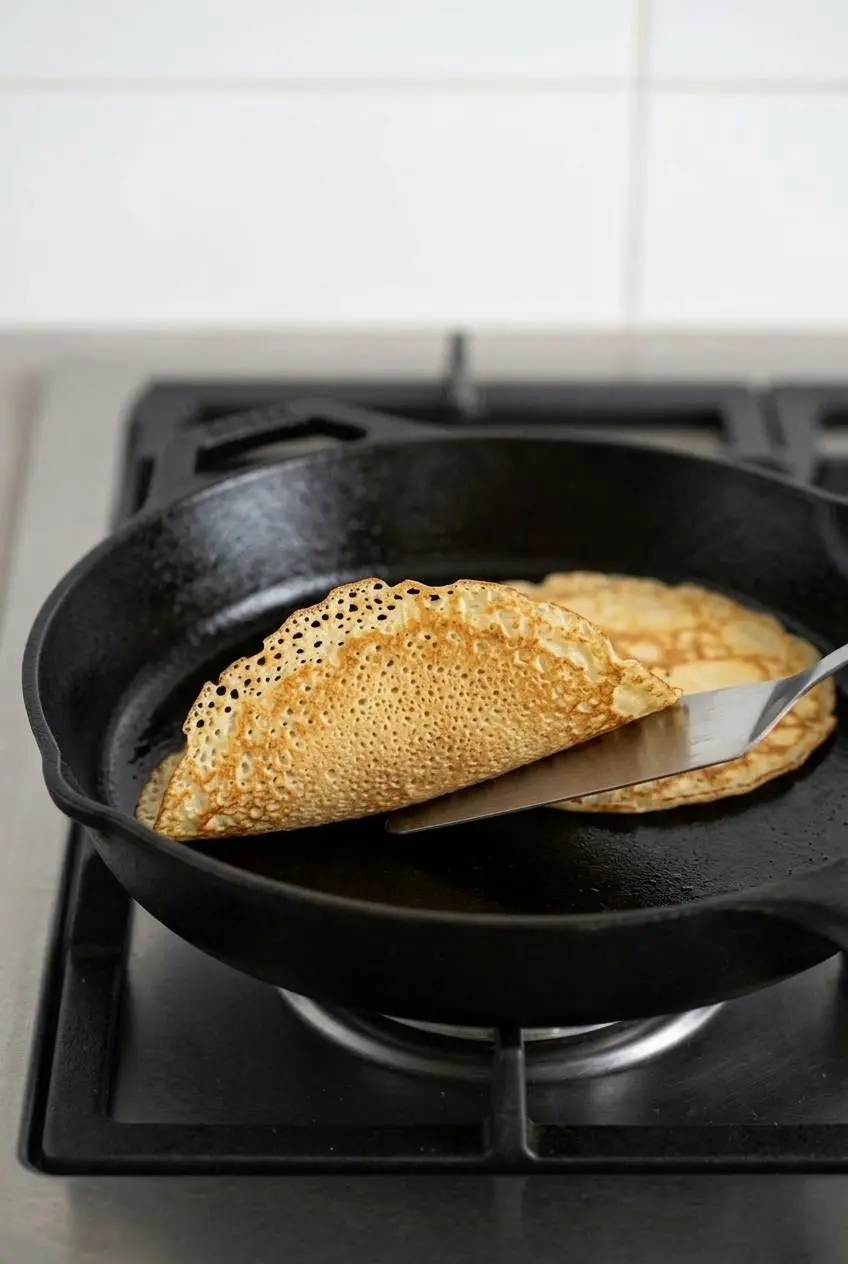
This is the part that turns a good batter into properly lacy pancakes. The batter needs to hit a hot pan, spread immediately, and cook just long enough for the surface to dry before the flip.
Make Pancake Batter
- Blend the eggs and milk for about 30 seconds until the mixture looks airy and has nearly doubled in volume.
The surface should look lightly foamy rather than flat, which tells you the eggs are well incorporated. - Add the flour, melted butter, sugar, and salt, then blend for 15 to 20 seconds until the batter is smooth.
Stop as soon as everything comes together so the batter stays silky and pours like light cream.
Pour and Pan Tilt
- Set a nonstick or well-seasoned cast iron pan over medium heat and let it warm fully before adding batter.
When the batter hits the pan, you should hear a faint sizzle instead of silence. - Pour in about 1/4 cup batter with one hand and immediately tilt the pan with the other to sweep the batter outward into a thin layer.
Move quickly here, because once the edges begin to set, the pancake will stop spreading and the rim can turn thick.
Cook
- Cook the pancake for about 1 minute, until the underside is golden brown and the top looks dry across most of the surface.
Right before flipping, the top takes on a look a bit like aged cheese, with a matte finish and tiny dry patches. - Slide a spatula under the edge, lift gently, and flip the pancake once the edge releases cleanly from the pan.
The thin rim should feel delicate but not wet, and the second side needs only 15 to 30 seconds to finish.
Serve
- Transfer the pancakes to a plate and serve them flat, folded, or rolled with jam, yogurt, or whipped cream.
They should bend easily without cracking when they’re cooked to the right thinness.
The flip gets easier once you trust the edge. If the spatula can glide under that paper-thin rim without dragging, the pancake is ready to turn.
Troubleshooting Common Pancake Pitfalls
Most problems with Swedish pancakes come down to heat, pan movement, or batter texture. The fixes are usually small.
- If the pancake tears when you flip it: it probably needs a few more seconds on the first side. Wait until the edge lifts cleanly and the top looks mostly dry before turning.
- If the edges stay pale and thick: the pan may be too cool, or the batter wasn’t tilted out quickly enough. Preheat longer and spread the batter the second it lands.
- If the pancake burns before it sets: lower the heat slightly. Cast iron in particular can hold more heat than expected between pancakes.
- If the batter looks lumpy: run it through the blender again briefly, or pour it through a fine mesh sieve before cooking.
- If the pancake sticks: the pan may need better preheating, or it may have too much grease. A heavy layer of butter can make the batter slide and cook unevenly instead of releasing neatly.
- If the texture turns rubbery: the batter was likely overmixed after the flour went in, or it didn’t get that short rest. Blend just until smooth, then let it sit.
Traditional and Creative Toppings
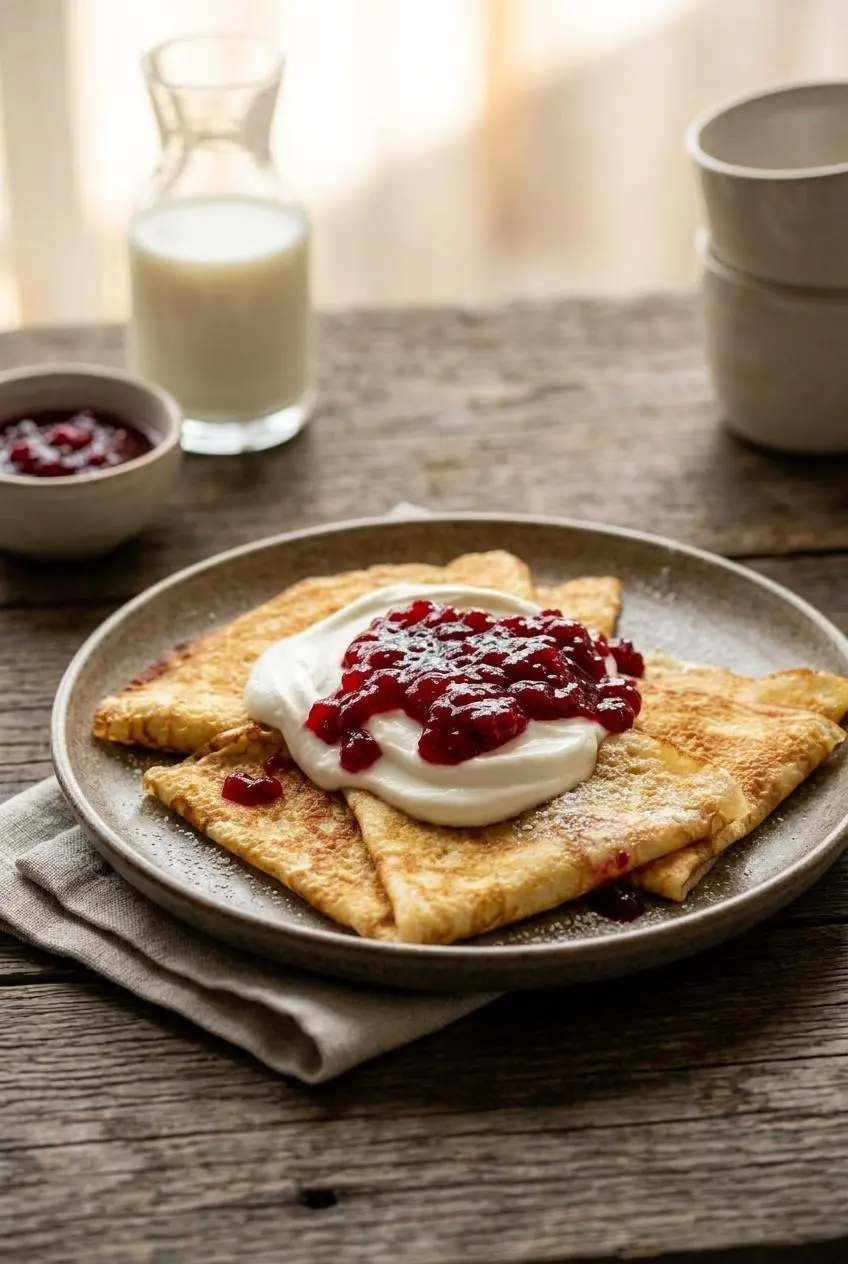
The classic toppings lean bright, cool, and creamy, which balance the rich butter and eggs beautifully. You can keep it traditional or branch out a little without losing the spirit of the dish.
The Classic Lingonberry and Yogurt Combo
Lingonberry jam is the most traditional choice, and for good reason. Its tartness cuts through the richness of the pancake and keeps every bite from feeling too sweet or heavy.
Pair it with plain yogurt for a tangy, cool contrast, or use whipped cream if you want a softer dessert-like finish. If you enjoy building a Scandinavian-style meal, lingonberries are also right at home with authentic Swedish meatballs.
Street-Style Lemon and Sugar
A squeeze of fresh lemon and a sprinkle of sugar is wonderfully simple. The acid sharpens the buttery flavor, and the sugar melts slightly on the warm surface.
This version feels especially good when the pancakes are rolled while still warm. Powdered sugar works for a softer finish, while granulated sugar adds a tiny bit of sparkle and crunch.
Traditional Sour Cream Batter Upgrade
This is an optional variation, not part of the main recipe. Replacing part of the milk with sour cream makes the batter richer, slightly tangier, and closer in feel to the full-fat dairy often used in Scandinavian cooking.
The batter will be a bit thicker, so you may need to tilt the pan a touch more decisively to keep the pancakes thin. Expect a softer center and slightly less dramatic lace around the edges.
Simple Gluten-Free Adaptations
If you want a gluten-free version, use a good 1-to-1 gluten-free baking flour in place of the all-purpose flour. Keep it as an equal swap rather than changing the rest of the batter right away.
The texture can turn a little more delicate, so let the pan fully preheat and keep the pancakes thin. If the batter feels slightly thick, a small splash more milk can help it spread and keep those signature lacy edges.
Keeping Your Pancakes Warm for a Crowd
Set finished pancakes in a 200 degree oven while you cook the rest. Lay them side by side or separate stacked pancakes with parchment paper so they stay warm and soft instead of steaming themselves into a sticky pile.
Keep the hold brief so the edges don’t dry out. This works especially well for brunch, when everyone somehow appears in the kitchen right as the last pancake hits the pan.
Conclusion
Swedish pancakes are worth making when you want something thinner, richer, and more elegant than a standard breakfast pancake. The batter is quick, the texture is distinctive, and the lacy edges make them feel a little special without extra work.
Rest the batter, heat the pan well, and tilt fast after each pour. Once you get that rhythm down, a warm stack with jam and cream is never far away.
Frequently Asked Questions
Can I make the pancake batter ahead of time?
Yes. Blend the batter, pour it into a tightly closed container, and keep it chilled. You can refrigerate it for up to 3 days because that timing is supported by this recipe’s guidance, and egg-based mixtures should stay properly chilled as part of safe handling and storage of eggs. Shake or whisk it well before cooking, since the flour can settle and the butter may separate a little.
Why are my Swedish pancakes rubbery?
Rubbery texture usually means the flour was overmixed. It can also happen when the batter goes straight into the pan without a short rest. Give it 10 minutes so the flour hydrates and the gluten relaxes. Blend only until smooth after adding the dry ingredients. That keeps the texture soft instead of springy.
Do I need a special pan for Swedish pancakes?
No. A standard 8 to 10-inch nonstick skillet works very well. A well-seasoned cast iron pan also works if you manage the heat carefully. It browns beautifully but can run hotter from one pancake to the next. A plett pan is traditional for small pancakes, but it’s optional.
How do you store and freeze leftover pancakes?
Let the pancakes cool completely before stacking them with parchment paper between layers. Store them covered in the refrigerator for up to 3 days. For longer keeping, you can freeze them for up to 3 months in a well-sealed bag with parchment between the pancakes. Warm them gently in a skillet or low oven so they stay soft rather than drying out.
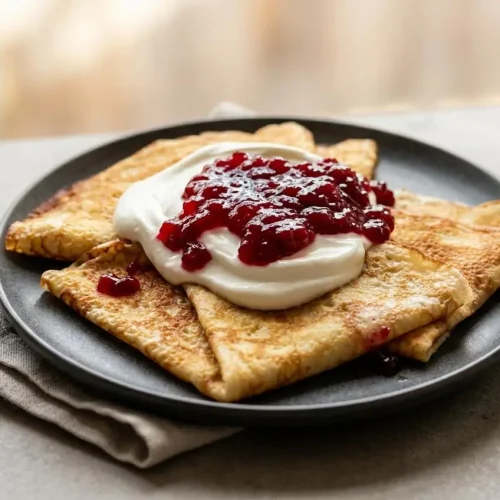
Swedish Pancakes

Equipment
- Blender
- nonstick or well seasoned cast iron pan
- Spatula
Ingredients
Swedish Pancakes
- 3 eggs
- 1 1/2 cups whole milk
- 1 cup flour
- 3 tablespoons melted butter
- 1 tablespoon granulated sugar
- 1/2 teaspoon salt
For Topping
- lingonberry or blueberry jam
- plain yogurt
- whipped cream
Instructions
Make Pancake Batter
- Blend the eggs and milk for about 30 seconds until the mixture looks airy and has nearly doubled in volume. The surface should look lightly foamy rather than flat, which tells you the eggs are well incorporated.
- Add the flour, melted butter, sugar, and salt, then blend for 15 to 20 seconds until the batter is smooth. Stop as soon as everything comes together so the batter stays silky and pours like light cream.
Pour and Pan Tilt
- Set a nonstick or well-seasoned cast iron pan over medium heat and let it warm fully before adding batter. When the batter hits the pan, you should hear a faint sizzle instead of silence.
- Pour in about 1/4 cup batter with one hand and immediately tilt the pan with the other hand to sweep the batter outward into a thin layer. Move quickly here, because once the edges begin to set, the pancake will stop spreading and the rim can turn thick.
Cook
- Cook the pancake for about 1 minute, until the underside is golden brown and the top looks dry across most of the surface. Right before flipping, the top takes on a look a bit like aged cheese, with a matte finish and tiny dry patches.
- Slide a spatula under the edge, lift gently, and flip the pancake once the edge releases cleanly from the pan. The thin rim should feel delicate but not wet, and the second side needs only 15 to 30 seconds to finish.
Serve
- Transfer the pancakes to a plate and serve them flat, folded, or rolled with jam, yogurt, or whipped cream. They should bend easily without cracking when they are cooked to the right thinness.