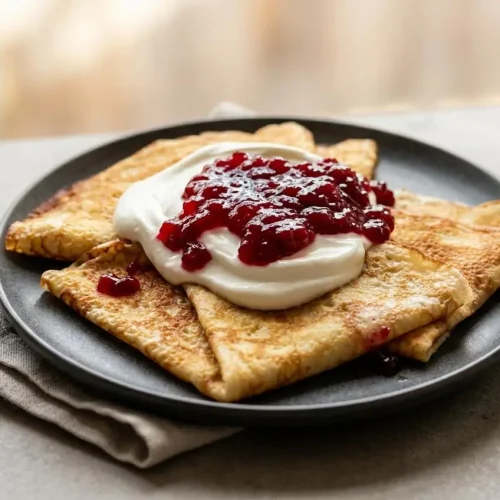
Swedish Pancakes

Thin, buttery, egg-rich pancakes with soft, flexible centers and delicate lacy edges. Easily folded or rolled, these classic Swedish favorites are a delightful breakfast treat.
Equipment
- Blender
- nonstick or well seasoned cast iron pan
- Spatula
Ingredients
Swedish Pancakes
- 3 eggs
- 1 1/2 cups whole milk
- 1 cup flour
- 3 tablespoons melted butter
- 1 tablespoon granulated sugar
- 1/2 teaspoon salt
For Topping
- lingonberry or blueberry jam
- plain yogurt
- whipped cream
Instructions
Make Pancake Batter
- Blend the eggs and milk for about 30 seconds until the mixture looks airy and has nearly doubled in volume. The surface should look lightly foamy rather than flat, which tells you the eggs are well incorporated.
- Add the flour, melted butter, sugar, and salt, then blend for 15 to 20 seconds until the batter is smooth. Stop as soon as everything comes together so the batter stays silky and pours like light cream.
Pour and Pan Tilt
- Set a nonstick or well-seasoned cast iron pan over medium heat and let it warm fully before adding batter. When the batter hits the pan, you should hear a faint sizzle instead of silence.
- Pour in about 1/4 cup batter with one hand and immediately tilt the pan with the other hand to sweep the batter outward into a thin layer. Move quickly here, because once the edges begin to set, the pancake will stop spreading and the rim can turn thick.
Cook
- Cook the pancake for about 1 minute, until the underside is golden brown and the top looks dry across most of the surface. Right before flipping, the top takes on a look a bit like aged cheese, with a matte finish and tiny dry patches.
- Slide a spatula under the edge, lift gently, and flip the pancake once the edge releases cleanly from the pan. The thin rim should feel delicate but not wet, and the second side needs only 15 to 30 seconds to finish.
Serve
- Transfer the pancakes to a plate and serve them flat, folded, or rolled with jam, yogurt, or whipped cream. They should bend easily without cracking when they are cooked to the right thinness.
Notes
Texture tip: Allow the pancake batter to rest for 10 minutes before cooking. During this time, the flour fully hydrates and the gluten relaxes, resulting in a tender, flexible pancake rather than a rubbery one.
Storage: Cool leftover pancakes completely before stacking them with parchment paper in between. Store in a covered container in the refrigerator for up to 3 days, or freeze in a well-sealed bag for up to 3 months.
Reheating: Warm leftovers gently in a skillet or low oven so they stay soft instead of drying out.
Troubleshooting: If your pancakes tear, wait a few more seconds until the edges release cleanly and the top looks dry before flipping. If they stick, ensure your pan was fully preheated and avoid over-greasing.
Nutrition information is an estimate based on common ingredients and serving sizes. Values may vary depending on brands, portions, and substitutions.