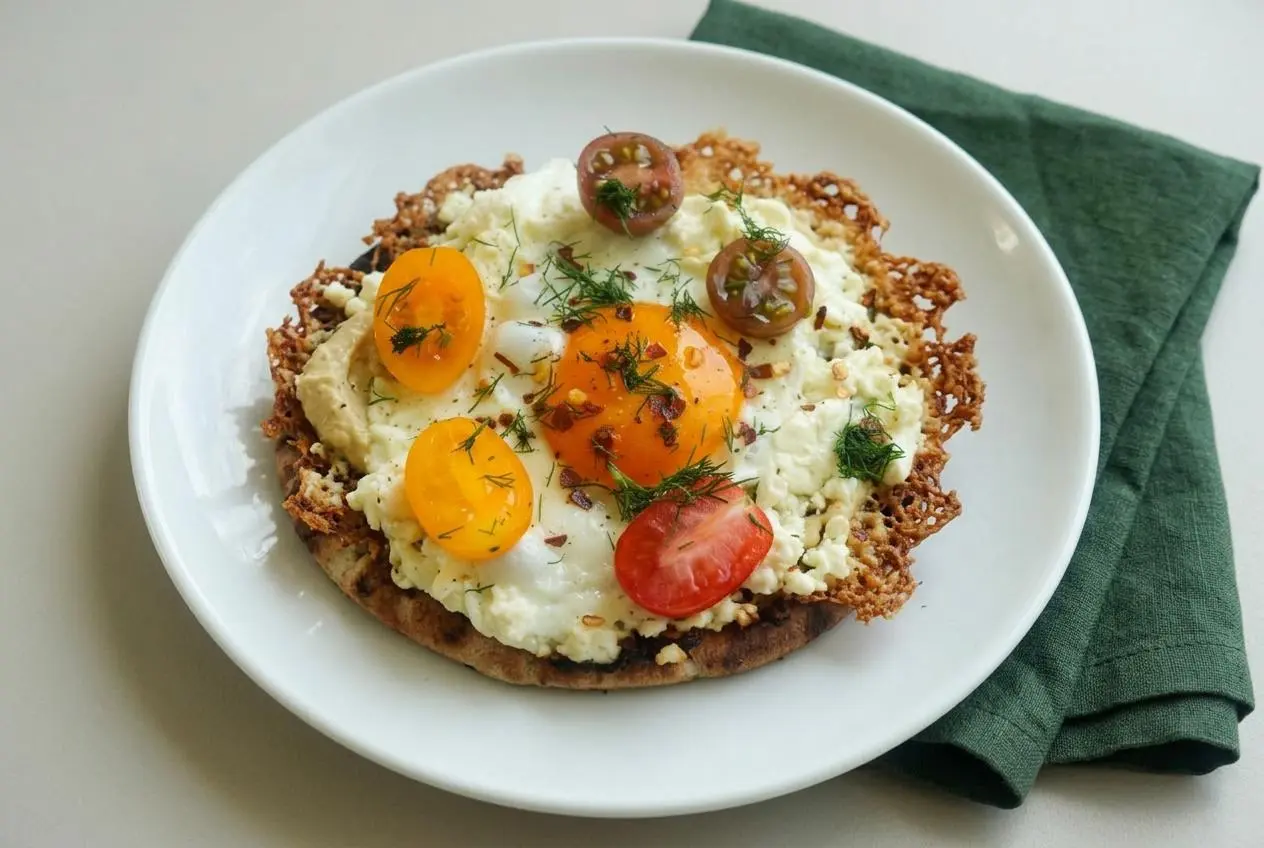
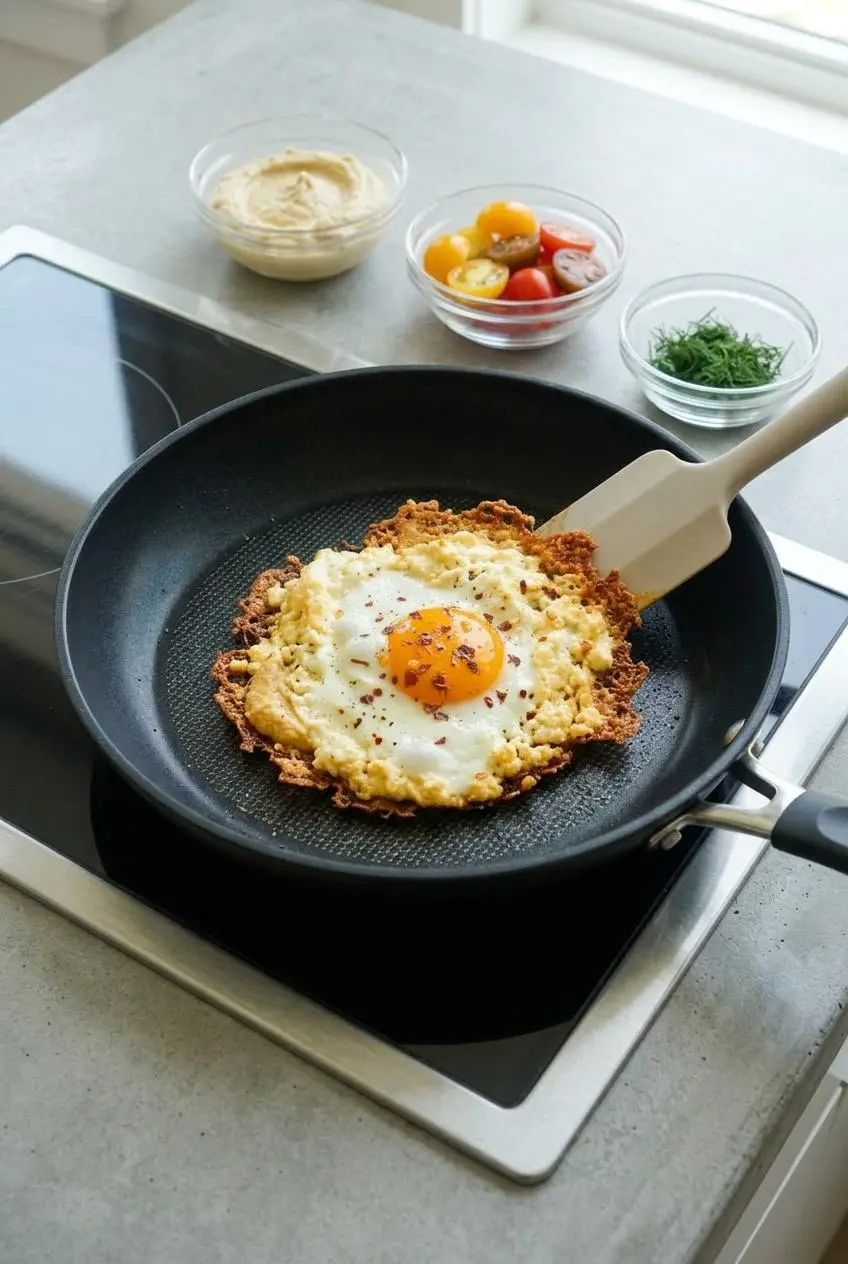
Make crispy feta fried eggs by arranging crumbled block feta in an open ring in a lightly oiled nonstick skillet. Crack an egg into the center, then lower the heat so the cheese develops golden, lacy edges while the egg cooks.
The first sizzle brings the smell of toasted cheese, followed by a savory crust around a tender egg. This single-serving breakfast pairs that salty crunch with warm pita, creamy hummus, juicy tomatoes, and fresh dill.
With 3 minutes of prep and 5 minutes of cooking, it fits a busy morning without feeling rushed. The trick is balancing the cheese’s browning with the egg’s doneness. Keep that center open.
Have the toppings ready before heating the skillet so you can serve the cheese crust while it’s crisp.
Why Ingredients Matter for Crispy Feta Fried Eggs
Feta supplies the salty crust, while the egg adds a tender center. Olive oil helps release the cheese, seasonings bring warmth, and pita, hummus, tomatoes, and dill balance the richness with softness, moisture, and freshness.
- 2 sprays olive oil spray
- ¼ cup crumbled feta cheese
- 1 egg
- ⅛ teaspoon dried crushed red pepper flakes
- 1 pinch salt and pepper
- 1 pita bread
- 2 tablespoons hummus
- 4 halved cherry tomatoes
- 1 tablespoon fresh chopped dill
Block Feta vs. Pre-Crumbled Feta
Choose feta for how it behaves in the pan, not just how convenient it is to sprinkle. Block feta in brine is a good starting point because you control the crumble size and can avoid added anti-caking ingredients.
- Block feta in brine: Moist crumbles soften and release milky liquid before their edges brown, giving you a mix of crisp lace and tender cheese.
- Pre-crumbled feta: Some brands contain starches or other anti-caking ingredients that can change how the cheese softens and browns; check the label rather than assuming every brand behaves alike.
Feta doesn’t melt into a smooth, stretchy layer like mozzarella. Look for bubbling moisture followed by a firm golden underside. Drain away excess brine so the cheese doesn’t sit in a puddle.
The olive oil spray provides a light coating without a pool of oil. Red pepper flakes add warmth, and black pepper cuts through the richness. A fresh egg works well; pasture-raised eggs are a preference, not a requirement for the technique.
I’d crumble the moist feta by hand over a bowl, leaving uneven pieces for delicate edges and softer, chewy bites.
The Mediterranean Pita and Hummus Base
Warm pita gives the egg a soft landing, while its charred spots echo the toasted cheese. Hummus adds a creamy layer that catches the yolk. Cherry tomatoes bring juicy acidity, and dill gives each bite a fresh, grassy finish.
Spread the hummus before adding the egg so you don’t have to press against the fragile crust. Keep the tomatoes and dill on top rather than underneath, where their moisture could soften the cheese.
How to Make Crispy Feta Fried Eggs Step by Step
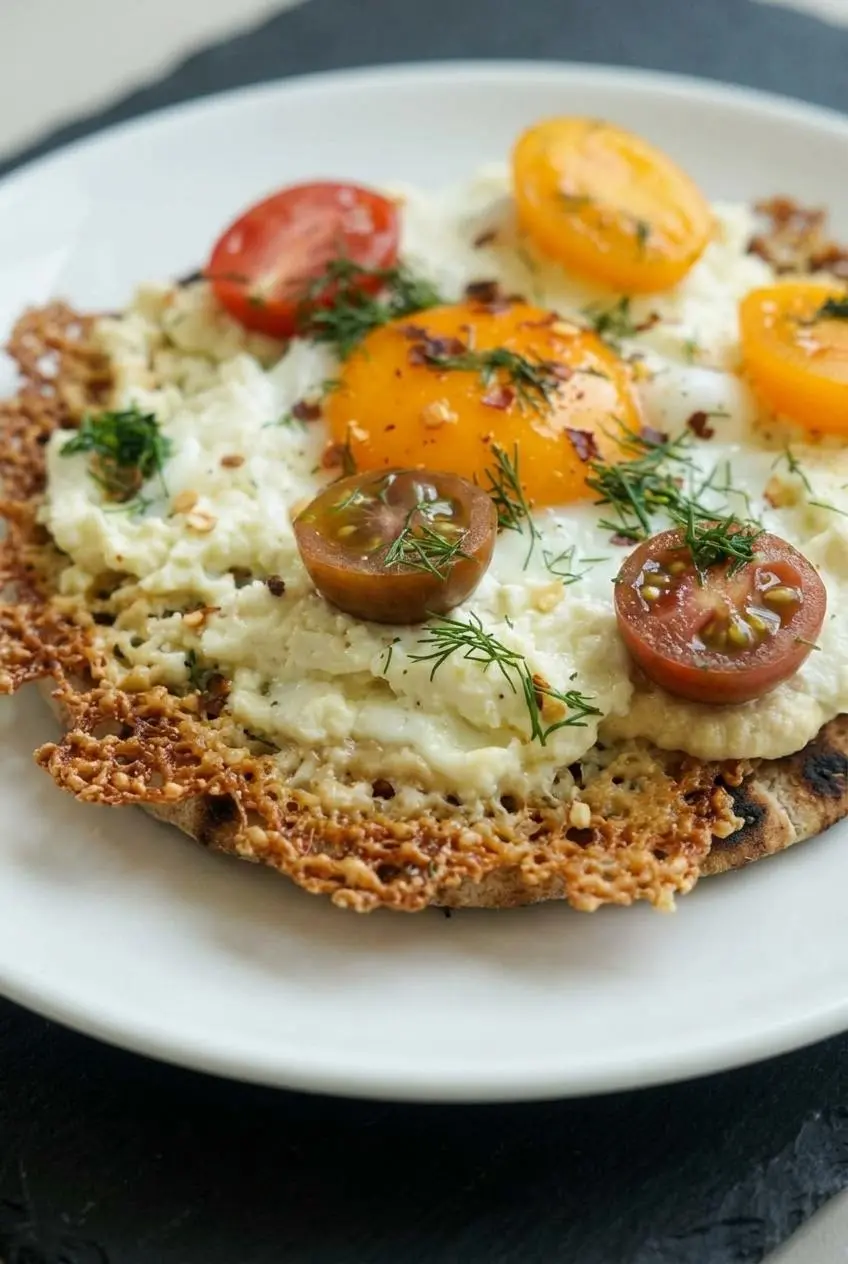
The open cheese ring does two jobs: it leaves room for the egg white to touch the skillet and lets the feta form a crisp border. Start over medium heat, then reduce it as soon as the egg goes in.
Prep: 3 minutes. Cook: 5 minutes. Yield: 1 serving.
- Coat a nonstick skillet with the olive oil spray, warm it over medium heat, and arrange the feta in a loose ring before cracking the egg into the opening.
The white should spread against the exposed pan and meet the cheese around its edges. - Immediately reduce the burner to medium-low, add the red pepper flakes and the pinch of salt and pepper, and continue cooking to your preferred doneness.
Look for opaque whites and a golden cheese border that smells toasted rather than sharp or scorched. - Warm the pita on the stovetop, turning it as needed to develop the char you prefer.
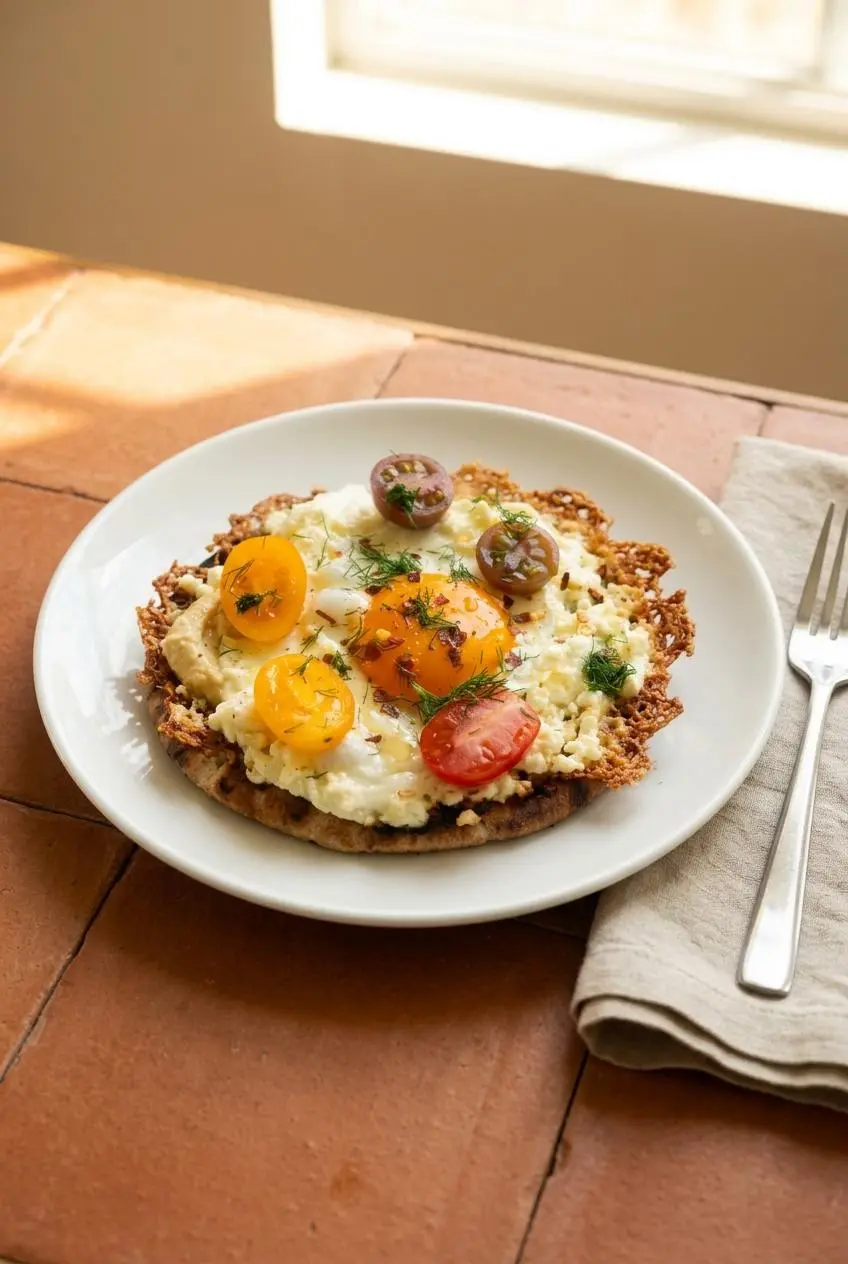
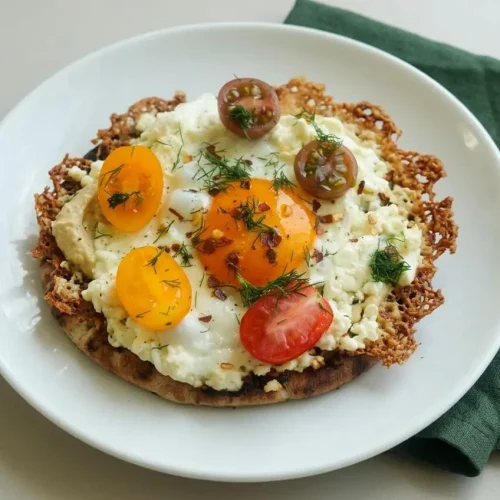
The bread should feel warm and flexible with scattered toasted patches. - Cover the warm pita with hummus, transfer the feta egg onto it, and finish with the cherry tomatoes and dill.
The finished serving should have an intact cheese edge with the fresh toppings scattered across the egg.
Watch the feta rather than relying entirely on the clock. At first, moisture gathers around the crumbles and bubbles briskly. As that moisture cooks away, the bubbling changes and the thin outer edges turn amber. That’s the point to pay close attention, because golden cheese can darken quickly.
Keep the ring loose rather than building a tall wall. A thick mound traps moisture and leaves soft cheese underneath the egg instead of a crisp border. The egg white can overlap the feta slightly; it doesn’t need a perfectly drawn circle.
When transferring, support both the egg and its cheese skirt with a thin spatula. If the border folds into a wet clump, it hasn’t formed a firm crust yet. Avoid scraping repeatedly, which can tear the delicate edge before it releases.
Tips and Troubleshooting for the Crispiest Feta Crust
Gentle heat and a clean release matter more than aggressive frying. The goal is browned cheese and tender whites, not a dark crust hiding an uncooked center.
Serve the egg straight from the skillet for the best crunch. For easier assembly, keep the hummus, cut tomatoes, and chopped dill in separate covered containers in the refrigerator until needed. Warm the pita and cook the egg when you’re ready to eat. Storing the assembled pita lets moisture migrate into the cheese crust, so keep components separate if you need to pause.
Runny yolks carry an undercooked-egg risk. For people at higher risk of foodborne illness, including pregnant people, cook eggs until both yolks and whites are firm, or use pasteurized eggs for lightly cooked preparations.
Choosing the Right Skillet
- Nonstick: The easiest choice for beginners because the thin cheese crust releases with less scraping.
- Well-seasoned cast iron: Can work, but retained heat makes browning harder to slow once the pan gets too hot.
- Stainless steel: Less forgiving for this dish because softened cheese can cling firmly to the surface.
Use a spatula that suits your pan’s coating, and wait for the underside to become firm and golden before lifting. A light oil coating helps, but it won’t compensate for trying to move the cheese while it’s still wet.
Common Mistakes and How to Fix Them
- Translucent whites near the yolk: Keep the heat low and optionally cover for about 60 seconds, then uncover and check; prolonged covering can soften the crust.
- Bitter, dark edges: The pan is too hot; lower the burner promptly after adding the egg and avoid piling the feta into a solid mound.
- Rubbery whites: Strong heat or extended cooking can toughen them; use gentler heat and stop when the egg reaches your chosen doneness.
- Too salty: Feta already supplies plenty of seasoning, so keep the added pinch light and taste the finished bite before adding more.
Delicious Variations and Serving Ideas
Keep these changes optional and separate from the skillet method above. Change one element at a time so the feta crust stays the focus.
For a sweet-savory finish, add a light drizzle of honey and fresh lemon zest just before serving. Use a restrained hand so the honey accents the salty cheese rather than covering it.
Feta Fried Eggs With Chili Crisp or Pesto
- Chili crisp: Drizzle some chili crisp oil into the skillet before adding the feta; watch the solids closely because they can scorch, or add those crunchy bits at serving.
- Basil pesto: Replace the oil spray with a thin coating of pesto for garlic-herb flavor, as in herbal pesto eggs, and keep the heat gentle to protect the herbs.
- Goat cheese: Use crumbled goat cheese for a softer, creamier result rather than expecting the same lacy feta crust.
- Halloumi: Try coarsely grated halloumi for a firmer, chewier cheese border with a different browning pattern.
Air Fryer Method
An air fryer offers a dish-style adaptation, though it won’t necessarily create the same skillet-fried lace. Use a lightly greased ramekin or shallow dish rated for your appliance rather than loose parchment.
- Arrange the feta in an open ring inside the dish.
- Crack the egg into the center and season lightly.
- Use your appliance’s egg-cooking directions as a starting point, checking for set whites and browned cheese rather than assuming a universal cooking time.
A deep ramekin tends to produce softer cheese underneath. A shallow dish exposes more of the feta to circulating heat, but the stovetop remains the better choice when crispness is the priority.
More Ways to Serve Feta Eggs
- Tortilla: Use a warm flour or corn tortilla with mashed avocado, lime juice, and chives.
- Sourdough: Slide the egg onto thick toast with roasted red pepper spread for a sturdy, savory breakfast.
- Arugula: Serve over lightly dressed peppery greens, adding the egg at the last moment to protect its crust.
Conclusion
Crisp cheese edges and a tender egg turn a quick breakfast into something worth sitting down for. Block feta, a nonstick skillet, and medium-low heat after adding the egg make the difference.
Serve on warm pita with hummus and fresh toppings, or try the honey and lemon zest finish. Have the plate ready so that first bite still has its crunch.
Frequently Asked Questions
What Type of Feta Works Best for Crispy Feta Fried Eggs?
Choose block feta packed in brine and crumble it yourself. Check for added starches in pre-crumbled options, since they can affect browning. Drain excess brine before adding the cheese to the skillet.
How Do I Stop the Feta Cheese From Sticking to the Pan?
Use a nonstick skillet with the measured olive oil spray. Wait until the underside forms a firm golden crust before lifting. Support the cheese border with a thin, coating-friendly spatula rather than scraping at individual edges.
How Do You Cook the Egg White Completely Without Burning the Feta?
Leave the center of the cheese ring open so the white touches the pan. Lower the heat immediately after cracking in the egg. If the top stays translucent, briefly cover the skillet, then uncover and check the whites.
Can You Make Crispy Feta Eggs in the Air Fryer?
Yes, as a dish-style adaptation using a greased, appliance-safe shallow dish. Place the egg inside a feta ring and check for set whites and browned cheese. Expect a different texture; direct skillet contact gives the more dependable lacy crust.
Crispy Feta Fried Eggs

Equipment
- Pan
- stove
Ingredients
- 2 sprays olive oil spray
- ¼ cup crumbled feta cheese
- 1 egg
- ⅛ teaspoon dried crushed red pepper flakes
- 1 pinch salt and pepper
- 1 pita bread
- 2 tablespoons hummus
- 4 halved cherry tomatoes
- 1 tablespoon fresh chopped dill
Instructions
- Coat a nonstick skillet with the olive oil spray, warm it over medium heat, and arrange the feta in a loose ring before cracking the egg into the opening. The white should spread against the exposed pan and meet the cheese around its edges.
- Immediately reduce the burner to medium-low, add the red pepper flakes and the pinch of salt and pepper, and continue cooking to your preferred doneness. Look for opaque whites and a golden cheese border that smells toasted rather than sharp or scorched.
- Warm the pita on the stovetop, turning it as needed to develop the char you prefer. The bread should feel warm and flexible with scattered toasted patches.
- Cover the warm pita with hummus, transfer the feta egg onto it, and finish with the cherry tomatoes and dill. The finished serving should have an intact cheese edge with the fresh toppings scattered across the egg.