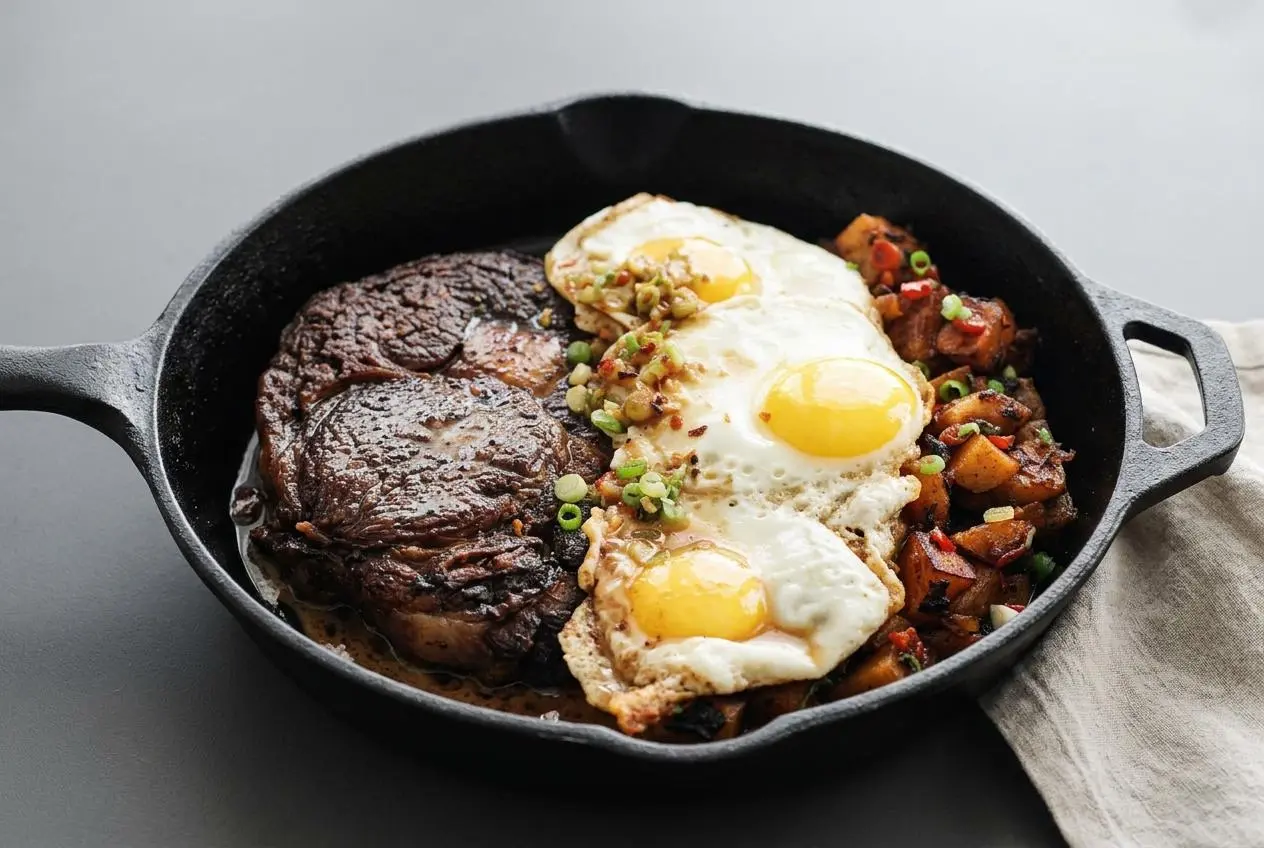
For a crisp steak crust and tender center, sear a dry, seasoned ribeye in a lightly smoking cast-iron skillet, baste it with butter, then rest it while eggs fry gently in fresh butter.
This steak and eggs recipe brings diner-style comfort home with sizzling beef, browned butter, runny yolks, and a tangy garlic pan sauce.
The key is managing the skillet heat between the steak and eggs so neither one gets lost in the shuffle. That glossy sauce is worth the pause.
Set the steak out, pat it dry, and have the eggs and butter ready before heating the skillet. The cooking moves quickly once the oil starts to smoke.
Key Ingredients and Cut Selection
Each ingredient has a job here: ribeye delivers richness, avocado oil builds the crust, butter carries the basting and sauce, and the sharp, spicy seasonings balance the beef and egg yolks.
- 20- ounce boneless ribeye
- 3 tablespoons avocado oil
- 7 tablespoons unsalted butter
- 4 large eggs
- 6 finely minced garlic cloves
- 1 ½ tablespoons Worcestershire sauce
- 1 tablespoon distilled vinegar
- 1 ½ teaspoons sugar
- 1 teaspoons red pepper flakes
- 1 tablespoons hot sauce
- 3 tablespoons water
- coarse salt and freshly cracked pepper to taste
The ribeye’s marbling melts as it sears, helping the meat stay juicy and leaving behind savory flavor in the skillet. Fresh eggs are especially helpful here because their yolks hold together cleanly until you break them over the sliced steak. Worcestershire, vinegar, sugar, hot sauce, and red pepper flakes make the pan sauce savory, tangy, lightly sweet, and warmly spicy.
I keep the butter cold until the sauce stage because cold butter melts gradually and gives the finished glaze a smoother, shinier finish.
Choosing Your Beef Cut
Boneless ribeye is the natural choice for fast skillet cooking because its intramuscular fat protects the meat during high heat. Sear the fatty edge first, then give the broad sides solid contact with the pan for a deep brown Maillard crust.
New York strip is a good optional swap when you prefer a firmer bite and a more uniform grain. It has less marbling than ribeye, so watch it closely and avoid prolonged basting. Flat iron steak is another tender, leaner option that cooks quickly when sliced against the grain. For a more robust lean-cut dinner, try this marinated flank steak on another night.
Selecting Oils and Cooking Fats
Avocado oil handles the initial high-heat sear without burning as quickly as butter. Wait for gentle wisps of smoke before adding the steak. That is the moment the pan has enough heat to brown the surface instead of steaming it.
Add butter only after the first sear and after lowering the heat. Butter added too soon can darken before the steak develops a proper crust, leaving bitter bits in the skillet. Later, the butter becomes the base for basting, frying the eggs, and bringing the sauce together.
New York Strip and Over-Easy Eggs
For an optional strip-steak version, use a New York strip and sear it with the same heat control. Its tighter grain gives a steakhouse-style chew that works well with over-easy eggs. Cook the whites until set, then turn the eggs gently so the yolks stay warm and liquid inside.
How to Make Steak and Eggs
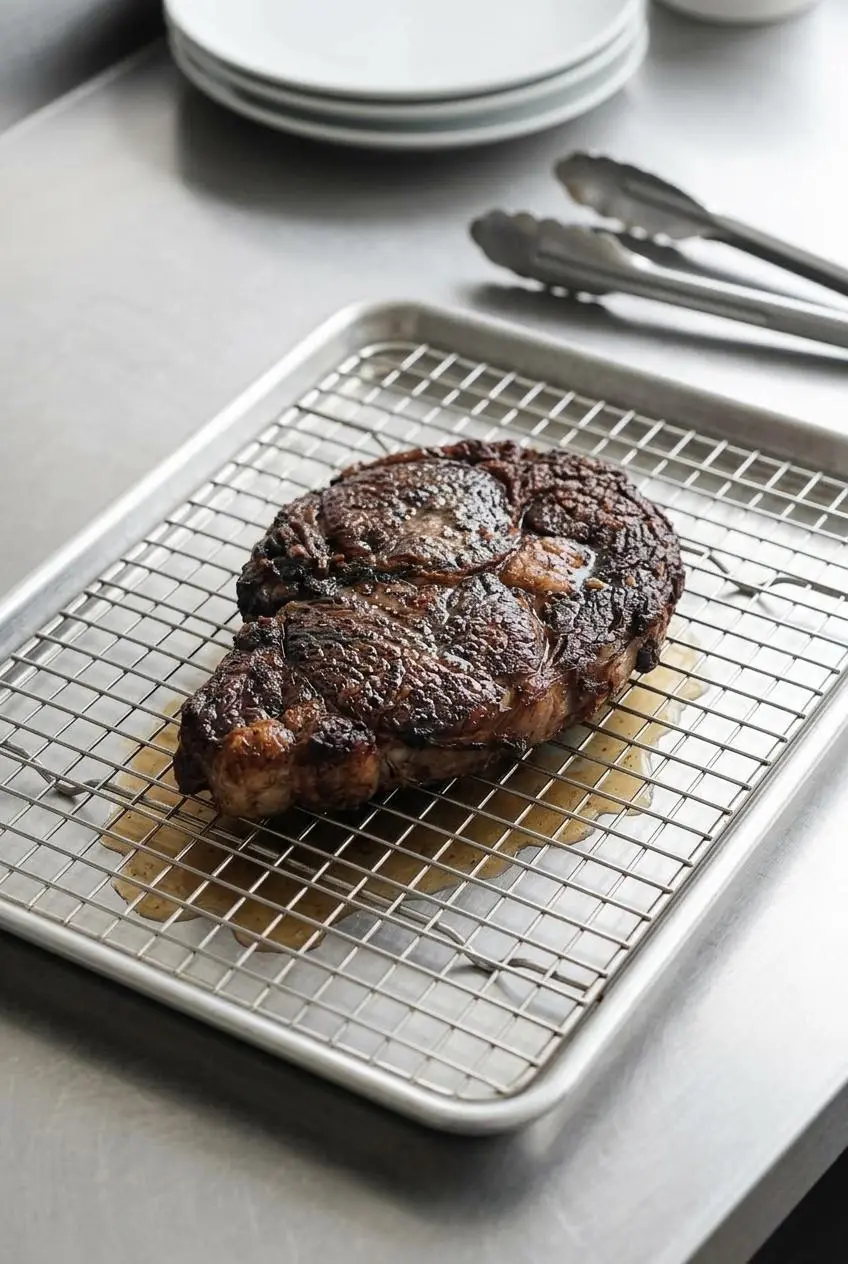
Keep the process moving in order: brown and rest the steak first, lower the skillet’s intensity for the eggs, then make the sauce while everything is still warm.
- Pat the ribeye dry on every surface, then season it generously with coarse salt and freshly cracked pepper.
A dry exterior browns quickly, while visible moisture would keep the meat pale and steamy. - Heat the avocado oil in a large carbon-steel or cast-iron skillet over high heat until it gives off light wisps of smoke.
The oil should look fluid and shimmering across the pan before the steak goes in. - Grip the steak with tongs and hold its fat cap against the skillet for 30 seconds.
The edge should begin to render and take on a golden-brown color. - Lay the steak on one side for 1 minute, then gently move it in a circular motion with the tongs for 90 seconds.
Steady contact with the hot metal creates an even, dark savory crust. - Turn the steak and leave it undisturbed for 1 minute, then reduce the heat to medium-low and add 2 tablespoons of unsalted butter.
The butter should melt and foam without immediately turning dark. - Baste the steak with the melted butter for 2 to 3 minutes, then transfer it to a wire rack to rest for 5 to 6 minutes.
The top should look deeply browned, and the rack keeps the bottom crust from softening in pooled juices. - Pour off most of the cooking fat, return the skillet to low heat, and let it cool for 1 to 2 minutes.
A brief cooldown prevents the next round of butter from scorching under the eggs. - Raise the heat to medium, melt 1 to 2 tablespoons of butter, and fry the eggs for 2 to 3 minutes before seasoning them with salt.
Listen for a calm, steady sizzle as the whites set around the yolks. - Place the skillet over medium heat and cook the minced garlic for 30 to 45 seconds.
Stir just until it smells fragrant; do not let the garlic brown. - Add the Worcestershire sauce, distilled vinegar, sugar, red pepper flakes, hot sauce, and water, then cook for 1 minute.
The mixture should bubble and pull the browned flavor from the skillet. - Turn off the heat and swirl in 2 to 3 tablespoons of cold unsalted butter, then spoon the sauce over the steak and eggs and finish with green onions.
The sauce should turn glossy and lightly thickened instead of separating into oily puddles.
Searing and Basting the Steak
Drying the steak is what lets high heat create browning instead of moisture buildup. Start with the fat cap so it renders before the steak’s flat sides hit the skillet. The circular movement helps build crust across the surface without repeatedly flipping the meat.
Once you lower the heat and add butter, spoon it over the top repeatedly. The butter should foam gently, coating the steak with richness while the underside continues to brown. A steak that yields slightly when pressed with tongs generally feels closer to medium-rare than one that feels firm and tight.
Pan Transition and Egg Frying
The pause after removing the steak matters. Drain away heavy, blackened grease, leave behind only a thin savory film, and let the pan settle for 1 to 2 minutes before adding fresh butter. The eggs need moderate heat, not the intense heat used to form the steak crust.
For sunny-side up eggs, let the whites set while keeping the yolks loose. If you prefer softer curds over intact yolks, serve the steak with soft scrambled eggs instead. Keep that variation separate from the hot steak skillet so the eggs stay creamy rather than overcooked.
Quick Pan Sauce and Rich Flavor Additions
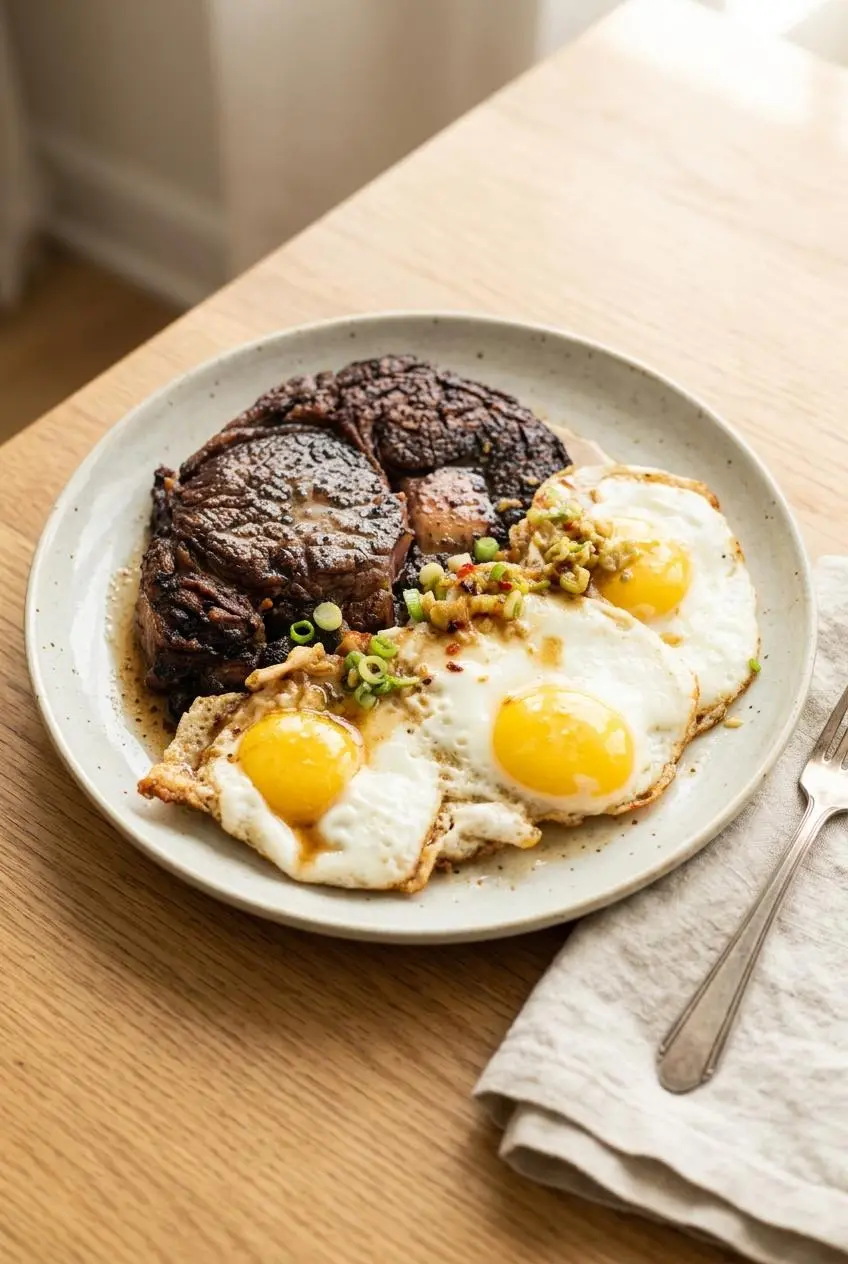
The pan sauce comes together during the steak’s resting window, using the browned bits left behind after the meat and eggs are cooked. Keep the garlic moving over medium heat so it softens and perfumes the pan without becoming bitter.
Worcestershire brings deep savoriness, distilled vinegar cuts through the ribeye’s richness, and sugar rounds off the sharp edges. Hot sauce and red pepper flakes add heat without masking the beef. Turn off the burner before swirling in cold butter. This final step emulsifies the sauce, giving it a glossy finish that clings to each slice.
- Garlic herb butter glaze: For an optional variation, fold chopped tender herbs into softened butter and use it as a finishing glaze over the rested steak. It adds fresh herbal lift without changing the main sauce.
- Green onion finish: Sprinkle green onions over the plated steak and eggs for a clean, sharp contrast to the buttery sauce.
- Potato side: Serve with crispy steak fries when you want a hearty diner-style plate with something sturdy for catching the sauce.
Slice the rested steak against the grain, arrange it beside the eggs, and spoon the sauce over the meat rather than drowning the yolks. A little sauce in each bite goes a long way.
Essential Troubleshooting and Temperature Tips
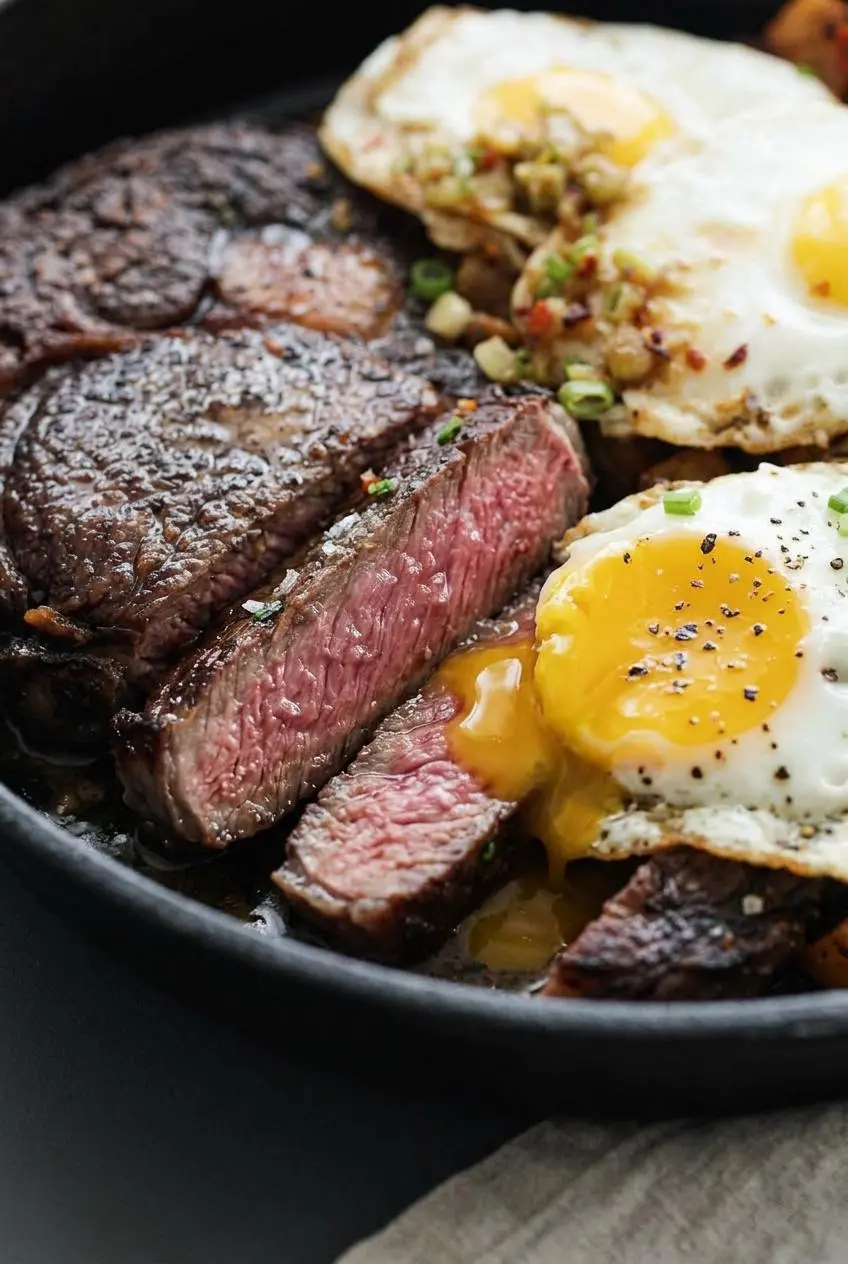
A great skillet breakfast depends on heat control more than fancy equipment. These quick fixes keep the steak crust dark, the eggs tender, and the sauce balanced.
- Grey steak instead of a crust: Surface moisture or a pan that was not hot enough usually causes this. Pat the steak thoroughly dry and wait for the avocado oil to shimmer with light smoke before searing.
- Steak sticks when you turn it: It likely needs more time to release naturally. Let the first side form its crust before trying to move it with the tongs.
- Rubbery egg whites: The skillet is still too hot after searing. Drain excess grease, let the pan cool briefly, then use fresh butter over medium heat.
- Burnt garlic or harsh sauce: Garlic cooks fast in a hot cast-iron skillet. Add it over medium heat, stir continuously, and pour in the sauce ingredients as soon as it turns fragrant.
- Greasy sauce: Swirl cold butter into the sauce only after turning off the heat. Boiling butter into the sauce can make the fat separate.
Use a digital thermometer rather than color alone to judge internal doneness. For cooking preference, pull the steak around 125 °F for rare, 135 °F for medium-rare, or 145 °F for medium, then rest it on the wire rack. For food safety, beef steaks should reach 145 °F and rest for at least 3 minutes.
If you enjoy runny yolks, serve the eggs promptly after cooking. Those who need fully cooked eggs can continue frying until both the yolk and white are firm.
Conclusion
Steak and eggs work best when the skillet does two jobs at two different temperatures: high heat for the ribeye’s crust, then gentler heat for tender eggs. Resting the steak on a wire rack keeps its browned underside from going soggy while the eggs finish.
Serve it hot with crusty sourdough toast or crispy skillet potatoes, and let the buttery garlic sauce tie the whole plate together. A warm yolk and a properly seared steak make a very convincing breakfast.
Frequently Asked Questions
Which Cut of Steak Is Best for Steak and Eggs?
Boneless ribeye is the richest choice because its marbling helps it stay juicy under high skillet heat. New York strip offers a firmer texture and a clean beef flavor. Flat iron is tender and leaner, with quick cooking potential. Choose a steak with an even thickness so it cooks more predictably.
How Do You Keep Steak Warm While Cooking Eggs?
Rest the steak on an elevated wire rack and tent it loosely with foil while the eggs cook. The rack lets air circulate beneath the steak, so the crust stays crisper. The resting period gives the juices time to settle back into the meat. Keep the foil loose so trapped steam does not soften the browned surface.
Can I Cook the Eggs in the Leftover Steak Grease?
Leave a thin film of flavorful drippings, but drain away heavy blackened grease before frying the eggs. Let the skillet cool briefly after searing the steak. Add fresh butter for clean flavor and gentler heat. Fresh foaming butter helps the whites set without turning crisp and rubbery around the edges.
What Is the Best Way to Reheat Leftover Steak and Eggs?
Warm sliced steak gently in a skillet over low heat with a dab of butter, then cook fresh eggs for the best texture. Slice the steak before warming so the center heats more evenly. Keep the heat low to avoid tightening and drying the meat. Freshly cooked eggs give the plate a much better yolk and white texture than reheated eggs.
How Do You Know When the Skillet Is Cool Enough for the Eggs?
Add fresh butter after the brief cooldown and watch how it behaves. It should melt into a quiet, gentle foam. If it pops aggressively or browns immediately, give the skillet more time off the heat. Crack in the eggs only when the butter looks calm and lightly foamy.
Steak and Eggs Recipe

Equipment
- large carbon-steel or cast-iron skillet
- Tongs
- wire resting rack
Ingredients
- 20 ounce boneless ribeye
- 3 tablespoons avocado oil
- 7 tablespoons unsalted butter
- 4 large eggs
- 6 garlic cloves finely minced
- 1 1/2 tablespoons Worcestershire sauce
- 1 tablespoon distilled vinegar
- 1 1/2 teaspoons sugar
- 1 teaspoons red pepper flakes
- 1 tablespoons hot sauce
- 3 tablespoons water
- coarse salt and freshly cracked pepper to taste
Instructions
- Pat the ribeye dry on every surface, then season it generously with coarse salt and freshly cracked pepper. A dry exterior browns quickly, while visible moisture would keep the meat pale and steamy.
- Heat the avocado oil in a large carbon-steel or cast-iron skillet over high heat until it gives off light wisps of smoke. The oil should look fluid and shimmering across the pan before the steak goes in.
- Grip the steak with tongs and hold its fat cap against the skillet for 30 seconds. The edge should begin to render and take on a golden-brown color.
- Lay the steak on one side for 1 minute, then gently move it in a circular motion with the tongs for 90 seconds. Steady contact with the hot metal creates an even, dark savory crust.
- Turn the steak and leave it undisturbed for 1 minute, then reduce the heat to medium-low and add 2 tablespoons of unsalted butter. The butter should melt and foam without immediately turning dark.
- Baste the steak with the melted butter for 2 to 3 minutes, then transfer it to a wire rack to rest for 5 to 6 minutes. The top should look deeply browned, and the rack keeps the bottom crust from softening in pooled juices.
- Pour off most of the cooking fat, return the skillet to low heat, and let it cool for 1 to 2 minutes. A brief cooldown prevents the next round of butter from scorching under the eggs.
- Raise the heat to medium, melt 1 to 2 tablespoons of butter, and fry the eggs for 2 to 3 minutes before seasoning them with salt. Listen for a calm, steady sizzle as the whites set around the yolks.
- Place the skillet over medium heat and cook the minced garlic for 30 to 45 seconds. Stir just until it smells fragrant; do not let the garlic brown.
- Add the Worcestershire sauce, distilled vinegar, sugar, red pepper flakes, hot sauce, and water, then cook for 1 minute. The mixture should bubble and pull the browned flavor from the skillet.
- Turn off the heat and swirl in 2 to 3 tablespoons of cold unsalted butter, then spoon the sauce over the steak and eggs and finish with green onions. The sauce should turn glossy and lightly thickened instead of separating into oily puddles.