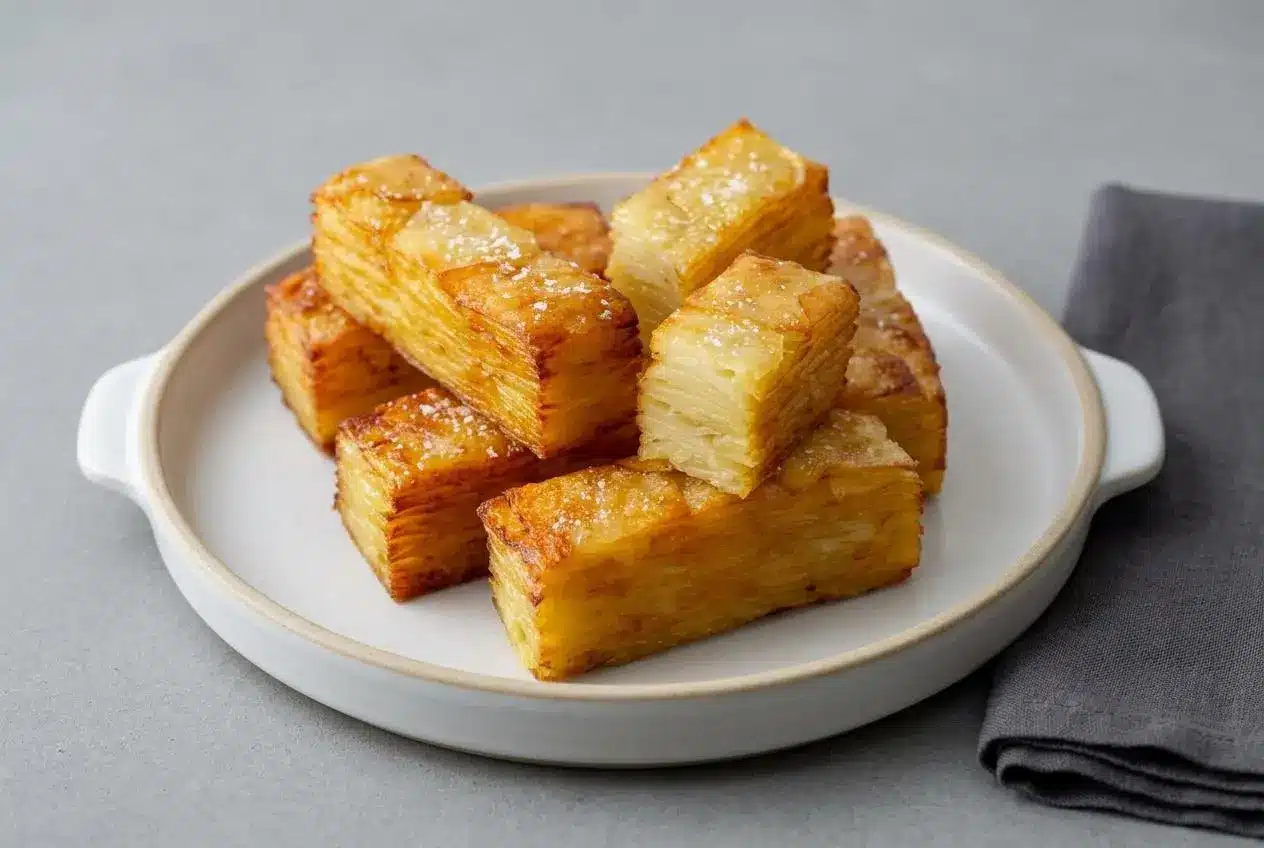
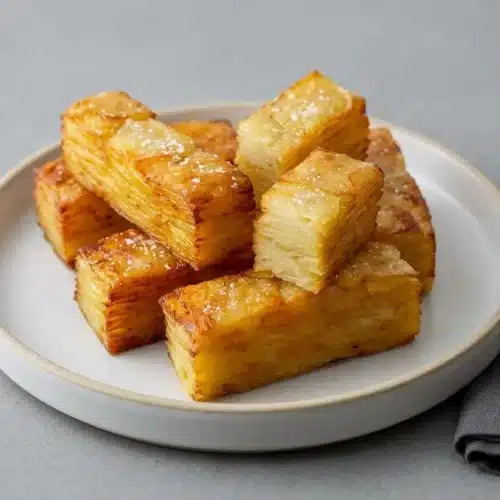
Potato pave is a French-inspired potato terrine made with thinly sliced potatoes, seasoned cream, and butter. Bake the layers until tender, press them overnight in the refrigerator, then brown thick slices for crisp golden edges and a creamy center.
This potato pave recipe turns delicate potato layers into neat, deeply savory portions. Cream coats the slices, parmesan adds depth, and butter enriches the stack without hiding the potato flavor.
Layering takes patience, but the oven and refrigerator handle most of the work. It’s a lovely dinner-party side because you assemble it before serving day and brown the portions near mealtime. The cut sides are where the crunch happens.
Clear a level space in the refrigerator before you start so the weighted loaf pan can sit flat.
Ingredients and Why Each One Matters
Potatoes provide the starch that holds the layers together, cream supplies moisture and richness, and butter encourages golden edges. Parmesan, garlic powder, and salt season the stack throughout rather than leaving all the flavor on the surface.
- 1.4 kg potatoes I used sebago
- 150 ml thickened cream 35% milk fat with included thickeners
- ½ teaspoon garlic powder
- 1 tablespoon finely grated parmesan cheese
- 1½ teaspoon salt
- 30 g unsalted butter melted
Choose starchy or all-purpose potatoes. Sebago potatoes work well, as do Yukon Gold or Russet potatoes in the US. Large potatoes give you broad slices that cover the pan efficiently. Their natural starch helps the baked layers form a cohesive block when chilled under pressure.
Yukon Gold potatoes bring a buttery flavor and yellow color; Russets give a more floury texture. Either way, consistent slicing matters more than making every slice perfectly round. Broken pieces can fill gaps.
Use heavy cream as the US substitute for Australian thickened cream. The listed thickened cream contains added thickeners, so the products aren’t identical, but heavy cream serves the same culinary role here. It moistens the potatoes and adds richness while they bake beneath the foil.
Finely grated parmesan disperses through the cream rather than forming separate cheese pockets. Garlic powder does the same, seasoning each coated slice without adding pieces between the layers. Melted butter slips between the potatoes and adds richness to the finished terrine.
I slice each peeled potato straight into the seasoned cream bowl rather than leaving a pile on the cutting board to discolor.
How to Make Potato Pave Step by Step
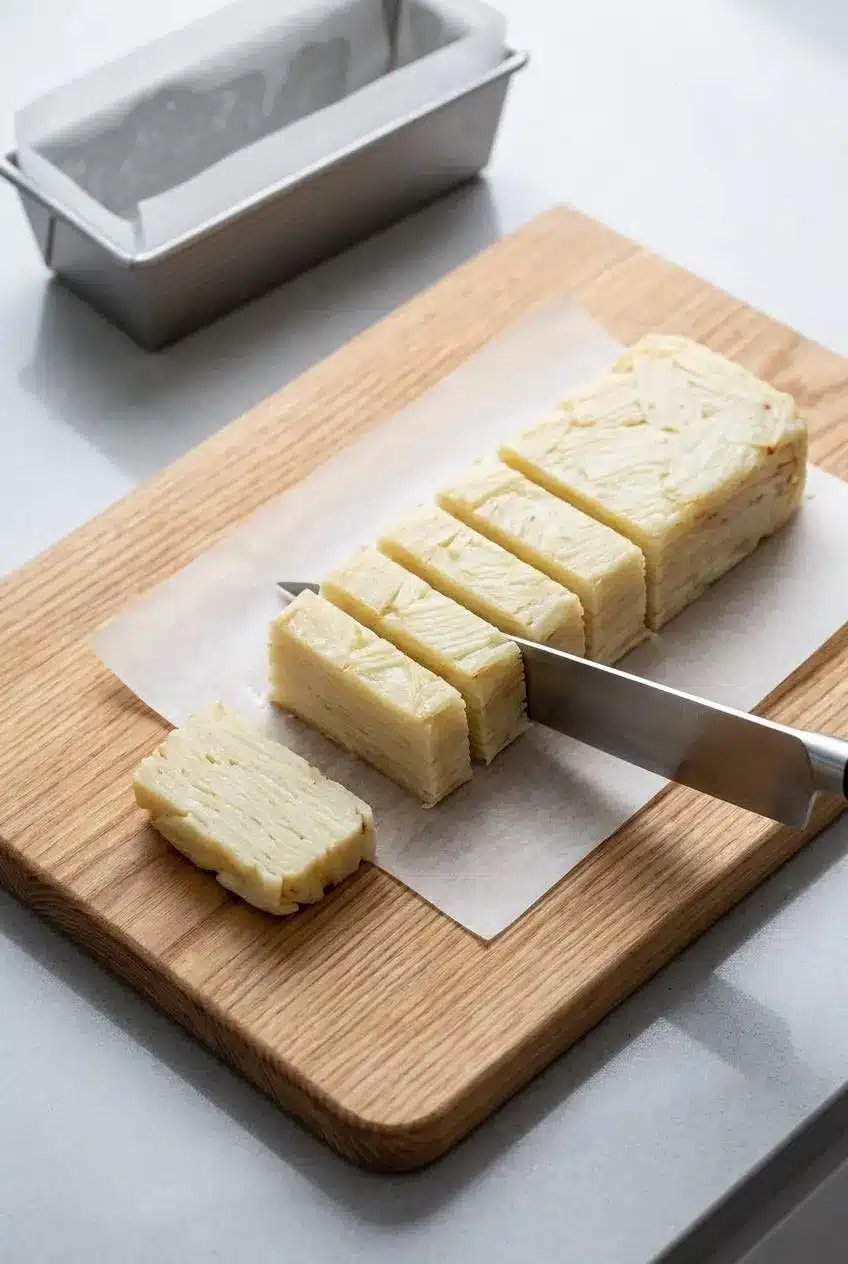
This recipe makes 6 portions and needs an overnight refrigerated press between baking the loaf and browning the slices. Have a mandoline with a hand guard, parchment paper, foil, a second loaf pan, and a rimmed baking sheet ready.
Main Preparation
- Set the oven to 180 °C.
Let it heat fully before the assembled loaf goes in. - Grease a 22 x 12 x 6 cm loaf pan, also listed as 8½ x 4½ x 2½ inches, and line it with parchment extending 13 cm or 5 inches beyond every side.
The generous paper flaps need to reach across the filled pan later. - Combine the cream, garlic powder, parmesan, and salt in a large bowl using a whisk.
The seasoning should spread evenly through the cream. - Peel the potatoes and cut them into thin slices, transferring them directly into the cream as you work.
Keep every slice submerged so the surfaces stay coated. - Arrange enough overlapping slices in the pan to form two layers.
Cover gaps so the bottom has an even thickness. - Begin drizzling melted butter over the second layer, then continue stacking the remaining potatoes with butter between successive layers.
A level stack will compress more evenly than one with a mound in the middle. - Bring the parchment flaps across the potatoes, cover the pan with foil, and bake for 1½ hours or until completely tender.
A sharp knife inserted into the center should meet no resistance. - Rest the baked loaf for 15 minutes, then nest a matching loaf pan on top, load it with heavy items, and refrigerate overnight.
The upper pan should sit level so the potatoes compress into an even block.
To finish and serve
- Heat the oven to 180 °C and cover a rimmed baking sheet with parchment.
The lined surface will support the exposed potato layers during browning. - Release the cold terrine by sliding a sharp knife around its perimeter.
Check the corners, where the block may cling to the pan. - Turn the pan upside down over a cutting board and tap its base firmly to release the potatoes.
The chilled loaf should emerge as one compact piece. - Square off the uneven edges with a large knife, then divide the loaf into 6 equally thick slices.
Flat cut faces give each portion good contact with the baking sheet. - Arrange the portions with a cut face against the parchment and bake for 30 minutes, then flip and bake for another 10 to 15 minutes.
Look for golden-brown surfaces and crisp edges before removing the tray.
Slicing and Layering the Potatoes
Keep the cream bowl beside the mandoline so the slices move directly into their coating. Separate any slices that stick together, then overlap them neatly in the pan. Fill low spots with smaller pieces instead of building a tall ridge down the center.
Baking and Compressing the Terrine Overnight
The parchment and foil hold moisture around the potatoes during the first bake. Test the center, not just an edge: a blade should slide through without catching on a firm slice. If it meets resistance, continue baking under the cover.
After the cooling rest, use bags of sugar or food cans inside the upper loaf pan as weights. Keep them balanced rather than piled at one end. Refrigeration firms the loaf while pressure brings the tender layers into close contact.
Trimming, Slicing, and Browning in the Oven
Cut the terrine while it’s cold and firm. Use deliberate downward cuts rather than sawing back and forth, which can pull at the layers. Leave space between the portions on the sheet so their edges can brown instead of crowding together.
Expert Tips and Troubleshooting for Perfect Layers
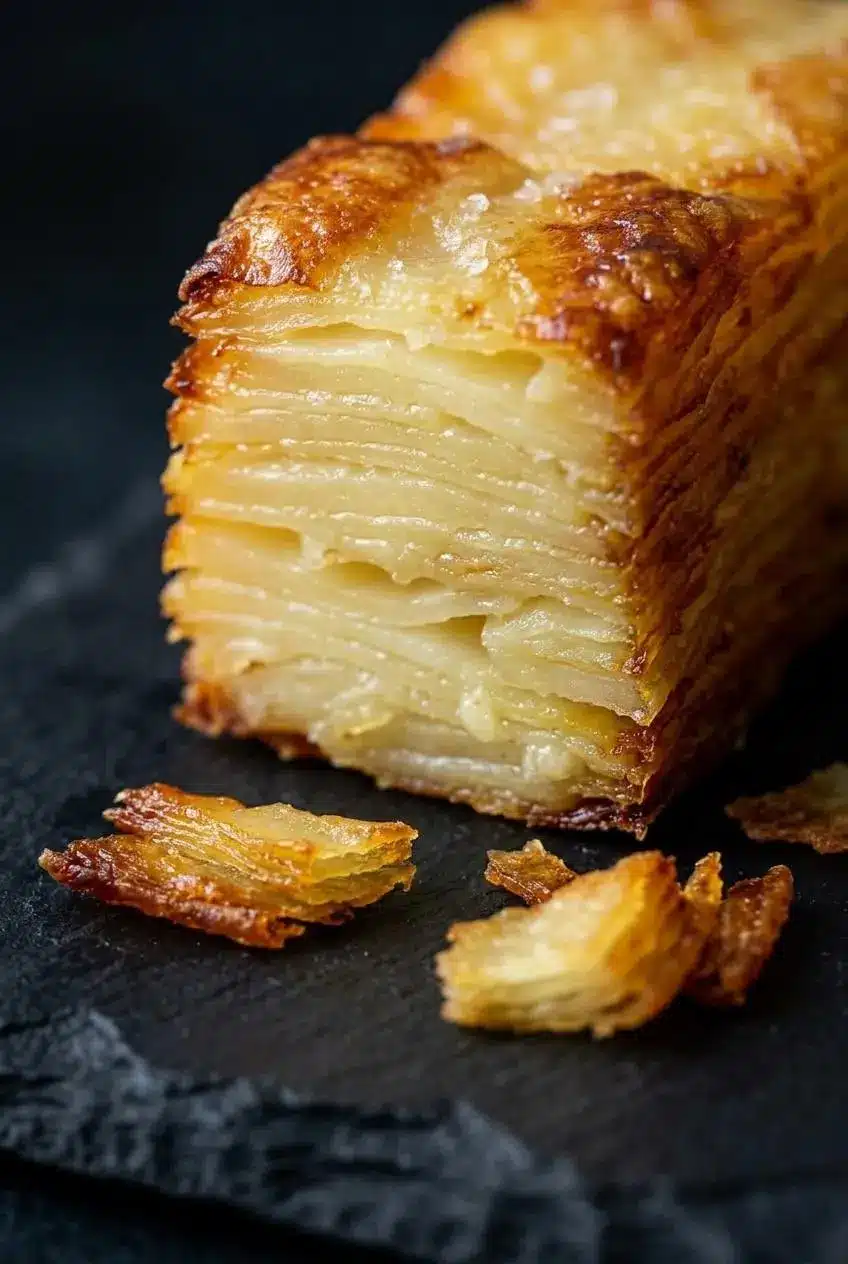
A tidy potato block depends on uniform slices, thorough cooking, and level pressure. Most structural problems begin at one of those stages.
- Liquid remains in the mixing bowl. That’s normal: raw potatoes release moisture into the cream while you work, so a pool of liquid doesn’t mean you measured incorrectly.
- The press tilts. Redistribute the weights over the upper pan rather than adding more weight to one spot. If a matching pan isn’t available, foil-wrapped cardboard cut to fit inside the loaf pan can spread pressure beneath cans or sugar bags.
- The cold loaf separates while cutting. Incomplete tenderness, uneven slices, or insufficient pressing can weaken the block. Handle fragile portions with a broad spatula and keep their cut faces supported.
- The edges darken before the broad faces brown. Check that the slices sit flat and aren’t crowded together. Judge the finish by color and crispness rather than extending the bake automatically.
- The portions stick during turning. Slide a thin spatula fully underneath before lifting. Pulling from one corner can peel away the bottom layers.
Save the trimmed edges. Bake them on the lined sheet alongside the portions, keeping them together in a separate area so you can remove them easily. Thin scraps brown sooner and make an excellent cook’s snack.
Choosing the Right Pan Size and Slice Thickness
The specified deep loaf pan produces tall portions with plenty of visible layers. An 8 x 8-inch square pan spreads the potatoes over a larger area, giving a flatter result. It isn’t a direct pan swap with identical depth or baking behavior, so use the loaf pan for the method above.
Aim for paper-thin, consistent slices, approximately 1/16 inch, using a mandoline. Use its hand guard throughout. Don’t chase the final sliver of potato toward the blade; an awkward end piece isn’t worth a cut.
Why You Should Never Rinse the Sliced Potatoes
For this terrine, leave the sliced potatoes unwashed. Rinsing or soaking removes surface starch that helps bind neighboring layers during baking and pressing. Transfer the slices straight into the cream instead.
If you enjoy other baked potato dishes with crisp edges and cohesive centers, crispy potato kugel offers a different texture using grated potatoes.
Variations and Finishing Methods
Keep these changes optional and separate from the ingredient list and method above. Aromatics can shift the flavor, while the finishing method changes how much crust surrounds each portion.
- Herb and garlic infusion: Gently warm the cream and butter with thyme, rosemary, and smashed garlic, then strain out the solids before using them so woody stems don’t interrupt the layers.
- Black pepper: Add freshly cracked pepper to the seasoning mixture for a little warmth against the rich cream.
- Flaky sea salt: Finish the browned portions lightly, tasting first because the cream mixture already contains salt and parmesan.
If you want creamy layered potatoes without the pressing stage, classic potatoes au gratin is a more direct route from oven to serving dish.
Oven-Baked Slices vs Pan-Fried Cubes
- Oven-baked slices: The main method makes 6 thick portions with golden cut faces and crisp edges, making it convenient for a seated dinner.
- Pan-fried cubes: For a 15-hour potatoes-style presentation, cut the chilled block into smaller appetizer pieces and brown them in neutral oil, turning carefully to crisp several sides.
- Texture and attention: Sheet-pan baking needs less hands-on attention; skillet frying produces a more pronounced crust but requires careful turning and room between pieces.
No-Cream Butter and Vegetable Broth Version
A no-cream version uses vegetable broth with melted butter, garlic, and thyme to coat the slices. It tastes more potato-forward and less rich than the cream version. The retained starch and refrigerated pressing still help the layers hold together.
This is a separate variation, not a tested equal-volume substitution for the cream above. For a dairy-free adaptation, use olive oil instead of butter and omit the parmesan as well; removing cream alone doesn’t remove all the dairy.
Make-Ahead, Storage, and Serving Suggestions
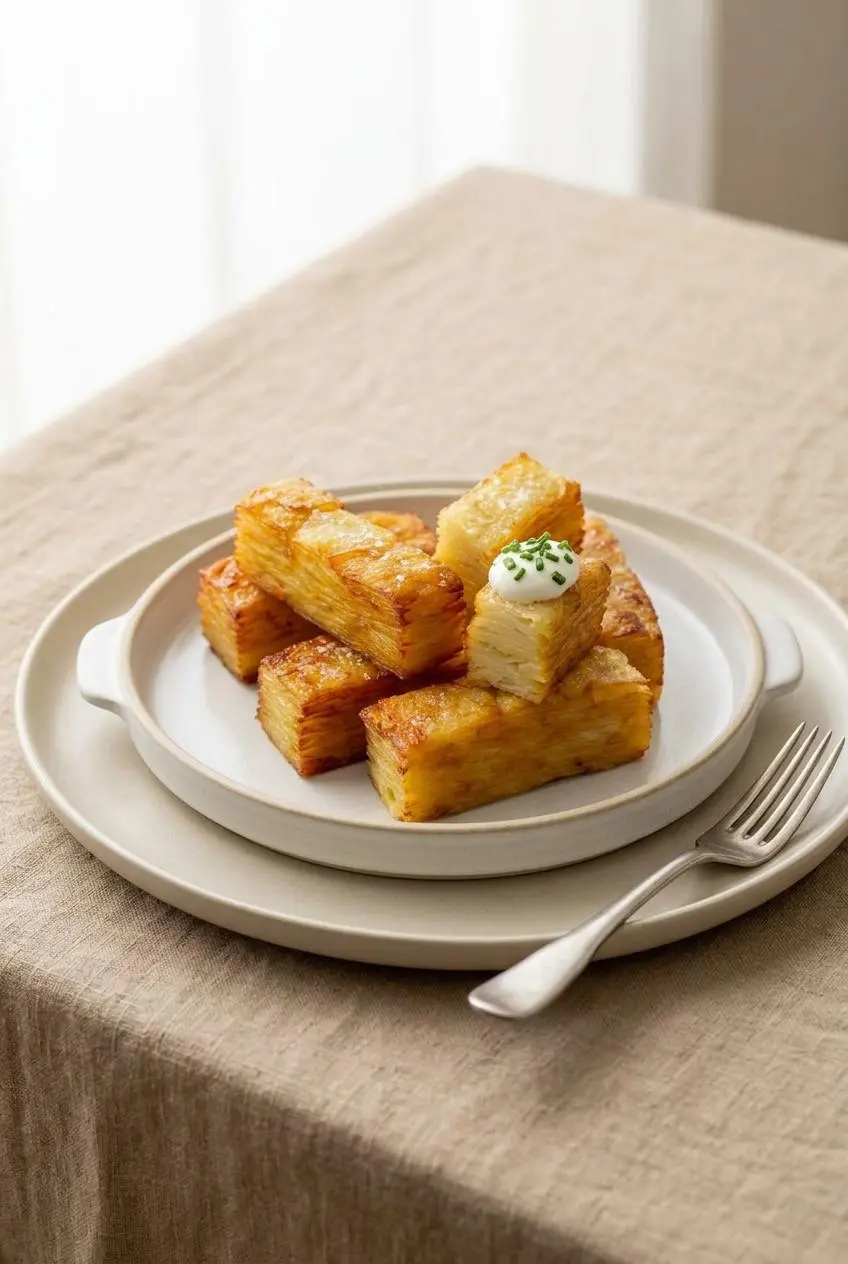
Plan the dish around its overnight press rather than trying to finish it in one session. Assemble and bake the loaf first, refrigerate it under weights as directed, then trim and brown the cold portions near serving time.
Keep the covered loaf refrigerated until you’re ready to portion it. After serving, refrigerate leftovers promptly in a covered container, with sour cream and fresh herbs stored separately. Brown only the portions you need when practical, since freshly crisped edges have the best texture.
To restore the exterior of leftover slices, use an oven or air fryer and arrange them without stacking. Heat until hot throughout and crisp at the edges, watching closely to avoid drying the exposed layers. A microwave softens the crust, so it’s a poor choice when crunch matters.
For serving, add a cool dollop of sour cream and freshly snipped chives to the hot potatoes. The temperature contrast suits the rich center. Keep toppings modest so the browned surface remains part of every bite.
Potato pave also works well alongside roasted beef, steak, or pan-seared fish. Serve the portions with their layered cut faces visible and add fresh herbs just before bringing them to the table.
If the overnight preparation doesn’t fit your schedule, crispy roasted red potatoes offer a same-day alternative without the pressing stage.
Conclusion
Potato pave earns its overnight wait with a contrast that’s hard to get from an ordinary potato bake: a creamy, tightly layered center surrounded by golden, crisp edges.
Keep the natural starch on the slices, bake until completely tender, and press the loaf level overnight. Finish with herbs or a little flaky salt if desired, then serve while those edges still crunch.
Frequently Asked Questions
What Is a Potato Pave and Why Is It Called That?
Potato pave is a layered potato terrine that’s baked, pressed, cut into rectangular portions, and browned. The French word “pavé” means paving stone, referring to the shape of the finished pieces.
What Potatoes Are Best for Making Potato Pave?
Large Yukon Gold, Russet, or Sebago potatoes work well. Their broad slices make layering easier, and their natural starch helps the compressed potatoes hold together.
Is Potato Pave Hard to Make?
It’s straightforward, but it takes planning and patient layering. A mandoline helps keep slices uniform, while most of the elapsed time goes into baking and refrigerated pressing.
Can I Make Potato Pave Without Heavy Cream?
Yes, a butter-and-vegetable-broth version with garlic and thyme is an option. Keep the starch on the potatoes and press thoroughly, but treat it as a separate variation rather than an equal-volume cream swap.
Potato Pave Recipe

Equipment
- loaf pan (22 x 12 x 6cm/8½’ x 4½’ x 2½’)
- Baking parchment paper
- mandolin
- aluminium foil
- Rimmed baking sheet
Ingredients
- 1.4 kg potatoes I used sebago
- 150 ml thickened cream 35% milk fat with included thickeners
- ½ teaspoon garlic powder
- 1 tablespoon finely grated parmesan cheese
- 1½ teaspoon salt
- 30 g unsalted butter melted
Instructions
Main Preparation
- Set the oven to 180 °C. Let it heat fully before the assembled loaf goes in.
- Grease a 22 x 12 x 6 cm loaf pan, also listed as 8½ x 4½ x 2½ inches, and line it with parchment extending 13 cm or 5 inches beyond every side. The generous paper flaps need to reach across the filled pan later.
- Combine the cream, garlic powder, parmesan, and salt in a large bowl using a whisk. The seasoning should spread evenly through the cream.
- Peel the potatoes and cut them into thin slices, transferring them directly into the cream as you work. Keep every slice submerged so the surfaces stay coated.
- Arrange enough overlapping slices in the pan to form two layers. Cover gaps so the bottom has an even thickness.
- Begin drizzling melted butter over the second layer, then continue stacking the remaining potatoes with butter between successive layers. A level stack will compress more evenly than one with a mound in the middle.
- Bring the parchment flaps across the potatoes, cover the pan with foil, and bake for 1½ hours or until completely tender. A sharp knife inserted into the center should meet no resistance.
- Rest the baked loaf for 15 minutes, then nest a matching loaf pan on top, load it with heavy items, and refrigerate overnight. The upper pan should sit level so the potatoes compress into an even block.
To finish and serve
- Heat the oven to 180 °C and cover a rimmed baking sheet with parchment. The lined surface will support the exposed potato layers during browning.
- Release the cold terrine by sliding a sharp knife around its perimeter. Check the corners, where the block may cling to the pan.
- Turn the pan upside down over a cutting board and tap its base firmly to release the potatoes. The chilled loaf should emerge as one compact piece.
- Square off the uneven edges with a large knife, then divide the loaf into 6 equally thick slices. Flat cut faces give each portion good contact with the baking sheet.
- Arrange the portions with a cut face against the parchment and bake for 30 minutes, then flip and bake for another 10 to 15 minutes. Look for golden-brown surfaces and crisp edges before removing the tray.