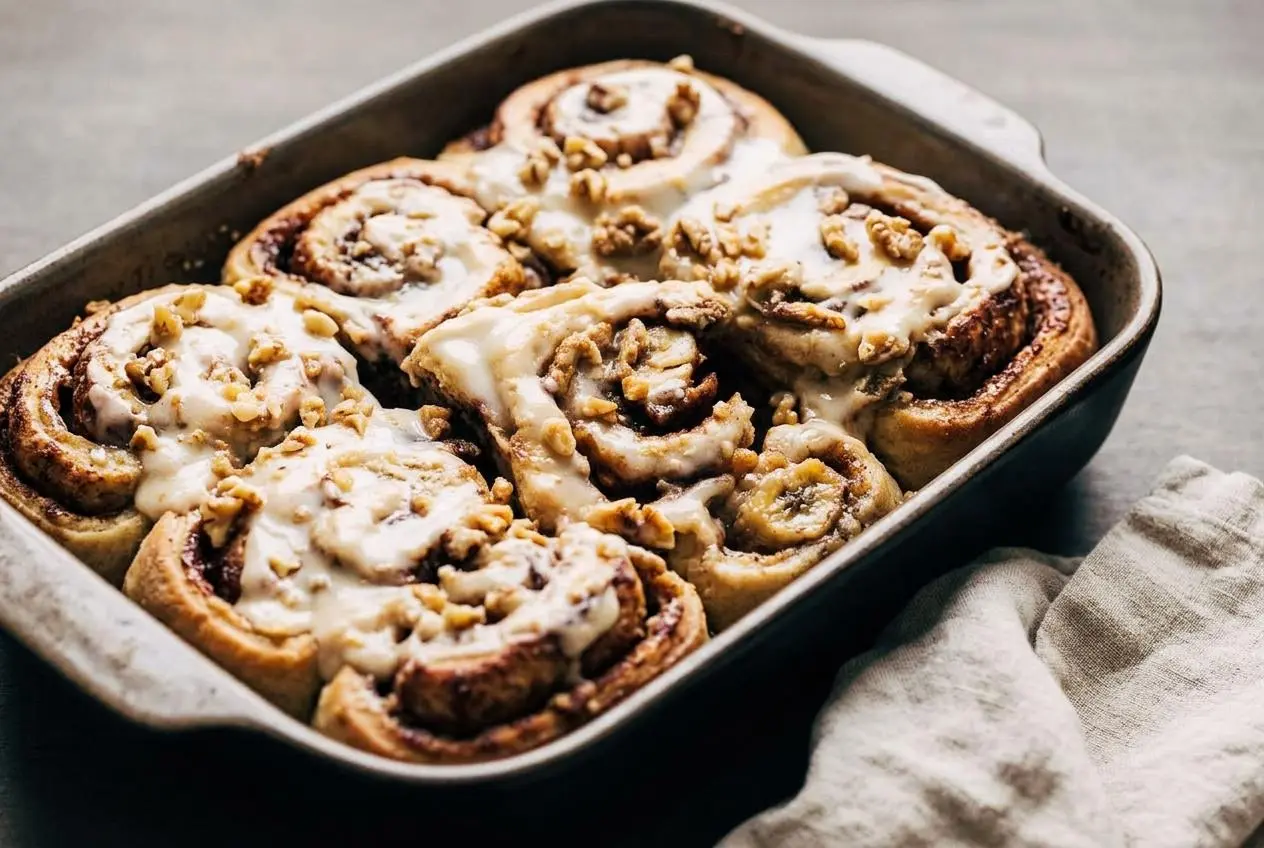
Banana bread cinnamon rolls combine soft, banana-infused yeast dough with cinnamon sugar, sliced bananas, and walnuts. Maple cream cheese icing melts into the warm swirls, giving you banana bread flavor in a fluffy, pull-apart roll.
The aroma of ripe bananas and warm cinnamon makes these rolls especially welcome at brunch. Mashed banana flavors the dough, while thin banana slices create gooey pockets inside the filling. The walnuts add a little crunch between those tender layers.
You can mix the dough by hand, and its changing texture tells you when to stop adding flour. The recipe makes 12 rolls, with about 30 minutes of preparation, an hour of rising, and 25 to 30 minutes of baking. Start with the dough’s feel.
Set out the filling butter and icing ingredients so they can soften while you work on the dough.
Key Ingredients and Their Roles
Bananas supply moisture and sweetness, flour gives the dough structure, and yeast lifts the rolls. Butter adds richness, cinnamon brings warmth, walnuts provide crunch, and maple cream cheese icing balances the sweet filling with a tangy finish.
Cinnamon Roll Dough
- 4 1/2 – 5 cups all purpose flour
- 1/4 cup (50g) granulated sugar
- 2 packets (4 1/2 tsp) rapid rise or instant yeast
- 1 tsp salt
- 3/4 cup (180ml) water
- 6 tbsp unsalted butter (or vegan butter)
- 3/4 cup (200g) mashed ripe bananas (about 2 bananas, but don’t forget to measure)
Filling
- 1/4 cup (55g) unsalted butter, room temp (or vegan butter)
- 1/2 cup (100g) light brown sugar, packed
- 1 tbsp cinnamon
- 3 yellow or ripe bananas, sliced
- 1/2 cup walnuts, finely chopped
Icing
- 4 oz cream cheese, room temp (or vegan cream cheese)
- 1/4 cup (55g) unsalted butter, room temp (or vegan butter)
- 1 cup (120g) powdered sugar
- 2 tbsp maple syrup
- 1/4 cup walnuts, finely chopped (optional)
Choose bananas for two different jobs. Heavily speckled bananas mash readily and bring pronounced banana flavor to the dough. Their moisture helps keep the rolls tender, making an egg unnecessary here. Measure the mash rather than relying on the number of bananas, since fruit sizes vary considerably.
For the filling, choose ripe yellow bananas that still hold their shape. Cut them into roughly 1/8-inch coins. Thin slices bend with the dough as you roll it; thick chunks make the log harder to close. Very soft fruit can smear and release more moisture into the swirl.
Keep the full yeast quantity. Two packets of rapid-rise or instant yeast provide lift for this fruit-enriched dough. Mix the yeast into the flour as directed rather than adding a separate activation step.
Measure flour gently. Spoon it into the measuring cup and level the top instead of scooping directly from the bag. Compressed flour can make the dough dry before you reach the right texture. Use the supplied gram weights for ingredients that include them; the flour measurement here is by volume.
Softened filling butter holds the brown sugar and cinnamon against the dough. Finely chopped walnuts distribute more evenly than large pieces, while maple syrup adds flavor and loosens the cream cheese icing.
I measure the mashed banana before mixing; guessing by banana count makes the dough’s moisture harder to manage.
How to Make the Banana Bread Cinnamon Rolls Step by Step
Let the flour additions guide the dough from a loose, batter-like mixture to a thick sticky mass, then a smooth, tacky ball. Don’t rush to make it completely dry to the touch.
Cinnamon Roll Dough
- Measure 2 cups of flour into a large bowl and whisk in the granulated sugar, yeast, and salt.
Even distribution helps the dough rise and season consistently. - Cut the dough butter into tablespoon-size pieces and microwave it with the water in a heat-safe bowl for 30 to 45 seconds.
The liquid should feel warm rather than hot, with some butter still unmelted. - Stir the mashed banana and warmed butter-water mixture into the flour mixture with a wooden spoon.
At this stage, expect a loose, wet mixture rather than a kneadable dough. - Work another 2 cups of flour into the bowl with the spoon.
The mixture will become substantially thicker and sticky as the flour absorbs moisture. - Incorporate another 1/2 cup of flour, then switch from the spoon to your hands when stirring becomes difficult.
The dough should look shaggy and uneven before kneading brings it together. - Knead in another 1/4 cup of flour by hand.
The rough dough should gradually become soft and smooth, with a slight tackiness. - Press a clean, dry finger into the dough, kneading in the final 1/4 cup of flour only if dough clings to your finger.
A clean release tells you to stop adding flour. - Shape the dough into a ball and leave it uncovered for 10 minutes.
After resting, it should look noticeably puffier without doubling in size. - Pat the dough into a rectangle on a lightly floured work surface, then roll it to 10 by 15 inches.
An even thickness helps the finished rolls bake consistently. - Cover the rectangle with a thin layer of softened filling butter, keeping a 1/2-inch border clear around the edges.
The uncovered border gives the dough edges room to meet without a slippery butter layer. - Distribute the brown sugar over the butter with your hand, then scatter the cinnamon over it.
A level coating gives each swirl a similar balance of sweetness and spice. - Arrange the banana slices across the filling and scatter the chopped walnuts over them.
Keep the fruit in an even layer so bulky spots don’t stretch the dough. - Roll inward from a 15-inch edge, then gently press the ends of the finished log toward its center.
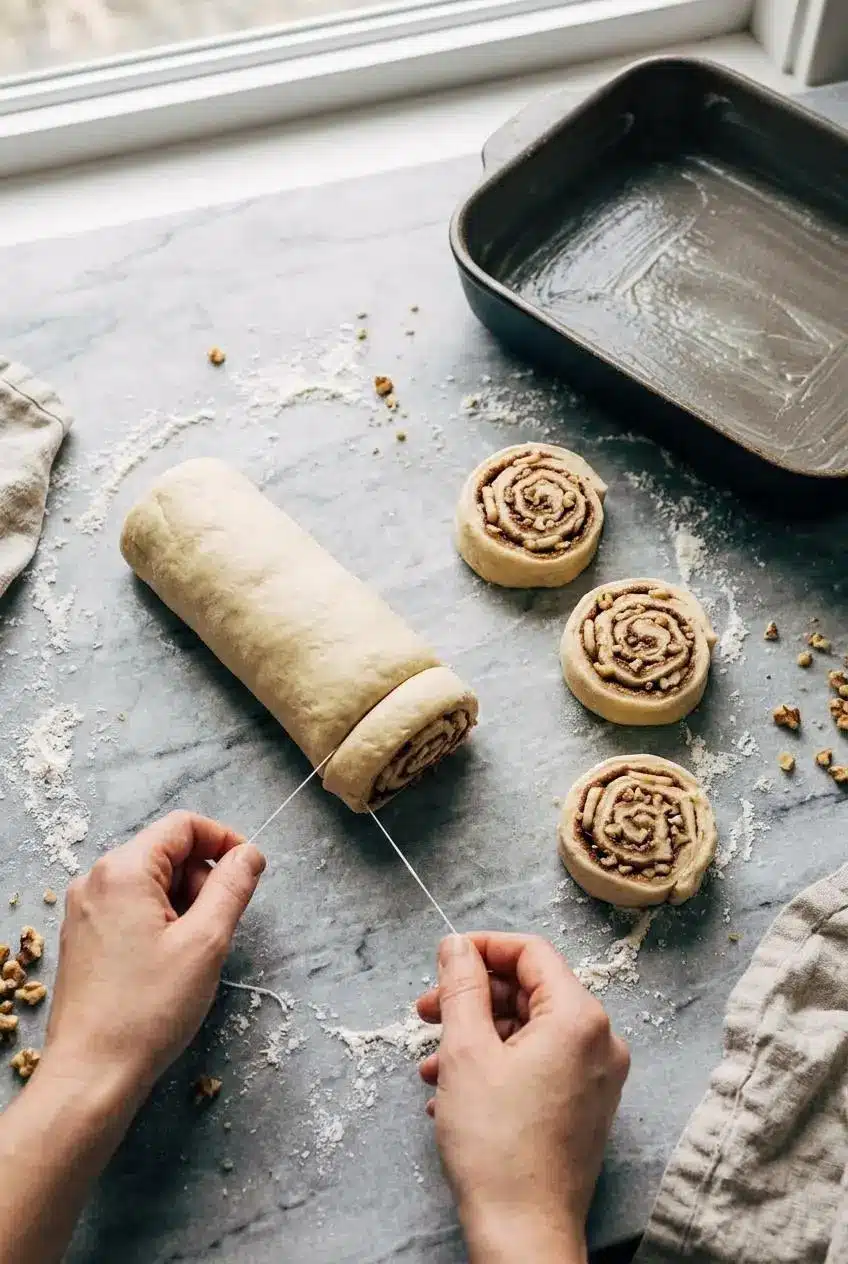
This brings an elongated log back into a compact shape without flattening the layers. - Choose unflavored dental floss or thin sewing thread for slicing, or use a sharp knife with a gentle sawing motion.
Avoid downward pressure, which flattens the soft dough and pushes out filling. - Pass the floss beneath the log, cross its ends over the top, and pull to trim away the two uneven ends.
The thread cuts through the layers while keeping the round shape intact. - Divide the trimmed log into halves, halve those sections again, and cut each of the four sections into three rolls.
This produces 12 portions with more consistent thickness. - Arrange the rolls in a greased 9×13-inch baking dish, or divide them between two greased 9-inch round pans with six rolls in each.
The rolls need space to expand rather than starting tightly compressed. - Cover the dish with a towel and let the rolls rise in a warm spot for 1 hour, using an oven warmed at its lowest setting and then switched off if needed.
The dough should expand into rounded, puffy swirls in the gentle warmth. - Remove any proofing rolls from the oven, then preheat it to 350°F.
By baking time, the rolls should have nearly doubled in size. - Bake for 25 to 30 minutes, then begin the icing while the rolls cool slightly.
Look for light golden tops and set dough between the center swirls.
Cream Cheese Icing
- Use a fork to blend the softened cream cheese and softened butter in a bowl.
Both should yield easily under the fork so firm pieces don’t remain in the icing. - Work in the powdered sugar and maple syrup with the fork, then whisk once the mixture loosens.
The finished icing should look smooth and spread without dragging. - Coat the warm rolls with icing and scatter the optional chopped walnuts over the top if desired.
The warmth softens the icing so it settles into the cinnamon swirls.
Expert Tips and Troubleshooting for Fluffy Rolls
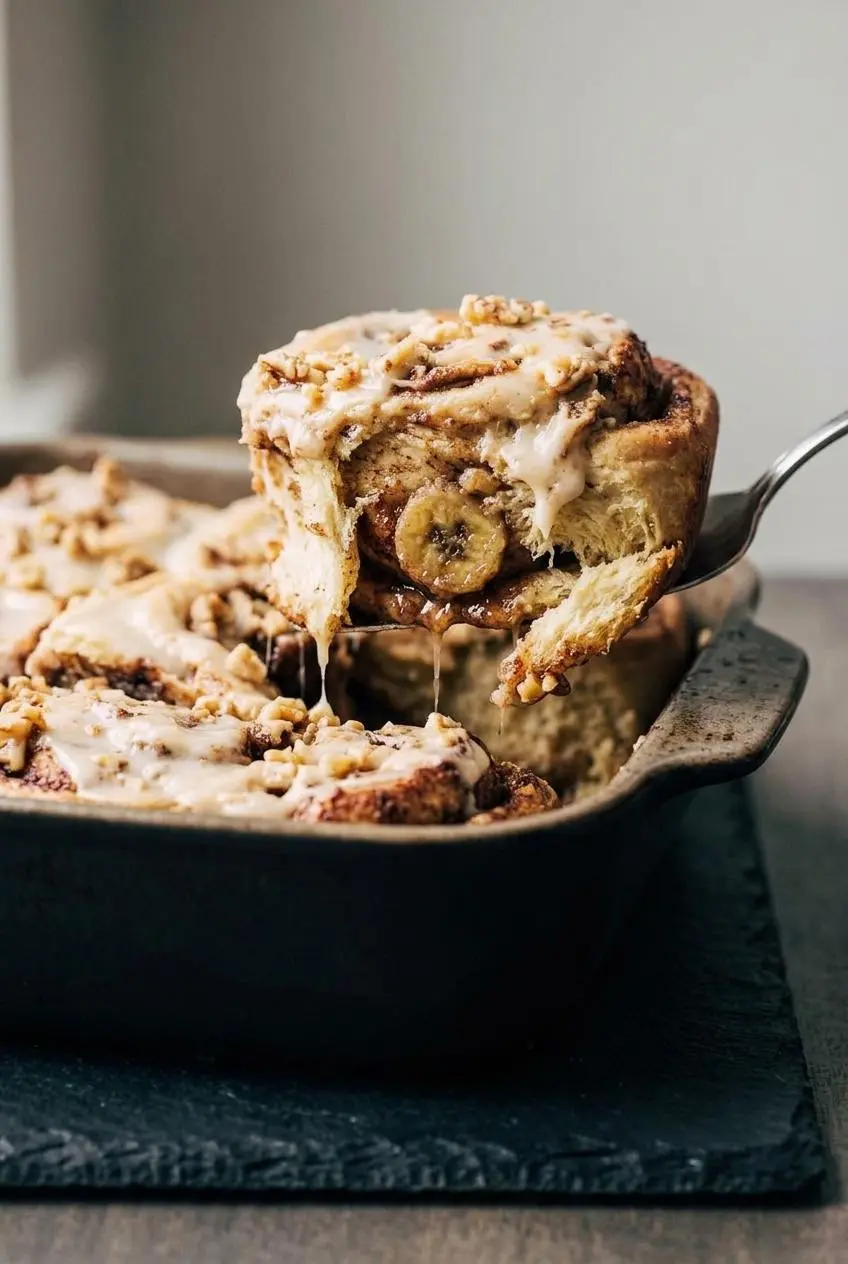
Most texture problems start with too much flour, overly warm filling butter, or rolls packed into an undersized pan.
- Dense, dry rolls: Packed flour measurements or unnecessary extra flour can stiffen the dough. Spoon and level, then let the finger test determine whether the final flour addition is needed.
- Filling leaking into the pan: Melted butter flows instead of spreading. Use butter soft enough to smear but still able to hold its shape.
- Little rise: Excessively hot liquid can damage yeast. Keep the butter-water mixture comfortably warm, and proof in gentle warmth rather than a running oven.
- Gummy center layers: Crowding and thick banana pieces can leave wet pockets. Slice the bananas thinly, use the specified pan, and check the center dough as well as the tops before removing the dish.
For smooth icing, soften both dairy ingredients rather than trying to whisk away cold lumps. The same temperature principle helps with cream cheese frosting: soft butter and cream cheese blend before the sugar goes in.
The Clean Finger Stick Test and Stand Mixer Option
Wash and dry your hands before testing. Dough already stuck to your fingers can make a properly hydrated batch seem too sticky, encouraging you to add flour it doesn’t need.
Press lightly with one dry finger. Look for a clean release and a little springiness, rather than a completely dry surface. Tacky dough feels slightly adhesive; overly wet dough leaves a smear.
For a stand mixer, use the dough hook on low speed through the same gradual flour additions. Let each addition incorporate before adding the next. Stop when the dough looks smooth, gathers around the hook, and passes the clean-finger test; don’t keep mixing just to reach an arbitrary kneading time.
Cutting Clean Swirls with Unflavored Dental Floss
Floss cuts from all sides without pressing down on the log. Slide it underneath, cross the ends over the dough, and pull them in opposite directions. Use unflavored floss so the cinnamon filling doesn’t pick up an unwanted mint flavor.
Thin sewing thread also works. If using a knife, choose a sharp blade and saw gently rather than pushing straight down.
Signs Your Baking Pan Is Too Small
The unrisen rolls shouldn’t need squeezing into place. If their sides already press firmly together, they may grow upward unevenly and leave the middle crowded.
Use a standard 9×13-inch dish or the two round pans specified above. If your dish runs small, move two or three rolls into a separate greased loaf pan and check that smaller batch independently during baking.
Delicious Variations and Easy Shortcuts
These optional changes offer different flavors and textures without changing the ingredient list or method above.
How to Make Vegan Banana Cinnamon Rolls
The dough already contains no egg. Use plant-based butter and dairy-free cream cheese in the listed amounts for a vegan and dairy-free version. Choose products intended for baking, and check the remaining ingredient labels if dietary requirements matter.
Smooth Mashed Banana vs Sliced Banana Filling
- No banana slices: Omit the sliced fruit for a cinnamon walnut swirl; the dough still supplies banana flavor.
- Mashed filling: Use mashed banana instead of coins for a more uniform texture, keeping the layer thin because mash spreads and adds moisture.
- No walnuts: Omit them from the filling and topping if needed, checking other ingredient labels when accommodating an allergy.
- Pecans instead: Toasted chopped pecans give the filling a different crunch and deeper roasted flavor.
No-Yeast and Quick Shortcut Options
You can’t simply remove the yeast from this dough and expect fluffy rolls. A no-yeast quick bread uses a different structure, while a canned-dough casserole produces a spoonable breakfast rather than defined homemade swirls.
For a shortcut, spread a thin layer of mashed banana and cinnamon sugar over refrigerated crescent dough, then roll and slice. Canned cinnamon rolls baked with a banana custard are another option, but use a dedicated casserole recipe for its proportions and baking instructions.
If gluten-free baking is the priority, gluten-free banana bread offers a more suitable quick-bread alternative than adapting this stretchy yeast dough.
The Brown Butter and Nutmeg Flavor Upgrade
For toasted depth, brown the butter intended for the icing until its milk solids turn golden and smell nutty. Let it cool to a soft, spreadable consistency before blending with the cream cheese; hot butter would make the icing runny.
A light pinch of ground nutmeg in the cinnamon sugar adds a familiar banana bread aroma. Keep it subtle so it complements rather than overtakes the banana and maple.
Prep, Proofing, and Storage Guide
The baking method above uses a warm rise, so plan around the dough becoming nearly doubled before it enters the oven. For easier preparation, measure the dry ingredients, chop the walnuts, and set out your equipment before starting. Mash the dough bananas and slice the filling fruit when you’re ready to assemble.
A timed refrigerator rise isn’t established for this dough here. Don’t assume chilled rolls will be ready after a fixed counter rest; dough temperature and visible expansion both affect readiness.
For leftovers, let excess steam escape, then cover and refrigerate the rolls. Treat the cream cheese icing as perishable: keep covered refrigerated foods at 40°F or below and limit room-temperature exposure to two hours. This is handling guidance, not a specific shelf-life promise for these rolls.
A slice of plain bread in the container can help unfrosted rolls retain softness, but it doesn’t replace refrigeration or proper handling. Keep it away from the icing so it doesn’t stick to the topping.
Rewarm an individual roll briefly in the microwave, checking frequently and stopping once the center feels warm. A small dab of butter can soften an unfrosted roll. Gentle warming preserves tenderness better than heating until the edges turn firm.
Best Serving Ideas for Brunch
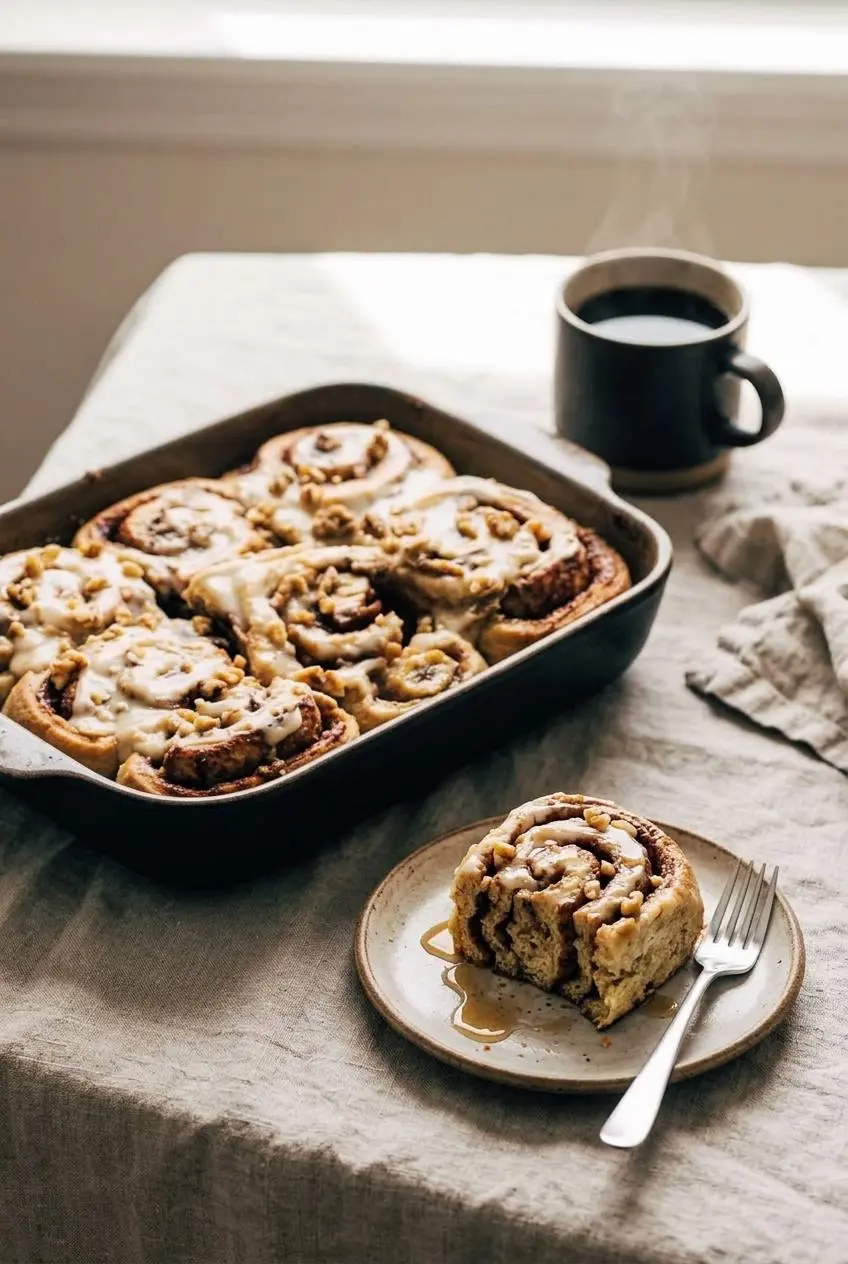
Serve the rolls warm enough for the maple icing to settle into the layers, but not so hot that it runs straight off. Add optional walnuts just before serving for a crisp contrast to the soft dough.
A light drizzle of pure maple syrup makes an especially sweet finish. Hot coffee or espresso balances the rich filling; a banana bread iced latte makes a playful flavor-matched pairing.
For a brunch spread, cut larger rolls in half so guests can taste one alongside the rest of breakfast. Keep extra icing available for anyone who likes a more generous coating.
Conclusion
These rolls bring together tender banana dough, gooey cinnamon filling, walnut crunch, and tangy maple icing. The clean, dry finger test helps you keep the dough soft without adding unnecessary flour.
Stick with maple cream cheese icing or try the optional brown butter upgrade for a toasted finish. Give the dough room to rise, then enjoy the warm swirls while their texture is at its best.
Frequently Asked Questions
Can I Make Banana Bread Cinnamon Rolls Ahead of Time for the Next Morning?
A timed next-morning refrigerator method isn’t established here. Measure the dry ingredients and prepare your equipment ahead, then follow the warm-rise method when you’re ready to bake. Don’t rely on a fixed counter rest to make chilled dough ready.
Can I Use a Stand Mixer With a Dough Hook Instead of Mixing by Hand?
Yes. Use the dough hook on low speed and follow the same gradual flour additions. Stop when the dough becomes smooth and tacky and releases cleanly from a dry finger, rather than adding flour until it feels completely dry.
Can I Make Banana Bread Cinnamon Rolls Without Yeast?
Not by leaving the yeast out of this dough. For a shortcut, roll a thin layer of mashed banana and cinnamon sugar inside refrigerated crescent dough. For canned cinnamon rolls with banana custard, follow a dedicated casserole method.
Can I Leave the Banana Slices Out of the Filling?
Yes. Omit them for a cinnamon walnut filling while keeping the mashed banana in the dough. For a smoother fruit filling, use a thin layer of mashed banana instead of slices; avoid a heavy layer that adds excess moisture.
Will 1-to-1 Gluten-Free All-Purpose Flour Work in This Recipe?
Don’t expect a direct swap to produce the same texture. This dough relies on gluten for stretch and structure, and general-purpose gluten-free blends can behave very differently. Choose a dedicated gluten-free yeast-roll recipe rather than assuming a flour substitution will work.
Banana Bread Cinnamon Rolls

Equipment
- Large Mixing Bowl
- Wooden Spoon
- Rolling Pin
- unflavored dental floss
- 9×13 dish
- Whisk
Ingredients
Cinnamon Roll Dough
- 4 1/2 – 5 cups all purpose flour
- 1/4 cup granulated sugar (50g)
- 2 packets rapid rise or instant yeast (4 1/2 tsp)
- 1 tsp salt
- 3/4 cup water (180ml)
- 6 tbsp unsalted butter (or vegan butter)
- 3/4 cup mashed ripe bananas (200g) (about 2 bananas, but don’t forget to measure)
Filling
- 1/4 cup unsalted butter (55g) room temp (or vegan butter)
- 1/2 cup light brown sugar (100g) packed
- 1 tbsp cinnamon
- 3 yellow or ripe bananas sliced
- 1/2 cup walnuts finely chopped
Icing
- 4 oz cream cheese room temp (or vegan cream cheese)
- 1/4 cup unsalted butter (55g) room temp (or vegan butter)
- 1 cup powdered sugar (120g)
- 2 tbsp maple syrup
- 1/4 cup walnuts finely chopped (optional)
Instructions
Cinnamon Roll Dough
- Measure 2 cups of flour into a large bowl and whisk in the granulated sugar, yeast, and salt. Even distribution helps the dough rise and season consistently.
- Cut the dough butter into tablespoon-size pieces and microwave it with the water in a heat-safe bowl for 30 to 45 seconds. The liquid should feel warm rather than hot, with some butter still unmelted.
- Stir the mashed banana and warmed butter-water mixture into the flour mixture with a wooden spoon. At this stage, expect a loose, wet mixture rather than a kneadable dough.
- Work another 2 cups of flour into the bowl with the spoon. The mixture will become substantially thicker and sticky as the flour absorbs moisture.
- Incorporate another 1/2 cup of flour, then switch from the spoon to your hands when stirring becomes difficult. The dough should look shaggy and uneven before kneading brings it together.
- Knead in another 1/4 cup of flour by hand. The rough dough should gradually become soft and smooth, with a slight tackiness.
- Press a clean, dry finger into the dough, kneading in the final 1/4 cup of flour only if dough clings to your finger. A clean release tells you to stop adding flour.
- Shape the dough into a ball and leave it uncovered for 10 minutes. After resting, it should look noticeably puffier without doubling in size.
- Pat the dough into a rectangle on a lightly floured work surface, then roll it to 10 by 15 inches. An even thickness helps the finished rolls bake consistently.
- Cover the rectangle with a thin layer of softened filling butter, keeping a 1/2-inch border clear around the edges. The uncovered border gives the dough edges room to meet without a slippery butter layer.
- Distribute the brown sugar over the butter with your hand, then scatter the cinnamon over it. A level coating gives each swirl a similar balance of sweetness and spice.
- Arrange the banana slices across the filling and scatter the chopped walnuts over them. Keep the fruit in an even layer so bulky spots don’t stretch the dough.
- Roll inward from a 15-inch edge, then gently press the ends of the finished log toward its center. This brings an elongated log back into a compact shape without flattening the layers.
- Choose unflavored dental floss or thin sewing thread for slicing, or use a sharp knife with a gentle sawing motion. Avoid downward pressure, which flattens the soft dough and pushes out filling.
- Pass the floss beneath the log, cross its ends over the top, and pull to trim away the two uneven ends. The thread cuts through the layers while keeping the round shape intact.
- Divide the trimmed log into halves, halve those sections again, and cut each of the four sections into three rolls. This produces 12 portions with more consistent thickness.
- Arrange the rolls in a greased 9×13-inch baking dish, or divide them between two greased 9-inch round pans with six rolls in each. The rolls need space to expand rather than starting tightly compressed.
- Cover the dish with a towel and let the rolls rise in a warm spot for 1 hour, using an oven warmed at its lowest setting and then switched off if needed. The dough should expand into rounded, puffy swirls in the gentle warmth.
- Remove any proofing rolls from the oven, then preheat it to 350°F. By baking time, the rolls should have nearly doubled in size.
- Bake for 25 to 30 minutes, then begin the icing while the rolls cool slightly. Look for light golden tops and set dough between the center swirls.
Cream Cheese Icing
- Use a fork to blend the softened cream cheese and softened butter in a bowl. Both should yield easily under the fork so firm pieces don’t remain in the icing.
- Work in the powdered sugar and maple syrup with the fork, then whisk once the mixture loosens. The finished icing should look smooth and spread without dragging.
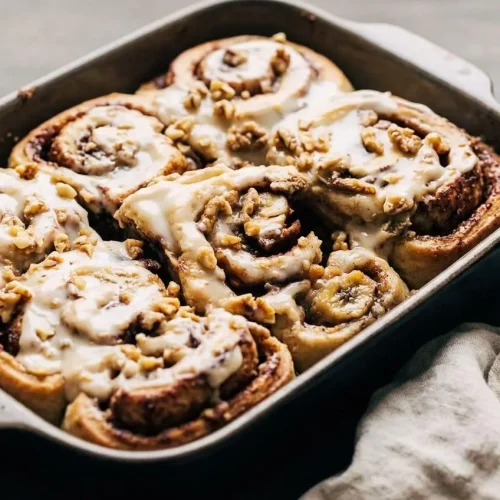
- Coat the warm rolls with icing and scatter the optional chopped walnuts over the top if desired. The warmth softens the icing so it settles into the cinnamon swirls.