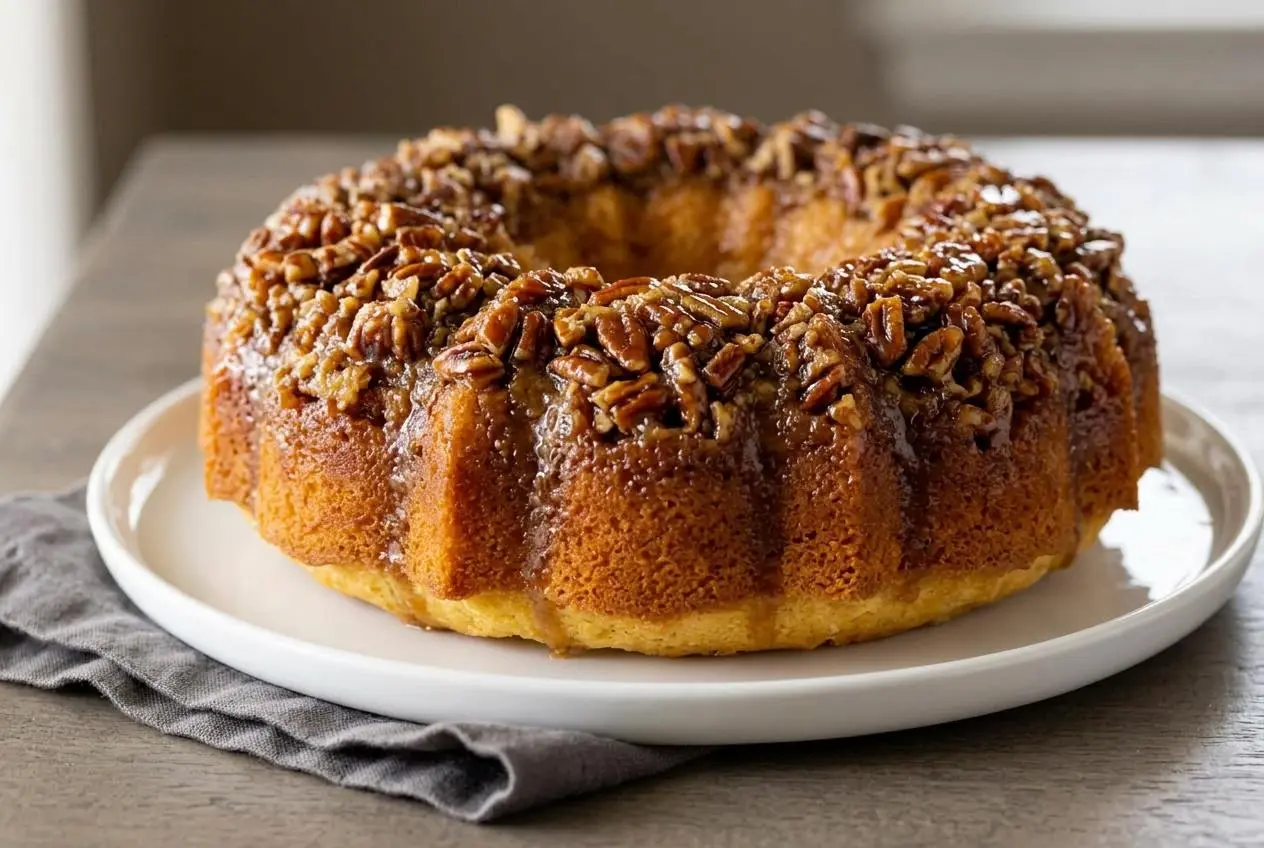
A pecan upside down bundt cake bakes buttery brown sugar, corn syrup, and chopped pecans beneath sour cream cake batter. Bake at 350°F for 40 to 45 minutes, then invert after a 10-minute rest to reveal the glossy nut topping.
This pecan upside down bundt cake combines the sticky, buttery appeal of pecan pie with a tender vanilla cake. The topping cooks right in the pan, so you don’t need to roll a crust, prepare a separate frosting, or handle a saucepan of hot caramel.
Warm brown sugar aromas fill the kitchen as it bakes, and the sour cream adds richness to the cake mix batter. It’s a lovely fit for Thanksgiving dessert or a coffee gathering. The trick is knowing when to flip.
Set out your cooling rack, cake plate, and timer before baking so you’re ready when the cake comes out.
Key Ingredients and Smart Substitutions
Butter and brown sugar give the topping richness, corn syrup adds gloss, and salt balances the sweetness. Pecans supply crunch, while eggs, oil, water, and sour cream help the vanilla cake develop structure and a moist crumb.
Pecan Topping
- ½ cup butter, melted
- ½ cup brown sugar, packed
- ¼ cup corn syrup
- ¼ teaspoon salt
- 1 cup chopped pecans
Cake Batter
- 1 box vanilla cake mix, 13.25 ounces
- 3 large eggs
- ½ cup vegetable oil
- 1 cup water
- 3 Tablespoon sour cream
For the Caramelized Pecan Topping
Melted butter coats the nuts and brings richness to the brown sugar topping. Pack the brown sugar when measuring it so the topping has the intended sweetness and consistency. Salt keeps that sweetness from tasting flat.
Corn syrup helps create the sticky, glossy finish associated with pecan pie. Whisk the mixture until the brown sugar begins to dissolve, rather than leaving dry pockets in the bowl. You don’t need to make it completely smooth before baking.
Chopped pecans settle into the pan’s curves more readily than whole halves. Keep the pieces reasonably even, with no large halves left behind. Large nuts can catch under the knife and pull through the soft cake.
- Honey: Use it in place of corn syrup in an equal amount for floral sweetness; expect a different glaze consistency rather than an identical result.
- Walnuts: Chopped walnuts give the topping a slightly more earthy flavor.
- Hazelnuts or pistachios: Chop either into even pieces for a different nut flavor and appearance.
For the Sour Cream Doctored Cake Batter
The cake mix supplies the foundation, including flour, sugar, and leavening. Use the specified 13.25-ounce box rather than assuming every box contains the same amount. A larger package changes the balance between dry mix and added liquids.
Vegetable oil contributes moisture, eggs help the cake hold together, and sour cream adds richness and a gentle tang. That moist crumb makes a pleasant contrast to the sticky pecan layer.
Room-temperature eggs and sour cream blend more readily into the batter. Plain full-fat Greek yogurt can replace the sour cream in an equal amount; avoid sweetened or flavored yogurt, which changes the cake’s flavor.
I’d keep the pecans in small, even pieces rather than powdery crumbs so they fit the flutes without losing their crunch.
How to Make the Pecan Upside Down Bundt Cake Step by Step
Build the pecan layer first, then add the batter gently so the nuts stay evenly distributed. This recipe makes 10 slices, with about 10 minutes of prep, 40 to 45 minutes of baking, and a 10-minute rest before unmolding; allow additional time for complete cooling.
- Set the oven to 350°F before preparing the mixtures.
A fully heated oven gives the cake a consistent start.
Pecan Topping
- Whisk the melted butter, packed brown sugar, corn syrup, and salt together in a medium bowl.
Stop when the sugar has begun to dissolve and no dry clumps remain, rather than waiting for every grain to disappear. - Fold in the chopped pecans, then generously coat the bottom of the bundt pan with nonstick spray and immediately transfer the topping into it.
The nuts should sit in a syrup-coated layer around the bottom, with the freshly applied spray helping the topping release later.
Cake Batter
- Mix the cake mix, eggs, vegetable oil, water, and sour cream in a large bowl, using a handheld mixer or mixing by hand.
The batter should look evenly blended, with no visible pockets of dry cake mix or streaks of sour cream. - Distribute the batter gently over the pecans with a spoon or scoop, then level the surface.
Small additions disturb the topping less than one heavy stream, leaving an even cake layer over the nuts. - Bake for 40 to 45 minutes at 350°F, checking the cake with a toothpick inserted into its thickest part.
A few moist crumbs indicate doneness, while wet batter means the cake needs more baking. - Move the pan to a cooling rack and start a 10-minute timer.
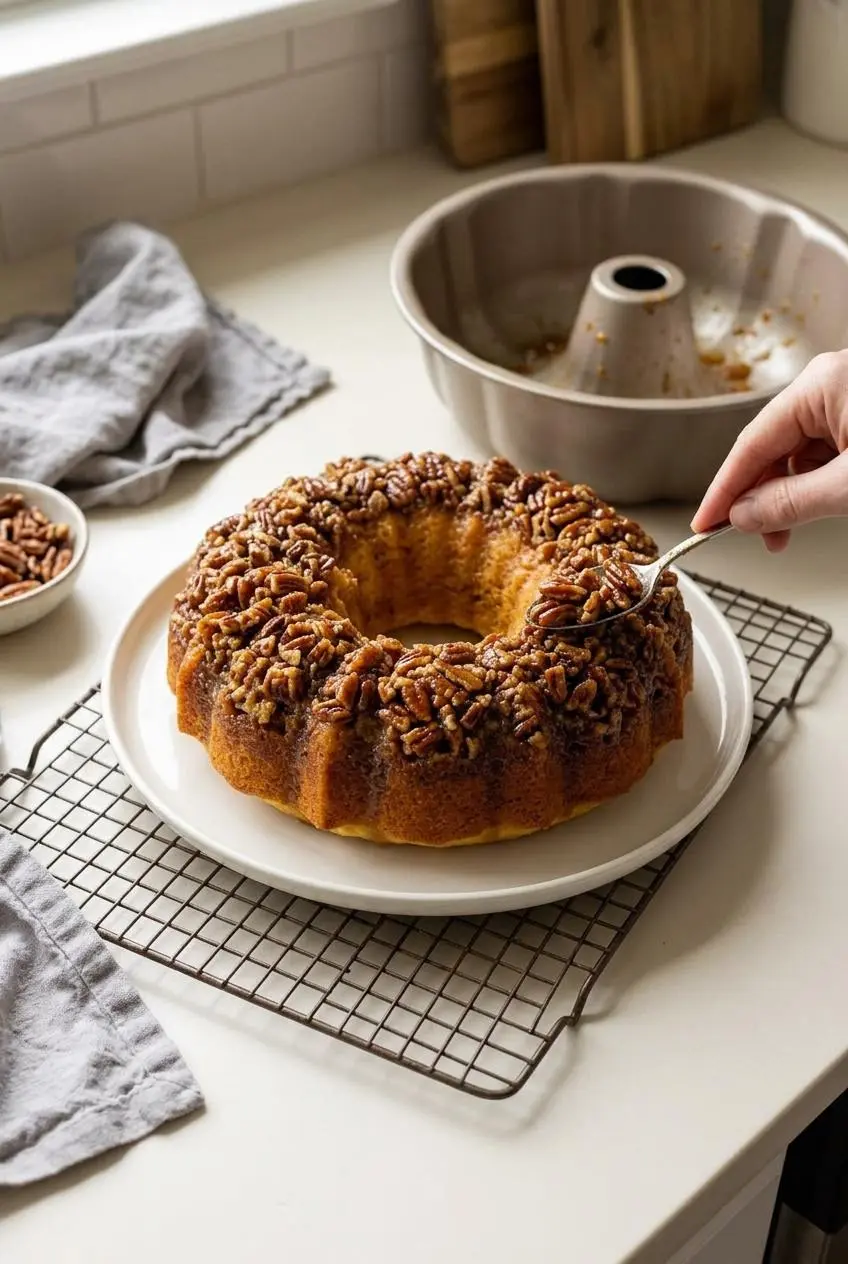
This rest lets the crumb firm up while the brown sugar topping remains warm enough to release. - At the timer, loosen the cake’s edges with a knife, gently tap and shake the pan, and turn it onto a cake plate before lifting the pan slowly.
If nuts remain behind, remove them once comfortable to touch and press them onto the warm glaze, then let the cake cool completely. - Cover the cooled cake for storage at room temperature or in the refrigerator, or wrap it tightly in several layers of plastic wrap for freezing.
Wait until the cake is completely cool before enclosing it so trapped warmth does not create condensation.
When testing doneness, aim the toothpick into the cake rather than down into the syrupy pecan layer. Sticky topping on the toothpick can make an otherwise baked cake look underdone.
Pro Tips for a Flawless Flip and Clean Slices
The pan’s shape, the cooling rest, and your slicing technique make the biggest difference to the finished cake. A few displaced pecans are easy to repair, so don’t let a small patch spoil the moment.
How to Invert Without Sticking
Choose a classic 10-inch nonstick bundt pan with rounded flutes. Its broad curves give chopped nuts room to settle and make the topping easier to release. Intricate decorative pans have narrow points and sharp grooves that can hold onto sticky pecans.
Spray just before adding the topping. Spraying far in advance lets the coating collect at the bottom rather than stay where you need it.
Follow the cooling rest rather than waiting until the pan feels cold. An immediate flip can break the fragile warm crumb; a much longer wait can make the topping cling more firmly as it cools.
Use a plate wide enough to support the whole cake. Hold the plate and pan together securely with oven mitts, turn them as one unit, and lift the pan gradually instead of jerking it upward.
How to Slice Cleanly Through the Pecan Crust
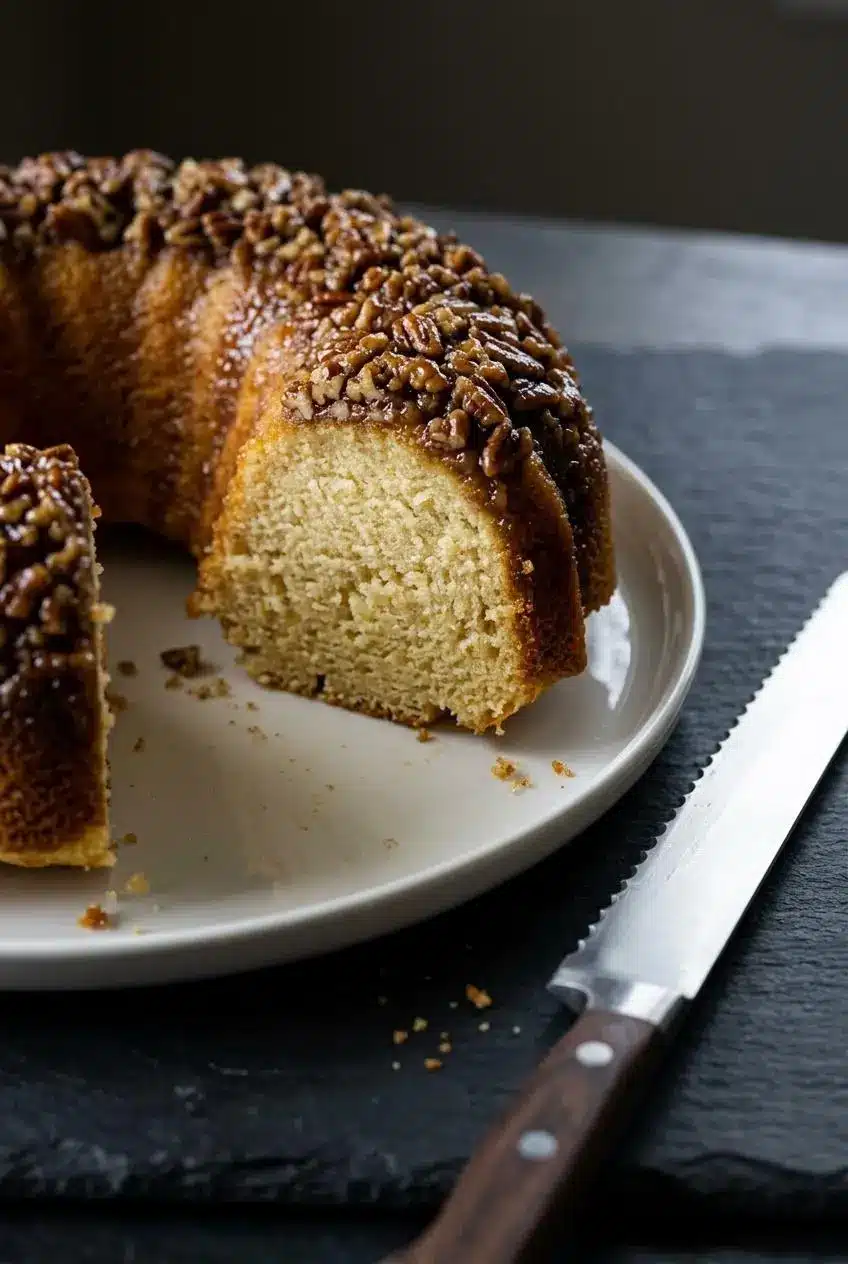
For the neatest slices, let the unmolded cake cool completely. Warm slices taste wonderful, but the softer crumb is more likely to compress under the knife.
Use a sharp serrated bread knife and begin with a gentle back-and-forth motion through the nut layer. Once the blade has crossed the topping, continue through the cake without pressing hard. Wipe sticky glaze from the blade between cuts if it starts dragging.
Fixes for Sticking, Crumbling, and Uneven Slices
- Caramel clings to a cooled pan: Hold a warm, damp towel against the outside bottom to gently warm the topping, then try releasing it again.
- A patch of pecans stays behind: Lift the nuts with a butter knife or your fingers once comfortable to touch, then press them into the cake’s glaze.
- The cake breaks during inversion: Let it complete the cooling rest next time, and support the pan and plate firmly during the turn.
- Slices look ragged: Smaller nut pieces, complete cooling, and a sawing motion help keep the crumb intact.
- The cake domes slightly or sinks: A modest dome isn’t necessarily a problem; check the box weight, mix only until blended, and confirm the center has baked through before removing it.
Delicious Variations and Pan Alternatives
Keep these changes optional, and start with a flavor swap before changing both the batter and the pan. That makes it easier to understand what affects the result.
Toasted Pecan and Cinnamon Upgrade
For a deeper nutty flavor, lightly toast the chopped pecans in a dry skillet over medium heat, stirring until fragrant. Watch closely and remove them before they darken too far, since they’ll bake again in the topping.
A pinch of ground cinnamon in the topping adds warmth without hiding the pecans. Both changes suit the buttery brown sugar flavor, but neither is necessary for the cake to work.
Yellow Cake Mix, Butter Pecan, and From-Scratch Options
- Yellow cake mix: Choose a matching 13.25-ounce box for a familiar yellow cake flavor.
- Butter pecan cake mix: This emphasizes the nutty flavor throughout the cake.
- Spice cake mix: A matching-size box adds an autumn spice profile beneath the topping.
- From-scratch batter: Use a separately formulated, sturdy sour cream cake batter with a suitable yield, rather than replacing the mix with an improvised flour mixture.
A homemade batter needs its own balanced amounts of flour, sugar, leavening, eggs, fat, and liquid. A classic yellow cake offers another baking option, but its batter volume and baking time need separate consideration before pairing it with this topping.
Baking in a 9-Inch Round Pan or Skillet
- Rounded bundt pan: The intended choice, with a center tube that helps heat reach the batter.
- Decorative bundt pan: Less suitable because narrow crevices can trap the topping.
- Deep 9-inch round pan: A possible alternative, but check its capacity; a shallow pan may not hold all the batter.
- Cast-iron skillet: Choose an oven-safe skillet with enough depth and room for the batter to rise.
Don’t assume another pan uses the bundt baking time. Leave room for rising, don’t force excess batter into the pan, and use the toothpick cue to judge doneness. The bundt method remains the most dependable choice for these quantities.
Serving Suggestions, Make-Ahead, and Storage Guide
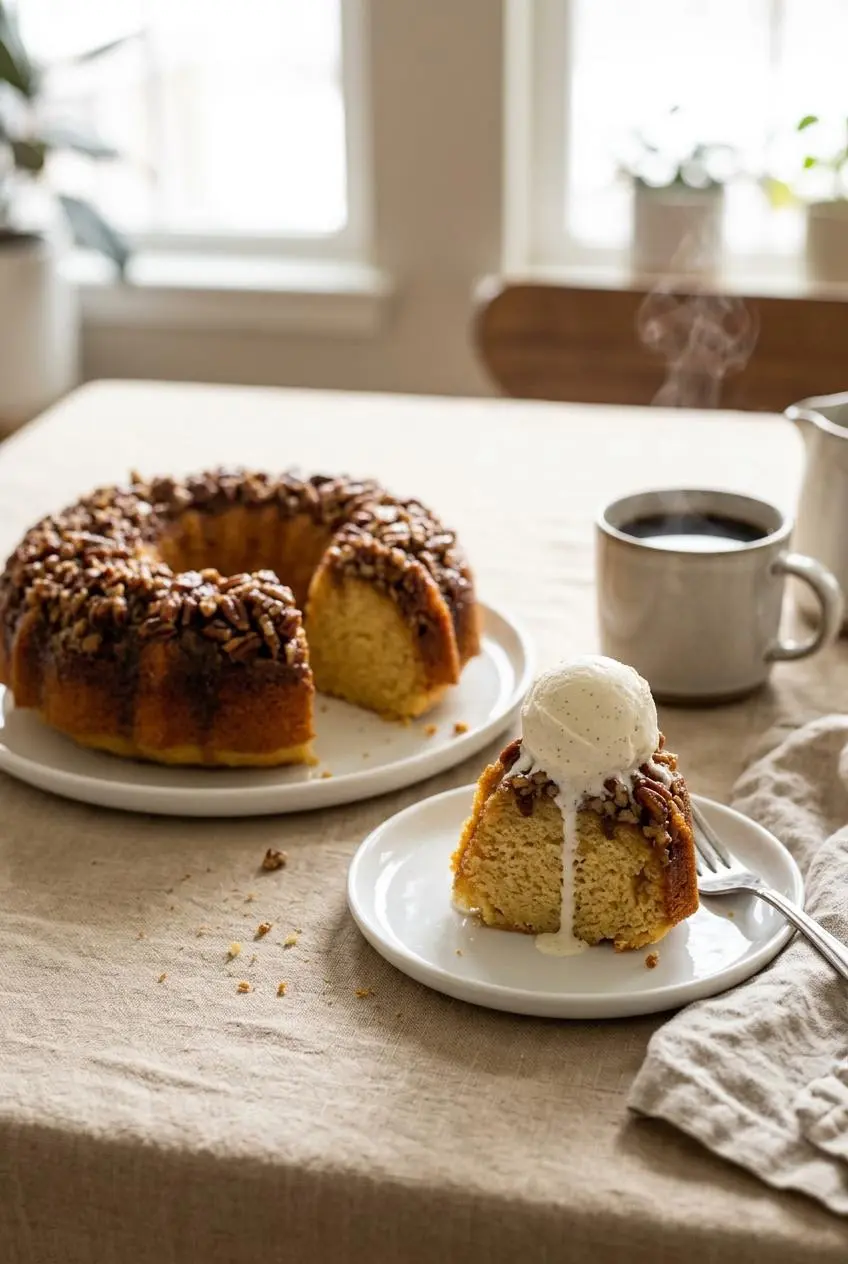
Serve warm slices when you want a softer, more spoon-friendly dessert, or let the cake cool completely when presentation and tidy wedges matter most.
Vanilla bean ice cream pairs especially well with the warm brown sugar glaze. Add it to individual plates just before serving so the melting ice cream doesn’t soak the whole cake.
Room-temperature slices work well with hot coffee for Thanksgiving dessert, autumn gatherings, or holiday brunch. The topping already brings plenty of sweetness and richness, so the cake doesn’t need frosting.
For advance preparation, bake, invert, and cool the cake completely before covering it. Finish the unmolding while the topping is still warm rather than leaving the cake in its pan until serving time. The storage guidance below applies whether you serve it immediately or prepare it ahead.
Keep the cooled cake covered to protect the crumb from drying out. A cake carrier or a container that leaves space above the pecans helps preserve the topping. Refrigeration is a cautious choice when your kitchen is warm; avoid leaving the cake uncovered in the refrigerator.
For freezing, wrap the completely cooled cake tightly in several layers of plastic wrap and freeze for up to 3 months. Wrap individual slices separately if you prefer to take out portions rather than the whole cake. Never freeze it while warm or still waiting to be inverted.
When serving stored cake, unwrap it carefully so the covering doesn’t pull off the pecans. Handle slices from underneath with a cake server rather than gripping the sticky topping.
Conclusion
This cake brings together glossy brown sugar pecans and a moist vanilla crumb without a separate crust or frosting. Chop the nuts evenly and follow the cooling rest before flipping for the best chance of a clean release.
Once you’re comfortable with the method, try toasted pecans and a little cinnamon. Keep the serrated knife handy, and let the topping do the decorating.
Frequently Asked Questions
Why Do You Need to Cool Your Bundt Cake for 10 Minutes Before Inverting It?
The rest helps the warm cake firm up enough to hold together during the flip. It also keeps the pecan topping warm enough to release more readily than it would after complete cooling in the pan.
How Do I Cut Pecan Upside Down Cake Cleanly Without Squishing the Cake?
Chop the pecans into even pieces before baking and let the unmolded cake cool completely. Use a sharp serrated knife with a gentle sawing motion through the nuts instead of pressing straight down.
Can I Use Honey Instead of Corn Syrup in the Pecan Topping?
Yes, use honey in an equal amount in place of the corn syrup. It adds floral sweetness, and the topping’s consistency may differ from the corn syrup version.
Can I Use a Decorative Bundt Pan or a Regular 9-Inch Cake Pan?
A classic rounded bundt pan is preferable to an intricate decorative one because sharp grooves can trap pecans. A deep 9-inch round pan may work, but check its capacity and don’t assume it will hold all the batter or bake in the same time.
Can I Make Pecan Upside Down Bundt Cake Ahead of Time?
Yes, complete the baking, inversion, and cooling before covering it for later serving. Follow the storage guidance above, and don’t leave the cake in its pan until you’re ready to serve.
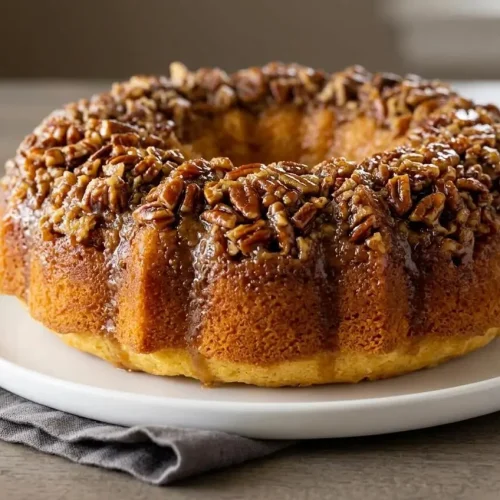
Pecan Upside Down Bundt Cake

Equipment
- Bundt Pan
- Medium bowl
- large bowl
- Hand-held mixer
- Cooling Rack
- cake plate
Ingredients
Pecan Topping
- ½ cup butter melted
- ½ cup brown sugar packed
- ¼ cup corn syrup
- ¼ teaspoon salt
- 1 cup chopped pecans
Cake Batter
- 1 box vanilla cake mix 13.25 ounces
- 3 large eggs
- ½ cup vegetable oil
- 1 cup water
- 3 Tablespoon sour cream
Instructions
- Set the oven to 350°F before preparing the mixtures. A fully heated oven gives the cake a consistent start.
Pecan Topping
- Whisk the melted butter, packed brown sugar, corn syrup, and salt together in a medium bowl. Stop when the sugar has begun to dissolve and no dry clumps remain, rather than waiting for every grain to disappear.
- Fold in the chopped pecans, then generously coat the bottom of the bundt pan with nonstick spray and immediately transfer the topping into it. The nuts should sit in a syrup-coated layer around the bottom, with the freshly applied spray helping the topping release later.
Cake Batter
- Mix the cake mix, eggs, vegetable oil, water, and sour cream in a large bowl, using a handheld mixer or mixing by hand. The batter should look evenly blended, with no visible pockets of dry cake mix or streaks of sour cream.
- Distribute the batter gently over the pecans with a spoon or scoop, then level the surface. Small additions disturb the topping less than one heavy stream, leaving an even cake layer over the nuts.
- Bake for 40 to 45 minutes at 350°F, checking the cake with a toothpick inserted into its thickest part. A few moist crumbs indicate doneness, while wet batter means the cake needs more baking.
- Move the pan to a cooling rack and start a 10-minute timer. This rest lets the crumb firm up while the brown sugar topping remains warm enough to release.
- At the timer, loosen the cake’s edges with a knife, gently tap and shake the pan, and turn it onto a cake plate before lifting the pan slowly. If nuts remain behind, remove them once comfortable to touch and press them onto the warm glaze, then let the cake cool completely.
- Cover the cooled cake for storage at room temperature or in the refrigerator, or wrap it tightly in several layers of plastic wrap for freezing. Wait until the cake is completely cool before enclosing it so trapped warmth does not create condensation.