Smoked salmon blinis are bite-sized savory pancakes topped with crème fraîche, thinly sliced smoked salmon, dill, and capers. This 35-minute version uses baking powder instead of yeast, giving you tender, golden rounds without a rising period.
A Smoked Salmon Blini brings together a fluffy pancake, cool herbed cream, and a delicate ribbon of smoky fish. Lemon, red onion, and capers keep each bite bright rather than overwhelmingly rich.
These little appetizers suit holiday gatherings, brunch spreads, and cocktail parties. The batter comes together quickly, and tablespoon-sized portions make cooking manageable. The trick is keeping that cream cool and thick.
Set a tablespoon beside the stove before you begin so each round cooks at roughly the same pace.
What Makes a Perfect Blini
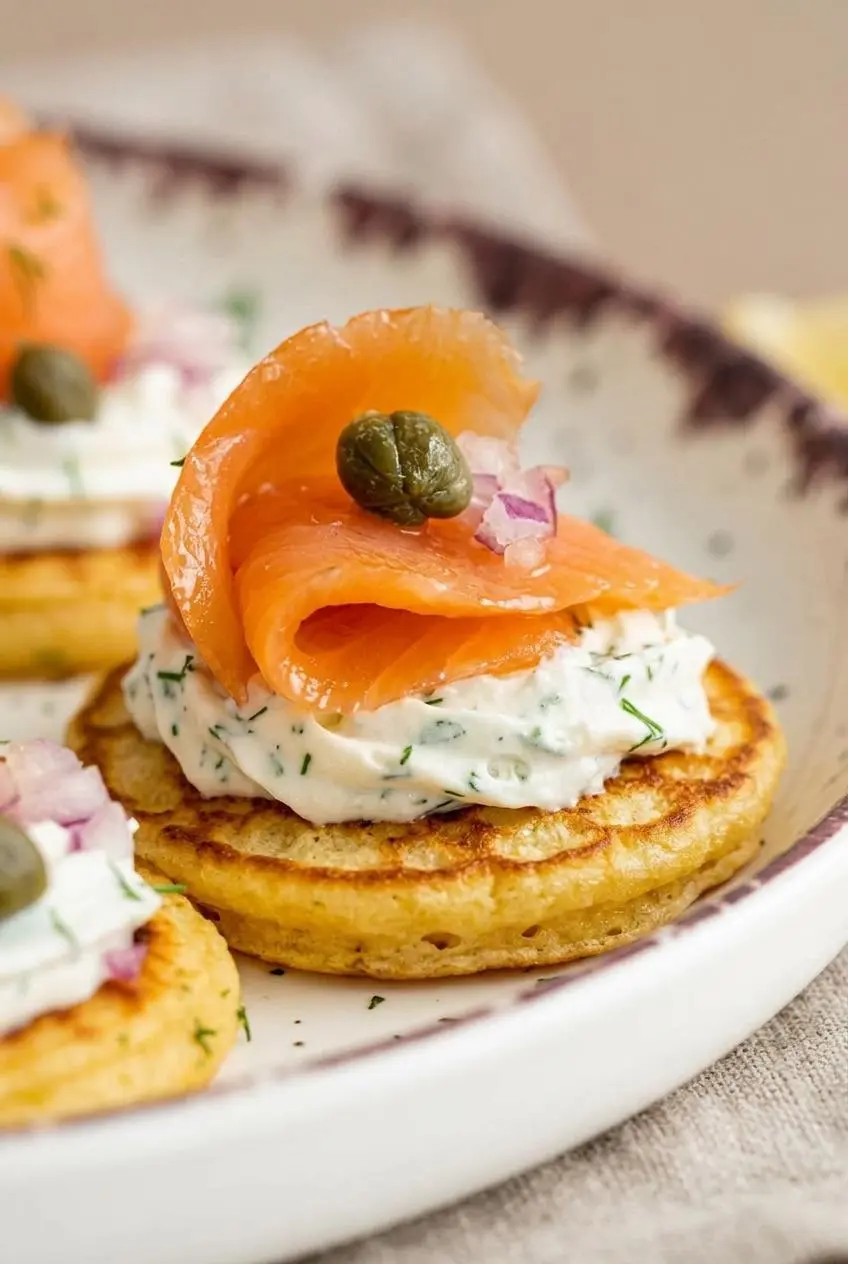
A good cocktail blini should support its toppings without feeling heavy. Aim for a tender center, a lightly golden exterior, and a size you can comfortably eat in a bite or two.
Blini belong to an Eastern European pancake tradition that includes different sizes and preparations. This appetizer version is smaller than a typical American breakfast pancake, with a savory batter and no added sugar. It provides a gentle backdrop for salty fish and tangy dairy.
Traditional yeasted preparations develop flavor as the batter rises. Baking powder offers a quicker route to lift, so this version goes from mixing bowl to skillet without proofing. The result has a mild flavor that leaves room for the salmon, dill, and lemon.
Think tender mini pancake, rather than crunchy cracker. A lightly browned surface is welcome, but cooking until the rounds become hard or deeply crisp sacrifices their soft interior.
Essential Ingredients for Smoked Salmon Blini
Flour and egg give the pancakes structure, milk supplies moisture, and butter adds tenderness. Baking powder provides lift, while salmon, herbed cream, onion, capers, lemon, and pepper build a balanced topping with richness, freshness, acidity, and a little bite.
For Blinis
- 1 cup all-purpose flour
- ½ teaspoon baking powder
- ¼ teaspoon salt
- 1 large egg (beaten)
- ¾ cup milk
- 2 tablespoons unsalted butter (melted)
Toppings
- 8 ounces smoked salmon (thinly sliced)
- 1 cup crème fraîche (or sour cream)
- 2 tablespoons fresh dill (finely chopped)
- 1 small red onion (finely chopped)
- 1 tablespoons capers (drained)
- 1 lemon (cut into wedges)
- ground black pepper (to taste)
The beaten egg binds the batter and helps the rounds hold together when you flip them. Melted butter softens the crumb, while baking powder supplies the lift that keeps each pancake from feeling dense.
The toppings balance one another: cream mellows the smoked fish, dill adds fresh aroma, and lemon and capers cut through the richness. Salmon and capers already bring salt, so taste a finished bite before considering any extra seasoning.
I blot drained capers on a paper towel before garnishing so their brine doesn’t loosen the cream.
The Pancake Ingredients and Batter Balance
All-purpose flour gives these rounds enough structure to lift from the pan while keeping the texture delicate. Measure it without packing it tightly into the cup, which can leave you with an overly thick batter.
Milk should bring the mixture to a smooth, spoonable consistency. Whole milk works well for a rounded flavor, though the ingredient list doesn’t require a particular milk fat percentage. The batter should drop smoothly from a spoon, then spread gently in the pan rather than race across it.
Combine the dry ingredients thoroughly before adding the liquids. That distributes the baking powder and salt without requiring prolonged whisking once the flour becomes wet. Stop mixing when the batter comes together.
Selecting the Best Smoked Salmon and Toppings
Choose thinly sliced cold smoked salmon for soft ribbons that fold neatly over the cream. Hot-smoked salmon has a cooked, flaky texture and won’t drape the same way.
Look for slices you can separate without shredding. Fold larger pieces to fit the pancake instead of letting them hang far over the edges, where they become awkward to pick up.
Finely chopped onion gives a pleasant sharpness without dominating a small bite. Keep the capers and dill distributed across the platter so every piece gets a balanced garnish rather than a mound of salty toppings.
Mastering the Step-by-Step Cooking Technique
Medium heat gives the centers time to cook before the bottoms become too dark. Allow about 20 minutes for prep and 15 minutes for cooking, for a total of 35 minutes and a yield of approximately 24 blinis.
- Blend the flour, baking powder, and salt in a mixing bowl, gradually whisk in the beaten egg and milk, then stir in the melted butter.
Stop once the mixture looks smooth and falls from the spoon in a thick, flowing ribbon. - Warm a nonstick frying pan over medium heat, melt a small knob of butter in it, and portion the batter by the tablespoon with space between the rounds.
Each spoonful should settle into a small pancake without touching its neighbors. - Cook each round for about 1–2 minutes per side, turning when bubbles open on top and the edges lose their wet shine.
The underside should look golden when you lift it with a spatula, rather than dark brown or scorched. - Transfer the cooked rounds to a plate, cover with a kitchen towel to keep warm, and repeat with the remaining batter.
The finished blinis should feel softly springy, with golden surfaces and no wet batter at the edges. - Stir half of the chopped dill into the crème fraîche in a small bowl.
The mixture should remain thick and spreadable, with the herb evenly dispersed. - Let the blinis cool slightly, spread each with the dill cream, add a folded salmon slice, and finish with the remaining dill, onion, capers, and black pepper.
The cream should hold its shape beneath the salmon instead of melting into the pancake. - Place the topped blinis on a platter and tuck the lemon wedges alongside them for a light squeeze at serving.
Keep the wedges separate so their juice doesn’t soak the pancakes before they’re eaten.
Check the first batch before filling the whole pan. If the bottoms darken while the tops still look wet, lower the heat. Later batches may cook faster as the pan retains heat, so follow the browning cues rather than the clock alone.
Slide a thin spatula fully underneath each round before turning it. A quick, supported flip keeps the pancake intact; repeatedly lifting a soft edge can tear it.
Assembling and Serving Your Canapes
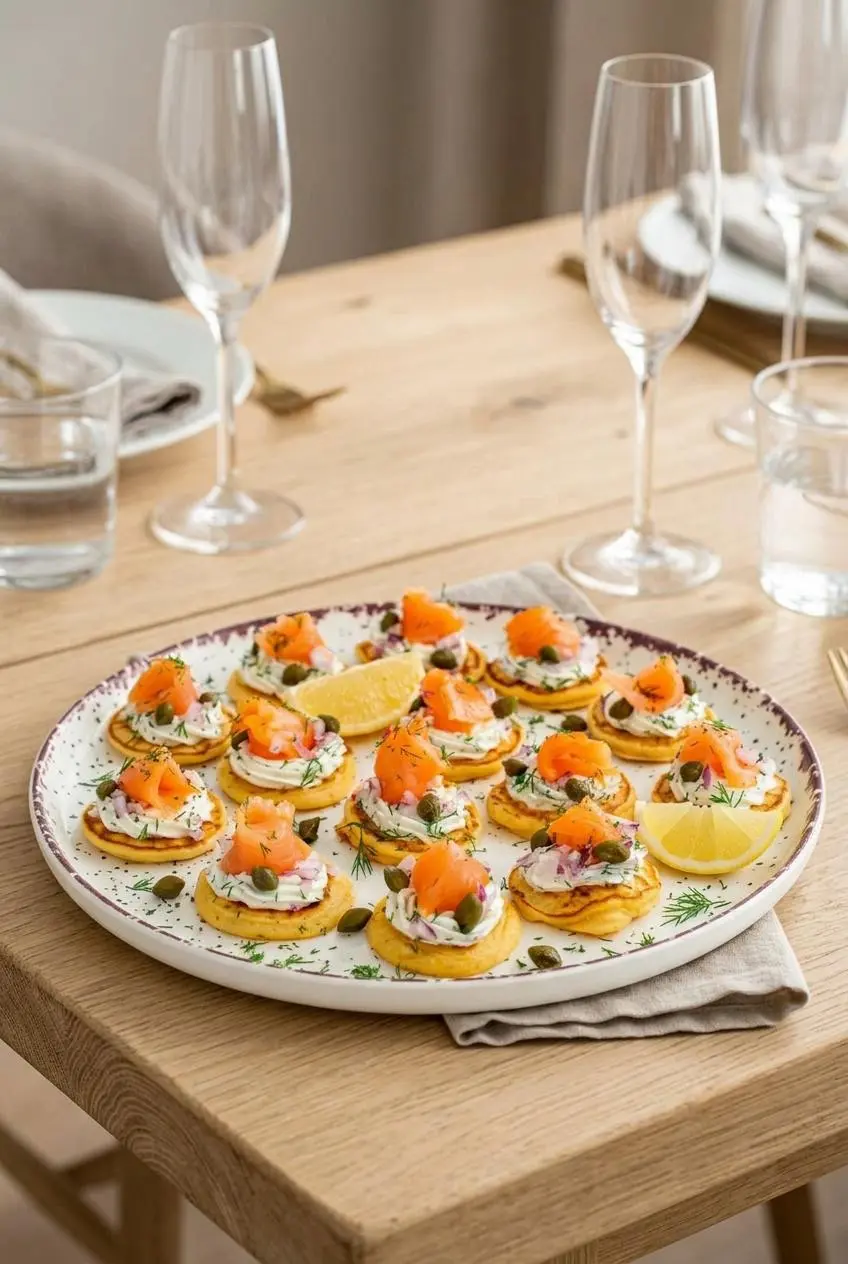
Build each canapé with a thin, even layer of herbed cream, a folded salmon ribbon, and a restrained garnish. Too much topping makes a small pancake difficult to lift and eat.
For immediate serving, let the rounds lose their hot steam before topping. For a platter you’ll carry to the table, let them cool completely so the dairy stays structured. Fold the salmon loosely to create height without piling it into a dense bundle.
Arrange the finished pieces on a chilled platter with room between them. Keep lemon wedges around the edge rather than squeezing juice over the entire batch.
As a starting point, plan four pieces per guest when other appetizers are available. A batch of 24 gives six guests that allocation; adjust for your menu and appetites. If you want a contrasting hot seafood option, crispy salmon bites offer a different texture alongside the soft canapes.
Troubleshooting Common Blini Mistakes
Most problems come down to batter consistency, pan heat, or moisture from the toppings. Match the symptom to its likely cause before changing the next batch.
- Dense or rubbery rounds: Prolonged whisking develops gluten after the flour gets wet. Mix only until combined, and avoid beating the batter again between batches.
- Batter that barely spreads: Packed flour can make the mixture too thick. Stir in small splashes of milk, stopping as soon as it drops smoothly from the spoon.
- Batter that spreads too widely: Recheck the measured liquids and flour before proceeding. As an optional correction, gently mix in a little flour to restore a spoonable consistency rather than trying to cook thin puddles.
- Dark bottoms and wet centers: The pan is too hot. Reduce the heat and wait for gentler browning before adding more batter.
- Greasy edges: Butter has pooled around the pancakes. Use a light coating for subsequent batches rather than letting the rounds sit in a puddle.
- Uneven shapes or torn pancakes: Crowding leaves too little room for the spatula. Cook a smaller batch and leave clear space around each round.
- Runny cream or soggy canapes: Hot pancakes, wet capers, or early assembly add unwanted moisture. Cool the rounds, blot the capers, and top close to serving.
Make-Ahead Instructions and Storage Tips
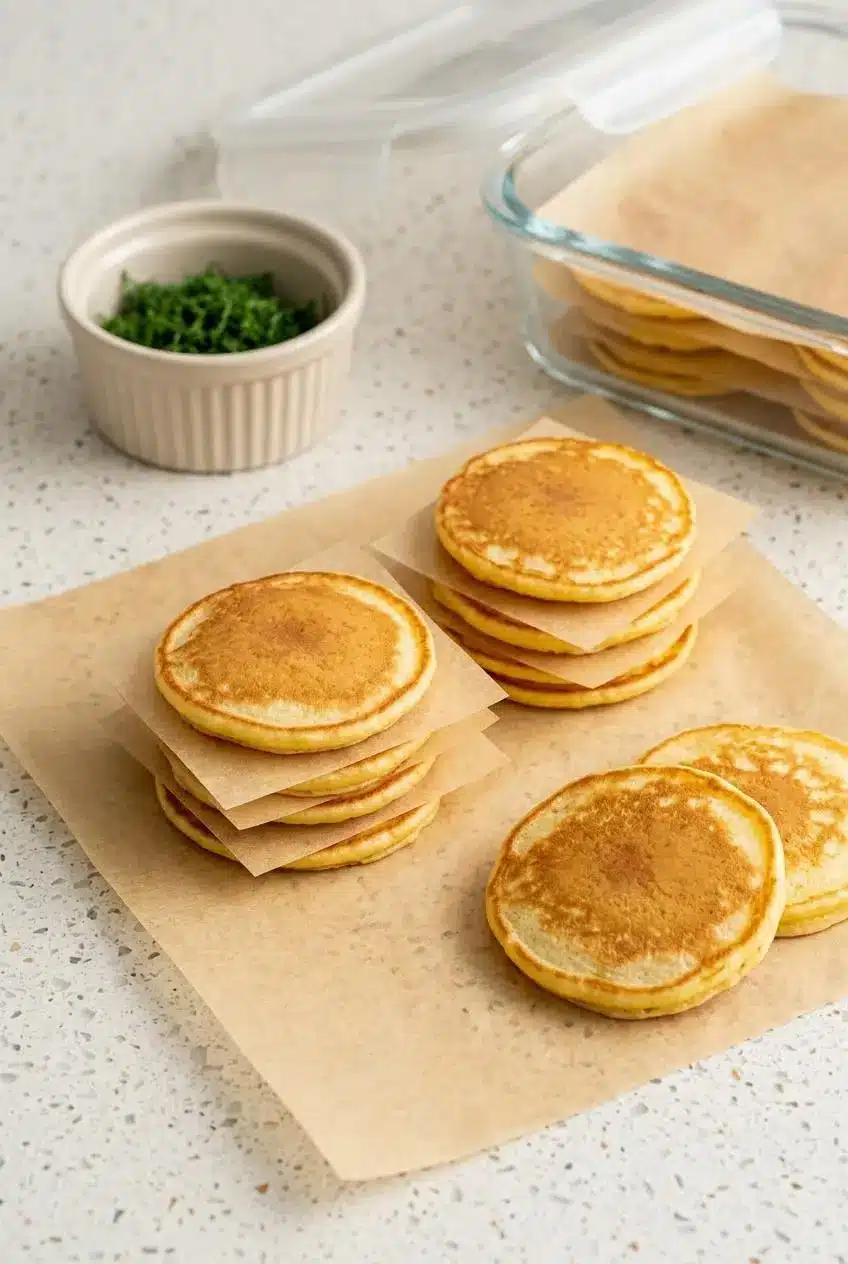
Keep the pancakes and toppings separate until assembly. This protects the texture better than storing a completed platter, where the cream gradually moistens the rounds.
For the smoothest serving sequence, cook the blinis first, then mix the dill cream and prepare the garnishes while the rounds cool. Keep the salmon and dairy chilled until you need them.
Allow plain cooked blinis to cool before placing them in a covered container, and refrigerate them rather than leaving them out during party preparation. Store the cream and garnishes separately, and follow the salmon package’s handling instructions.
If you want to restore warmth to plain cooked rounds, warm them gently in an oven or toaster oven and watch for drying at the edges. Let them lose that heat again before adding cream. Skip the microwave if a soft, evenly warmed texture is your priority.
Serve smaller platters and replenish them rather than putting every topped blini out at once. Attention to proper handling and chilling of seafood helps reduce risks during preparation and service; a chilled platter doesn’t replace refrigerated storage.
Flavor Variations and Easy Substitutions
Choose optional changes according to the flavor or texture you want. Keep the pancake method unchanged unless you’re deliberately trying a flour variation.
- Crème fraîche: Use it for a rich, gently tangy topping that spreads easily.
- Full-fat sour cream: Choose the listed alternative for a brighter tang and a softer consistency.
- Whipped cream cheese: Try it when you want a firmer topping that holds a salmon ribbon securely.
- Lemon zest and pink peppercorns: Add these optionally to the cream for citrus aroma and a delicate peppery accent.
- Gluten-free flour blend: For an optional adaptation, choose a blend intended to replace all-purpose flour and follow its package guidance, since absorption and structure vary.
Traditional Buckwheat Flour Blend
Replacing part of the all-purpose flour with buckwheat flour adds an earthy, nutty flavor and a darker, speckled appearance associated with traditional blini preparations. Keeping some all-purpose flour helps retain the delicate structure of this quick version.
Buckwheat changes how the batter absorbs liquid, so check the spoonable consistency rather than assuming it will behave identically. This variation keeps baking powder as the leavener; it doesn’t turn the method into a yeasted preparation.
Cream Cheese and Horseradish Alternative
Soften or whip cream cheese, then loosen it with a splash of milk or lemon juice until it spreads without dragging across the pancake. Milk softens the texture without adding acidity; lemon juice adds brightness as well.
- Prepared horseradish: Fold it into the cream cheese optionally for a sharper topping, tasting as you go because its strength varies.
- Fresh dill: Keep the herbal character of the topping when using cream cheese instead of crème fraîche.
Caviar and Smoked Trout Upgrades
- Salmon roe: Add an optional garnish for a briny pop, using fewer capers so the bite doesn’t become overly salty.
- Black lumpfish caviar: Try it for a small celebratory accent and pronounced salty flavor.
- Smoked rainbow trout: Use it as an optional alternative to salmon, arranging small flakes if the fish doesn’t come in flexible slices.
Conclusion
Homemade blinis give you a tender, golden foundation for smoky salmon, herbed cream, and bright garnishes. Consistent spoonfuls and moderate pan heat make the cooking straightforward.
Let the rounds cool before topping, and leave the lemon squeeze until serving. Those small choices keep the platter neat and each bite balanced.
Frequently Asked Questions
Can I Make the Blini Batter Ahead of Time?
Mixing close to cooking gives this baking-powder batter the best chance of good lift. If preparation pauses, keep it covered and chilled, and avoid vigorous whisking before cooking.
How Do I Prevent Blinis From Getting Soggy During a Party?
Cool the pancakes before topping, drain and blot the capers, and assemble close to serving. Offer smaller platters as needed, with lemon wedges on the side rather than juice squeezed over every piece.
What Is the Best Substitute for Crème Fraîche on Blinis?
Full-fat sour cream is the closest listed substitute, with a tangier flavor and softer texture. Whipped cream cheese loosened with milk or lemon juice is an optional choice when you want a firmer spread.
How Should I Handle Leftover Cooked Blinis?
Keep plain rounds separate from the toppings and refrigerate them in a covered container once cooled. If warming them, use gentle oven heat and watch their texture, then let them cool before adding the chilled cream and salmon.

Smoked Salmon Blini

Equipment
- KitchenAid Hand Mixer
- All-Clad Hard Anodized Nonstick Fry Pan Set 2
Ingredients
For Blinis
- 1 cup all-purpose flour
- ½ teaspoon baking powder
- ¼ teaspoon salt
- 1 large egg beaten
- ¾ cup milk
- 2 tablespoons unsalted butter melted
Toppings
- 8 ounces smoked salmon thinly sliced
- 1 cup crème fraîche or sour cream
- 2 tablespoons fresh dill finely chopped
- 1 small red onion finely chopped
- 1 tablespoons capers drained
- 1 lemon cut into wedges
- ground black pepper to taste
Instructions
- Blend the flour, baking powder, and salt in a mixing bowl, gradually whisk in the beaten egg and milk, then stir in the melted butter. Stop once the mixture looks smooth and falls from the spoon in a thick, flowing ribbon.
- Warm a nonstick frying pan over medium heat, melt a small knob of butter in it, and portion the batter by the tablespoon with space between the rounds. Each spoonful should settle into a small pancake without touching its neighbors.
- Cook each round for about 1-2 minutes per side, turning when bubbles open on top and the edges lose their wet shine. The underside should look golden when you lift it with a spatula, rather than dark brown or scorched.
- Transfer the cooked rounds to a plate, cover with a kitchen towel to keep warm, and repeat with the remaining batter. The finished blinis should feel softly springy, with golden surfaces and no wet batter at the edges.
- Stir half of the chopped dill into the crème fraîche in a small bowl. The mixture should remain thick and spreadable, with the herb evenly dispersed.
- Let the blinis cool slightly, spread each with the dill cream, add a folded salmon slice, and finish with the remaining dill, onion, capers, and black pepper. The cream should hold its shape beneath the salmon instead of melting into the pancake.
- Place the topped blinis on a platter and tuck the lemon wedges alongside them for a light squeeze at serving. Keep the wedges separate so their juice doesn’t soak the pancakes before they’re eaten.