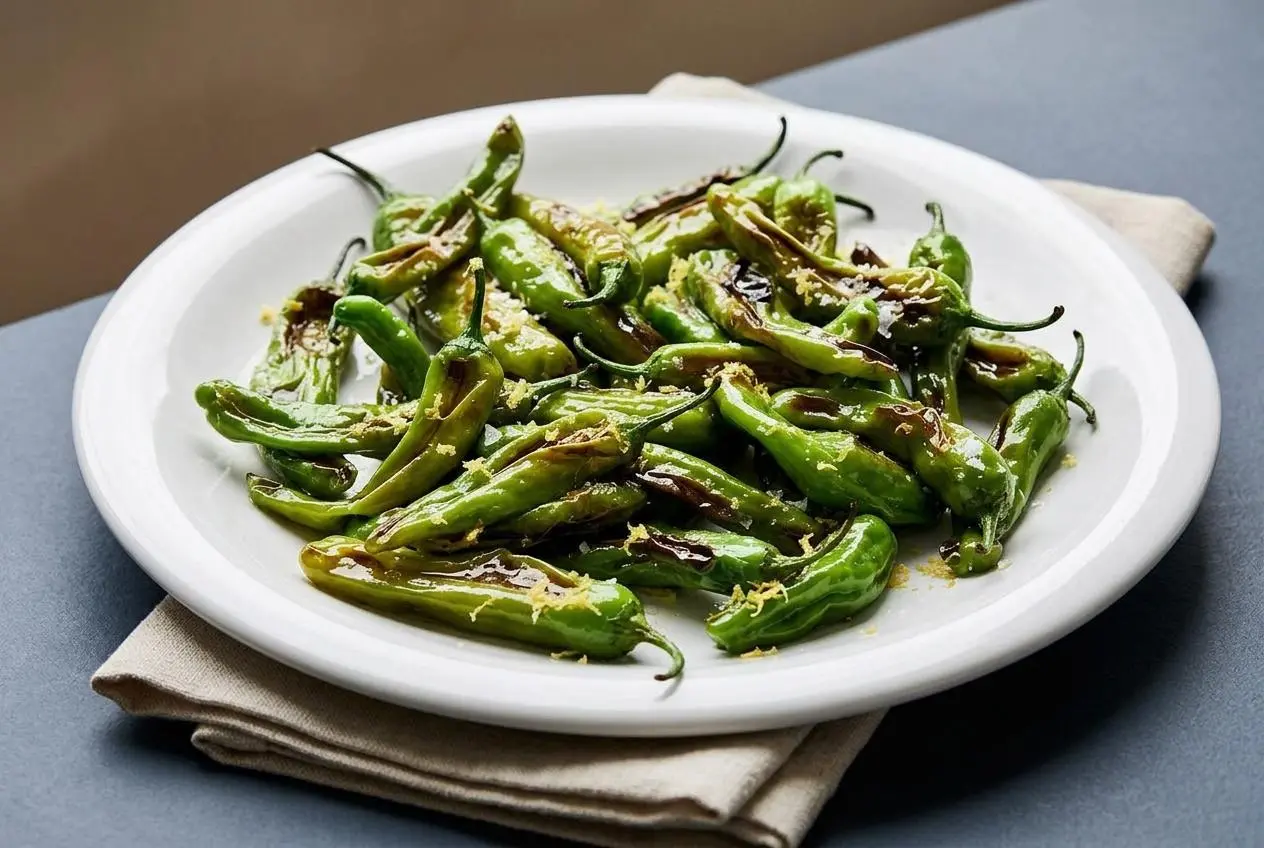
Blister shishito peppers in a very hot skillet with olive oil until their skins puff and char, then finish them with lemon zest and flaky salt for a smoky, tender-crisp appetizer.
This shishito peppers recipe turns fresh green peppers into a fast skillet snack with savory sweetness, gently softened flesh, and crackly blistered skin.
Most bites are mild, but an occasional pepper brings a surprising kick. That little bit of pepper roulette keeps the platter interesting.
Dry the peppers thoroughly before they touch hot oil so they sear cleanly instead of sputtering.
What Are Shishito Peppers and Are They Spicy?
Shishito peppers are slender, wrinkled green peppers often enjoyed as a warm appetizer or tapas-style snack. Their thin skins blister quickly, while the flesh stays pleasantly tender with a mild, slightly sweet, green-pepper flavor.
Most shishitos are mild and are often described in the 50 to 200 Scoville Heat Unit range. Still, roughly one pepper out of ten may taste noticeably hotter than the rest. It is a quick flash of heat rather than an overwhelming burn, so shishitos are approachable even if you usually avoid very spicy peppers.
The spicy surprise is hard to predict from appearance alone. A pepper may look exactly like its neighbors and still carry more heat, which is part of the fun when everyone reaches for the platter at once.
Spanish padrón peppers are a close comparison. Both are small green peppers that are traditionally cooked until blistered and served with salt, but padróns can have a grassier flavor and may vary more in size. If you enjoy one, you will probably enjoy the other.
Ingredients and Pan Selection
Each ingredient supports the final bite: oil helps the peppers blister, shishitos bring tender texture, lemon zest adds fragrance, and flaky salt sharpens their savory finish.
- 2 tablespoons extra-virgin olive oil
- 12 ounces shishito peppers
- 2 teaspoons lemon zest
- 2 teaspoons flaky salt
Choose firm, bright green shishito peppers with taut skin and no soft spots. A few wrinkles are normal, but deeply shriveled or floppy peppers tend to soften too quickly in the skillet.
Extra-virgin olive oil gives the peppers a fruity, Mediterranean-style finish. For a hotter skillet with less indoor smoke, you can use avocado oil or another neutral high-heat oil instead. Keep that swap outside the main ingredient list, since it changes the flavor profile slightly.
A heavy cast iron skillet is especially useful here because it holds heat when the peppers hit the pan. That steady heat creates beige and golden blister pockets instead of leaving the peppers pale and steamy. A large stainless-steel skillet also works well, but skip lightweight nonstick cookware for this high-heat job.
Lemon zest should be freshly grated so its citrus oils stay fragrant, and flaky salt gives distinct bursts of salinity without disappearing into the peppers.
I like to inspect the stems before cooking and discard any pepper with a soft, damp stem end, since dry, firm peppers blister more evenly.
How to Blister Shishito Peppers Step by Step
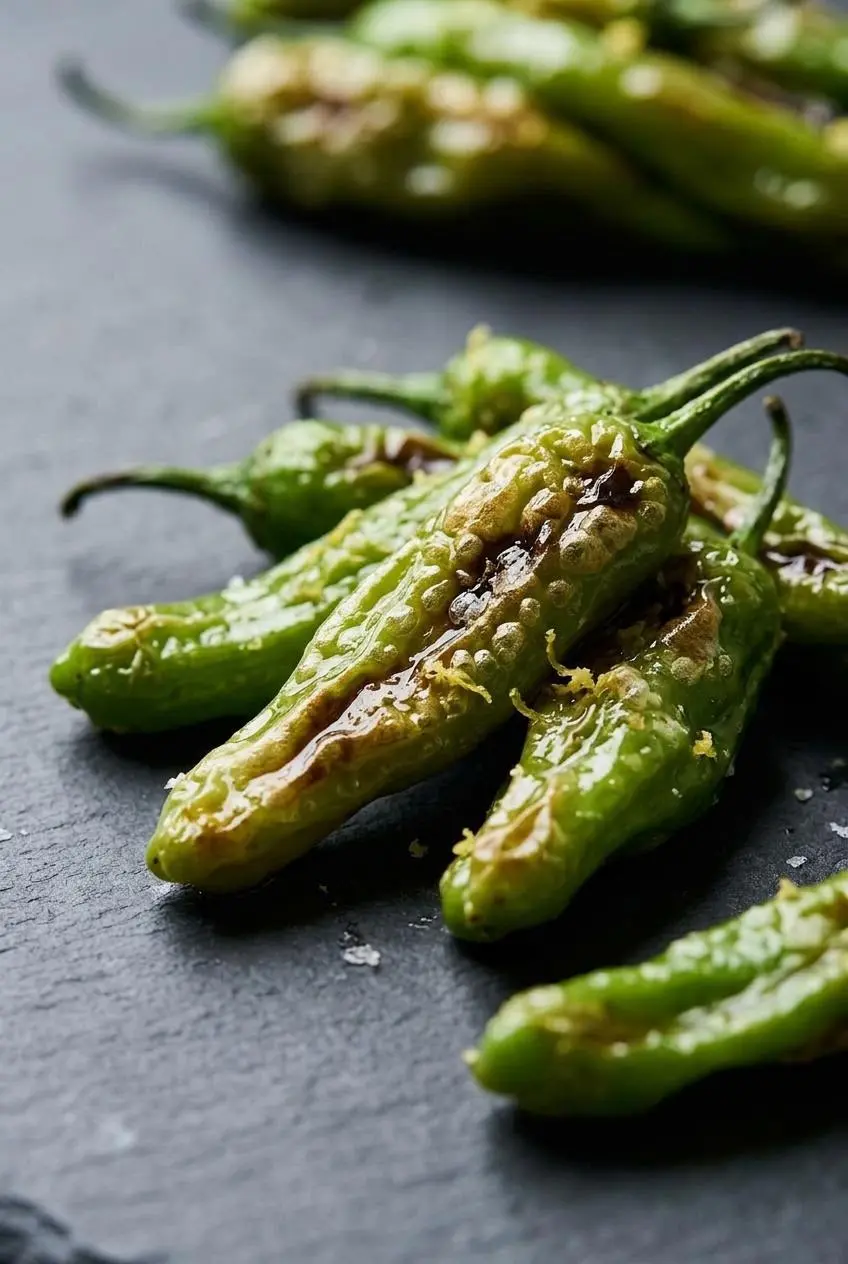
The best way to cook shishitos is fast and hot: give them direct contact with a large skillet, leave them alone long enough to color, then turn them once the first side blisters. The pan should sound lively, with a sharp hiss and gentle crackle as the peppers land.
- Heat the olive oil in a large skillet over high heat, then arrange the peppers in one uncrowded layer when the oil looks glossy.
Leave them untouched for about 2 minutes, until raised beige and golden blister pockets appear on the bottom sides. - Use tongs to turn the peppers and continue cooking for 2 to 3 minutes, moving them only as needed for even contact with the skillet.
The peppers are ready when they are softened but still hold their shape and show blistering across the skins. - Move the hot peppers to a serving plate and scatter the lemon zest and flaky salt over them.
Serve while warm, when the citrus aroma is strongest and the skins remain tender-crisp.
Prepping and Piercing the Peppers
Rinse the peppers, then dry them very well with a clean kitchen towel. Water on the skin can make hot oil spit, and moisture also slows down browning.
Before cooking, make a tiny slit in each pepper with the tip of a paring knife or prick each one once with a fork. This gives steam an easy escape route as the peppers heat and helps reduce popping and oil splatter. Keep the puncture small so the pods still look whole when served.
Do not cut the peppers open or remove the seeds before cooking. The thin skin and tender seeds are meant to be eaten, and an intact pepper develops the best blistered texture.
Cast Iron Skillet Technique and Timing
Give each pepper space. If they overlap or crowd the skillet, they release moisture into the pan and steam instead of developing charred patches. Cook in batches if needed rather than piling every pepper into the skillet.
The first 2 minutes matter most. Resist the urge to stir, shake, or constantly flip the peppers. Still contact with the hot pan builds the blistered skin that makes this appetizer taste restaurant-worthy.
Turn the peppers with tongs once their first side has visible bubbles and light char. Continue until the skins look mottled rather than uniformly black. Deep black scorching can taste bitter, while golden-brown blistering keeps the peppers savory and fresh-tasting.
Troubleshooting Common Blistering Mistakes
- The peppers are soft and soggy: The skillet was crowded or not hot enough. Cook in batches and wait until the oil looks glossy before adding the peppers.
- The pan is smoking heavily: Olive oil can smoke quickly over intense heat. Lower the burner slightly or use avocado oil next time for a cleaner high-heat cook.
- The peppers are popping: Trapped steam is escaping quickly. Dry the peppers thoroughly and make a small slit or fork prick in each pod before cooking.
- The peppers taste bitter: They scorched rather than blistered. Look for pale beige, golden, and lightly charred patches, then remove them before the entire skin turns black.
- The seasoning tastes flat: Add the lemon zest and flaky salt while the peppers are hot. The warmth wakes up the citrus aroma and helps the salt cling to the skins.
Best Sauces and Seasoning Variations
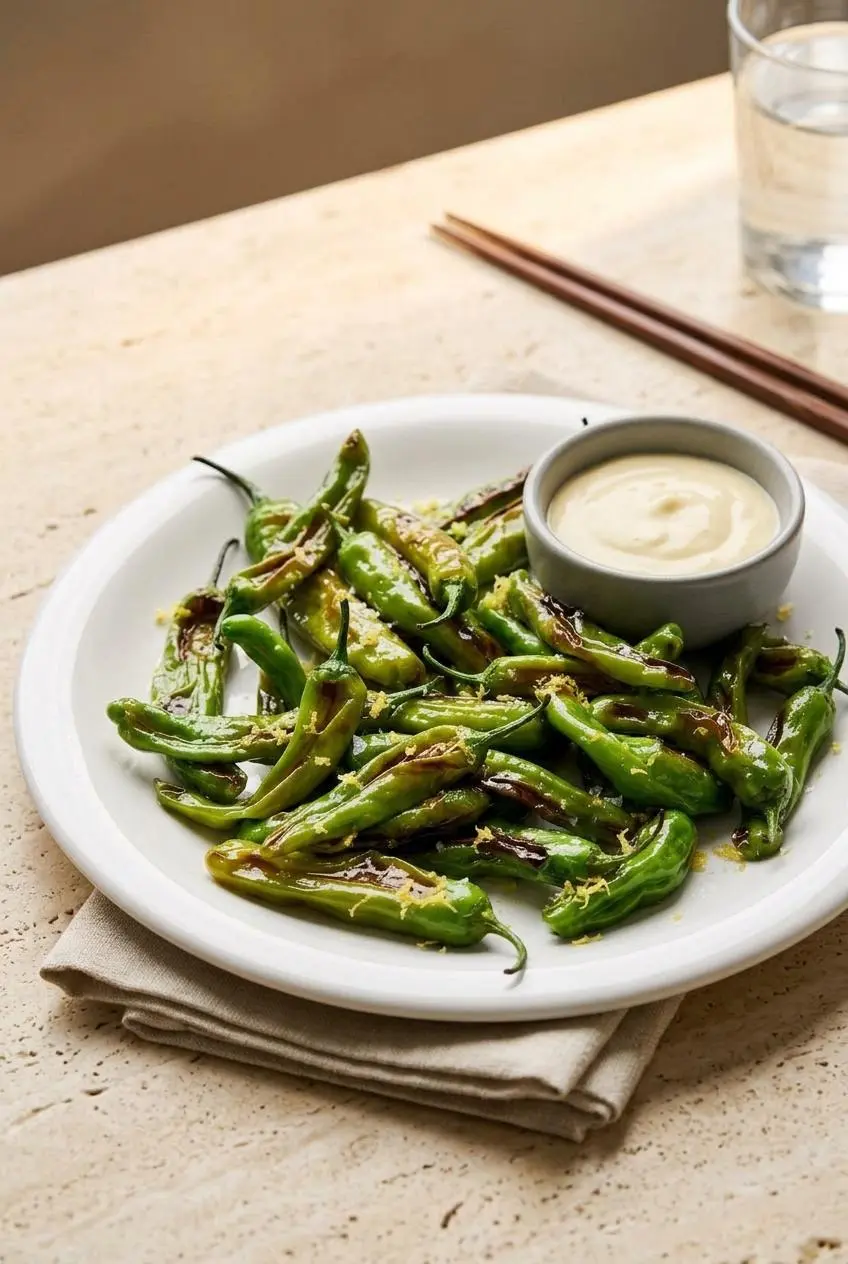
The lemon-and-salt finish is the main event, but optional seasonings and dips can steer the peppers toward Spanish tapas or Japanese izakaya flavors. Add any sauce after cooking so the blistered skins stay intact.
Classic Sea Salt and Lemon Zest
For a tapas-style plate, keep the peppers hot and finish them with flaky Maldon salt, fresh lemon zest, and a small optional pinch of crushed toasted sesame seeds. Add the sesame off the heat so it stays nutty rather than scorching against the skillet.
Set these out beside marinated olives, a cheese board, grilled skewers, or sliced steak. The peppers work especially well when the rest of the meal needs a bright, slightly smoky vegetable bite.
Savory Soy Garlic Sesame Glaze
For soy garlic glazed shishitos, stir together low-sodium soy sauce, minced garlic, and toasted sesame oil as an optional finishing mixture. Once the peppers are blistered, remove the skillet completely from the active burner before tossing them with the glaze.
That off-heat step matters because garlic and soy sauce can scorch quickly on hot cast iron. The residual heat warms the glaze and coats the peppers without turning the sauce harsh or sticky. Serve this version alongside homemade fried rice for an easy savory dinner pairing.
Creamy Aioli and Dipping Sauces
Serve blistered shishitos with any of these optional dips:
- Lemon garlic aioli: Its creamy richness balances the smoky skin and citrusy finish.
- Kewpie mayonnaise with togarashi: A dusting of Japanese chile seasoning adds warmth, sesame flavor, and a bar-snack feel.
- Ponzu dip: The bright, salty citrus flavor cuts through the olive oil without covering the peppers.
- Furikake and sesame: Sprinkle these over the finished peppers for extra savory crunch and seaweed flavor.
Storage, Reheating, and Serving Ideas
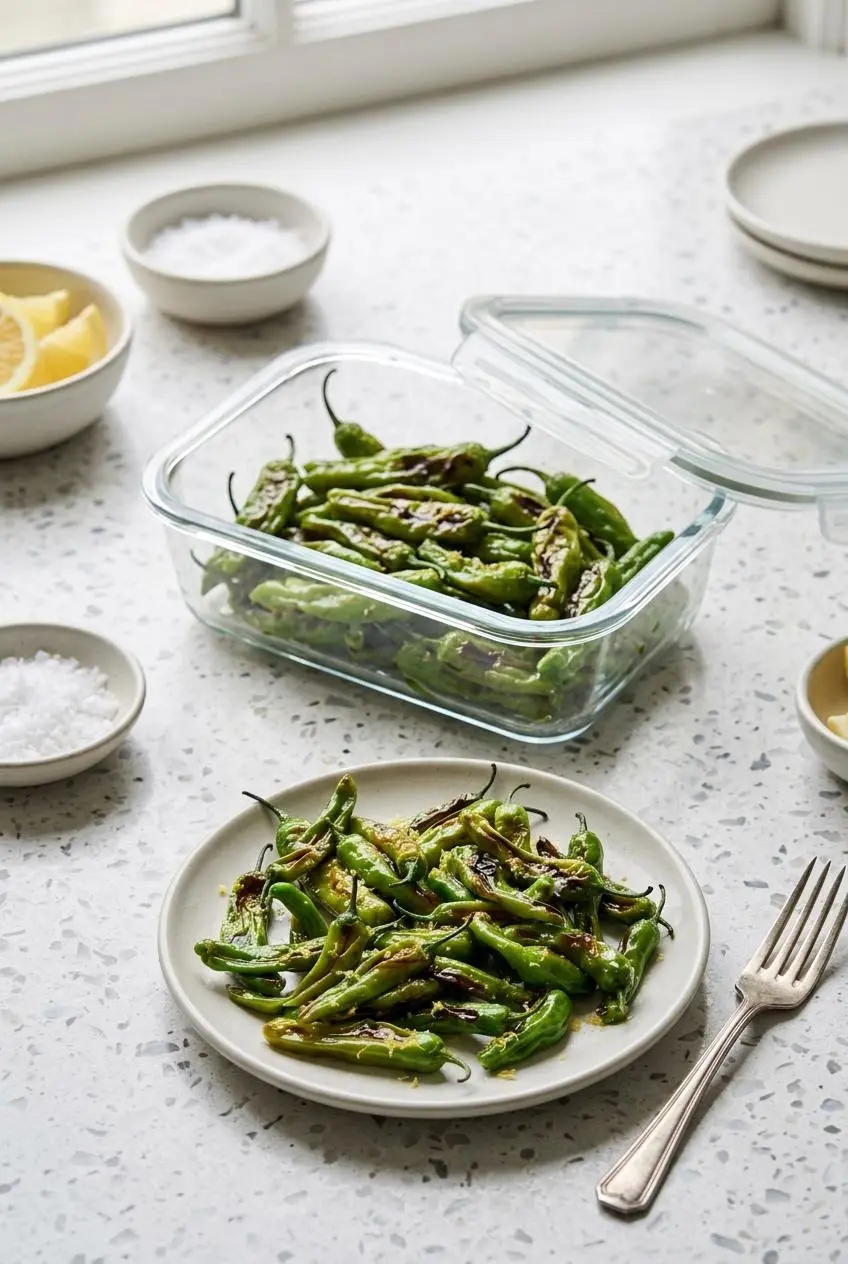
These peppers are at their best straight from the skillet, when the skins are lightly crisp and the lemon zest is fragrant. To eat them, hold each pepper by the stem, bite off the pod, and place the stem aside. The thin skin and seeds are tender enough to enjoy.
If you have leftovers, let them cool, then keep them covered and chilled until you are ready to use them. Avoid reheating them in the microwave, which can make the skins rubbery. Instead, warm the peppers in a hot, dry skillet just until the skins regain a little char and the centers heat through.
For a different use, chop chilled peppers and fold them into stir-fries or spoon them over a nourishing buddha bowl. Their smoky flavor works particularly well with rice, roasted vegetables, crunchy cucumbers, and a tangy dressing.
When serving a larger group, bring out the peppers in small hot batches rather than cooking everything at once. They disappear quickly, and keeping the platter warm helps preserve that satisfying tender-crisp bite.
Conclusion
These blistered shishitos turn a hot skillet, fresh peppers, lemon zest, and flaky salt into a quick appetizer with plenty of character.
Keep the pan hot, avoid crowding, and let the peppers sit long enough to blister before turning. Then grab a dip and enjoy the occasional spicy surprise.
Frequently Asked Questions
Are Shishito Peppers Spicy?
Most shishito peppers are sweet and mild. They are commonly described in the 50 to 200 Scoville Heat Unit range. About one pepper in ten may have a noticeably stronger kick. The heat is usually brief and manageable rather than intensely spicy.
Do You Eat the Whole Shishito Pepper Including Seeds?
Yes. The thin skin and small seeds are edible and tender after blistering. Hold the pepper by its stem. Eat the pod and seeds. Discard the stem after eating.
Why Do You Have to Pierce Shishito Peppers Before Cooking?
A small slit or fork prick allows steam to escape as the peppers heat. It helps reduce sudden popping in the skillet. It can limit hot oil splatter. Keep the opening tiny so the peppers remain whole and easy to eat.
How Do You Reheat Leftover Blistered Shishito Peppers?
Use a hot, dry skillet rather than a microwave. Warm the peppers in a single layer until the skins regain light char. Turn them with tongs as needed. Finish with a fresh pinch of flaky salt or lemon zest if the flavor needs a lift.
What Oil Is Best for Blistering Shishito Peppers?
Extra-virgin olive oil gives the finished peppers a rich flavor and works well for this recipe. Avocado oil is a useful optional choice for intense skillet heat. Grapeseed oil is another neutral alternative with a high smoke point. Use enough oil to lightly coat the peppers without leaving them greasy.
Shishito Peppers Recipe

Equipment
- Large Skillet
- Tongs
Ingredients
- 2 tablespoons extra-virgin olive oil
- 12 ounces shishito peppers
- 2 teaspoons lemon zest
- 2 teaspoons flaky salt
Instructions
- Heat the olive oil in a large skillet over high heat, then arrange the peppers in one uncrowded layer when the oil looks glossy. Leave them untouched for about 2 minutes, until raised beige and golden blister pockets appear on the bottom sides.
- Use tongs to turn the peppers and continue cooking for 2 to 3 minutes, moving them only as needed for even contact with the skillet. The peppers are ready when they are softened but still hold their shape and show blistering across the skins.
- Move the hot peppers to a serving plate and scatter the lemon zest and flaky salt over them. Serve while warm, when the citrus aroma is strongest and the skins remain tender-crisp.