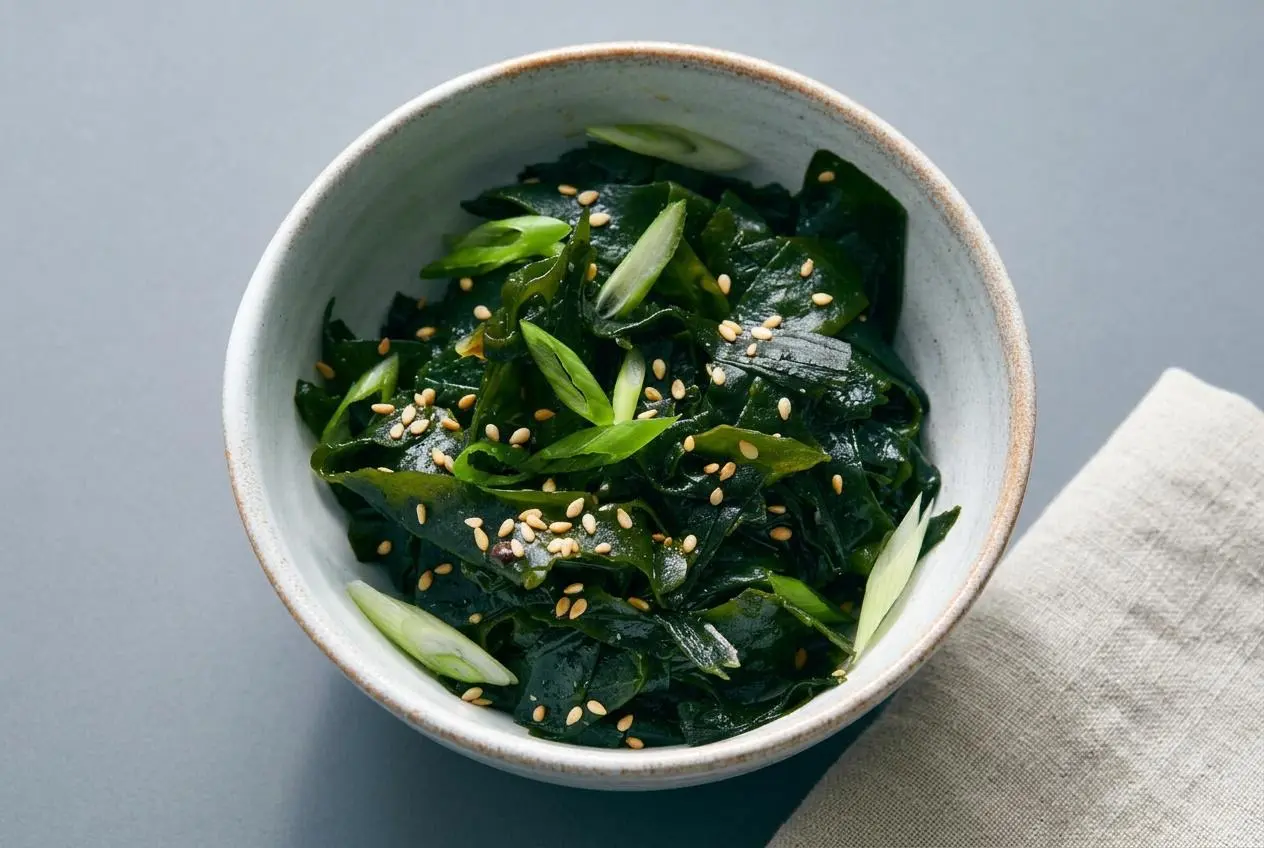
Seaweed salad is a quick Japanese side dish made by soaking dried wakame, squeezing it very dry, and tossing it with a savory sesame miso dressing for a crisp, briny bite.
Good seaweed salad should taste clean and ocean-fresh, with a little snap in each strand and a nutty finish from toasted sesame oil. This version stays faithful to the classic home style and keeps the dressing deeply savory, not syrupy.
It also clears up the big questions, like why homemade seaweed looks darker than restaurant versions and how to keep it from turning slick. The paper towel squeeze is the whole game.
Use cold water for the soak, and don’t stop squeezing until the wakame clumps together instead of dripping.
The Ingredients: Selecting and Preparing Dried Seaweed
Each ingredient pulls its weight here, from the briny backbone of wakame to the mellow sweetness, acidity, and nuttiness that make the dressing taste balanced instead of flat.
- 1/2 cup wakame (dried seaweed)
- 2 tablespoons low-sodium soy sauce
- 1 tablespoon unseasoned rice vinegar
- 1 tablespoon mirin
- 1 tablespoon toasted sesame oil
- 1 tablespoon white miso
- Salt and pepper
- Toasted white sesame seeds or thinly sliced scallions (or a combination), for garnish (optional)
Wakame brings the signature briny chew and crisp-tender texture. White miso does more than season the dressing. It acts as a gentle binder, helping the soy sauce, mirin, vinegar, and toasted sesame oil cling to the seaweed instead of sliding to the bottom of the bowl. Rice vinegar keeps the flavor bright, while mirin softens the edges with subtle sweetness.
I always pause for a second when I open the bag of dried wakame because the pieces look tiny and crinkled, then expand dramatically once they hit water.
Understanding Wakame
If you want a traditional homemade version, dried wakame is the best place to start. It rehydrates quickly, has a clean marine flavor, and lands in that nice middle ground between tender and pleasantly springy.
Once soaked, wakame swells a lot and turns silky-dark green with a light snap when you bite into it. That snapping texture is what you want. If it feels mushy or slippery right away, it usually soaked too long or held too much water.
Look for wakame in Asian grocery stores, Japanese markets, well-stocked natural food stores, or online. Avoid thick kelp or raw kombu here. They’re useful in other dishes, but they’re too tough and heavy for this style of salad.
What Is Kaisou Salad Mix?
Kaisou salad mix is a colorful blend of sea vegetables, often including wakame plus other varieties that bring extra curl, color, and chew. It can be a fun option if you want a more restaurant-style look with varied texture.
For this recipe, wakame stays the focus because it gives the most classic result and the clearest texture cues. If you do use a kaisou mix, expect the rehydrated salad to look more mixed in shape and color than plain wakame.
Hijiki and other blended seaweeds can be interesting, but thick sheets or heavy-cut sea vegetables won’t behave the same way in this dressing. The goal is light, glossy strands, not a dense tangle.
A Note on Miso and Mirin Selection
Choose a mild white miso here. It gives the dressing body and savory depth without taking over. Darker miso can be delicious, but it can crowd out the fresh briny character of the seaweed and make the dressing feel heavier than it should.
Mirin adds a soft sweetness that rounds out the saltiness of soy sauce and the tang of rice vinegar. Together, white miso and mirin make the dressing taste balanced and smooth rather than sharp or overly salty.
If you need a wheat-free option, you can swap the low-sodium soy sauce for tamari. For a soy-free direction, coconut aminos work too, though the flavor will be milder and a little sweeter.
How to Make Seaweed Salad Step-by-Step
This method is quick, but one detail matters more than anything else: get the wakame fully rehydrated, then get it very dry so the dressing stays thick and clingy.
- Place the wakame in a medium bowl and add enough cold water to cover it by 2 inches, then let it stand for about 10 minutes until softened.
The seaweed should expand noticeably and feel flexible but still a little springy. - Drain the wakame in a colander, squeeze out as much water as possible with your hands, then press it again between paper towels.
When it’s dry enough, the seaweed will clump together tightly instead of dripping into the sink. - In another medium bowl, whisk together the soy sauce, rice vinegar, mirin, toasted sesame oil, and white miso, then season with salt and pepper.
Keep whisking until the miso fully dissolves and the dressing looks smooth, glossy, and evenly blended. - Add the dried wakame to the bowl of dressing, season again with salt and pepper, and toss until every strand is coated, breaking up any clumps as you go.
The seaweed should look lightly glossy and evenly seasoned, with no dry patches hiding in the middle. - Transfer the salad to a serving bowl and finish with sesame seeds or scallions, if using, then serve at room temperature or chilled.
The flavor tastes a little rounder after a short chill, but the texture should still stay snappy.
Rehydration Mastery
Cold water matters. It helps wakame soften without going limp, and it gives you a more defined bite than hot water. The exact 10-minute soak is useful because wakame hydrates fast. Leave it sitting much longer and the texture starts heading toward slick and floppy.
Many home cooks expect seaweed to need a long soak, but wakame is the opposite. Once the pieces are plump and supple, stop there. It should feel crisp-tender, not bloated.
- If the seaweed feels tough, it likely needed the full soak time.
- If it feels slippery before dressing, it likely sat in the water too long.
- If the finished salad tastes diluted, the problem usually started at the draining stage, not the dressing.
Squeezing and Drying the Algae
This is the step that saves the whole salad. First squeeze the drained wakame by hand, then squeeze it again between paper towels. That second press removes the water trapped on the surface and between the folds.
Without that extra drying, the dressing loosens right away and collects at the bottom of the bowl. With it, the miso-sesame mixture coats the seaweed closely, almost like a light glaze. When it works, the strands feel compact in your fingers and the bowl doesn’t fill with watery runoff.
Emulsifying the Sesame Dressing
White miso needs a thorough whisk. If you rush, you’ll end up with little salty clumps that never fully blend into the soy sauce and mirin. Keep going until the dressing is smooth and unified.
You’ll notice the aroma change too. At first it smells like separate ingredients. Once the sesame oil and miso come together, the bowl smells rounder and toastier, with a gentle bloom from the sesame oil. That’s the cue that the dressing is ready to coat the seaweed evenly.
Why Is Restaurant Seaweed Salad So Neon Green?
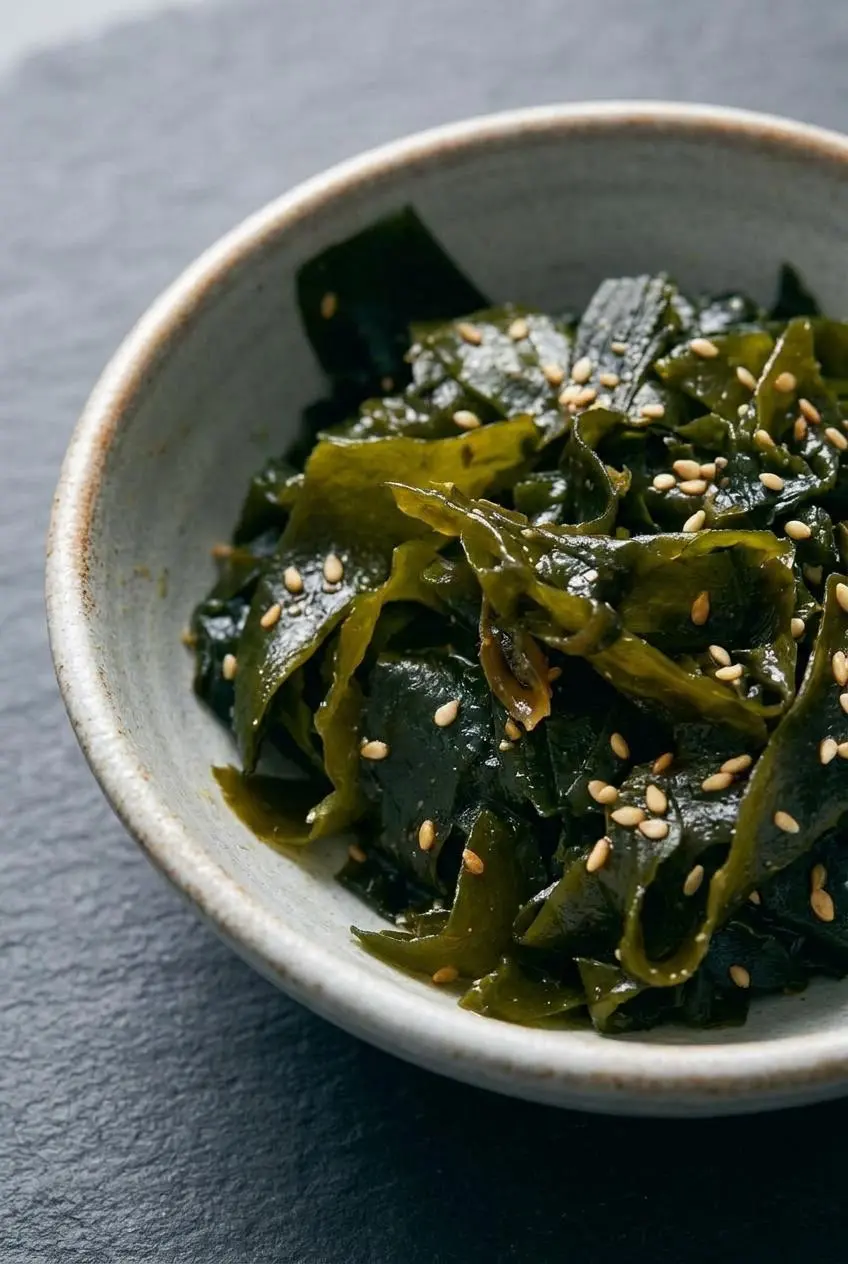
If your homemade salad looks darker, that’s normal. Rehydrated wakame at home usually lands somewhere in the olive-green to brownish-green range, especially once it’s dressed.
The bright neon version often served at sushi spots is commonly sold as a prepared commercial product rather than mixed from plain wakame at the last minute. Those packaged versions may include added coloring and sweeter ingredients, which is why the flavor can lean more candy-sweet than savory.
That also explains why homemade seaweed salad often tastes cleaner and more balanced. The white miso adds depth, the mirin softens the vinegar, and the seaweed still tastes like seaweed. No mystery glow required.
How to Store Seaweed Salad to Avoid a Slimy Texture
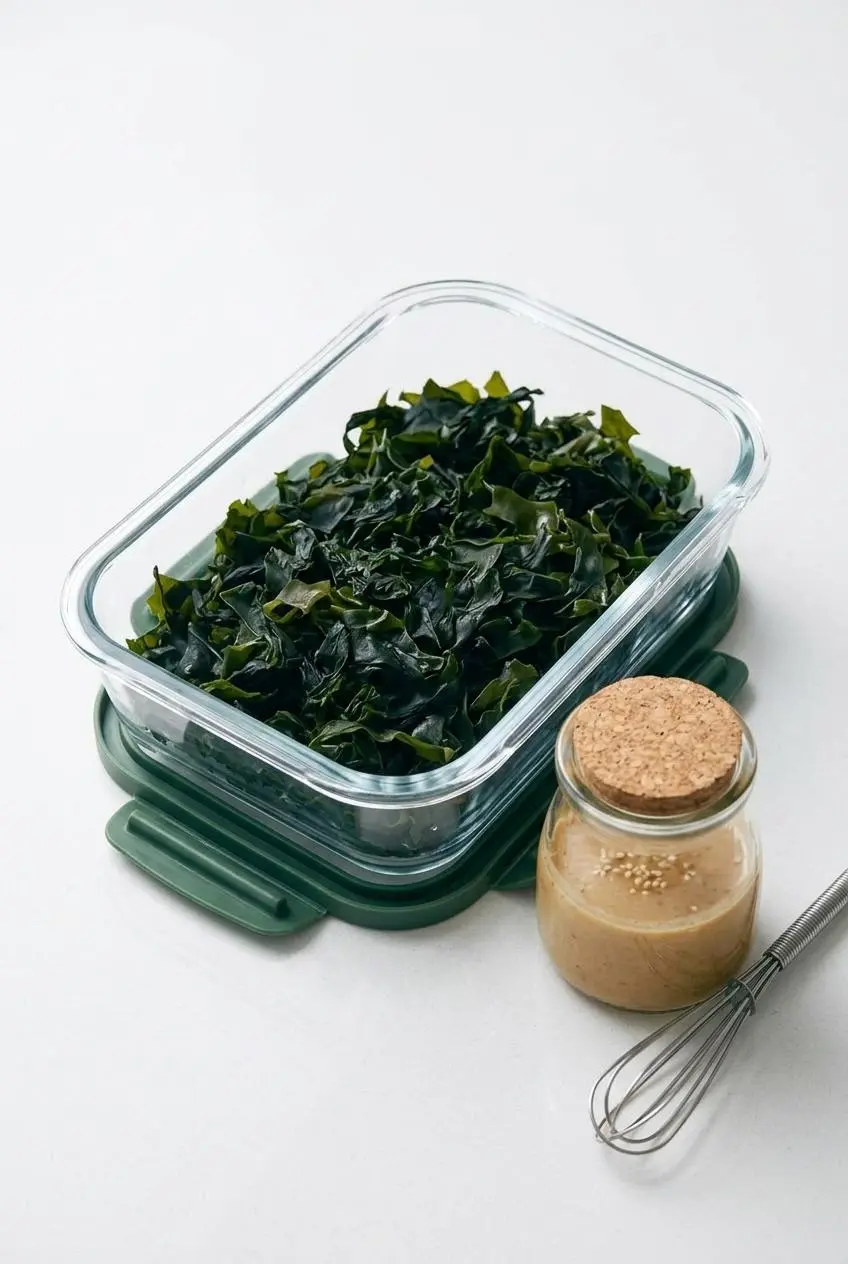
Seaweed softens quickly once dressed, so texture matters more than almost anything in storage. If you’re serving it soon, keep it chilled and try not to leave the dressed salad sitting around for more than 2 hours.
For make-ahead prep, the best move is to store the rehydrated and thoroughly dried wakame in one airtight container and the whisked dressing in another. Kept separate in the fridge, they can be held for up to 3 days before tossing together. Once mixed, the seaweed gradually loses that crisp-tender bite and becomes slicker.
If you add scallions, wash and dry them well to reduce extra moisture and cross-contact on fresh produce.
Freezing isn’t a good fit here. The texture turns watery and mushy after thawing, which works against the whole point of this salad.
Easy Flavor Swaps and Dietary Variations
You can change the flavor profile without disturbing the core method. Keep the base recipe as written first, then tweak from there if you want a different finish.
- Gluten-free: swap the low-sodium soy sauce for tamari. The salad stays close to the original, with the same savory depth.
- Soy-free: use coconut aminos instead of soy sauce. Expect a sweeter, softer flavor and a slightly less punchy finish.
- Spicy sesame wakame salad: add a touch of chili oil or a few thin slices of fresh red chile to the dressing after it’s whisked smooth.
- Ginger-yuzu twist: add a splash of fresh yuzu juice and a little grated ginger for a brighter, warmer edge that pairs especially well with rich mains.
If bold, tangy side dishes are your thing, a spicy kimchi salad makes a great next move on another day.
Perfect Pairings: What to Serve with Seaweed Salad
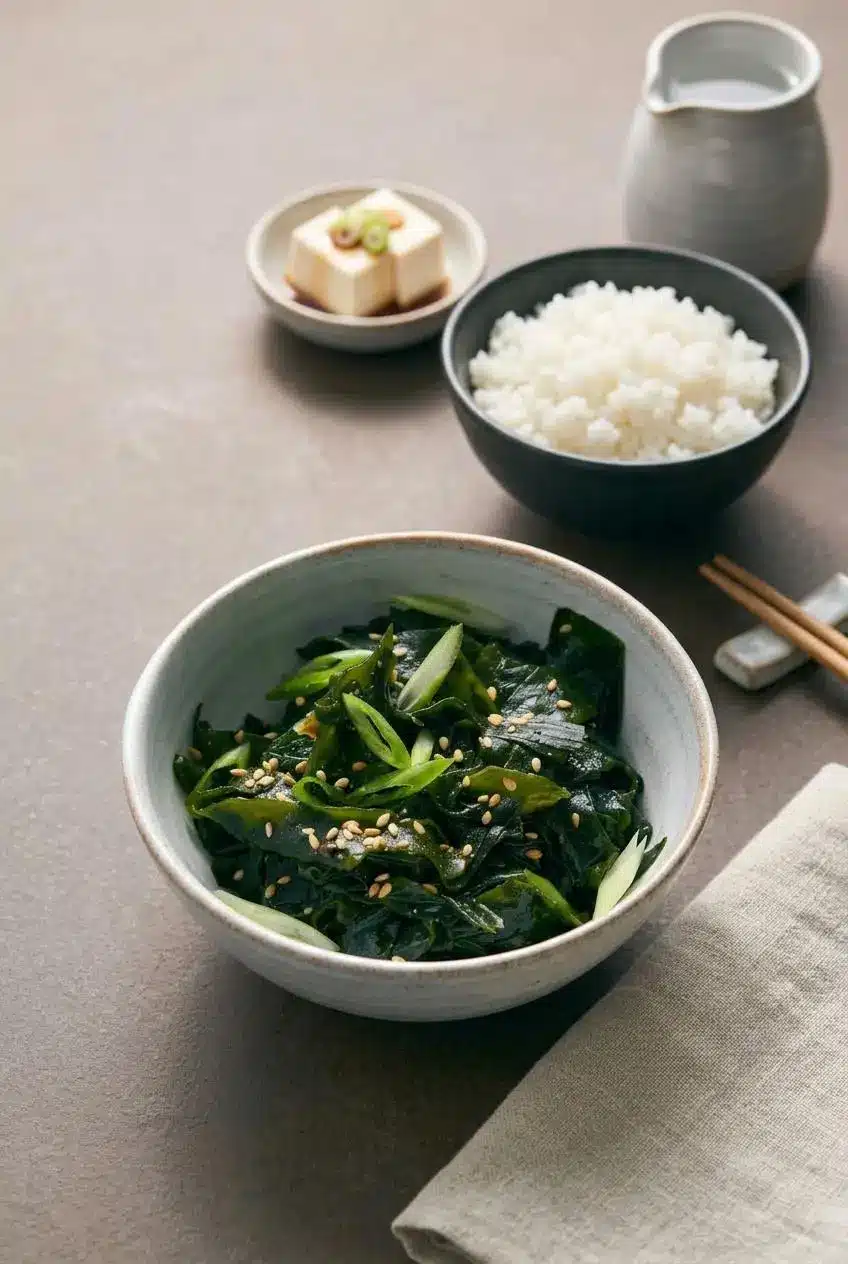
This salad works best next to foods that are rich, warm, or subtly sweet, because its briny tang cuts through heavier bites so well.
- Serve it with sushi rolls, nigiri, or sashimi for a classic Japanese-inspired spread.
- Pair it with chicken katsu or other fried dishes to balance the richness.
- Spoon it over steamed rice with silken tofu and cucumber for a light lunch.
- Add it to a starter lineup with creamy crab salad if you want that sushi bar appetizer feel at home.
Conclusion
Homemade seaweed salad is fast, deeply savory, and much easier to control than the restaurant version. You get the clean briny flavor of wakame, a balanced sesame miso dressing, and a fresher texture.
The biggest trick is simple: soak in cold water, then dry the seaweed more thoroughly than you think you need to. Once you nail that, this becomes a repeat side dish with very little fuss.
Frequently Asked Questions
Is seaweed salad healthy?
Yes, it can be a nutritious side dish as part of a balanced meal. Seaweed is often valued for minerals and fiber, though exact nutrition can vary by brand and type. This version uses low-sodium soy sauce, which helps keep the salt level more in check. If sodium is a concern for you, season lightly and taste before adding extra salt.
What does seaweed salad taste like?
It tastes briny, nutty, tangy, and deeply savory. The mirin adds a soft sweetness, while rice vinegar keeps the finish bright. Rehydrated wakame has a crisp-chewy bite that contrasts nicely with the smooth dressing. It should taste fresh and oceanic, not fishy.
Can you freeze seaweed salad?
It’s better not to. Freezing breaks down the texture, so the seaweed thaws out mushy and watery. This is one of those dishes that really rewards fresh assembly. If you want to get ahead, keep the dried wakame and dressing separate until serving time.
Where do I buy seaweed for seaweed salad?
Look for dried wakame at Asian grocery stores or Japanese markets first. Many natural food stores and larger supermarkets with international aisles carry it too. Online shops are also a practical option if local selection is limited. If you see kaisou salad mix, that can work as a colorful alternative, but wakame is the most traditional starting point.
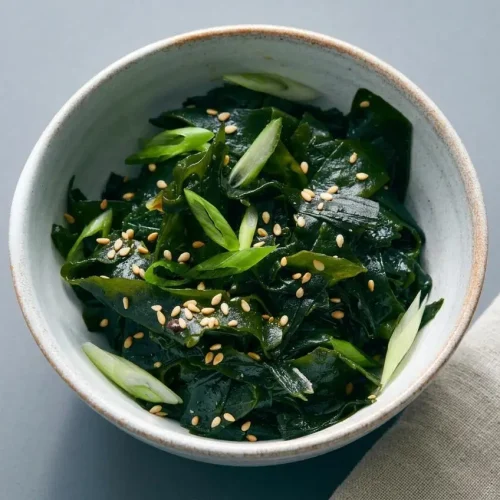
Seaweed Salad

Equipment
- Medium bowl
- Whisk
- Paper towels
- Colander
- Serving bowl
Ingredients
- 1/2 cup wakame (dried seaweed)
- 2 tablespoons low-sodium soy sauce
- 1 tablespoon unseasoned rice vinegar
- 1 tablespoon mirin
- 1 tablespoon toasted sesame oil
- 1 tablespoon white miso
- Salt and pepper
- Toasted white sesame seeds or thinly sliced scallions (or a combination), for garnish (optional)
Instructions
- Place the wakame in a medium bowl and add enough cold water to cover it by 2 inches, then let it stand for about 10 minutes until softened. The seaweed should expand noticeably and feel flexible but still a little springy.
- Drain the wakame in a colander, squeeze out as much water as possible with your hands, then press it again between paper towels. When it’s dry enough, the seaweed will clump together tightly instead of dripping into the sink.
- In another medium bowl, whisk together the soy sauce, rice vinegar, mirin, toasted sesame oil, and white miso, then season with salt and pepper. Keep whisking until the miso fully dissolves and the dressing looks smooth, glossy, and evenly blended.
- Add the dried wakame to the bowl of dressing, season again with salt and pepper, and toss until every strand is coated, breaking up any clumps as you go. The seaweed should look lightly glossy and evenly seasoned, with no dry patches hiding in the middle.
- Transfer the salad to a serving bowl and finish with sesame seeds or scallions, if using, then serve at room temperature or chilled. The flavor tastes a little rounder after a short chill, but the texture should still stay snappy.