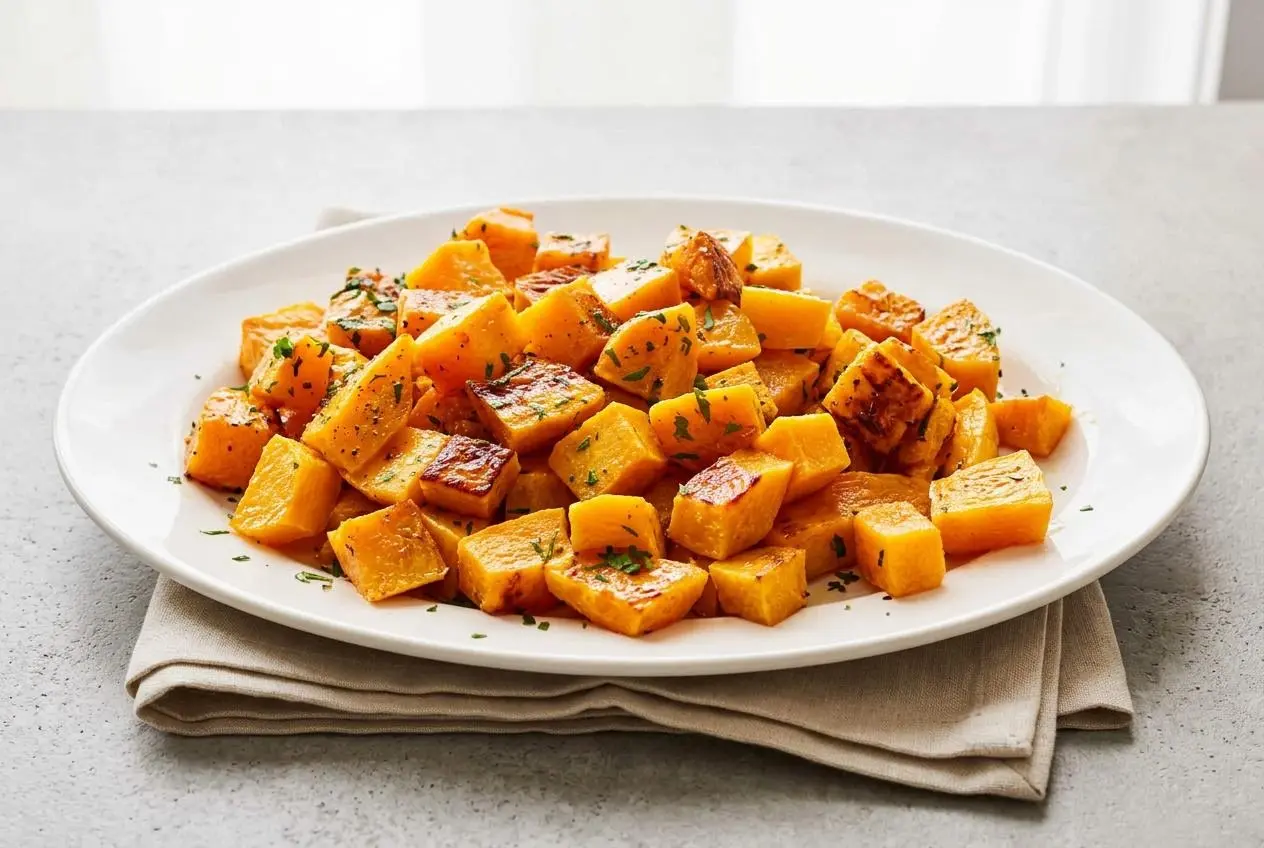
For a roasted butternut squash recipe with caramelized edges, roast 1-inch cubes coated with olive oil, salt, and pepper at 400°F for 30 to 35 minutes, until fork-tender and golden.
This roasted butternut squash recipe turns the vegetable’s natural sweetness into soft, buttery centers with savory, browned corners. It works as an easy side dish and gives you a dependable method for getting color instead of steamed squash.
As the cubes roast, the kitchen starts smelling gently sweet around the halfway point, then deeper and toastier as the edges brown. The space between the cubes makes the difference.
Use a large rimmed baking sheet so the squash has room to release steam and brown.
Ingredients and Their Roles
Each ingredient supports the final texture and flavor: squash brings sweetness, oil encourages browning, salt balances flavor, pepper adds warmth, and parsley adds fresh contrast.
- 1 butternut squash (peeled, seeds scooped, and cubed)
- Extra-virgin olive oil (for drizzling)
- Sea salt and freshly ground black pepper
- Chopped fresh parsley (optional, for garnish)
Choose a squash that feels firm and heavy for its size, with matte, unblemished skin. A mature squash has dense orange flesh that holds its shape long enough to brown before becoming tender.
Extra-virgin olive oil lightly coats the surfaces, helping the dry oven heat brown the squash without leaving it greasy. Sea salt sharpens its sweetness and pulls a little moisture toward the surface, while freshly ground black pepper gives each bite a gentle savory bite. Parsley is optional, but its clean herbal flavor brightens the rich roasted notes.
I look for a squash with a long, thick neck because it gives the most uniform cubes and makes cutting less fiddly.
How to Safely Peel, Seed, and Cut Butternut Squash
Butternut squash is dense and round, so setting up a stable workspace makes prep calmer and more accurate. Uniform cubes also mean fewer scorched small pieces and fewer undercooked large ones.
Knife and Cutting Board Stabilization
Set a damp paper towel or non-slip mat under a heavy cutting board so it cannot slide. With a sharp chef’s knife, trim a thin slice from the stem end and base to create two flat surfaces before cutting further.
If the squash feels exceptionally hard, prick the skin several times with a fork and microwave it whole briefly to soften the rind. Let it cool enough to handle, then continue with a steady knife and dry hands.
Peeling with a Heavy-Duty Y-Peeler
Use a sturdy Y-peeler rather than a paring knife. Hold the squash firmly against the board and peel downward in long vertical strokes, following its curves until the vivid orange flesh shows.
Remove the pale greenish layer directly beneath the outer skin as well. That layer can stay fibrous after roasting, while fully peeled squash becomes tender and silky.
Scooping Seeds and Cubing Into 1-Inch Pieces
Cut the peeled squash where the narrow neck meets the rounded bulb. Slice the bulb lengthwise, then use a sturdy spoon to scrape away the seeds and stringy pulp.
Cut the neck and cleaned bulb into 1-inch cubes, keeping the pieces close in size. If you want to use the seeds, rinse and dry them well before trying this method for roasted pumpkin seeds.
How to Make Roasted Butternut Squash
Roasting at 400°F gives the dense squash enough heat to soften in the center while developing concentrated, caramelized edges. A fully heated oven matters here, so give it time to reach temperature before the pan goes in.
- Heat the oven to 400°F and cover a large baking sheet with parchment paper.
Use a rimmed pan so the cubes stay contained, and let the oven come fully to temperature before roasting. - Spread the cubed squash over the prepared pan, drizzle with olive oil, and season with sea salt and freshly ground black pepper.
Coat the cubes lightly and evenly, then roast for 30 to 35 minutes until their edges are golden brown and a fork slides easily through the centers.
For stronger browning, place the pan on the bottom oven rack. The lower position gives the flat sides of the cubes more concentrated heat. Around the middle of roasting, the squash should smell softened and sweet. By the end, look for blistered golden spots and tender centers rather than a pale, damp surface.
Essential Tips for Golden, Never-Soggy Squash
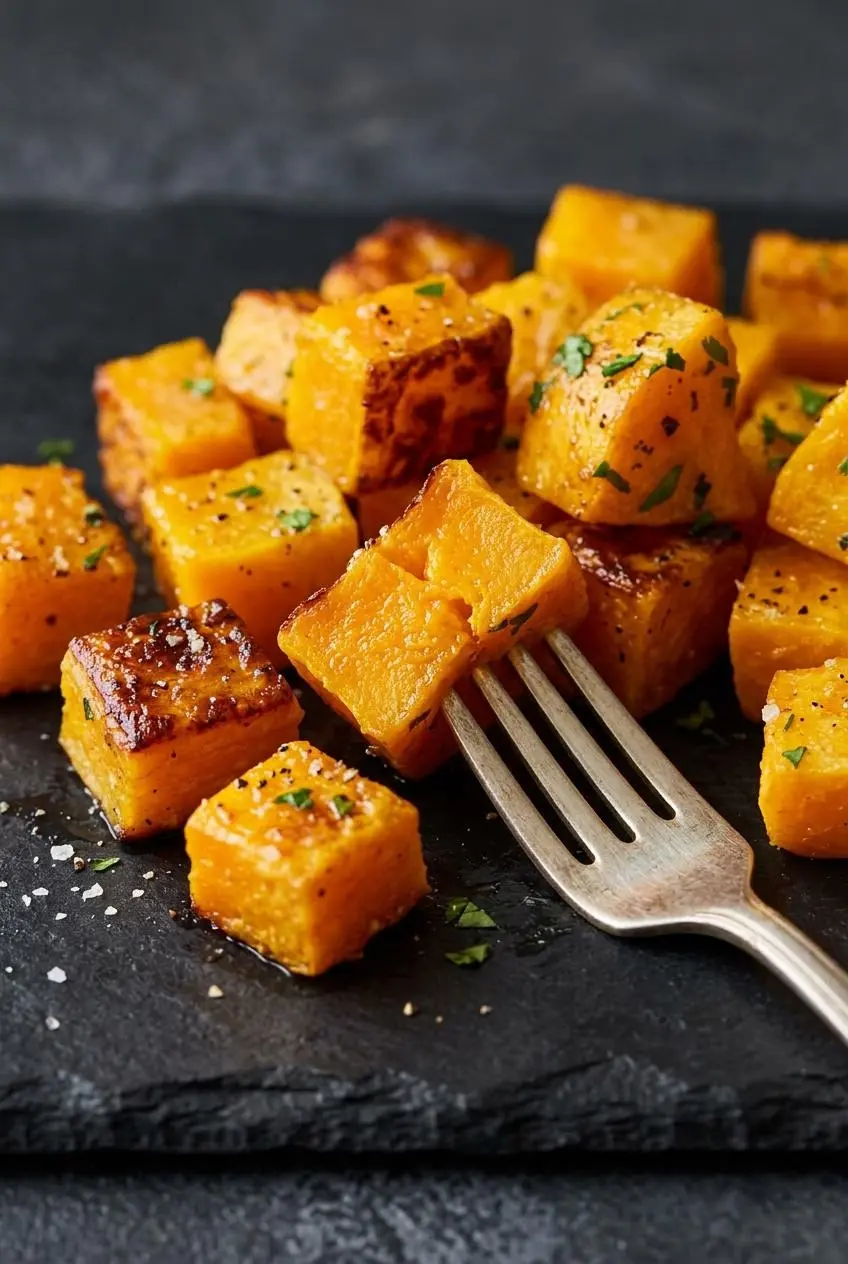
Caramelization begins when moisture can escape. If steam gets trapped around the cubes, the squash softens in its own juices instead of browning.
- Pale, soft cubes: The pan was likely crowded. Spread the squash in one layer with visible space between pieces, using a second sheet pan when needed.
- Uneven cooking: Cube sizes varied too much. Keep the pieces close to 1 inch so the smallest pieces do not burn while larger ones stay firm.
- Sticking when you turn it: Give the squash more time. Flat sides release more easily once a browned crust has formed.
- Slow browning: Parchment prevents sticking, but a bare rimmed pan can brown the squash faster. Use parchment when easy cleanup matters most, or use a lightly oiled bare pan for deeper contact browning.
Resist stirring during the early part of roasting. The cubes need steady contact with the hot pan to form a crust. Once the undersides release easily, you can turn a few pieces if your oven browns unevenly.
Flavor Variations for Sweet and Savory Squash
Keep the main roast exactly as written, then add one optional finish when you want a different direction. Add sweet ingredients late so they do not scorch, and save delicate toppings for the end.
Maple Cinnamon and Fresh Rosemary
For a holiday-style finish, toss the nearly tender cubes with pure maple syrup, ground cinnamon, and finely minced fresh rosemary during the final part of roasting. The maple clings to the browned surfaces, cinnamon adds warm spice, and rosemary keeps the sweetness from tasting flat.
Use a light hand with the syrup. Too much creates a wet coating that can darken before the squash is fully tender.
Garlic Parmesan with Toasted Pecans
Add minced garlic and freshly grated Parmesan near the end of roasting so the cheese can melt into a crisp golden layer without burning. Finish with chopped toasted pecans just before serving for buttery crunch against the soft squash.
This savory version suits roast chicken, pork tenderloin, or a meatless dinner with lentils and greens.
Browned Butter, Crispy Sage, and Smoked Salt
For a richer finish, drizzle the squash with warm browned butter during the latter part of roasting, then add finely chopped fresh sage and a small pinch of smoked sea salt before serving. The nutty butter echoes the squash’s caramelized sweetness, while sage adds an earthy edge.
Keep the smoked salt restrained. It should support the sweetness, not turn the whole pan into a campfire.
Roasting Squash Halves for Soups and Purées
Halves are a good choice when you want soft flesh for blending rather than defined cubes. Cut the squash lengthwise, scoop out the seeds, rub the cut surfaces with olive oil, salt, and pepper, then roast cut-side down on a parchment-lined sheet at 400°F until the flesh is completely tender and beginning to collapse.
Scoop the cooked flesh from the skin and blend it into butternut squash soup or stir it into a smooth seasonal purée. Cubes give you more browned edges, while halves retain more moisture and create a softer texture.
What to Serve with Roasted Butternut Squash
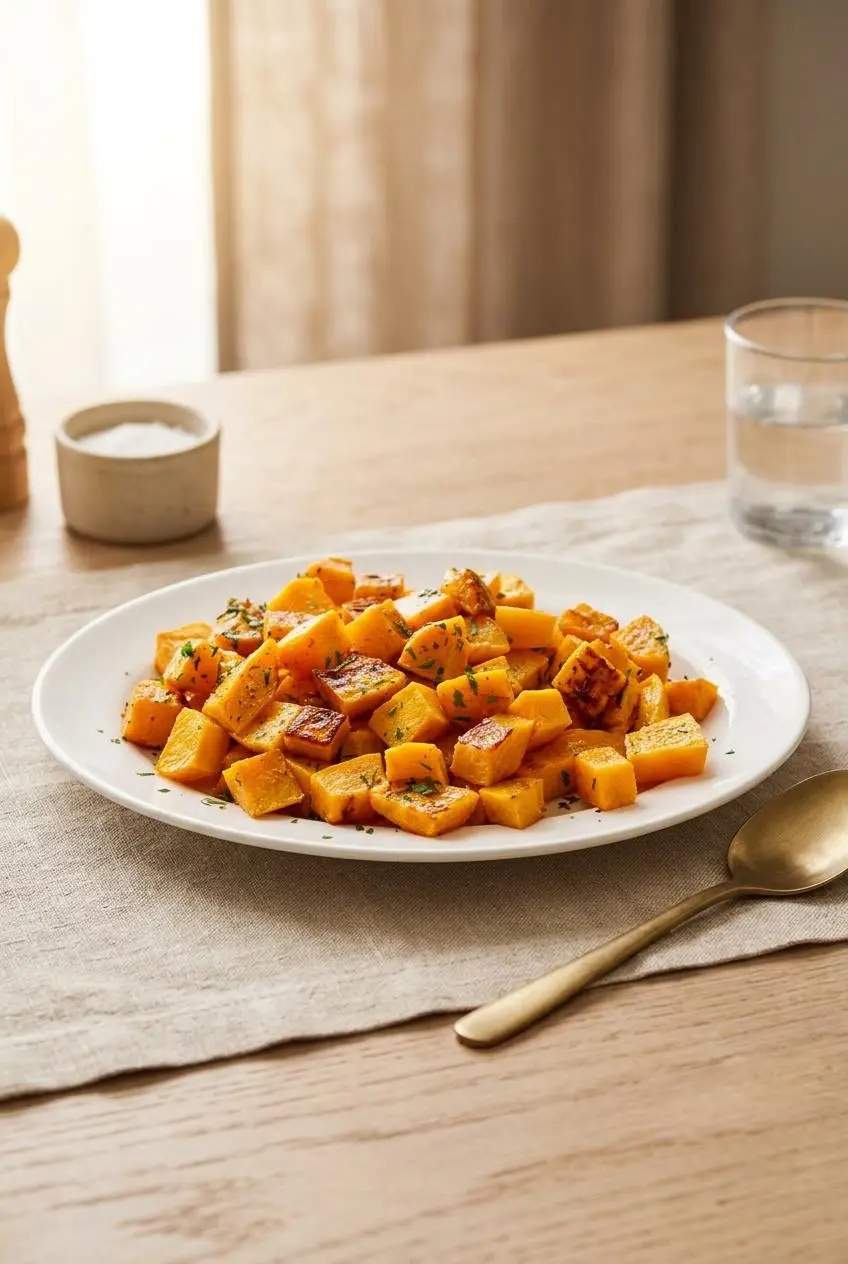
These caramelized cubes work with weeknight mains and holiday spreads because their sweetness balances salty, savory foods.
- Serve them beside roasted chicken, pork tenderloin, or classic roast beef for a hearty dinner plate.
- Fold warm cubes into cooked quinoa with baby kale, toasted pumpkin seeds, and creamy lemon tahini dressing.
- Stir them into baked pasta near the end of cooking so the pieces stay recognizable.
- Spoon them over whipped ricotta crostini with parsley for a warm appetizer.
Storage and Reheating for Leftovers
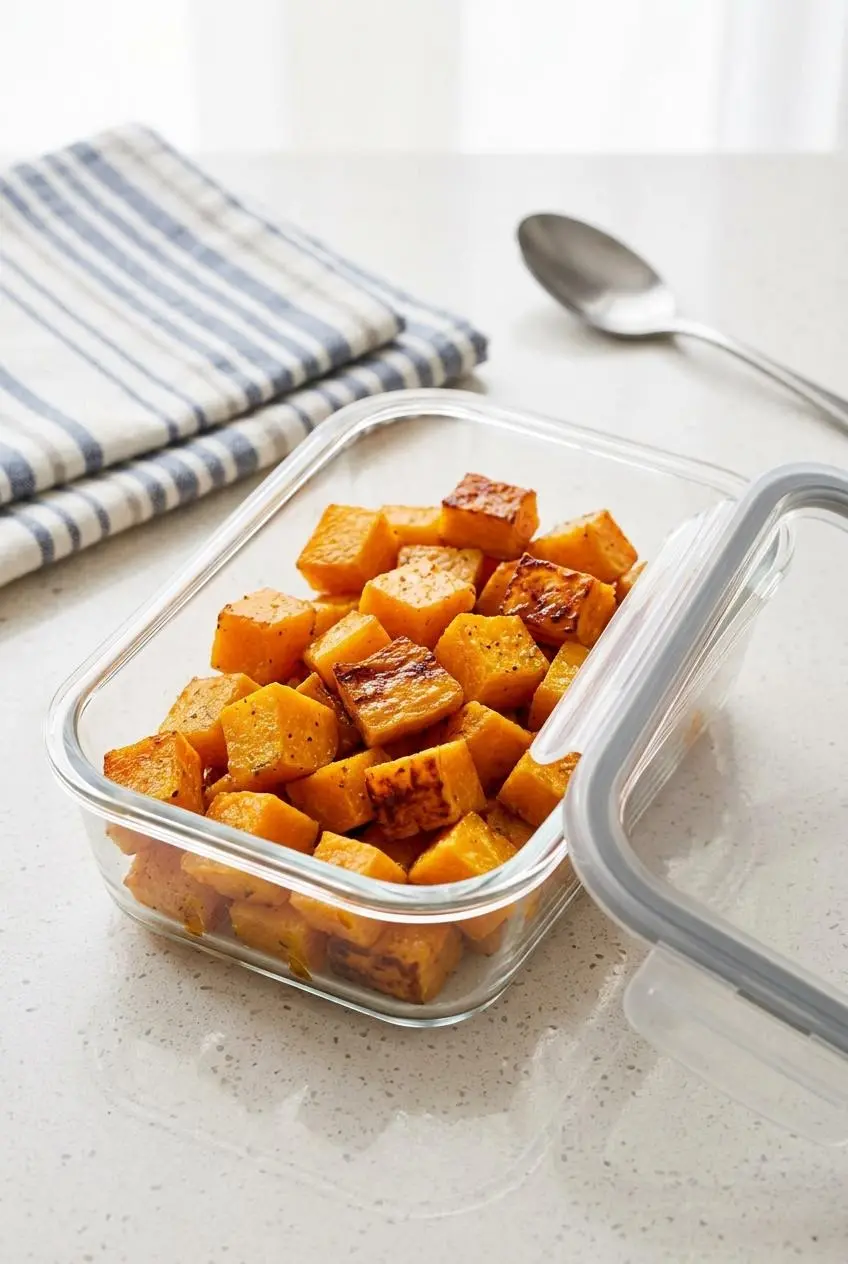
Cool leftover squash before transferring it to a covered airtight container and refrigerate it promptly. Keep the parsley separate when possible, then add it after reheating so it stays fresh and green.
Refrigerator Storage and Prep Planning
For advance prep, peel, seed, and cube the squash close to the time you plan to roast it. Keep the raw pieces dry and covered in the refrigerator, then season with oil, salt, and pepper just before they go on the pan.
For cooked leftovers, store only what you expect to use soon and reheat portions separately. This helps the cubes keep more defined edges instead of repeatedly softening in a large container.
Keeping Roasted Cubes at Their Best
Protect the texture by cooling the cubes in a single layer before packing them away. Trapped steam is the enemy of crisp edges, so avoid sealing the squash while it is still hot.
If you have more than you need for one meal, use the leftover cubes in soups, grain bowls, or baked pasta where their tender texture is an advantage.
Oven and Stovetop Reheating Methods
For the best chance of reviving browned edges, spread cold cubes on a baking sheet in a single layer and warm them in a hot oven until heated through. A lightly oiled cast-iron skillet also works well: let the squash sit undisturbed until the contact sides regain color.
A microwave warms squash quickly, but its trapped steam tends to soften the exterior. Choose dry oven heat or a skillet when caramelized texture matters.
Conclusion
Roast butternut squash at 400°F with enough space between the cubes, and you’ll get sweet golden edges around tender, buttery centers.
Keep the pan uncrowded, let the surfaces brown before moving them, and finish with parsley or an optional flavor variation that fits the meal. Dinner will smell especially good.
Frequently Asked Questions
What Temperature Is Best to Roast Butternut Squash?
For cubed squash, 400°F is an excellent temperature. It softens the dense centers while giving the natural sugars time to caramelize around the edges in 30 to 35 minutes.
Should You Boil or Microwave Butternut Squash Before Roasting?
Skip boiling, which adds water and works against browned edges. If the squash is difficult to cut, briefly microwave the whole pricked squash to soften the rind, then let it cool before peeling and cubing.
Can You Roast Butternut Squash with the Skin Left On?
Butternut squash skin is edible, but it can become tough and leathery on roasted cubes. Peel cubes for the best texture; for roasted halves, leave the skin on and scoop out the tender flesh after cooking.
How Do You Reheat Roasted Butternut Squash to Keep It Crispy?
Use a hot oven or a lightly oiled skillet rather than a microwave. Spread the cubes in one layer and let them heat without crowding so moisture can escape and the edges can brown again.
Roasted Butternut Squash Recipe

Equipment
- Baking Sheets
- Parchment Paper
Ingredients
- 1 butternut squash peeled, seeds scooped, and cubed
- Extra-virgin olive oil for drizzling
- Sea salt and freshly ground black pepper
- Chopped fresh parsley optional, for garnish
Instructions
- Heat the oven to 400°F and cover a large baking sheet with parchment paper. Use a rimmed pan so the cubes stay contained, and let the oven come fully to temperature before roasting.
- Spread the cubed squash over the prepared pan, drizzle with olive oil, and season with sea salt and freshly ground black pepper. Coat the cubes lightly and evenly, then roast for 30 to 35 minutes until their edges are golden brown and a fork slides easily through the centers.