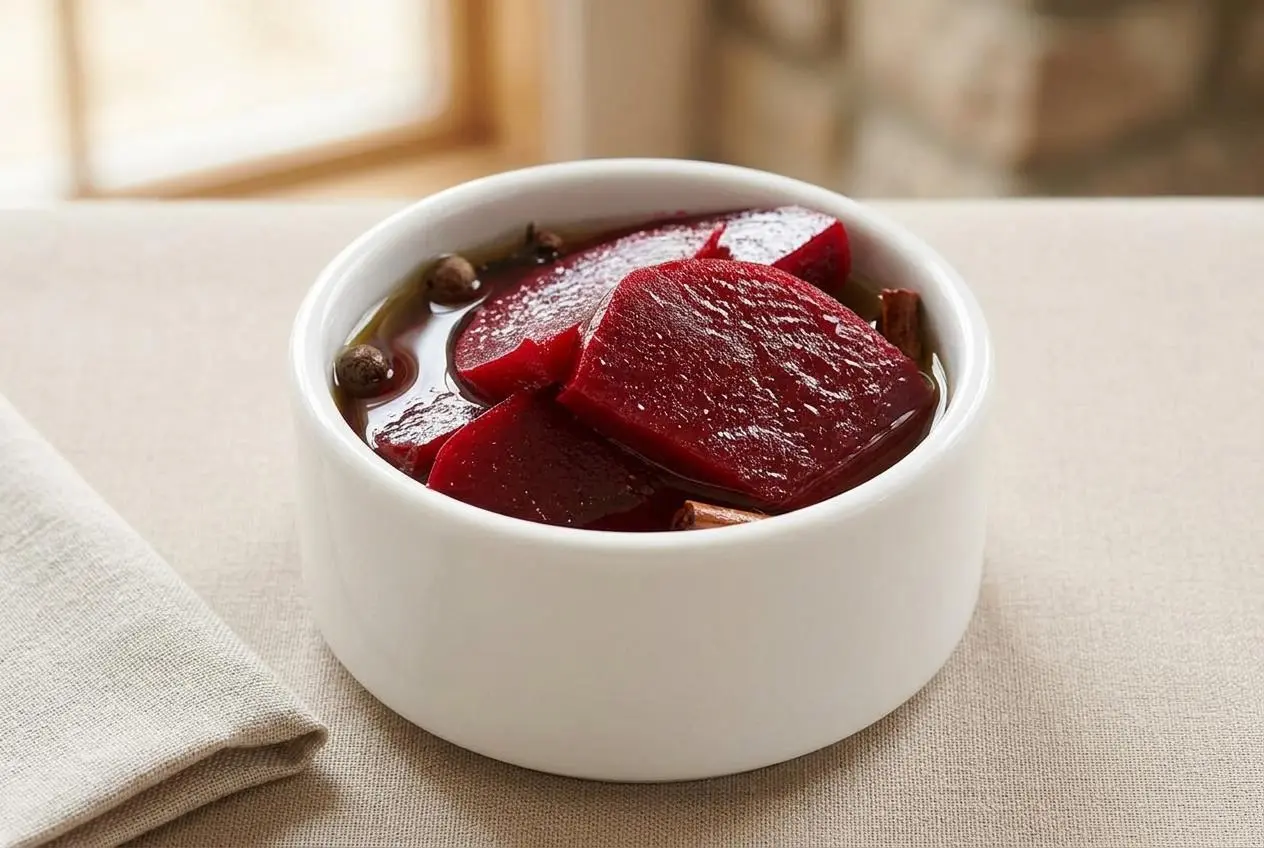
To make pickled beets, simmer whole, unpeeled beets until fork-tender, peel and slice them, then briefly simmer the slices in a hot vinegar, sugar, and whole-spice brine. Pack them into jars and choose refrigerated storage or a properly verified water-bath canning method.
This pickled beets recipe balances earthy red beets with sweet tang and the cozy aroma of cinnamon, cloves, and allspice. The slices turn tender but hold their shape, making them easy to tuck into sandwiches or spoon alongside dinner.
The key is controlling tenderness before the beets meet the vinegar, then giving the spices time to settle into the slices. Refrigerator jars offer the easier route, while pantry storage takes additional care. Start with the fork test.
Set out a washable cutting board before peeling; beet juice stains porous surfaces quickly.
Pickled Beet Ingredients and Brine Ratios
Beets provide earthy sweetness and substantial texture, vinegar brings tang, and sugar softens its sharp edge. Cinnamon, cloves, and allspice add warm aroma, while salt rounds out the sweet and sour flavors.
- 6 pounds red beets, washed and scrubbed clean
- 4 cups white vinegar (5% acidity)
- 1 3/4 cup sugar
- 1 stick cinnamon
- 1 teaspoon whole cloves
- 1 teaspoon whole allspice berries
- 1 1/2 teaspoon salt
Choose firm beets. Look for roots that feel solid rather than rubbery, preferably with reasonably similar sizes. They will cook more evenly, and you can check the smaller ones without waiting for the largest beet to soften. Commercially canned beets offer a refrigerator shortcut, but they don’t need this initial cooking stage.
Use the specified vinegar. Check the bottle for 5% acidity rather than assuming every white vinegar has the same strength. This brine contains no added water: the water used to boil the beets gets discarded. Don’t dilute the vinegar to soften the flavor, particularly if you intend to can the jars.
Vinegar contributes the acidity needed for pickling, but its label alone doesn’t establish that a finished jar is suitable for pantry storage. The vegetable quantity, brine proportions, jar size, and processing method all matter. For shelf-stable preservation, use a tested canning formula rather than treating vinegar strength as a stand-alone safety check.
Sugar balances rather than erases the tang. The beets should still taste distinctly pickled. Salt keeps the sweet brine from tasting flat, and whole spices infuse it without the gritty texture that ground cinnamon or cloves can leave behind.
I prefer beets of similar size here because it’s easier to catch them at the tender, sliceable stage.
How to Make Pickled Beets Step by Step
Keep the skins on during cooking, then check the centers rather than judging tenderness by the outside alone. This batch yields approximately 6 pints, or 24 servings; allow additional time for cooling and flavor development beyond the cooking work.
- Cover the unpeeled beets with water in a large pot, bring it to a boil, then lower the heat and simmer with the lid on for 25 to 35 minutes.
A fork should enter the center easily, while the beet remains firm enough to slice without falling apart. - Drain away the cooking water and set the beets aside until they are comfortable to handle.
The roots should feel warm rather than painfully hot before you begin rubbing away their skins. - Bring the vinegar, sugar, cinnamon, cloves, allspice, and salt to a boil in the emptied pot while the beets cool.
Stir to dissolve the sugar and salt, leaving a liquid that smells sharply tangy with warm spice underneath. - Rub off the beet skins and cut the peeled roots into slices 1/4 inch thick.
Aim for even rounds so the pieces have a consistent texture in the finished jars. - Lower the slices into the boiling brine, reduce the heat, and simmer for 5 minutes.
The beets should become hot throughout without breaking into soft fragments. - Transfer the hot slices and brine into clean jars, covering the beets completely and leaving 1/2 inch of headspace.
The liquid should reach above the slices while leaving a clear gap below each jar rim. - Let refrigerator jars cool and refrigerate them, or apply canning lids and water-bath process only after confirming that the formula, jar size, and elevation match tested canning directions.
The processing schedule is 30 minutes at low elevation and 35 minutes from 1,000 to 3,000 feet, with canned jars resting undisturbed for 24 hours afterward. - Allow the beets to develop flavor for at least 3 days before tasting, keeping refrigerator jars chilled throughout.
The vinegar will still taste tangy, but the sweetness and whole spices should feel more integrated.
Cooking and Peeling Fresh Beets
Leave the skin, root tip, and remaining stem base intact while the beets simmer. Cutting deeply into the flesh gives the red pigment more opportunity to escape into the cooking water. Some tint in the water is normal; perfectly clear water isn’t the goal.
Start checking at the early end of the cooking range. Push a fork toward the center of a larger beet, not just beneath its skin. If the center feels hard, continue simmering and check again. If smaller beets finish first, lift them out rather than letting them soften while the others cook.
For an optional peeling aid, transfer the drained, hot beets into an ice bath. The skins may wrinkle and loosen as the surface cools. Once you can handle the roots, use gentle thumb pressure to slide the skin away; trim stubborn patches rather than gouging out the flesh.
Simmering the Spiced Brine
Stir across the bottom of the pot as the vinegar mixture heats. Sugar can settle there before it dissolves, so check that no grains remain before adding the sliced beets.
The vinegar steam will smell sharp at first, followed by the aroma of cinnamon and cloves as the spices heat. Keep your face away from the steam. Aroma tells you the spices are infusing, not that the acidity has disappeared or that a canning process is complete.
The brine should stay fluid rather than thicken into syrup. Once the slices go in, maintain a gentle simmer instead of an aggressive boil that knocks tender pieces against one another.
Packing Jars and Sealing
Use clean, heat-ready jars for the hot mixture. Spoon in the slices without crushing them, then distribute the brine so every jar has enough liquid to cover its beets. Don’t overfill early jars and leave the final jar short of brine.
Measure headspace from the surface of the liquid to the top of the jar rim, not from the highest slice. For canning, follow the tested directions for releasing trapped bubbles, checking the fill level, wiping rims, and applying lids.
A lid that seals after hot filling doesn’t, by itself, make a jar shelf-stable. The preservation process matters as much as the lid.
Canning vs Refrigerator Storage Methods
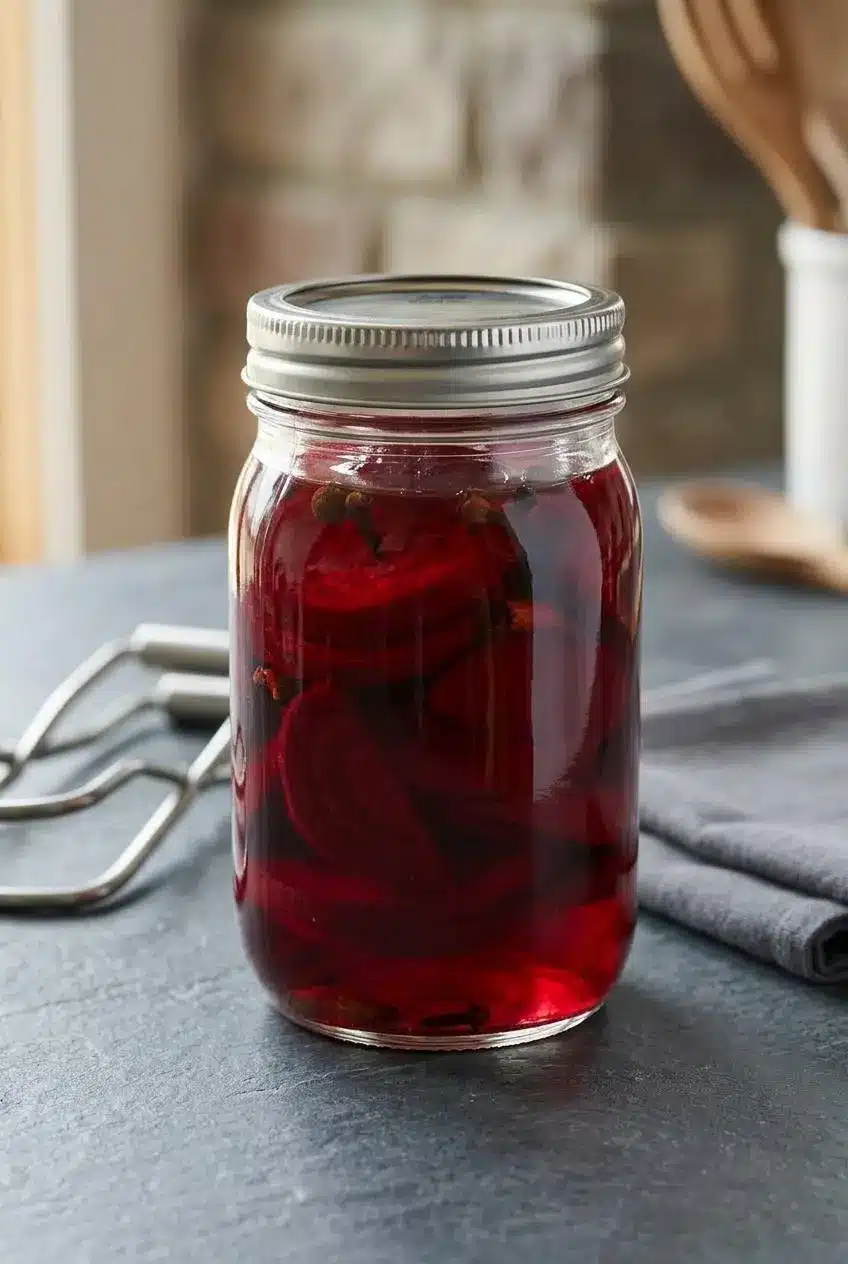
Choose the storage method before filling your jars. Refrigerator pickles depend on continued chilling; pantry jars require a complete, appropriate canning process.
- Choose refrigeration when you want the least equipment or plan to try optional herbs and add-ins.
- Choose canning only when you can verify a tested formula and follow its equipment, jar-size, and elevation requirements.
- Don’t substitute hot filling for processing. Unprocessed jars belong in the refrigerator, even when their lids pull down.
Water Bath Processing and Altitude Adjustments
The processing schedule in the method increases with elevation, but it doesn’t provide a complete high-altitude chart. Above the stated range, obtain tested directions for your location rather than guessing an additional processing time.
A water-bath canner needs a rack to keep jars off the bottom and enough depth to maintain the required water coverage. A suitable deep stockpot can serve that purpose only when it meets the tested directions. Use a jar lifter to move hot jars without tipping them.
Prepare jars and lids as directed for the particular canning process; cleaning and sterilization aren’t interchangeable terms. Start timing at the point specified by the tested directions, and maintain the required boil throughout processing.
After cooling, check each seal before pantry storage. Keep properly processed, sealed jars in a cool, dark place and refrigerate them after opening. If a seal fails or the processing details are uncertain, don’t treat the jar as pantry-ready.
Quick Refrigerator Method
The refrigerator approach skips the water bath, not the cooking or hot brine. Cool the filled jars, cover them, and transfer them to the refrigerator rather than leaving them out to develop flavor.
Keep the slices submerged and use a clean utensil whenever you remove some. Mark jars with the preparation date so you can track the batch, and maintain chilled storage after serving.
The resting period develops flavor; it isn’t a preservation test. Newly packed beets can taste sharply vinegary at the surface, while rested slices carry sweetness and spice more evenly through each bite.
Flavor Variations and Add-Ins
Keep these optional changes for refrigerator batches. Adding vegetables, herbs, or other aromatics doesn’t automatically fit a canning formula, so leave pantry batches unchanged unless tested directions specifically allow the variation.
Pickled Beets with Onions and Fresh Dill
- Sweet onions: Layer thin slices between the warm beets for a sharper, crisper contrast.
- Fresh dill: Add dill sprigs for a grassy, savory aroma alongside the sweet vinegar flavor.
- Peppercorns: Use them as an optional refrigerator addition when you want a peppery edge rather than more warm spice.
Onions and dill work together, but you can use either alone. Slice onions thinly so they tuck between the rounds without forcing the beets above the brine. Dill changes the aromatic direction without requiring extra water or weaker vinegar.
If you prefer to keep the onion flavor separate, serve quick pickled onions alongside the beets instead of adding them to every jar.
Pantry Shortcut: Using Canned Beets
Commercially canned, plain beets are already cooked. Drain them, slice whole beets if necessary, and steep them in freshly prepared hot spiced brine for a refrigerator-only shortcut.
Skip the whole-root boiling and peeling stages. Handle canned slices gently because they may be softer than freshly cooked beets. Avoid products already labeled pickled unless you want their existing seasoning to influence the result.
Commercially canned beets and home-canned pickled beets are different products. Opening a commercial can and adding brine doesn’t create a new shelf-stable jar.
Citrus and Coriander Aromatics
For another refrigerator variation, infuse the hot brine with optional cracked coriander seeds and wide strips of orange peel. Coriander brings a citrus-like fragrance, while orange peel adds bright aromatic oils.
Use the colored outer peel with as little white pith as practical to limit bitterness. These aromas can soften the impression of the beets’ earthiness, but they don’t replace vinegar or establish preservation suitability.
Common Mistakes and Expert Tips
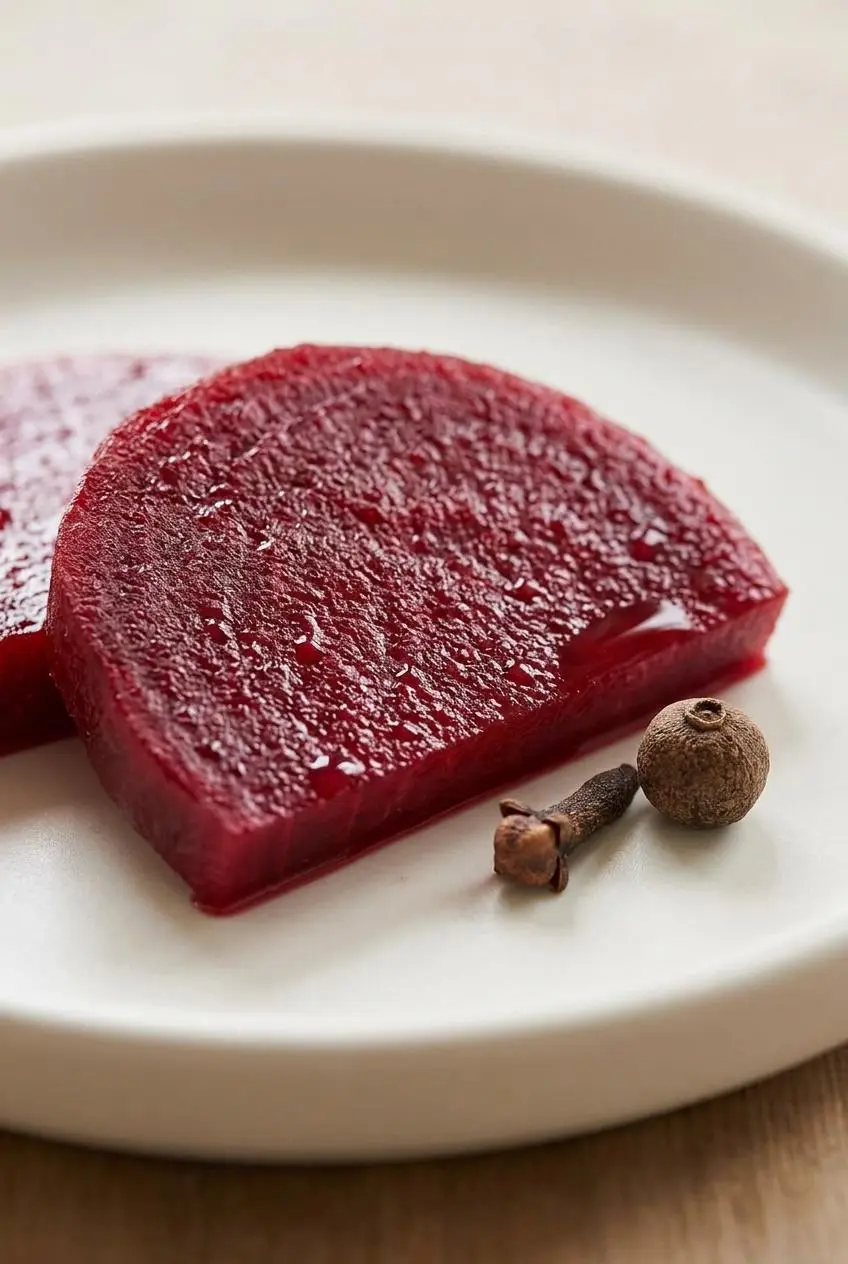
Most texture problems begin before the jars get filled. Check tenderness carefully and resist trying to fix sharp flavor by diluting the brine.
- Pale or watery beets: Peeling before boiling exposes the flesh to the cooking water; cook intact roots and peel afterward.
- Mushy slices: Overcooking leaves the beets unable to hold their shape; test the centers early and remove finished roots individually.
- Uneven pieces: Thick wedges and thin rounds feel different when eaten together; keep the slices close to the specified thickness.
- Harsh first taste: Freshly filled jars haven’t developed balanced flavor; allow the stated resting period rather than adding water.
- Gritty brine: Ground spices leave particles throughout the liquid; use the whole spices listed for cleaner texture.
- Stained hands or counters: Beet juice spreads during peeling and slicing; wear gloves if desired and protect porous surfaces with parchment or a washable board.
- Questionable pantry jars: A sealed lid doesn’t confirm correct processing; verify the full canning method rather than relying on appearance or tasting.
If the finished beets taste stronger than you prefer, drain the portion you’re serving and pair it with creamy or mild foods. That softens the eating experience without changing the contents of the remaining jars.
Delicious Ways to Serve Pickled Beets
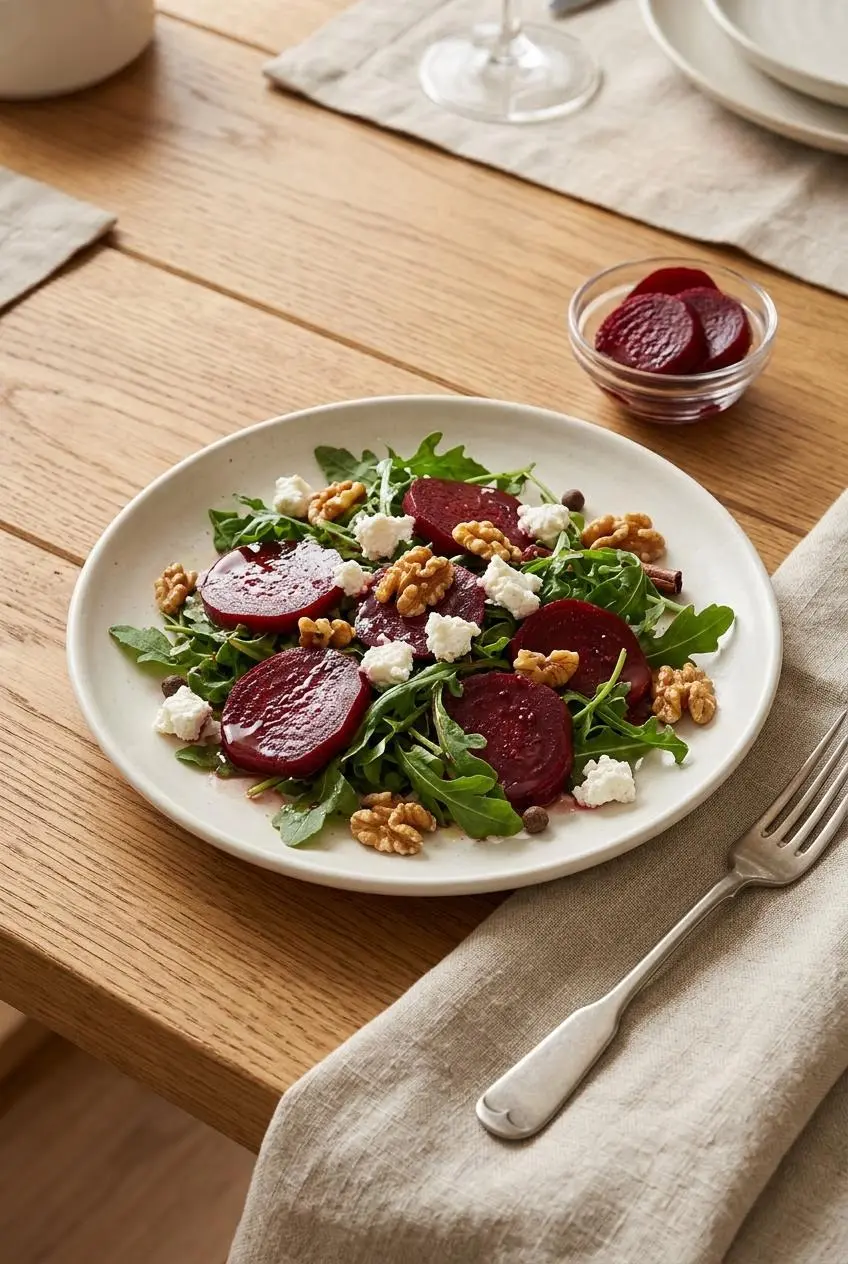
Drain the slices before adding them to meals so their brine doesn’t soak bread or overwhelm a dressing. Their sweet acidity works especially well beside creamy, salty, and nutty flavors.
- Green salads: Combine beets with arugula, crumbled goat cheese, and toasted walnuts, adding the slices near serving time.
- Turkey burgers and deli sandwiches: Tuck drained rounds between the filling and greens for tang without a soggy bun.
- Cheese and charcuterie boards: Serve a separate dish of beets beside cheeses, sliced meats, and crackers to contain the magenta juice.
- Grain bowls: Add a few drained slices to a vibrant Buddha bowl for contrast with grains and creamy dressing.
For beet-colored hard-boiled eggs, use freshly prepared extra spiced brine for a separate refrigerator preparation rather than assuming used jar liquid is suitable for another preservation project. Keep the eggs chilled, and don’t can them using this beet method.
Conclusion
Tender beet slices, sweet vinegar, and whole spices create a pickle with plenty of character. Careful cooking preserves their shape, while resting brings the tang and warm aromatics together.
Choose refrigerator jars for flexibility, or verify a complete tested process before canning for pantry storage. Give the flavor time to develop, then keep a jar ready to brighten your next meal.
Frequently Asked Questions
Should You Cook Beets Before You Pickle Them?
Yes, cook the beets first for this recipe so the slices turn tender rather than hard and dense. Boil them with their skins on, then peel and slice once they are comfortable to handle.
What Is the Best Vinegar for Pickling Beets?
White vinegar gives this recipe its clean, direct tang; use the acidity specified in the ingredient list. Keep the stated brine proportions, and don’t assume a specialty vinegar is an equivalent choice for canning.
How Long Do Refrigerator Pickled Beets Last Compared to Canned Beets?
Refrigerator beets require continued chilled storage; properly processed, sealed canned beets can go in the pantry until opened. The appropriate storage limit depends on the verified preparation and handling, so don’t treat a general timeline as a guarantee for every batch. Refrigerate opened jars and follow the storage directions for the specific tested canning recipe you use.
What Are the Most Common Mistakes When Pickling Beets?
Peeling before boiling can wash out color, while overcooking makes slices soft and fragile. Tasting too early gives an incomplete impression of the sweet and spiced flavor. Diluting the vinegar or treating unprocessed jars as shelf-stable creates problems that a tight lid cannot resolve.
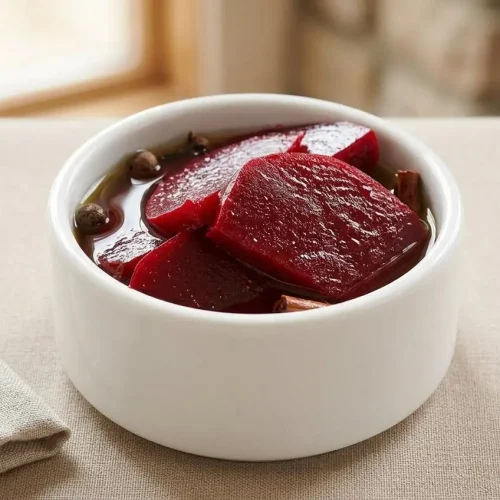
Pickled Beets Recipe

Equipment
- Large Pot
- Mason jars
- Water bath canner
Ingredients
- 6 pounds red beets washed and scrubbed clean
- 4 cups white vinegar (5% acidity)
- 1 3/4 cup sugar
- 1 stick cinnamon
- 1 teaspoon whole cloves
- 1 teaspoon whole allspice berries
- 1 1/2 teaspoon salt
Instructions
- Cover the unpeeled beets with water in a large pot, bring it to a boil, then lower the heat and simmer with the lid on for 25 to 35 minutes. A fork should enter the center easily, while the beet remains firm enough to slice without falling apart.
- Drain away the cooking water and set the beets aside until they are comfortable to handle. The roots should feel warm rather than painfully hot before you begin rubbing away their skins.
- Bring the vinegar, sugar, cinnamon, cloves, allspice, and salt to a boil in the emptied pot while the beets cool. Stir to dissolve the sugar and salt, leaving a liquid that smells sharply tangy with warm spice underneath.
- Rub off the beet skins and cut the peeled roots into slices 1/4 inch thick. Aim for even rounds so the pieces have a consistent texture in the finished jars.
- Lower the slices into the boiling brine, reduce the heat, and simmer for 5 minutes. The beets should become hot throughout without breaking into soft fragments.
- Transfer the hot slices and brine into clean jars, covering the beets completely and leaving 1/2 inch of headspace. The liquid should reach above the slices while leaving a clear gap below each jar rim.
- Let refrigerator jars cool and refrigerate them, or apply canning lids and water-bath process only after confirming that the formula, jar size, and elevation match tested canning directions. The processing schedule is 30 minutes at low elevation and 35 minutes from 1,000 to 3,000 feet, with canned jars resting undisturbed for 24 hours afterward.
- Allow the beets to develop flavor for at least 3 days before tasting, keeping refrigerator jars chilled throughout. The vinegar will still taste tangy, but the sweetness and whole spices should feel more integrated.