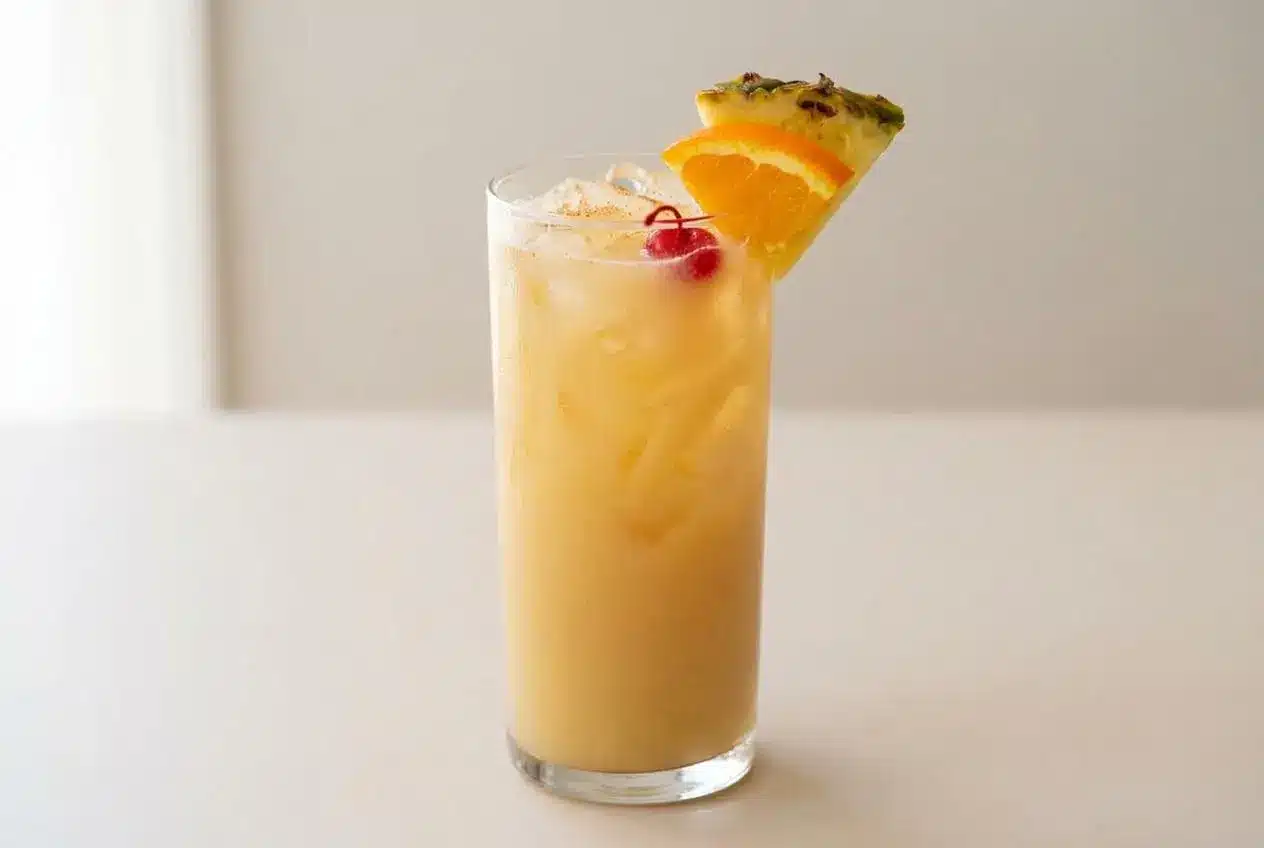
A Painkiller is a classic Caribbean cocktail made with dark rum, pineapple juice, orange juice, and cream of coconut, finished with nutmeg. The classic build follows a 4:1:1 ratio of pineapple juice, orange juice, and cream of coconut.
The Painkiller Cocktail tastes like a beach bar favorite in the best way: creamy, fruity, tropical, and a little spiced from the rum and nutmeg. It’s shaken, not blended, and that gives it a lighter frothy top instead of a slushy texture.
It’s easy to make, but two details matter more than people expect: the right coconut product and a really strong shake. That fragrant nutmeg finish is the part that makes it feel complete.
Chill your glass first if you can, because this drink is at its best icy cold.
What Is a Painkiller Cocktail?
A Painkiller is a Caribbean rum drink made with four core ingredients: dark rum, pineapple juice, orange juice, and cream of coconut. It’s served over ice and finished with a dusting of nutmeg, which gives the drink its unmistakable warm aroma.
If you’ve ever wondered what’s in a Painkiller drink, that’s the full foundation. The flavor is richer and creamier than many tropical cocktails, with bright fruit from the juices and a rounded coconut sweetness that softens the rum.
Ingredients for a Classic Painkiller
Each ingredient earns its place here, shaping the drink’s sweetness, body, aroma, and that smooth tropical balance.
- 2 ounces Pusser’s Dark Rum
- 4 ounces pineapple juice
- 1 ounce pulp-free orange juice
- 1 ounce cream of coconut
- Pinch of ground nutmeg
- Orange and/or pineapple wedge and a maraschino cherry (optional garnish)
Pusser’s Dark Rum gives the drink its traditional backbone. It brings deeper molasses-like notes and a fuller, spiced-rum feel that keeps the juices from tasting too candy-sweet.
Pineapple juice is the main fruity base, and it also helps create the drink’s frothy head when shaken hard. Orange juice brightens the mix and keeps the pineapple from tasting flat. Using pulp-free juice gives you the smoothest texture.
Cream of coconut is what makes a Painkiller taste like a Painkiller. It adds sweetness, thickness, and that creamy body that turns the drink from simple rum punch into something lush and dessert-like.
Nutmeg may look small on paper, but it changes the whole finish. The aroma hits first, and that warm spice is what makes the drink smell as tropical as it tastes.
Choosing Your Rum
Pusser’s is the traditional choice, and it’s the rum most closely tied to the classic version. Its navy rum style brings weight, spice, and a slightly savory depth that works especially well with sweet coconut.
If you don’t have it, a good dark rum or aged rum still makes a very good drink. A navy rum usually tastes bolder and more robust. A dark rum often leans richer and sweeter. An aged rum can bring a drier, woodier finish. Many home bartenders also like using a blend, especially if they want a little more complexity without making the drink overly heavy.
The practical takeaway is simple: use Pusser’s if you want the most traditional profile, but don’t skip the cocktail just because you have another solid bottle on hand.
The Importance of Cream of Coconut
This is the ingredient that causes the most confusion. Cream of coconut is not the same thing as coconut cream, and it is definitely not the same as coconut milk.
Cream of coconut, such as Coco Lopez, is sweet and syrupy. It’s made to bring both coconut flavor and sweetness, and it has the thick texture that gives the drink its creamy body. Coconut cream is usually much less sweet and often thicker in a different way. Coconut milk is thinner and unsweetened, so it won’t give the drink the same texture or flavor balance.
If you swap in coconut cream or coconut milk, the cocktail can turn out thinner, less integrated, and noticeably less true to style. If you end up with extra cream of coconut, it’s a great excuse to bake a delicious coconut cake.
I always stir the can of cream of coconut well before measuring, because it often separates into thick syrup at the bottom and a looser layer on top.
How to Make a Painkiller Cocktail
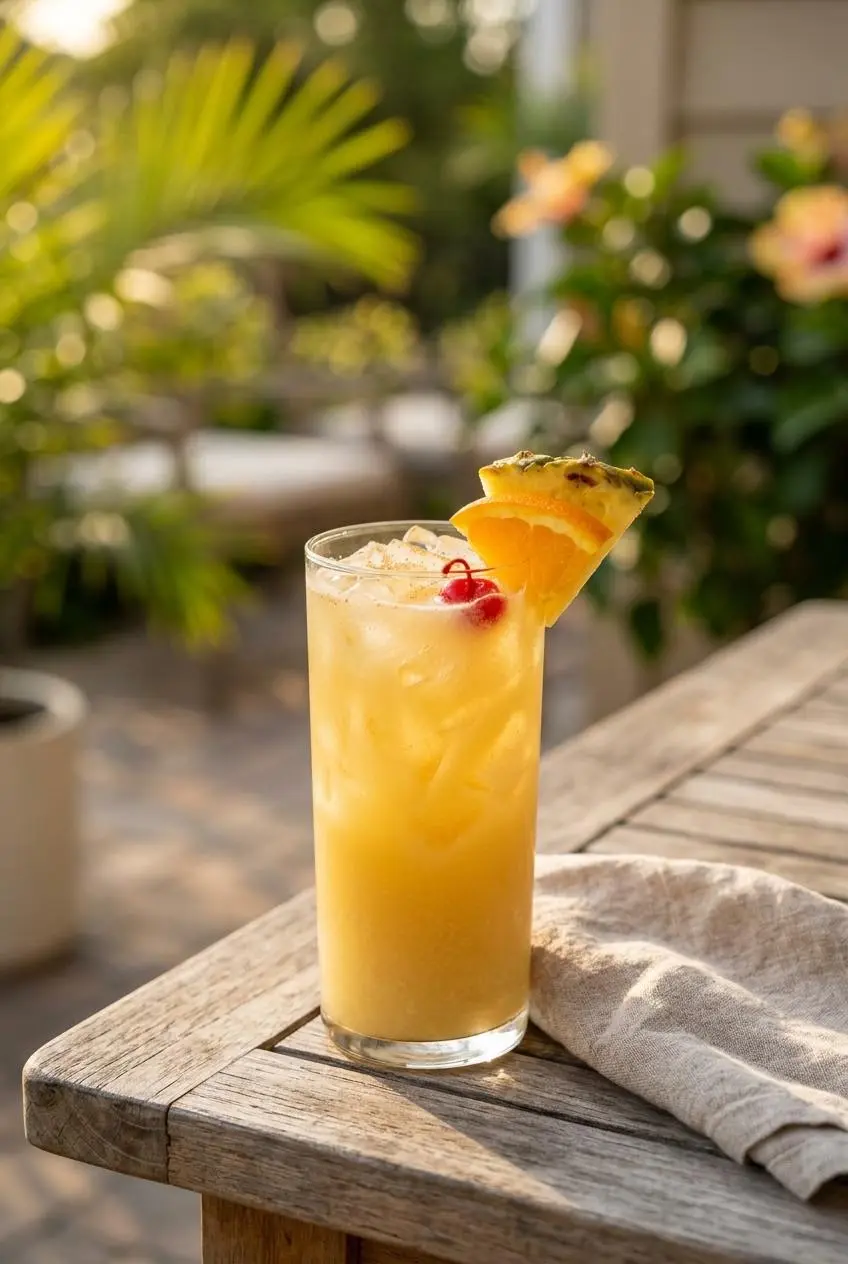
This drink comes together in minutes, but the texture depends on how you shake it. A vigorous shake fully blends the cream of coconut and builds the signature frothy cap.
- Add the rum, pineapple juice, orange juice, and cream of coconut to a cocktail shaker filled with ice, then seal and shake very vigorously for at least 15 seconds before straining into an ice-filled glass.
The mixture should turn paler and slightly foamy in the shaker, with no heavy streaks of coconut left behind. - Finish the drink with a pinch of nutmeg over the top.
If you grate it fresh, you’ll get a fragrant cloud of warm spice right as it hits the cold foam. - Add an orange and/or pineapple wedge and a maraschino cherry, if desired.
The garnish should feel festive, but the real finishing touch is that cold, creamy, lightly frothy surface.
If you don’t have a cocktail shaker, use a tightly sealed mason jar. It works well for this style of drink because the goal is strong agitation, not delicate stirring.
The Story Behind the Painkiller
The Painkiller started in the British Virgin Islands in the 1970s, where it became associated with the Soggy Dollar Bar. The story most often told credits Daphne Henderson with creating the drink there, giving travelers a rich tropical cocktail that quickly became part of the destination’s identity.
The name stuck because the drink was smooth, strong, and very easy to like. Later, Pusser’s Rum became closely linked to the cocktail and promoted its own version widely. You’ll often see the name treated as strongly connected to that brand, which is one reason Pusser’s remains the traditional rum choice even when home bartenders branch out.
What matters most in the glass is that the drink still feels true to its roots: Caribbean, creamy, rum-forward, and built for plenty of ice.
Expert Tips for the Perfect Drink
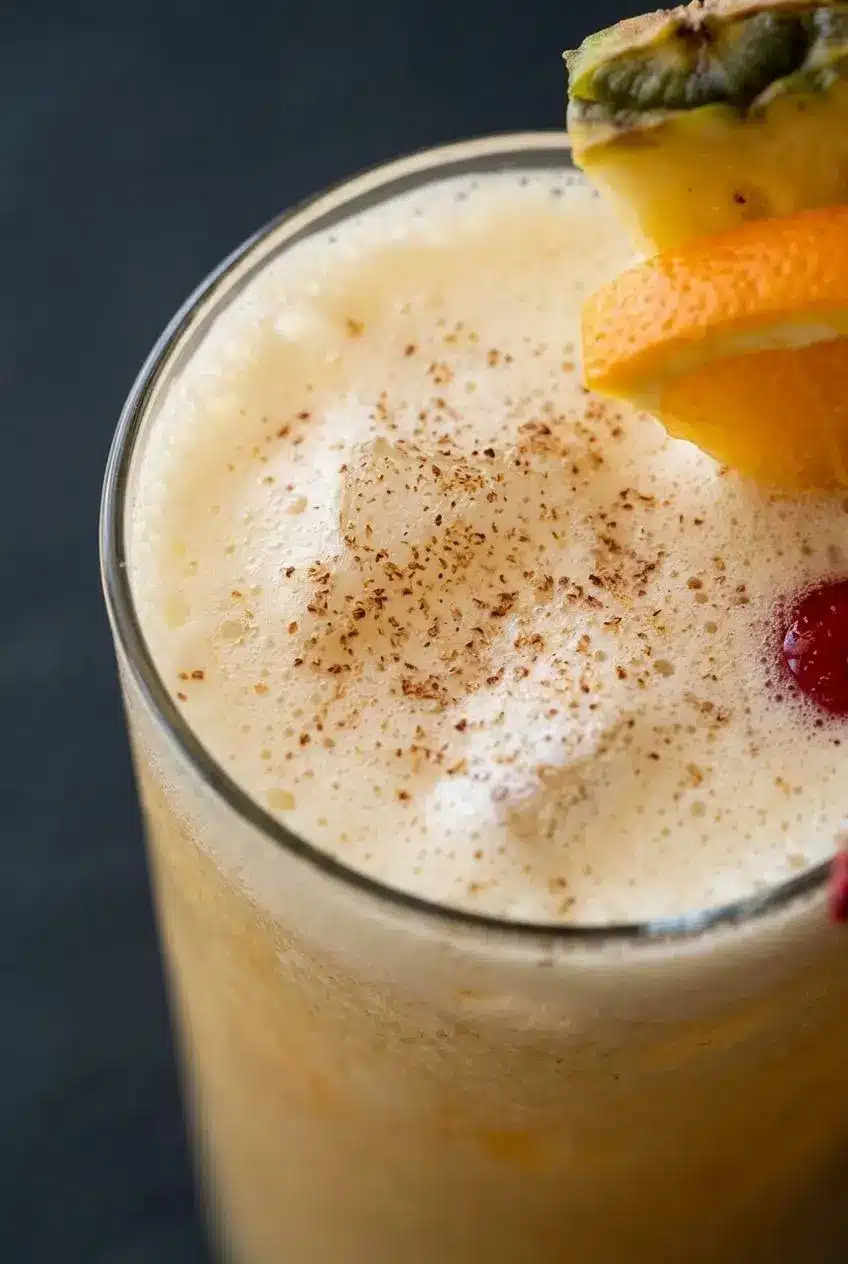
A Painkiller is forgiving, but a few small choices make the difference between decent and excellent.
- Use pulp-free orange juice for a smoother, silkier texture.
- Shake harder than you think you need to. This is what creates the froth and fully blends the cream of coconut.
- Use freshly grated nutmeg if possible. Pre-ground nutmeg works in a pinch, but the aroma is much flatter.
- Chill the serving glass so the drink stays colder longer.
- If the cream of coconut has separated, stir or briefly blend it before measuring.
- An optional tiny pinch of sea salt can soften the sweetness and make the fruit flavors pop a little more.
Troubleshooting Common Painkiller Problems
| Problem | Solution |
|---|---|
| Drink is too sweet | Use a drier rum, make sure you used cream of coconut and not an extra-sweet substitute, or add a small splash more orange juice to brighten the balance. |
| Drink separated or isn’t frothy | Shake longer and harder, and make sure the cream of coconut was thoroughly stirred before measuring. |
| Drink tastes weak | Use plenty of ice in the serving glass but strain promptly after shaking so the mix doesn’t get watered down too much. |
| Texture feels grainy or uneven | Check that your cream of coconut was fully smooth before adding it, and avoid orange juice with heavy pulp. |
Painkiller Variations to Try
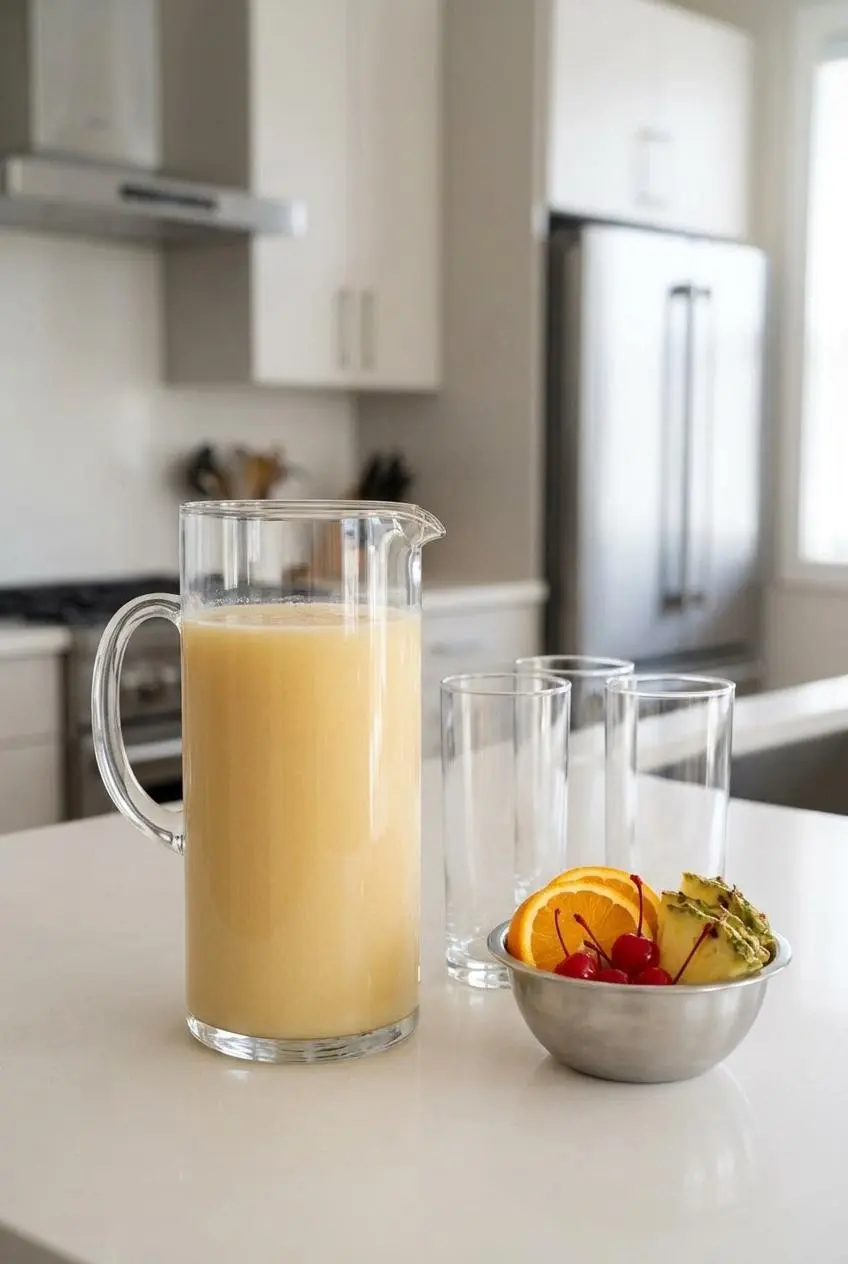
The classic version is the one to know first, but there are a few well-known ways to tweak it without losing its tropical identity.
The ‘Numbered’ Painkiller: Adjusting the Strength
The Painkiller number system refers to how much rum goes into the drink. A No. 2 uses 2 ounces of rum, which is the standard version here. A No. 3 uses 3 ounces, and a No. 4 uses 4 ounces.
Everything else stays essentially the same, so the number is really about strength and rum presence. If you like a fruitier, softer drink, stick with the No. 2. If you want the rum to push forward more boldly, move up from there.
How to Make a Pitcher of Painkillers
For a crowd, keep the same ratio and scale it up. For 8 servings, combine 16 ounces Pusser’s Dark Rum, 32 ounces pineapple juice, 8 ounces pulp-free orange juice, and 8 ounces cream of coconut in a large pitcher or drink dispenser.
Stir the juices and cream of coconut together very well first, then add the rum. Keep the pitcher chilled until serving, and pour over ice so the drink stays cold without getting diluted too early.
If you want to prep ahead for a party, you can mix the pineapple juice, orange juice, and cream of coconut base first and refrigerate it. A university extension storage chart notes that pre-mixed full-strength fruit juice can be kept refrigerated for 6 days in pre-mixed full-strength fruit juice storage guidance. Add the rum and shake or stir with ice just before serving for the freshest texture.
Non-Alcoholic ‘No-Painkiller’ Recipe
For a spirit-free version, simply leave out the rum. To keep the drink balanced, add a splash of sparkling water for lift or a little extra orange juice for brightness, then shake with ice and finish with nutmeg as usual.
This version still gives you the creamy pineapple-orange-coconut profile, just softer and lighter.
Painkiller vs. Piña Colada: What’s the Difference?
These two drinks share tropical ingredients, but they don’t taste or feel the same in the glass.
| Feature | Painkiller | Piña Colada |
|---|---|---|
| Key Ingredients | Dark rum, pineapple juice, orange juice, cream of coconut | Rum, pineapple, coconut, usually without orange juice |
| Method | Usually shaken and poured over ice | Often blended until thick and slushy |
| Garnish | Fresh nutmeg, often with fruit garnish | Usually fruit garnish, no nutmeg |
The biggest flavor clue is the orange juice. That extra citrus note gives the Painkiller a brighter, rounder fruit profile, while the nutmeg adds a spiced finish a Piña Colada doesn’t usually have.
Conclusion
This is one of those cocktails that feels a little indulgent without being complicated. You get creamy coconut, bright fruit, dark rum depth, and a cold frothy finish in just a few minutes.
If you make it once with well-stirred cream of coconut and freshly grated nutmeg, you’ll taste why those small details matter. Keep it cold, shake it hard, and enjoy every sip.
Frequently Asked Questions
What is the difference between a Painkiller and a Piña Colada?
A Painkiller includes orange juice and a nutmeg garnish, and it’s usually shaken over ice. A Piña Colada does not include orange juice and is typically blended into a slushy drink.
Do I have to use Pusser’s Rum?
No. Pusser’s is the traditional choice, but any good dark or aged rum can make a delicious version. A blend of rums can work very well too.
Can I use coconut milk instead of cream of coconut?
No, it’s not recommended. Cream of coconut is sweet and thick, which is essential to the classic flavor and texture. Coconut milk is much thinner and not sweet enough for the same result.
How do you get the foam on top of a Painkiller?
Shake the drink very vigorously with ice for at least 15 to 20 seconds. The pineapple juice and cream of coconut help build that frothy top when they’re properly aerated.
Can you make a Painkiller ahead of time?
Yes, especially for a party. Mix the pineapple juice, orange juice, and cream of coconut base ahead and keep it chilled, then add rum and shake with ice right before serving so the drink stays cold and lively instead of watered down.
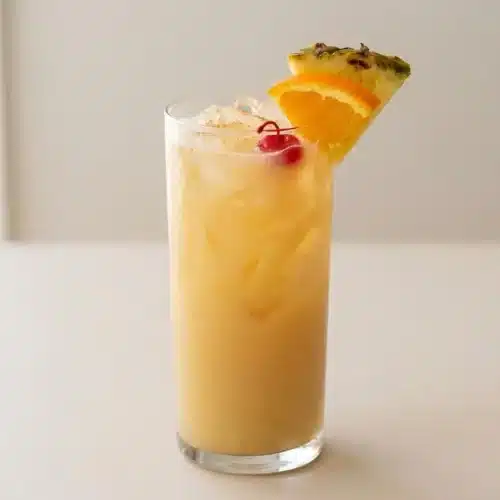
Painkiller Cocktail

Equipment
- Cocktail shaker
Ingredients
- 2 ounces Pusser’s Dark Rum
- 4 ounces pineapple juice
- 1 ounce pulp-free orange juice
- 1 ounce cream of coconut
- 1 Pinch of ground nutmeg
- Orange and/or pineapple wedge and a maraschino cherry (optional garnish)
Instructions
- Add the rum, pineapple juice, orange juice, and cream of coconut to a cocktail shaker filled with ice, then seal and shake very vigorously for at least 15 seconds before straining into an ice-filled glass. The mixture should turn paler and slightly foamy in the shaker, with no heavy streaks of coconut left behind.
- Finish the drink with a pinch of nutmeg over the top. If you grate it fresh, you’ll get a fragrant cloud of warm spice right as it hits the cold foam.
- Add an orange and/or pineapple wedge and a maraschino cherry, if desired. The garnish should feel festive, but the real finishing touch is that cold, creamy, lightly frothy surface.