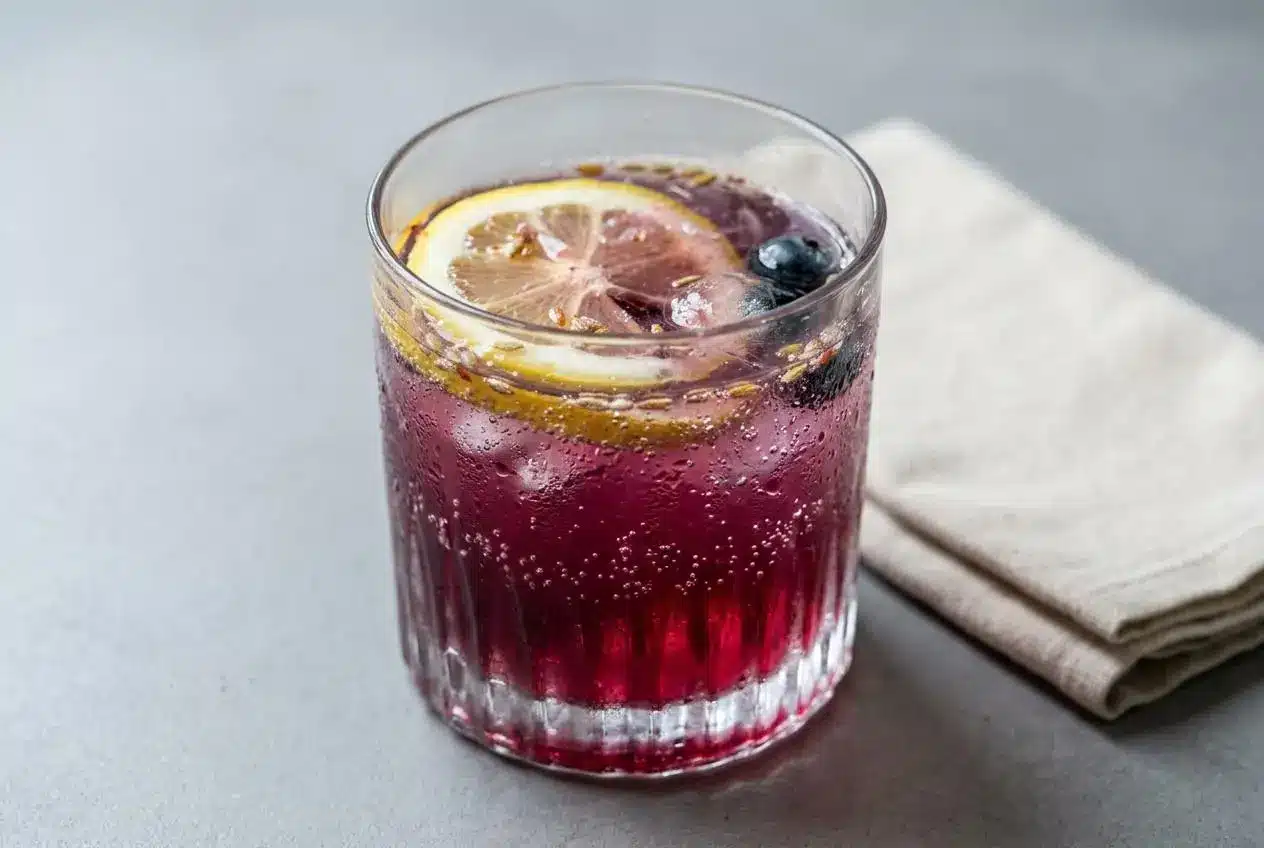
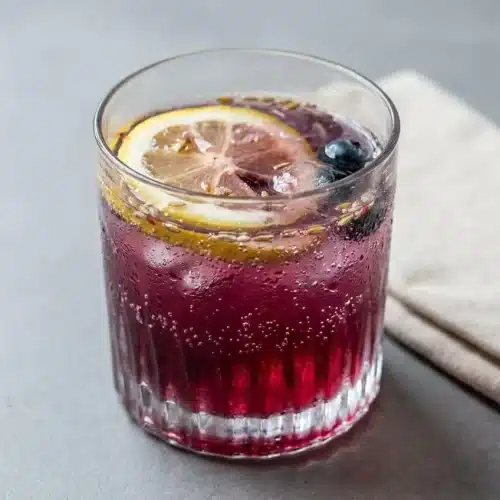
A Lavender Mocktail is an alcohol-free botanical spritzer made with culinary lavender honey syrup, muddled blueberries, fresh lemon juice, and sparkling water. Gentle steeping, light muddling, and a last-minute sparkling water pour keep the drink floral, tart, and refreshing.
This Lavender Mocktail brings chilled citrus, soft floral fragrance, and juicy berries together in an ice-filled glass. The honey-lavender infusion adds a delicate sweetness rather than the thick, sugary finish of a concentrated syrup.
It’s a lovely choice for brunch, a summer lunch, or an afternoon when you want something more interesting than plain sparkling water. The trick is letting the flowers support the fruit, not overwhelm it. Keep the lavender gentle.
Leave the sparkling water out of the shaker and keep it chilled until you’re ready to pour.
Essential Ingredients for a Fresh Lavender Mocktail
Lavender supplies fragrance, honey rounds out the floral edge, lemon adds brightness, and blueberries contribute fruit flavor and color. Water carries the infusion, ice chills the drink, and sparkling water gives it a lively finish. The garnish adds a final aromatic touch.
- 2 cups water
- 2 Tbsp. raw honey
- 1 Tbsp. dried culinary lavender
- 1 lemon, quartered
- 1 cup blueberries, divided
- Ice
- 2 cups sparkling water
- Lavender sprigs, for garnish
Honey softens the sharpness of the floral infusion without hiding the lemon. Blueberries release their juice and pigment when pressed, so choose ripe berries with a sweet, full flavor. Fresh lemon juice cuts through the lavender aroma and keeps each sip bright.
Plain sparkling water lets those flavors stand out. A strongly flavored variety can compete with the flowers, especially if it brings its own sweetness. Keep the water cold so you don’t lose the chill you created in the shaker.
I prefer pressing the lemon flesh rather than grinding the rind; it releases juice without making the citrus peel dominate the drink.
Culinary Lavender vs Decorative Lavender
Choose dried lavender labeled for culinary use. English lavender, often sold as Lavandula angustifolia, is a common choice for cooking, but a botanical name alone doesn’t tell you how the flowers were grown or handled.
Skip lavender sold for crafts, sachets, or decoration. Its fragrance may be too camphorous or perfume-like for a drink, and it may not have been handled for food use. Don’t substitute lavender essential oil for the dried buds.
Use the same care with garnish sprigs. Choose lavender intended for culinary use rather than flowers from a decorative arrangement. If the flowers’ identity or treatment history is uncertain, leave them out.
Citrus and Natural Sweetener Choices
Fresh lemon gives this drink a clear citrus aroma as well as acidity. Bottled juice can taste flatter or sharper, and it doesn’t provide the freshly muddled peel aroma that comes from the lemon quarter.
For optional changes, think about how each ingredient affects the balance:
- Pure maple syrup: Replace the honey for a vegan variation with a warmer, more noticeable sweetness.
- Light agave nectar: Use it instead of honey for a vegan version with a milder flavor that leaves more room for lavender.
- Lime: Try it in place of lemon for a sharper citrus character; taste before adding more.
- Grapefruit: Use it as an optional citrus variation when you want a softer acidity and a lightly bitter finish.
Sweeteners vary in intensity, so don’t assume every substitute will taste identical. Adjust an optional version by tasting the finished drink, not by adding more lavender.
How to Brew Smooth Lavender Honey Syrup
This honey syrup is a light infusion: 2 cups water to 2 tablespoons raw honey. It should pour like flavored water, not coat a spoon like a concentrated sugar syrup.
Heat the water, honey, and dried culinary lavender together in a small saucepan. Maintain a gentle simmer for 3 to 5 minutes, then move the pan completely off the heat for the 30-minute steep. Avoid a rolling boil or extending the cooking time to chase a stronger aroma.
During steeping, the liquid should develop a recognizable floral scent with honey underneath it. Don’t judge its strength by color. Lavender alone may produce a muted infusion rather than the purple shade you expect from the finished blueberry drink.
Pour the infusion through a fine mesh strainer to remove the buds. If plant fragments slip through, strain it again rather than leaving them in the drinking mixture. Allow it to cool completely before shaking; warm liquid melts the ice quickly and weakens the drink.
Plan on 5 minutes of prep, 3 to 5 minutes of simmering, and a 30-minute steep, with additional cooling as needed. Keep the finished infusion covered and refrigerated if you’re not assembling the drinks immediately.
If you have unused dried culinary buds, lemon lavender cookies offer another way to enjoy the same floral-citrus pairing.
Step-by-Step Mocktail Assembly and Shaking
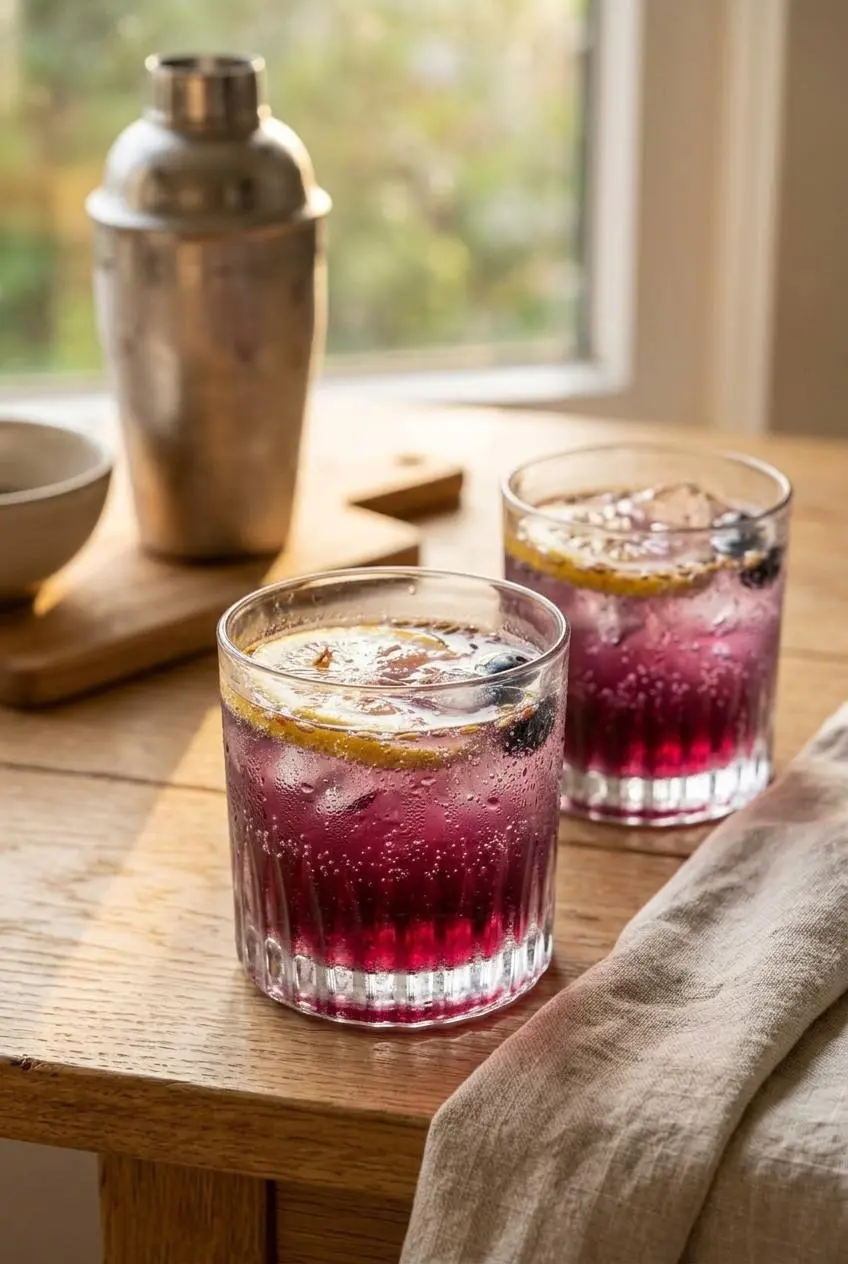
The recipe makes four mocktails. Assemble them individually so each glass gets its share of fruit, citrus, lavender infusion, and fresh bubbles.
Gather a small saucepan, fine mesh strainer, cocktail shaker, muddler, and glasses large enough to hold the drink and ice. The following method takes you from the infusion through the final pour.
- Warm the water, honey, and dried culinary lavender in a small saucepan, maintaining a gentle simmer for 3 to 5 minutes.
Look for small, steady bubbles rather than vigorous boiling. - Move the saucepan off the burner, leave the lavender to steep for 30 minutes, then strain the liquid and let it cool completely.
The strained infusion should have a floral aroma without loose buds floating in it. - Place one lemon quarter and 1/4 cup blueberries in the cocktail shaker, then press them gently with a muddler.
Stop when the berries have burst and released colored juice while the lemon rind remains largely intact. - Measure 4 ounces of cooled honey-lavender infusion into the shaker, add ice, and shake for 10 to 15 seconds.
The shaker should feel thoroughly cold, with condensation or frost developing on the outside. - Empty the shaker into a glass, including the ice and muddled fruit.
The blueberry juice should tint the liquid, with fruit pieces settling among the ice. - Slowly pour 4 ounces sparkling water into the glass and finish with a lavender sprig.
Fresh bubbles should rise through the berry-colored drink without excessive foaming. - Use the remaining lemon quarters, blueberries, infusion, ice, sparkling water, and garnish to assemble three more drinks, then serve immediately.
Each glass should taste cold and bright, with lively carbonation.
Use short downward presses when muddling instead of scraping the muddler around the shaker. You want to burst the blueberry skins and release lemon juice, not pulverize the fruit or grind the white citrus pith.
Keep carbonated water out of the sealed shaker. Add it only after pouring the chilled mixture into the glass; shaking it can create pressure and sacrifices the fizz you want to preserve.
Practical Tips and Troubleshooting
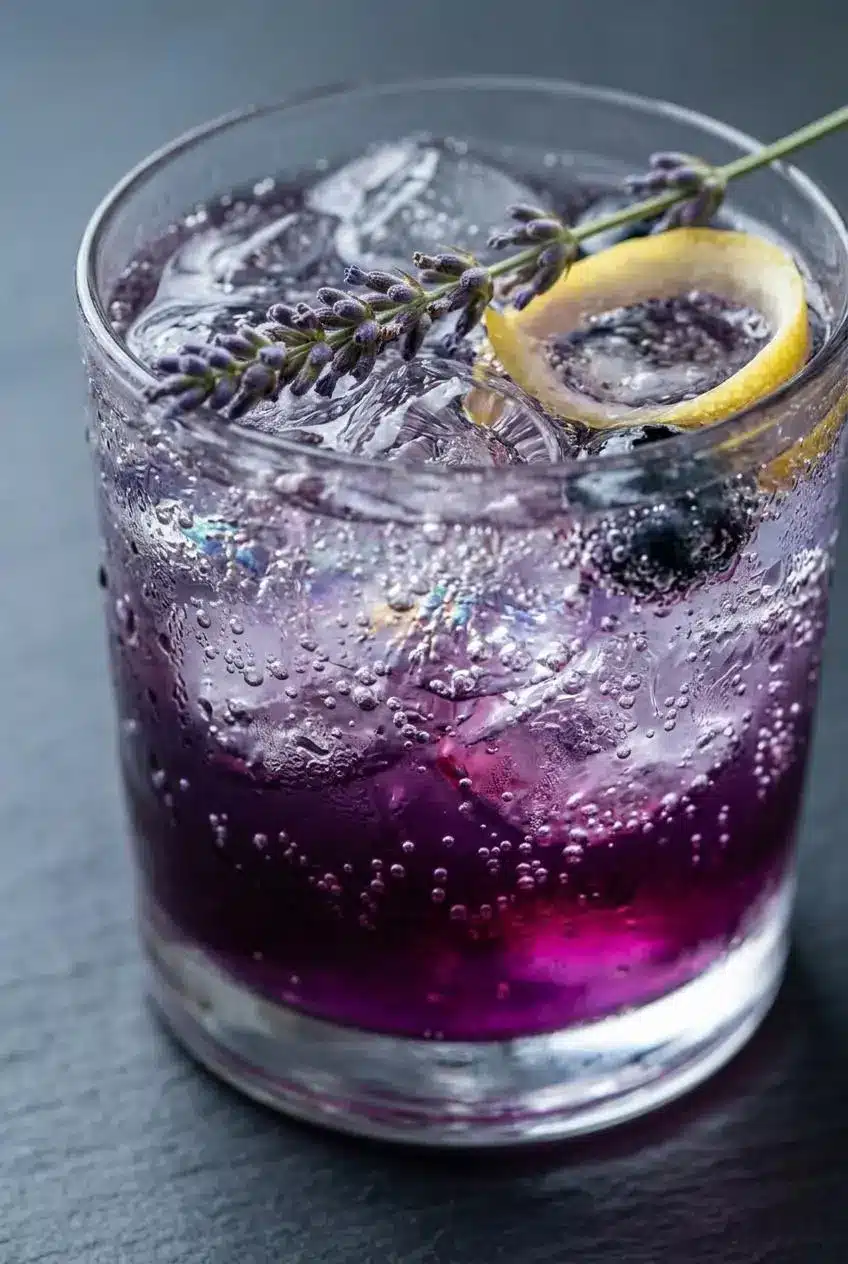
Taste the finished drink before adjusting it. Lavender, citrus, sweetness, and dilution affect one another, so change one thing at a time.
- Too floral or perfume-like: The lavender may be particularly strong or the extraction too intense. Try an extra squeeze of lemon or a splash of sparkling water; if the flavor still dominates, remake the infusion rather than piling on sweetener.
- Bitter citrus finish: Heavy muddling can make the rind and pith too prominent. Press the lemon flesh gently in the next glass and stop as soon as it releases juice.
- Watery drink: Warm infusion or prolonged shaking can melt too much ice. Cool the infusion fully and stick to the brief shake in the method.
- Flat fizz: Warm sparkling water, an open bottle, or early mixing may be the cause. Use cold, freshly opened sparkling water and add it at serving time.
- Weak berry color: The blueberries may be underripe or insufficiently muddled. Press ripe berries until their skins split and colored juice collects in the shaker.
- Too tart: Lemon size and juiciness vary. For an optional adjustment, add a little honey sweetener and taste again rather than automatically increasing the floral infusion.
Expect a berry-toned pink, purple, or reddish-violet drink, not a guaranteed vivid lavender shade. Blueberry variety, ripeness, and citrus acidity all affect the result.
For an optional botanical color variation, infuse culinary butterfly pea flowers with the syrup and strain them out before assembly. They can create blue tones that shift toward purple or pink when lemon enters the drink. This addition changes the appearance, so keep it separate from the listed recipe.
Serve in chilled glasses with room for the ice and bubbles. Light summer salads, goat cheese crostini, or brunch dishes make good companions without competing with the floral flavor.
Make-Ahead and Safe Storage Guidelines
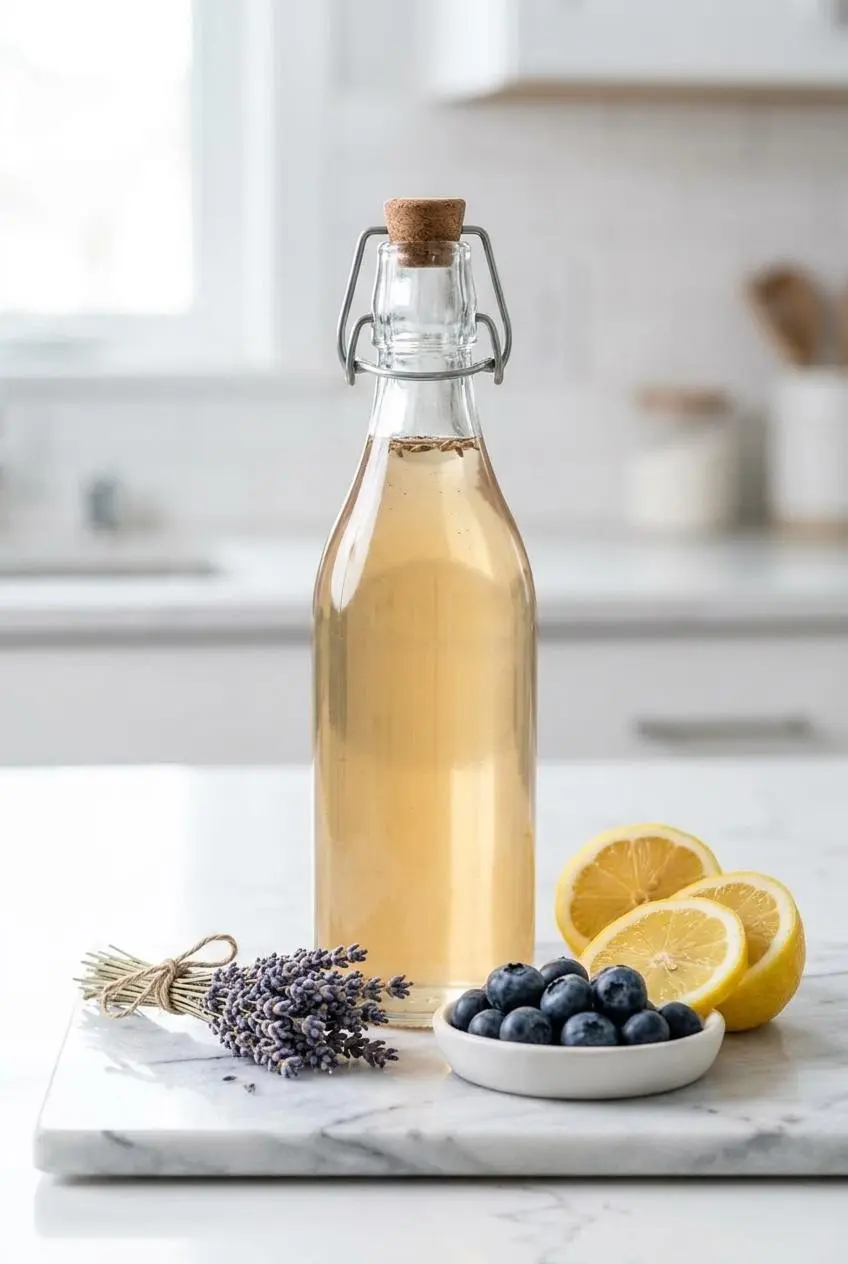
Keep the infusion, fresh fruit, and sparkling water separate until assembly. The method already requires cooled infusion, so completing that component first makes serving easier without sacrificing the bubbles.
- Infusion: Transfer the strained liquid to a clean, covered glass container and keep it refrigerated. Use clean utensils when portioning it.
- Fruit and citrus: Keep them covered and chilled separately, then muddle when you’re ready to assemble the drinks.
- Sparkling water: Keep it chilled and unopened until service, then pour it directly into the glasses.
- Ice: Add it during assembly rather than letting it melt in a pitcher of mixed drink.
This dilute honey infusion doesn’t have a verified refrigerator shelf life here. Don’t assume that storage advice for a concentrated sugar syrup applies to it or assign it a two-week keeping time.
For pitcher service, combine cooled infusion with freshly muddled lemon and blueberries when you’re ready to begin serving. Portion the still mixture into ice-filled glasses and add sparkling water individually. Stir the pitcher gently between pours so the fruit doesn’t all stay at the bottom.
If you need a larger batch, scale the listed ingredients together rather than increasing the lavender alone. Keep the finished mixture chilled during service and leave the sparkling component separate.
Flavor Variations and Seasonal Pairings
Try optional changes one at a time. Lavender already brings a distinctive aroma, so a restrained herb or fruit addition usually works better than several competing flavors.
Blueberry Thyme Lavender Spritzer
Add fresh culinary thyme alongside the blueberries and lemon during muddling. Press lightly to release its earthy, herbaceous fragrance without shredding the leaves. Thyme gives the floral drink a more savory edge while keeping blueberries at the center.
For a still drink with a similar berry-floral pairing, try blueberry lavender iced tea instead of a sparkling spritzer.
Sugar-Free Sparkling Lavender Lemonade
The honey-and-blueberry recipe above is not sugar-free. For an optional lemonade-style drink without added sugar, omit the honey and blueberries, then use a sweetener labeled sugar-free, such as an appropriate monk fruit or stevia product, with lemon and plain sparkling water or club soda.
Follow the sweetener’s package directions because concentrations vary. Taste before adding extra lemon, and expect a lighter flavor without the honey’s roundness or the berries’ color. Fresh lemon still contributes naturally occurring sugar, so “no added sugar” describes this homemade adaptation more accurately.
Additional Creative Pairings
- Blackberry basil lavender fizz: Swap blueberries for ripe blackberries and gently muddle fresh sweet basil for a deeper berry flavor and fresh herbal finish.
- Lavender vanilla cream mocktail: Add alcohol-free vanilla flavoring and a coconut cream float for a dessert-style variation; citrus may separate some oat milks, so coconut cream is the better choice for a distinct creamy layer.
- Raspberry lavender spritzer: Replace blueberries with raspberries for a brighter, tangier berry flavor, keeping their seeds in mind if you prefer a smoother drink.
Conclusion
This botanical spritzer balances soft lavender fragrance with juicy blueberries, fresh lemon, and crisp bubbles. Off-heat steeping and gentle muddling help keep the flowers and citrus in proportion.
Pour the sparkling water just before serving and finish with a culinary lavender sprig. Enjoy it cold, while the bubbles are lively and the lemon is bright.
Frequently Asked Questions
What Is the Secret to Avoiding a Soapy Lavender Flavor?
Choose lavender labeled for culinary use, not decorative or craft flowers. Keep the simmer gentle and move the pan off the heat for the steep specified in the method. Don’t increase the lavender to intensify the color; blueberries supply the drink’s berry hue.
Can I Use Dried Lavender From My Flower Garden?
Use garden lavender only if you can verify its culinary suitability and know its growing and treatment history. English lavender is a common culinary choice, but identification alone doesn’t establish suitability for food use. If you’re uncertain, use packaged culinary lavender instead.
How Long Will Homemade Lavender Honey Syrup Keep in the Fridge?
A verified storage duration isn’t available for this dilute honey infusion, so don’t assume a two-week shelf life. Keep it refrigerated in a clean, tightly covered container and handle it with clean utensils. Prepare what you need for serving rather than relying on extended storage.
How Do You Achieve a Bright Purple Mocktail Color Naturally?
Muddle ripe blueberries until their skins split and release colored juice. Expect the shade to vary with the berries and lemon acidity rather than guaranteeing bright purple. For an optional color variation, culinary butterfly pea flowers can add blue tones that shift toward purple or pink with lemon.
Lavender Mocktail

Equipment
- Small saucepan
- Fine mesh strainer
- Cocktail shaker
- Muddler
- Glasses
Ingredients
- 2 cups water
- 2 Tbsp. raw honey
- 1 Tbsp. dried culinary lavender
- 1 lemon quartered
- 1 cup blueberries divided
- Ice
- 2 cups sparkling water
- Lavender sprigs for garnish
Instructions
- Warm the water, honey, and dried culinary lavender in a small saucepan, maintaining a gentle simmer for 3 to 5 minutes. Look for small, steady bubbles rather than vigorous boiling.
- Move the saucepan off the burner, leave the lavender to steep for 30 minutes, then strain the liquid and let it cool completely. The strained infusion should have a floral aroma without loose buds floating in it.
- Place one lemon quarter and 1/4 cup blueberries in the cocktail shaker, then press them gently with a muddler. Stop when the berries have burst and released colored juice while the lemon rind remains largely intact.
- Measure 4 ounces of cooled honey-lavender infusion into the shaker, add ice, and shake for 10 to 15 seconds. The shaker should feel thoroughly cold, with condensation or frost developing on the outside.
- Empty the shaker into a glass, including the ice and muddled fruit. The blueberry juice should tint the liquid, with fruit pieces settling among the ice.
- Slowly pour 4 ounces sparkling water into the glass and finish with a lavender sprig. Fresh bubbles should rise through the berry-colored drink without excessive foaming.
- Use the remaining lemon quarters, blueberries, infusion, ice, sparkling water, and garnish to assemble three more drinks, then serve immediately. Each glass should taste cold and bright, with lively carbonation.