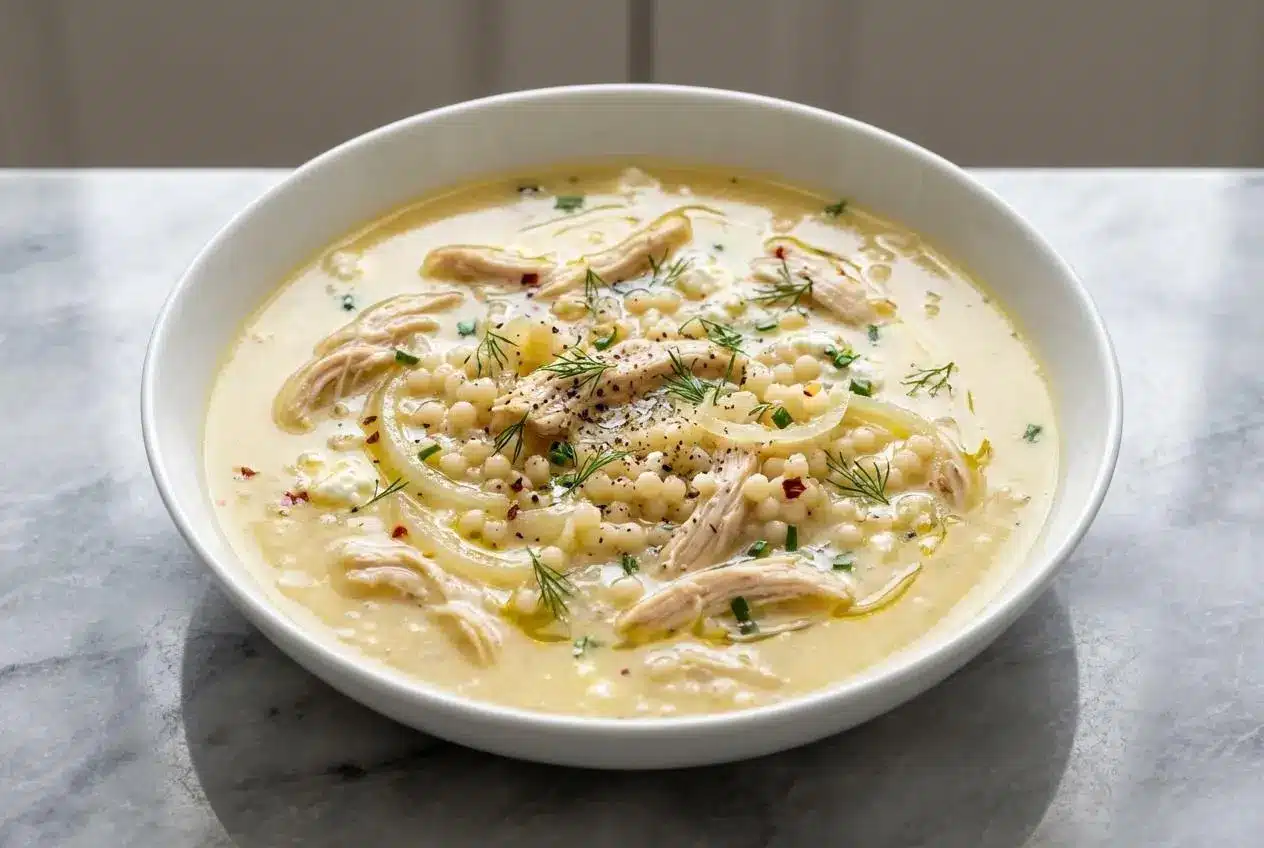
There are nights when only a bowl of something warm, bright, and deeply comforting will do, and Greek Lemon Chicken Soup is exactly what I reach for. Avgolemono has that rare magic, silky and rich from eggs, sunny with lemon, and soothing in a way that feels almost old-fashioned.
In my kitchen, this version stands out because it doesn’t just taste good, it tastes layered and special. I’ll walk you through the little secrets that make it restaurant-worthy at home, especially the brown butter, the bloomed zest, and the gentle tempering that gives you a creamy finish without a moment of panic.
Why You’ll Love This Greek Lemon Chicken Soup
Deep, savory flavor: I discovered that starting with brown butter gives this soup a rounder, toastier backbone than plain oil ever could. That nutty base makes every spoonful of this comfort food taste richer without feeling heavy.
Brighter lemon character: Blooming the lemon zest in the warm fat for 30 seconds wakes up the citrus oils right away. It gives the whole pot a more fragrant, full-bodied lemon aroma, not just a sharp hit of lemon juice at the end.
True Avgolemono texture: The real beauty of an authentic egg-lemon sauce is that it turns the broth into a creamy soup without any cream. Once you learn the tempering eggs method, the finish is silky, glossy, and wonderfully reliable.
Weeknight comfort: This is the kind of one-pot meal I make when I want something cozy but not dull. It feels nourishing, tastes bright and fresh, and fits just as well on a quiet Sunday as it does on a busy Tuesday.
Ingredients and Substitutions
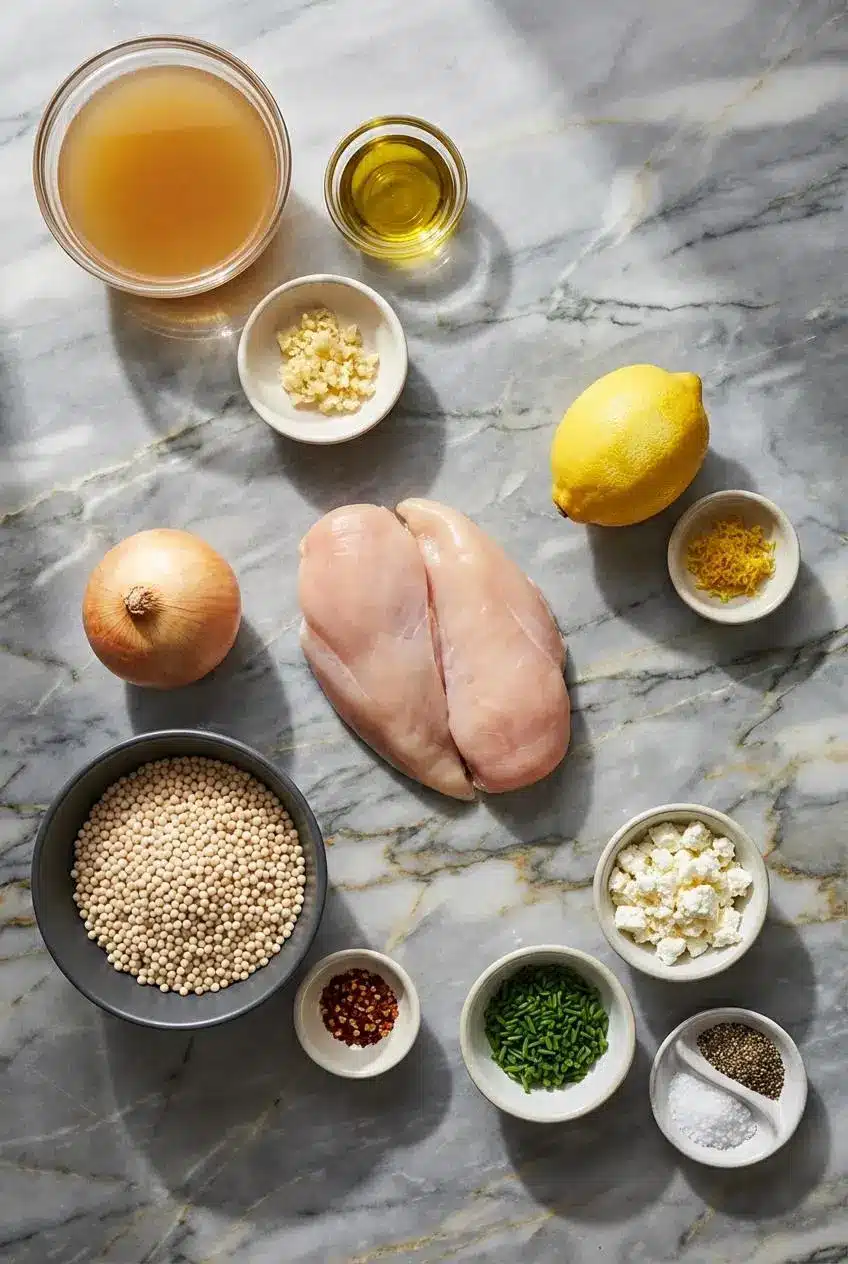
These are the original core ingredients for the recipe base, and each one plays a part in building a savory, lemony bowl of soup.
Ingredients
- 10 cups chicken broth
- 3 tablespoon olive oil
- 8 cloves garlic, minced
- 1 sweet onion
- 1 large lemon, zested
- 2 boneless skinless chicken breasts
- 1 cup Israeli couscous (pearl)
- 1/2 teaspoons crushed red pepper
- 2 ounces crumbled feta
- 1/3 cup chopped chive
- Salt and pepper
Ingredient Notes & Substitutions
Chicken: Boneless chicken breasts keep the soup quick and weeknight-friendly, but bone-in pieces, especially thighs or even a small whole chicken, will give your chicken broth more body and a richer mouthfeel. If you go that route, simmer the chicken longer until it is tender, then pull the meat from the bones and return it to the pot.
Rotisserie chicken: When dinner needs to move fast, rotisserie chicken is a practical shortcut. I add shredded meat near the end and rely on a good-quality broth, because the soup will only taste as good as the liquid you start with.
Starch: Israeli couscous gives the soup a lovely chew, but orzo is a more traditional choice for many American home cooks making Avgolemono-inspired soup. Short-grain rice, pearl couscous, long-grain rice, or even diced potatoes can all work, and each one changes the texture a bit.
Eggs: For a classic Avgolemono finish, room temperature eggs are your best friend because they temper more smoothly and are less likely to seize. If they are straight from the fridge, let them sit out while you prep the rest of the ingredients.
Lemon: Fresh lemon juice is the flavor that makes this style of soup sing. Bottled juice can taste flat, while fresh zest and juice bring the clean, bright edge that defines Greek Lemon Chicken Soup.
Broth: Homemade broth always gives the deepest flavor, especially if it includes bones and a little mirepoix. If you use store-bought, choose a low-sodium version so you can season the soup yourself without ending up with a salty pot.
Dairy-free and gluten-free options: To make a dairy-free soup, skip the butter-based variation and use olive oil instead. For a gluten-free soup, swap in rice, potatoes, or a certified gluten-free small pasta in place of couscous or orzo.
How to Make Greek Lemon Chicken Soup
Build the Aromatic Base
- Set a large 6 to 8 quart sauce pot or Dutch oven over medium-low heat and add the olive oil. While it warms, peel the onion, cut it into quarters, then slice it into thin strips so it softens quickly and melts into the broth.
- Once the oil is shimmering, add the onion and minced garlic. Cook them for 3 to 4 minutes, stirring often, until the onion begins to turn tender and translucent and the garlic smells mellow and fragrant, not browned.
Simmer the Chicken and Broth
- Pour in the chicken broth, then add the raw chicken breasts, the lemon zest, and the crushed red pepper. Turn the heat up to high, cover the pot, and bring everything to a boil.
- As soon as the broth reaches a lively boil, lower the heat to medium so it settles into a steady simmer. Let it cook for 5 minutes, giving the chicken time to poach gently and the lemony aroma to move through the broth.
Cook the Couscous
- Stir in the Israeli couscous along with 1 teaspoon salt and a few grinds of black pepper. Let the soup simmer for another 5 minutes, until the couscous starts to swell and soften while the broth takes on a slightly fuller texture.
- Turn off the heat once the couscous is just tender. This keeps it from going too soft while you finish the soup.
Shred and Finish
- Lift the chicken breasts out with tongs and transfer them to a cutting board. Using a fork and the tongs, pull the meat into bite-size shreds, then return it to the pot.
- Stir in the crumbled feta and chopped chive until the cheese begins to soften into the hot broth. Taste carefully, then add more salt and pepper if needed before serving warm.
The Science of a Silky, Rich Avgolemono
The magic of brown butter: In the upgraded version of this soup, browning butter adds a deeper flavor foundation because the milk solids toast and develop nutty, savory notes. It is a simple bit of kitchen science, but it gives the broth a complexity that plain fat cannot match.
The power of blooming zest: Lemon zest carries aromatic oils, and fat is one of the best ways to capture and spread those flavors. When I stir zest into warm butter off the heat, the whole pot gets a more rounded citrus perfume instead of just a sharp acidic finish.
Collagen builds body: Bone-in chicken naturally gives broth more richness because collagen melts into gelatin as it cooks. That is why old-school homemade chicken broth always feels silkier on the spoon than thin boxed stock.
Starch creates creaminess: Couscous, orzo, and short-grain rice all release starch into the liquid as they cook. That starch gently thickens the broth, which is one of the reasons a good Greek-style chicken soup feels naturally creamy even before any egg-lemon sauce is added.
A Deep Dive into Authentic Avgolemono Sauce
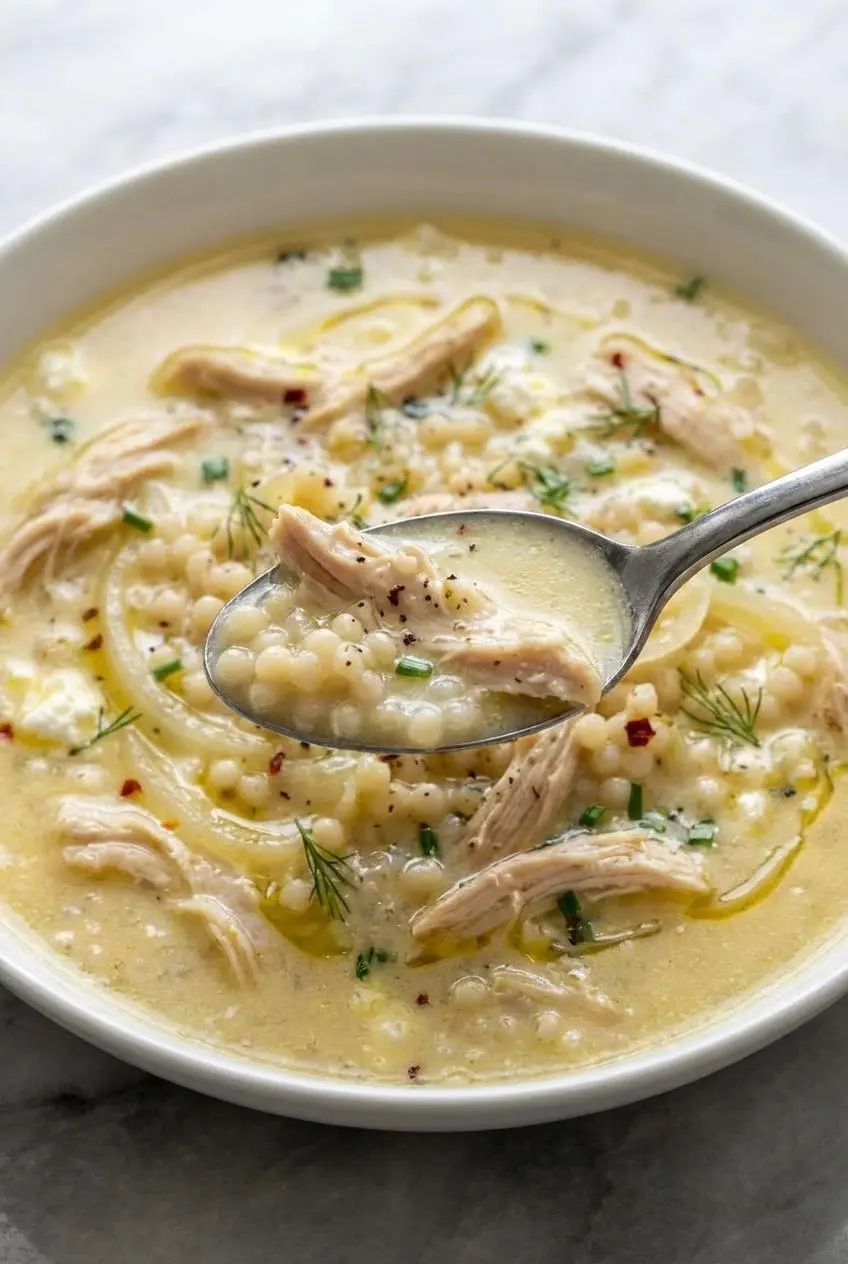
What Avgolemono really is: Avgolemono is a classic Greek egg-lemon sauce used to enrich soups and stews. It brings body, tang, and a velvety finish, all without relying on cream.
Why it tastes different from shortcut versions: Many modern lemon chicken soups use flour, cornstarch, or heavy cream to create thickness. Those versions can be tasty, but they do not deliver the same light, silky texture or bright, clean flavor that a true egg-lemon sauce creates.
Why tempering matters: Tempering eggs simply means raising their temperature slowly with hot broth while whisking, so the proteins thicken gently instead of scrambling. It sounds fussy the first time, but once you see how it works, it becomes one of those techniques that makes you feel like a very confident cook.
How to picture the process: I always tell friends to imagine building a bridge between cold eggs and hot soup. A step-by-step photo collage or quick GIF would be perfect here, because the visual of slowly whisking in hot broth makes the method feel much less intimidating.
Pro Tips & Troubleshooting
Pro Tips
- Use room temperature eggs if you are making an authentic Avgolemono version, because they temper more smoothly and are less likely to curdle.
- For a lighter, almost cloud-like texture, separate the eggs, whip the whites to soft peaks, then fold in the yolks and lemon juice before tempering.
- If you want the richest possible broth, start with a whole chicken or bone-in pieces and simmer with mirepoix for 45 to 60 minutes before finishing the soup.
- If the broth feels thinner than you like, blend a cup of the soup with some softened onion and stir it back into the pot for a naturally thicker texture.
- If bright lemon and chicken is one of your favorite flavor combinations, I think you would also appreciate the same fresh, lively balance in Chicken Piccata Pasta. It leans in a different direction, but it scratches that same craving for savory richness and citrusy lift.
Common Mistakes to Avoid
- Curdled eggs: This usually happens when the soup boils after the egg mixture is added or when hot broth is poured in too fast during tempering. If it happens, straining can help a little, but prevention is the real fix, keep the heat low and never let the finished soup boil.
- Soup too thin: A broth that feels watery usually needs either more reduction or more starch. Let it simmer a little longer before adding eggs, or blend a small portion and stir it back in.
- Soup too thick: This is especially common the next day because couscous, rice, or orzo keeps absorbing liquid as it sits. Loosen it with a splash of broth or water while reheating until the texture looks silky again.
- Flavor out of balance: If the soup tastes too sour, a tiny pinch of sugar or a bit more broth can soften the edge. If it tastes flat, another squeeze of lemon juice and a final pinch of salt often wake it right up.
- Overcooked starch: Couscous and orzo go from pleasantly tender to heavy very quickly. Turn off the heat when they are just cooked, because they will keep softening in the hot broth.
Serving, Storing, and Reheating
Serving Suggestions
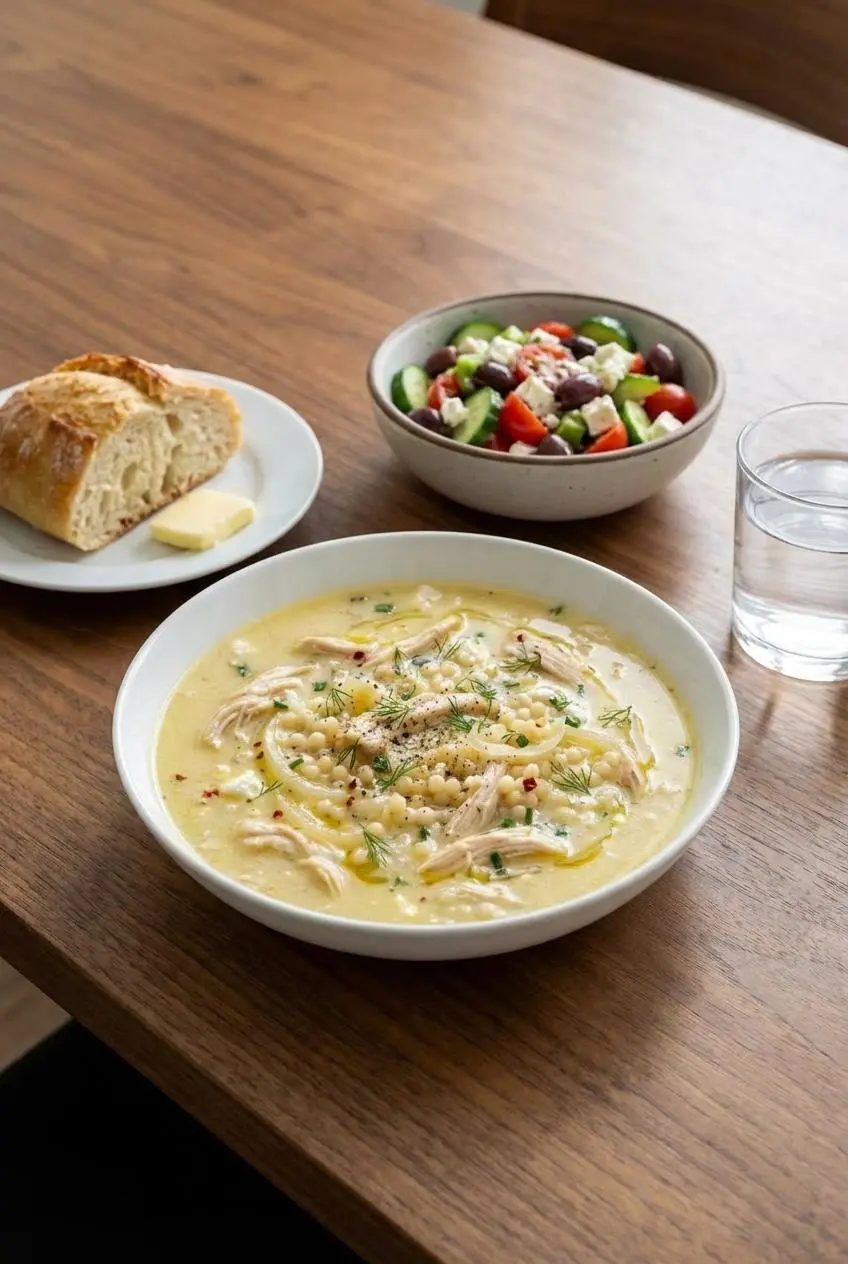
A generous shower of fresh dill, a few cracks of black pepper, and a little drizzle of extra virgin olive oil make each bowl feel finished. Warm bread or pita on the side is never a bad idea, especially when there is fragrant broth left at the bottom.
For a fuller meal, I like to pair this soup with something cool and crisp to balance the creamy, tangy broth. A bright Greek orzo salad fits beautifully on the table because it echoes the same Mediterranean flavors while adding crunch and freshness.
If these lemony, herby flavors are already your kind of dinner, a simple another Greek chicken recipe can carry the same mood into the rest of your week. It is the kind of pairing I keep in mind when planning meals that feel connected without becoming repetitive.
Storage, Freezing, and Reheating
Leftovers keep well in an airtight container in the refrigerator for up to 3 days. Just know that the starch will continue soaking up broth, so the soup will seem thicker by the next day.
Freezing works best if you stop before adding any egg-lemon finish, especially if you are making a true Avgolemono version. Freeze the broth, chicken, and aromatics first, then thaw, reheat, cook the starch, and finish with the tempered sauce when you are ready to serve.
When reheating, use a saucepan over low heat and stir often until the soup is just warmed through. Avoid a hard boil or a very hot microwave cycle, because gentle heat is the key to keeping the texture smooth.
Greek Lemon Chicken Soup

Equipment
- Large pot or Dutch oven
- Tongs
- Cutting board
Ingredients
- 10 cups chicken broth
- 3 tablespoon olive oil
- 8 cloves garlic, minced
- 1 sweet onion
- 1 large lemon, zested
- 2 boneless skinless chicken breasts
- 1 cup Israeli couscous (pearl)
- 1/2 teaspoons crushed red pepper
- 2 ounces crumbled feta
- 1/3 cup chopped chive
- Salt and pepper to taste
Instructions
Build the Aromatic Base
- Set a large 6 to 8 quart sauce pot or Dutch oven over medium-low heat and add the olive oil. While it warms, peel the onion, cut it into quarters, then slice it into thin strips.
- Add the sliced onion and minced garlic to the pot. Cook for 3 to 4 minutes, stirring often, until the onion becomes tender and translucent.
Simmer the Chicken and Broth
- Pour in the chicken broth, then add the raw chicken breasts, lemon zest, and crushed red pepper. Turn the heat up to high and bring the mixture to a boil.
- Once boiling, lower the heat to medium to maintain a steady simmer. Let it cook for 5 minutes to poach the chicken.
Cook the Couscous
- Stir in the Israeli couscous along with 1 teaspoon of salt and a few grinds of black pepper. Continue to simmer for another 5 minutes, or until the couscous is tender.
- Turn off the heat once the couscous is cooked to prevent it from becoming mushy.
Shred and Finish
- Using tongs, transfer the cooked chicken breasts to a cutting board. Use two forks to pull the meat into bite-size shreds, then return the shredded chicken to the pot.
- Stir in the crumbled feta and chopped chives. Continue stirring until the cheese begins to soften into the hot broth. Taste carefully and add more salt and pepper if needed before serving warm.
Notes
Nutrition
Conclusion
When you combine the old-world comfort of Avgolemono with the extra depth of brown butter and the brightness of bloomed lemon zest, Greek Lemon Chicken Soup becomes something truly memorable. It is cozy, silky, and full of character, the sort of meal that tastes like it took far more effort than it really did.
Settle in, trust the process, and make it your own with the starch or chicken variation that suits your kitchen best. Enjoy every comforting, lemony spoonful.
Frequently Asked Questions
What is Avgolemono and why are eggs used in this soup?
What is the secret to making creamy Avgolemono without scrambling the eggs?
Can I make this soup ahead of time? What is the best way to store and reheat it?
What are the best gluten-free substitutes for rice or orzo in this recipe?
Can I use rotisserie chicken to save time, and how does it change the recipe?
My soup is too thick or too thin, how can I fix it?