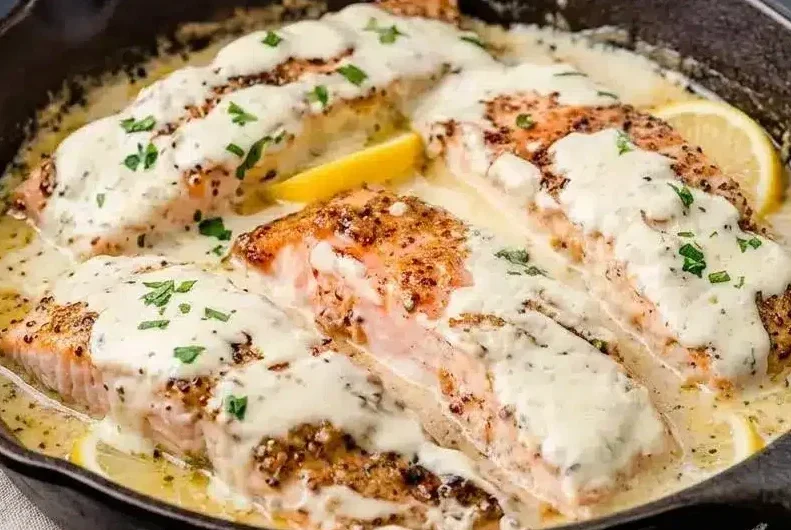
Tender flakes and creamy garlic-herb sauce make baked boursin salmon a satisfying weeknight dinner. Bake the Dijon-coated fillets at 425°F for 10 to 12 minutes, then spoon over a warm Boursin sauce finished with lemon juice off the heat.
The fish cooks in a baking dish while the cheese melts with butter and chicken stock in a separate saucepan. That gives you whole salmon fillets and plenty of pourable sauce, rather than a thick cheese topping.
The mustard-garlic rub brings tang and savory flavor beneath that rich sauce. With 5 minutes of preparation and 12 minutes of cooking, this recipe serves four without stovetop flipping. Save room for the pan juices.
Keep the lemon juice for the salmon rub separate from the lemon juice reserved for finishing the sauce.
Key Ingredients and Their Roles
Dijon, garlic, and lemon season the salmon, while Boursin, butter, and stock create a creamy coating. Olive oil carries the rub across the fillets; salt, pepper, and the optional garnishes round out the flavor and freshness.
Baked Salmon
- 4 6 oz. each skinless salmon fillets
- 2 tablespoons freshly squeezed lemon juice
- 1 tablespoon olive oil
- 1 tablespoon minced garlic
- 2 tablespoons old style Dijon mustard
- Salt and ground black pepper, to taste
- 1 tablespoon fresh chopped parsley, optional
- Lemon slices, for serving, optional
Boursin Cheese Sauce
- 2 tablespoons unsalted butter
- 2/3 cup chicken stock
- 1 x 5 oz. pack of Boursin Garlic & Herbs Cheese, at room temperature
- 1-2 tablespoons freshly squeezed lemon juice
Choose fillets of similar thickness. Matching their weight helps with portioning, but matching their thickness matters more for even cooking. Fully thawed frozen fillets can also work; dry them thoroughly before applying the rub.
Keep the mustard in the rub. Old style Dijon brings tang and a pleasant grainy texture, while minced garlic supplies savory depth. Neither goes into the saucepan. Lemon appears in both components, balancing the richness without making the dish taste primarily of cheese.
Use softened Boursin. Room-temperature cheese blends into warm stock more readily than a cold, firm block. The stock makes the cheese pourable, and butter adds richness. Look for a sauce that coats a spoon but still flows easily.
Consider low-sodium chicken stock. Boursin and mustard already contribute salt, so this optional purchasing choice gives you more control over seasoning. The butter is unsalted; keep the salmon’s added salt and pepper to taste.
I prefer to blot the fillets until the paper towel comes away nearly dry so the mustard rub clings rather than slides.
How to Make Baked Boursin Salmon
Have a baking dish, small bowl, and small pot ready before starting. Make the sauce while the salmon bakes so both components reach the table warm.
- Set the oven to 425°F (220°C) and coat the inside of a baking dish lightly with grease.
A thin film across the bottom helps keep the fish from sticking. - Blot the fillets with paper towels, combine the salmon’s lemon juice, olive oil, garlic, and Dijon in a small bowl, then arrange the fish in the dish, coat it with the rub, and season with salt and pepper.
The surface should look evenly coated, with mustard grains and garlic distributed across each piece. - Roast the fillets for 10 to 12 minutes, checking that they have cooked through before removing them.
The flesh should turn opaque and separate into flakes under gentle fork pressure. - Start the sauce during the bake by warming the butter in a small pot over medium heat until melted.
The butter should be fluid without taking on a dark brown color. - Add the chicken stock to the melted butter, stir in the softened Boursin, and let the mixture simmer gently for a few minutes as it thickens.
Small cheese pieces should gradually blend into a smooth sauce that lightly coats a spoon. - Move the pot off the burner before mixing in the sauce’s lemon juice.
The finished sauce should remain creamy and flowing rather than bubbling hard. - Spoon the warm sauce across the cooked fillets while they remain in the baking dish.
The cheese sauce will mingle with the juices collected around the salmon. - Scatter the chopped parsley over the fish if using.
The green flecks add freshness against the pale sauce. - Bring the salmon to the table with the optional lemon slices.
The fillets should sit in a pool of warm garlic-herb sauce.
Tips for a Smooth Sauce and Flaky Salmon
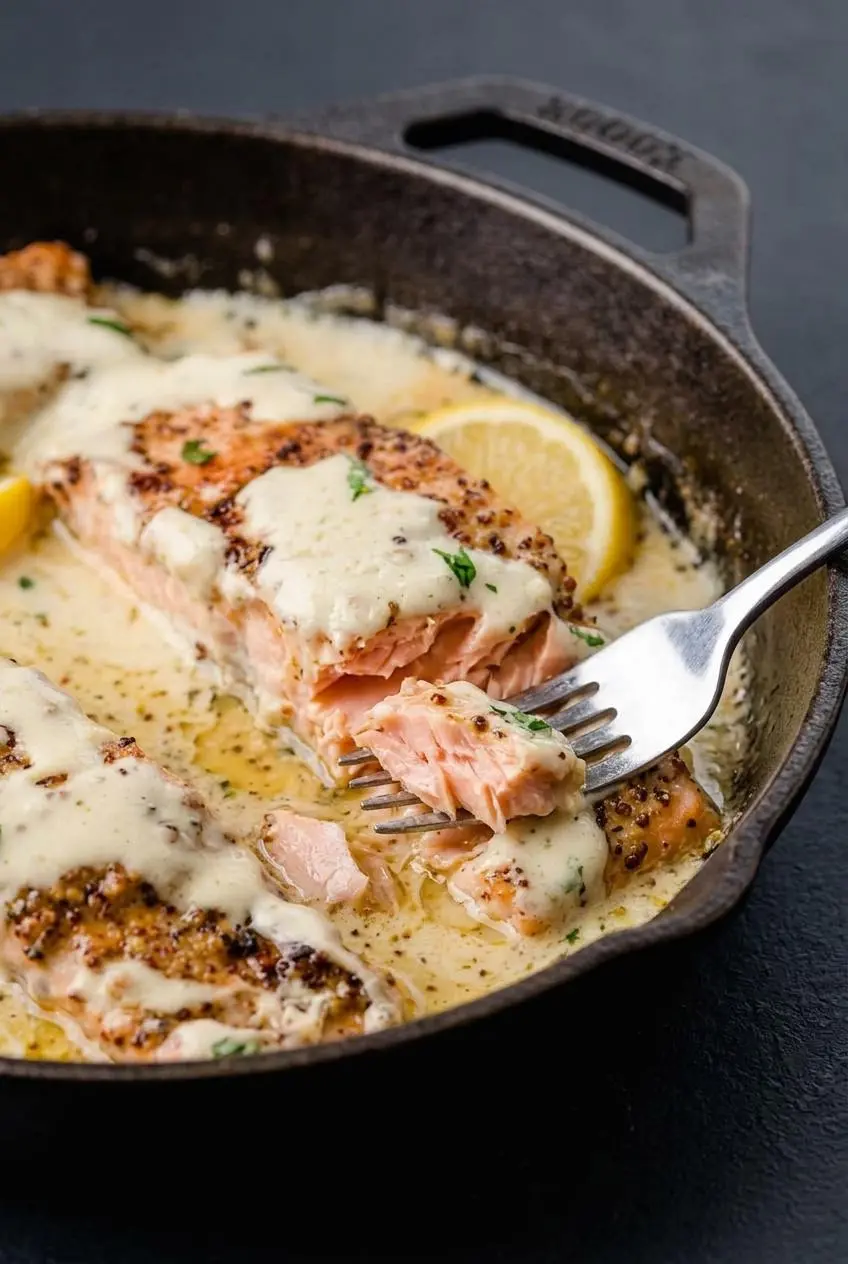
Control the sauce’s heat and check the fish according to thickness. Those two habits do more for the finished texture than extending the cooking time.
How to Keep Boursin Sauce from Separating
- Stubborn lumps: Cold cheese takes longer to blend, which can tempt you to turn up the heat. Start with softened cheese and stir patiently as the pieces melt.
- Grainy texture: Aggressive bubbling can destabilize the sauce. Keep the official medium heat for melting butter, then lower it if the cheese mixture begins boiling vigorously.
- Visible oil pooling: Remove the pot from the heat and gently whisk in a small splash of warm stock. This may help bring the sauce together, although severe curdling may not fully reverse.
- Sauce that is too thick: Add warm stock gradually, stirring between additions. Stop when the sauce flows from the spoon instead of dropping in heavy clumps.
- Separation after lemon: Heat and acidity together can encourage splitting. Add the finishing lemon juice only after moving the pot off the burner.
A successful sauce looks evenly creamy, with herbs suspended throughout and no ring of oil around grainy solids. Don’t keep reducing it in pursuit of a heavy glaze; it needs to mingle with the salmon juices.
Fillet Thickness Matters More Than Salmon Type
Use roughly 4 to 6 minutes per half-inch of thickness as a checking aid, not a substitute for the recipe’s 10-to-12-minute bake. A thin tail portion can finish before a thick center-cut piece, even when both weigh the same.
Wild-caught sockeye fillets are often thinner than farmed Atlantic portions, but inspect the fish rather than relying on the label. If the pieces vary, check the thinner ones first. Opaque flesh and gentle flaking are useful cues, but appearance alone should not establish doneness; use a food thermometer to check the thickest part.
Continued cooking after the fish is done pushes out moisture and can increase the white protein called albumin on the surface. Albumin is not a safety test. For an option without the cheese sauce, try classic baked salmon.
Stovetop Sauce vs. Baked-On Boursin Topping
- Stovetop pour-over sauce: Stock loosens the cheese into a silky coating, leaving extra sauce for the plate. This is the method used here.
- Baked-on topping: Crumbled cheese creates a thicker finish with less loose sauce. It saves saucepan work but doesn’t produce the same pourable texture.
- Pan-seared salmon: Direct skillet contact creates a different browned surface and requires more stovetop attention. Oven baking avoids flipping the fillets.
Boursin Salmon Variations With Vegetables and Pasta
Keep these adaptations optional and separate from the ingredient list above. Added vegetables and starches change moisture levels, so they need their own attention.
- Spinach and tomatoes: Add vegetables around the fillets for color and a juicier pan sauce.
- Pasta: Fold flaked salmon and warm sauce through cooked pasta for a creamy serving variation.
- Cheese crust: Choose a crumbled topping when you prefer a thicker cheese layer.
- Potatoes and asparagus: Give the potatoes advance cooking so the fish doesn’t have to wait for them.
Spinach and Cherry Tomato Baked Boursin Salmon
Arrange spinach and halved cherry tomatoes around the salmon. Halving the tomatoes reduces whole tomatoes bursting and lets their juices escape into the dish.
Dry the vegetables well and avoid packing the dish tightly. Spinach wilts and tomatoes release liquid, both of which can thin the sauce. Don’t assume a heavily filled dish will follow the same baking schedule as salmon alone.
Viral Boursin Salmon Pasta Bake
For a pasta-style meal, flake the cooked salmon and gently fold it into al dente tagliatelle or penne with the warm sauce. Add a little reserved pasta water only if the mixture needs loosening; excess water quickly dilutes the creamy coating.
This is a serving adaptation, not a casserole schedule for baking raw fish, pasta, vegetables, and a whole cheese block together. For a dedicated pasta version, use creamy Boursin pasta rather than guessing the pasta proportions or baking liquid.
Direct Baked-On Boursin Cheese Crust
For an optional topping approach, crumble softened Boursin over seasoned salmon before baking. Expect a thicker cheese layer and less sauce to spoon around the plate.
Monitor the fish rather than waiting for a particular crust color. The topping may soften without developing an evenly golden surface, and this variation doesn’t establish a separate baking schedule.
Sheet Pan Salmon With Potatoes and Asparagus
- Use par-boiled baby potatoes because raw potatoes need more cooking than these fillets.
- Add asparagus with space around it so moisture can escape instead of collecting beneath crowded vegetables.
- Check each component separately; potato size and asparagus thickness affect when they finish.
Optional Lemon Zest and Black Pepper Finish
Stir fresh lemon zest and a pinch of cracked black pepper into the off-heat sauce if desired. Zest adds citrus aroma without extra lemon juice.
You can also leave the sauced fillets in their warm pan juices for an optional 2-minute pause before serving. This gives the sauce time to mingle with the juices, but it won’t restore moisture to overcooked fish.
What to Serve With Boursin Salmon and Extra Sauce
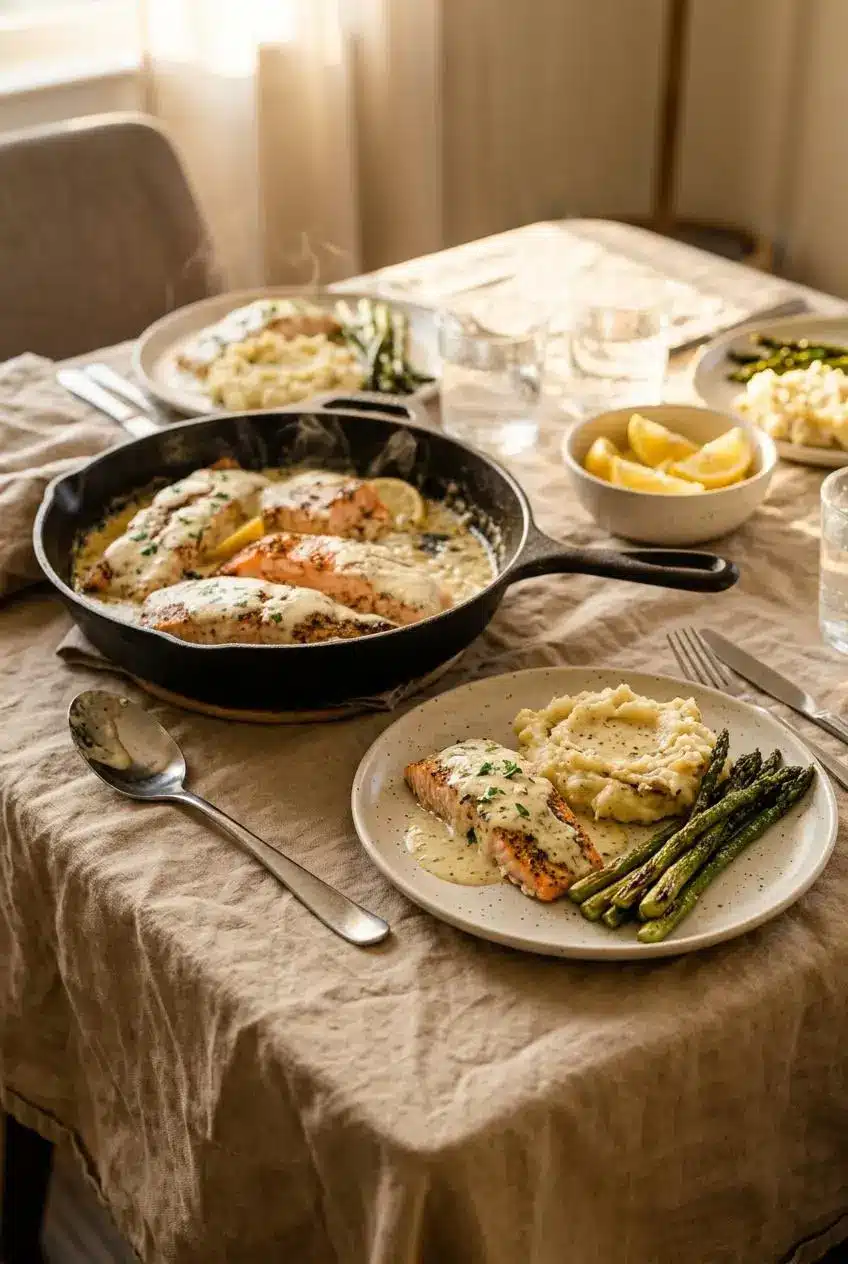
Choose sides that catch the sauce or contrast with its richness, rather than adding another creamy component.
- Sauce-catching starches: Mashed potatoes, steamed rice, quinoa, and crusty bread give the garlic-herb sauce somewhere to go. For a potato with a sturdy skin and soft center, serve fluffy baked potatoes.
- Crisp green vegetables: Roasted asparagus, green beans, or broccoli bring texture alongside the tender fish.
- Bright salads: A green salad with an acidic dressing refreshes the plate between bites of rich sauce.
Keeping Leftover Boursin Salmon Creamy
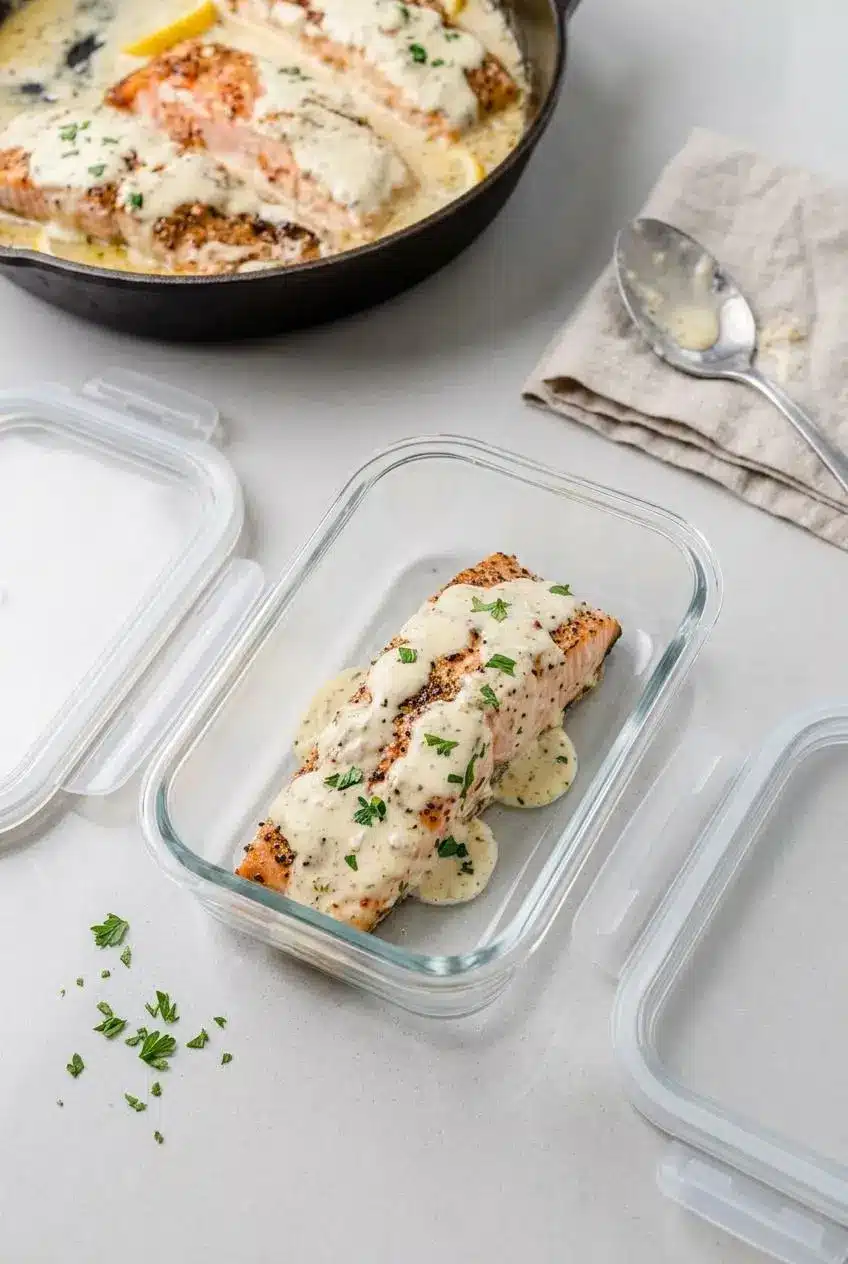
Refrigerate leftovers promptly in a tightly covered container, keeping sauce with the fish to protect its texture. Store any crisp salad or bread separately.
For reheating, use gentle stovetop heat with a cover and add a small splash of stock or water if the sauce has thickened. Warm the fish through without letting the sauce boil vigorously. Reheat only the portion you plan to serve to avoid repeatedly heating the entire dish.
The sauce may need gentle stirring around the fillets to look creamy again. Avoid high-power microwaving, which can overheat the cheese sauce before the center of the fish warms.
Conclusion
Baked salmon, a tangy Dijon rub, and creamy garlic-herb sauce make a generous dinner without frying or flipping. Similar-size fillets help everything cook evenly.
Keep the sauce at a gentle simmer and add its lemon juice off the heat. Then spoon it into the baking dish and let those pan juices join dinner.
Frequently Asked Questions
Why Did My Boursin Cheese Sauce Separate and How Can I Fix It?
Excessive heat or lemon added while the sauce is on the burner can encourage separation. Use room-temperature cheese, keep the simmer gentle, and add lemon off the heat. Try gentle off-heat whisking with a splash of warm stock; badly curdled sauce may not fully recover.
Can I Bake Boursin Cheese Directly on Top of the Salmon Fillets?
Yes, softened Boursin can be crumbled over seasoned fillets as an optional topping. It produces a thicker cheese layer, not the pourable stock-based sauce made here. Check the salmon’s doneness rather than waiting for the cheese to brown.
How Do I Know When Baked Boursin Salmon Is Fully Cooked?
Begin with the recipe’s 425°F bake for 10 to 12 minutes, adjusting your checks for fillet thickness. Look for opaque flesh that flakes gently, and check the thickest part with a food thermometer rather than relying on color alone.
Can I Use Frozen Salmon or Substitute Another Cheese for Boursin?
Fully thawed frozen fillets can work; pat them thoroughly dry before applying the rub. This recipe uses Boursin Garlic & Herbs, and an equivalent cheese substitution hasn’t been established here. Another soft garlic-herb cheese may melt differently and change the sauce’s thickness or seasoning.
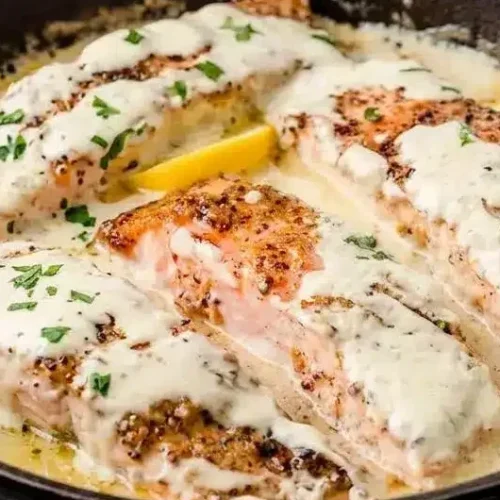
Baked Boursin Salmon

Equipment
- Baking Dish
- Small bowl
- Small Pot
Ingredients
Baked Salmon
- 4 6 oz. each skinless salmon fillets
- 2 tablespoons freshly squeezed lemon juice
- 1 tablespoon olive oil
- 1 tablespoon minced garlic
- 2 tablespoons old style Dijon mustard
- Salt and ground black pepper to taste
- 1 tablespoon fresh chopped parsley optional
- Lemon slices for serving, optional
Boursin Cheese Sauce
- 2 tablespoons unsalted butter
- 2/3 cup chicken stock
- 1 x 5 oz. pack of Boursin Garlic & Herbs Cheese at room temperature
- 1-2 tablespoons freshly squeezed lemon juice
Instructions
- Set the oven to 425°F (220°C) and coat the inside of a baking dish lightly with grease. A thin film across the bottom helps keep the fish from sticking.
- Blot the fillets with paper towels, combine the salmon’s lemon juice, olive oil, garlic, and Dijon in a small bowl, then arrange the fish in the dish, coat it with the rub, and season with salt and pepper. The surface should look evenly coated, with mustard grains and garlic distributed across each piece.
- Roast the fillets for 10 to 12 minutes, checking that they have cooked through before removing them. The flesh should turn opaque and separate into flakes under gentle fork pressure.
- Start the sauce during the bake by warming the butter in a small pot over medium heat until melted. The butter should be fluid without taking on a dark brown color.
- Add the chicken stock to the melted butter, stir in the softened Boursin, and let the mixture simmer gently for a few minutes as it thickens. Small cheese pieces should gradually blend into a smooth sauce that lightly coats a spoon.
- Move the pot off the burner before mixing in the sauce’s lemon juice. The finished sauce should remain creamy and flowing rather than bubbling hard.
- Spoon the warm sauce across the cooked fillets while they remain in the baking dish. The cheese sauce will mingle with the juices collected around the salmon.
- Scatter the chopped parsley over the fish if using. The green flecks add freshness against the pale sauce.
- Bring the salmon to the table with the optional lemon slices. The fillets should sit in a pool of warm garlic-herb sauce.