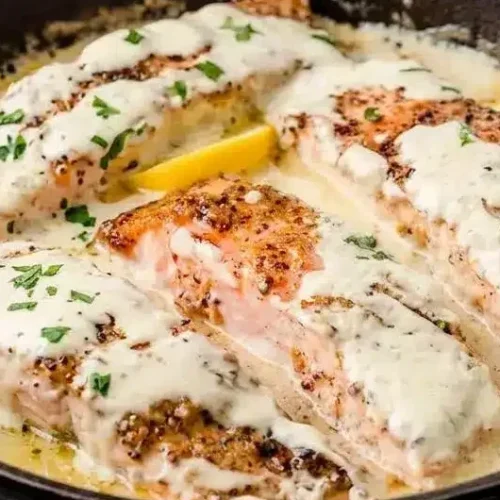
Baked Boursin Salmon

Skinless salmon fillets coated in a tangy Dijon, garlic, and lemon rub bake at 425°F in 10 to 12 minutes, then get topped with a warm, pourable Boursin cheese and chicken stock sauce.
Equipment
- Baking Dish
- Small bowl
- Small Pot
Ingredients
Baked Salmon
- 4 6 oz. each skinless salmon fillets
- 2 tablespoons freshly squeezed lemon juice
- 1 tablespoon olive oil
- 1 tablespoon minced garlic
- 2 tablespoons old style Dijon mustard
- Salt and ground black pepper to taste
- 1 tablespoon fresh chopped parsley optional
- Lemon slices for serving, optional
Boursin Cheese Sauce
- 2 tablespoons unsalted butter
- 2/3 cup chicken stock
- 1 x 5 oz. pack of Boursin Garlic & Herbs Cheese at room temperature
- 1-2 tablespoons freshly squeezed lemon juice
Instructions
- Set the oven to 425°F (220°C) and coat the inside of a baking dish lightly with grease. A thin film across the bottom helps keep the fish from sticking.
- Blot the fillets with paper towels, combine the salmon’s lemon juice, olive oil, garlic, and Dijon in a small bowl, then arrange the fish in the dish, coat it with the rub, and season with salt and pepper. The surface should look evenly coated, with mustard grains and garlic distributed across each piece.
- Roast the fillets for 10 to 12 minutes, checking that they have cooked through before removing them. The flesh should turn opaque and separate into flakes under gentle fork pressure.
- Start the sauce during the bake by warming the butter in a small pot over medium heat until melted. The butter should be fluid without taking on a dark brown color.
- Add the chicken stock to the melted butter, stir in the softened Boursin, and let the mixture simmer gently for a few minutes as it thickens. Small cheese pieces should gradually blend into a smooth sauce that lightly coats a spoon.
- Move the pot off the burner before mixing in the sauce’s lemon juice. The finished sauce should remain creamy and flowing rather than bubbling hard.
- Spoon the warm sauce across the cooked fillets while they remain in the baking dish. The cheese sauce will mingle with the juices collected around the salmon.
- Scatter the chopped parsley over the fish if using. The green flecks add freshness against the pale sauce.
- Bring the salmon to the table with the optional lemon slices. The fillets should sit in a pool of warm garlic-herb sauce.
Notes
Ingredient tip: Pick salmon fillets of matching thickness so they finish baking evenly, and blot them dry with paper towels so the Dijon rub adheres well.
Sauce tip: Let the Boursin soften at room temperature before simmering it gently with the stock, and always remove the pot from the burner before adding the finishing lemon juice to avoid separation.
Doneness: Check that the fish turns opaque and flakes easily under a fork, using a food thermometer in the thickest section rather than relying on surface appearance alone.
Storage and reheating: Store leftover salmon and sauce together in a tightly covered container in the refrigerator. Reheat single portions gently in a covered pan on the stovetop with a splash of stock or water, avoiding high-power microwaving.
Nutrition information is an estimate based on common ingredients and serving sizes. Values may vary depending on brands, portions, and substitutions.