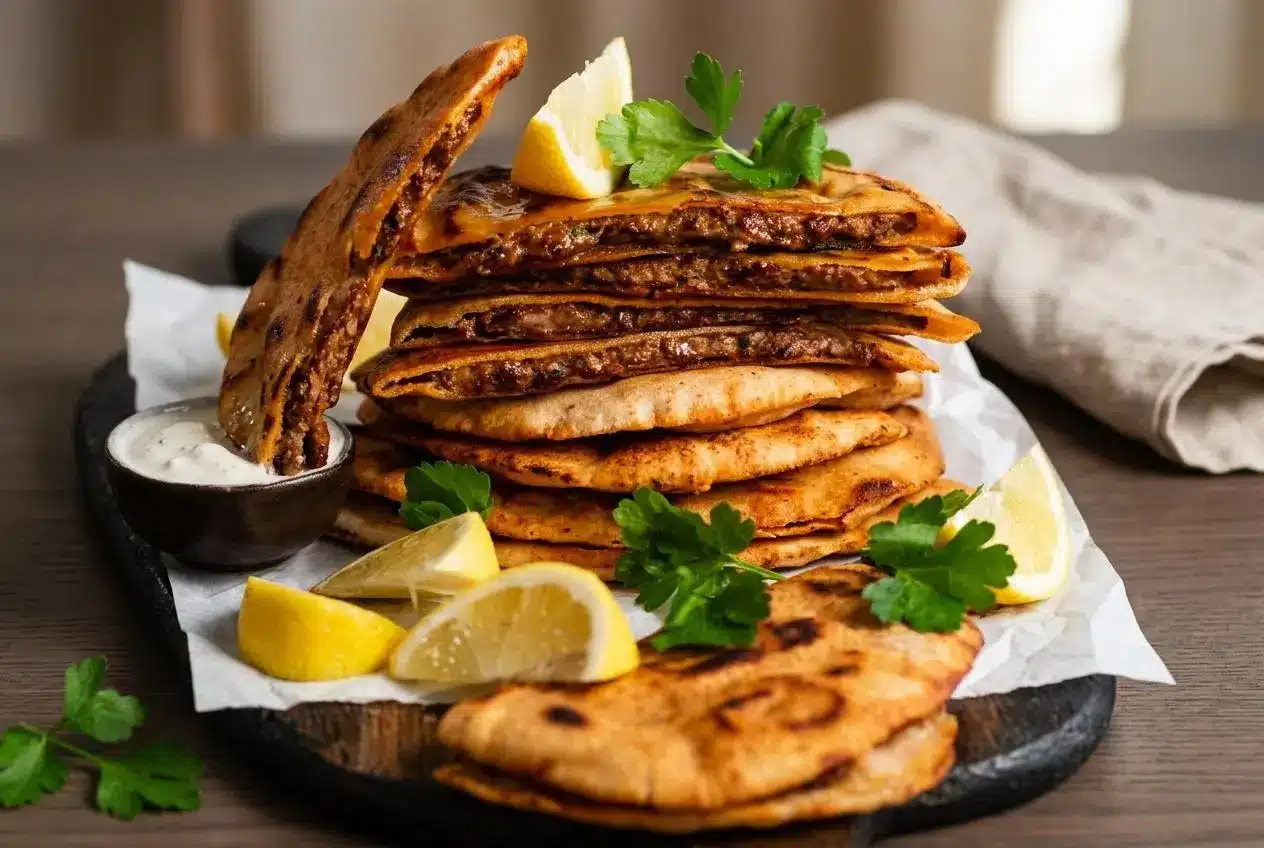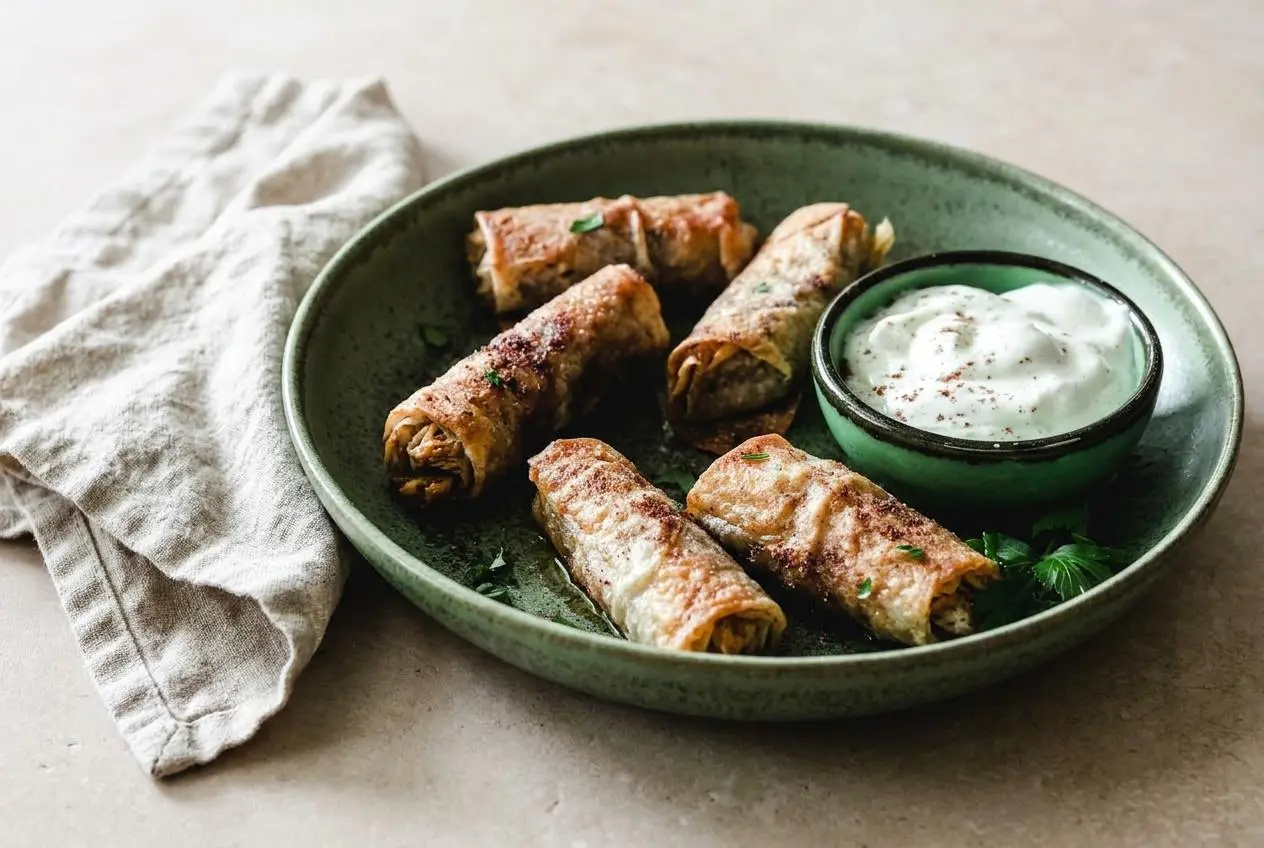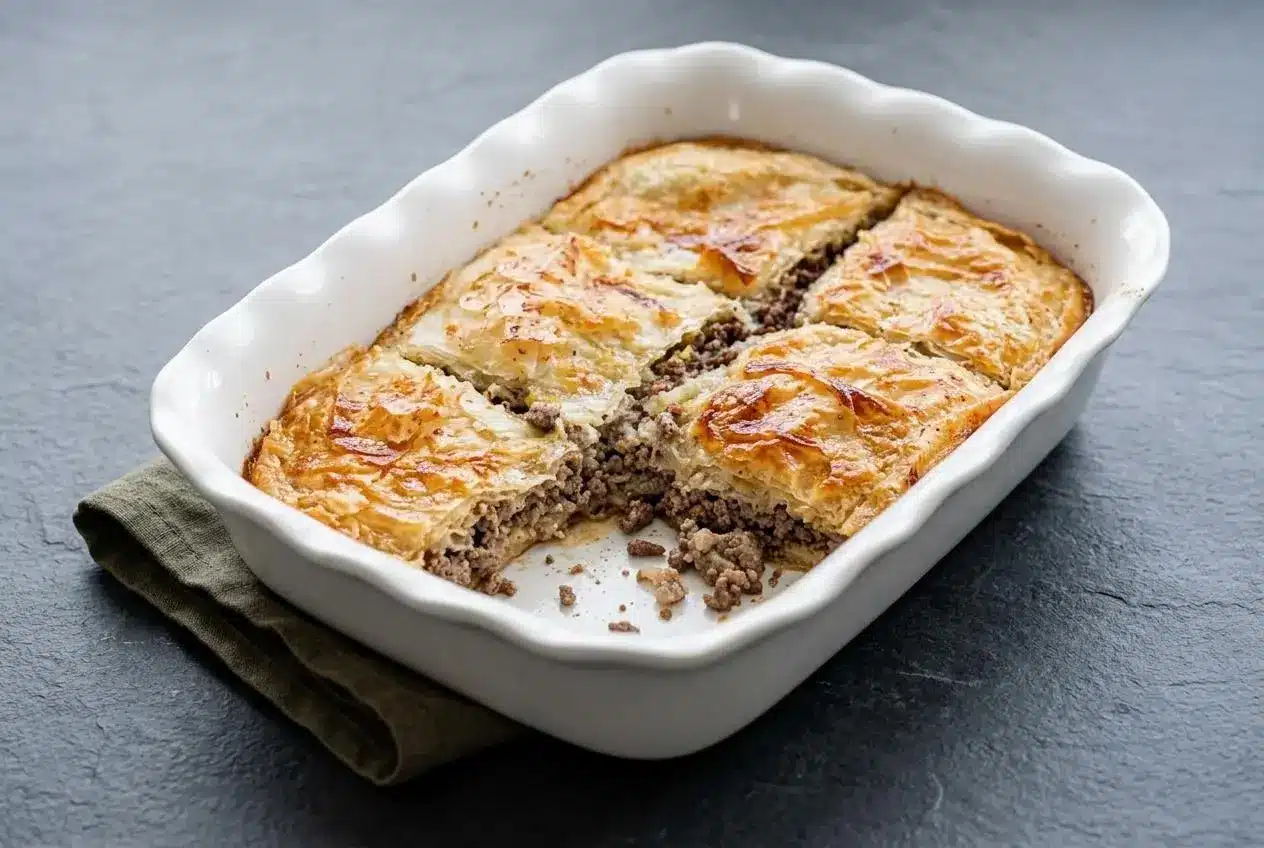
Golden, shattering layers make egyptian goulash a savory phyllo meat pie, not a stew. Spiced ground beef fills buttered pastry sheets, while a milk and egg wash gives the inside tenderness as the top bakes crisp.
This Egyptian pastry sandwiches an onion-and-beef filling between thin sheets of phyllo. Allspice and cinnamon bring warmth rather than heat, and the contrast between the delicate crust and substantial filling makes each square satisfying.
The layering is forgiving, even if a sheet tears along the way. What matters most is controlling the filling’s moisture and cutting the pastry before baking. Those cuts do double duty.
Set the pastry brush and sharp knife beside your pan before uncovering the phyllo.
Why Egyptian Goulash Is a Phyllo Pie, Not a Stew
In Egypt, Gollash bil Lahma refers to layered pastry filled with meat. Expect squares you lift from a baking dish, with crisp edges and a warmly seasoned center.
That makes it quite different from classic Hungarian goulash stew, a paprika-seasoned dish served by the spoonful. The shared English name can cause confusion, but the cooking methods and finished textures are distinct.
Key Ingredients and Their Roles
Beef and onion give the filling substance and sweetness, spices add warmth, and phyllo builds the delicate crust. Butter and olive oil enrich the layers, while milk and egg bring moisture and structure to the interior.
For the filling
- 1 1/2 pounds lean ground beef
- 1 onion, diced, roughly 1 cup
- 1 tablespoon allspice
- 1 teaspoon cinnamon
- 1 teaspoon garlic powder
- 1 teaspoon salt
- 1/2 teaspoon black pepper
- 2 tablespoons olive oil
For the pastry
- 454 grams phyllo pastry sheets, 20 sheets, thawed
- 1/4 cup butter, melted
- 1/4 cup olive oil
- 1 cup milk, full fat or semi-skimmed
- 1 egg
- 1/4 teaspoon salt
- dash of black pepper
The beef-and-onion filling, often called hashweh, should taste savory and warmly aromatic. Allspice leads, cinnamon adds a rounded sweetness, and garlic powder provides a savory background. Once mixed into the hot beef, the spices release a noticeably warmer, fuller aroma.
Phyllo, also sold as filo, comes in paper-thin sheets. It isn’t puff pastry, and it needs brushing fat between the layers rather than relying on a thick laminated sheet. Divide the 20 sheets between the bottom and top, aiming for at least 10 below the meat and roughly 10 above.
Melted butter contributes flavor, while olive oil makes the brushing mixture spread readily. Neither replaces the need to reach the corners. The milk moistens the inner sheets, and the egg helps them set together, creating a tender center beneath the brittle top.
I prefer to uncover only the sheets I’m about to use, keeping the remaining phyllo covered while I brush and layer.
How to Make Egyptian Goulash Step by Step
Build the pie in stages: cook a filling without pooled liquid, layer the pastry, then cut it before adding the wash. Keep the filling evenly spread so each square has a similar balance of meat and crust.
Prep: 30 minutes. Cook: 50 minutes. Servings: 6 servings. Use a 10" x 6" baking pan and a sharp knife; the baking stage below takes 45 minutes.
- Allow the phyllo to thaw overnight in the refrigerator or for a few hours on the counter, following the package directions, and count out at least 20 sheets.
The pastry should unroll into flexible sheets rather than crack as you separate it. - Set the oven to 350°F before starting the filling.
A fully heated oven helps the assembled pastry begin baking evenly. - Soften the diced onion in the filling’s olive oil for about 5 to 7 minutes.
Look for tender pieces with less raw sharpness before adding the beef. - Break the beef into the onions and cook for about 10 minutes, then mix in allspice, cinnamon, garlic powder, salt, and pepper and set the filling aside.
The meat should be browned without pooled liquid, and the spices should smell warm and fragrant. - Combine the melted butter with the pastry’s olive oil and coat the bottom of a 10" x 6" pan with the mixture.
An even film of fat helps the bottom sheets bake into a crisp crust. - Trim the phyllo approximately to the pan’s dimensions, allowing uneven edges to fold along the sides.
Perfect rectangles aren’t necessary, and folded borders will give the pie extra crunch. - Build the bottom crust with batches of 2 to 3 sheets, brushing generously between batches until you have at least 10 sheets.
Each brushed surface should have an even sheen, including the corners. - Distribute the cooked filling over the bottom crust and level it with the back of a spoon.
A flat meat layer supports the upper sheets without large bumps or gaps. - Cover the filling with roughly 10 more sheets, adding them in batches of 2 to 3 and brushing between batches.
The upper crust should cover the meat evenly from edge to edge. - Coat the final sheet with the butter mixture, then use a sharp knife to divide the unbaked pie into pieces, retracing each cut through the bottom crust.
Cut before baking so the wash can reach the inner layers and the finished top needs less handling. - Beat the milk, egg, salt, and pepper together and distribute the mixture across the cut pastry.
The wash should spread over the surface and enter the knife cuts. - Bake for 45 minutes, with an optional few minutes under the broiler while watching continuously.
The finished top should look golden brown and crisp, with close attention during broiling to prevent scorching.
Essential Tips for Working with Phyllo Dough and Troubleshooting
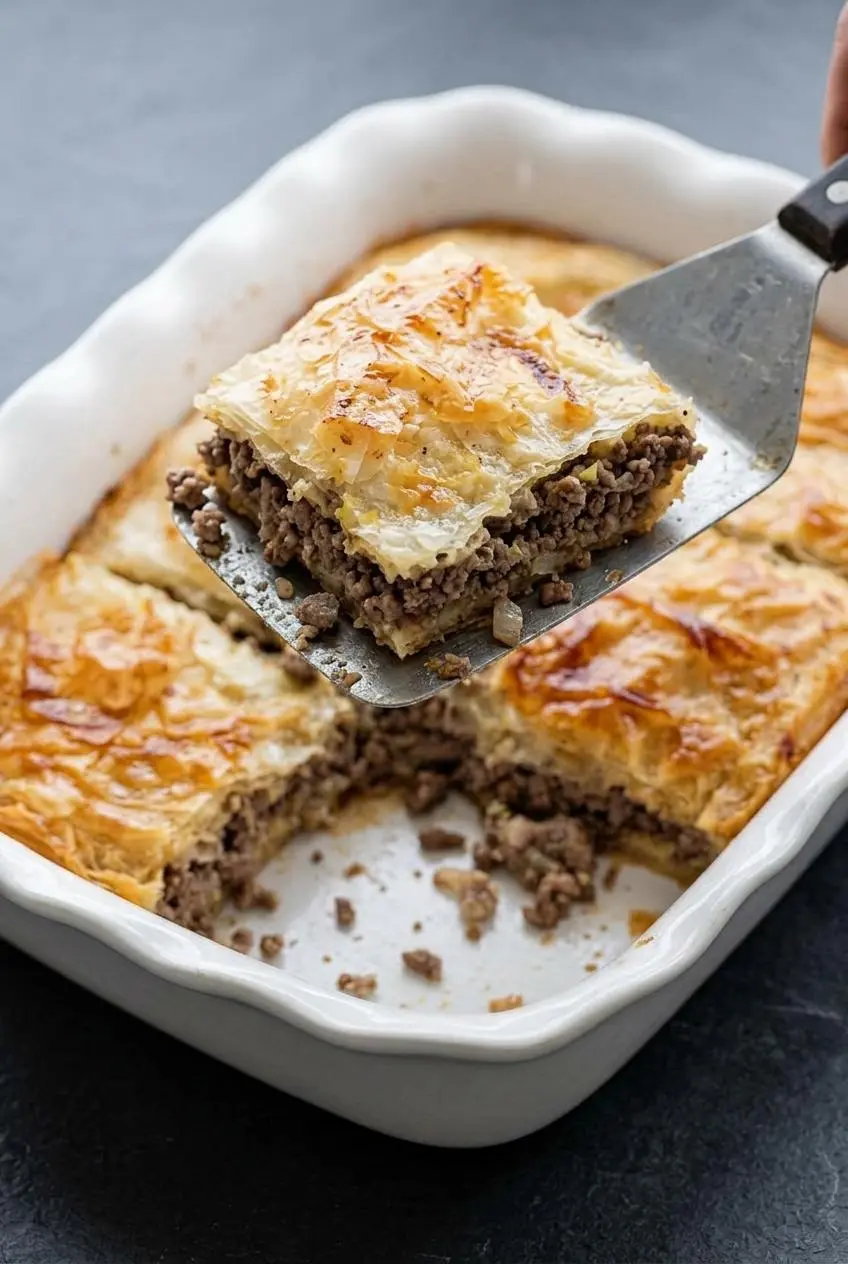
Phyllo needs protection from drying air, not direct moisture. Once you unroll it, cover the stack with plastic wrap and place a slightly damp kitchen towel over the plastic. Keep the towel off the pastry itself.
Follow the package’s thawing directions and avoid the microwave. Uneven warming can leave sheets sticky and difficult to separate. If a sheet tears, tuck it inside the layered crust rather than discarding it; overlapping pieces work well here.
Choosing Your Pan Size, 10×6 vs. 9×13
Pan size changes the pie’s thickness, so a larger dish isn’t an interchangeable choice.
- 10" x 6" pan: Produces thicker squares and matches the quantities and baking instructions given here.
- Slightly larger pan: Spreads the same filling into a thinner layer, which may suit your preference.
- 9" x 13" dish: Has nearly twice the area, producing a much thinner pie and potentially requiring more patching to cover each layer.
A substantially wider dish can also change browning and baking behavior. No alternate baking time is established here, so choose the specified pan for the most predictable result.
How to Prevent Soggy or Shattered Pastry
- Soggy bottom: Excess filling liquid can soak the lower sheets. Let the beef’s liquid evaporate during cooking rather than transferring a wet filling into the pan.
- Dry corners: Missed patches of brushing fat leave exposed sheets brittle and dry. Carry the brush into the corners and over folded edges.
- Shattered top: Cutting the whole pie after baking crushes delicate layers. Make complete cuts while the pastry is still soft and unbaked.
- Uneven wash: Shallow cuts keep liquid near the surface. Check that the knife reaches the pan, then gently tilt the dish after pouring if needed to guide the wash into the cuts.
Folded edges can become especially crisp. Brush those folds rather than trimming every irregular piece away.
Helping the Squares Hold Together After Baking
Let the pie cool slightly before lifting the portions. Straight-from-the-oven layers are more delicate, and a little settling helps the filling stay between the crusts.
Follow the existing cuts with a flat spatula and support each square from underneath. If a small pastry fragment breaks away, leave the rest of the top undisturbed rather than pressing it down.
Egyptian Goulash Variations With Cheese, Lamb, or Vegetables
Keep these optional changes separate from the beef version above. Each changes the filling or texture without changing the pie’s layered character.
- Cheese: Adds a softer, richer center beneath the crisp top.
- Lamb and pine nuts: Bring deeper meat flavor and a nutty bite.
- Vegetables: Add sweetness or earthiness when their excess moisture cooks away.
- Milk-only wash: Omits the egg but gives the layers less binding.
Egyptian Goulash With Cheese
Scatter shredded mozzarella or Kashkaval over the cooked beef before adding the upper pastry sheets. Keep it within the filling layer so the top can still bake crisp.
Mozzarella gives a mild, stretchy center, while Kashkaval adds a more pronounced savory flavor. Either makes the interior richer, so a bright salad is especially welcome alongside.
Traditional Lamb, Ghee, and Pine Nut Version
For a household-style variation, choose ground lamb or a beef-and-lamb mixture, with baharat as an optional seasoning direction. Toasted pine nuts and fresh parsley can go into the warm filling for crunch and freshness.
Baharat blends vary, so this is a different flavor option rather than a measured replacement for the listed spices.
- Butter and olive oil: The specified blend supplies buttery flavor and spreads easily between sheets.
- Ghee: Also called samna, this optional brushing fat brings a different, concentrated buttery flavor; no tested replacement amount is specified here.
Vegetable-Boosted Beef Filling
Cook optional vegetables with the filling and let excess moisture evaporate before layering. This remains a meat-filled pie.
- Finely diced mushrooms: Add earthy flavor but need their released liquid cooked away.
- Finely diced bell peppers: Bring sweetness and color once softened.
- Peas: Add small sweet bites throughout the beef.
- Spinach: Adds leafy flavor, provided the filling isn’t left watery.
Egg-Free Milk Wash
A milk-only wash is an optional alternative to the milk-and-egg mixture. The inner sheets will still receive moisture, but without the egg’s binding role, the portions may set less firmly. This option still contains dairy.
What to Serve With Egyptian Goulash
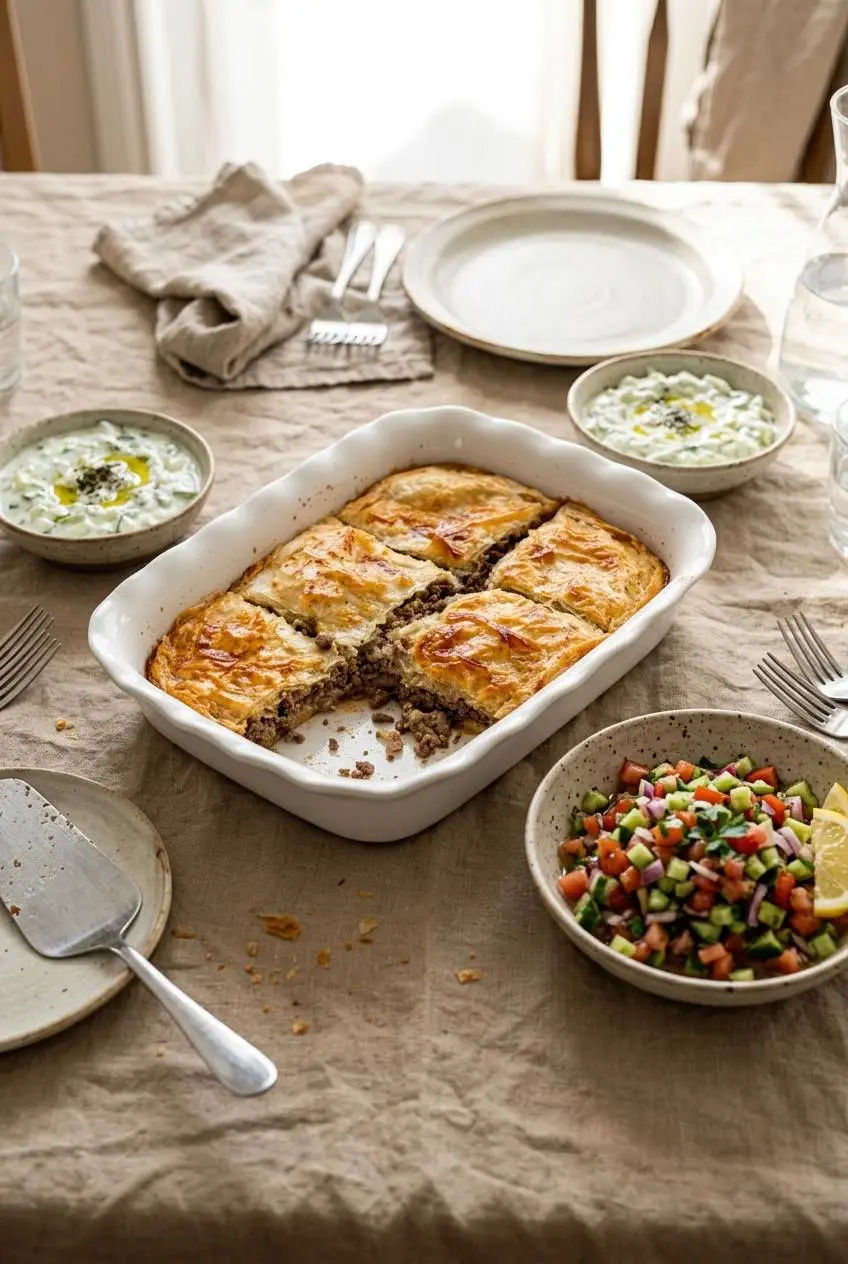
Fresh, acidic sides balance the buttery pastry best. Start with salad, then add a warm side if you want a fuller dinner or Iftar spread.
- Salata baladi: Chopped tomatoes, cucumbers, and lemon provide a bright contrast to the beef and pastry.
- Cucumber yogurt salad: Offers a cool, tangy accompaniment to the warm spices.
- Roasted vegetables: Add a warm vegetable side without another pastry component.
- Egyptian vermicelli rice: Makes the meal more substantial; serve a fresh salad alongside it.
- Lentil soup: Works well as a warm first course for dinner or Iftar.
A crisp Greek salad is another useful tomato-and-cucumber pairing. For a party appetizer, cut smaller pieces before baking rather than trying to subdivide the crisp portions afterward.
How to Prepare Ahead and Store Egyptian Goulash
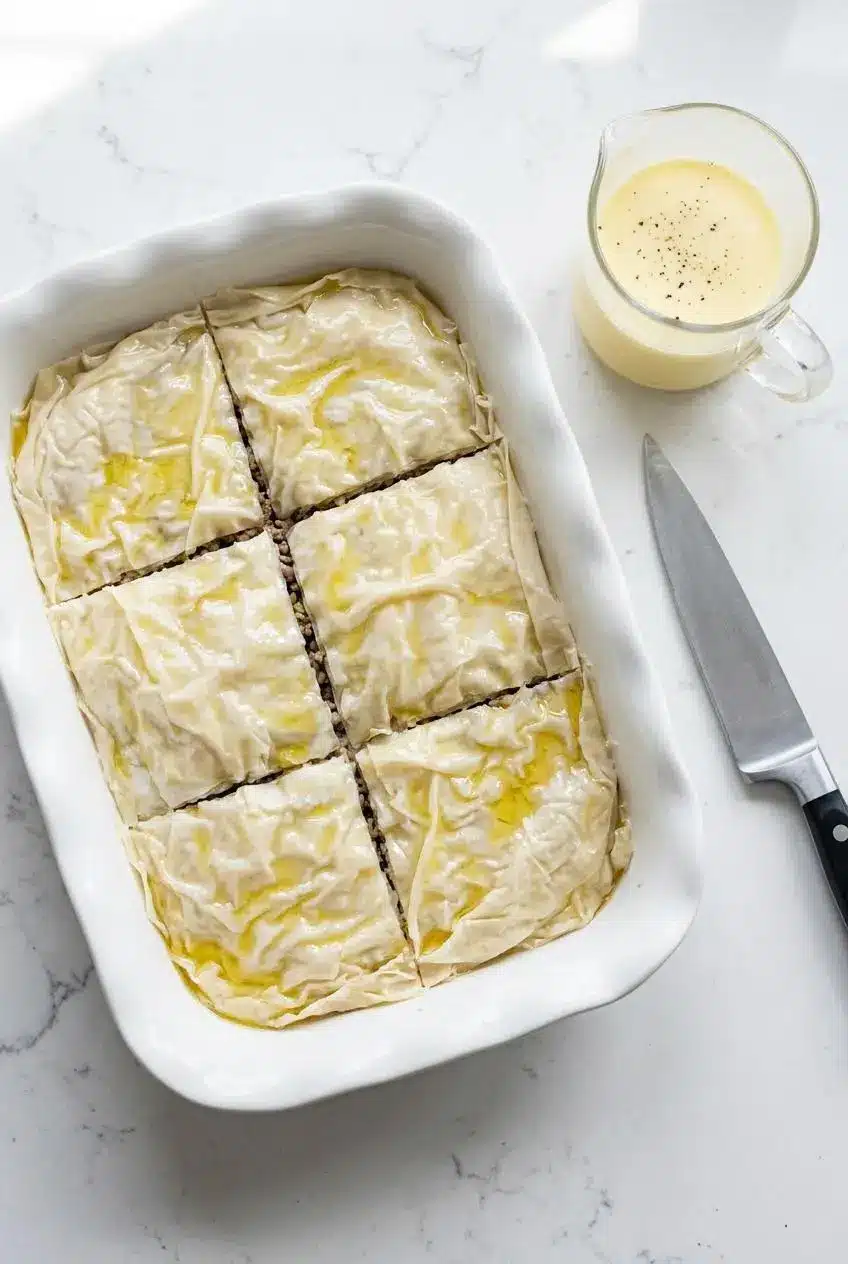
Keep advance preparation focused on separate components so the pastry doesn’t sit in the milk wash. Refrigerate prepared filling promptly in a covered container, and reserve the wash until the pie is ready to bake.
If you pause after assembling the pastry and filling, cover and refrigerate the pan without the wash. Add the milk-and-egg mixture just before baking to protect the layers from becoming overly soft.
Refrigerate cooked leftovers promptly in covered containers. For reheating, use the oven to help restore crispness; the microwave tends to soften phyllo instead. Check that the center reaches 165°F when reheating leftovers, since a crisp surface doesn’t tell you whether the middle is hot enough.
Conclusion
Crisp phyllo, fragrant beef, and tender inner layers give this pie its appeal. Even brushing and a filling without pooled liquid help preserve that contrast.
Remember the most useful detail: cut through every layer before pouring the wash. Then let the baked pie settle slightly and lift those golden squares gently.
Frequently Asked Questions
What Is Egyptian Goulash Made Of?
Phyllo sheets surround ground beef, onion, allspice, cinnamon, and garlic powder. Butter and olive oil coat the pastry layers. A seasoned milk-and-egg wash moistens and binds the interior; cheese and vegetables are optional variations.
What Do You Eat With Egyptian Goulash?
Salata baladi adds fresh tomatoes, cucumbers, and lemon to balance the rich pastry. Cucumber yogurt salad offers a cool, tangy contrast. Roasted vegetables or lentil soup round out a warm meal.
What Is Goulash in Arabic and How Does It Differ From Hungarian Goulash?
In Egypt, the meat-filled pastry is called Gollash bil Lahma. It consists of baked phyllo layers around seasoned ground meat, rather than a spoonable stew.
Can I Assemble Egyptian Goulash Ahead of Time?
You can keep the assembled pastry and cooked filling covered and refrigerated before baking. Leave out the milk-and-egg wash until just before the pan goes into the oven. Keep advance assembly separate from cooked-leftover storage, as explained above.
Egyptian Goulash

Equipment
- 10″ x 6″ pan
- Sharp knife
Ingredients
For the filling
- 1 1/2 pounds lean ground beef
- 1 onion diced, roughly 1 cup
- 1 tablespoon allspice
- 1 teaspoon cinnamon
- 1 teaspoon garlic powder
- 1 teaspoon salt
- 1/2 teaspoon black pepper
- 2 tablespoons olive oil
For the pastry
- 454 grams phyllo pastry sheets 20 sheets, thawed
- 1/4 cup butter melted
- 1/4 cup olive oil
- 1 cup milk full fat or semi-skimmed
- 1 egg
- 1/4 teaspoon salt
- dash of black pepper
Instructions
- Allow the phyllo to thaw overnight in the refrigerator or for a few hours on the counter, following the package directions, and count out at least 20 sheets. The pastry should unroll into flexible sheets rather than crack as you separate it.
- Set the oven to 350°F before starting the filling. A fully heated oven helps the assembled pastry begin baking evenly.
- Soften the diced onion in the filling’s olive oil for about 5 to 7 minutes. Look for tender pieces with less raw sharpness before adding the beef.
- Break the beef into the onions and cook for about 10 minutes, then mix in allspice, cinnamon, garlic powder, salt, and pepper and set the filling aside. The meat should be browned without pooled liquid, and the spices should smell warm and fragrant.
- Combine the melted butter with the pastry’s olive oil and coat the bottom of a 10″ x 6″ pan with the mixture. An even film of fat helps the bottom sheets bake into a crisp crust.
- Trim the phyllo approximately to the pan’s dimensions, allowing uneven edges to fold along the sides. Perfect rectangles aren’t necessary, and folded borders will give the pie extra crunch.
- Build the bottom crust with batches of 2 to 3 sheets, brushing generously between batches until you have at least 10 sheets. Each brushed surface should have an even sheen, including the corners.
- Distribute the cooked filling over the bottom crust and level it with the back of a spoon. A flat meat layer supports the upper sheets without large bumps or gaps.
- Cover the filling with roughly 10 more sheets, adding them in batches of 2 to 3 and brushing between batches. The upper crust should cover the meat evenly from edge to edge.
- Coat the final sheet with the butter mixture, then use a sharp knife to divide the unbaked pie into pieces, retracing each cut through the bottom crust. Cut before baking so the wash can reach the inner layers and the finished top needs less handling.
- Beat the milk, egg, salt, and pepper together and distribute the mixture across the cut pastry. The wash should spread over the surface and enter the knife cuts.
- Bake for 45 minutes, with an optional few minutes under the broiler while watching continuously. The finished top should look golden brown and crisp, with close attention during broiling to prevent scorching.