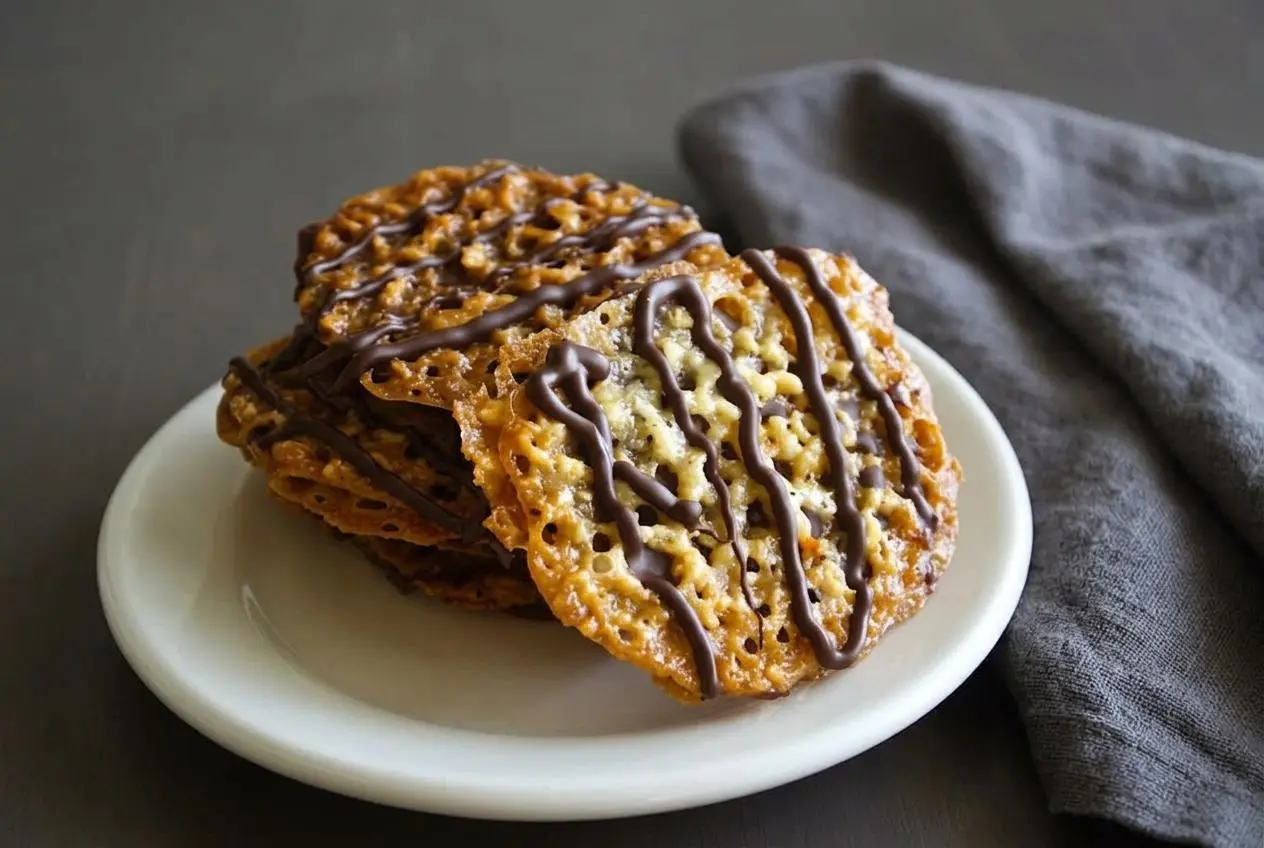
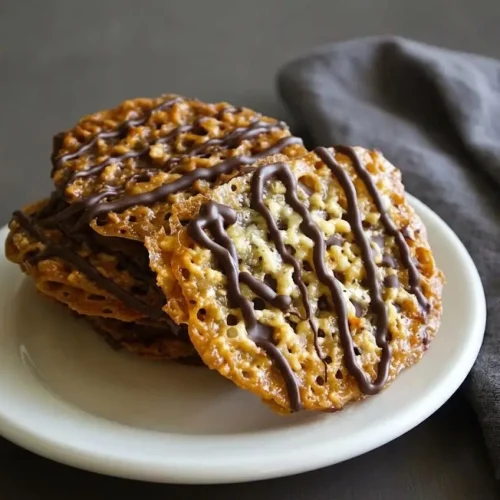
Florentine cookies are crisp, caramelized almond lace cookies sandwiched with melted dark or milk chocolate. Finely chopped almonds give them their nutty crunch, while optional dried orange adds citrus flavor. The key is generous spacing and careful handling while the baked sugar firms up.
These delicate cookies bake into thin, golden wafers with tiny openings and toasted caramel flavor. A chocolate filling joins them in pairs, giving each bite a balance of brittle almond lace and smooth chocolate.
They take patience rather than complicated equipment. Small portions spread dramatically, and the brief cooling window matters as much as the bake. Watch for that golden lace.
Clear space for a cooling rack before baking so you can transfer each batch without rushing.
Key Ingredients and Smart Substitutions
Almonds and flour provide structure, sugar and syrup create caramelized crunch, and butter and cream add richness. Vanilla rounds out the flavor, optional dried orange brings citrus, and chocolate supplies the smooth filling.
- 1 cup (145 grams) raw almonds
- 3 tablespoons all-purpose/plain flour
- 2 tablespoons dried oranges, optional
- ¾ cup (140 grams) granulated sugar
- 2 tablespoons heavy cream
- 2 tablespoons light corn syrup or light agave syrup
- 5 tablespoons (71 grams) unsalted butter
- ½ teaspoon vanilla extract
- 1 ¼. pounds (567 grams) dark or milk chocolate, cut into small chunks
The flour helps bind the chopped nuts within the sugar lace. Butter contributes both flavor and spread, while cream brings moisture and richness to the hot sugar mixture. Vanilla softens the toasted-sugar flavor without competing with the almonds.
I stop pulsing while the almond pieces are still distinct; powder or oily paste is the wrong texture here.
Why Whole Pulsed Almonds Beat Almond Flour
Finely chopped almonds leave small, distinct pieces throughout the wafer. Almond flour and almond meal behave differently: their finer particles change how the mixture absorbs syrup and spreads, so neither makes a suitable direct substitute.
Blanch raw almonds for just 1 minute, then rinse cold, rub away the skins, and dry thoroughly. Longer boiling softens them unnecessarily. Store-bought blanched slivered almonds offer an optional shortcut that skips peeling; use the listed almond weight rather than guessing a cup-for-cup conversion.
Best Swaps for Light Corn Syrup
Corn syrup helps limit sugar crystallization, encouraging a smooth mixture rather than a grainy one. Heat, moisture, fat, and the chopped-nut structure work together as the cookies bubble and spread into lace.
- Light corn syrup: Provides sweetness without a strong competing flavor.
- Light agave syrup: Already an option in the ingredient list, not an additional ingredient.
- Honey: An optional, untested alternative that brings its own floral flavor and may change browning and spreading.
- Pure maple syrup: Adds maple flavor, but its different moisture balance may affect the finished lace.
- Golden syrup: Brings a more pronounced caramel flavor and potentially deeper color.
- Dark corn syrup: Adds darker color and a stronger, molasses-like flavor.
These syrups aren’t interchangeable in every respect. Beyond the listed agave option, don’t expect identical texture or spreading.
Dried Orange and Candied Peel Choices
Orange remains optional. Dried orange contributes concentrated citrus flavor, while candied orange peel also brings added sweetness and a chewier bite.
Homemade or store-bought candied peel can provide an optional sweeter citrus direction. Their moisture and sweetness vary, so neither should be treated as an identical replacement for dried orange.
Dark or Milk Chocolate for the Filling
Dark chocolate offers a less-sweet contrast to the caramelized wafers. Milk chocolate gives a sweeter, creamier flavor. Both work as the listed filling, which is melted chocolate, not ganache; the cream belongs in the cookie mixture.
How to Make Florentine Cookies Step by Step
This recipe yields 30 sandwiched cookies. Allow 30 minutes for prep, 10 to 12 minutes of baking per batch, and about 15 minutes for the dough to cool before shaping. Multiple baking batches extend elapsed kitchen time beyond the listed 42-minute total.
- Heat the oven to 325°F/163°C with a rack in the center, and cover a 17 x 12 inch (43 x 30 cm) baking sheet with parchment paper or a silicone mat.
The lined sheet gives the delicate sugar lace a surface it can release from. - Bring water to a boil over high heat, boil the almonds for 1 minute only, then drain, rinse cold, rub off their skins in a towel, and dry thoroughly.
The skins should loosen easily, while the nuts should remain firm rather than softened by prolonged boiling. - Pulse the dried almonds in a food processor or blender to produce finely chopped pieces.
Look for visible nut fragments, not flour or a greasy paste. - Combine the chopped almonds with the flour and dried orange, if using, in a mixing bowl.
Distribute the flour throughout so it doesn’t remain in pockets. - Heat the sugar, cream, corn syrup or listed agave option, and butter in a small saucepan over medium heat, stirring occasionally until the sugar dissolves and the mixture reaches a rolling boil, then simmer for 1 minute.
The mixture should bubble throughout without visible sugar granules. - Take the saucepan off the heat, stir its contents and the vanilla into the almond mixture, then leave the dough to cool for about 15 minutes until handleable.
The mixture should hold together without being too hot to touch. - Measure 1-teaspoon portions and roll each into a round ball, holding crumbly portions in your palm until they soften enough to shape.
Hand warmth softens the butter, so dry-looking crumbs can come together without extra liquid or fat. - Arrange the balls 6 inches (15 cm) apart on the lined sheet, working in batches.
Each small portion spreads into a wafer approximately 3 inches (7 ½ cm) across. - Bake for 10 to 12 minutes until golden brown, then remove the sheet and immediately separate any joined edges with a sharp knife.
Golden lace and a toasted caramel aroma signal the endpoint, while the hot edges remain flexible enough to cut. - Leave the cookies on their sheet for 2 minutes before moving them to a cooling rack, then continue baking the remaining dough.
The lace should firm enough to lift without stretching or tearing. - Melt the chocolate in a microwave-safe bowl using 10-second intervals, stirring between each interval.
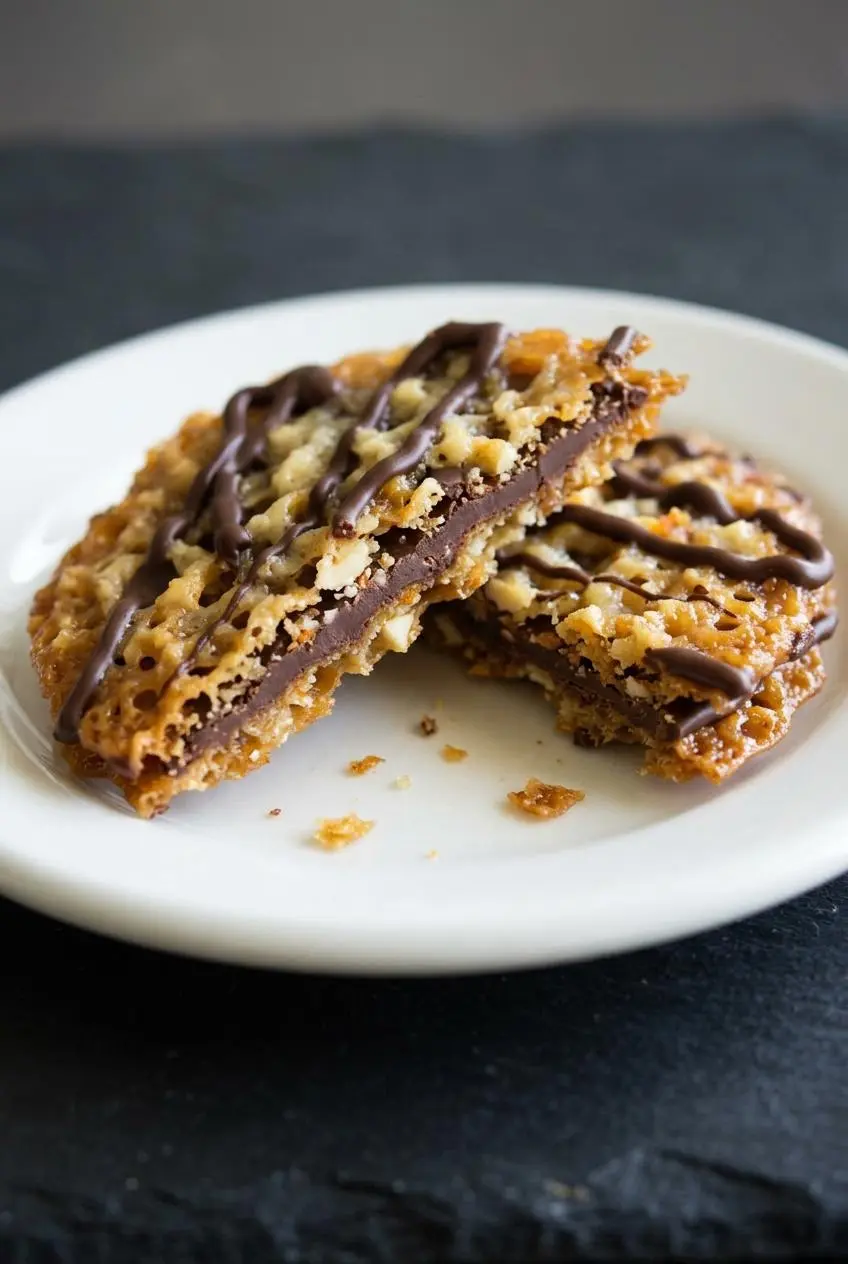
Stop when stirring produces smooth chocolate without unmelted chunks, avoiding further heating that could scorch it. - Spread melted chocolate over one side of a fully cooled wafer and gently place another wafer against it, repeating with the remaining pairs.
Use light pressure because the crisp lace breaks easily. - For an optional drizzle, spoon melted chocolate into a small ziptop bag, snip a tiny opening at one corner, and pipe over the sandwiches.
A small opening gives you a fine stream rather than a heavy ribbon. - Let the assembled cookies cool completely, then pack them in an airtight container and refrigerate.
The chocolate should be set before the cookies touch one another in storage.
Expert Tips and Troubleshooting Lace Cookies

Hot sugar stays flexible briefly, then becomes brittle as it cools. Most shaping and release problems come down to working within that changing texture.
How to Shape Neat Circles Right Out of the Oven
Cut joined edges immediately after baking, before the sugar hardens. For optional tidying, place a round cutter or mug larger than the cookie around it and gently nudge ragged edges inward.
Keep fingers away from the hot sugar and sheet. Avoid vigorous scooting, which can tear the lace; this technique tidies edges but won’t rebuild a severely over-spread wafer.
What to Do If Cookies Harden on the Pan
If a cookie becomes brittle before you can lift it, an optional rescue is to return the sheet to the oven at the same setting for 1 minute. Watch closely for additional browning.
The brief warming softens the sugar enough to help it release. Slide a thin spatula underneath rather than pulling or forcing the cookie off its liner.
Why Later Batches Spread Too Much
A warm sheet starts melting the butter before the dough reaches the oven, giving later batches a head start on spreading. Let baking sheets cool completely between batches.
Keep the same teaspoon portion size and generous spacing throughout. Crowding the last batch to finish faster usually creates more cutting and breakage, not a useful shortcut.
Crumbly Dough, Torn Lace, and Burnt Edges
- Crumbly portions: Cool butter can make the dough resist shaping; warm each portion in your palm instead of adding ingredients.
- Torn wafers: Moving them while the sugar is still soft stretches the lace; respect the 2-minute pan rest and support each cookie underneath.
- Burnt edges: Excess browning can turn the sugar bitter; check the center-rack position, oven setting, and golden-brown endpoint.
- Uneven spreading: Irregular portions or inconsistent almond texture can distort the circles; measure carefully and keep the nuts finely chopped rather than powdered.
Chocolate Styles and Holiday Florentine Variations
Keep these optional changes separate from the almond lace method, especially when you’re first learning how the dough spreads.
White Chocolate Florentine Cookies
White chocolate offers a sweeter, creamier optional filling than dark chocolate. It makes a pale contrast against the golden wafers, though this variation doesn’t come with a separate tested quantity or melting schedule.
Peppermint Holiday Florentines
Peppermint extract and crushed candy canes provide an optional Christmas direction. Use restraint with the extract, and remember that candy pieces add a harder crunch as well as festive color.
Cardamom and Flaky Sea Salt
For an optional spiced version, add ground cardamom and a pinch of flaky sea salt to the dry almond mixture before combining it with the hot syrup. Cardamom complements almond and orange, while salt balances the sweet chocolate, much as it does in salted brownie cookies.
Chocolate Bottoms, Half-Dips, or Sandwiches
- Chocolate bottoms: Coat one side of a single wafer for a lighter chocolate layer.
- Half-dips: Dip part of a wafer to leave some lace exposed, handling the uncovered edge gently.
- Sandwiches: Follow the method above for chocolate between two crisp wafers.
The yield is 30 sandwiches, equivalent to 60 individual wafers before pairing, rather than a separately tested single-cookie batch.
Keeping Florentine Lace Crisp for Gifting and Making Ahead
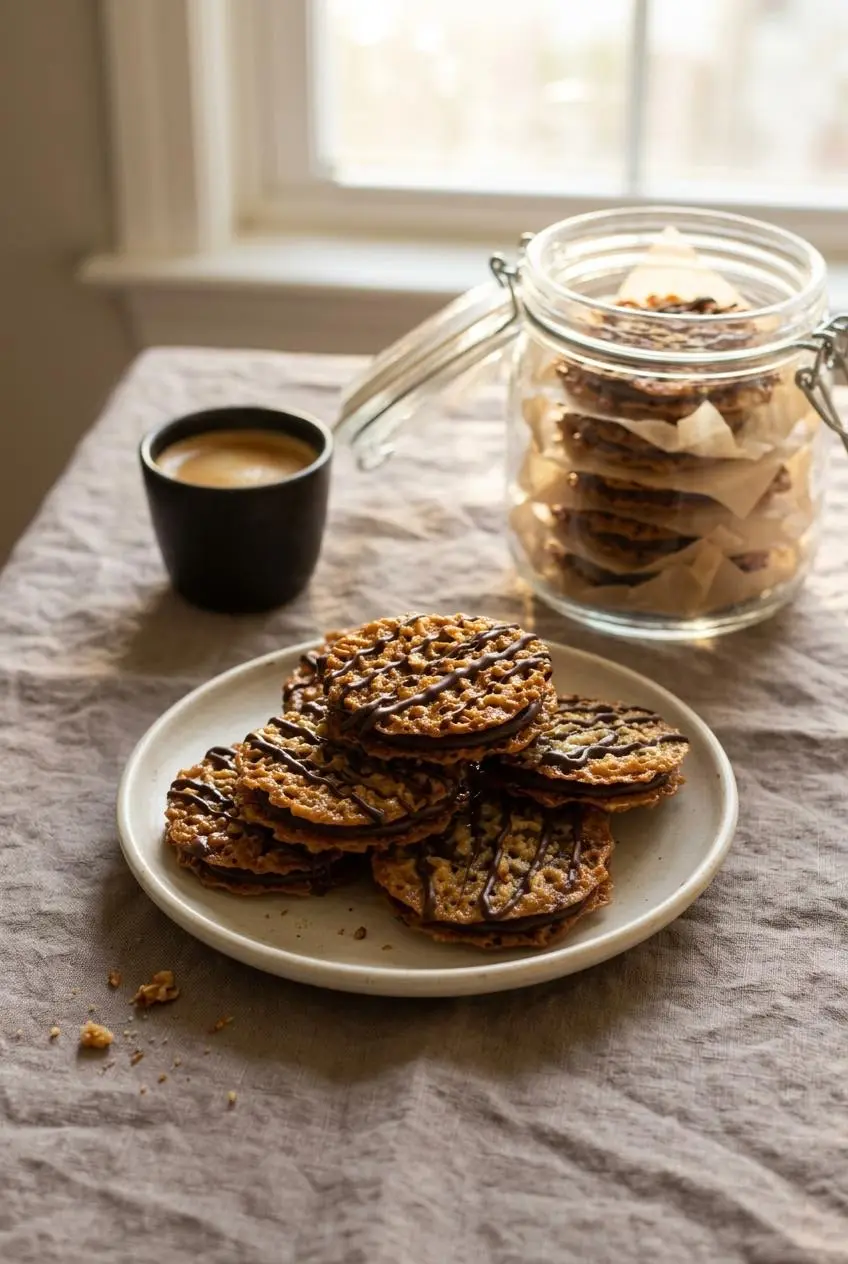
Pack fully cooled cookies in an airtight container and refrigerate for up to 2 weeks. Careful packaging protects their texture, but storage time alone doesn’t guarantee quality under every handling condition.
Airtight Layers Without Sticky Lace
Add parchment between layers to limit sticking and protect the fragile edges. Sugar lace attracts moisture, so avoid leaving an open container in a humid kitchen.
Packing Finished Cookies Without Moisture
Let the chocolate set and the cookies cool fully before closing the container. Warm cookies can trap moisture inside, softening the lace you’re trying to protect.
When moving the closed container from cold storage toward serving temperature, keep it closed initially to help limit condensation directly on the cookies.
Espresso Pairings and Holiday Cookie Boxes
Serve with espresso or strong dark-roast coffee to contrast with the caramelized sweetness, or alongside vanilla bean gelato for dessert.
For a holiday assortment, pair them with biscotti or buttery shortbread cookies. Protect the Florentines in separate, parchment-lined layers and pack in dry conditions; a decorative gift box doesn’t replace refrigerated storage.
Conclusion
Crisp almond lace and smooth chocolate make these cookies worth the small-batch baking. Distinct chopped nuts and generous spacing help create their delicate structure.
Handle the hot wafers patiently, then assemble only after they’ve cooled. Give that fragile crunch a little care, and it will be the highlight of the cookie tray.
Frequently Asked Questions
Can I Use Almond Flour Instead of Chopped Almonds in Florentine Cookies?
No. Almond flour and almond meal aren’t suitable direct substitutes here. The dough needs distinct chopped nut pieces for the intended spread and lacy crunch.
What Can I Substitute for Light Corn Syrup in Florentine Cookies?
Light agave syrup is already a listed option. Honey, pure maple syrup, golden syrup, and dark corn syrup are optional, untested alternatives that may change flavor, color, moisture, and spreading.
How Do You Keep Florentine Cookies Round If They Spread Together?
Use 1-teaspoon portions with 6 inches between them. Cut merged edges while hot, then optionally nudge uneven edges into shape before the sugar hardens.
How Many Cookies Does This Florentine Recipe Make and How Do I Store Them?
Expect 30 sandwiched cookies, equivalent to 60 wafers before pairing. Cool completely, pack airtight, and refrigerate using the storage guidance above. Parchment between layers helps protect against sticking and breakage.
Florentine Cookies

Equipment
- 17 x 12 inch (43 x 30 cm) baking or cookie sheet
- parchment paper or a silicone mat
- Food processor or blender
- Teaspoon measuring spoon
- Cooling Rack
- small ziptop bag
Ingredients
- 1 cup raw almonds (145 grams)
- 3 tablespoons all-purpose/plain flour
- 2 tablespoons dried oranges optional
- ¾ cup granulated sugar (140 grams)
- 2 tablespoons heavy cream
- 2 tablespoons light corn syrup or light agave syrup
- 5 tablespoons unsalted butter (71 grams)
- ½ teaspoon vanilla extract
- 1 ¼. pounds dark or milk chocolate (567 grams), cut into small chunks
Instructions
- Heat the oven to 325°F/163°C with a rack in the center, and cover a 17 x 12 inch (43 x 30 cm) baking sheet with parchment paper or a silicone mat. The lined sheet gives the delicate sugar lace a surface it can release from.
- Bring water to a boil over high heat, boil the almonds for 1 minute only, then drain, rinse cold, rub off their skins in a towel, and dry thoroughly. The skins should loosen easily, while the nuts should remain firm rather than softened by prolonged boiling.
- Pulse the dried almonds in a food processor or blender to produce finely chopped pieces. Look for visible nut fragments, not flour or a greasy paste.
- Combine the chopped almonds with the flour and dried orange, if using, in a mixing bowl. Distribute the flour throughout so it doesn’t remain in pockets.
- Heat the sugar, cream, corn syrup or listed agave option, and butter in a small saucepan over medium heat, stirring occasionally until the sugar dissolves and the mixture reaches a rolling boil, then simmer for 1 minute. The mixture should bubble throughout without visible sugar granules.
- Take the saucepan off the heat, stir its contents and the vanilla into the almond mixture, then leave the dough to cool for about 15 minutes until handleable. The mixture should hold together without being too hot to touch.
- Measure 1-teaspoon portions and roll each into a round ball, holding crumbly portions in your palm until they soften enough to shape. Hand warmth softens the butter, so dry-looking crumbs can come together without extra liquid or fat.
- Arrange the balls 6 inches (15 cm) apart on the lined sheet, working in batches. Each small portion spreads into a wafer approximately 3 inches (7 ½ cm) across.
- Bake for 10 to 12 minutes until golden brown, then remove the sheet and immediately separate any joined edges with a sharp knife. Golden lace and a toasted caramel aroma signal the endpoint, while the hot edges remain flexible enough to cut.
- Leave the cookies on their sheet for 2 minutes before moving them to a cooling rack, then continue baking the remaining dough. The lace should firm enough to lift without stretching or tearing.
- Melt the chocolate in a microwave-safe bowl using 10-second intervals, stirring between each interval. Stop when stirring produces smooth chocolate without unmelted chunks, avoiding further heating that could scorch it.
- Spread melted chocolate over one side of a fully cooled wafer and gently place another wafer against it, repeating with the remaining pairs. Use light pressure because the crisp lace breaks easily.
- For an optional drizzle, spoon melted chocolate into a small ziptop bag, snip a tiny opening at one corner, and pipe over the sandwiches. A small opening gives you a fine stream rather than a heavy ribbon.
- Let the assembled cookies cool completely, then pack them in an airtight container and refrigerate. The chocolate should be set before the cookies touch one another in storage.