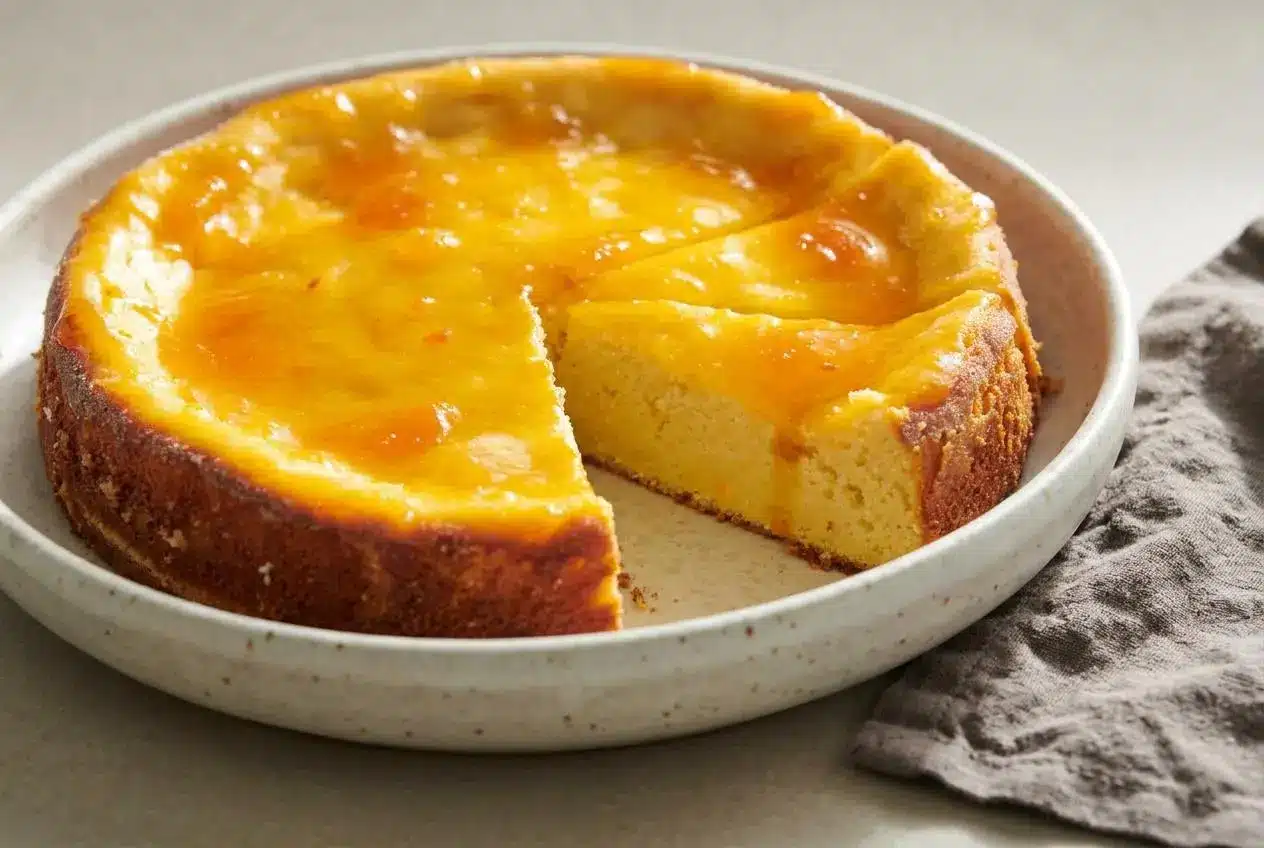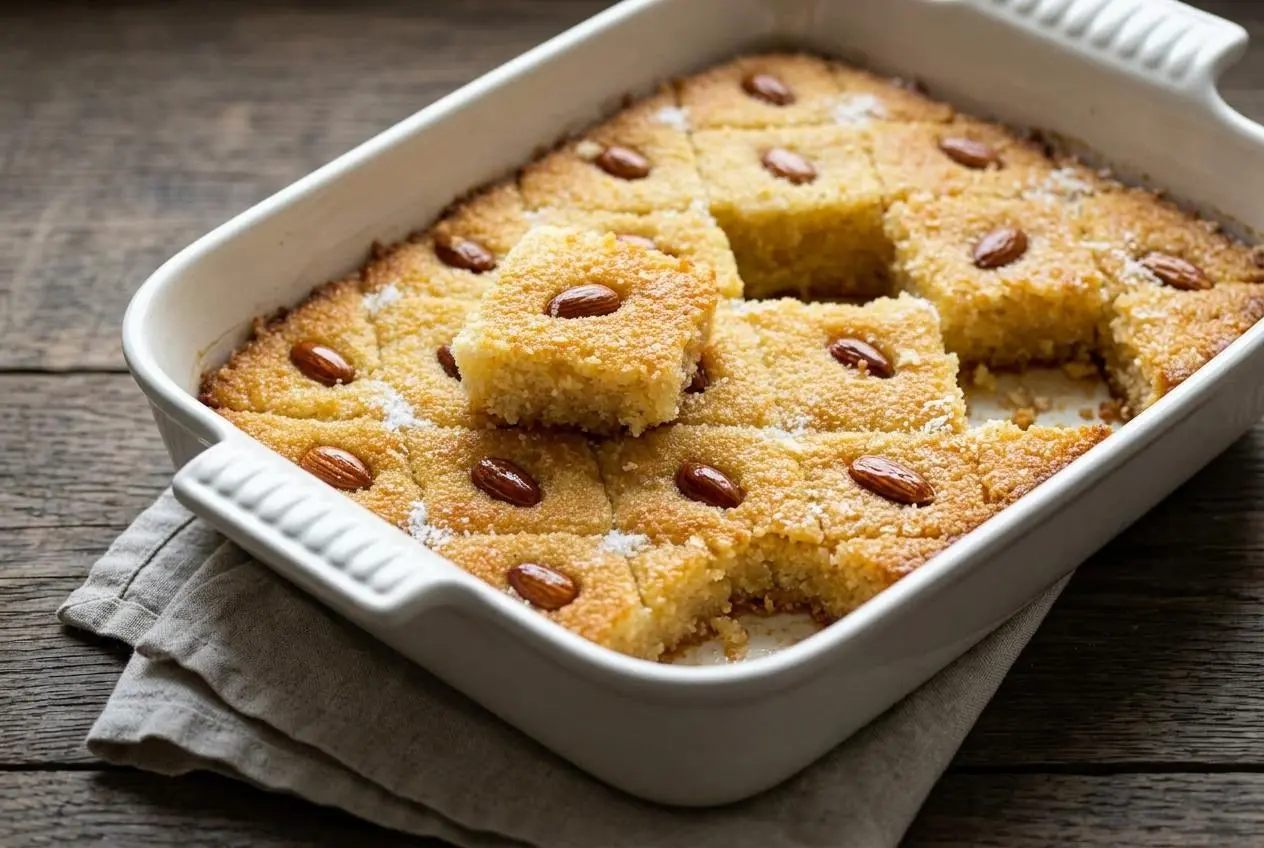
This basbousa recipe makes a Middle Eastern semolina cake with yogurt, coconut, and buttery, golden grains soaked in lemon syrup. Bake it in a tahini-coated dish, add almonds, and let it cool completely for tender pieces that hold their shape.
Buttery semolina and sweet lemon syrup give this cake its inviting aroma. The crumb stays pleasantly grainy rather than fluffy, with coconut throughout and a whole almond marking each piece.
Expect about 15 minutes of preparation and roughly 35 minutes of baking, plus at least 1 hour for cooling. The two oven stages can total 30 to 40 minutes, so follow the color cues rather than a rigid finish time. The syrup does the finishing work.
Have a 9×13-inch baking dish ready, and check that your semolina looks granular rather than powdery before mixing.
Key Ingredients and Their Roles
Semolina gives the cake its grainy structure, butter adds richness, and yogurt and milk supply moisture. Coconut brings texture, leavening provides lift, tahini helps the cake release, almonds add crunch, and lemon syrup delivers sweetness with a bright finish.
Cake Batter
- 1 cup Plain Yogurt
- 1 cup Granulated Sugar
- 1.5 tsp Baking Powder
- 1/2 tsp Baking Soda
- 3 cups Semolina, coarse
- 1/2 cup Butter, unsalted, melted (this is equivalent to 1 stick of butter)
- 1 cup Fine Coconut Flakes
- 3/4 cup Milk
- 2 tbsp Tahini Paste (this is used to coat the baking pan)
- Whole Almonds (enough for each piece of semolina cake. approx. 24 almonds)
Simple Syrup
- 2 cups Granulated Sugar
- 1.5 cups Water
- Squeeze of lemon
Butter coats the dry semolina before the wet mixtures go in, helping create a rich, tender crumb. Yogurt contributes tang, while milk brings everything into a cohesive batter. The coconut powder mentioned in some basbousa methods means finely textured coconut flakes here, not coconut flour.
The almonds provide a little contrast to the syrup-softened cake. Lemon balances the syrup’s sweetness without turning it into a strongly lemon-flavored glaze.
I look for visible, distinct semolina grains in the bag rather than relying on the product name alone.
Coarse Semolina Versus Fine Semolina Flour
Look for coarse durum wheat semolina at Middle Eastern markets, international grocery stores, or a supermarket’s baking aisle. Online listings can help, but check the grind description carefully.
- Coarse semolina: Visible, sandy grains give this cake its characteristic texture.
- Fine semolina flour: A much finer grind can produce a denser, less distinctly grainy cake; it is not an equivalent replacement here.
- Cornmeal: It may look similar, but it comes from corn and does not replace the required wheat semolina.
Packaging terms and numbered grades vary between brands. A number on the bag is less useful than a clear “coarse” label and a look at the grains.
Why Tahini Helps Form a Golden Crust
Tahini adds a subtle sesame flavor while helping reduce sticking. Brush the listed amount evenly across the bottom and sides of the dish, spreading out any thick pockets.
An even coating gives the cake a nutty outer layer without leaving concentrated patches of sesame paste around the edges.
Yogurt and Leavening for a Tender Crumb
Small bubbles and a slight rise are expected when the yogurt meets the baking soda and baking powder. Mix them together, then continue with the semolina mixture; there is no separate timed resting stage.
Once the wet and dry mixtures meet, aim for an evenly combined batter rather than prolonged stirring. Butter-coated grains and restrained mixing support the tender, grainy texture you want.
How to Make Basbousa Step by Step
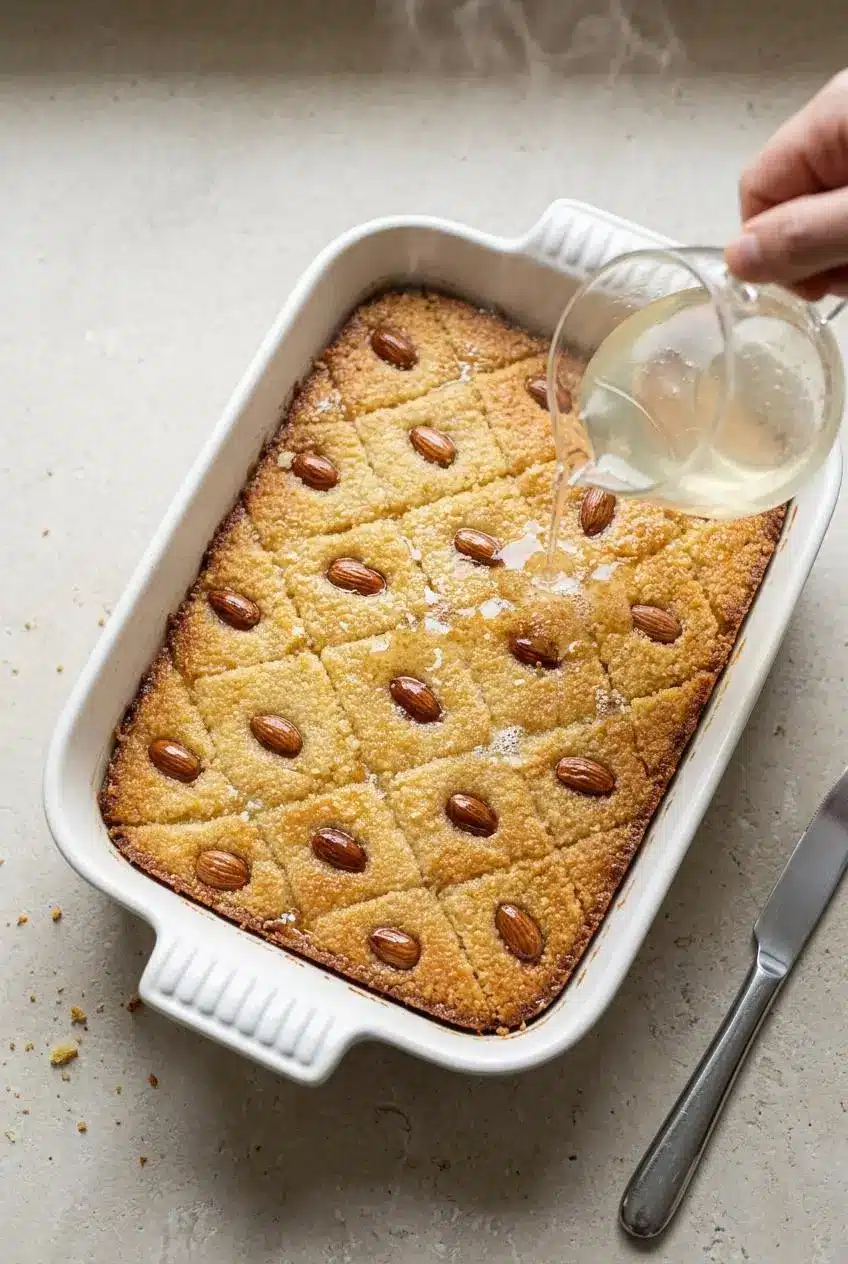
The mixing order matters: coat the semolina with butter before adding the yogurt mixture and milk. This recipe makes approximately 24 pieces, with the score lines guiding both almond placement and cutting after baking.
- Heat the oven to 375 °F and use the tahini to brush the bottom and sides of a 9×13-inch baking dish.
Spread the coating evenly so no thick streaks collect along the edges. - Combine the yogurt, sugar, baking powder, and baking soda in a bowl, then leave it aside while preparing the semolina.
A little bubbling and expansion show the expected reaction in the yogurt mixture. - Work the melted butter through the semolina in a separate bowl, then fold in the fine coconut flakes.
The grains should look evenly moistened and begin to cling together. - Incorporate the yogurt mixture into the coated semolina, then stir in the milk until evenly combined.
Stop once the batter is cohesive, thick, and spreadable, without dry pockets. - Transfer the batter to the tahini-coated dish, level the surface, and tap the dish against the counter to release trapped air.
An even layer helps the cake bake consistently across the pan. - Use a knife to mark squares or diamonds in the unbaked batter, making approximately 24 portions.
The mixture should be firm enough to retain the cutting lines. - Gently press a whole almond into the middle of each marked portion and, if desired, scatter a little fine coconut over the surface.
Keep the almonds visible rather than burying them in the batter. - Bake uncovered on the bottom rack for 25–30 minutes, then transfer the dish to the top rack for another 5–10 minutes.
Look for browning edges before moving the dish and an evenly light brown top before removing it. - During baking, heat the syrup sugar and water together, stirring until dissolved, then simmer for about 8 minutes and finish with a squeeze of lemon.
The syrup should thicken slightly while remaining fluid enough to pour. - Immediately after baking, follow the marked lines with a sharp knife and distribute the warm syrup over the entire hot cake.
The reopened cuts help the syrup reach into the crumb rather than staying only on top. - Leave the cake in its dish until completely cool, allowing at least 1 hour before lifting out portions.
The syrup needs time to absorb and the delicate crumb needs time to settle so the pieces hold together.
The bottom-rack stage develops color around the edges; the top-rack finish brings color to the surface. Keep the oven on its regular baking setting throughout, rather than switching to the broiler.
Expert Tips and Troubleshooting for Perfect Texture
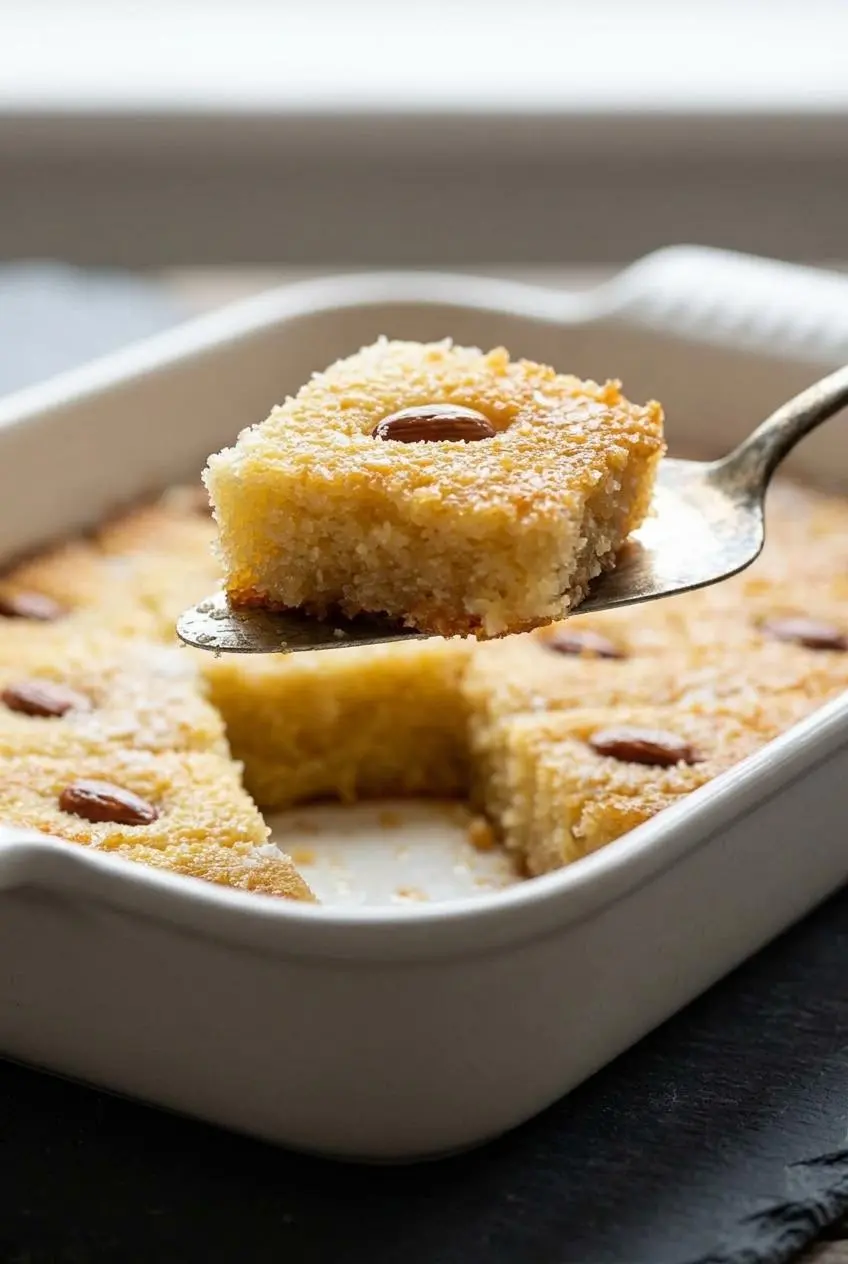
A thick batter and a pleasantly grainy crumb are normal here. Don’t expect the airy texture of a classic yellow cake, and don’t keep mixing in pursuit of a smooth, pourable batter.
Warm Syrup and a Freshly Baked Cake
For this version, pour warm syrup over the cake just after it comes out of the oven and you have recut the lines. Other semolina cakes may use different temperature pairings, but mixing those directions into this method can change the result.
A little syrup on the surface immediately after pouring does not necessarily mean the cake is soggy. Give it the full cooling period to absorb. Use the complete syrup batch; reducing it changes moisture as well as sweetness.
If you prefer a less sweet serving, choose a smaller piece or add an optional tangy accompaniment rather than altering the syrup formula.
Dry Cake, Pooled Syrup, and Crumbling Slices
- Dry crumb: Overbaking or withholding syrup can leave the cake dry. Follow the browning cues and distribute the full syrup batch across the surface.
- Dense texture: Finely milled semolina or excessive mixing can move the crumb away from its intended texture. Choose coarse grains and stop mixing when the batter comes together.
- Pooled syrup: Allow absorption time before judging the result, and make sure you reopened the score lines. An extra batch of syrup is not a guaranteed repair.
- Broken pieces: Lifting the cake while warm can pull apart the delicate crumb. Leave it in the dish until completely cool.
- Overbrowned edges: Watch for edge color during the first oven stage and move the dish as directed. Don’t leave it on the bottom rack waiting for the top to brown.
Can a 9-Inch Pan Replace the 9×13 Dish?
A smaller pan makes a deeper cake, not merely a different shape. Compare the footprints before choosing a substitute:
- 9×13-inch dish: 117 square inches of surface area, the recommended size for this recipe.
- 9-inch square pan: 81 square inches, so the same batter would form a deeper layer.
- 9-inch round pan: About 64 square inches, making the batter deeper still.
The full batch may exceed a smaller pan’s capacity. Deeper batter can need longer baking while the edges continue browning, and no verified 9-inch timing or scaled formula is available here. Use the 9×13 dish for the clearest path to the intended thickness.
Regional Variations of Basbousa
Basbousa belongs to a broad family of syrup-soaked semolina cakes. These optional directions highlight different flavors, not corrections to the yogurt-and-coconut cake above.
- Egyptian-style versions: Often emphasize the rich flavor of ghee, with coconut use varying by household.
- Palestinian and Jordanian hareesa: Can offer a coconut-free approach to semolina cake.
- Lebanese namoura: May feature floral syrup and, in some versions, thick cream.
Egyptian Style With Ghee and Toasted Coconut
Samna means ghee, a rich fat used in Egyptian-style semolina cakes. A ghee-forward formulation brings a different flavor from butter, but no replacement ratio is specified for this cake.
For an optional flavor variation, lightly toast a small portion of the coconut until golden before folding it into the butter-coated semolina. Finish the warm lemon syrup with orange blossom water for a floral accent. These additions emphasize toasted nuttiness and aroma; they are not part of the main method.
Basbousa Without Coconut in Hareesa Style
Coconut-free semolina cakes are certainly possible, including some Palestinian and Jordanian hareesa versions. Simply deleting the coconut from this formula, however, changes its balance of solids and liquid.
For a coconut-free result, choose a formulation developed that way rather than guessing at extra semolina or yogurt. A thick batter that holds score lines is a useful cue, but it cannot confirm that an improvised replacement will bake identically.
Lebanese Namoura With Orange Blossom or Rose Water
Orange blossom water or rose water gives some namoura syrups their floral fragrance. Some Lebanese versions also include thick cream or ashta for richness, though neither feature defines every household’s cake.
Treat floral waters and cream as optional directions for a different formulation. Adding cream changes the batter’s moisture, so it needs more planning than an extra spoonful stirred into this cake.
How to Serve and Store Basbousa
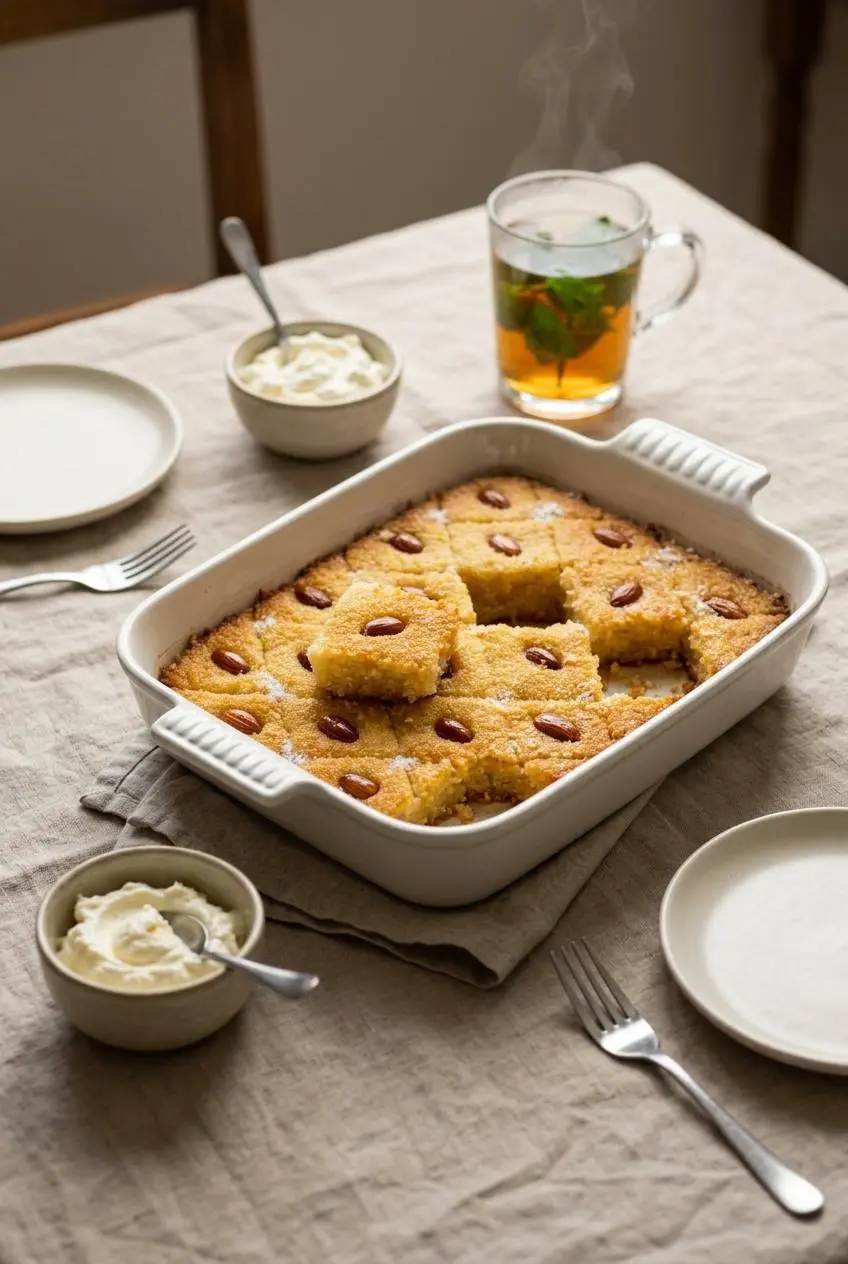
Let the cake finish cooling before arranging a platter. Its syrup-soaked crumb is delicate while warm, even when the top looks firm enough to cut.
Tea, Coffee, and Clean Diamond Slices
Serve at room temperature with mint tea or Arabic coffee. Diamond-shaped pieces make a welcoming platter for Ramadan, Eid, or a family gathering, with an almond centered on each portion.
Optional clotted cream, ashta, or tangy Greek yogurt adds a creamy contrast. Keep these accompaniments separate until serving.
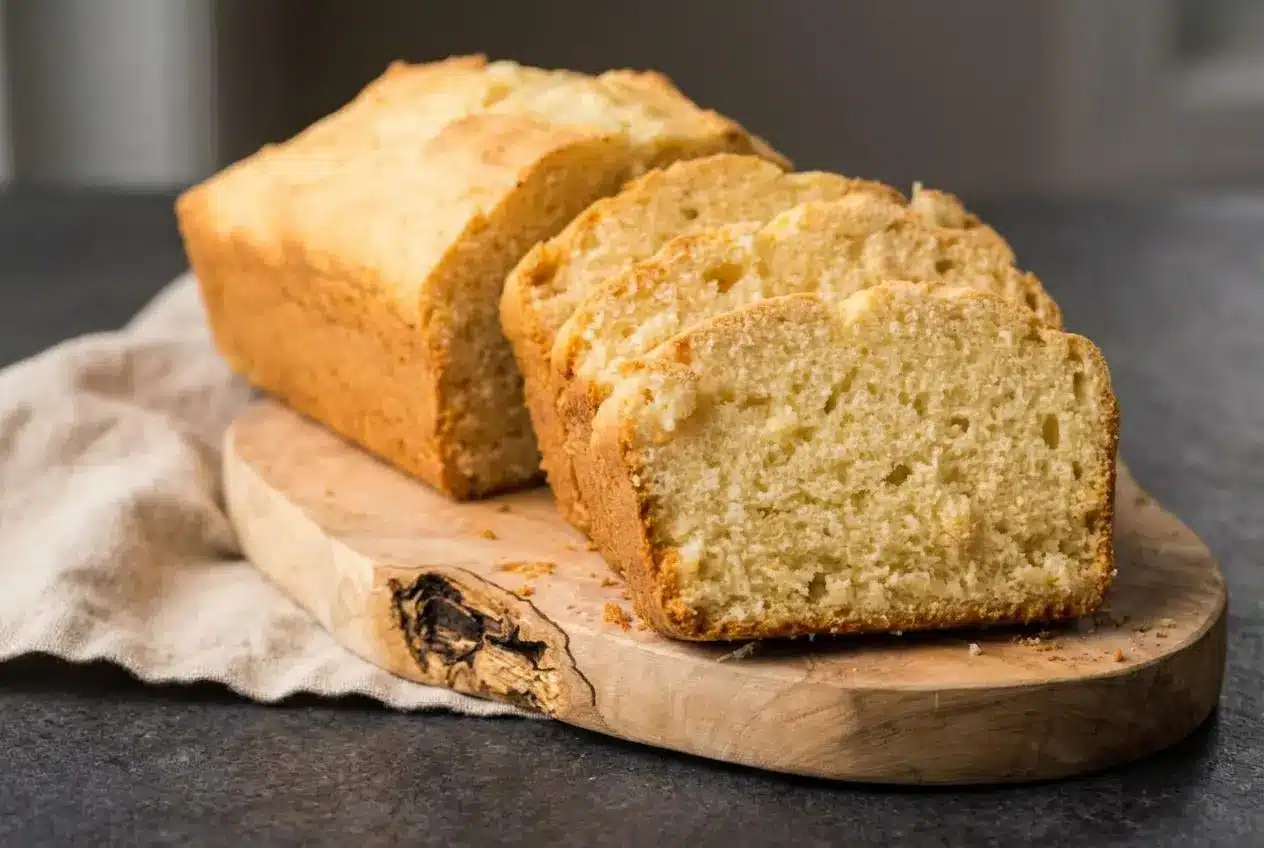
For a larger afternoon tea spread, a bright lemon loaf offers another citrus-scented option alongside the semolina cake.
Keeping Basbousa Covered Without Drying the Crumb
The required cooling period lets the syrup distribute and the crumb settle, so plan serving around that rest rather than trying to lift hot pieces. Once the cake has cooled, cover the dish closely or transfer portions to a tightly closed container to limit drying.
Room-temperature serving is different from extended counter storage. Don’t assume the syrup preserves this yogurt-and-milk cake, particularly in a warm kitchen; keep leftovers covered and refrigerated as a precaution.
Cold cake may feel firmer. If you prefer it warmer, gently warm an individual portion without drying its edges, and add any fresh dairy accompaniment afterward.
Conclusion
Coarse semolina, butter-coated grains, and warm lemon syrup give basbousa its tender, golden crumb. Follow the rack-and-color cues rather than chasing a darker crust.
Allow complete cooling for at least 1 hour before lifting the pieces. That patient finish makes it much easier to serve neat diamonds with their syrup-soaked centers intact.
Frequently Asked Questions
What Is the Difference Between Basbousa, Namoura, and Hareesa?
All belong to a family of Middle Eastern syrup-soaked semolina cakes. Basbousa is a common Egyptian name, namoura is common in Lebanon, and hareesa is used in Palestinian and Jordanian cooking. Names and ingredients overlap, so coconut, cream, or floral syrup is not an absolute regional rule.
Can I Make Basbousa Without Coconut?
Yes, but choose a coconut-free formulation rather than simply deleting the coconut here. This yogurt-and-coconut cake has no verified coconut-free adjustment; removing the coconut changes the batter’s balance.
Can I Use Fine Semolina Instead of Coarse Semolina for Basbousa?
Coarse semolina is the right choice for this version’s distinct, tender grains. Fine semolina can make a denser cake and is not an equivalent replacement, even with restrained mixing.
How Do I Keep Basbousa From Turning Dry or Crumbly?
Avoid overbaking by following the edge and surface color cues. Recut the marked lines and pour the full warm syrup batch over the freshly baked cake. Cool completely for at least 1 hour before lifting slices so the syrup absorbs and the crumb settles.
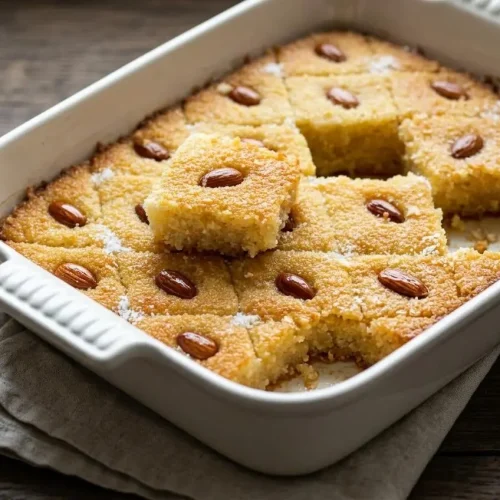
Basbousa Recipe

Equipment
- 9×13 Baking Dish
Ingredients
Cake Batter
- 1 cup Plain Yogurt
- 1 cup Granulated Sugar
- 1.5 tsp Baking Powder
- 1/2 tsp Baking Soda
- 3 cups Semolina, coarse
- 1/2 cup Butter, unsalted, melted this is equivalent to 1 stick of butter
- 1 cup Fine Coconut Flakes
- 3/4 cup Milk
- 2 tbsp Tahini Paste this is used to coat the baking pan
- Whole Almonds enough for each piece of semolina cake. approx. 24 almonds
Simple Syrup
- 2 cups Granulated Sugar
- 1.5 cups Water
- Squeeze of lemon
Instructions
- Heat the oven to 375 °F and use the tahini to brush the bottom and sides of a 9×13-inch baking dish. Spread the coating evenly so no thick streaks collect along the edges.
- Combine the yogurt, sugar, baking powder, and baking soda in a bowl, then leave it aside while preparing the semolina. A little bubbling and expansion show the expected reaction in the yogurt mixture.
- Work the melted butter through the semolina in a separate bowl, then fold in the fine coconut flakes. The grains should look evenly moistened and begin to cling together.
- Incorporate the yogurt mixture into the coated semolina, then stir in the milk until evenly combined. Stop once the batter is cohesive, thick, and spreadable, without dry pockets.
- Transfer the batter to the tahini-coated dish, level the surface, and tap the dish against the counter to release trapped air. An even layer helps the cake bake consistently across the pan.
- Use a knife to mark squares or diamonds in the unbaked batter, making approximately 24 portions. The mixture should be firm enough to retain the cutting lines.
- Gently press a whole almond into the middle of each marked portion and, if desired, scatter a little fine coconut over the surface. Keep the almonds visible rather than burying them in the batter.
- Bake uncovered on the bottom rack for 25–30 minutes, then transfer the dish to the top rack for another 5–10 minutes. Look for browning edges before moving the dish and an evenly light brown top before removing it.
- During baking, heat the syrup sugar and water together, stirring until dissolved, then simmer for about 8 minutes and finish with a squeeze of lemon. The syrup should thicken slightly while remaining fluid enough to pour.
- Immediately after baking, follow the marked lines with a sharp knife and distribute the warm syrup over the entire hot cake. The reopened cuts help the syrup reach into the crumb rather than staying only on top.
- Leave the cake in its dish until completely cool, allowing at least 1 hour before lifting out portions. The syrup needs time to absorb and the delicate crumb needs time to settle so the pieces hold together.