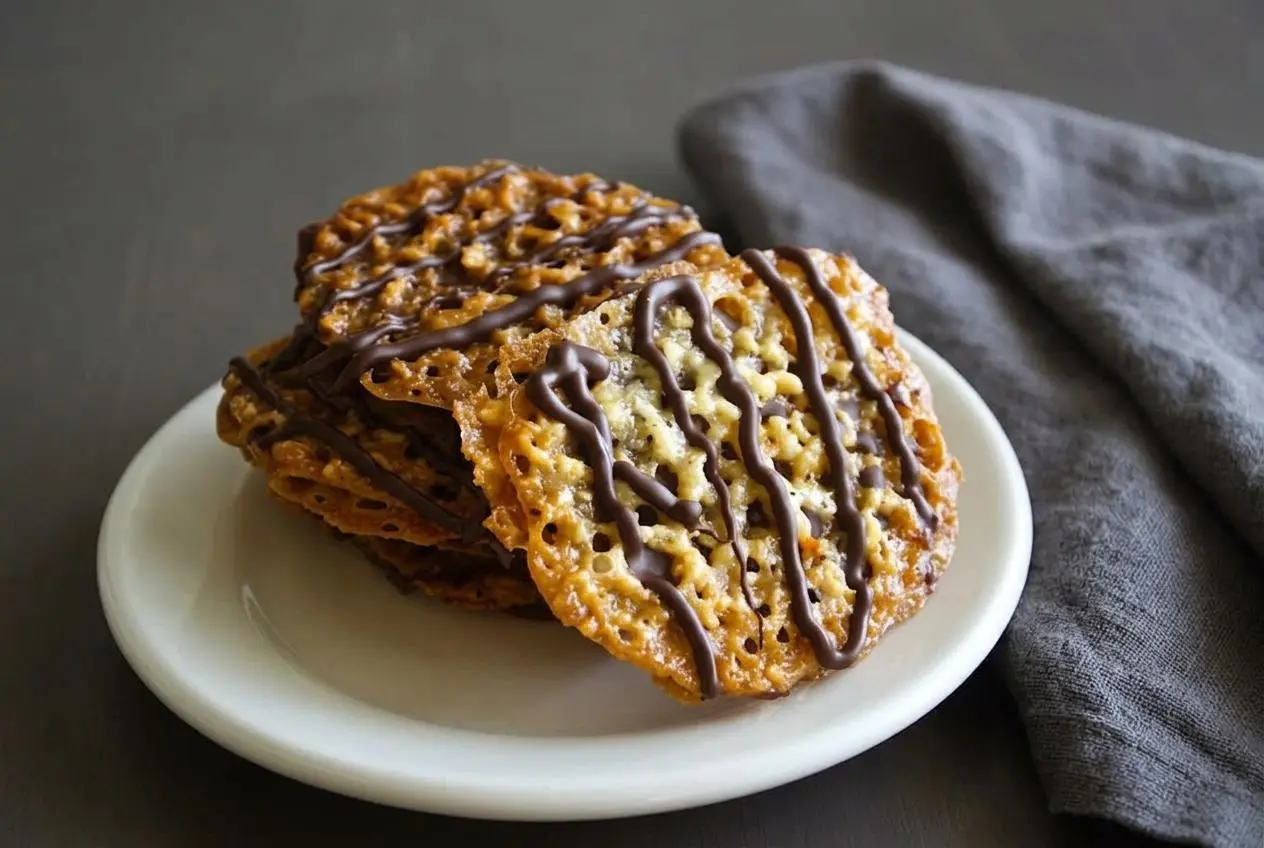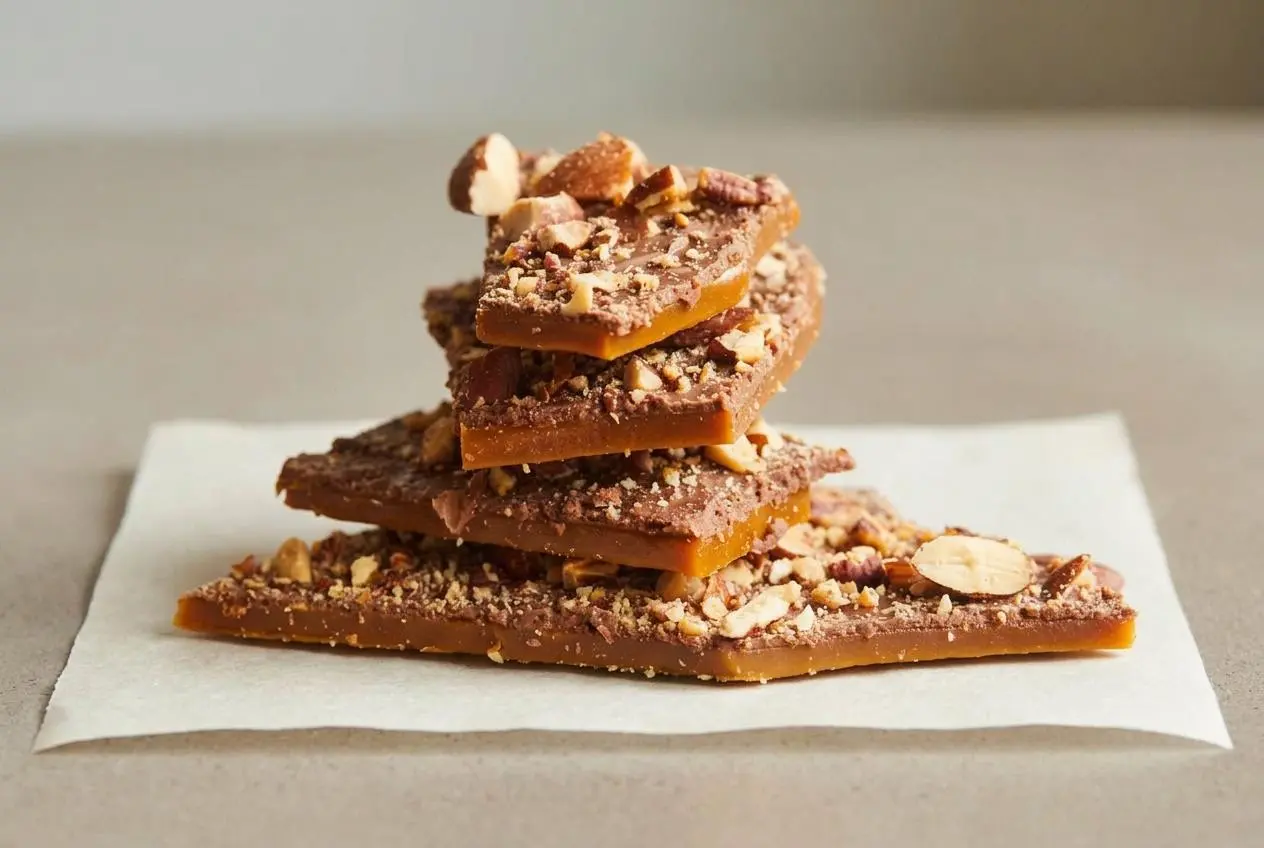
This english toffee recipe cooks equal weights of butter and granulated sugar with vanilla and salt, then finishes the hardened candy with milk chocolate and toasted nuts. The result is rich, crisp butter toffee with a chocolate-covered snap.
As the mixture bubbles, its pale buttery foam deepens into amber and develops a caramelized, nutty aroma. This is the chocolate-and-nut butter crunch commonly called English toffee in the United States.
The contrast makes it worth the attention at the stove: crisp candy underneath, smooth chocolate above, and roasted almonds and pecans in every bite. Watch for that amber finish.
Measure everything and position the parchment-lined pan before turning on the heat, so you won’t need to leave bubbling sugar unattended.
Key Ingredients and Their Roles
Butter supplies richness, sugar builds the crisp candy structure, and vanilla and salt round out the flavor. Milk chocolate adds a smooth coating, while toasted almonds and pecans bring roasted aroma and a contrasting crunch.
- 2 ½ sticks (10oz/284g) butter
- 1 ¼ cups (10oz/284g) granulated sugar
- 2 teaspoons vanilla extract
- ¼ teaspoon salt
- ¾ cup (4 ½ oz/128g) milk chocolate
- ⅓ cup (1 ½oz/43g) toasted chopped almonds
- ⅓ cup (1 ½oz/43g) toasted chopped pecans
Butter and sugar: Each weighs 284 grams, but their volumes differ. Equal weight does not mean equal cups. Butter gives the candy its rich bite, while cooked sugar provides the structure that lets it break rather than crumble.
Salted or unsalted butter: The recipe doesn’t specify either. Unsalted butter gives you more control over seasoning; salted butter contributes additional salt, and the amount varies by brand. Keep that in mind alongside the listed ¼ teaspoon salt. Salt alone won’t prevent butter separation.
Vanilla and salt: Both go into the saucepan with the butter and sugar. Vanilla adds aroma, and salt balances sweetness. There’s no separate finishing addition in this method.
Chocolate and nuts: Milk chocolate makes a sweet, creamy contrast to the candy. Use the almonds and pecans already toasted and chopped so they’re ready when the coating is wet. Darker chocolate is an optional topping choice covered below.
I prefer weighing the butter and sugar rather than relying on cup markings, especially when their equal weights matter more than their very different volumes.
How to Make Classic English Toffee Step by Step
Keep the heat steady and your attention on the saucepan. A heavy bottom helps distribute heat, while a candy thermometer gives you a clearer endpoint than the clock alone.
- Prep time: 20 minutes
- Cook time: 20 minutes
- Setting and chilling time: 1 hour 20 minutes
- Servings: 8 people
- Equipment: measuring cups and spoons, medium baking sheet, parchment paper, heavy-bottomed saucepan, candy thermometer, whisk, and spatula
Boiling sugar can cause serious burns. Keep hands away from the syrup, clear the work area, and never taste it hot.
- Cover a medium baking sheet with parchment and place it near the stove.
The lined surface should be ready to receive the candy without any last-minute preparation. - Add the butter, granulated sugar, vanilla, and salt to a heavy-bottomed saucepan, then set the burner to medium.
As the butter liquefies, the mixture will look pale and buttery. - Allow the sugar to dissolve, then maintain a simmer while whisking continuously until the candy reaches 285°F, generally 15 to 20 minutes.
The mixture should deepen to dark amber, with the whisk keeping the butter and sugar together. - Transfer the hot candy onto the lined sheet and leave it undisturbed for 20 minutes.
The poured mixture should harden into a firm sheet before you coat it. - Melt the milk chocolate gently, distribute it across the hardened candy with a spatula in a thin, even layer, and scatter both toasted nuts over it while wet.
The glossy coating should cover the surface, with nuts resting in the chocolate rather than on a dry layer. - Chill for about 1 hour until the chocolate sets, then remove the candy, break it into pieces, and transfer it to an airtight container at room temperature.
The topping should feel firm, while extended refrigerator storage can leave the candy damp and less crisp.
During cooking, watch the pale foam give way to thicker amber candy and a deeper caramel aroma. The final stretch moves quickly, so keep whisking and watch the thermometer rather than stepping away because the estimated cooking time hasn’t passed.
English Toffee Tips for Success and Troubleshooting
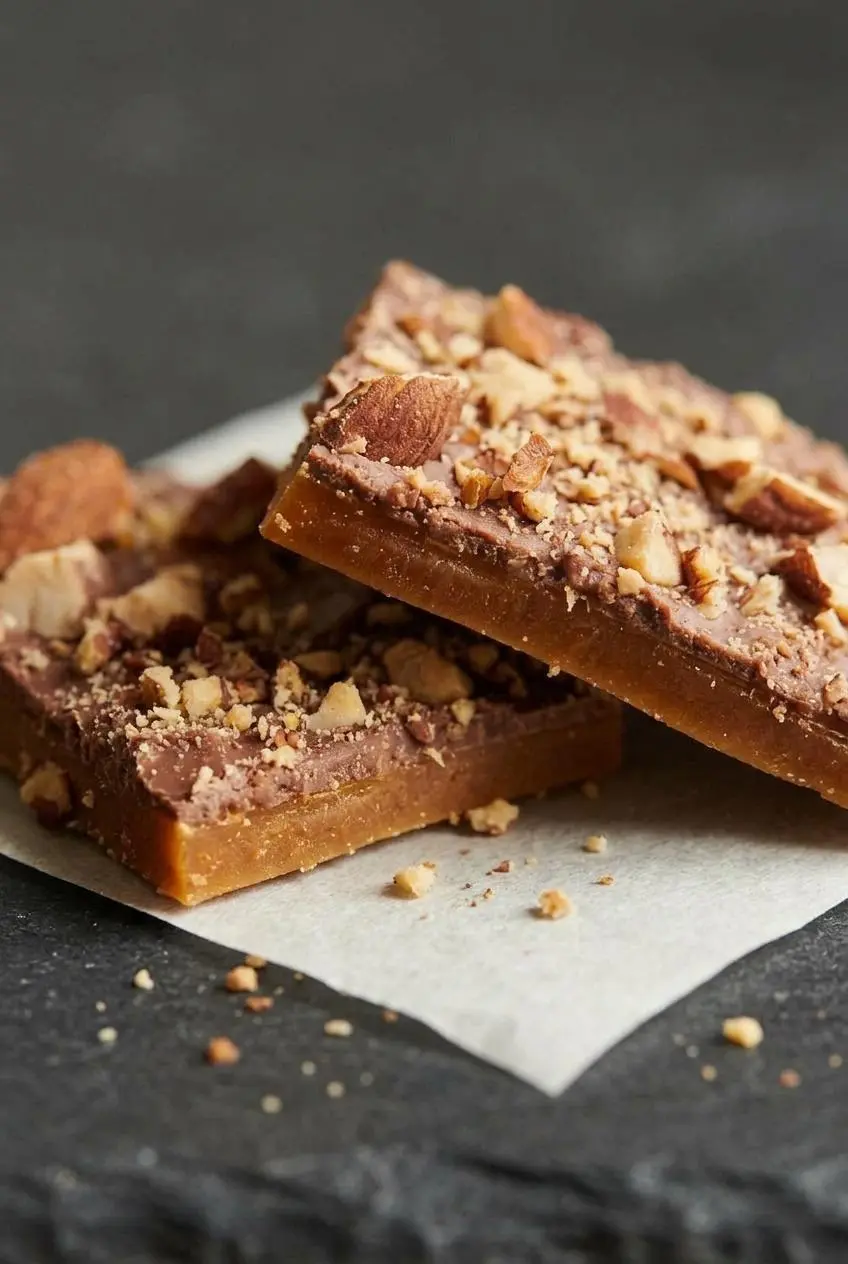
Check the mixture’s appearance as well as its temperature. Pooled fat, sandy texture, and a soft finished sheet point to different problems and need different responses.
How to Prevent and Fix Separated Butter
A heavy-bottomed saucepan, steady medium heat, and continuous whisking help maintain the butter emulsion. Turning up the burner to hurry things along can work against you.
- Butter pools around the edges: The mixture may be separating; lower the heat or briefly move the saucepan off the burner and whisk steadily to encourage it to come together.
- The mixture remains oily: As an optional rescue, carefully add a small splash of hot water off the heat and whisk to recombine, keeping clear because the syrup can sputter.
- The mixture comes back together: Resume controlled cooking and monitor doneness; adding water changes the cooking progress, so don’t rely on elapsed time.
A split batch may recover, but there’s no guarantee. Treat rescue attempts as troubleshooting, not as another required stage or a reason to add water at the start.
Making English Toffee Without a Candy Thermometer
A thermometer is more reliable than color alone, but a cold-water sample can provide a supporting texture check.
- Watch for rich, dark amber color rather than pale yellow foam.
- Carefully drop a small sample from a utensil into cold water, keeping your fingers away from the saucepan and hot syrup.
- Let the sample cool fully before handling, then check whether it snaps rather than bends or feels chewy.
The recipe’s 285°F endpoint falls within standard soft-crack terminology, not hard crack. Don’t raise the cooking temperature simply to match a hard-crack chart. The cooled sample helps you assess texture, but it isn’t a separately tested replacement for thermometer-guided cooking.
Why Toffee Turns Chewy or Grainy
- Chewy after setting: Insufficient cooking may have left excess moisture; check temperature and amber color on the next batch rather than using minutes alone.
- Sandy or grainy: Sugar crystallization is a likely cause; allow the sugar to dissolve during the melting stage and avoid scraping dried sugar deposits into the boiling mixture.
- Sticky after storage: Moisture exposure can soften the surface; protect finished pieces in an airtight container and avoid prolonged refrigeration.
These problems don’t all have a dependable repair. In particular, recooking chocolate-covered candy isn’t part of this method.
How to Keep the Chocolate Layer Attached
Let the candy harden before coating it, and make sure its surface is dry. Moisture or condensation can interfere with the chocolate layer, while an excessively thick coating can break away in large pieces.
Spread gently melted chocolate thinly and evenly, then add the nuts while it’s still wet. If desired, press the chopped nuts lightly into the coating to help them stay attached when you break the candy. This won’t prevent every loose fragment, but it gives the topping better contact.
English Toffee Variations and Substitutions
Topping changes offer a more straightforward way to customize this candy than changing the sugar. Keep these options separate from the measured recipe above.
Brown Sugar English Toffee
Brown sugar brings a molasses note and a darker starting color. That makes visual doneness harder to judge, so a candy thermometer matters more when exploring this variation.
No tested brown-sugar replacement ratio is provided here, and you shouldn’t expect identical texture or assume the same endpoint guarantees the same result. For the recipe as written, use granulated sugar. Brown sugar suggests a flavor direction associated with some British toffees, though it isn’t the same ingredient as treacle.
Dark Chocolate and Flaky Sea Salt Toffee
For a less-sweet finish, choose dark or semi-sweet chocolate instead of milk chocolate. Its deeper cocoa flavor contrasts with the buttery candy and toasted nuts.
An optional light pinch of flaky sea salt over the wet chocolate and nuts adds salty contrast before chilling. Use a restrained hand, particularly if you chose salted butter.
Almonds, Pecans, and Chocolate Choices
- All almonds: Choose them for a firmer nut crunch and a distinctly toasted flavor.
- All pecans: Choose them for a softer, rich nutty bite.
- Semi-sweet chocolate: Use it for a middle ground between sweet milk chocolate and more intense dark chocolate.
For a separate cinnamon-sugar, cracker-based direction, try churro saltine toffee rather than changing the cooking method here.
How to Store and Gift English Toffee
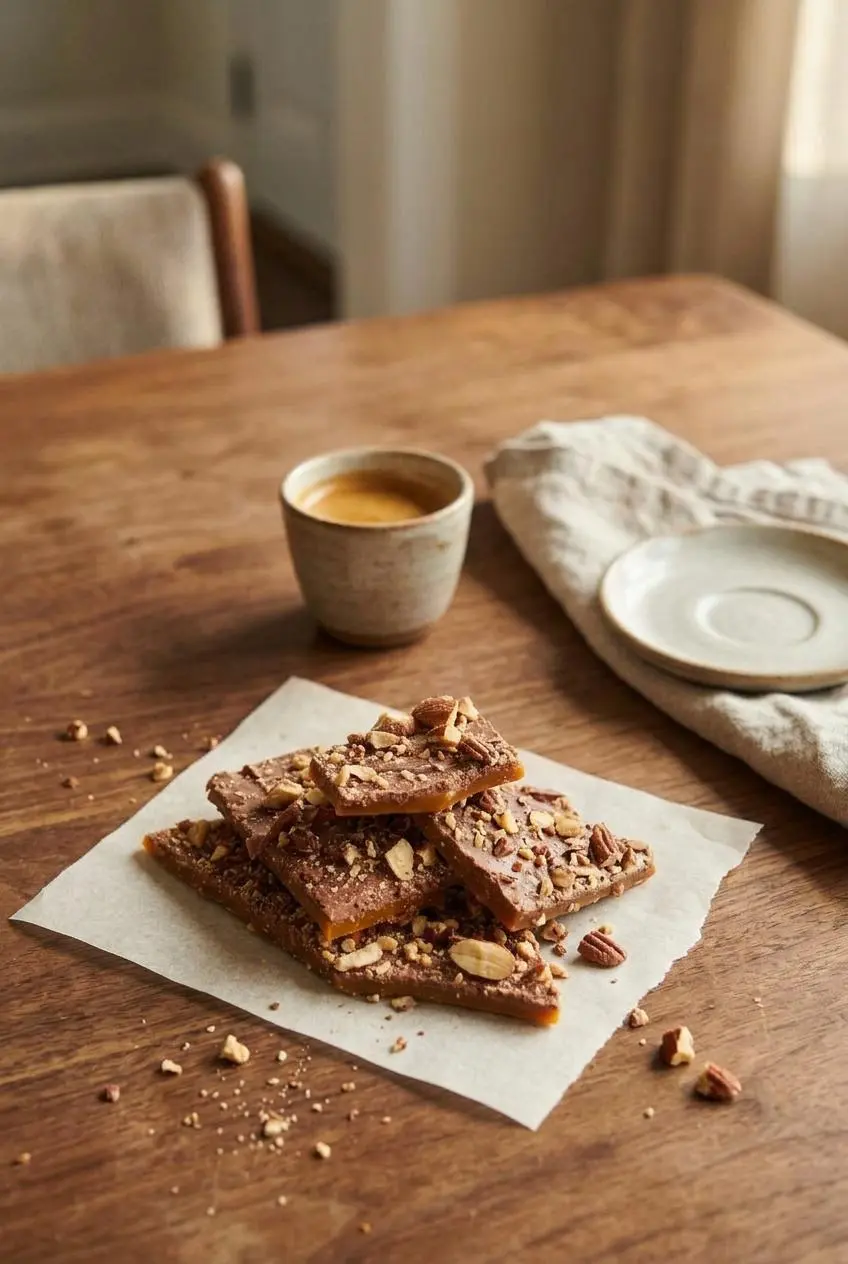
Use the refrigerator to set the chocolate, then store the finished candy in an airtight container at room temperature. Setting the topping and storing the candy serve different purposes.
Prolonged refrigeration can introduce moisture and soften the snap. Keep the container away from humidity and heat, and close it after taking out pieces.
For gifts, pack dry pieces in airtight holiday tins with parchment between the layers. The paper limits rubbing and keeps the chocolate-coated pieces from sticking together. Label the tins with the ingredients so recipients know they contain milk and nuts.
Serve shards alongside coffee or espresso, arrange them on a holiday dessert platter, or scatter broken pieces over vanilla ice cream or brownies. For contrasting textures on a candy tray, pair crisp toffee with classic Texas fudge, keeping each candy in its own paper liner.
Conclusion
Butter-rich candy, smooth chocolate, and toasted almonds and pecans make a satisfying combination of crispness and crunch. The most useful habits are steady heat, constant whisking, and close attention near the amber finish.
Once the topping sets, protect that texture with airtight room-temperature storage. Keep the tin closed between servings so the next piece has the snap you worked for.
Frequently Asked Questions
What Is the Difference Between Toffee and English Toffee?
In common US usage, English toffee often means crisp butter-and-sugar candy topped with chocolate and nuts. British toffee includes brown-sugar and treacle styles, sometimes served plain; names and recipes vary rather than following one universal definition.
What Is the Secret to Making Toffee That Does Not Separate?
Use a heavy-bottomed saucepan, steady medium heat, and constant whisking during simmering. Watch for pooled butter as an early warning; lowering the heat and whisking may help it recombine.
How Do You Know When English Toffee Is Done Without a Thermometer?
Look for dark amber color and check a small sample in cold water; once fully cooled, it should snap rather than bend. Keep fingers away from hot syrup, and remember that a candy thermometer is more reliable than color alone.
Can You Make English Toffee With Brown Sugar?
Brown sugar is an optional variation that adds molasses flavor and makes color cues less useful. This recipe uses granulated sugar; no tested brown-sugar replacement ratio is provided, so identical results aren’t promised.
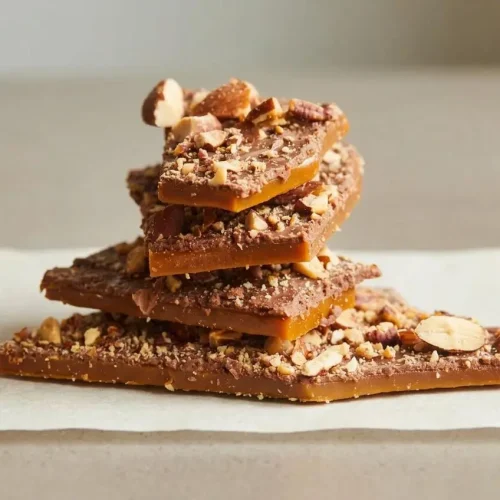
English Toffee Recipe

Equipment
- Measuring cups and spoons
- Baking Sheet
- Parchment Paper
- Heavy-bottomed saucepan
- Candy thermometer
- Whisk
- Spatula
Ingredients
- 2 ½ sticks butter (10oz/284g)
- 1 ¼ cups granulated sugar (10oz/284g)
- 2 teaspoons vanilla extract
- ¼ teaspoon salt
- ¾ cup milk chocolate (4 ½ oz/128g)
- ⅓ cup toasted chopped almonds (1 ½oz/43g)
- ⅓ cup toasted chopped pecans (1 ½oz/43g)
Instructions
- Cover a medium baking sheet with parchment and place it near the stove. The lined surface should be ready to receive the candy without any last-minute preparation.
- Add the butter, granulated sugar, vanilla, and salt to a heavy-bottomed saucepan, then set the burner to medium. As the butter liquefies, the mixture will look pale and buttery.
- Allow the sugar to dissolve, then maintain a simmer while whisking continuously until the candy reaches 285°F, generally 15 to 20 minutes. The mixture should deepen to dark amber, with the whisk keeping the butter and sugar together.
- Transfer the hot candy onto the lined sheet and leave it undisturbed for 20 minutes. The poured mixture should harden into a firm sheet before you coat it.
- Melt the milk chocolate gently, distribute it across the hardened candy with a spatula in a thin, even layer, and scatter both toasted nuts over it while wet. The glossy coating should cover the surface, with nuts resting in the chocolate rather than on a dry layer.
- Chill for about 1 hour until the chocolate sets, then remove the candy, break it into pieces, and transfer it to an airtight container at room temperature. The topping should feel firm, while extended refrigerator storage can leave the candy damp and less crisp.