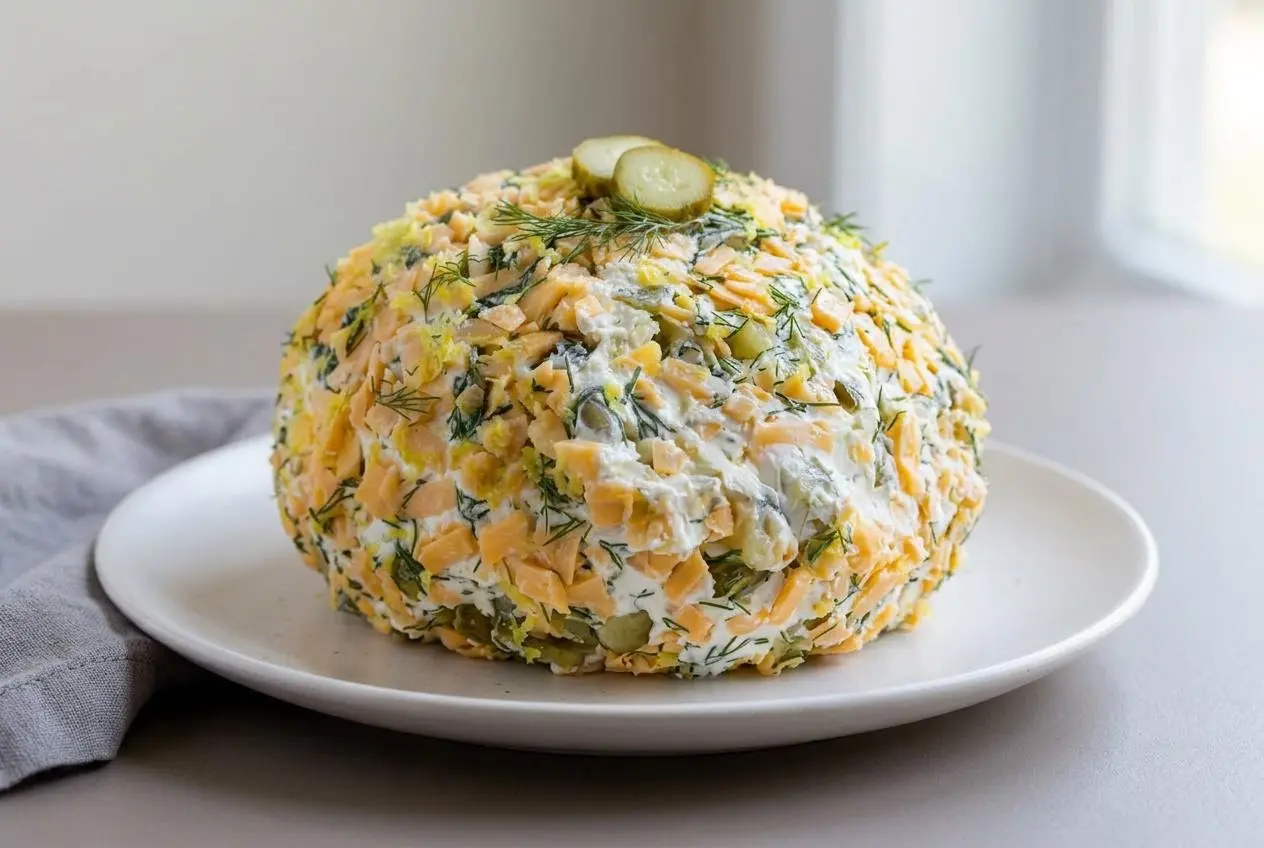
A dill pickle cheese ball is a chilled cream cheese spread mixed with tangy pickles, cheddar, dill, and garlic, then shaped until firm. Drying the pickles well keeps the mixture thick enough to hold its round shape.
This dill pickle cheese ball brings creamy, salty, herb-flecked flavor to a game-day snack board or holiday spread. The lemony cheddar coating makes each scoop taste bright instead of heavy.
The contrast of cool dill, sharp cheese, and crunchy pickles is hard to beat. The paper-towel step makes all the difference.
Set the cream cheese out until it yields easily when pressed, but do not let the chopped pickles sit in their brine while you prep the rest.
Ingredients
Each ingredient contributes to the cheese ball’s structure and flavor, from rich cream cheese and cheddar to crisp pickles, fresh dill, garlic, and lemon for brightness.
Cheeseball
- 16 ounces Cream Cheese – softened
- 4 Tablespoon Sour Cream
- 1/2 teaspoon Garlic Powder
- 1 teaspoon Lemon Juice
- Salt/Pepper – to taste
- 1 Cup Shredded Cheddar Cheese
- 1½ Cups Chopped Dill Pickles
- 2 Tablespoons Fresh Chopped Dill
Coating
- 1/2 Cup Shredded/Chopped Cheddar Cheese
- 1 Tablespoon Fresh Chopped Dill
- 1 teaspoon Lemon Zest
Use block-style full-fat cream cheese when possible. Tub spreads tend to be looser, while softened blocks whip into a sturdier base. Sour cream makes the mixture easier to beat, and lemon juice lifts the richness without making the cheese ball taste overtly citrusy.
Freshly shredded sharp cheddar gives the filling a cleaner cheese flavor and helps it bind without the powdery coating sometimes found on bagged shredded cheese. The fresh dill keeps the pickle flavor grassy and bright, while the zest adds fragrance to the outer crust.
I blot the pickles until the paper towels no longer look wet, because even a small amount of lingering brine can soften the finished cheese ball.
How to Make the Ultimate Dill Pickle Cheese Ball
Whip the dairy base until fluffy, fold in the solids, then use plastic wrap to compress the soft mixture into a neat sphere before chilling it for at least 2 hours.
- Beat the softened cream cheese, sour cream, garlic powder, lemon juice, salt, and pepper with a hand mixer for 1 to 2 minutes.
The mixture should change from dense and lumpy to smooth, pale, and lightly fluffy. - Stir in the shredded cheddar, chopped dill pickles, and fresh dill until evenly distributed.
The mixture should look thick and scoopable, with pickle pieces suspended throughout rather than pooling in liquid. - Arrange two long sheets of plastic wrap in a cross on a work surface, then mound the cheese mixture in the center and gather the wrap around it.
Twist the plastic wrap snugly at the top to round and compact the mixture into a firm ball shape. - Refrigerate the wrapped cheese ball for at least 2 hours, then roll it in the coating cheddar, dill, and lemon zest.
Press the coating gently into bare areas until the outside is evenly covered, then move it to a platter.
Prepping and Drying the Pickles
Choose savory dill pickles rather than sweet bread-and-butter pickles so the cheese ball stays tangy, garlicky, and balanced. Dice them finely so they distribute through each bite instead of creating large wet pockets.
Spread the chopped pickles between thick layers of paper towels and press firmly. Replace the towels if they become saturated. This step removes excess brine before it can loosen the cream cheese mixture and interfere with a clean, sliceable shape.
Whipping and Flavor Incorporation
Start with softened cream cheese so the hand mixer can smooth it quickly. After a minute or two, the mixture should look airy and cohesive, with no stubborn cream cheese lumps around the bowl’s edge.
Fold in the cheddar, dried pickles, and dill with a sturdy spatula after the base is whipped. Gentle folding keeps the mixture thick and avoids overworking it into a loose, greasy spread.
The Plastic Wrap Shaping Method
The crisscrossed wrap acts like a sling, giving you control over a mixture that is still soft before chilling. Place one sheet of plastic wrap across the other in an X, pile the cheese mixture in the middle, and bring all four ends upward.
Twist the gathered wrap taut above the ball, using the tension to compress the mixture into a smooth round. If the shape looks uneven, gently rotate and tighten it through the plastic rather than handling the cheese directly.
Chilling and Outer Crust Rolling
The long chill is what turns the soft cheese mixture into a spreadable sphere that holds together. Before unwrapping, press the wrapped ball lightly with your thumb. It should resist pressure rather than feel squishy or slumped.
Scatter the coating ingredients across a flat board, then roll the chilled ball slowly so the cheddar, dill, and lemon zest adhere. Apply the fresh dill coating close to serving time, ideally within an hour, so it stays green and aromatic.
Texture Mastery and Common Mistakes to Avoid
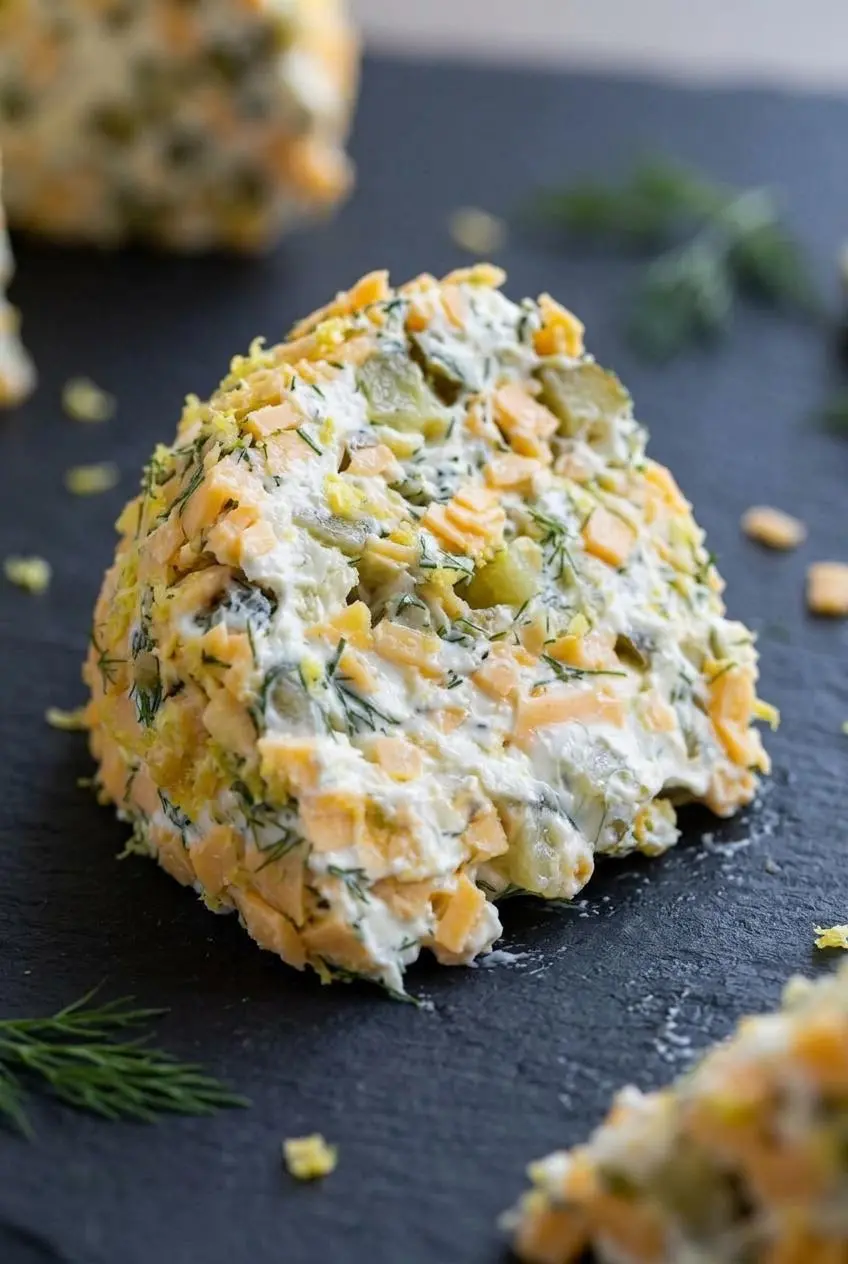
A firm cheese ball depends more on moisture control than muscle. These fixes keep the filling thick, round, and easy to scoop.
- Mixture feels too loose: Fold in more finely shredded cheddar, rewrap the ball tightly, and chill it longer until it firms up. The cheese adds structure without changing the main flavor direction.
- Mixture turns soupy: Pickle brine is usually the culprit. Do not pour brine into the bowl, and press the chopped pickles dry before adding them.
- Coating looks wilted: Fresh dill releases moisture as it sits. Hold off on the dill and lemon zest coating until close to serving time.
- Ball loses its round shape: Tighten the plastic wrap more firmly during shaping, then wait until the center resists gentle thumb pressure before removing the wrap.
If the mixture is too soft to shape despite chilling, serve it as a scoopable creamy dill pickle dip instead. It will still taste great with crackers and vegetables, and there is no reason to wrestle a loose spread into a ball.
Flavor Variations and Creative Outer Coatings
Keep the main cheese ball as written, then change the outside or add optional flavor accents when you want a different party platter mood.
Smoky Bacon and Cheddar Crust
For a bacon lover dill pickle cheese ball, roll the chilled ball in crisp, well-drained bacon crumbles mixed with extra sharp cheddar. The smoky crunch plays especially well with the tart pickle flavor, but keep the bacon dry so it does not soften the coating.
Ranch and Pickled Jalapeno Kick
For a zesty ranch version, add dry ranch seasoning and finely diced pickled jalapeños to the cheese mixture as an optional adaptation. Ranch brings a familiar herby savoriness, while jalapeños add tang and heat. Blot the jalapeños just as carefully as the dill pickles.
Everything Bagel and Toasted Pecan Blend
Everything bagel seasoning, toasted chopped pecans, and fresh chives make a fragrant, crunchy outer layer. The toasted onion and sesame flavors add depth, while pecans bring a buttery crunch that balances the cool cream cheese.
- For mini bite-sized pickle cheese balls, portion the mixture with a small cookie scoop before chilling.
- Set the portions on parchment, chill until firm, and roll each one in your chosen coating.
- Add sturdy pretzel sticks or toothpicks just before serving for easy single-bite snacks.
For a more traditional holiday option alongside the pickle version, try a classic cheese ball with its own savory coating.
Make-Ahead Guidelines and Safe Storage
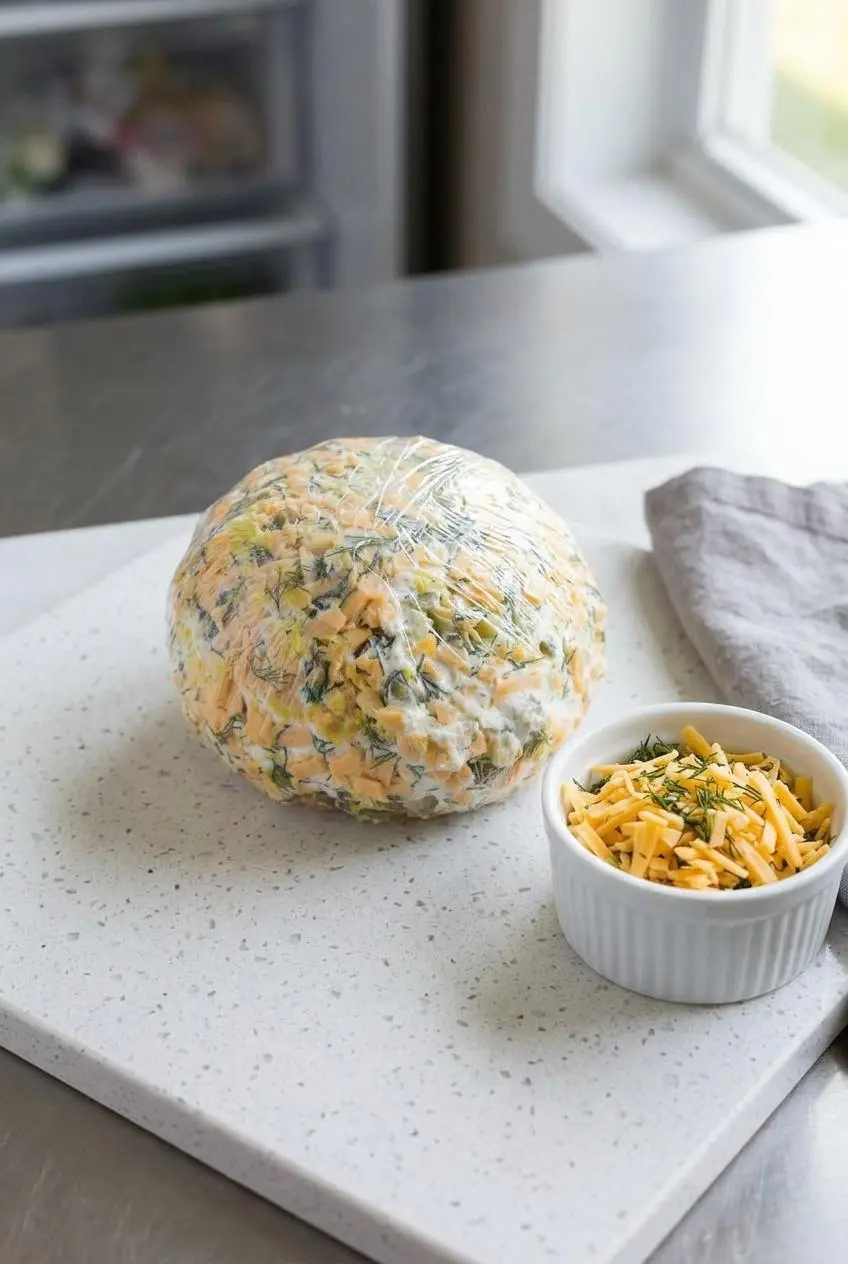
You can shape the cheese ball in plastic wrap ahead of a gathering, keeping the delicate dill, cheddar, and lemon zest coating separate until close to serving. This protects the color and texture of the crust while the center firms in the refrigerator.
Keep the wrapped cheese ball chilled and tightly covered until you are ready to coat and serve it. Refrigeration at 40 °F or below helps slow bacterial growth in perishable foods such as cheese, as explained in refrigeration and food safety information.
Store leftover portions in an airtight container in the refrigerator and keep them chilled between servings. Freezing is not recommended for this appetizer because cream cheese and sour cream can separate as they thaw, leaving the texture watery or grainy.
Firm, crisp pickles make the best make-ahead filling because they release less moisture into the cheese mixture. If you are making your own, these homemade dill pickles are a flavorful option once fully drained and blotted dry.
Best Crackers and Platter Serving Ideas
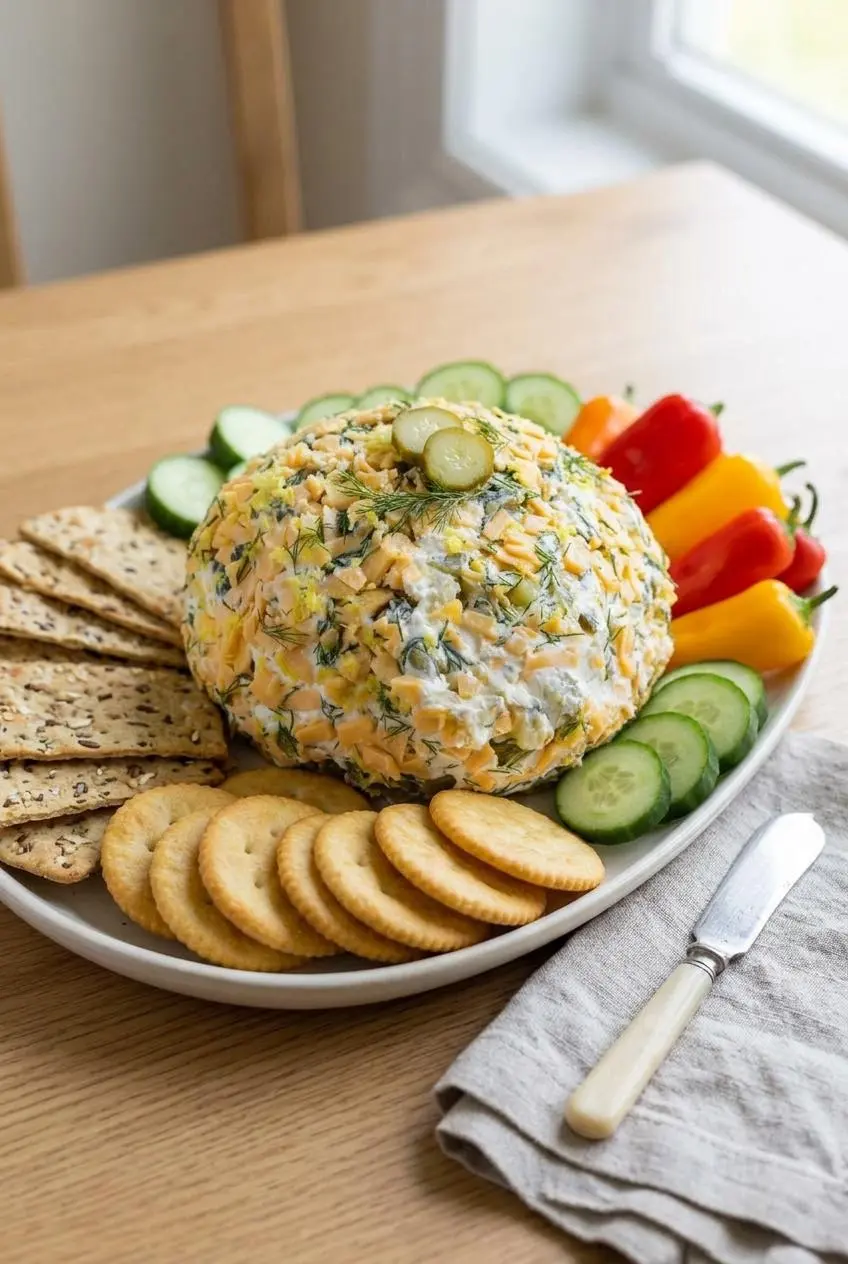
This is a dense, chilled spread, so choose dippers with enough structure to carry a generous scoop without snapping.
- Thick buttery round crackers: Their rich flavor suits cheddar and dill, and their sturdy shape handles a cold spread well.
- Multigrain flatbreads: These add a hearty crunch without competing with the bright pickle flavor.
- Pretzel crisps or bagel chips: Their salty crunch makes a great match for tangy cream cheese.
- Toasted sourdough slices: Crisp crostini provide the strongest base for generous portions.
- Fresh vegetables: Cucumber rounds, celery sticks, carrot batons, and mini bell pepper halves bring a cool, crisp contrast.
Skip delicate wafer-thin crackers, which tend to crumble under the weight of the spread. Let the cheese ball stand briefly before serving so it softens slightly and spreads more comfortably, while still keeping its shape.
Conclusion
Rich cheddar, punchy dill pickles, fresh herbs, and bright lemon zest make this cheese ball an easy fit for nearly any snack table. The creamy center and crunchy coating give every scoop plenty of character.
Dry the pickles thoroughly, chill the ball until firm, and save the fresh coating for close to serving time. Swap in toasted nuts or crisp bacon when you want a different finish for the occasion.
Frequently Asked Questions
How Far in Advance Can I Make This Cheese Ball?
Shape the cheese ball, wrap it tightly, and keep it refrigerated until serving time. Add the fresh dill, cheddar, and lemon zest coating close to serving so the outside stays bright and fresh.
What Cheese Pairs Best With Dill Pickles?
Sharp cheddar is an especially good match because its rich, savory flavor stands up to tart dill pickles. White cheddar, Colby, Monterey Jack, and pepper Jack also work well as optional alternatives when you want a milder or spicier profile.
How Do I Keep the Cheese Ball From Getting Soggy?
Dice the pickles finely and press them firmly between paper towels before mixing them into the dairy base. Skip the pickle brine, keep the ball chilled, and wait to add fresh herbs until close to serving.
Can I Freeze a Dill Pickle Cheese Ball?
Freezing is not recommended because the cream cheese and sour cream can separate after thawing. The cheese ball may become watery, grainy, or crumbly instead of smooth and spreadable.
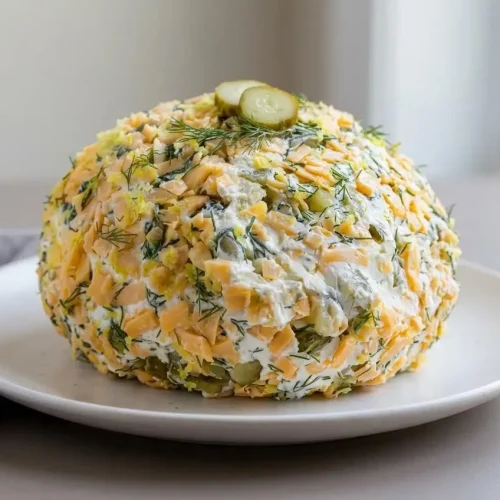
Dill Pickle Cheese Ball

Equipment
- Zester – Grater
- Cutting Boards
- Knives
Ingredients
Cheeseball
- 16 ounces Cream Cheese softened
- 4 Tablespoon Sour Cream
- 1/2 teaspoon Garlic Powder
- 1 teaspoon Lemon Juice
- Salt/Pepper to taste
- 1 Cup Shredded Cheddar Cheese
- 1½ Cups Chopped Dill Pickles
- 2 Tablespoons Fresh Chopped Dill
Coating
- 1/2 Cup Shredded/Chopped Cheddar Cheese
- 1 Tablespoon Fresh Chopped Dill
- 1 teaspoon Lemon Zest
Instructions
- Beat the softened cream cheese, sour cream, garlic powder, lemon juice, salt, and pepper with a hand mixer for 1 to 2 minutes. The mixture should change from dense and lumpy to smooth, pale, and lightly fluffy.
- Stir in the shredded cheddar, chopped dill pickles, and fresh dill until evenly distributed. The mixture should look thick and scoopable, with pickle pieces suspended throughout rather than pooling in liquid.
- Arrange two long sheets of plastic wrap in a cross on a work surface, then mound the cheese mixture in the center and gather the wrap around it. Twist the plastic wrap snugly at the top to round and compact the mixture into a firm ball shape.
- Refrigerate the wrapped cheese ball for at least 2 hours, then roll it in the coating cheddar, dill, and lemon zest. Press the coating gently into bare areas until the outside is evenly covered, then move it to a platter.