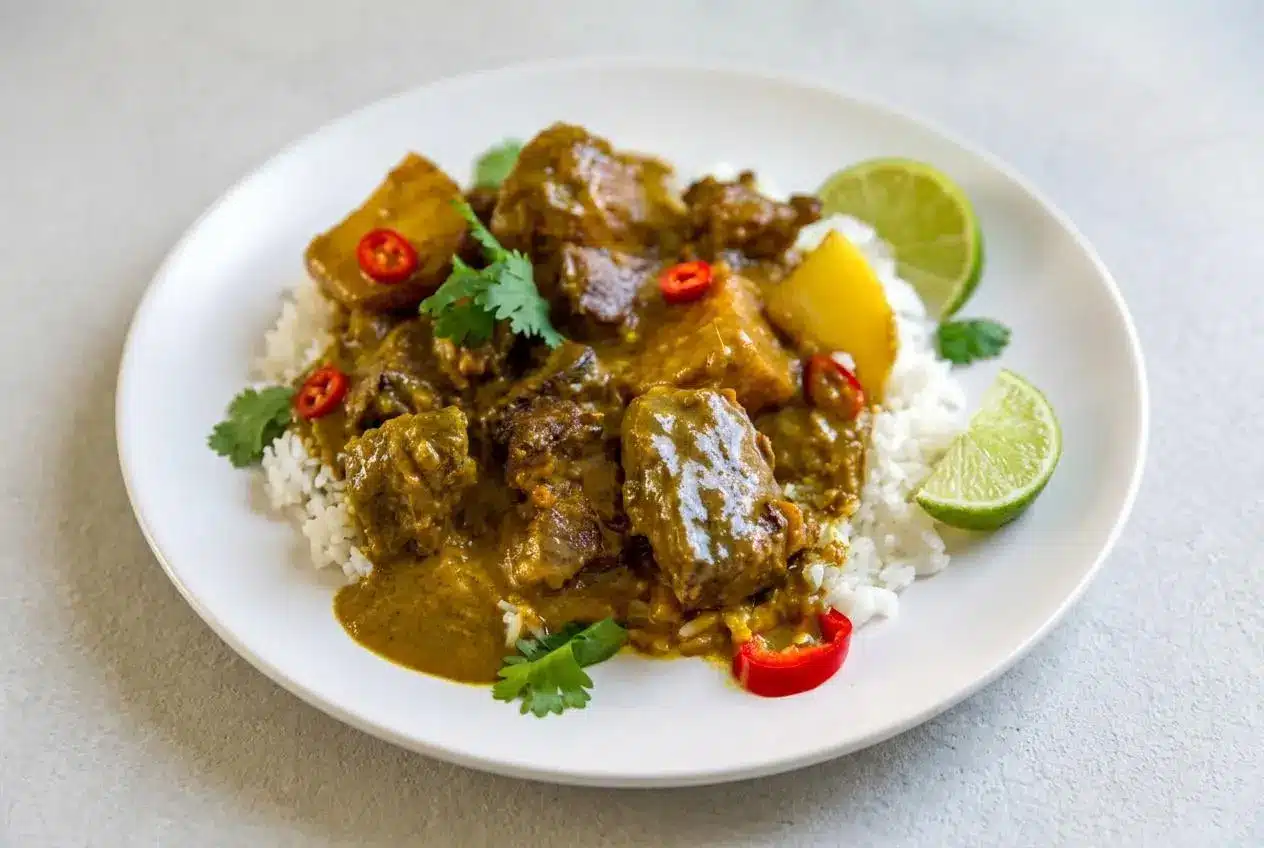
Curry beef is a comforting stovetop braise of seared beef chuck, onions, garlic, ginger, curry powder, coconut milk, and potatoes simmered until the meat turns fork-tender.
This curry beef fills the kitchen with the deep aroma of toasted spices and a bubbling coconut gravy that clings beautifully to every bite.
Browned beef, silky sauce, and tender potatoes make it hearty without feeling heavy. The two-stage simmer keeps the potatoes intact.
Keep the pot at a lazy simmer, with small bubbles around the edges, rather than a hard boil.
Essential Ingredients for a Rich Curry Beef Gravy
Every ingredient has a clear job here: chuck provides richness, aromatics build fragrance, curry powder brings warmth, coconut milk gives body, and potatoes add a satisfying texture.
- 1 1/2 lbs beef chuck (cut into 1 1/2-inch pieces)
- 1/2 tsp salt (more if desired)
- 2 tbsp vegetable oil
- 2 tbsp butter (salted or unsalted)
- 1 medium white onion (thinly sliced)
- 4 cloves garlic (finely chopped)
- 1 tbsp ginger paste (or fresh ginger, peeled and finely chopped)
- 3 tbsp curry powder
- 2 bay leaves
- 2 13 oz unsweetened coconut milk
- 2 lbs Yukon Gold potatoes (peeled, cut into 2-inch pieces)
- 1 Fresno chiles (sliced thin, or other chile of choice)
- fresh cilantro (chopped)
- Lime wedges
Beef chuck is the right choice for this long, gentle braise because its marbling and connective tissue soften into succulent bites. Garlic and ginger create the savory backbone, while curry powder needs warm fat to release its fullest aroma instead of tasting dusty or raw.
Unsweetened full-fat coconut milk gives the gravy a velvety texture and rounds out the spices. Yukon Gold potatoes are waxy enough to stay in distinct pieces while lending a little starch to the sauce as they cook.
I trim away thick, firm exterior fat from chuck, but leave the fine marbling and connective tissue that give the finished curry its lush texture.
How to Make Tender Curry Beef on the Stovetop
Build flavor in layers: brown the meat first, soften the aromatics in the same pot, then let the beef become tender before the potatoes go in.
- Season the beef with kosher salt, then heat the vegetable oil in a large heavy pot over medium-high heat and brown the beef in batches for 8 to 10 minutes.
Leave space between the pieces so you hear a steady sizzle and develop deep brown color instead of gray, wet-looking meat. - Move the browned beef to a plate and carefully remove all but 1 tbsp of fat from the pot, then lower the heat to medium and add the butter, onion, garlic, and ginger.
Stir often for about 5 minutes, scraping the browned bits from the pot, until the onion looks translucent and smells sweet. - Stir in the curry powder and cook it in the aromatic butter mixture for about 3 minutes before adding the bay leaves, coconut milk, and 1 cup water.
The spices should smell warm and toasty, with no harsh raw-powder aroma. - Return the beef and any collected juices to the pot, season with salt, and bring the curry to a gentle simmer before partially covering it for 30 to 35 minutes.
The beef should be starting to yield when pressed with a fork, but it does not need to be fully tender yet. - Add the potatoes, return the curry to a simmer, and cook uncovered for 25 to 35 minutes, stirring occasionally and adding water if the gravy becomes thicker than you like.
The curry is ready when the potatoes are tender and two forks pull the beef apart without resistance; finish with salt and serve with cilantro, sliced chile, and lime wedges.
The browned layer on the bottom of the pot is valuable flavor, so loosen it while the onion cooks. Avoid rushing the liquid stage. A vigorous boil can make the coconut gravy look oily and can leave the beef tight rather than tender.
The Best Beef Cuts for Melt-in-Your-Mouth Curry
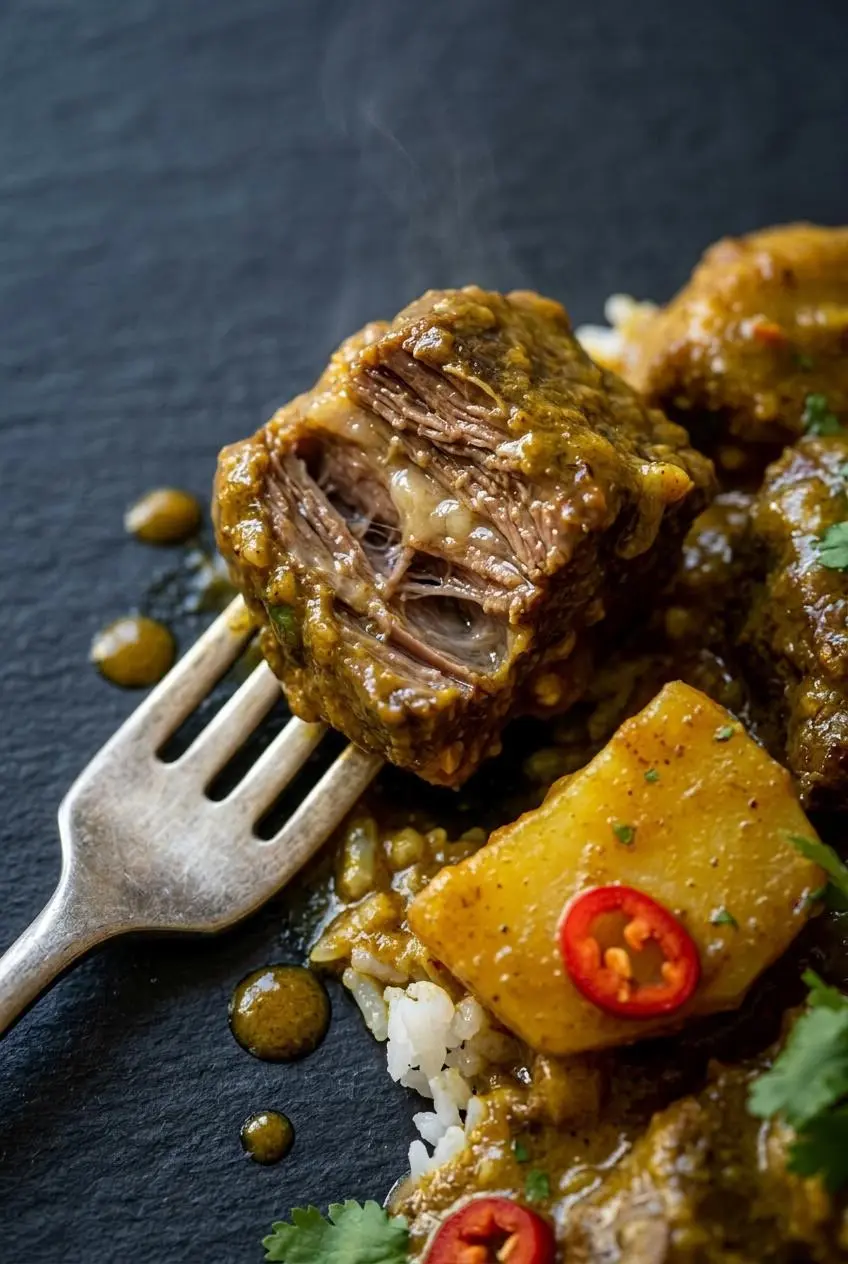
Boneless beef chuck roast makes the most reliable curry because it has enough marbling and connective tissue to stay moist through a long simmer. It is also the same dependable choice for a classic beef stew, where slow cooking transforms a firm cut into tender spoonable pieces.
Buy a whole chuck roast when possible and cut it into uniform 1 1/2-inch cubes. Consistent sizing matters more than perfectly geometric pieces, since very small chunks can dry out before larger pieces soften.
- Chuck roast: The best all-around option for rich flavor, even braising, and tender pieces that hold together.
- Brisket: A flavorful alternative with a fuller beefy taste, though its grain needs careful trimming and slicing after cooking.
- Lean sirloin: Better for quick cooking than braising; it can become dry and chewy in a curry that simmers for this long.
Pre-cut stew meat can be uneven because packages often contain mixed cuts. If you use it, sort the pieces by size and expect some variation in tenderness. Chuck gives you more control from the start.
Slow Cooker and Instant Pot Adaptations
Both appliances can work well, but still brown the beef and bloom the spices first. That early stovetop work creates the roasted depth that a sealed cooker cannot develop on its own.
Hands-Off Crockpot Method
Brown the beef and cook the onion, garlic, ginger, and curry powder as directed, using a skillet or the slow cooker’s sauté setting if available. Transfer everything to the slow cooker with the bay leaves, coconut milk, and 1/2 cup water. The sealed environment holds onto moisture, unlike a stovetop pot.
Cook until the chuck is tender, using low heat for 6 to 7 hours or high heat for 3 to 4 hours. Add the potato chunks during the final 2 hours so they become tender without collapsing. For another hands-off braising approach, this slow cooker beef stew uses the same patient, low-heat logic.
Quick Instant Pot Pressure Cooker Steps
Use sauté mode to brown the beef in batches, then cook the onion, garlic, ginger, and curry powder before stirring in the bay leaves, coconut milk, and water. Pressure cook on high for 25 minutes, then allow a 10-minute natural pressure release.
Add the potatoes after releasing the pressure, then cook on high pressure for 5 more minutes and use a quick release. This two-part method protects the potatoes from turning overly soft while the beef gets the longer cook it needs.
Flavor Variations and Cultural Styles
The coconut curry version is complete as written, but these optional directions can take the flavor in a different direction without changing the main method.
Caribbean and Jamaican Profile
For a Caribbean-style profile, marinate the beef in green seasoning before cooking, then add fresh thyme, ground allspice, and a whole uncut Scotch bonnet pepper during the simmer. The thyme and allspice bring warm, savory complexity, while the whole pepper perfumes the gravy with gentler heat than sliced chile.
Japanese Golden Roux Variation
For a thicker Japanese or Hawaiian-inspired curry, cook equal parts butter and flour into a medium-brown roux in a separate pan, stir in curry powder, and whisk it into the simmering gravy. The result is glossier, thicker, and more gravy-like than the coconut-forward version.
Brightening Citrus Finish
Right before serving, stir in fresh lime juice, lime zest, and toasted crushed cumin seeds if you want a brighter finish. The citrus sharpens the rich coconut gravy, while cumin adds a warm, nutty edge that works especially well with the beef.
Troubleshooting Common Curry Beef Problems
Most curry problems come down to heat control, timing, or seasoning at the finish. Small adjustments can bring the pot back into balance.
Fixing Tough or Chewy Meat
- Tough beef: The chuck likely needs more time at a gentle simmer. Keep the pot partially covered and continue cooking until the fork slides in easily.
- Rubbery texture: The heat may be too high. Lower it until the gravy barely bubbles, since a hard boil can tighten the meat fibers.
- Uneven tenderness: The cubes may be different sizes. Remove tender pieces if needed while the larger pieces continue simmering.
Preventing Sauce Separation and Thin Broth
- Oily-looking coconut gravy: Lower the heat immediately and stir gently. Coconut milk stays smoother when it simmers quietly rather than boiling hard.
- Thin sauce: Let the curry cook uncovered for a little longer. The potatoes naturally release starch as they soften, helping the gravy thicken.
- Flat flavor: Add salt gradually, then finish with lime juice. Salt strengthens the spices, while acid makes the rich gravy taste clearer.
- Too much heat: Remove the chile slices before serving, then offer cooling cucumber raita alongside the curry.
What to Serve with Curry Beef
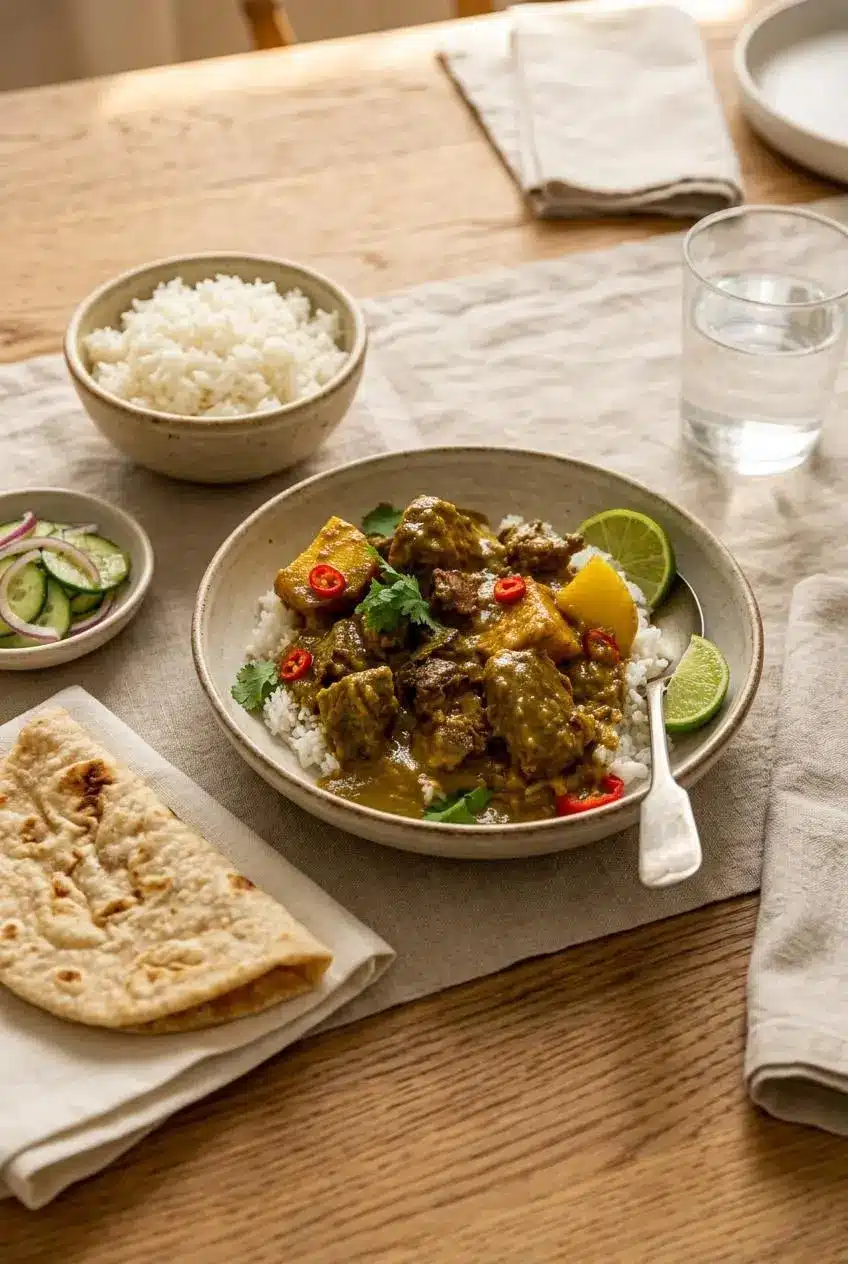
Serve the curry over warm jasmine or basmati rice so the grains catch every bit of the coconut gravy. Garlic naan or flaky roti are equally good for scooping up the sauce.
- Cucumber salad: Crisp cucumber and a lightly tangy dressing cut through the richness.
- Cucumber raita: A cool, creamy side softens the heat from the Fresno chile.
- Lime wedges: Add a squeeze at the table for a fresh contrast to the tender beef.
- Rice leftovers: Turn extra rice into beef fried rice for another hearty meal.
Storage and Reheating Instructions
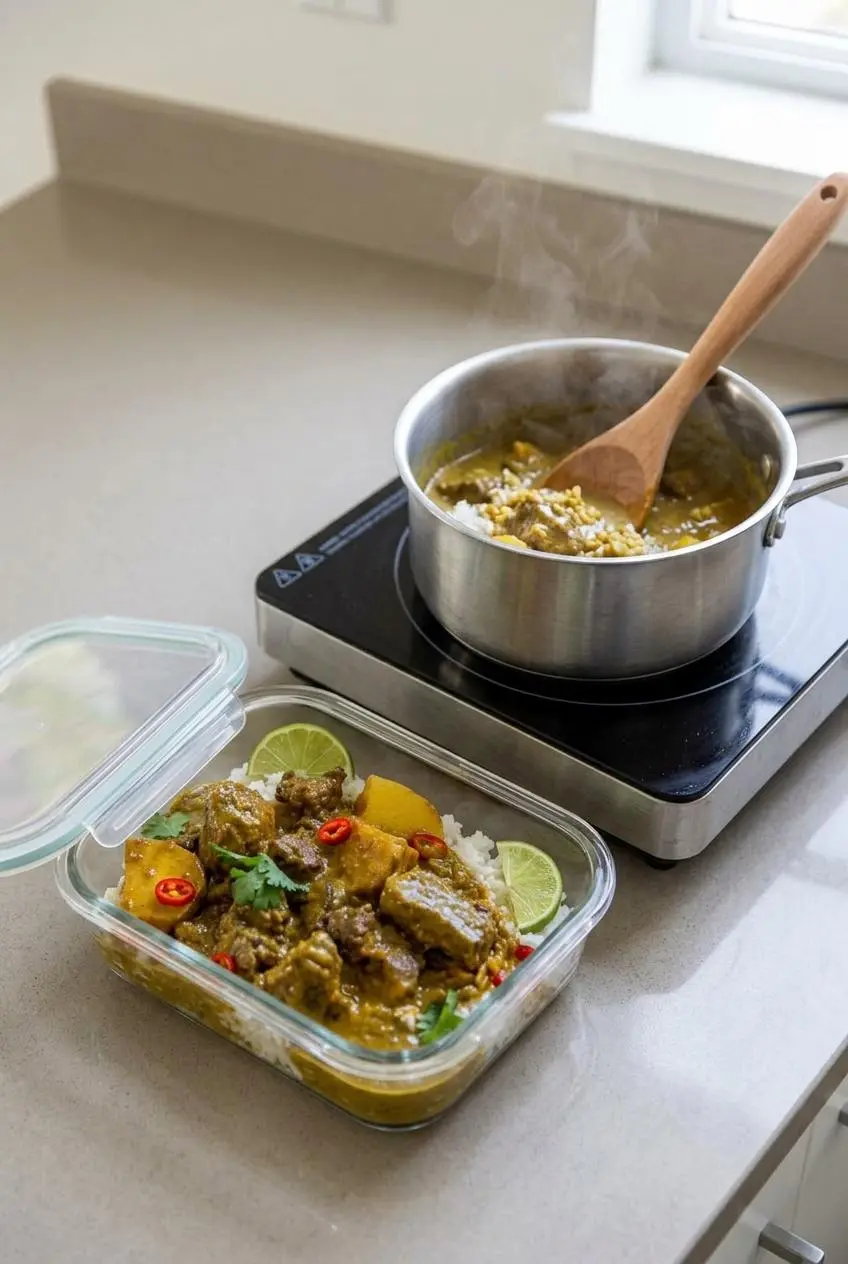
Cool the curry completely, transfer it to airtight containers, and keep it chilled. The flavors often become more blended after resting in the refrigerator, especially the ginger, garlic, and curry spices.
Reheat only the portion you plan to serve in a saucepan over medium-low heat, stirring occasionally and adding a splash of water if the gravy has thickened. Avoid heating on high power in the microwave, which can cause the sauce to splatter and heat unevenly.
Potatoes can soften after freezer storage, so they are best enjoyed fresh when their firm texture matters most. If you use freezer-safe containers for portions, cool the curry fully first and keep the containers tightly sealed.
Conclusion
This curry rewards two things: patiently browning the beef in batches and keeping the simmer gentle. Those steps build a deeply savory coconut gravy and give the chuck time to become truly tender.
Spoon it over warm rice, finish with cilantro and lime, and serve it while the sauce is glossy and fragrant. It is the kind of meal that makes a quiet evening feel well fed.
Frequently Asked Questions
What Is the Best Cut of Beef for Curry Beef?
Boneless beef chuck roast is the best choice for curry beef. Its marbling and connective tissue soften during braising. Cut it into even 1 1/2-inch pieces for consistent tenderness. Lean cuts such as round or sirloin tend to dry out during a long simmer.
Why Is My Curry Beef Still Tough After Simmering?
Tough chuck usually needs more gentle cooking time, not higher heat. Keep the curry at a low simmer with the pot partially covered. Continue cooking until a fork enters the beef with almost no resistance. A rapid boil will not speed up tenderness and can make the meat chewier.
Can I Make Curry Beef Ahead of Time?
Yes. The flavors become more blended after the cooked curry rests chilled. Cool it completely before transferring it to an airtight container. Reheat gently so the coconut gravy stays smooth. Add cilantro, chile, and lime just before serving for their freshest flavor.
How Do I Freeze and Reheat Curry Beef Safely?
Potatoes may become softer after freezer storage, so fresh curry has the best texture. Cool the curry fully before placing portions in tightly sealed freezer-safe containers. Thaw portions in the refrigerator before reheating. Warm gently on the stovetop with a splash of water, stirring until the gravy is smooth.
How Do You Keep Beef Tender in Curry?
Use chuck, brown it in batches, and then simmer it gently until tender. Do not crowd the pot during searing, or the beef will steam instead of brown. Keep the heat low once the coconut milk goes in. Add potatoes after the beef has started to soften so both ingredients finish at the right texture.
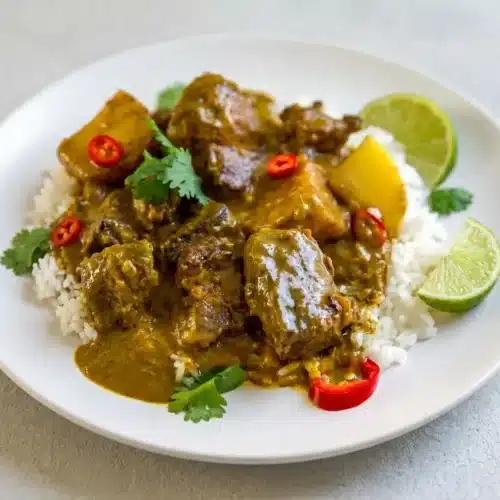
Curry Beef

Equipment
- Large heavy pot
Ingredients
- 1 1/2 lbs beef chuck cut into 1 1/2-inch pieces
- 1/2 tsp salt more if desired
- 2 tbsp vegetable oil
- 2 tbsp butter salted or unsalted
- 1 medium white onion thinly sliced
- 4 cloves garlic finely chopped
- 1 tbsp ginger paste or fresh ginger, peeled and finely chopped
- 3 tbsp curry powder
- 2 bay leaves
- 2 13 oz unsweetened coconut milk
- 2 lbs Yukon Gold potatoes peeled, cut into 2-inch pieces
- 1 Fresno chiles sliced thin, or other chile of choice
- fresh cilantro chopped
- Lime wedges
Instructions
- Season the beef with kosher salt, then heat the vegetable oil in a large heavy pot over medium-high heat and brown the beef in batches for 8 to 10 minutes. Leave space between the pieces so you hear a steady sizzle and develop deep brown color instead of gray, wet-looking meat.
- Move the browned beef to a plate and carefully remove all but 1 tbsp of fat from the pot, then lower the heat to medium and add the butter, onion, garlic, and ginger. Stir often for about 5 minutes, scraping the browned bits from the pot, until the onion looks translucent and smells sweet.
- Stir in the curry powder and cook it in the aromatic butter mixture for about 3 minutes before adding the bay leaves, coconut milk, and 1 cup water. The spices should smell warm and toasty, with no harsh raw-powder aroma.
- Return the beef and any collected juices to the pot, season with salt, and bring the curry to a gentle simmer before partially covering it for 30 to 35 minutes. The beef should be starting to yield when pressed with a fork, but it does not need to be fully tender yet.
- Add the potatoes, return the curry to a simmer, and cook uncovered for 25 to 35 minutes, stirring occasionally and adding water if the gravy becomes thicker than you like. The curry is ready when the potatoes are tender and two forks pull the beef apart without resistance; finish with salt and serve with cilantro, sliced chile, and lime wedges.