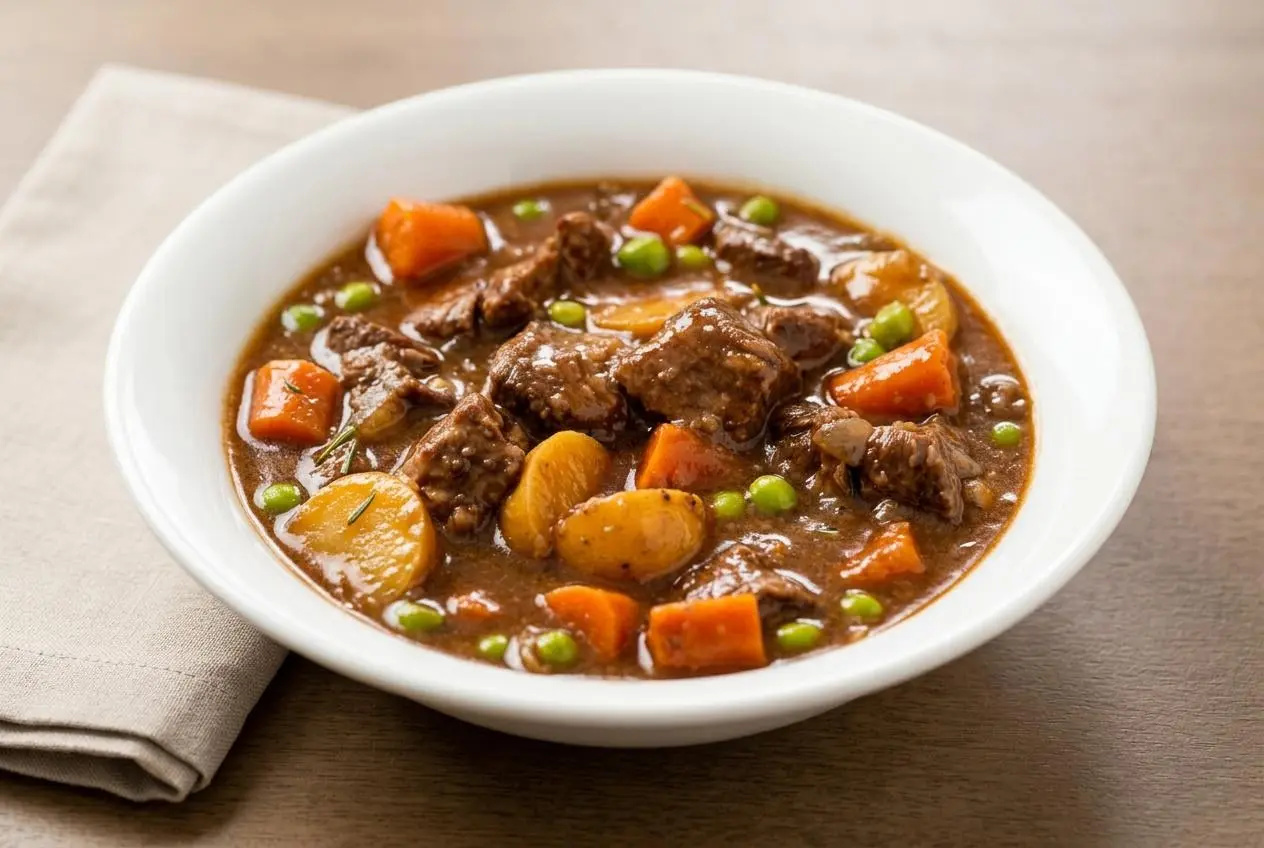
On cold nights in my kitchen, I want comfort that tastes like it simmered all day, even when I started cooking after work. This beef stew recipe is my answer to the two big stew disappointments, watery gravy and bland, one-note flavor.
Instead of hoping time fixes everything, this method leans on a few chef tricks, a proper Dutch oven braise, and one surprising finish. You will learn why each step works, and you will end up with fork-tender beef and a glossy, velvety sauce.
Why You’ll Love This Recipe
The Secret Twist: Stirring in 1/2 ounce of 85% dark chocolate at the end sounds bold, but it makes the gravy taste rounder, deeper, and more “restaurant” without reading as dessert.
Science, Not Guesswork: Between the Maillard Reaction on the beef and careful Deglazing of the fond, you build the kind of layered flavor most stews only get after a much longer simmer.
Umami That Tastes Like Beef: Anchovies, soy sauce, and Gelatin act like quiet background singers, they amplify savoriness and body while letting the Beef Chuck Roast stay center stage.
Pro-Level Texture, Home-Cook Friendly: I love that this Braising method gives a glossy sauce and tender meat, but the steps are still practical, even on a busy weekend.
Ingredients and Substitutions

These ingredients are built for depth, body, and balance, from low-sodium stock to umami boosters and sturdy vegetables. Measure as written so the braise reduces into a silky gravy.
Ingredients
- 4 cups (950 ml) homemade or store-bought low-sodium chicken stock
- 3 tablespoons tomato paste (2.5 ounces; 75 g)
- 3 oil- or salt-packed anchovy fillets, rinsed (or 1 tablespoon any Asian fish sauce)
- 4 packets powdered unflavored gelatin (1 ounce; 30 g)
- 1 tablespoon (15 ml) soy sauce
- 1 tablespoon (15 ml) Worcestershire sauce
- 2 tablespoons (30 ml) vegetable oil
- 3 pounds (1.25 kg) whole boneless beef chuck roast, cut into 3 steaks
- Kosher salt and freshly ground black pepper
- 10 ounces (275 g) white button mushroom, quartered
- 4 medium carrots (10 ounces; 275 g), 2 left whole, 2 cut into bite-sized pieces
- 8 ounces (225 g) frozen or fresh pearl onions (thawed if frozen, peeled if fresh)
- 1 large yellow onion, unpeeled, split in half (10 ounces; 275 g)
- 2 small ribs celery (3 ounces; 85 g)
- 3 medium cloves garlic, unpeeled
- 1 cup sherry, dry vermouth, or red wine (8 ounces; 235 ml)
- 2 tablespoons all-purpose flour (about 3/4 ounce; 20 g)
- 2 bay leaves
- 4 sprigs thyme
- 1 pound (450 g) Yukon gold potatoes, peeled and cubed
- 4 ounces (113 g) frozen peas
Ingredient Notes & Substitutions
Beef chuck roast: Chuck is loaded with connective tissue and collagen, which is exactly what you want for stew. As it braises, that collagen breaks down and turns the broth silky, and the meat becomes spoon-tender instead of dry.
Potatoes: Yukon Golds hold their shape and stay creamy, while Russets tend to go grainy and can cloud the sauce. If you want neat cubes that still feel buttery, Yukon Gold is the reliable choice.
The umami bombs: The anchovies, soy sauce, and Worcestershire disappear into the background and make the stew taste more like itself. Gelatin adds body and a lush mouthfeel, the same effect you get from a long-simmered stock, without needing a full day.
Wine or sherry: Dry vermouth, sherry, or red wine all work because you reduce it hard, then build the braise on top of it. If skipping alcohol, replace with extra stock and balance at the end with a small splash of balsamic vinegar.
Keto-friendly variation: Turnips or rutabaga can stand in for potatoes, and you can skip the flour if you plan to reduce longer at the end. The stew will still have body thanks to gelatin and the reduced braising liquid.
How to Make beef stew recipe
The Umami Base & Searing
- Combine stock, tomato paste, anchovies, gelatin, soy sauce, and Worcestershire sauce in a blender and blend on high speed until homogenous. Set aside.
- Adjust oven rack to lowest position and preheat oven to 300°F (150°C). In a large Dutch oven, heat oil over medium-high heat until shimmering.
- Season beef all over with salt and pepper and add to Dutch oven. Cook, turning occasionally, until beef is well browned on 2 sides, about 10 minutes, you want a deep brown crust, not gray.
- Transfer beef to a rimmed baking sheet or large plate and set aside.
Sautéing Aromatics & Capturing the Fond
- Add mushrooms to Dutch oven and cook, stirring, until liquid is released and mushrooms begin to brown, about 6 minutes, lowering heat as necessary to prevent scorching.
- Add diced carrots and pearl onions and cook, stirring, until well-browned on all sides. Season to taste with salt and pepper, transfer to a bowl, and set aside.
- Add halved yellow onion to Dutch oven, cut-side-down. Add whole carrots, celery stalks, and garlic. Cook, turning carrots, celery, and garlic occasionally until all the vegetables are well-browned, about 4 minutes.
- Add wine or sherry, scrape up browned bits with a wooden spoon, and cook until reduced by 3/4, about 3 minutes.
- Add stock mixture and bring to a simmer. Remove from heat.
The Low and Slow Oven Braise
- Cut seared steaks into 1 1/2- to 2-inch chunks and transfer to a large bowl. Toss with flour.
- Add beef and any juices accumulated in the tray or plate to the Dutch oven along with bay leaves and thyme sprigs. Stir to combine and return to a simmer over medium heat.
- Transfer to oven, cover with lid partially open, and cook until beef is starting to become tender, about 1 1/2 hours. Liquid should hold a slow, steady simmer the entire time, adjust oven temperature if necessary during cooking.
The Final Addition & The Twist
- Remove stew from oven. Using tongs, fish out and discard carrot, celery, thyme, bay leaves, onion, and garlic.
- Add potatoes and reserved sautéed mushrooms, pearl onions, and carrots to stew, return to oven, and continue to cook, partially covered, until beef, potatoes, and carrots are tender and broth has thickened, 45 minutes to 1 hour.
- Remove stew from oven. If necessary, place over a burner and simmer for up to 15 minutes to reduce to desired consistency.
- During this final thickening phase, stir in 1/2 oz of 85% dark chocolate until fully melted and the sauce turns glossy.
- Stir in peas. Season to taste with salt and pepper if necessary.
- Serve immediately, or refrigerate overnight or for up to 5 days and reheat to serve.
The Secret to Perfect Beef Tenderness

Target internal temperature matters: In my experience, stew beef turns truly tender around 180°F to 190°F, when collagen has time to hydrolyze into gelatin. If the meat is browned but still chewy, it usually just needs more time at a gentle simmer, not more stirring.
The resting rule after searing: Searing whole steaks first is not only about browning, it also protects moisture. Letting the meat sit on the tray before cubing helps the juices redistribute, so your chunks stay succulent once they go back into the braise.
Stovetop vs. oven: A burner delivers constant energy, which can scorch the bottom while the top barely simmers. The oven holds a steadier temperature, so the Dutch oven braises evenly and the connective tissue softens without turning the outside dry.
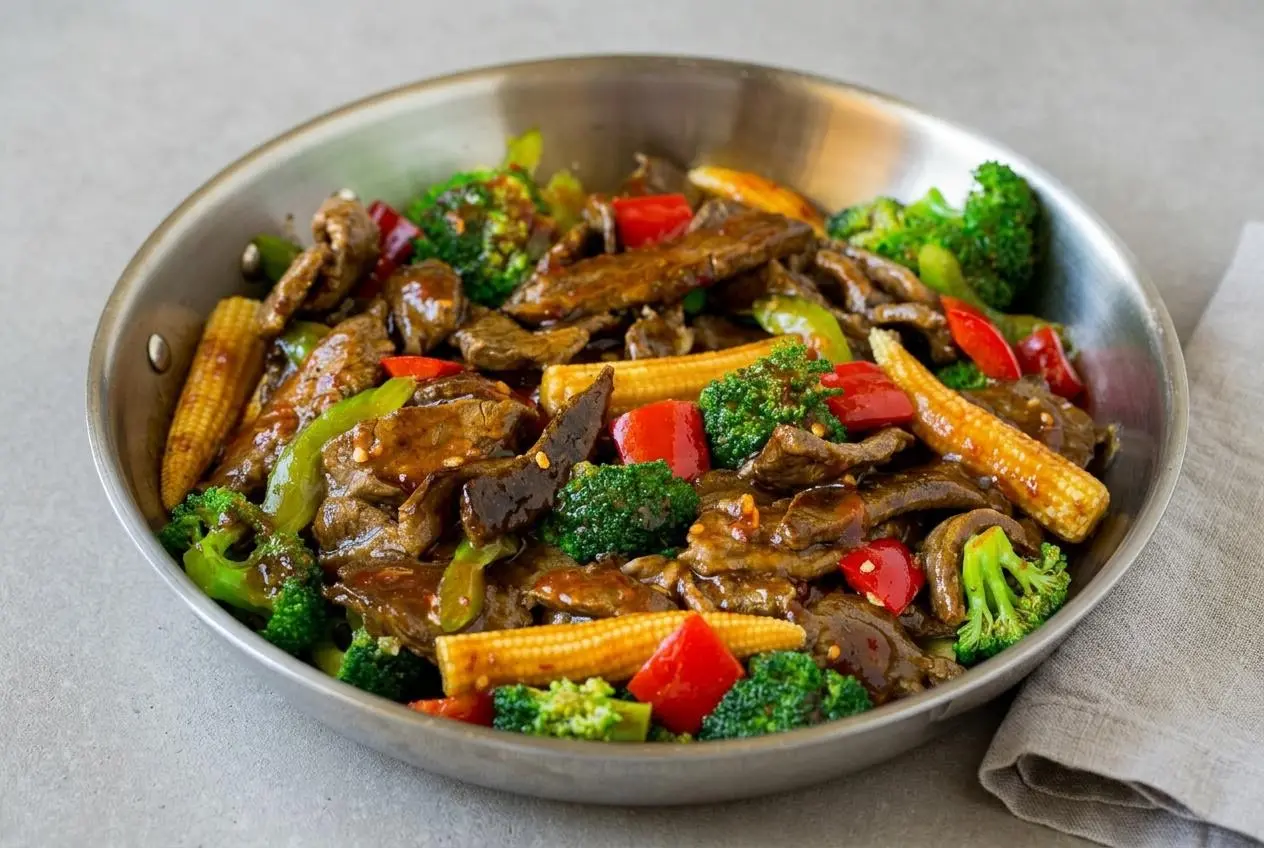
Why this differs from quick beef dishes: Fast stir-fries like beef and broccoli rely on thin cuts and high heat. Chuck roast is the opposite, it rewards patience and gentle braising.
Pro Tips & Troubleshooting
Pro Tips
- Deglaze thoroughly: Scrape every browned bit of fond with a wooden spoon, that is concentrated flavor you already paid for.
- Keep the simmer gentle: You want slow bubbles, not a rolling boil, so the beef stays tender instead of tightening up.
- Balsamic finish: If the gravy tastes heavy at the end, a small splash of balsamic vinegar can brighten the whole pot.
- Cornstarch slurry for thin stew: If it has not reduced enough after oven time, whisk cornstarch with cold water, then boil 1 to 2 minutes to remove starchy taste.
- Comfort-food flavor building: The same “brown, deglaze, simmer” mindset works in my beefaroni recipe on busy nights. Both dishes get their depth from a developed base.
Common Mistakes to Avoid
- Buying “stew meat”: Pre-cut packs often mix muscle groups, so some pieces turn soft while others stay tough.
- Boiling instead of simmering: Boiling contracts muscle fibers and can make the beef stringy, even if you cooked it “long enough.”
- Overcrowding the pot: If the beef is packed in tight, it steams and turns gray, and you miss the Maillard Reaction that builds flavor.
- Adding peas too early: Peas go dull and mushy fast, so they belong at the very end.
Serving & Storage

Serving Ideas
This stew is at its best with something that soaks up gravy, like garlic mashed potatoes or crusty sourdough bread. I also love a bright gremolata of parsley, lemon zest, and garlic sprinkled on top to cut the richness.
Storage & Reheating
Better the next day: After an overnight rest, the sauce tastes deeper and the herbs read more clearly. Reheat gently so the gravy stays silky and the beef stays tender.
Fridge and freezer: Refrigerate for up to 5 days, or freeze up to 3 months, knowing potatoes may soften further. If you have extra Yukon Golds on hand, a crisp potato crust is a smart way to use them up. That trick keeps leftovers from feeling repetitive all week.

Ultimate Beef Stew Recipe

Equipment
- Blender
- Large Dutch oven
- Wooden Spoon
- Rimmed baking sheet or large plate
- Tongs
Ingredients
- 4 cups homemade or store-bought low-sodium chicken stock (950 ml)
- 3 tablespoons tomato paste (2.5 ounces; 75 g)
- 3 oil- or salt-packed anchovy fillets, rinsed (or 1 tablespoon any Asian fish sauce)
- 4 packets powdered unflavored gelatin (1 ounce; 30 g)
- 1 tablespoon soy sauce (15 ml)
- 1 tablespoon Worcestershire sauce (15 ml)
- 2 tablespoons vegetable oil (30 ml)
- 3 pounds whole boneless beef chuck roast, cut into 3 steaks (1.25 kg)
- Kosher salt
- freshly ground black pepper
- 10 ounces white button mushroom, quartered (275 g)
- 4 medium carrots (10 ounces; 275 g), 2 left whole, 2 cut into bite-sized pieces
- 8 ounces frozen or fresh pearl onions (thawed if frozen, peeled if fresh) (225 g)
- 1 large yellow onion, unpeeled, split in half (10 ounces; 275 g)
- 2 small ribs celery (3 ounces; 85 g)
- 3 medium cloves garlic, unpeeled
- 1 cup sherry, dry vermouth, or red wine (8 ounces; 235 ml)
- 2 tablespoons all-purpose flour (about 3/4 ounce; 20 g)
- 2 bay leaves
- 4 sprigs thyme
- 1 pound Yukon gold potatoes, peeled and cubed (450 g)
- 4 ounces frozen peas (113 g)
- 1/2 oz 85% dark chocolate
Instructions
The Umami Base & Searing
- Combine stock, tomato paste, anchovies, gelatin, soy sauce, and Worcestershire sauce in a blender and blend on high speed until homogenous. Set aside.
- Adjust oven rack to lowest position and preheat oven to 300°F (150°C). In a large Dutch oven, heat oil over medium-high heat until shimmering.
- Season beef all over with salt and pepper and add to Dutch oven. Cook, turning occasionally, until beef is well browned on 2 sides, about 10 minutes.
- Transfer beef to a rimmed baking sheet or large plate and set aside.
Sautéing Aromatics & Capturing the Fond
- Add mushrooms to Dutch oven and cook, stirring, until liquid is released and mushrooms begin to brown, about 6 minutes, lowering heat as necessary to prevent scorching.
- Add diced carrots and pearl onions and cook, stirring, until well-browned on all sides. Season to taste with salt and pepper, transfer to a bowl, and set aside.
- Add halved yellow onion to Dutch oven, cut-side-down. Add whole carrots, celery stalks, and garlic. Cook, turning carrots, celery, and garlic occasionally until all the vegetables are well-browned, about 4 minutes.
- Add wine or sherry, scrape up browned bits with a wooden spoon, and cook until reduced by 3/4, about 3 minutes.
- Add stock mixture and bring to a simmer. Remove from heat.
The Low and Slow Oven Braise
- Cut seared steaks into 1 1/2- to 2-inch chunks and transfer to a large bowl. Toss with flour.
- Add beef and any juices accumulated in the tray or plate to the Dutch oven along with bay leaves and thyme sprigs. Stir to combine and return to a simmer over medium heat.
- Transfer to oven, cover with lid partially open, and cook until beef is starting to become tender, about 1 1/2 hours.
The Final Addition & The Twist
- Remove stew from oven. Using tongs, fish out and discard carrot, celery, thyme, bay leaves, onion, and garlic.
- Add potatoes and reserved sautéed mushrooms, pearl onions, and carrots to stew, return to oven, and continue to cook, partially covered, until beef, potatoes, and carrots are tender and broth has thickened, 45 minutes to 1 hour.
- Remove stew from oven. If necessary, place over a burner and simmer for up to 15 minutes to reduce to desired consistency.
- During this final thickening phase, stir in 1/2 oz of 85% dark chocolate until fully melted and the sauce turns glossy.
- Stir in peas. Season to taste with salt and pepper if necessary.
- Serve immediately, or refrigerate overnight or for up to 5 days and reheat to serve.
Notes
Nutrition
Conclusion
This beef stew recipe is all about stacking small, smart techniques, real browning, proper deglazing, steady oven braising, and that final 85% dark chocolate finish for a glossy, balanced gravy. Once you taste how velvety and complex it turns out, you will never settle for watery stew again.
If you want to riff, swap the wine, change the veg, or add that bright vinegar pop at the end. The method stays the same, and it is a keeper.
FAQ
What is the best cut of beef for stew?
Beef Chuck Roast is the classic best choice because it has enough fat and connective tissue to become tender during braising. Lean cuts can turn dry before they soften.
Why is my stew meat tough?
It usually has not cooked long enough to reach the tender zone, around 180°F to 190°F, or it boiled too hard. Keep a slow, steady simmer and give it time for collagen hydrolysis.
Can I make beef stew without wine?
Yes. Replace the wine with extra stock, then balance flavor at the end with a small splash of balsamic vinegar or red wine vinegar for brightness.
How do I thicken the stew sauce?
This recipe uses flour plus reduction for body, and gelatin for a velvety mouthfeel. If it is still thin after the oven time, simmer up to 15 minutes, or use a cornstarch slurry and boil briefly.
How long can I store leftover beef stew?
Store it in the refrigerator for up to 5 days, or freeze for up to 3 months. Reheat gently so the beef stays tender and the gravy does not break.
Why did my potatoes turn into mush?
Russets break down faster than waxier potatoes, and adding potatoes too early can overcook them. Yukon Gold potatoes added in the later oven phase hold their shape much better.