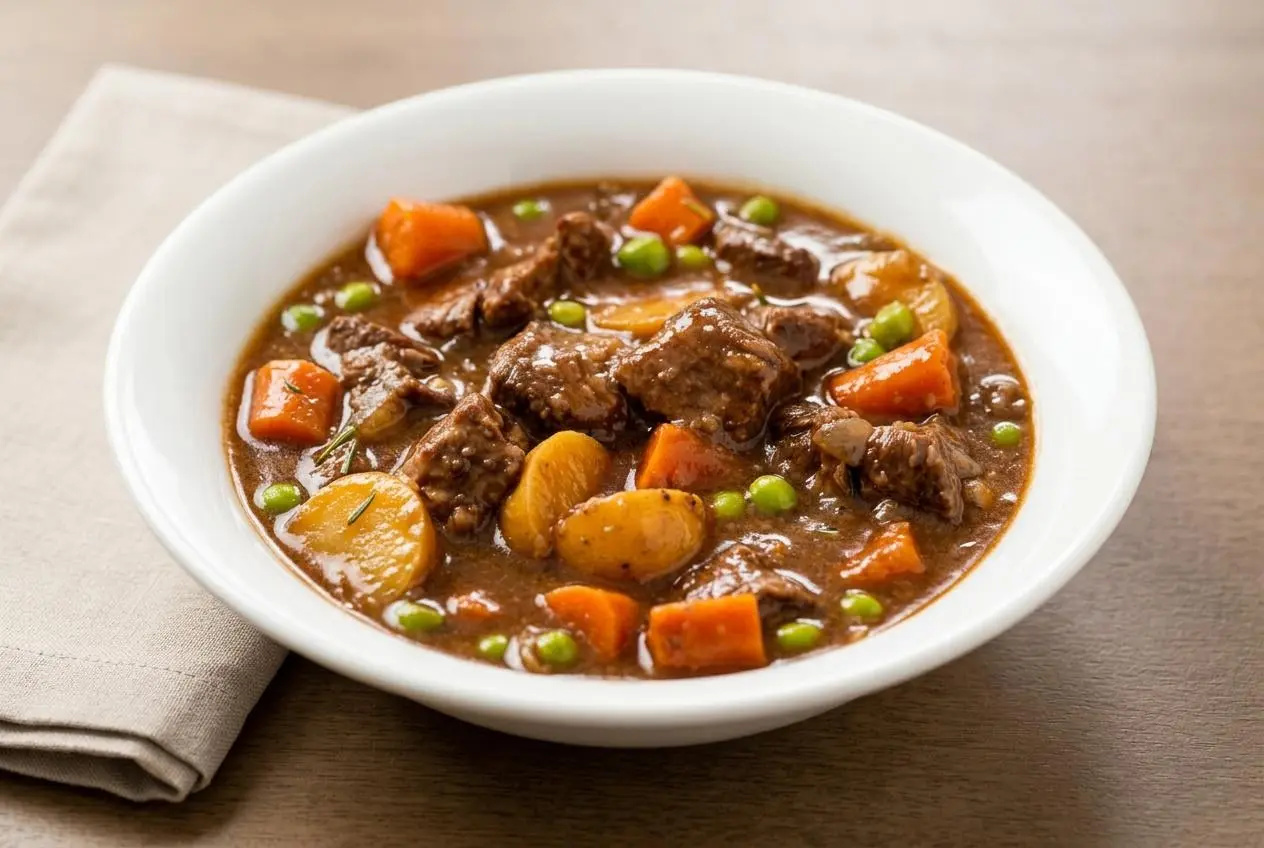
For tender crockpot beef stew, brown seasoned beef in batches, deglaze the skillet, then cook it with broth and waxy potatoes on Low until the meat yields easily to a fork.
This crockpot beef stew recipe brings together deeply browned beef, soft carrots, buttery Yukon Gold potatoes, and a savory herb broth that turns into rich gravy as it cooks.
Garlic, rosemary, and wine slowly perfume the kitchen while the beef becomes spoon-tender. The cold-butter finish is the little detail that makes the broth shine.
Cut the carrots into sturdy 1-inch pieces so they stay distinct and tender rather than disappearing into the gravy.
Key Ingredients and Why They Work
Each ingredient contributes to the stew’s structure, savory depth, tenderness, aroma, or finish, from the flour-coated beef and concentrated broth to the vegetables that balance the rich gravy.
- 2 ½ pounds stew meat
- ½ teaspoon EACH: black pepper, garlic salt, celery salt
- 1/4 cup flour
- 3-6 tablespoons olive oil
- 3 tablespoons cold butter, divided
- 2 cups yellow onions, diced
- 4 cloves garlic, minced
- 1 cup cabernet sauvignon
- 4 cups beef broth
- 2 beef bouillon cubes
- 2 tablespoons Worcestershire Sauce
- 3 tablespoons tomato paste
- 5 medium carrots, cut into 1-inch chunks
- 1 lb. baby Yukon gold potatoes, halved or quartered
- 2 bay leaves
- 1 sprig rosemary
- 1 cup frozen peas
- 1/4 cup Cold Water + 3 tablespoons Corn Starch, Optional
- 2-3 drops Gravy Master
The flour gives the broth an early head start on thickening, while tomato paste and Worcestershire sauce create darker, more savory depth. Cabernet adds acidity to balance the beef, and bouillon cubes reinforce the meaty backbone without making the broth taste flat.
I prefer stew meat with visible fine marbling, because those small streaks of fat give the finished beef a fuller, silkier texture.
The Best Beef Cuts for Melting Tenderness
Pre-cut stew meat works well here, but chuck roast cut into even 1-inch cubes is often the better choice. Chuck has more marbling and connective tissue, which gradually softens during a long, gentle cook and gives the stew a lush, hearty texture.
Lean cuts such as bottom round or sirloin can become dry and chewy during extended slow cooking. Trim off thick exterior fat, but leave fine marbling within the meat. For another collagen-rich braising cut, beef cheek meat is also suited to long, gentle cooking.
Choosing Potatoes That Hold Their Shape
- Baby Yukon Gold potatoes: Their waxy texture stays creamy and intact through the long cook.
- Small red potatoes: Another good option when you want neat, firm pieces in each bowl.
- Russet potatoes: Best avoided here, since their high starch content can make them crumble and cloud the broth.
Halve or quarter the potatoes according to their size so they finish at the same time as the carrots. Small pieces soften too quickly, while very large pieces can remain firm after the beef is ready.
Mushroom and Herb Rich Variation
For an earthier bowl, add sliced cremini or baby bella mushrooms with the carrots. They bring a woodsy savoriness that fits beautifully with rosemary and beef. A little Dijon stirred into the tomato paste and fresh lemon thyme scattered in at the end can brighten the flavor, but keep these additions separate from the main method.
Alcohol-Free Broth Adjustments
If you prefer to cook without wine, replace the cabernet with additional beef broth and add a small splash of red wine vinegar or balsamic vinegar. The acidity keeps the gravy from tasting heavy and gives the tomato paste and Worcestershire sauce more lift.
Step-by-Step Cooking Technique for Beef Stew
Build flavor before the slow cooker does its quiet work. Browning, deglazing, and patient cooking make the difference between a pale broth and a deeply savory stew.
- Cut the stew meat into 1-inch cubes, removing large pieces of exterior fat while keeping any fine marbling.
Even pieces cook at the same pace and should look lightly streaked with fat rather than completely lean. - Season the beef with black pepper, garlic salt, and celery salt, then toss it with the flour until coated.
The flour should cling in a light, even layer without forming thick dry patches. - Heat 3 tablespoons olive oil in a large skillet over medium-high heat and brown the beef in batches for 45 seconds per side, adding more oil if needed, then transfer it to the slow cooker.
Listen for a lively sizzle and look for a dark brown crust before moving each batch. - Lower the skillet to medium heat, melt 1 tablespoon butter, and cook the onions for 5 minutes before adding garlic for 1 minute.
The onions should soften and smell sweet, while the garlic becomes fragrant without browning. - Pour in a splash of wine and scrape the browned residue from the skillet with a silicone spatula, then add the onion mixture and remaining wine to the slow cooker.
The skillet should be mostly clean, with the dark flavorful bits dissolved into the liquid. - Add the beef broth, bouillon cubes, Worcestershire Sauce, tomato paste, carrots, potatoes, bay leaves, and rosemary.
Stir until the tomato paste disperses and the vegetables are surrounded by broth. - Cook on Low for 7 ½ to 8 hours or on High for 3½ to 4 hours.
The stew is ready when the carrots are soft, the potatoes are fork-tender, and the beef gives way easily without resistance. - Stir in the frozen peas during the final 15 minutes, then remove the bay leaves and rosemary stem.
The peas should be bright green and warmed through, not dull or mushy. - For thicker gravy, whisk the Cold Water and Corn Starch until smooth, then slowly stir it into the stew.
Let the stew stand until the broth looks lightly glossy and coats a spoon. - Turn off the slow cooker and swirl in the remaining 2 tablespoons cold butter; add Gravy Master if desired.
The butter should melt into a velvety sheen that softens the edges of the broth.
Searing the Beef in Batches
Give the beef room in the skillet. When the pan is crowded, moisture collects around the cubes and they steam instead of browning. Work in batches so the surface stays hot enough to form a deep mahogany crust in the allotted 45 seconds per side.
That browned crust comes from the Maillard reaction, which creates the roasted aroma and complex flavor associated with a good stew. The meat does not need to cook through at this stage. It only needs color.
Deglazing the Fond for Maximum Flavor
The dark residue left in the skillet is fond, a concentrated layer of browned meat and flour. Melt the butter, soften the onions and garlic, then add wine while the skillet is still warm. Scrape firmly across the bottom and corners until the fond releases into the liquid.
Pour every bit into the slow cooker. This step gives the broth a deeper color and fuller flavor without adding another seasoning mix.
Why Low Heat Outperforms High Heat
Low heat gives chuck time to relax and soften gradually, which is why the 7 ½ to 8 hour setting produces the most tender texture. High heat is useful when the schedule demands it, but the shorter 3½ to 4 hour cook can leave the meat a little less yielding.
If a cube still fights the fork, it usually needs more gentle cooking rather than more stirring. Tough stew meat often means the connective tissue has not softened fully yet.
How to Thicken and Perfect Stew Gravy
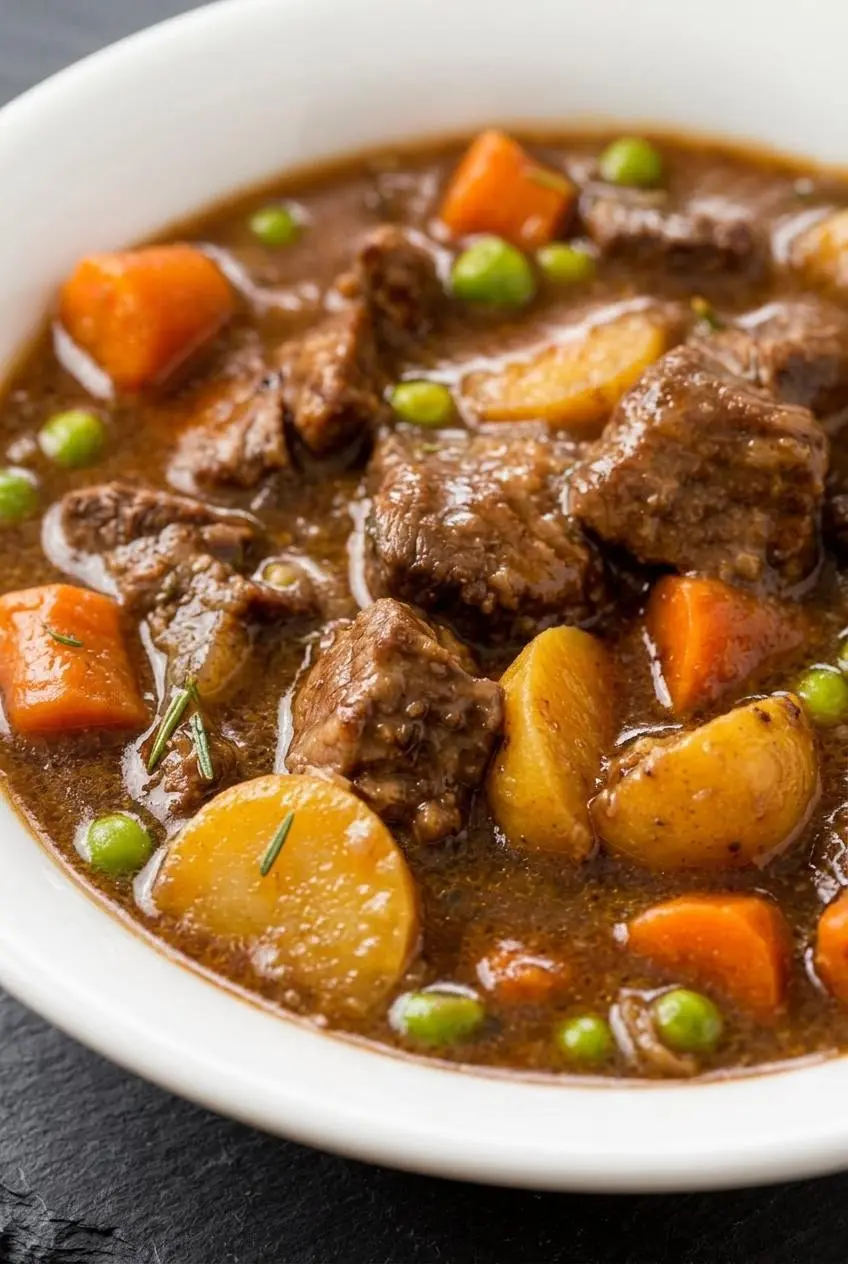
Slow cookers hold in moisture, so the broth can look thinner than expected near the end. This recipe builds body in two stages: flour on the beef before browning, then an optional slurry and butter finish after cooking.
The Cold Cornstarch Slurry Method
Whisk 3 tablespoons cornstarch with 1/4 cup cold water until completely smooth. Cold water matters because dry cornstarch added directly to hot stew can form stubborn lumps. Slowly stir the slurry into the hot broth near the end of cooking, then allow it to heat through until the gravy becomes glossy.
For a gluten-free approach, skip the flour coating and use an equal amount of arrowroot powder or tapioca starch in the cold slurry. These swaps will thicken the gravy, though the finished texture may be a little different from cornstarch.
Chef Finish: Monter au Beurre
Swirling cold butter into the stew after turning off the heat is called monter au beurre. The butter emulsifies with the warm broth, creating a satiny finish and smoothing the sharper edges of wine, tomato paste, and Worcestershire sauce.
Stop stirring once the butter has melted in and the gravy has a soft shine. Aggressive stirring is unnecessary here.
Troubleshooting Common Beef Stew Mistakes
- Tough beef: The cut may be too lean, or the connective tissue may need more time to soften. Keep cooking on Low until a fork slides in with little resistance.
- Thin broth: Stir in the optional cold cornstarch slurry near the end, then let the stew sit briefly so the gravy can settle and thicken.
- Mushy vegetables: Keep carrots in 1-inch chunks, use Yukon Gold or red potatoes, and wait until the final 15 minutes to add frozen peas.
- Pale flavor: Brown the beef in uncrowded batches and scrape the skillet well when deglazing. Those browned bits carry a surprising amount of flavor.
How to Serve Slow Cooker Beef Stew
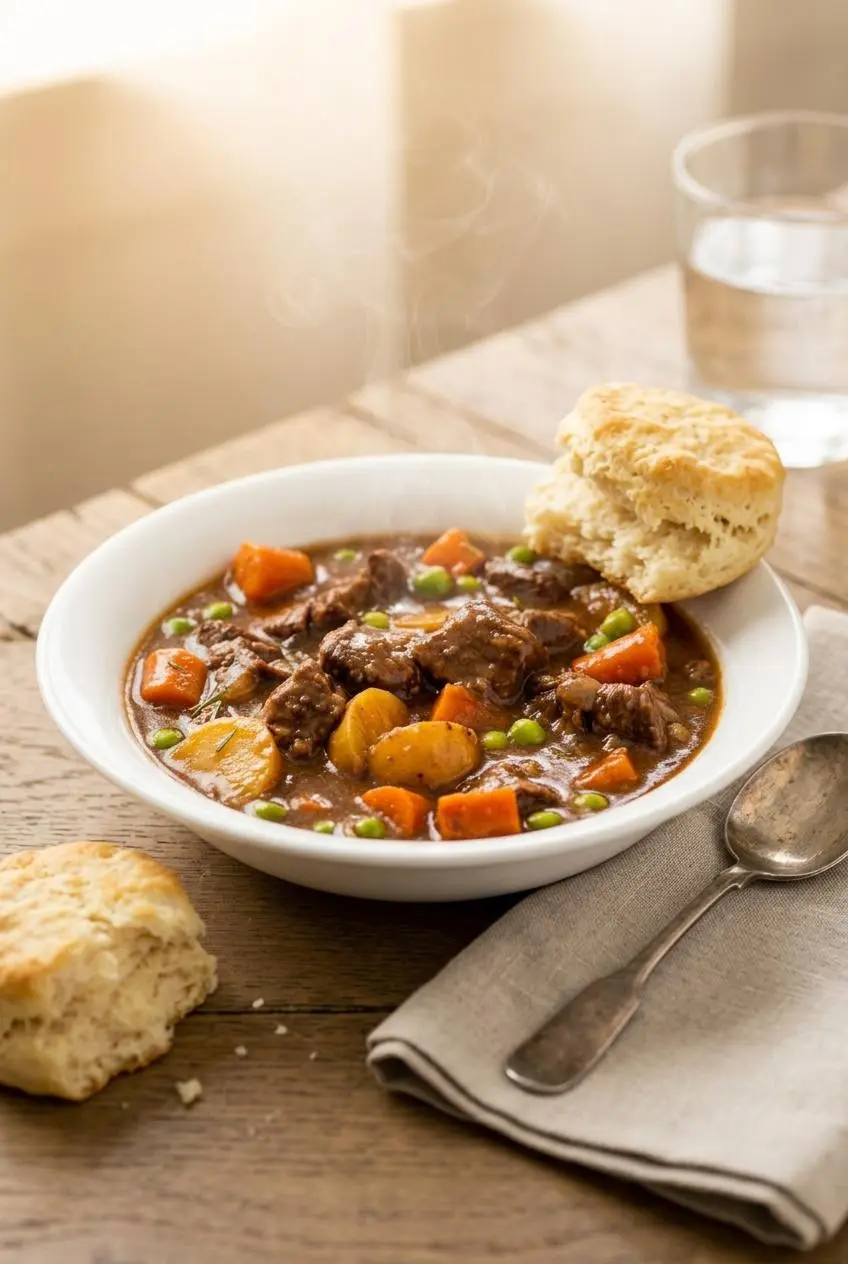
Serve this stew in wide bowls with something ready to catch every drop of gravy. Warm buttermilk biscuits, crusty sourdough, and buttery skillet cornbread all work beautifully for dipping.
For a heartier meal, spoon the stew over creamy garlic mashed potatoes or buttered egg noodles. If egg noodles are a favorite comfort-food route, try creamy beef stroganoff another night. A crisp green salad with tangy vinaigrette keeps the meal balanced.
Storage and Reheating Guide
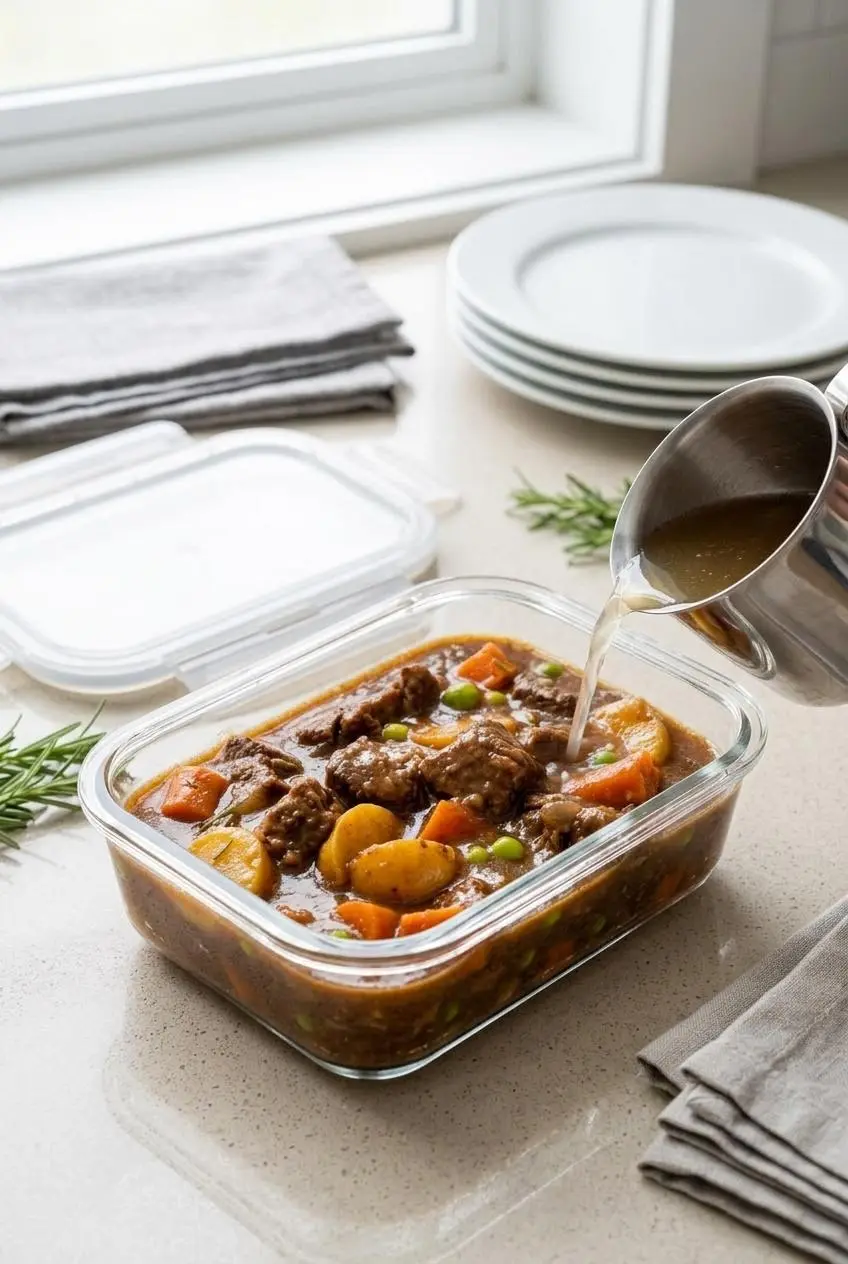
Transfer leftover stew to shallow, covered containers and refrigerate it promptly. Keep cooked food out of the room-temperature danger zone, and cool leftovers within two hours to reduce the risk of bacterial growth.
Reheat only the portion you plan to eat, using medium-low heat on the stovetop and a splash of beef broth if the gravy has tightened. Warm it gently until hot and steaming so the beef stays tender and the potatoes hold together.
Conclusion
A few minutes of browning and skillet scraping turn this stew into the kind of comforting meal that tastes slow-cooked in every spoonful. Low heat does the patient work of making the beef tender while the vegetables absorb the savory broth.
Finish with cold butter for that smooth, glossy gravy, then bring it straight to the table with warm bread nearby. Cozy dinners do not need much more.
Frequently Asked Questions
Should You Brown Stew Meat Before Putting It in the Crockpot?
Yes. Browning gives the beef a rich crust and creates fond in the skillet. Deglazing that fond into the slow cooker adds roasted, savory flavor to the broth. Raw beef can cook in a crockpot, but it will not develop the same depth.
Why Is My Beef Stew Meat Tough in the Slow Cooker?
Tough meat is usually too lean or needs more cooking time. Chuck and well-marbled stew meat become more tender during a long, gentle cook. Test a piece with a fork. If it still resists, continue cooking on Low until it softens.
What Are the Best Potatoes to Use for Crockpot Beef Stew?
Baby Yukon Gold potatoes are ideal because they stay creamy while holding their shape. Small red potatoes work well too. Avoid russets when possible, since they break down more easily and can make the broth cloudy.
How Do You Thicken Beef Stew in a Slow Cooker?
Whisk cold water and cornstarch until smooth, then slowly stir the slurry into the hot stew near the end of cooking. Let the gravy heat through and stand briefly. It should become thicker, glossier, and better able to coat the beef and vegetables.
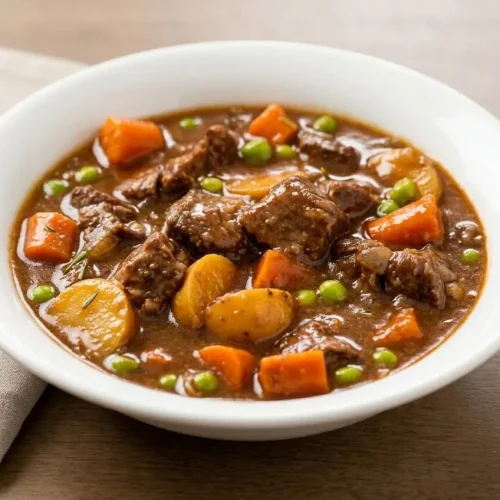
Crockpot Beef Stew Recipe

Equipment
- 6-quart slow cooker
Ingredients
- 2 1/2 pounds stew meat
- 1/2 teaspoon EACH: black pepper, garlic salt, celery salt
- 1/4 cup flour
- 3-6 tablespoons olive oil
- 3 tablespoons cold butter divided
- 2 cups yellow onions diced
- 4 cloves garlic minced
- 1 cup cabernet sauvignon
- 4 cups beef broth
- 2 beef bouillon cubes
- 2 tablespoons Worcestershire Sauce
- 3 tablespoons tomato paste
- 5 medium carrots cut into 1-inch chunks
- 1 lb. baby Yukon gold potatoes halved or quartered
- 2 bay leaves
- 1 sprig rosemary
- 1 cup frozen peas
- 1/4 cup Cold Water + 3 tablespoons Corn Starch Optional
- 2-3 drops Gravy Master
Instructions
- Cut the stew meat into 1-inch cubes, removing large pieces of exterior fat while keeping any fine marbling. Even pieces cook at the same pace and should look lightly streaked with fat rather than completely lean.
- Season the beef with black pepper, garlic salt, and celery salt, then toss it with the flour until coated. The flour should cling in a light, even layer without forming thick dry patches.
- Heat 3 tablespoons olive oil in a large skillet over medium-high heat and brown the beef in batches for 45 seconds per side, adding more oil if needed, then transfer it to the slow cooker. Listen for a lively sizzle and look for a dark brown crust before moving each batch.
- Lower the skillet to medium heat, melt 1 tablespoon butter, and cook the onions for 5 minutes before adding garlic for 1 minute. The onions should soften and smell sweet, while the garlic becomes fragrant without browning.
- Pour in a splash of wine and scrape the browned residue from the skillet with a silicone spatula, then add the onion mixture and remaining wine to the slow cooker. The skillet should be mostly clean, with the dark flavorful bits dissolved into the liquid.
- Add the beef broth, bouillon cubes, Worcestershire Sauce, tomato paste, carrots, potatoes, bay leaves, and rosemary. Stir until the tomato paste disperses and the vegetables are surrounded by broth.
- Cook on Low for 7 ½ to 8 hours or on High for 3½ to 4 hours. The stew is ready when the carrots are soft, the potatoes are fork-tender, and the beef gives way easily without resistance.
- Stir in the frozen peas during the final 15 minutes, then remove the bay leaves and rosemary stem. The peas should be bright green and warmed through, not dull or mushy.
- For thicker gravy, whisk the Cold Water and Corn Starch until smooth, then slowly stir it into the stew. Let the stew stand until the broth looks lightly glossy and coats a spoon.
- Turn off the slow cooker and swirl in the remaining 2 tablespoons cold butter; add Gravy Master if desired. The butter should melt into a velvety sheen that softens the edges of the broth.