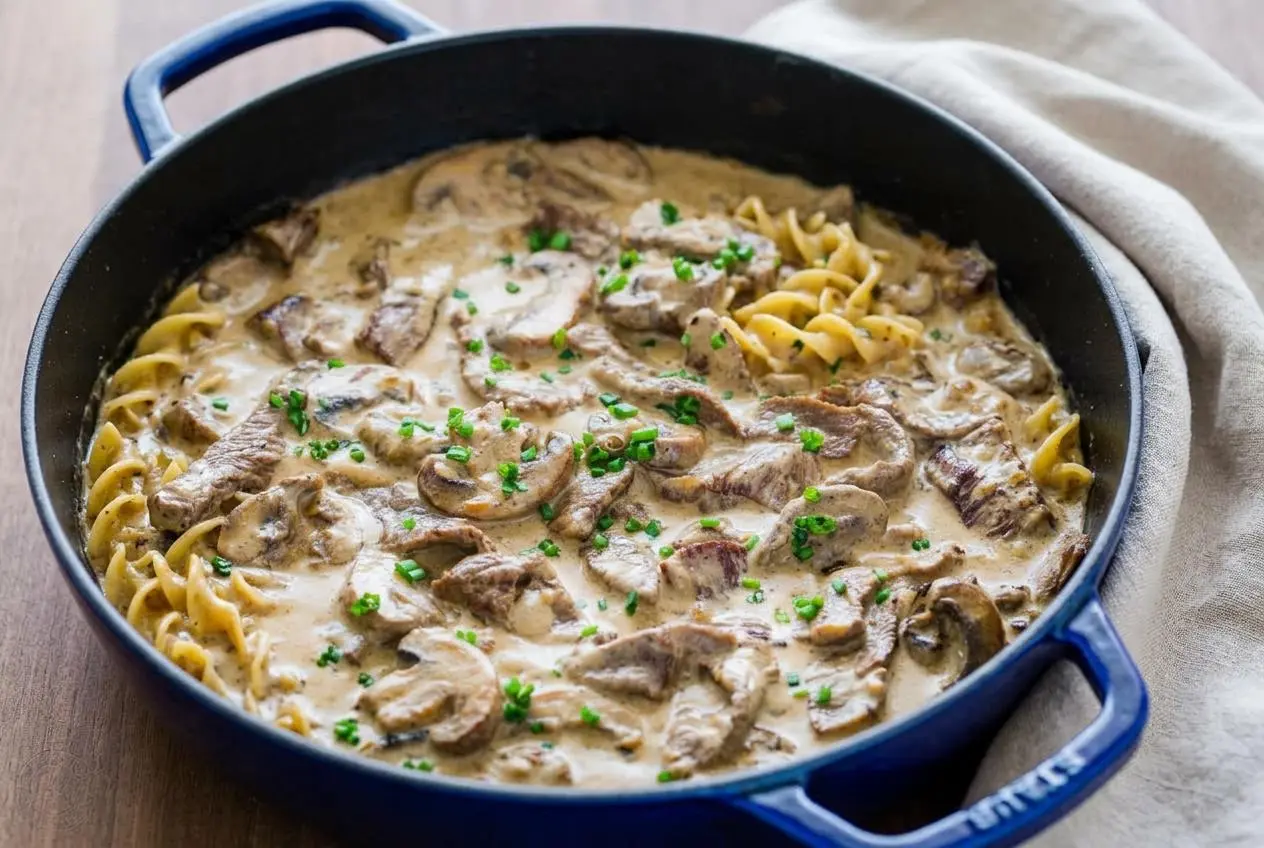
To make great beef stroganoff, sear thin beef strips fast over high heat, cook mushrooms and onions until golden, build a cream sauce with broth, and temper the sour cream before stirring it in.
Beef stroganoff is a quick skillet dinner with tender steak, mushrooms, and a creamy tangy gravy that tastes like real comfort food instead of a rushed weeknight fix.
It comes together in about 30 minutes, but the small technique details matter a lot. The best part is how a few smart moves keep the beef tender and the sauce smooth.
Have your sour cream at room temperature before you start, and keep a small bowl nearby for tempering.
Ingredients
Each ingredient pulls its weight here, building savory depth, creamy body, gentle tang, and the kind of glossy mushroom gravy that clings to every bite.
For the Beef Stroganoff
- 1 lb top sirloin steak, thinly sliced into strips
- 2 Tbsp olive oil
- 2 Tbsp unsalted butter
- 1/2 medium onion, finely chopped
- 1/2 lb brown mushrooms, thickly sliced
- 1 garlic cloves, minced
- 1 Tbsp all-purpose flour
- 1 cup beef broth
- 3/4 cup heavy whipping cream
- 1/4 cup sour cream
- 1 Tbsp Worcestershire sauce
- 1/2 tsp dijon mustard
- 1/2 tsp salt
- 1/4 tsp black pepper
To Serve
- 1 Tbsp green onion or parsley, to garnish
- 8-12 oz egg noodles, optional, to serve
Top sirloin is a strong choice because it stays tender when sliced thin and cooked fast. Heavy whipping cream gives the gravy body, while full-fat sour cream adds tang and a softer finish without making the sauce watery. Worcestershire and Dijon bring the savory depth that makes the whole skillet taste fuller and more balanced.
I like to slice the steak while it is slightly firm from the fridge because it makes those thin, even strips much easier to cut cleanly.
How to Make Classic Beef Stroganoff
- Heat a large deep pan or Dutch oven over medium-high heat, add 2 Tbsp oil, then sear the beef in 2 batches for 1 minute per side in a single layer without moving it around too soon.
The strips should pick up dark brown edges and lose their red color quickly, which means they are searing instead of steaming. - Transfer the beef to a plate and cover it to keep warm, then add 2 Tbsp butter, the chopped onion, and the sliced mushrooms to the same pan.
Cook for 6-8 minutes until the mushrooms release their moisture, the pan looks drier again, and everything turns soft and lightly browned. - Stir in 1 minced garlic clove and cook for 1 minute, then sprinkle in 1 Tbsp flour and keep stirring for another minute.
You should smell the garlic first, then a light nutty aroma from the flour as it toasts without scorching. - Pour in 1 cup beef broth while scraping up the browned bits from the bottom, then add 3/4 cup whipping cream and let it simmer for 1 to 2 minutes.
The sauce should lose its thin look and start coating the back of a spoon. - Put 1/4 cup sour cream in a small bowl and whisk in a few spoonfuls of the hot sauce until smooth, then stir that tempered mixture back into the pan.
This should blend in smoothly and keep the sauce creamy rather than grainy or split. - Stir in 1 Tbsp Worcestershire sauce, 1/2 tsp dijon mustard, 1/2 tsp salt, and 1/4 tsp black pepper, then return the beef and any juices from the plate to the pan and warm everything just to a gentle simmer.
The finished gravy should look glossy and creamy, and the beef should be heated through without cooking any further.
Choosing and Preparing Your Beef
If your stroganoff turns chewy, the beef is almost always the reason. The right cut, the right slice, and a very fast sear make a bigger difference than any sauce trick.
Premium vs Budget Steak Cuts
Top sirloin is the everyday sweet spot for this recipe. It has solid beefy flavor, stays tender with a quick sear, and usually costs less than the more luxurious options.
Boneless ribeye is richer and more marbled, so it brings a softer bite and fuller flavor. Beef tenderloin is the most tender choice of the bunch, but it is also the priciest and has a milder beef flavor. If you want the cleanest, most delicate texture, tenderloin wins. If you want the best balance of cost and result, sirloin is hard to beat.
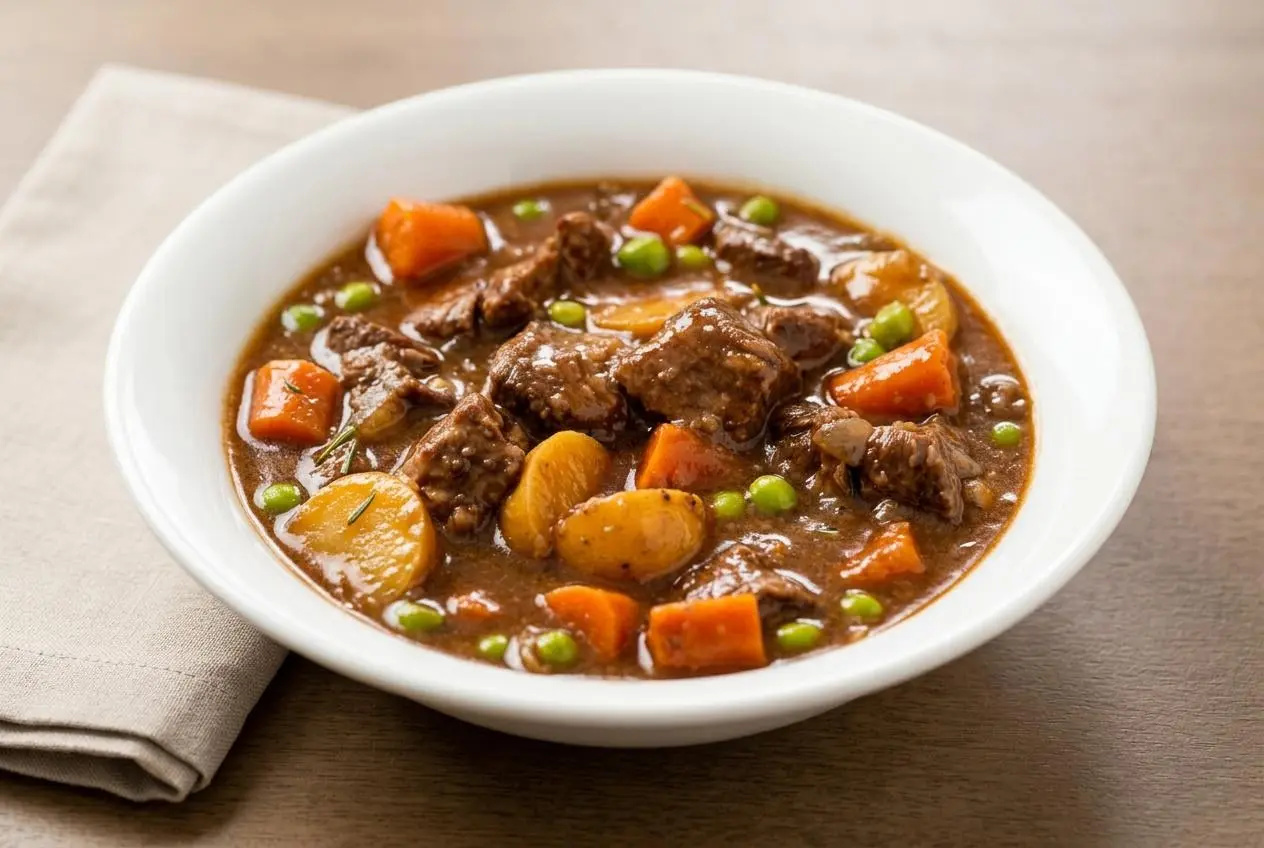
Avoid stew meat here. It needs long, slow cooking to break down, so it will stay stubborn in a fast skillet dinner. If stew meat is what you have, it is better saved for a beef stew recipe built for that kind of cut.
The Slicing Technique: Slicing Against the Grain
Look closely at the steak before you cut it and find the long muscle lines running through the meat. Those lines are the grain.
Slice across those lines, not with them. Cutting against the grain shortens the muscle fibers, so each bite feels tender instead of stringy. Thin, even strips also cook at the same speed, which matters when each side gets only about a minute in the pan.
If the steak has tapered ends, angle your knife to keep the slices similar in thickness. That one small habit helps the whole pan cook more evenly.
The Chinese Velveting Method for Ultra-Tender Beef
If you want to use a more budget-friendly steak, velveting is a smart optional move. This method lightly coats the beef before cooking so it stays softer and juicier during a quick sear.
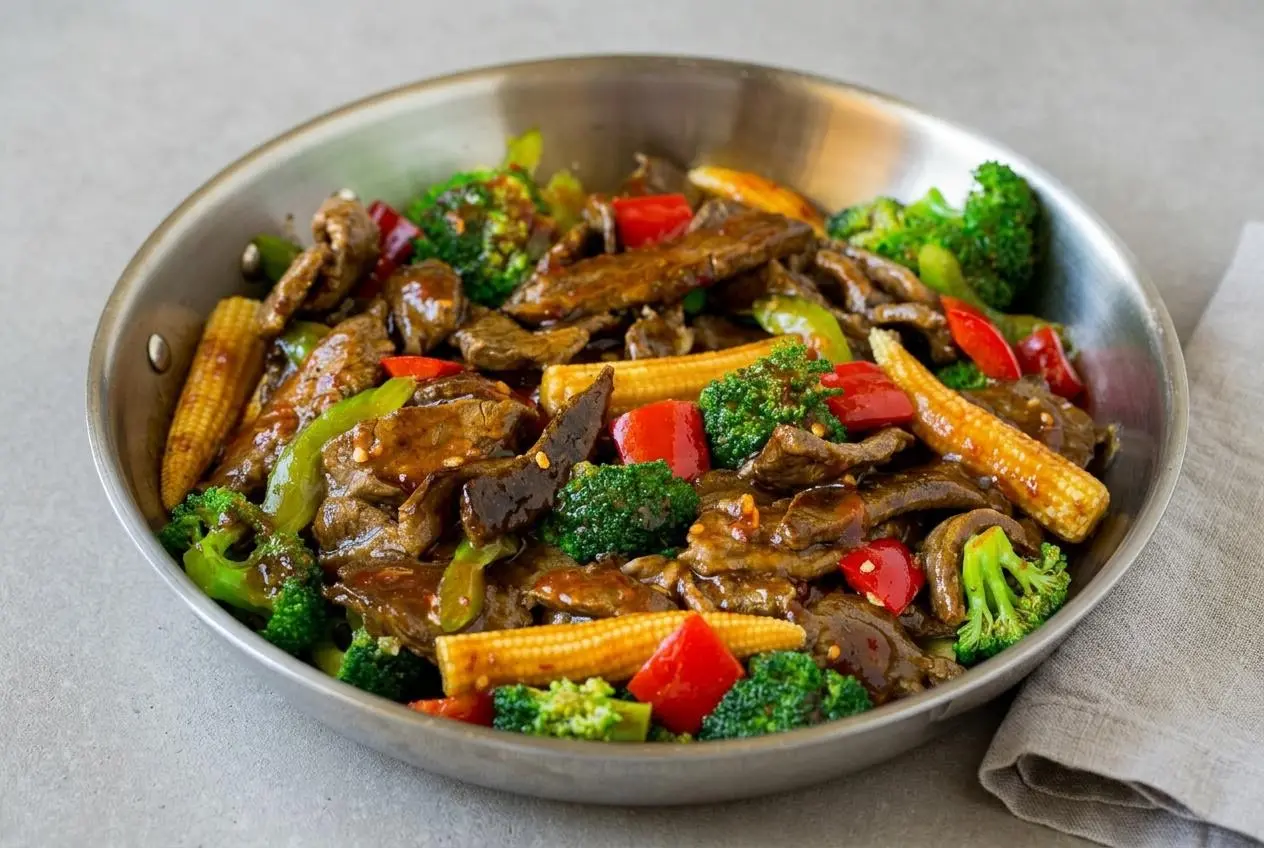
The basic idea is to toss the sliced beef with a little cornstarch and let it sit briefly before it hits the pan. The coating protects the surface, helps the meat hold moisture, and gives you a more tender result, especially with leaner or less expensive cuts. It is the same approach that makes dishes like beef and broccoli taste especially tender.
For this stroganoff, keep velveting as an optional prep technique rather than part of the main recipe. The official version works beautifully with sirloin, but velveting can rescue a bargain steak from becoming dinner disappointment.
The Secrets to a Velvety, Non-Curdled Sauce
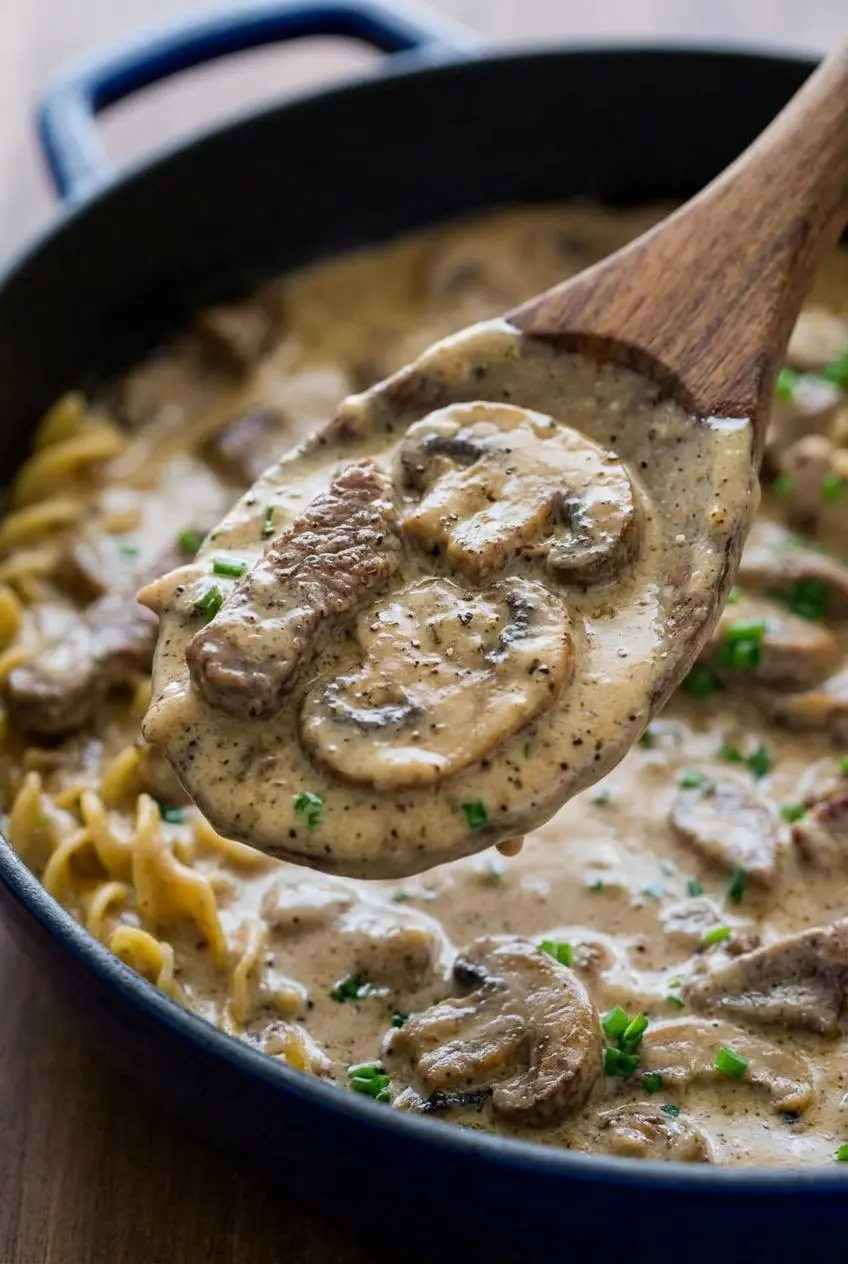
A stroganoff sauce should feel smooth, rich, and spoon-coating, not grainy or broken. The key is managing heat and using dairy that can handle it.
The Chemistry of Sour Cream in Hot Gravy
Full-fat sour cream matters here because the higher fat content gives the sauce more stability. It blends more gracefully into hot gravy and is much less likely to separate than low-fat versions, which contain more water and can break more easily.
Heavy cream helps too. It adds richness and supports the flour-thickened base, giving the gravy structure before the sour cream ever goes in. That is why the sauce feels silky instead of thin.
Once the sour cream is added, keep the heat gentle. Do not boil the sauce. High heat is the fastest path to a split stroganoff, and nobody wants a pan of creamy regret.
How to Temper Sour Cream Step-by-Step
Tempering simply means bringing the sour cream up to temperature gradually so it does not shock and curdle.
First, scoop the sour cream into a separate bowl. Whisk in a few spoonfuls of warm sauce until the mixture loosens and feels smooth. Then stir that warmed mixture back into the skillet while stirring constantly. This equalizes the temperature and helps the dairy blend into the gravy instead of tightening up in little curds.
If your sauce already looks thick enough before the sour cream goes in, that is a good sign. The sour cream should finish the texture, not do all the thickening work by itself.
Sauce Troubleshooting Checklist
- If the sauce looks split, take the pan off the heat right away and stir gently until it settles. Fast boiling is usually the cause.
- If it still looks grainy, whisk a small spoonful of warm sauce in a separate bowl, then slowly stir that smoother mixture back into the pan.
- If the sauce is too thin, let it simmer briefly before adding the sour cream or after the beef goes back in, keeping the heat gentle. It should thicken enough to coat a spoon.
- If the sauce tastes flat, the fix is usually a touch more salt or a little more Dijon or Worcestershire, not more cream.
- If the mushrooms made the sauce watery, cook them longer next time until their moisture evaporates and they turn deeply golden before the broth goes in.
Using Wine vs Stock for Deglazing
This recipe uses beef broth, which keeps the flavor round, savory, and weeknight-friendly. Broth also works especially well with Worcestershire and Dijon because it builds depth without pulling focus from the mushrooms and cream.
If you like a slightly brighter finish, a splash of dry white wine can be used to loosen the browned bits before the broth goes in. The acidity sharpens the flavor and cuts through the richness a little more. If you skip wine, just stick with broth and scrape the pan well so none of that fond goes to waste.
Adding Savory Umami Boosts
The Worcestershire and Dijon already do a lot of heavy lifting, but there is room for optional fine-tuning if you like a deeper gravy.
- A small dab of tomato paste can make the sauce taste darker and meatier.
- A pinch of sweet smoked paprika adds warmth and a little background depth without turning the dish smoky.
- A tiny squeeze of fresh lemon juice at the end can wake up the creaminess if the sauce tastes too heavy.
- An extra touch of Dijon gives the gravy a sharper, more classic stroganoff edge.
Easy Storage and Make-Ahead Guidelines
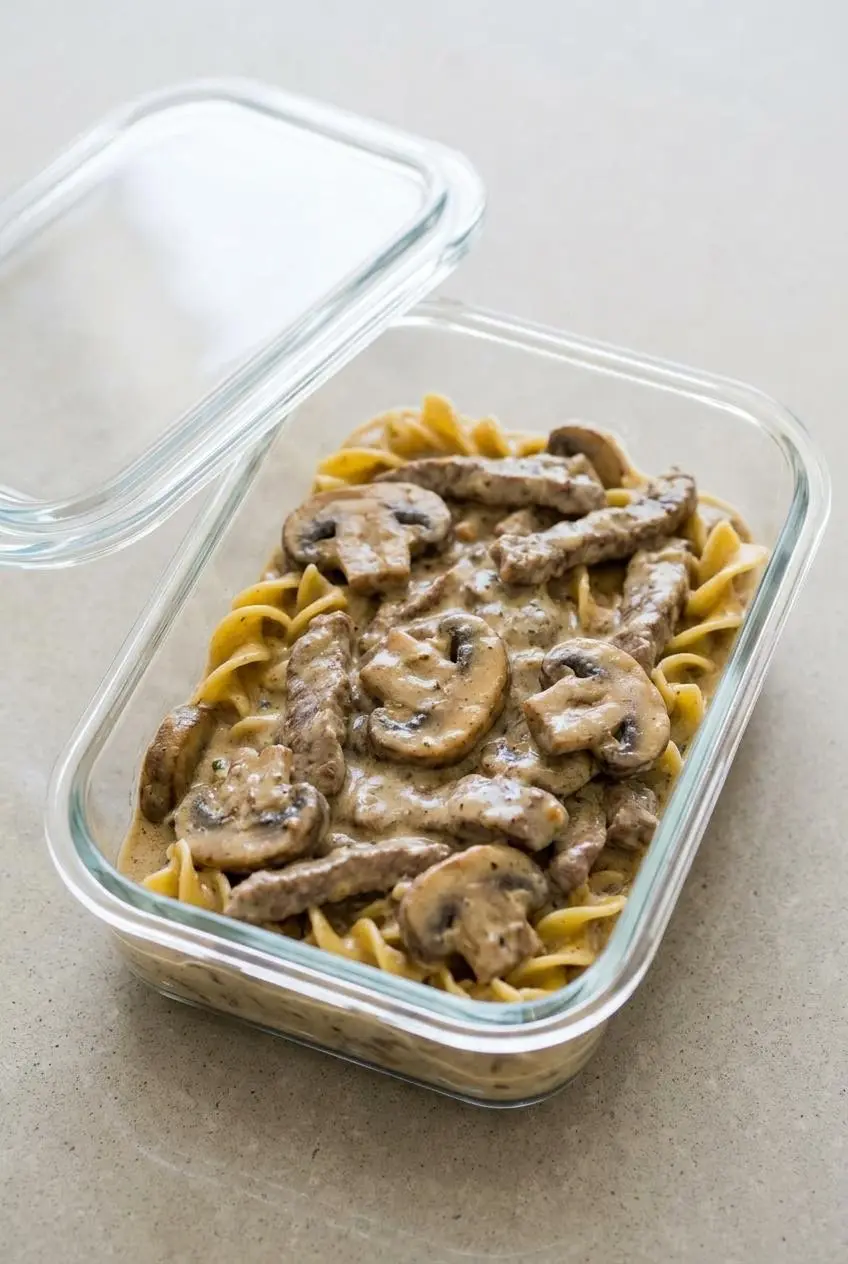
Stroganoff keeps best when you protect the texture. The main goal is to keep the noodles from soaking up all the sauce and the beef from overcooking during reheating.
Store the noodles and sauce in separate airtight containers when possible. Let the stroganoff cool before chilling it, and keep leftovers refrigerated. For food handling and leftovers, follow safe leftover storage for cooked beef dishes.
You can also make the beef and sauce ahead, chill them, and cook fresh noodles when you are ready to serve. That keeps the final bowl from turning soft or heavy.
Reheating Stroganoff Without Chewy Beef
Reheat it slowly on the stove over low heat. Add a small splash of beef broth if the sauce has tightened in the fridge, then stir just until the gravy loosens and the beef is warmed through.
Avoid high heat, which can make the steak tighten up and can push the dairy toward separating. The microwave works in a pinch, but lower power and short bursts are kinder to the sauce than blasting it all at once.
Budget-Friendly Stroganoff Variations
Ground beef is the easiest budget swap for a weeknight version. If that is what you are after, this ground beef stroganoff is the most natural next stop.
You can also use flank steak if you slice it very thin against the grain, though it needs extra care not to overcook. Pork tenderloin is another good alternative when you want a similar creamy mushroom dinner with a slightly lighter flavor.
Dietary Adaptations
For a gluten-free version, replace the flour with a cornstarch slurry and serve the stroganoff over gluten-free noodles. Add the slurry near the simmering stage and stir just until the sauce thickens, then temper in the sour cream the same way.
Keep in mind that cornstarch gives the sauce a slightly glossier finish than flour. The flavor stays classic, but the texture is a touch silkier and less gravy-like.
Conclusion
This is the kind of 30-minute dinner that feels cozy and complete, with tender beef, mushrooms, and a rich sauce that tastes like it took much longer.
If you sear the meat quickly and temper the sour cream with care, this stroganoff is wonderfully reliable. Put on some noodles and make it happen tonight.
Frequently Asked Questions
How do I prevent my stroganoff sauce from curdling?
Use full-fat sour cream, not low-fat. Take the pan off high heat before adding it. Whisk a few spoonfuls of warm sauce into the sour cream first, then stir it into the skillet. Do not boil the sauce after the sour cream goes in.
What can I use instead of beef sirloin?
Boneless ribeye is richer and very tender. Beef tenderloin gives the softest bite, but it costs more. Flank steak can work if you slice it very thin against the grain. For a budget option, high-quality ground beef is a great alternative.
Can I make beef stroganoff ahead of time?
Yes, you can make the beef and sauce ahead. Store the sauce and noodles separately so the pasta does not absorb too much gravy. Reheat the sauce gently, then combine with freshly cooked or rewarmed noodles before serving. This approach gives you the best texture at the table.
Why is my stroganoff beef tough and chewy?
The steak may have been sliced with the grain instead of against it. A tougher cut may have been used for a fast-cooking recipe. The pan may not have been hot enough, so the beef simmered instead of seared. Cooking the strips too long will make them tighten up quickly.
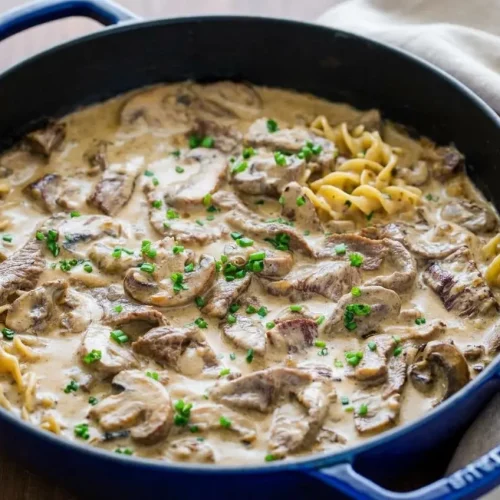
Beef Stroganoff

Equipment
- Large deep pan or Dutch oven
- Tongs
- Spatula
- Small mixing bowl
Ingredients
For the Beef Stroganoff
- 1 lb top sirloin steak thinly sliced into strips
- 2 Tbsp olive oil
- 2 Tbsp unsalted butter
- 1/2 medium onion finely chopped
- 1/2 lb brown mushrooms thickly sliced
- 1 cloves garlic minced
- 1 Tbsp all-purpose flour
- 1 cup beef broth
- 3/4 cup heavy whipping cream
- 1/4 cup sour cream
- 1 Tbsp Worcestershire sauce
- 1/2 tsp dijon mustard
- 1/2 tsp salt
- 1/4 tsp black pepper
To Serve
- 1 Tbsp green onion or parsley to garnish
- 8-12 oz egg noodles optional, to serve
Instructions
- Heat a large deep pan or Dutch oven over medium-high heat, add 2 Tbsp oil, then sear the beef in 2 batches for 1 minute per side in a single layer without moving it around too soon. The strips should pick up dark brown edges and lose their red color quickly, which means they are searing instead of steaming.
- Transfer the beef to a plate and cover it to keep warm, then add 2 Tbsp butter, the chopped onion, and the sliced mushrooms to the same pan. Cook for 6-8 minutes until the mushrooms release their moisture, the pan looks drier again, and everything turns soft and lightly browned.
- Stir in 1 minced garlic clove and cook for 1 minute, then sprinkle in 1 Tbsp flour and keep stirring for another minute. You should smell the garlic first, then a light nutty aroma from the flour as it toasts without scorching.
- Pour in 1 cup beef broth while scraping up the browned bits from the bottom, then add 3/4 cup whipping cream and let it simmer for 1 to 2 minutes. The sauce should lose its thin look and start coating the back of a spoon.
- Put 1/4 cup sour cream in a small bowl and whisk in a few spoonfuls of the hot sauce until smooth, then stir that tempered mixture back into the pan. This should blend in smoothly and keep the sauce creamy rather than grainy or split.
- Stir in 1 Tbsp Worcestershire sauce, 1/2 tsp dijon mustard, 1/2 tsp salt, and 1/4 tsp black pepper, then return the beef and any juices from the plate to the pan and warm everything just to a gentle simmer. The finished gravy should look glossy and creamy, and the beef should be heated through without cooking any further.