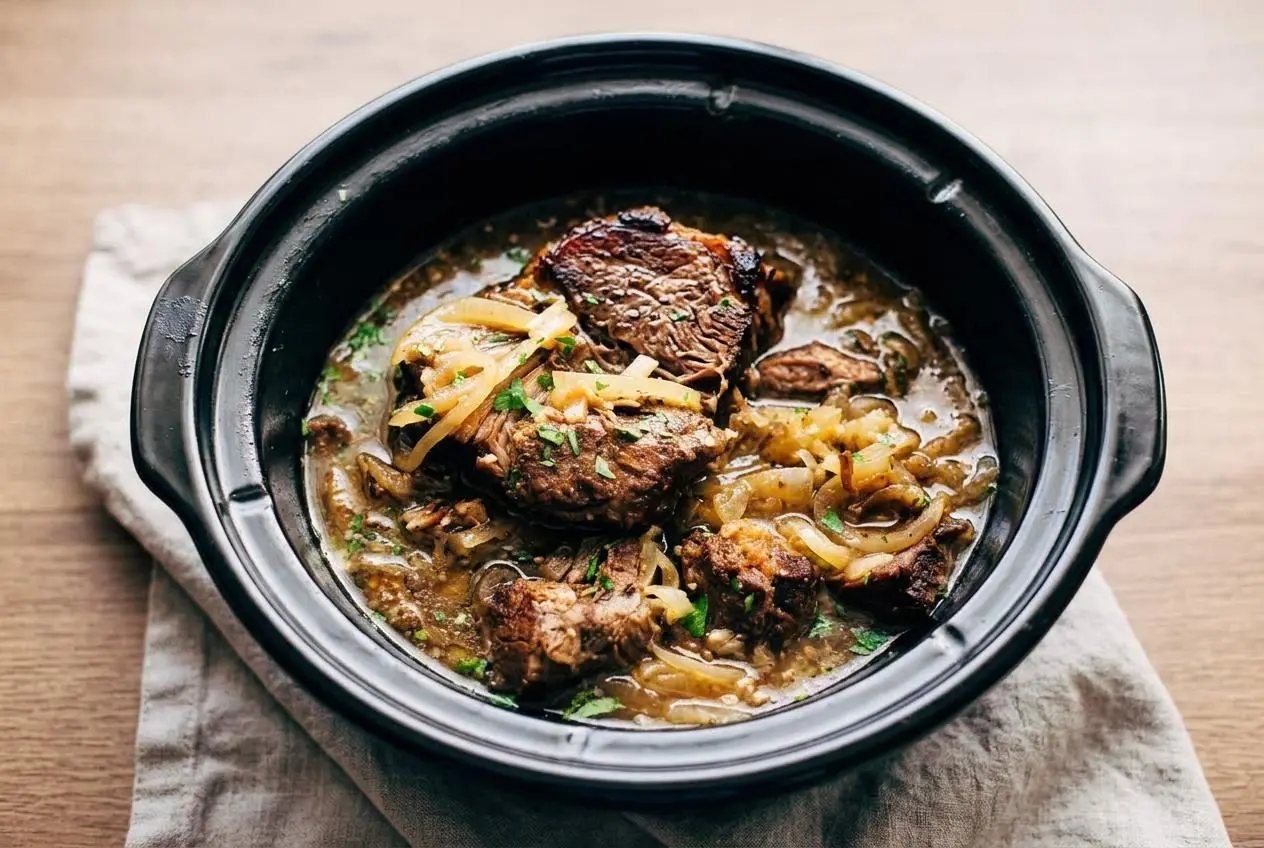
Sear chuck roast, layer it with sliced onions, beef stock, and savory seasonings, then cook on Low for 6 to 8 hours until fork-tender. Finish by thickening the cooking juices with a cornstarch slurry for a rich onion gravy.
Crock Pot French Onion Pot Roast brings together slow-braised beef and the sweet, savory flavor of onions softened in beef stock. A browned crust gives the gravy depth, while garlic, thyme, and Worcestershire sauce round out every spoonful.
Most of the cooking happens under the lid, leaving you free to handle the rest of dinner. As the onions soften, their aroma mingles with the toasted beef flavor from the sear. Save room for the gravy.
Slice the onions before heating the skillet so you can move straight from browning the beef to the optional onion sauté.
Key Ingredients and Flavor Builders
Chuck provides richness, onions bring sweetness, and stock supplies the braising moisture. Butter and oil help develop a browned crust, aromatics deepen the savory flavor, vinegar adds balance, and cornstarch turns the cooking juices into a smooth gravy.
- 2 pounds chuck roast
- 2 tablespoons butter
- 1 tablespoon avocado oil
- 3 garlic cloves (pressed or minced)
- 2 yellow onions (thinly sliced)
- 2 cups beef stock
- 1 tablespoon Worcestershire sauce
- 1 tablespoon apple cider vinegar
- ½ teaspoon onion powder
- ½ teaspoon dried thyme
- 1 bay leaf
- ⅛ teaspoon celery seeds (crushed between fingers)
- 1 tablespoon sugar
- 2-3 tablespoons cornstarch
- ⅓ cup water
Butter contributes flavor to the sear, while avocado oil supplies a cooking fat suited to the hot skillet. The combination still needs attention: oil doesn’t prevent butter solids from burning. Keep the heat at medium-high and watch for browning rather than blackening.
Worcestershire sauce supplies concentrated savory flavor, and garlic adds a rounded aromatic backbone. Apple cider vinegar brightens the stock without making the finished dish taste sharply acidic. Sugar softens the onions’ pungency and balances the vinegar.
Dried thyme, bay leaf, and crushed celery seeds give the broth a gentle herbal character. Crushing the seeds releases their aroma, so they season the sauce rather than sitting unnoticed in it.
- For a scratch onion seasoning: Use the listed onion powder, dried thyme, and crushed celery seeds together for an aromatic blend without a commercial soup packet.
- For more control over salt: Choose a lower-sodium beef stock and taste the finished gravy before adding more seasoning.
- For reliable thickening: Reserve the cornstarch for the finish rather than adding it at the start of the braise.
I slice the onions to a consistent thickness so they soften evenly instead of leaving a mix of firm chunks and disappearing strands.
Selecting the Right Cut of Beef
Boneless chuck roast is the best choice here because it combines marbling with connective tissue that softens during a long, moist cook. Look for visible streaks of fat within the meat, not simply a thick layer around the outside.
As the connective tissue breaks down, the roast becomes easier to pull apart and the cooking liquid gains body. This takes time. A roast can be cooked through and still resist shredding, which is why tenderness matters more than the clock alone.
Eye of round and sirloin tip are leaner choices and won’t give the same forgiving, rich result. Keep chuck as the primary choice for this dish. If it has a thick, loose exterior fat flap, trim that excess while leaving the internal marbling intact.
Onion Varieties and Flavor Balance
Yellow onions provide a good balance of assertive onion flavor and sweetness. Their sharpness mellows during cooking, leaving soft ribbons that blend into the savory stock.
Sweet onions, including Vidalia, are an optional alternative if you prefer a milder onion flavor. They can make the sauce taste sweeter, especially alongside the listed sugar. Yellow onions offer the more balanced starting point.
Thin slices soften more evenly than thick wedges and distribute easily through the gravy. Expect translucent, softened strands after braising, not the dark, deeply caramelized onions produced by a long stovetop sauté.
How to Make the Crock Pot French Onion Pot Roast
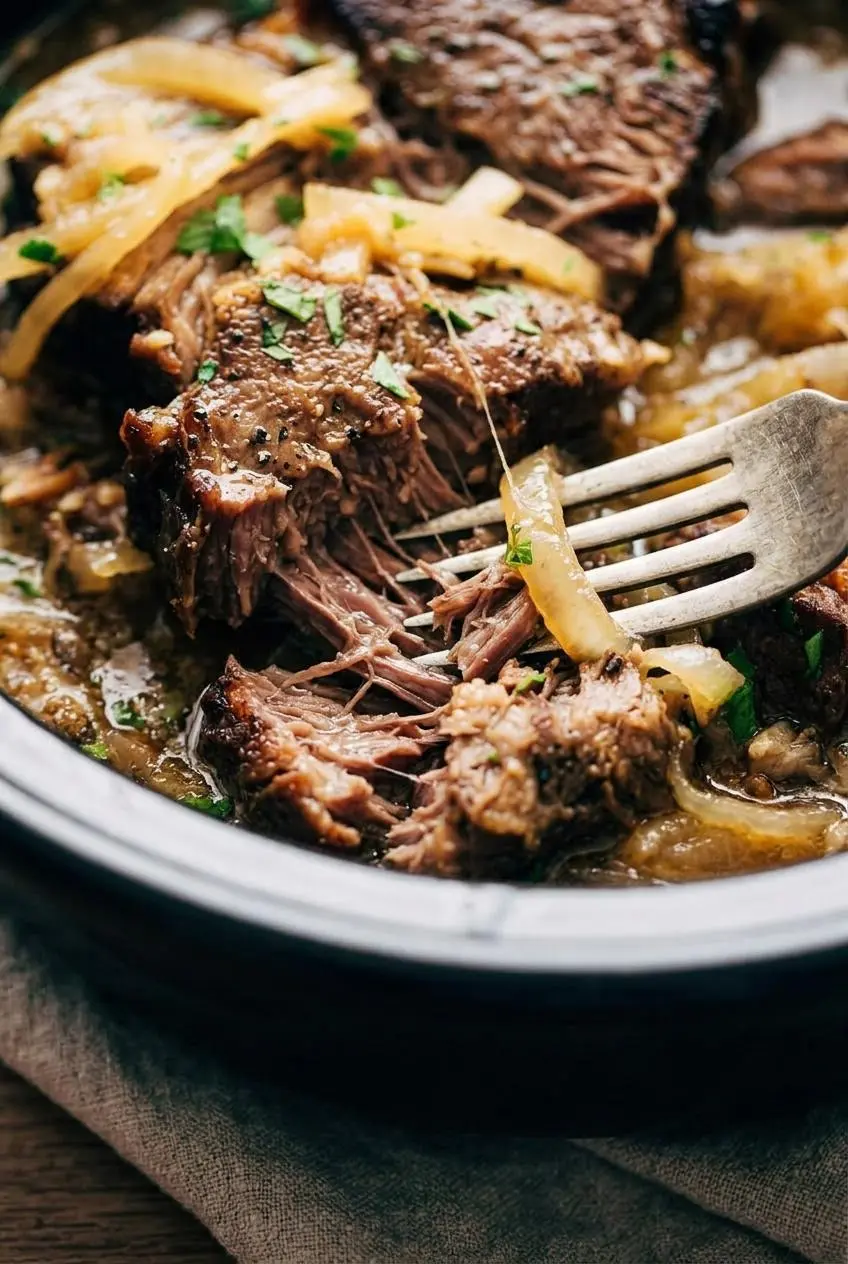
Build the browned flavor first, then let the slow cooker handle the tenderizing. This recipe serves 5; allow about 10 minutes for prep and 6 to 8 hours on Low, plus searing and gravy finishing.
SEAR
- Dry the chuck with paper towels, season every surface with salt and pepper, and heat a large skillet over medium-high heat.
A dry surface encourages a browned crust instead of a wet, gray exterior. - Melt the butter with the avocado oil in the skillet, then brown the roast for about 2 to 3 minutes on each side before transferring it to a plate.
Listen for a steady sizzle and look for a deep brown crust with a toasted beef aroma.
OPTIONAL
- If desired, add a little more oil to the skillet and sauté the sliced onions for 3 to 4 minutes.
The onions should begin to soften and turn translucent while picking up some of the browned pan flavor.
Slow Cooker
- Arrange half the onions in the cooker, add the garlic, beef stock, Worcestershire sauce, apple cider vinegar, onion powder, dried thyme, bay leaf, celery seeds, and sugar, then place the roast on top and cover it with the remaining onions.
The two onion layers surround the beef with flavor as the onions release moisture and soften. - Cover the cooker and cook on Low for 6 to 8 hours, checking the roast for tenderness toward the end.
A fork should enter the center easily and separate the fibers with a gentle twist. - Transfer the tender beef to a platter and cover it to keep it warm while you whisk 2 tablespoons cornstarch with the ⅓ cup cold water, stir the mixture into the cooking liquid, and cook for another 5 to 7 minutes.
The gravy should become smoother and thicker as the starch heats through. - If the gravy remains thin, dissolve the remaining tablespoon of cornstarch in 2 tablespoons of water, stir it into the cooker, and cook for an additional 5 minutes.
Stop when the gravy lightly coats a spoon rather than running off like stock.
Serving
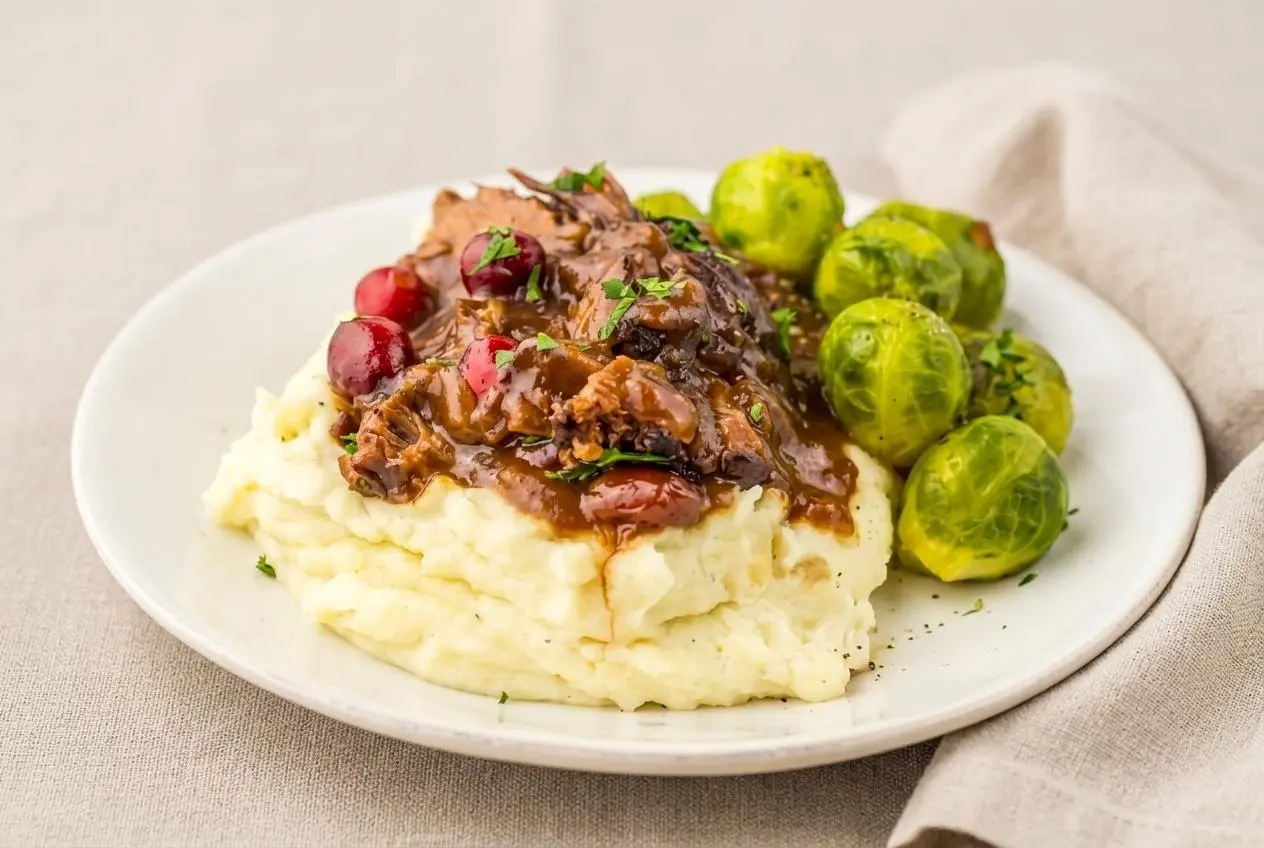
Keep the beef covered while the gravy finishes, allowing it to rest before you pull it apart. Serve with cheddar mashed potatoes, or offer crusty bread and a house salad alongside.
Searing for Maximum Fond
The brown crust and the browned residue on the skillet bottom, called fond, give the sauce its roasted depth. Searing builds flavor; it doesn’t seal juices inside the beef.
Let each surface sit against the hot skillet rather than moving it repeatedly. If the meat clings when you try to turn it, give the crust a chance to develop before lifting again. The goal is mahogany brown, not scorched black.
The optional onion sauté adds another layer of flavor. Stir the onions through the drippings and loosen the brown bits as they release moisture. If the residue is black and smells bitter, don’t scrape it into the cooker.
Low and Slow Braising Timeline
Use Low for the full 6-to-8-hour cooking window. The onions beneath the roast sit in the braising liquid, while those on top soften as steam circulates under the lid. Neither layer needs to brown inside the cooker to flavor the sauce.
Choose a cooker that holds the roast comfortably with the lid fully closed, and follow its fill recommendations. Use the listed stock rather than adding liquid merely to cover the beef; the onions and roast will release additional juices.
Check the thickest part with a fork. If the meat feels springy or grips the fork firmly, it needs more cooking. When ready, the fibers part with little effort. Avoid repeatedly lifting the lid during the braise, since that releases heat.
Finishing the Silky Onion Gravy
Removing the beef gives you room to stir the slurry evenly through the liquid. It also lets the roast rest, covered, before shredding or separating it into larger serving pieces.
Whisk cornstarch into cold water until no dry pockets remain. Stir it again immediately before pouring, since the starch can settle. Dry cornstarch added directly to hot broth tends to form lumps that are difficult to smooth out.
Follow the staged thickening method rather than adding all the starch at once. A spoonful of gravy should cling lightly to the spoon while still flowing easily over the beef. Taste after thickening, when you can judge the final flavor and texture together.
Dutch Oven Braising Alternative
For an optional oven version, sear the beef directly in a heavy Dutch oven and, if desired, soften the onions in the same pot. Add the stock and listed seasonings, arrange the onions around the roast, and cover tightly.
Braise at 325 °F for about 3 to 3½ hours, using the fork test to judge tenderness. Check that liquid remains in the pot, since an oven braise can lose more moisture than a slow cooker. Remove and cover the tender beef, then finish the gravy with the same cold-water slurry technique.
Common Mistakes and Pro Cooking Tips
Most texture problems come down to tenderness, liquid balance, or the way the thickener enters the sauce.
- Tough beef: Chuck that still feels rubbery may need more time for its connective tissue to soften. Continue cooking on Low and check again rather than shredding resistant meat.
- Watery gravy: Slow cookers retain moisture. Use the second slurry described in the method, then let it cook before deciding whether the texture needs further adjustment.
- Lumpy gravy: Dry starch hitting hot liquid can form clumps. Mix it thoroughly with cold water first; if lumps already formed, strain them out before adding a properly mixed slurry.
- Greasy sauce: Excess exterior fat can collect on the surface. Skim visible fat from the hot cooking liquid before thickening so the gravy feels rich rather than oily.
- Overly salty gravy: Stock and Worcestershire both contribute salt. Season the beef thoughtfully, avoid adding a soup packet, and taste before finishing; a little unsalted stock can soften excess salt, though it also loosens the gravy.
- Bitter flavor: Burned butter or blackened fond can carry bitterness through the whole dish. Watch the skillet closely and reduce the heat if the fat begins smoking heavily.
The flavor balance should resemble classic French onion soup: savory broth with rounded onion sweetness, rather than salt dominating every bite. More sugar won’t correct an overly salty sauce.
For serving pieces, separate the rested roast into larger sections and spoon gravy over them. For sandwiches, shred more finely so the beef fits into the rolls and carries the soft onions with it.
Serving Suggestions and Sandwich Variations
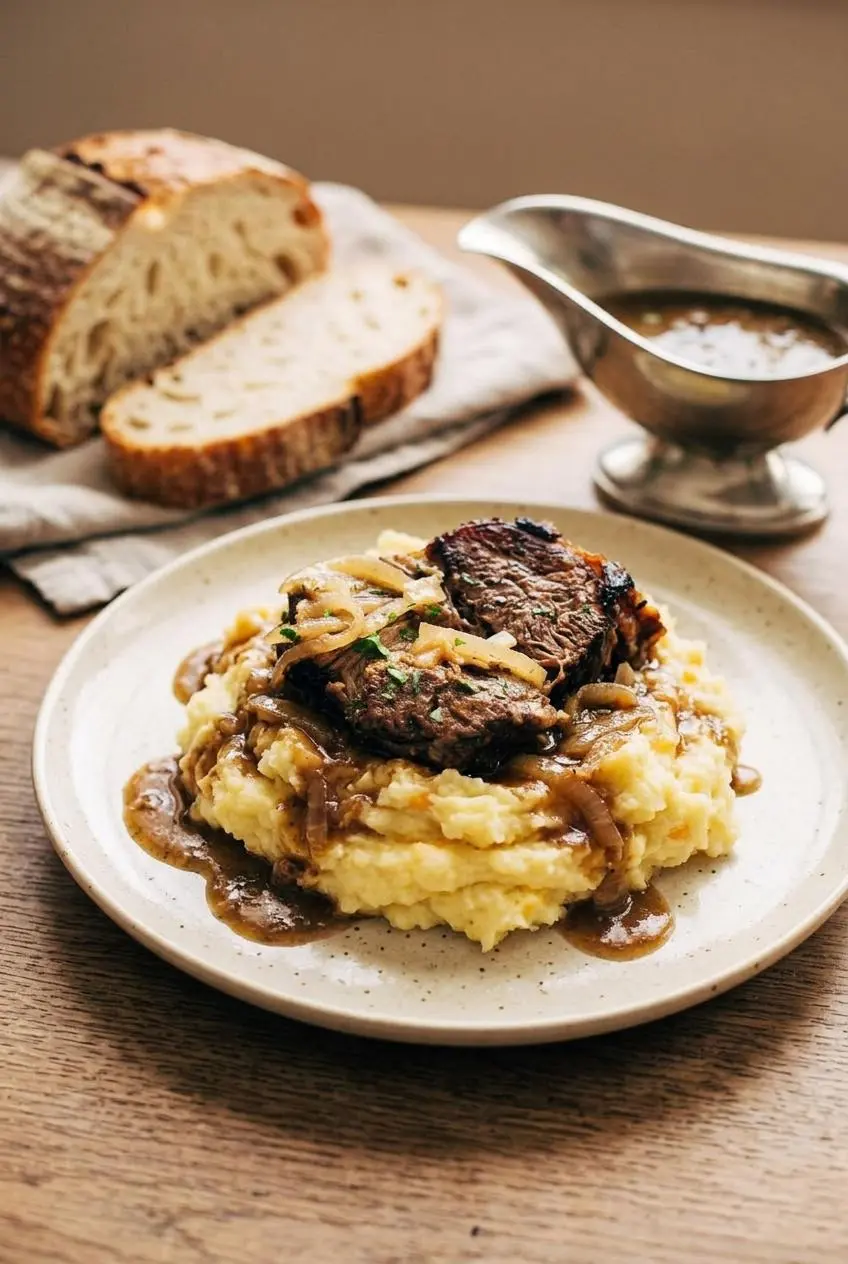
Give the onion gravy something to soak into, then add a fresh side to balance the rich beef.
Classic Comfort Side Pairings
- Cheddar or garlic mashed potatoes: Spoon the beef over the potatoes and let the onion gravy settle into the center.
- Buttered egg noodles: Toss the noodles with fresh parsley, then add beef and enough sauce to coat without pooling excessively.
- Bread and salad: Pair the roast with crusty French bread for dipping and a crisp green salad dressed with a bright vinaigrette.
Keep extra gravy at the table so everyone can adjust their plate. A lightly dressed salad provides a useful contrast to the butter, beef, and soft onions without competing with them.
Cheesy Broiled French Dip Melts
For an optional sandwich variation, tuck warm shredded beef and softened onions into toasted hoagie rolls or a split baguette. Use enough gravy to moisten the filling, but drain off excess so the bread doesn’t become soggy before serving.
Top with Swiss or Gruyere and broil until the cheese bubbles and begins to turn golden. Watch closely under the broiler. Serve with warm onion gravy in small ramekins for dipping.
Storage, Reheating, and Make-Ahead Instructions
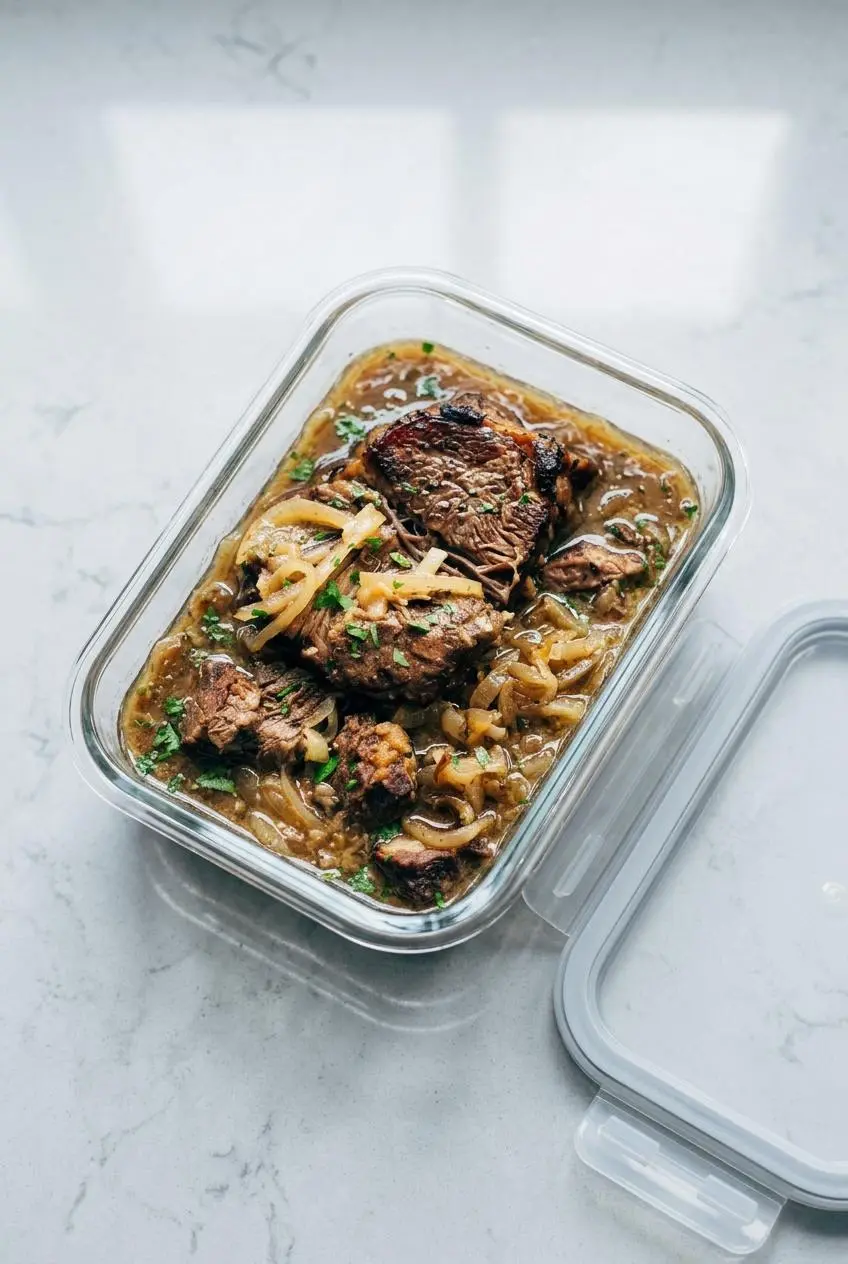
Store the beef with its gravy so the exposed fibers stay coated rather than drying out. Divide leftovers into shallow containers, cover, and refrigerate within two hours rather than leaving the whole roast on the counter to cool.
For reheating, put a portion of beef and gravy in a covered saucepan and warm it gently, stirring or turning the meat as needed. Avoid prolonged boiling, which can reduce the gravy too far and dry the edges of shredded beef.
To streamline prep, slice the onions and measure the dry seasonings separately, keeping the onions covered and chilled. Keep the raw beef refrigerated until you’re ready to sear and begin cooking. Complete the searing as part of the cooking session rather than partially cooking the roast for storage.
Conclusion
A good sear, well-marbled chuck, and patient cooking on Low give this dinner its rich flavor and tender texture. Finish the gravy in stages so it stays smooth and spoonable.
Choose mashed potatoes, noodles, or toasted rolls, then let the softened onions and savory gravy bring the meal together. Keep a spoon handy for that last bit of sauce.
Frequently Asked Questions
Can I Cook French Onion Pot Roast on High Instead of Low?
Low is the recommended setting for this recipe and gives chuck time to soften during the 6-to-8-hour braise. High isn’t a direct time-saving equivalent here. Use the fork test rather than assuming a hotter setting guarantees tender beef.
Do I Have to Brown the Roast Before Putting It in the Slow Cooker?
Browning is strongly recommended for the roasted flavor it adds to the beef and gravy. The roast can cook without searing, but the finished sauce will lack the same depth from the browned crust and fond.
How Do I Thicken the French Onion Gravy if It Is Too Watery?
Remove the beef, then stir in cornstarch thoroughly mixed with cold water. Let the slurry cook before judging the consistency, and use the second slurry from the method only if needed.
Can I Assemble This French Onion Pot Roast Ahead of Time?
Prep the onions and measure the dry seasonings separately to make assembly quicker. Keep the beef chilled, then sear and assemble when you’re ready to start cooking rather than storing a partially cooked roast.
What Are the Best Types of Onions to Use for French Onion Pot Roast?
Yellow onions are the recommended choice for balanced savory depth and sweetness. Sweet onions, such as Vidalia, are an optional milder alternative; slice either variety thinly for evenly softened strands.
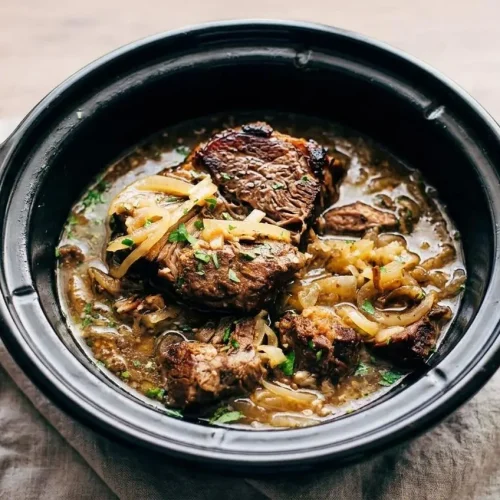
Crock Pot French Onion Pot Roast

Equipment
- Slow cooker
Ingredients
- 2 pounds chuck roast
- 2 tablespoons butter
- 1 tablespoon avocado oil
- 3 cloves garlic pressed or minced
- 2 yellow onions thinly sliced
- 2 cups beef stock
- 1 tablespoon Worcestershire sauce
- 1 tablespoon apple cider vinegar
- ½ teaspoon onion powder
- ½ teaspoon dried thyme
- 1 bay leaf
- ⅛ teaspoon celery seeds crushed between fingers
- 1 tablespoon sugar
- 2-3 tablespoons cornstarch
- ⅓ cup water
Instructions
SEAR
- Dry the chuck with paper towels, season every surface with salt and pepper, and heat a large skillet over medium-high heat. A dry surface encourages a browned crust instead of a wet, gray exterior.
- Melt the butter with the avocado oil in the skillet, then brown the roast for about 2 to 3 minutes on each side before transferring it to a plate. Listen for a steady sizzle and look for a deep brown crust with a toasted beef aroma.
OPTIONAL
- If desired, add a little more oil to the skillet and sauté the sliced onions for 3 to 4 minutes. The onions should begin to soften and turn translucent while picking up some of the browned pan flavor.
Slow Cooker
- Arrange half the onions in the cooker, add the garlic, beef stock, Worcestershire sauce, apple cider vinegar, onion powder, dried thyme, bay leaf, celery seeds, and sugar, then place the roast on top and cover it with the remaining onions. The two onion layers surround the beef with flavor as the onions release moisture and soften.
- Cover the cooker and cook on Low for 6 to 8 hours, checking the roast for tenderness toward the end. A fork should enter the center easily and separate the fibers with a gentle twist.
- Transfer the tender beef to a platter and cover it to keep it warm while you whisk 2 tablespoons cornstarch with the ⅓ cup cold water, stir the mixture into the cooking liquid, and cook for another 5 to 7 minutes. The gravy should become smoother and thicker as the starch heats through.
- If the gravy remains thin, dissolve the remaining tablespoon of cornstarch in 2 tablespoons of water, stir it into the cooker, and cook for an additional 5 minutes. Stop when the gravy lightly coats a spoon rather than running off like stock.
Serving
- Keep the beef covered while the gravy finishes, allowing it to rest before you pull it apart. Serve with cheddar mashed potatoes, or offer crusty bread and a house salad alongside.