Skip to content
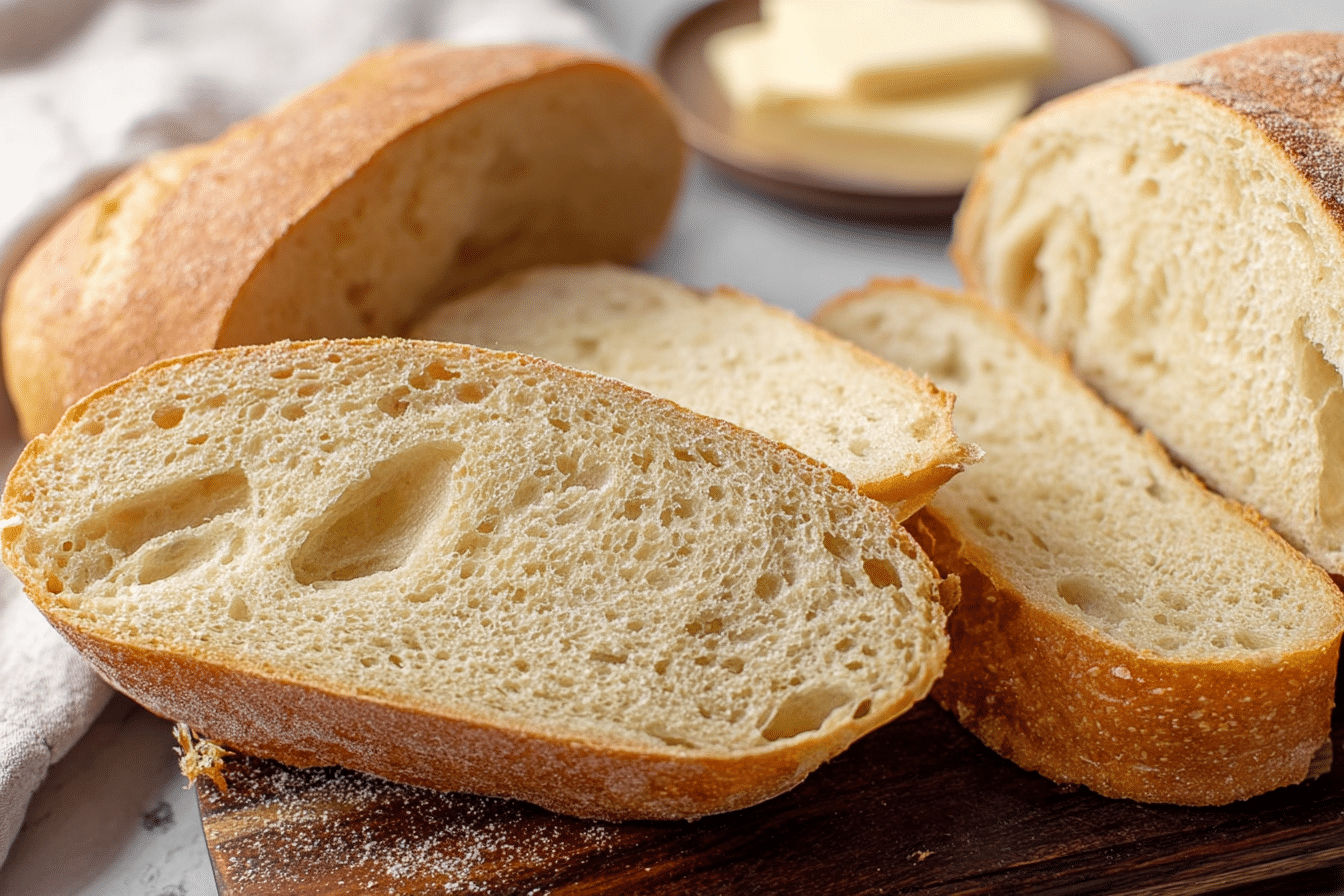
In my kitchen, the moment I know a loaf is right is when the crust sings, that crackly, toasty sound as it cools, and the crumb inside stays soft and springy.
This french bread recipe is my go-to when I want bakery vibes at home without spending all day kneading, watching, and worrying. It is perfect for busy bakers who want a dependable rise, a golden crust, and that buttery aroma that makes everyone hover near the counter.
Why You’ll Love This Recipe
24-hour cold ferment magic: Retarding the dough in the fridge builds deeper flavor and a better crumb with more alveoli, with almost no extra active work.
Secret bakery boost: I add 1/2 teaspoon diastatic malt powder to the flour so the yeast stays happy during the long rest and the crust browns like a pro.
Better crust science: The slow proofing improves enzyme activity, which means more natural sugars for a stronger Maillard reaction and a darker, tastier finish.
My “why didn’t I do this sooner” tweak: I discovered this after a few pale loaves, and the difference was immediate, better color, better aroma, better chew.
Ingredients and Substitutions
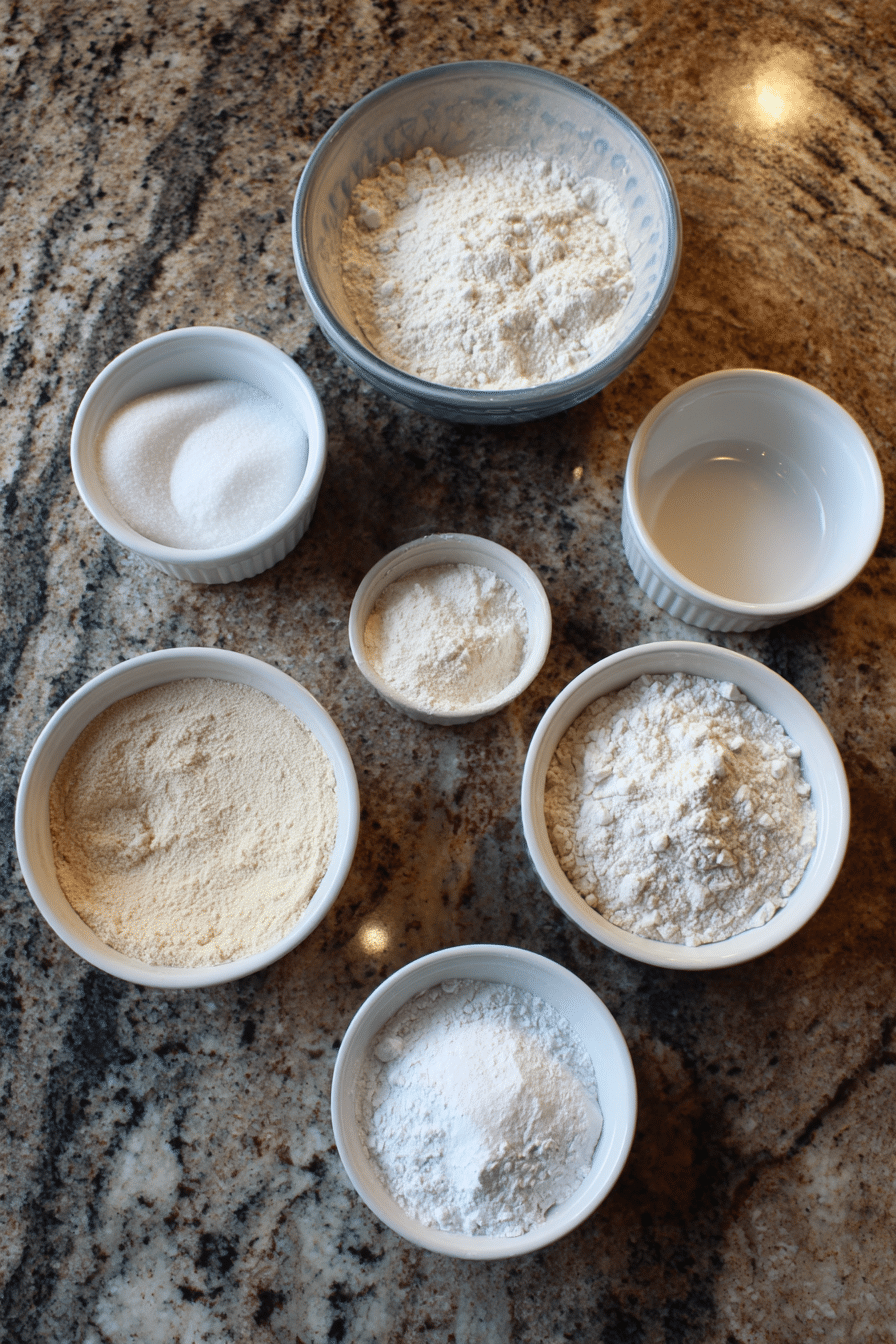
This ingredient list is short on purpose, each one has a job, from gluten development to a tender crumb and balanced salt.
Ingredients
- 1 ¾ cups water, warmed to 100°F-110°F
- 2 ½ teaspoons instant yeast, 1 packet (mine is rapid rise)
- 4 ½ cups all-purpose flour, or bread flour
- 2 ½ teaspoons kosher salt, or half the amount of table salt
- ¼ cup unsalted butter, cubed
Ingredient Notes & Substitutions
Diastatic malt powder: This is my quiet “bakery” ingredient for better browning and steady fermentation during the long chill. Check: diastatic malt powder increases enzymatic activity.
Flour choice: Bread flour gives a chewier crumb because of higher protein, all-purpose flour bakes up a bit softer and more fluffy. Source: the protein content difference between bread and all-purpose flour.
Instant yeast vs active dry yeast: Instant yeast can go straight in, but I still like a quick bloom to confirm it is lively. If you use Active dry yeast, bloom it 5 to 10 minutes until foamy, and expect proofing to run a bit longer.
Salt: Salt is not just flavor, it helps strengthen the dough and keeps proofing steady so the loaf does not taste overly “yeasty.”
Butter: Those cubes melt into the dough during mixing and baking, giving this an American-style softness and a slightly richer crumb.
How to Make french bread recipe
Mixing & Kneading
- In a small bowl, stir the warm water and instant yeast together until it looks evenly cloudy. Let it sit while you measure everything else, but keep it under 10 minutes, you want it awake, not sluggish.
- Add the flour and salt to a stand mixer bowl fitted with the dough hook, then pour in the yeast mixture. Mix on low just until no dry flour remains and the dough looks fully hydrated, about 1 minute.
- Turn the mixer up to medium and knead 4 to 5 minutes, until the dough becomes soft, strong, and elastic. Aim for a rough window pane test, you should be able to stretch a thin spot that turns translucent with visible veining, not perfectly smooth like brioche.
- Drop in the cubed butter and reduce speed to low, then mix until every piece disappears into the dough and it looks cohesive again. If kneading by hand, room temperature butter is easier, but cold butter in tiny cubes works fine in the mixer.
First Rise (Bulk Fermentation)
- Scrape the dough into a lightly oiled medium bowl using a bowl scraper or stiff silicone spatula, turn once to coat, and cover with plastic wrap. Proof at room temperature for 45 to 60 minutes, until doubled and lightly puffy.
Divide & Preshape
- Turn the dough onto a very lightly dusted surface and divide into two equal pieces. Each piece will be about 485g if you want to be precise.
- Preshape the first piece into a boule by flipping it over and folding all four sides toward the center, then flip seam-side down. Cup your hands and gently pull the dough toward you, rotate a quarter turn, and repeat until it stands up as a tidy round, then repeat with the second piece.
- Cover both rounds with plastic wrap and let them bench rest 15 to 20 minutes, this longer rest is key so the dough relaxes and stops snapping back.
Shape the Bâtard
- Flip one dough round seam-side up, then lift the edge farthest from you, give it a small shake to stretch, and fold it down to the center. Rotate 180 degrees and repeat with the other side, creating a tighter, layered center seam.
- Shape into a traditional bâtard by forming a log, tapering and sealing both ends so they are pointed and the center stays fuller. Do 2 sets of thumb folds, wrap the dough around your left thumb and seal with the heel of your right hand, starting on the right end and moving left, then repeat once more to fully close and tighten the tapered log.
Final Proof & Scoring
- Line a sheet pan with parchment and set the loaves seam-side down on the diagonal at opposite ends of the pan. Cover loosely with plastic wrap and proof in a warm spot for 30 to 45 minutes, until visibly doubled and light and airy when you touch it.
- While the loaves proof, preheat the oven to 375°F conventional (no fan) so the heat is steady and even.
- Right before baking, remove the plastic wrap gently and score each loaf with a razor, bread lame, or very sharp knife. Make 3 diagonal slashes where the ends overlap, spaced about 1 inch apart, but cut perpendicularly into the dough, not angled like sourdough, and aim for 1/2 inch deep so the loaf opens cleanly.
Baking
- Bake for 28 to 30 minutes, until deeply golden and the internal temperature reaches 205°F. Slide the loaves onto a wire rack and cool at least 15 minutes before slicing with a serrated knife so the crumb sets instead of turning gummy.
American-Style vs. Traditional Baguettes
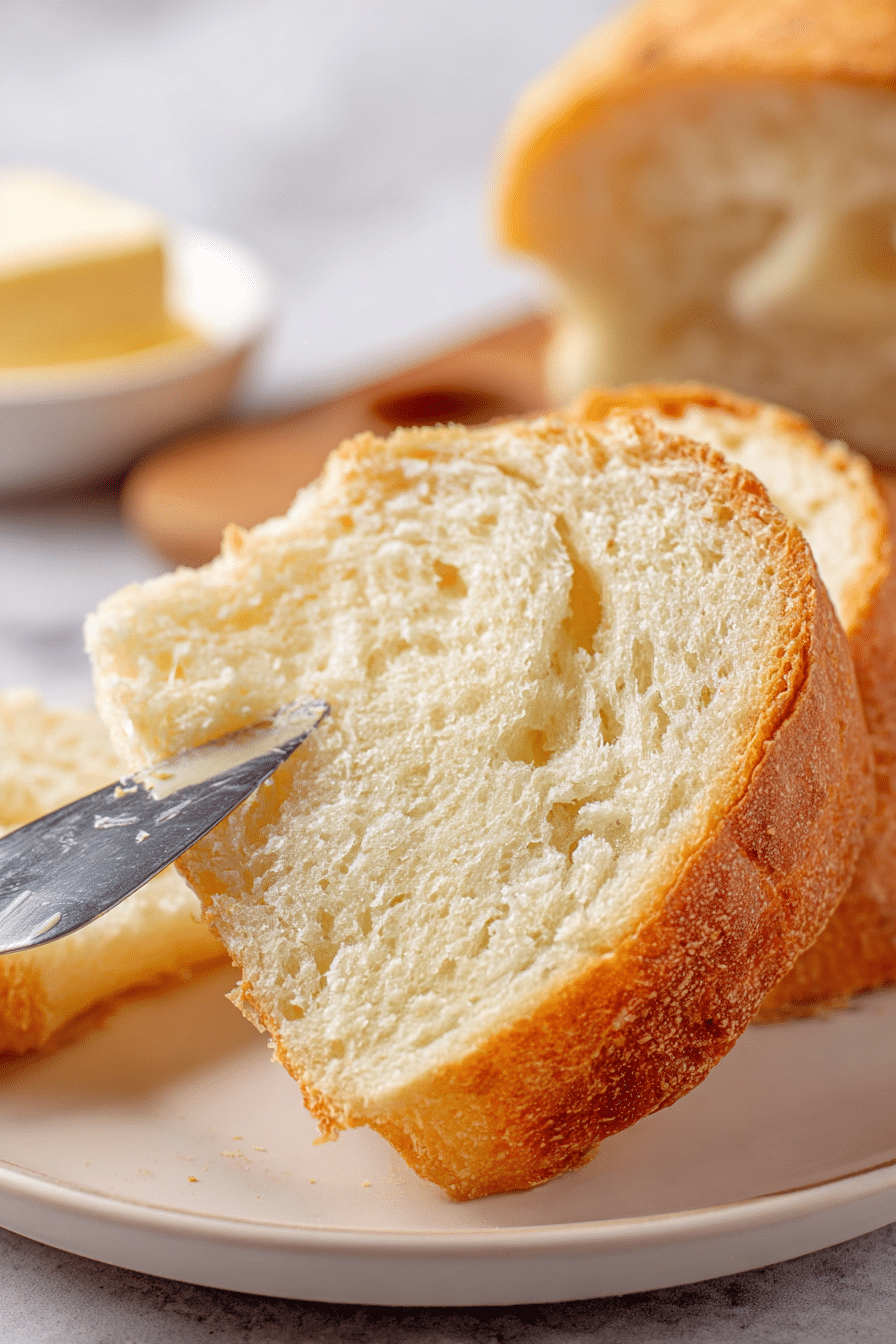
This loaf is an American-style French bread, wider, softer, and slightly richer from butter.
A traditional baguette tends to be slimmer with a drier, harder crust and a leaner dough, so expect this recipe to slice beautifully for sandwiches and toast.
Try: our popular sourdough discard sandwich bread recipe.
Pro Tips & Troubleshooting
Pro Tips
- Weigh your flour if you can, too much flour is the fastest route to a dense crumb.
- Keep bench flour minimal, a slightly tacky dough shapes into a tighter bâtard with better oven spring.
- For a glossy finish, brush on an egg wash (1 egg beaten) right before scoring and baking.
- Proof in a draft-free spot, my favorite is the oven with just the light on for gentle warmth.
- For crust color, learn: the Maillard reaction during baking.
Common Mistakes to Avoid
- Killing the yeast, do not use water over 115°F. Guide: ideal water temperature for yeast activation.
- Slicing too early, hot bread vents steam fast and the crumb can turn gummy and compressed.
- Skipping the bench rest, the dough will fight you and you will lose shape and volume.
- Under-baking, tap the bottom, it should sound hollow, and confirm 205°F internal temperature.
Try next: homemade vanilla bean paste for an incredible flavor boost in your baking.
Serving & Storage
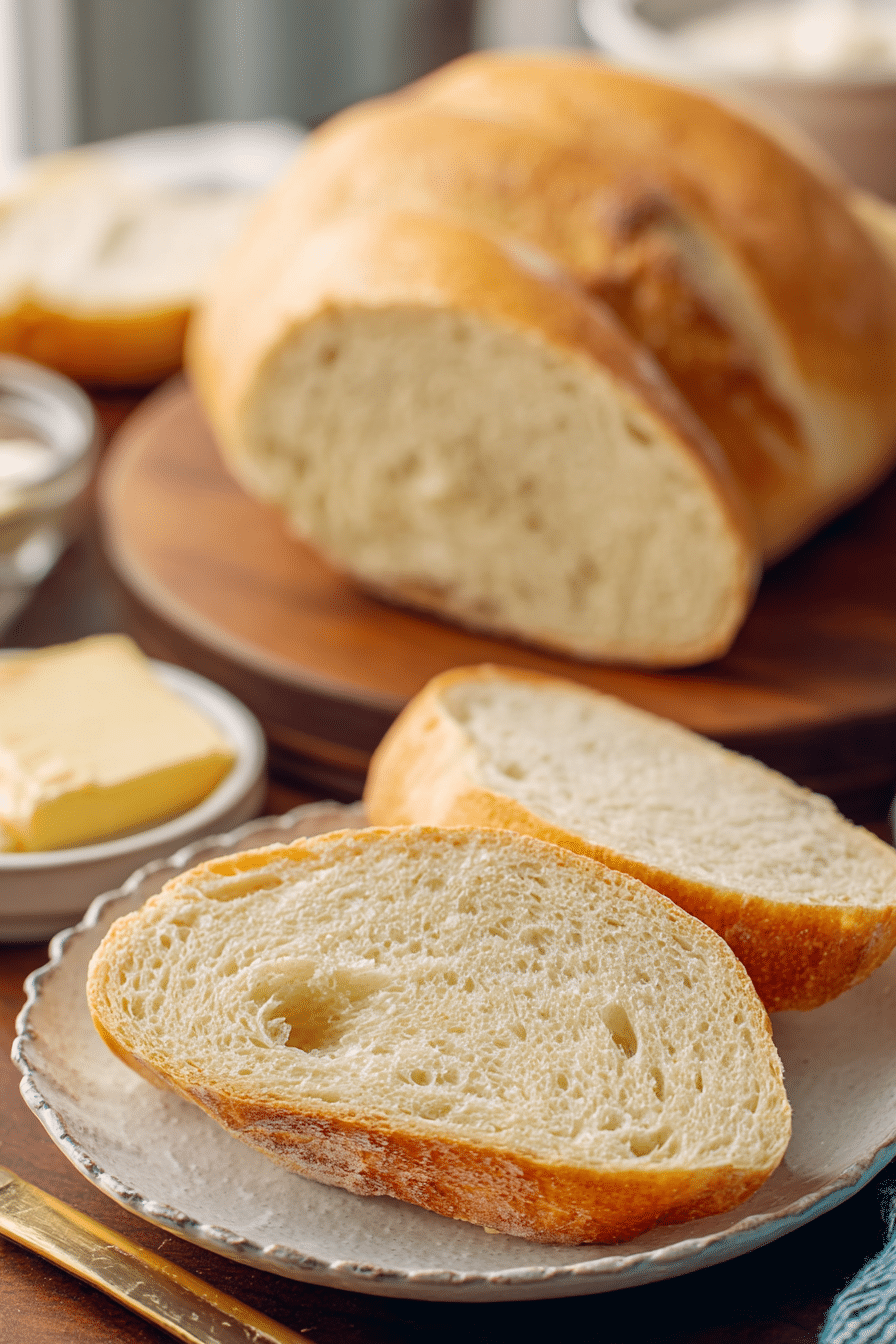
Serving Ideas
Serve warm with good salted butter, it melts into the crumb and makes the aroma feel even more buttery.
Use it for steak sandwiches, or toast thick slices for French bread pizza.
Pair with hearty soups and stews, especially broccoli cheddar soup or thick beef stew.
Make dinner: classic beef and broccoli.
Bake alongside: garlic bread rolls as a delicious accompaniment.
Storage & Reheating
Room temp: store for 1 day in a paper bag to protect the crust while keeping it pleasantly crisp.
Freezing: wrap the cooled loaf tightly, then freeze, it is the best way to preserve the crumb without drying it out.
To revive: reheat straight from frozen in a 350°F oven until the crust feels crisp again and the loaf is warmed through.
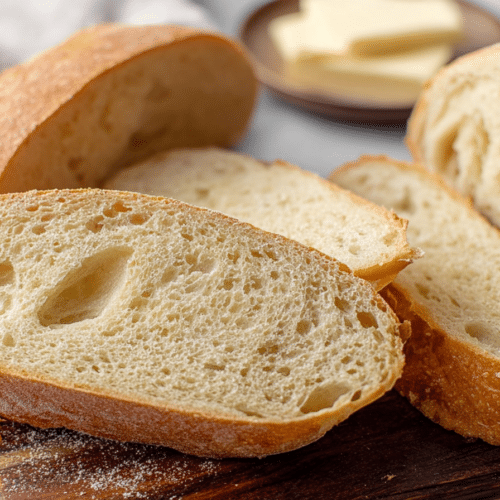
Best French Bread Recipe

Equipment
- Stand mixer with dough hook
- Small bowl
- Medium bowl
- Bowl scraper or stiff silicone spatula
- Sheet Pan
- Parchment Paper
- Plastic wrap
- Razor, bread lame, or very sharp knife
- Wire rack
- Serrated Knife
- Instant-read thermometer
Ingredients
- 1 3/4 cups water warmed to 100°F-110°F
- 2 1/2 teaspoons instant yeast 1 packet (mine is rapid rise)
- 4 1/2 cups all-purpose flour or bread flour
- 2 1/2 teaspoons kosher salt or half the amount of table salt
- 1/4 cup unsalted butter cubed
Instructions
Mixing & Kneading
- In a small bowl, stir the warm water and instant yeast together until it looks evenly cloudy. Let it sit while you measure everything else, but keep it under 10 minutes.
- Add the flour and salt to a stand mixer bowl fitted with the dough hook, then pour in the yeast mixture. Mix on low just until no dry flour remains and the dough looks fully hydrated, about 1 minute.
- Increase to medium speed and knead 4 to 5 minutes, until the dough is soft, strong, and elastic and you can stretch a rough window pane.
- Add the cubed butter and reduce speed to low, then mix until every piece disappears into the dough and it looks cohesive again.
First Rise (Bulk Fermentation)
- Scrape the dough into a lightly oiled medium bowl, turn once to coat, and cover with plastic wrap. Proof at room temperature for 45 to 60 minutes, until doubled and lightly puffy.
Divide & Preshape
- Turn the dough onto a very lightly dusted surface and divide into two equal pieces (about 485g each if you want to be precise).
- Preshape each piece into a boule: flip it over and fold all four sides toward the center, then flip seam-side down. Cup your hands and gently pull the dough toward you, rotate a quarter turn, and repeat until it stands as a tidy round.
- Cover both rounds with plastic wrap and bench rest 15 to 20 minutes so the dough relaxes.
Shape the Bâtard
- Flip one round seam-side up. Lift the edge farthest from you, give it a small shake to stretch, and fold it down to the center. Rotate 180 degrees and repeat with the other side to create a tighter, layered center seam.
- Shape into a bâtard: form a log, taper and seal both ends so they are pointed and the center stays fuller. Do 2 sets of thumb folds, wrapping the dough around your left thumb and sealing with the heel of your right hand from right to left; repeat once more to fully close and tighten the tapered log.
Final Proof & Scoring
- Line a sheet pan with parchment and set the loaves seam-side down on the diagonal at opposite ends of the pan. Cover loosely with plastic wrap and proof in a warm spot for 30 to 45 minutes, until doubled and light and airy to the touch.
- While the loaves proof, preheat the oven to 375°F conventional (no fan).
- Right before baking, remove the plastic wrap and score each loaf with a razor, bread lame, or very sharp knife. Make 3 diagonal slashes where the ends overlap, spaced about 1 inch apart; cut perpendicularly into the dough and aim for 1/2 inch deep.
Baking
- Bake for 28 to 30 minutes, until deeply golden and the internal temperature reaches 205°F. Move the loaves to a wire rack and cool at least 15 minutes before slicing.
Notes
Nutrition
Conclusion
The cold-ferment method makes this french bread recipe taste less “quick-yeast” and more like something you grabbed from a great bakery.
If this is your first loaf, stick with the timing and the internal temperature, then tweak only one thing next time so you learn what changes the crumb and crust.
FAQ
What is the secret to a crispy crust?
Steam and strong browning are the combo. Even without a fancy oven steam setup, you can still boost crust color and flavor with the diastatic malt powder, and bake until the loaf hits 205°F so the crust fully sets.
Can I use all-purpose flour instead of bread flour?
Yes. Bread flour usually gives a chewier crumb due to higher protein and stronger gluten development, while all-purpose flour bakes up a bit softer and more tender, which many people prefer for sandwiches.
Why didn’t my bread rise a second time?
Most often it is yeast health or proofing temperature. Make sure the yeast mixture sits less than 10 minutes, keep water in the 100°F-110°F range, and proof in a warm, draft-free spot until the dough has visibly doubled and feels light.
How do I store French bread to keep it fresh?
For the best crust, keep it at room temperature in a paper bag for 1 day. For longer storage, wrap tightly and freeze, then reheat in a 350°F oven to bring back the fresh-baked crunch.