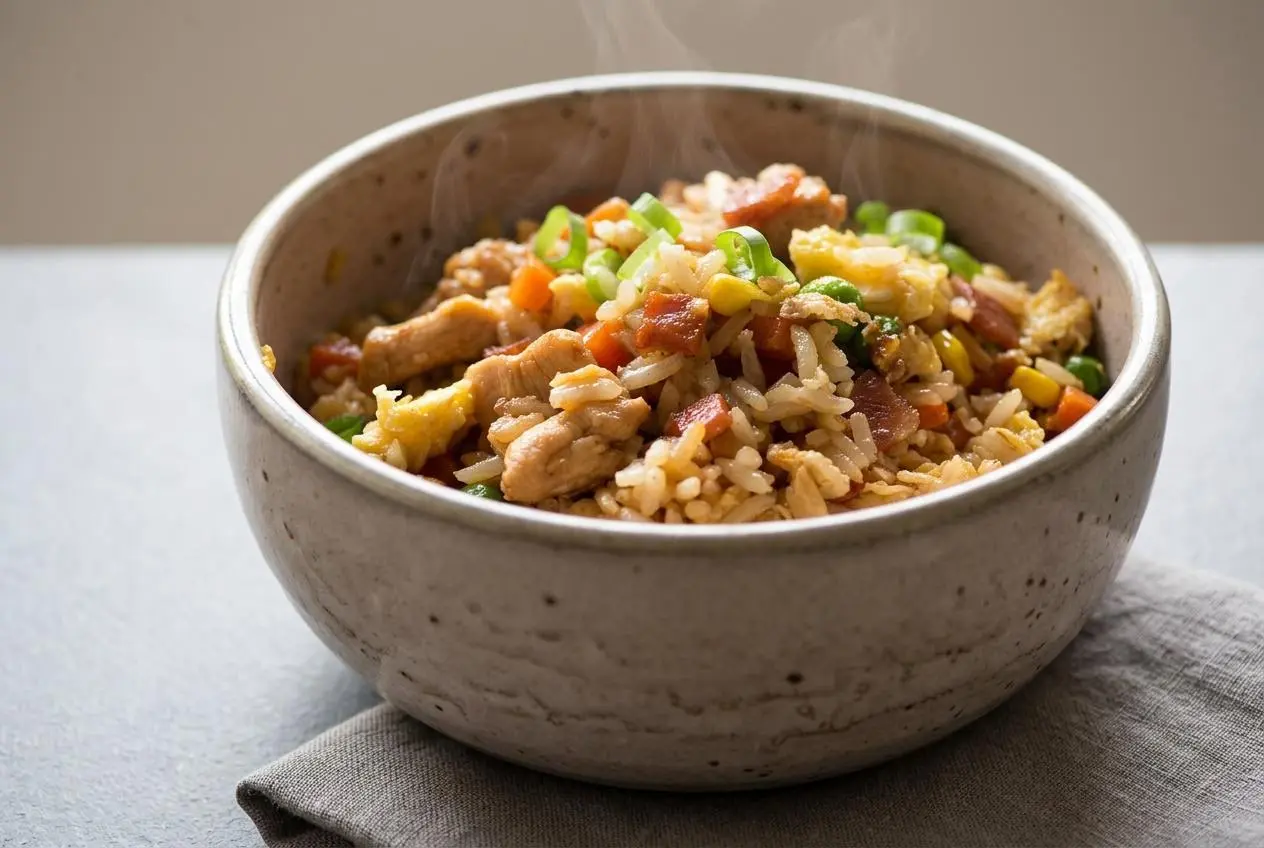
Chicken fried rice comes together by stir-frying chicken, soft scrambled eggs, aromatics, and chilled rice in a hot skillet with soy sauce, oyster sauce, and sesame oil.
This skillet dinner delivers savory bacon, tender chicken, sweet vegetables, and glossy rice with the satisfying sizzle of takeout.
With cold rice and a hot pan, the grains stay distinct instead of soggy. That first crackle is the good part.
Set every ingredient beside the stove before heating the pan, because the final stir-fry moves quickly.
Essential Ingredients for Authentic Chicken Fried Rice
Each ingredient contributes something useful: oil supports fast frying, rice provides chewy structure, bacon adds richness, vegetables bring color and sweetness, and the sauce ties everything together with savory depth.
- 2 tbsp oil, peanut, vegetable or canola
- 2 eggs, lightly whisked
- 150 g (5 oz) chicken breast, finely sliced into small pieces
- 2 garlic cloves, minced
- 1/2 onion, finely chopped
- 120 g (4 oz) bacon, excess fat trimmed, chopped
- 1 small carrot, peeled and diced 0.75 cm / 1/3″
- 1/2 cup frozen corn (or can or fresh)
- 1/2 cup frozen peas
- 2 cups (packed) cooked white rice, day old
- 3/4 cup green onions, finely sliced
SAUCE
- 2.5 tbsp Chinese cooking wine or Mirin
- 1 tbsp oyster sauce
- 3 tbsp light soy sauce
- 1/2 tsp sesame oil, optional
- 1/4 tsp white pepper, optional
Chilled long-grain white rice, including jasmine rice, is the backbone of good fried rice because its drier surface lets each grain fry separately. Freshly cooked rice carries more steam and tends to clump when it hits the skillet.
Peanut, vegetable, and canola oils tolerate high heat better than butter, helping the rice fry before it sticks. Garlic and onion create the fragrant base, while bacon renders savory fat that seasons the chicken, vegetables, and grains as they cook.
Chicken breast stays tender when cut into small, even pieces, while the peas, carrots, corn, and green onions keep the dish bright and balanced.
I dice the chicken quite small so every piece turns opaque at nearly the same moment instead of leaving a few pieces dry while others finish cooking.
How to Make Chicken Fried Rice
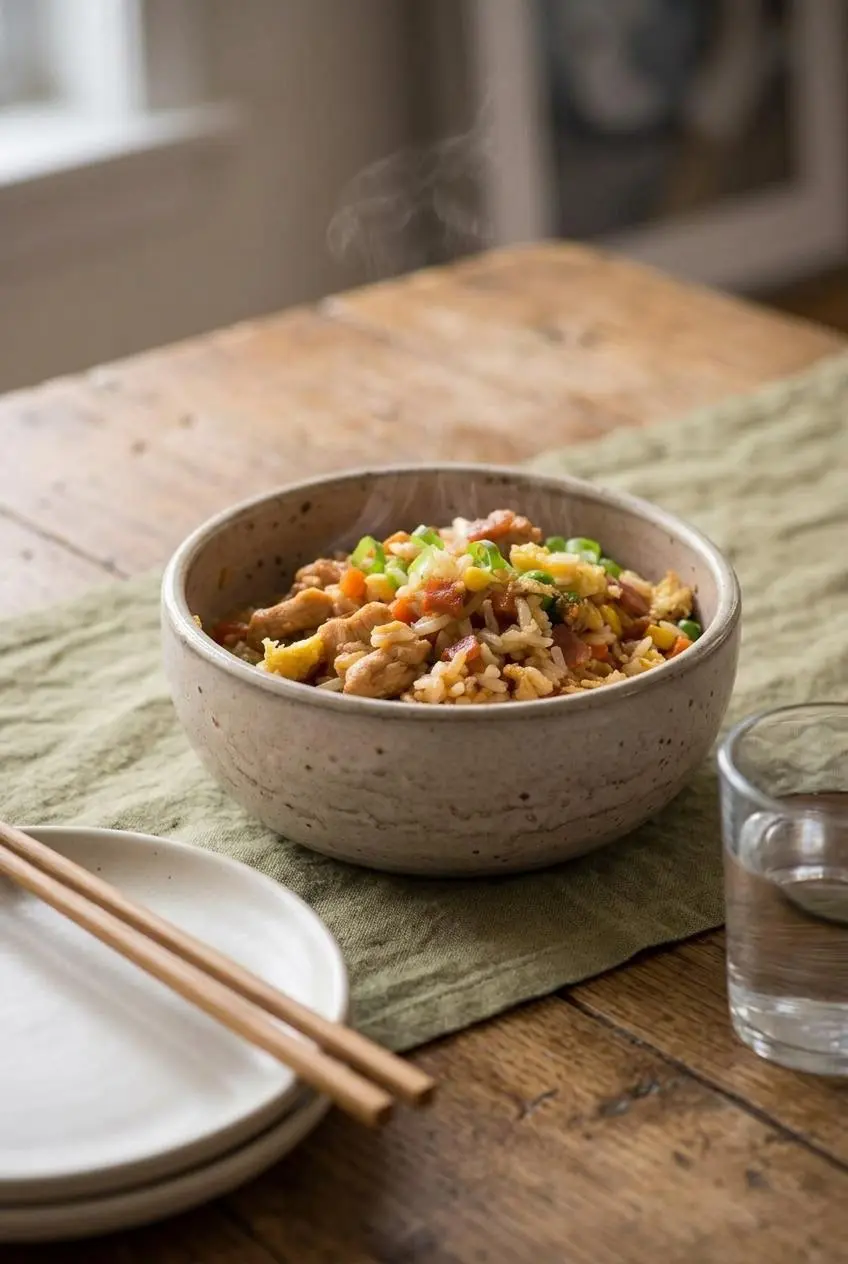
Cooking in stages protects the pan temperature. Eggs stay soft, chicken sears quickly, and the rice gets a chance to fry rather than sit in a puddle of steam.
- Whisk the sauce ingredients in a bowl, then coat the chicken with 2 tsp of the mixture and leave it for 10 minutes.
The chicken should look lightly glazed, with no excess marinade pooling in the bowl. - Warm 1 tbsp oil in a wok or skillet over medium heat, then scramble the eggs and transfer them out while the curds are still slightly glossy.
They should be softly set rather than browned or dry. - Raise the heat to high and add the remaining 1/2 tbsp oil with the bacon.
After about 1 minute, the bacon should begin to render and smell deeply savory. - Stir in the onion and garlic, then cook for about 1 1/2 minutes.
The bacon should turn light golden and the garlic should smell fragrant without darkening. - Add the carrot, corn, and peas directly from frozen if needed, and stir-fry for 1 minute.
The vegetables should become hot and bright while the skillet continues to sizzle. - Add the marinated chicken and stir-fry for about 1 1/2 minutes.
The pieces should change from pink to opaque throughout. - Add the cold rice and remaining sauce, then keep the rice moving for 1 1/2 minutes.
Listen for a lively sizzle as the sauce darkens and coats each grain with a light sheen. - Return the eggs to the skillet with the green onions and toss just until evenly distributed, then remove the pan from the heat.
The egg curds should stay visible and tender among the separated grains. - Serve immediately.
The rice should be hot, savory, and lightly smoky from the high-heat stir-fry.
For poultry, check the thickest chicken pieces with an instant-read thermometer and cook to a 165°F internal temperature for poultry. The meat should be opaque before it joins the rice.
Staging Eggs and Chicken Separately
Cooking the eggs first may feel fussy, but it makes a real difference. Pulling them while they are still soft prevents rubbery curds, and folding them back in at the end keeps their texture intact.
Give chicken its own space, too. Adding raw chicken, eggs, and vegetables together cools the skillet fast. Instead of searing, the ingredients release moisture and steam. A wide skillet helps, but working in stages matters even more when cooking on a home stove.
If the pan stops sizzling after the vegetables go in, let the moisture cook off before adding the rice. The rice should make a popping sound when it lands in properly heated fat, not a quiet hiss.
Quick Rotisserie Chicken Variation
For a faster weeknight version, use shredded rotisserie chicken or cooked chicken breast. Skip the chicken marinade, then add the cooked meat with the rice and sauce during the final 1 1/2 minutes. This warms it through without giving it enough time to turn stringy or dry.
If you prefer quick-cooking seafood, shrimp fried rice uses the same high-heat, staged-pan approach with a different protein.
The Secret Takeout Sauce Combination
Restaurant-style flavor comes from layered seasoning, not from soy sauce alone. Light soy sauce seasons the grains, oyster sauce adds rounded umami, and Chinese cooking wine or Mirin brings gentle sweetness and depth.
Chinese cooking wine is often Shaoxing wine, which adds a subtle savory complexity when heated in the pan. If avoiding alcohol, use a little low-sodium chicken broth with a drop of rice vinegar as an optional flavor alternative. Keep the substitution modest so the rice does not become wet.
- For a gluten-free option: use tamari in place of light soy sauce in equal measure, and choose a gluten-free oyster sauce. Coconut aminos can also work, though the flavor is sweeter and less salty.
- For less saltiness: choose low-sodium soy sauce, then taste after tossing. Bacon and oyster sauce already bring plenty of savory character.
- For the finish: add the optional sesame oil and white pepper right as the heat goes off. Swirling them around the hot edge of the pan wakes up their aroma without scorching them.
For a heartier version built around the same savory profile, try beef fried rice. The sauce works especially well with richer proteins because oyster sauce has enough depth to stand up to them.
Mastering the Rice: Why Day-Old Rice Matters
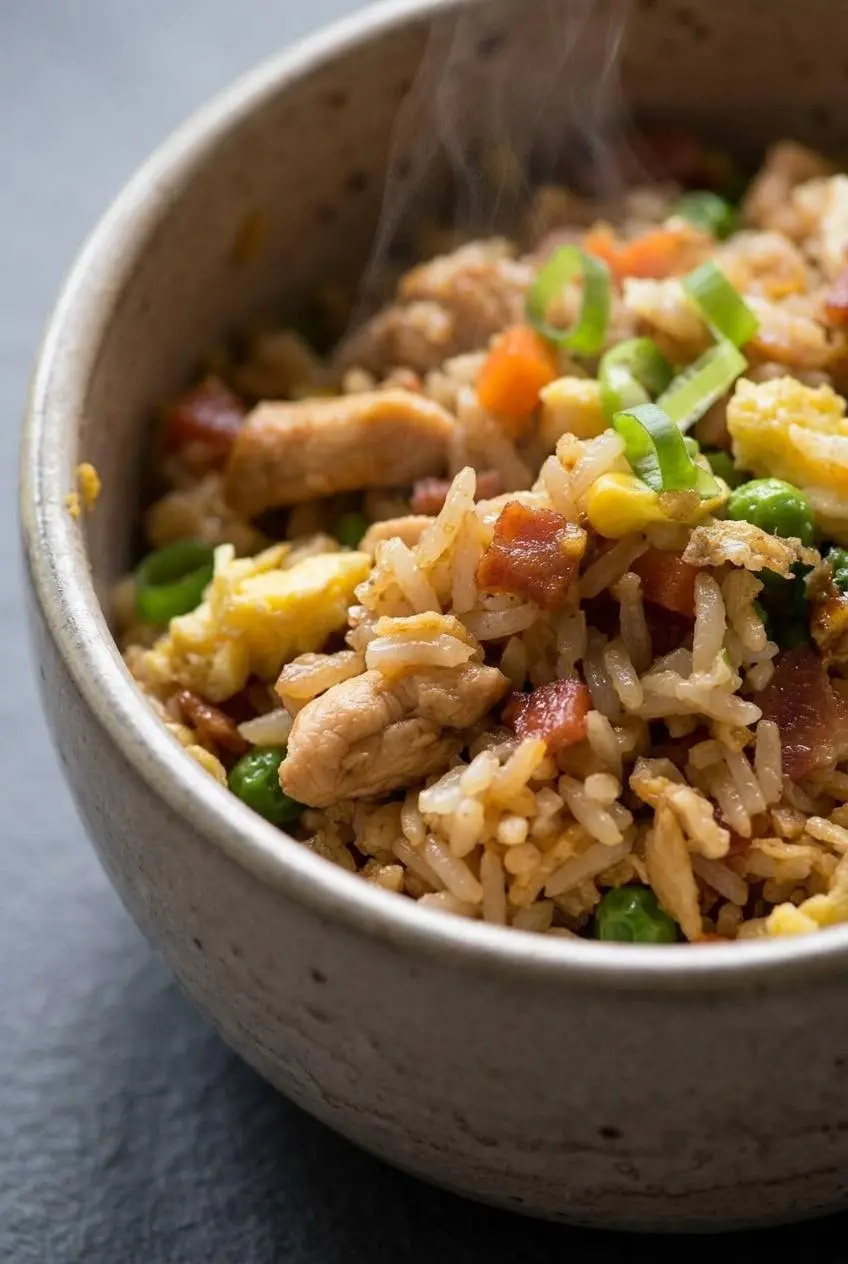
Cold day-old rice is the best defense against mushy fried rice. As cooked rice chills, its surface starch firms up and loses moisture, a process often called starch retrogradation. That gives each grain enough structure to stay separate in a hot skillet.
Long-grain white rice is ideal because it fries into fluffy, distinct kernels with a light chew. Short-grain rice is naturally stickier, so it is harder to keep loose. Break up any cold clumps with clean fingers before the rice goes into the pan.
High heat matters just as much as chilled rice. Spread the rice across the skillet for a moment before stirring so some grains make contact with the hot surface. A little bottom crispness and a faint toasted aroma create that wok hei character at home.
If your rice seems dry after frying, do not flood the skillet with sauce. Keep tossing over high heat and let the existing sauce coat the grains evenly. If it looks wet, give it space and heat so excess moisture can evaporate.
The Sheet Pan Quick-Chill Solution
Need fried rice tonight without leftover rice? Spread freshly cooked warm rice in a thin, even layer across a large baking sheet. Place it in the freezer for 15 to 20 minutes, until the surface feels cool and dry rather than steamy.
This fast chill releases trapped steam and firms the outside of the grains, making the rice far more suitable for stir-frying. Do not pile it in a bowl while it cools, because the center stays hot and damp.
White Rice vs Brown Rice
Jasmine or another medium- to long-grain white rice gives the most traditional fluffy texture. Brown rice works as an optional whole-grain swap, but its bran layer gives it a firmer chew and a nuttier taste.
Chill brown rice thoroughly before frying and keep the skillet over steady high heat. Add the sauce lightly so the grains do not become dry or heavy. The result is less delicate than white rice but still satisfying with bacon, chicken, and vegetables.
Moisture control matters in vegetable-forward versions too. Vegetable fried rice is a useful option when you want the same separated grains with more produce in the skillet.
Storing and Reheating Leftovers
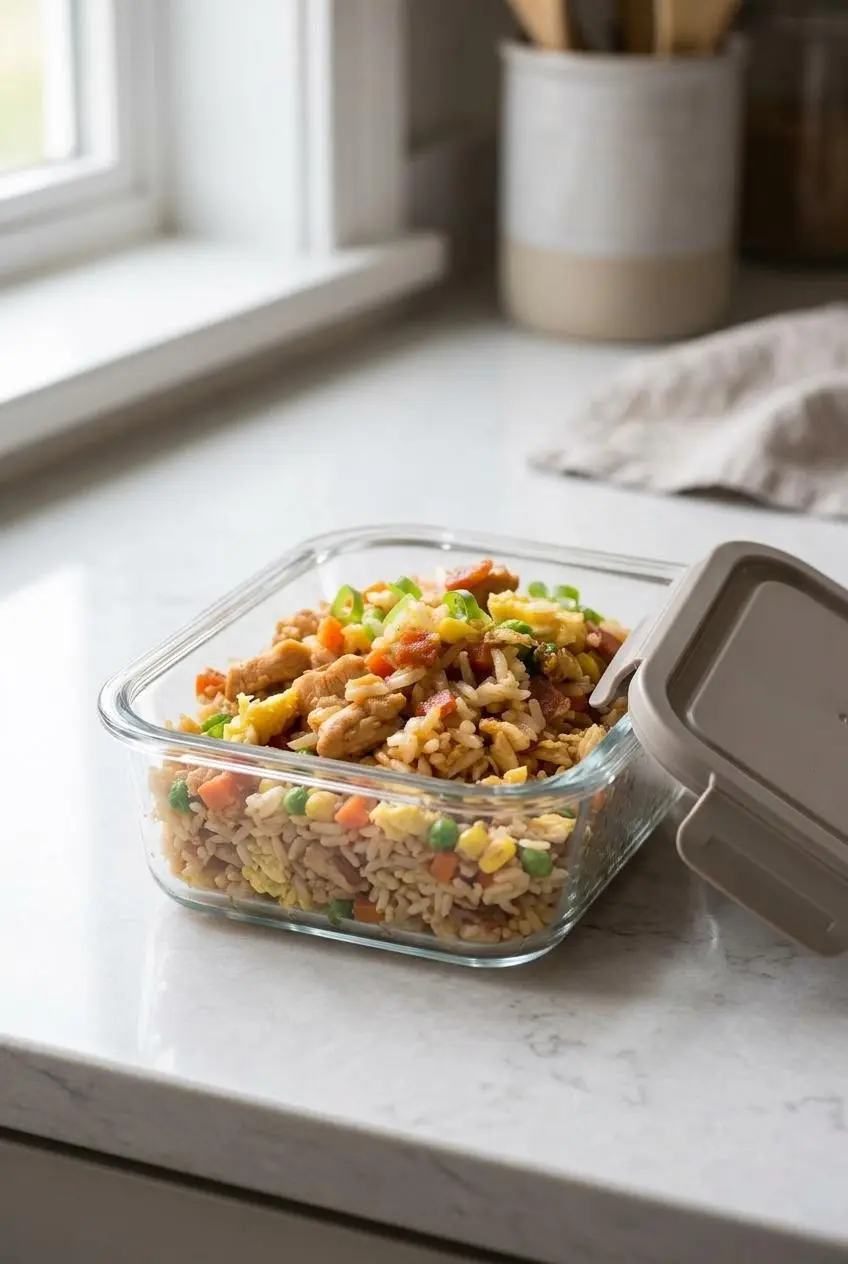
Cool leftovers promptly and refrigerate them in a sealed container. For safer handling of cooked chicken dishes, keep food from sitting out longer than 2 hours before refrigeration.
Reheat one portion at a time so the rice warms evenly. Sprinkle a small splash of water over the rice, cover it loosely, and microwave until hot throughout. The trapped steam helps restore fluffy grains without making them gummy.
A skillet also works well for reheating. Use medium-high heat and stir often, adding a small splash of water only if the rice looks dry. Avoid repeatedly warming and chilling the same container.
Conclusion
Great fried rice comes down to cold, separate grains, high heat, and cooking each component in stages. Those small choices keep the chicken tender, the eggs soft, and the rice glossy instead of soggy.
Make the skillet your own with crisp vegetables that suit your fridge, while keeping the pan hot and the rice dry. Dinner can still have that takeout-style sizzle at home.
Frequently Asked Questions
What Is the Secret to Non-Mushy Chicken Fried Rice?
Use chilled day-old long-grain rice whenever possible, since drier grains fry separately. Keep the pan hot and avoid crowding it with too many cold ingredients at once. Drizzle the sauce around the hot sides of the skillet so it sizzles before coating the rice. Let excess moisture evaporate before adding the rice if frozen vegetables make the pan wet.
Can I Make Chicken Fried Rice if I Do Not Have Day-Old Rice?
Yes. Spread freshly cooked rice in a thin layer on a baking sheet. Chill it in the freezer for 15 to 20 minutes until the surface is cool and no longer steamy. Break apart clumps before frying so more grains can touch the hot skillet.
What Gives Restaurant Chicken Fried Rice Its Distinctive Flavor?
Light soy sauce seasons the rice, while oyster sauce provides deeper savory flavor. Garlic, onion, bacon fat, and high-heat caramelization build the savory base. Chinese cooking wine or Mirin adds subtle sweetness and complexity. Toasted sesame oil and white pepper added off the heat give the final aroma.
How Long Can Leftover Chicken Fried Rice Stay in the Fridge?
Cool it promptly, keep it in a sealed container in the refrigerator, and reheat only the portion you plan to eat. For the best texture, use the leftovers while the rice still tastes fresh and the grains remain separate.
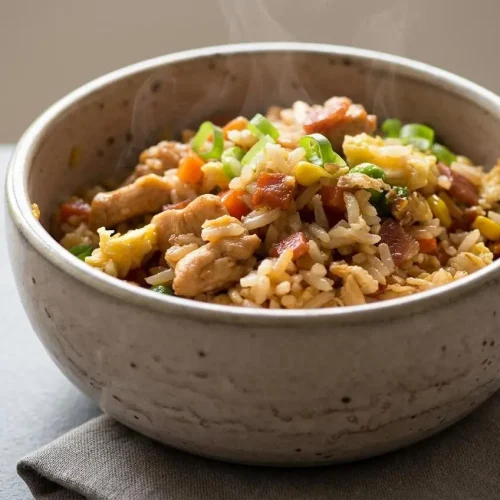
Chicken Fried Rice

Equipment
- wok or skillet
- bowl
Ingredients
- 2 tbsp oil peanut, vegetable or canola
- 2 eggs lightly whisked
- 150 g chicken breast (5 oz), finely sliced into small pieces
- 2 cloves garlic minced
- 1/2 onion finely chopped
- 120 g bacon (4 oz), excess fat trimmed, chopped
- 1 small carrot peeled and diced 0.75 cm / 1/3″
- 1/2 cup frozen corn (or can or fresh)
- 1/2 cup frozen peas
- 2 cups cooked white rice (packed), day old
- 3/4 cup green onions finely sliced
SAUCE
- 2.5 tbsp Chinese cooking wine or Mirin
- 1 tbsp oyster sauce
- 3 tbsp light soy sauce
- 1/2 tsp sesame oil optional
- 1/4 tsp white pepper optional
Instructions
- Whisk the sauce ingredients in a bowl, then coat the chicken with 2 tsp of the mixture and leave it for 10 minutes. The chicken should look lightly glazed, with no excess marinade pooling in the bowl.
- Warm 1 tbsp oil in a wok or skillet over medium heat, then scramble the eggs and transfer them out while the curds are still slightly glossy. They should be softly set rather than browned or dry.
- Raise the heat to high and add the remaining 1/2 tbsp oil with the bacon. After about 1 minute, the bacon should begin to render and smell deeply savory.
- Stir in the onion and garlic, then cook for about 1 1/2 minutes. The bacon should turn light golden and the garlic should smell fragrant without darkening.
- Add the carrot, corn, and peas directly from frozen if needed, and stir-fry for 1 minute. The vegetables should become hot and bright while the skillet continues to sizzle.
- Add the marinated chicken and stir-fry for about 1 1/2 minutes. The pieces should change from pink to opaque throughout.
- Add the cold rice and remaining sauce, then keep the rice moving for 1 1/2 minutes. Listen for a lively sizzle as the sauce darkens and coats each grain with a light sheen.
- Return the eggs to the skillet with the green onions and toss just until evenly distributed, then remove the pan from the heat. The egg curds should stay visible and tender among the separated grains.
- Serve immediately. The rice should be hot, savory, and lightly smoky from the high-heat stir-fry.