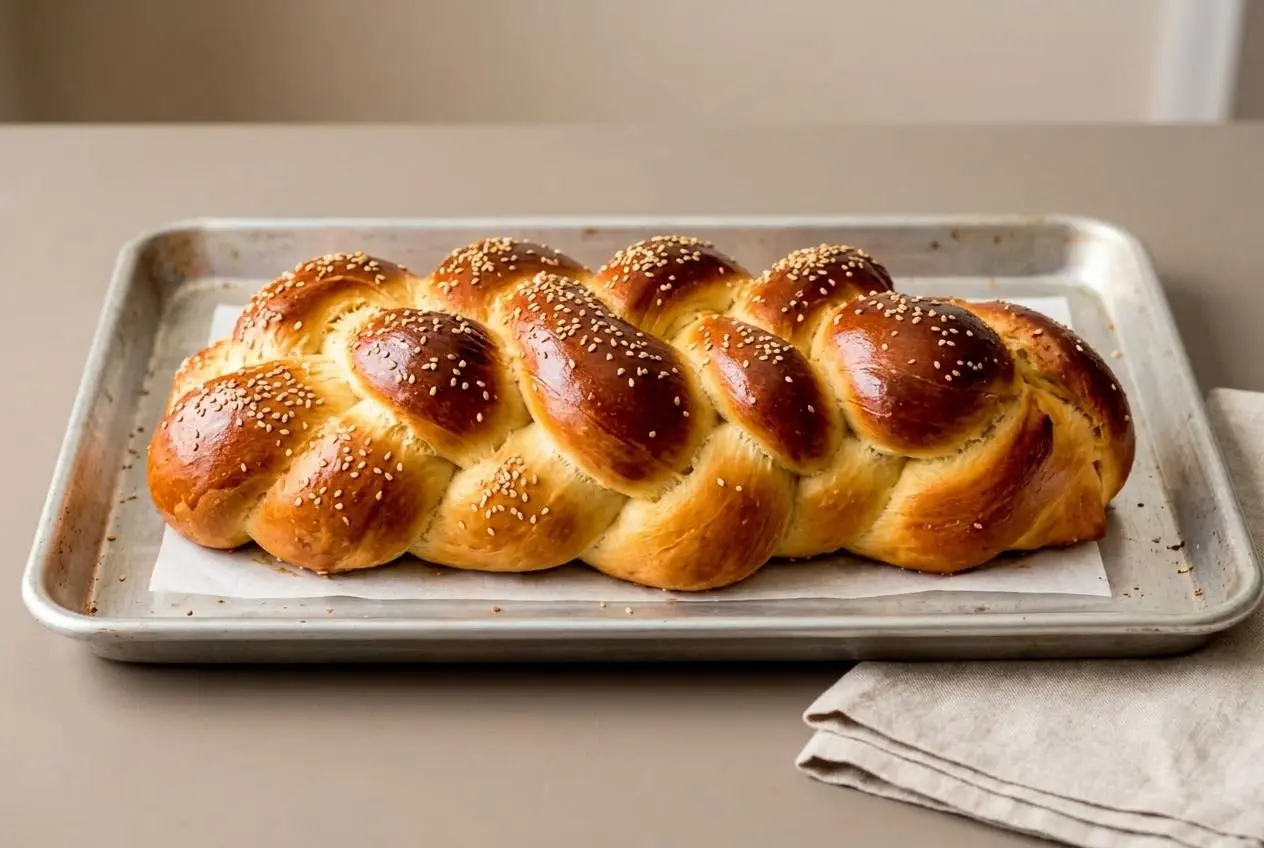
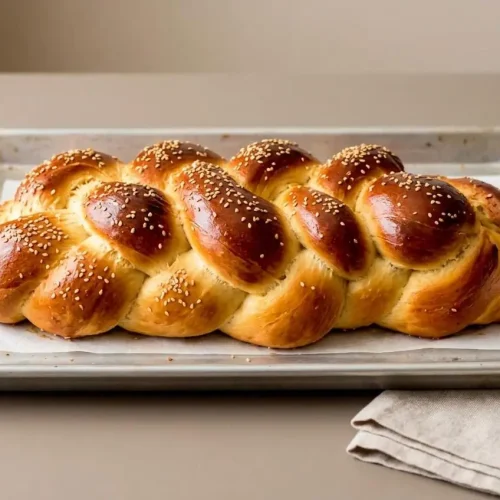
Authentic challah is a Jewish yeast bread enriched with eggs, oil, and water for a pillowy crumb and shiny golden crust. This method makes two braided loaves with a tender interior and a deep amber finish.
This challah bread recipe starts with a soft egg-and-oil dough, then builds its signature look through relaxed braiding and two gentle rises. The kitchen smells especially good once the sugar, eggs, and yeast begin doing their work.
Pulling apart the warm, tender strands is the reward. The double egg wash makes the crust shine.
Keep the water comfortably warm rather than hot so the yeast can foam without being damaged.
Challah Bread Ingredients
Each ingredient supports the bread’s flavor, structure, tenderness, moisture, golden color, or finishing crunch.
- 1 ¾ cups warm water
- 1 ½ tablespoons active dry yeast
- ½ cup sugar
- ½ cup vegetable oil
- 4 large eggs
- 1 tablespoon salt
- 8 to 8½ cups all-purpose flour
- Sesame seeds
Vegetable oil keeps this enriched dough tender without dairy, which is why challah can remain kosher pareve when the other ingredients meet that standard. Eggs bring richness, structure, and the bread’s warm yellow interior, while sugar gives the yeast fuel and adds a gentle sweetness.
All-purpose flour works well here because the dough gets strength from kneading and eggs, without requiring specialized bread flour. Active dry yeast needs to bloom in warm water before mixing; instant yeast behaves differently and can often be mixed with dry ingredients, but this method is built around active dry yeast.
Room-temperature eggs blend more smoothly into the dough and help it rise with a more even, elastic crumb. A digital scale can be useful when dividing the finished dough into equal portions, even though the ingredients are measured here by volume.
I stop adding flour once the dough feels soft and smooth rather than dry, because extra flour can turn a pillowy loaf into a heavy one.
How to Make Challah Bread
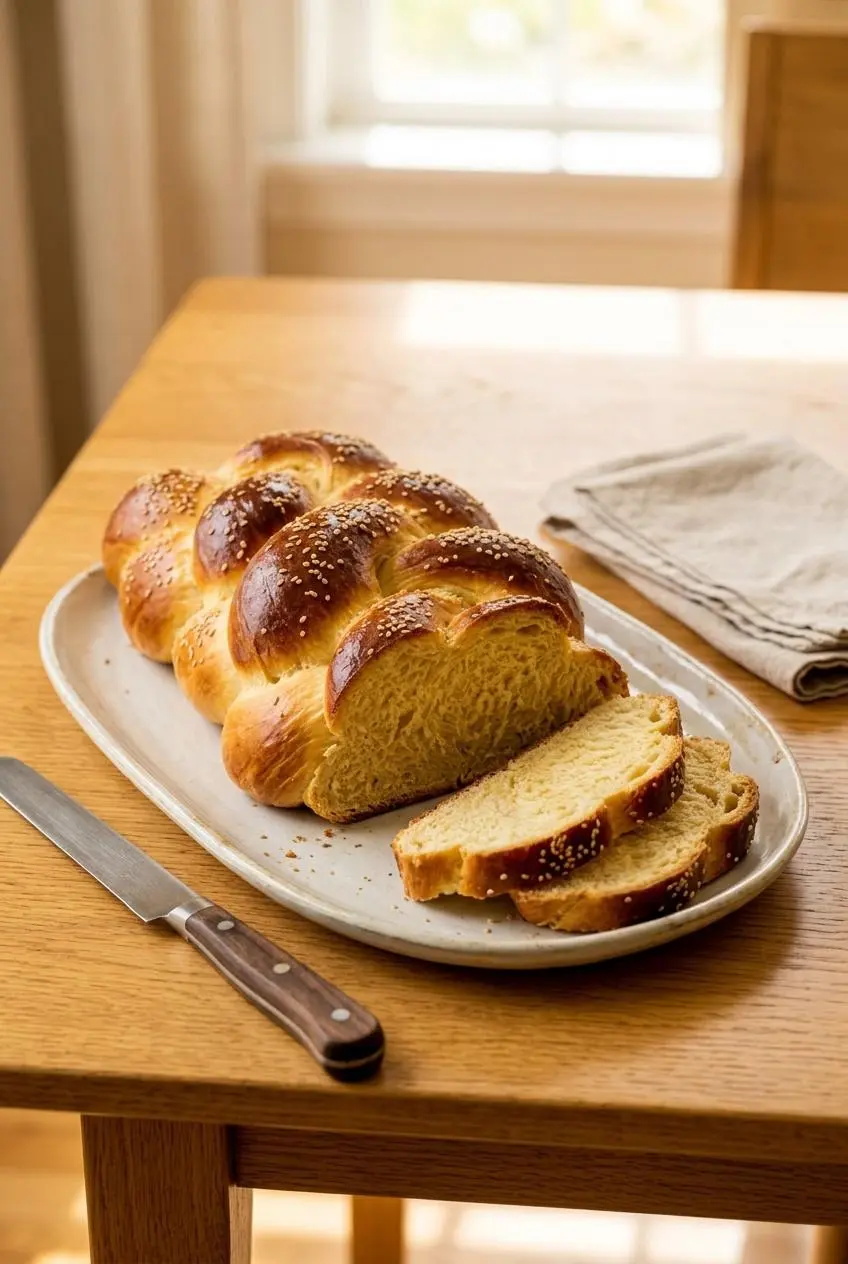
- Combine the warm water, active dry yeast, and 1 tablespoon of the sugar in a large mixing bowl, then wait about 5 minutes before continuing.
The mixture should look foamy on top, showing that the yeast is active. - Mix in the vegetable oil, 4 eggs, remaining sugar, and salt, reserving 1 egg for the finish later.
Add the flour gradually, 1 cup at a time, until a soft dough forms. - Knead the dough on a lightly floured surface until it becomes smooth and supple.
The finished dough should feel soft and spring back gently when pressed, rather than sticking heavily to your hands. - Lightly oil the cleaned mixing bowl, return the dough to it, cover, and let it rise in a warm, draft-free place for about 1 hour.
When it has nearly doubled, press down the center to release excess gas. - Cover the dough again and let it rise for another 30 minutes before shaping.
The dough should look puffy and relaxed, which makes it easier to roll without tearing. - Divide the dough in half for two loaves, then divide each half into 6 equal pieces and roll each piece into a strand about 16 inches long.
Arrange the strands side by side and pinch their top ends together firmly. - Braid each loaf by moving the outside right strand over two strands to the left, then moving the second strand from the left to the far right.
Continue by moving the outside left strand over two strands to the right, then moving the second strand from the right to the far left. - Repeat that four-move pattern until the braid reaches the end, then tuck the loose end underneath and gently shorten and widen the loaf as needed.
The braid should look even from end to end and feel relaxed rather than tightly pulled. - Repeat the shaping with the remaining dough, then place both loaves on a parchment-lined baking sheet with at least 2 inches between them.
The space allows the loaves to rise without joining together. - Beat the reserved egg and brush half over the braids, working into the grooves and down the sides.
Let the loaves rise in a warm place for another hour, until they look noticeably fuller. - Brush on the remaining egg wash and sprinkle with sesame seeds.
The second coat should cover any newly opened areas between the strands. - Bake at 375°F for 30 to 35 minutes.
The loaves should be golden brown, sound hollow when tapped underneath, and register 190°F in the center on an instant-read thermometer.
Essential Ingredients and Dough Science
Challah differs from standard lean bread because eggs and oil soften the crumb, deepen the color, and give the loaf a subtle richness. Compared with classic sandwich bread, this dough contains more enriching ingredients, so it bakes into a more tender, pull-apart loaf.
The water should feel lukewarm, around 105 to 110°F, rather than hot. That range wakes up active dry yeast efficiently. If the water feels hot enough to sting, let it cool first. A foamy yeast mixture is the best early sign that the dough is headed in the right direction.
Oil matters beyond tenderness. Traditional challah commonly uses oil instead of butter, allowing the bread to stay dairy-free and pareve. Butter-based brioche has a distinctly richer dairy flavor and a softer, more cake-like crumb, while challah tastes lightly sweet and eggy with a cleaner finish.
Salt keeps the sweetness in balance and helps the dough taste like bread rather than dessert. It also strengthens the dough’s structure, which is especially helpful when the strands need to hold their shape through the final rise.
Step-by-Step Shaping and Braiding Technique
Braiding looks elaborate, but uniform ropes and gentle tension do most of the work. After the second rise, press the dough lightly to remove large air pockets, then divide it evenly. A scale helps keep the two loaves and all 12 strands close in size, which prevents one side from baking taller than the other.
Roll each portion on a clean, unfloured surface. Start at the center and move your hands outward, gradually lengthening the rope to about 16 inches. Rolling from the middle prevents a thin weak spot in the center and leaves softly tapered ends that tuck neatly under the loaf.
Keep the ropes close together without stretching them hard. Dough needs room to expand in the oven. A braid that feels loose but organized will bake more evenly than one pulled tight like a shoelace.
Mastering the Traditional Six-Strand Braid
Set the six ropes in a row and pinch the top ends together. Think of the movement as a repeating rhythm: outside right over two, second from left all the way right, outside left over two, second from right all the way left.
After each movement, straighten the ropes before beginning the next one. This small pause keeps the pattern readable and prevents a twisted, uneven braid. Continue until only short ends remain, then tuck both ends underneath for a tapered, bakery-style finish.
If the loaf becomes too narrow as you braid, gently nudge the sides inward and shorten it slightly on the baking sheet. Do not squash the pattern. The goal is a plump loaf with defined strands.
Simplified Four-Strand Technique for Beginners
For a four-strand loaf, arrange four equal ropes in a row and pinch the top ends together. Cross the outside right rope over its neighbor, then bring the outside left rope over its neighbor. Repeat the same crossing pattern, keeping each pass loose and centered.
This braid has fewer moving pieces but still gives the loaf an attractive woven shape and even height. Tuck the ends underneath before the final rise so the loaf holds a neat form as it expands.
Baking Secrets for Golden Glossy Challah
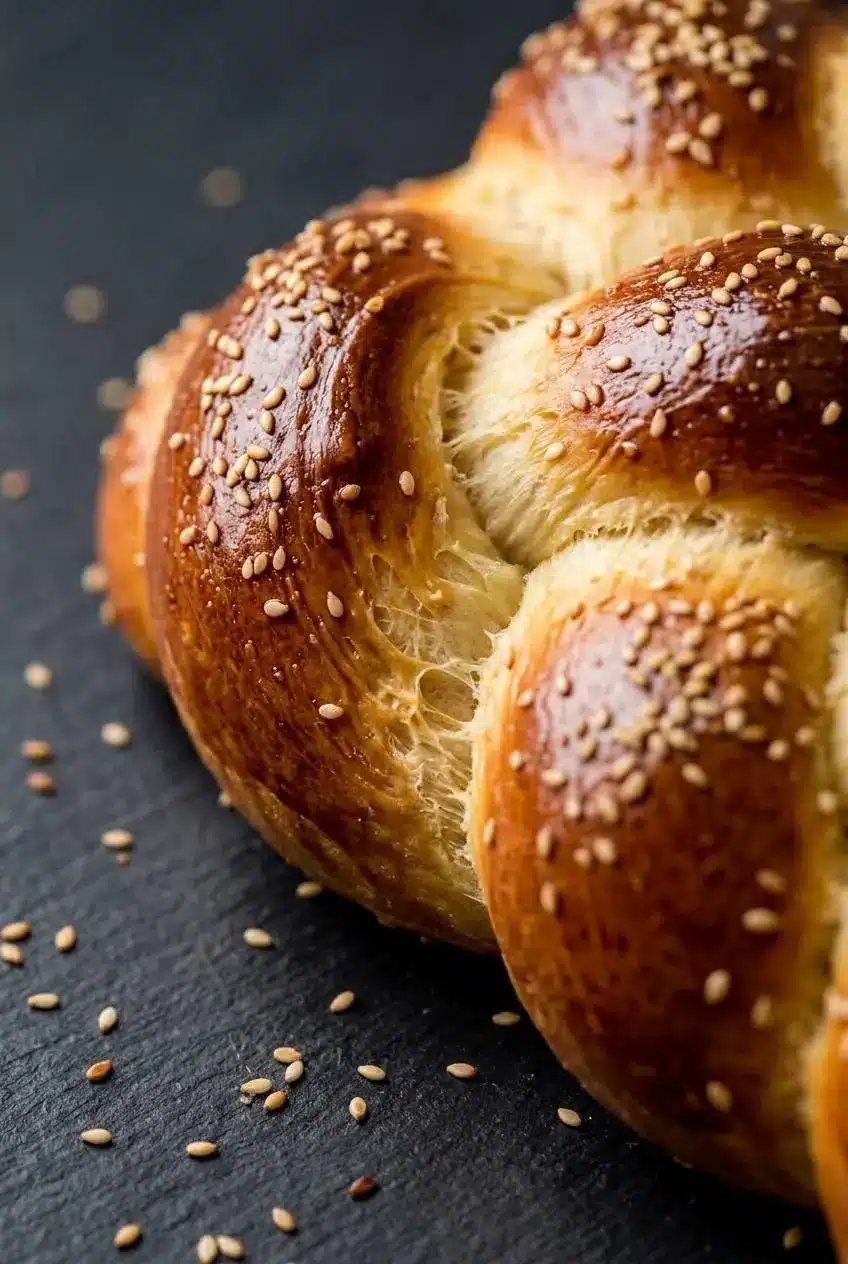
The two-stage egg wash is what gives challah its lacquered, mahogany-colored crust. Brush on the first coat immediately after braiding, making sure it reaches the low grooves between the strands. This first layer covers the dough before the final rise opens the braid.
After the final rise, apply the second coat right before baking. It fills in newly exposed crevices and prevents pale patches. Sesame seeds cling best when added over this fresh second coating.
Challah needs a tender, shiny crust rather than the hard, steam-developed crust of crusty French bread. Bake until the surface is richly golden and the loaf sounds drumlike when tapped. The thermometer cue in the method is especially helpful when the crust has browned quickly but the center needs confirmation.
Troubleshooting Common Challah Baking Mistakes
- The braid split open: The ropes were likely braided too tightly, or the loaf went into the oven before the final rise had finished. Keep the braid relaxed and wait until it looks puffy before baking.
- The loaf feels dense: Too much flour during kneading can dry out the dough and limit expansion. Use only enough flour to handle the dough, then knead until it feels smooth and elastic.
- The dough will not rise well: The yeast may not have foamed, the water may have been too hot or too cool, or the dough may be sitting in a chilly spot. Begin only once the yeast mixture looks active.
- The crust is pale or patchy: A missed second egg wash often causes uneven color. Brush gently into the braid’s creases just before baking.
- The loaf spread wide instead of rising high: The ropes may have been rolled too thin or the loaf may have been shaped too loosely. Keep the strands even and gently nudge the finished braid into a compact shape.
- The bottom browns too fast: Move the baking sheet to the center rack and watch the color near the end of baking. A deep golden top is desirable, but the loaf should not look overly dark underneath.
Holiday Variations and Seed Toppings
Keep the main dough as written, then make optional changes when you want a different holiday or dinner-table feel. For a softer floral sweetness, stir a touch of honey and pure vanilla extract into the warm liquid before adding the yeast. These additions change the flavor direction without changing the braided format.
Rosh Hashanah Round Spiral Loaf
For Rosh Hashanah, divide the dough as usual but shape each loaf into a round spiral instead of a long braid. Form ropes, braid them loosely, then coil the braid inward from one end to make a round loaf that symbolizes continuity and the cycle of the year.
Optional plump golden raisins can be rolled into the strands before shaping for little pockets of sweetness. Keep the coil loose enough to expand during the final rise, then brush and bake it as directed.
Traditional Seed and Herb Crusts
- Sesame seeds: These add a mild toastiness and a delicate crunch over the glossy crust.
- Poppy seeds: Their nutty flavor gives the loaf a more traditional deli-style finish.
- Everything bagel seasoning: Use it for a savory, onion-and-garlic-forward crust that suits sandwiches well.
- Rosemary and coarse sea salt: Finely minced fresh rosemary creates an aromatic savory loaf for dinner. If garlic flavors appeal, savory garlic rolls offer another dinner-bread direction.
Storage and Delicious Leftover Uses
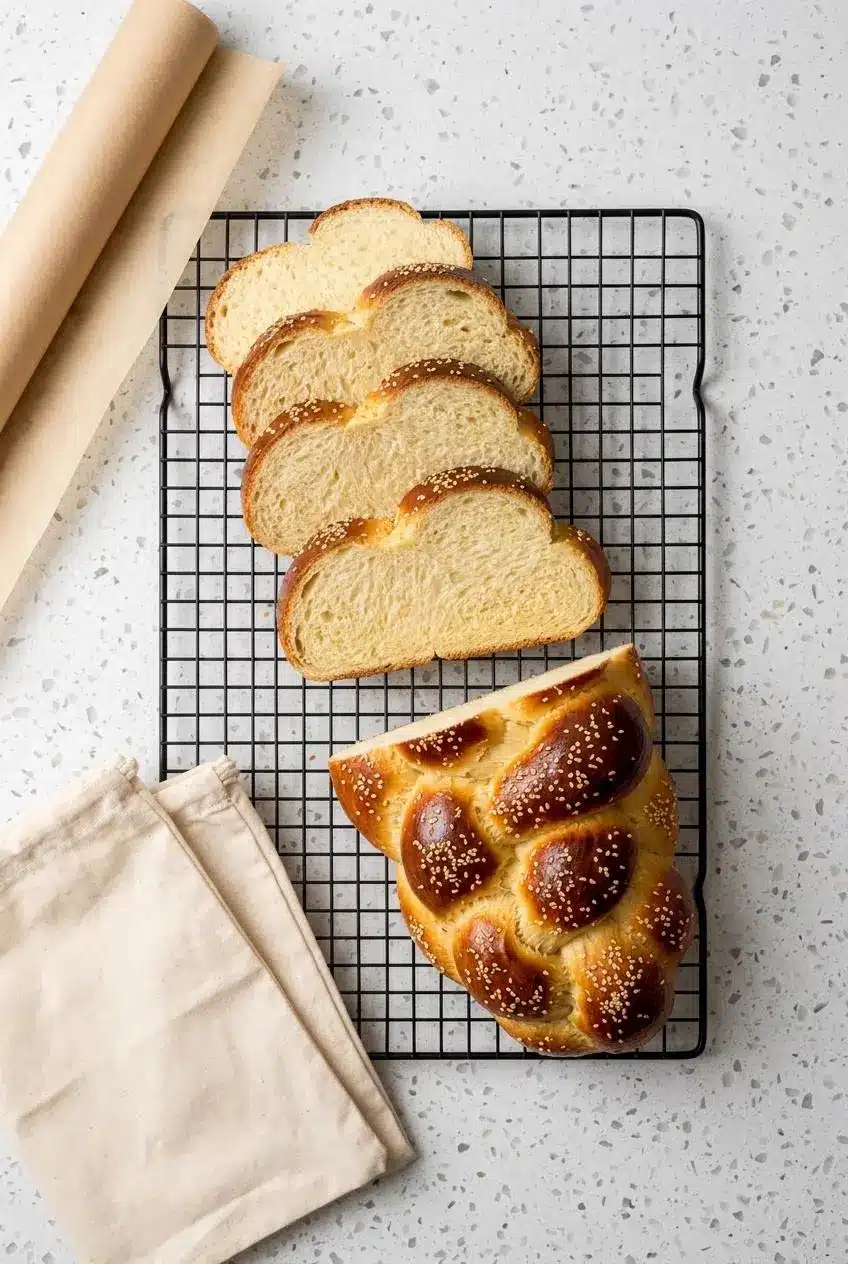
Let the loaves cool completely before wrapping them tightly at room temperature. Avoid refrigerating baked challah, since cold air can make the crumb stale faster. Keep it protected from air so the interior stays soft for serving.
For the best texture, warm a slice briefly before serving if it has cooled. Slightly dry challah is especially useful for thick-cut French toast because the egg-rich crumb absorbs custard without immediately falling apart.
Day-old slices also make excellent rich bread pudding. Tear the bread into pieces, soak it in custard, and bake until the center is soft and the top is browned. The braided loaf’s tender crumb gives the dessert a particularly luxurious texture.
Conclusion
Fresh challah brings together a tender egg-rich crumb, a golden braided crust, and a gentle sweetness that works for holiday meals, sandwiches, and breakfast.
Give the dough time to rise, braid with a light hand, and use both coats of egg wash. Those small details make homemade loaves feel wonderfully special.
Frequently Asked Questions
What Makes Challah Different From Brioche Bread?
Challah and brioche are both enriched yeast breads, but they use different fats. Challah relies on vegetable oil and eggs, which can keep it dairy-free and pareve. Brioche uses substantial butter and often milk, giving it a richer dairy flavor. Challah is usually more bread-like and lightly sweet, while brioche has a softer, more buttery crumb.
Why Did My Braided Challah Burst or Split During Baking?
A tight braid restricts the dough as it expands in the oven, so pressure can force open the seams. Roll the strands evenly, braid with relaxed tension, and allow the shaped loaf to become puffy during the final rise before baking.
Can Challah Dough Be Prepared in Advance and Refrigerated Overnight?
This method is designed around two warm rises, so follow those rises for the most predictable result. If you need a refrigerated schedule, use a dough formula written specifically for cold fermentation rather than changing the rise plan here.
How Do You Keep Baked Challah Bread Fresh and Soft?
Cool the bread fully, then wrap it tightly in plastic wrap or place it in an airtight bread bag at room temperature. Keep the loaf away from refrigerator air, and warm individual slices briefly when you want to restore their soft texture.
Challah Bread Recipe

Equipment
- Large Mixing Bowl
- Stand mixer with dough hook
- Parchment-lined baking sheet pan
- Pastry brush
- Instant-read thermometer
Ingredients
- 1 ¾ cups warm water
- 1 ½ tablespoons active dry yeast
- ½ cup sugar
- ½ cup vegetable oil
- 4 large eggs
- 1 tablespoon salt
- 8 to 8½ cups all-purpose flour
- Sesame seeds
Instructions
- Combine the warm water, active dry yeast, and 1 tablespoon of the sugar in a large mixing bowl, then wait about 5 minutes before continuing. The mixture should look foamy on top, showing that the yeast is active.
- Mix in the vegetable oil, 4 eggs, remaining sugar, and salt, reserving 1 egg for the finish later. Add the flour gradually, 1 cup at a time, until a soft dough forms.
- Knead the dough on a lightly floured surface until it becomes smooth and supple. The finished dough should feel soft and spring back gently when pressed, rather than sticking heavily to your hands.
- Lightly oil the cleaned mixing bowl, return the dough to it, cover, and let it rise in a warm, draft-free place for about 1 hour. When it has nearly doubled, press down the center to release excess gas.
- Cover the dough again and let it rise for another 30 minutes before shaping. The dough should look puffy and relaxed, which makes it easier to roll without tearing.
- Divide the dough in half for two loaves, then divide each half into 6 equal pieces and roll each piece into a strand about 16 inches long. Arrange the strands side by side and pinch their top ends together firmly.
- Braid each loaf by moving the outside right strand over two strands to the left, then moving the second strand from the left to the far right. Continue by moving the outside left strand over two strands to the right, then moving the second strand from the right to the far left.
- Repeat that four-move pattern until the braid reaches the end, then tuck the loose end underneath and gently shorten and widen the loaf as needed. The braid should look even from end to end and feel relaxed rather than tightly pulled.
- Repeat the shaping with the remaining dough, then place both loaves on a parchment-lined baking sheet with at least 2 inches between them. The space allows the loaves to rise without joining together.
- Beat the reserved egg and brush half over the braids, working into the grooves and down the sides. Let the loaves rise in a warm place for another hour, until they look noticeably fuller.
- Brush on the remaining egg wash and sprinkle with sesame seeds. The second coat should cover any newly opened areas between the strands.
- Bake at 375°F for 30 to 35 minutes. The loaves should be golden brown, sound hollow when tapped underneath, and register 190°F in the center on an instant-read thermometer.