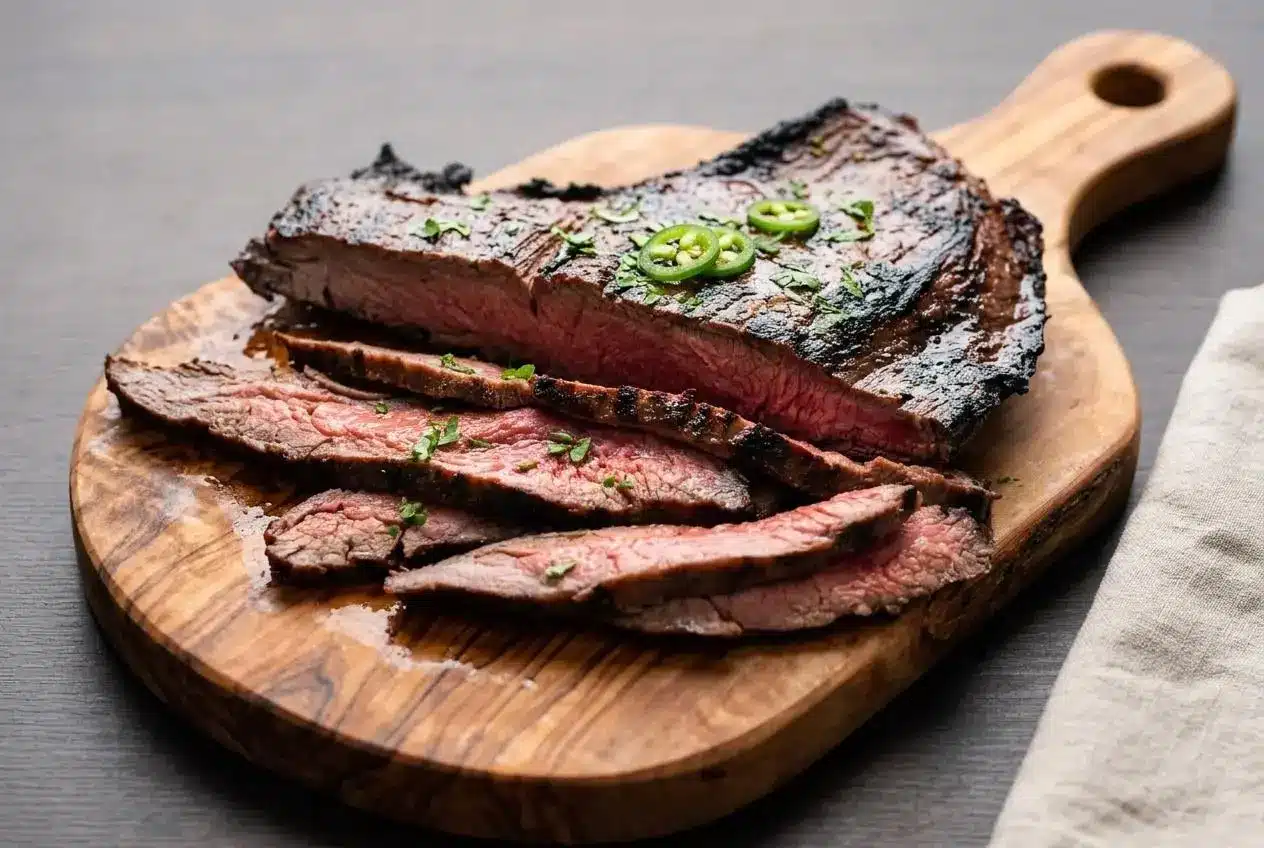
A great carne asada recipe starts with flank or skirt steak in a citrus marinade, then cooks hot and fast for deeply browned, tender beef with a smoky edge.
Carne asada is marinated beef, usually flank steak or skirt steak, grilled quickly over high heat and sliced thin for easy-to-chew pieces. This version leans on orange, lime, lemon, garlic, cilantro, and jalapeño for bright flavor and a beautifully charred finish.
You get big flavor without a complicated method, and the small details really matter here: scrape off the bits that burn, don’t overcook the steak, and slice it correctly. The sizzle is worth it.
If your jalapeños are extra spicy, wear gloves or wash your hands well before touching your face.
Why This Carne Asada Recipe Works so Well
This method works because the marinade and the grill do different jobs. The citrus and vinegar start tenderizing the surface of the beef while oil carries flavor and helps the meat stay supple instead of sharp and dry.
Orange juice does the heavy lifting. It brings sweetness that caramelizes over high heat, plus enough acidity to soften tough meat fibers. Lime and lemon sharpen the flavor, garlic and cilantro build that unmistakable savory freshness, and jalapeño adds a clean heat that doesn’t overpower the beef.
Then the grill finishes the job fast. A hot grate chars the outside before the inside has time to dry out, so you get browned edges, juicy slices, and that instant garlic-herb aroma the moment the steak hits the heat.
Choosing the Best Cut: Flank vs. Skirt Steak
The cut matters as much as the marinade. Carne asada needs a thin steak with strong beef flavor that can handle a hot, quick cook and still slice beautifully.
Flank Steak: The Lean Option
Flank steak is leaner, a little firmer, and very good at soaking up marinade. Its long, visible muscle fibers make it a strong choice for this recipe, but they also make slicing non-negotiable.
Because it’s so lean, flank steak should be cooked no further than medium if you want it tender. Once it goes beyond that point, it can turn dry and stringy in a hurry. Thin slices cut across those long fibers are what make flank steak feel tender instead of chewy.
One useful trick is to notice the grain before cooking. On raw flank steak, the grain looks like long lines running in one direction across the meat. After grilling, those lines are harder to spot, so it helps to mentally mark the direction early.
Skirt Steak: The Restaurant Standard
Skirt steak is often the restaurant favorite, and for good reason. It has more fat marbling, a looser texture, and an even beefier flavor, so it cooks up especially juicy and charred.
It also cooks faster than flank steak, so keep a closer eye on it over high heat. If you swap it in, use the same marinade and method as an option, but start checking for doneness earlier.
Sirloin flap is another good choice when you want something a little more budget-friendly. It has rich beef flavor, takes well to a citrus marinade, and slices nicely for tacos, plates, or bowls.
Ingredients for the Perfect Carne Asada
Each ingredient has a job here, from tenderizing and moisture to heat, aroma, balance, and that deep grilled char.
- 1/2 cup fresh orange juice (about 1 very large navel orange)
- 1/4 cup fresh lemon juice (about 1 lemon)
- 1/4 cup fresh lime juice (about 2 limes)
- 1 1/2 tablespoons white wine vinegar
- 1/4 cup olive oil
- 1 to 2 jalapeños (thinly sliced)
- 4 cloves garlic (crushed)
- 1 cup fresh cilantro (chopped)
- 1 teaspoon chili powder
- 1 teaspoon ground cumin
- 1 teaspoon coarse kosher salt
- 1/2 teaspoon black pepper
- 1 1/2 pounds flank steak
Orange juice is the standout because it helps tenderize the steak and gives the surface a better char once it meets high heat. Lime and lemon keep the flavor bright, while white wine vinegar adds another layer of tang that works on tougher fibers. Olive oil rounds out the marinade so it clings better and helps the meat stay moist.
Jalapeños and garlic add sharp savory heat, cilantro keeps the whole thing fresh, and cumin plus chili powder give the beef a warmer backbone. If you want the jalapeño flavor without extra fire, remove the seeds and slice them thinly with a stable knife grip so they’re easy to whisk into the marinade.
I always trim any thick surface silver skin off the steak before marinating so the citrus can reach the meat instead of sliding off a tough layer.
How to Grill Carne Asada to Perfection
The goal is simple: marinate long enough for flavor, grill over medium-high heat, and pull the steak before it dries out. A loud sizzle and the smell of hot garlic are your first signs that things are going right.
- Whisk the orange juice, lemon juice, lime juice, white wine vinegar, olive oil, jalapeños, garlic, cilantro, chili powder, ground cumin, coarse kosher salt, and black pepper in a bowl until blended.
The marinade should look loose but well mixed, with herbs and jalapeño slices evenly suspended throughout. - Lay the flank steak in a 9 by 13-inch casserole dish and poke shallow holes over both sides with a fork.
Those small punctures help the marinade reach more of the surface and can soften the bite of a lean cut. - Pour the marinade over the steak, cover the dish, and refrigerate for at least 2 hours and up to 24 hours.
By the end of the marinating time, the meat should smell citrusy and garlicky rather than just raw beef. - Lift the steak from the marinade, scrape off any clinging jalapeño, garlic, and cilantro, and let it sit at room temperature for about 15 minutes while the grill heats.
Removing those bits helps prevent bitter burnt spots once the steak hits the grate. - Clean the grill grates, oil them lightly with a paper towel or napkin soaked in vegetable oil, and preheat the grill to medium high before adding the steak.
When the meat hits the grate, you should hear a strong sizzle and catch an immediate burst of garlic-herb aroma. - Cook the steak for 5 to 7 minutes on each side, flipping once.
When juices start to pool on the top surface and the underside releases more easily, it is usually time to turn it. - Transfer the steak off the grill and rest it for 10 minutes before slicing thinly across the grain.
A gentle finger press should meet slight firmness for medium-rare, and the resting time helps keep the juices in the meat instead of on the cutting board.
Outdoor Grilling Directions
For a gas grill, preheat with the lid closed until the grates are fully hot, then lower to medium-high if needed before the steak goes on. For charcoal, wait until the coals are ashed over and the heat feels strong but controllable.
Clean grates matter more than they get credit for. Lean marinated steak loves to stick, and sticking tears away the browned crust you want to keep. A light coat of oil on hot, clean grates gives you better release and better char.
Try not to fuss with the steak once it’s down. Let the first side sear properly, watch for juices pooling on top, and flip once. That simple restraint makes a noticeable difference.
Indoor Cast-Iron Skillet Method
No grill? A heavy cast-iron skillet or grill pan works well. Preheat it over high heat until very hot, then add the marinated steak and sear it for 4 to 6 minutes per side.
Open a window and turn on the vent fan first, because this is a smoky method by design. You want a hard sear, but you also want to be able to see your kitchen.
Use the same cues as outdoor grilling. The steak should sizzle immediately, develop dark browned patches, and feel slightly springy when pressed for medium-rare. Keep the steak in a single layer and don’t crowd the pan.
The Ultimate Citrus Carne Asada Marinade
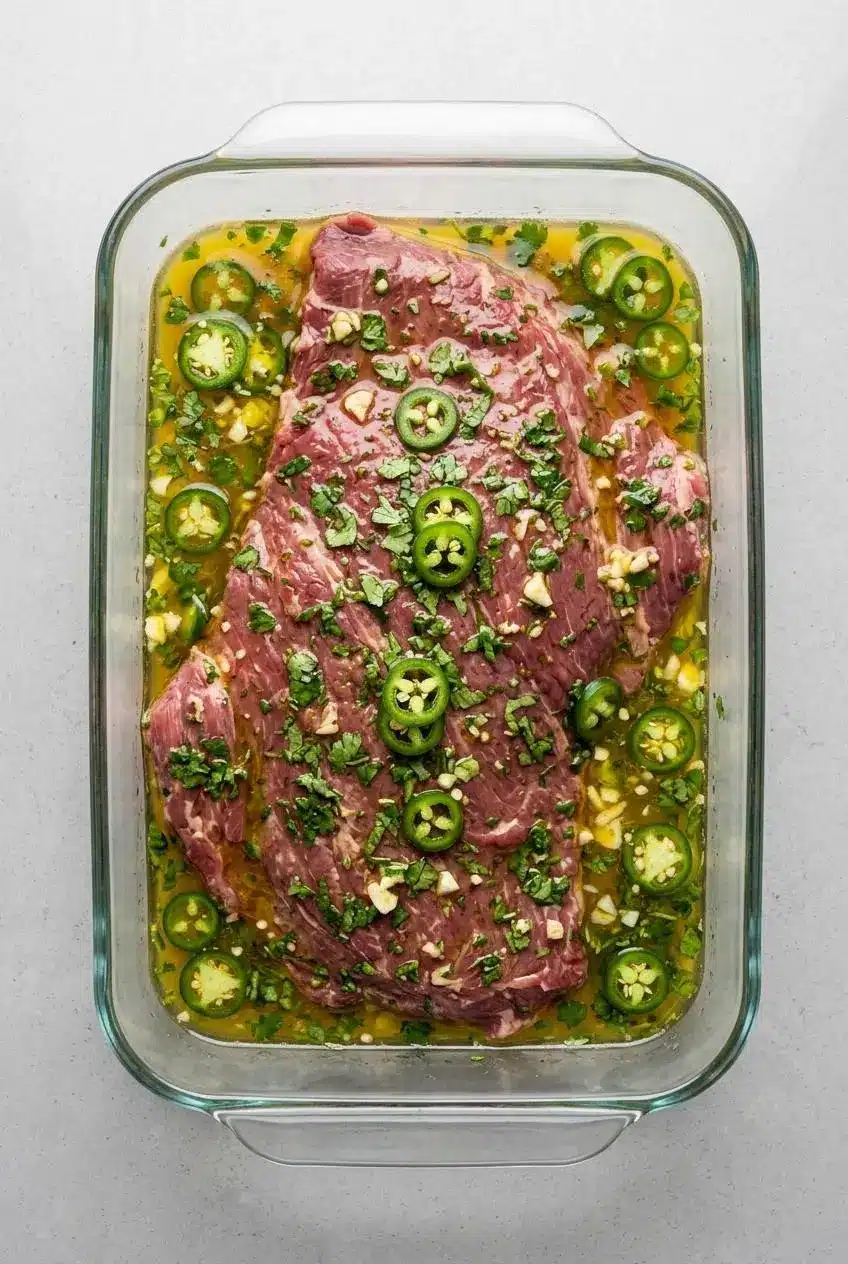
This marinade is where the tenderness starts. Citrus acid changes the surface proteins in the meat, which helps a tougher cut feel less tight after cooking, while oil buffers that acidity so the outside doesn’t taste harsh or dry.
Orange juice is the key ingredient here because it does two jobs at once. It adds acidity for tenderness, and its natural sugars help the steak brown and caramelize more deeply on the grill. That’s why the finished meat tastes smoky, savory, and a little sweet around the edges.
Marinating too long is a real problem with a citrus-heavy mix. After a certain point, the acid keeps working and the texture can go from tender to oddly soft. If the steak sits in this marinade for more than 24 hours, it can become mushy instead of pleasantly tender.
- 2 Hours: Mild flavor, light tenderization and a good option when you need dinner moving.
- 6 Hours: The best balance of citrus flavor and tender texture for most cooks.
- 24 Hours: The deepest flavor and very tender meat, but don’t go past this point.
How to Slice Cooked Flank Steak for Tenderness
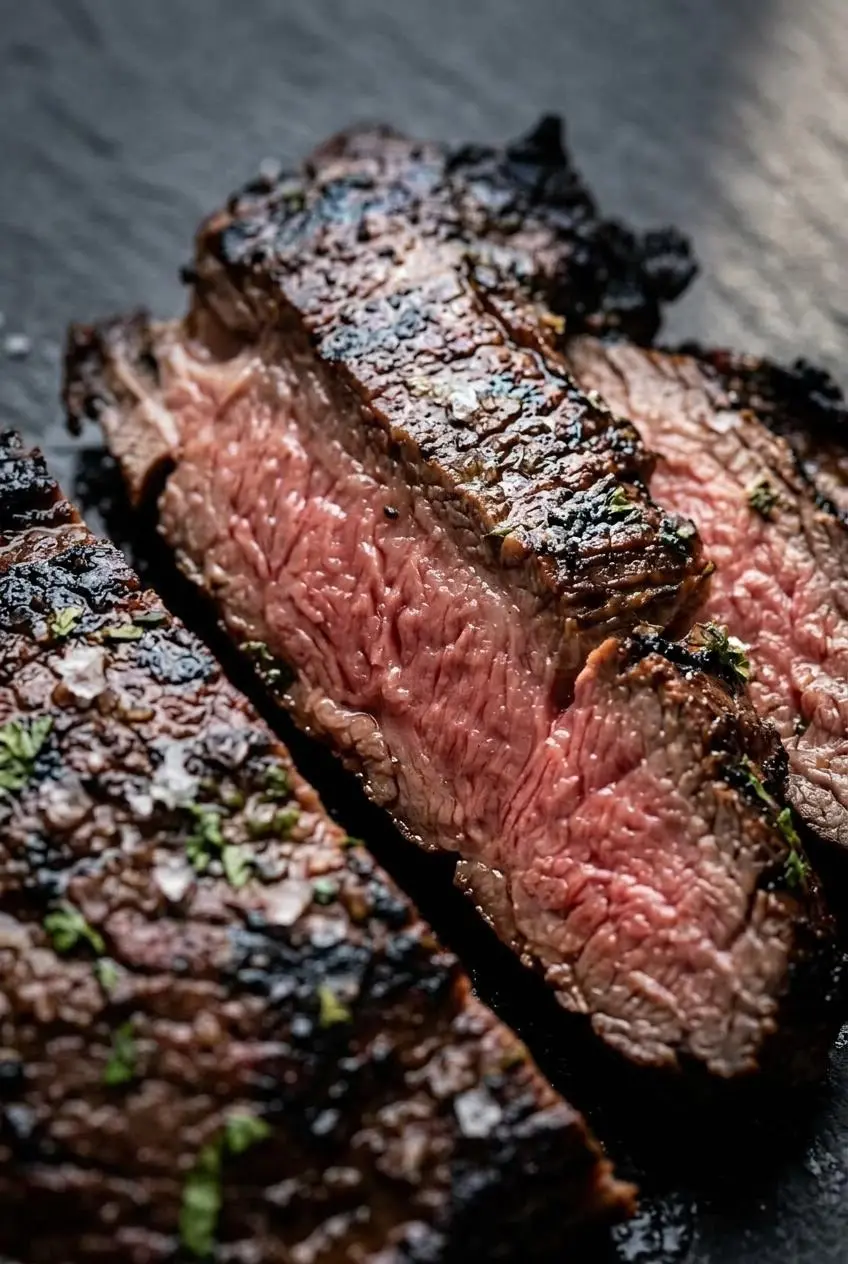
If carne asada ever seems tough even though you cooked it well, the slicing is usually the problem. Flank steak has long muscle fibers, and your knife needs to shorten them.
Slicing across the grain means cutting perpendicular to those long visible lines in the meat, not parallel with them. Think of the fibers as long strings. When you cut across them, each bite contains short pieces that chew easily instead of long strands that fight back.
It helps to identify the grain before grilling, when it’s easier to see. After cooking, the charred surface can blur those lines, so turn the steak as needed and look at the cut edge if you need a reminder.
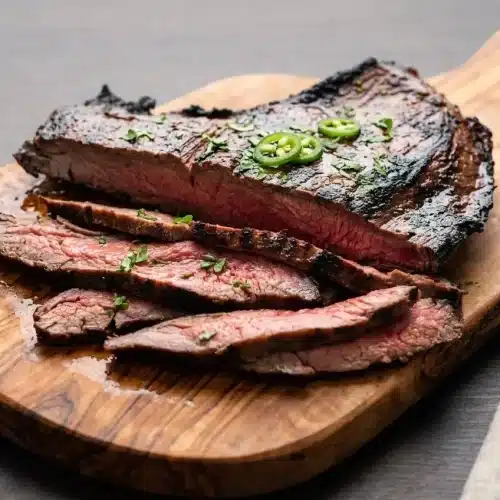
For the best texture, hold a sharp chef’s knife at about a 45-degree angle and slice thinly. That angled cut gives you wider slices without making them thicker, which makes the steak feel especially tender on the plate. Resting the meat for 10 minutes before cutting is just as important, because it gives the juices time to settle back into the steak.
For doneness, these target temperatures are a helpful pull guide. Rare is 125°F, medium-rare is 135°F, and medium is 145°F. For whole cuts of beef, USDA food safety guidance supports cooking steaks to 145°F with safe handling practices in mind, which you can review in this beef cooking temperature guidance.
For this cut, medium-rare gives the best texture, and medium should be your upper limit. If you slice the leftovers thinly, they’re also excellent in a tender steak salad.
Serving Ideas and Side Dishes
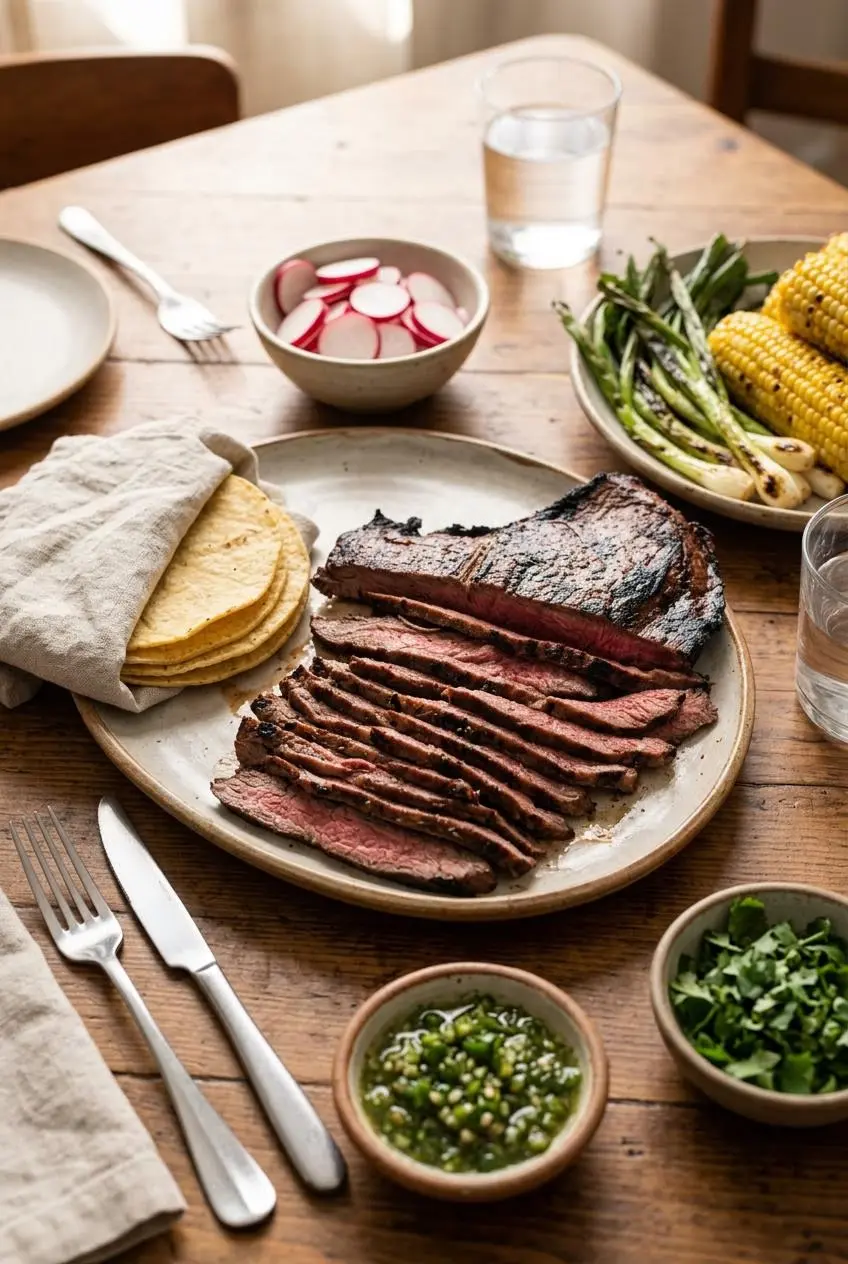
Carne asada is easiest to serve when you keep the sides fresh and the textures varied. The beef is rich and charred, so crisp vegetables and warm tortillas make it feel balanced right away.
For a classic plate, tuck the sliced steak into warm corn tortillas with chopped cilantro and onions. If you want a full meal idea, turn it into carne asada tacos and pile the meat high while it’s still warm.
Fresh radishes and charred green onions are especially good here because they bring crunch and bite without competing with the marinade. Grilled corn on the side works beautifully too, especially with a little butter brushed over it while it’s hot.
If you want something bright and a little sweet next to the smoky beef, a spoonful of fresh mango salsa makes a great contrast.
Conclusion
This carne asada turns out best when you focus on three things: a balanced citrus marinade, a hot grill, and a patient rest before slicing. Those details are what turn lean steak into juicy, charred, tender strips.
Keep the cook quick, stop at medium or earlier, and cut across the grain at an angle. That’s the difference between good steak and the kind people reach for first.
Frequently Asked Questions
What is the secret ingredient in carne asada?
Fresh orange juice is the key flavor builder here. Its acidity helps tenderize tougher steak cuts. Its natural sugars caramelize on the grill for better char. It also rounds out the sharper lime and lemon with a fuller citrus flavor.
What cut of meat is used for carne asada?
Flank steak and skirt steak are the most common choices. Flank steak is leaner and slices neatly, but it must be cut across the grain. Skirt steak is more traditional in many restaurant versions and usually tastes richer because of its marbling. Sirloin flap can also work well as an optional budget-friendly alternative.
Can you marinate carne asada for too long?
Yes, you can. This marinade should go at least 2 hours for flavor. It can stay on the steak up to 24 hours. Past that point, the citrus acid can break the surface down too much and make the meat mushy.
How do you cook carne asada indoors without a grill?
A cast-iron skillet or grill pan is the best option. Heat the pan over high heat until it is very hot before the steak goes in. Sear the steak for 4 to 6 minutes per side. Open a window or run the vent fan, because a proper sear creates smoke. Rest the steak before slicing so the juices stay in the meat.
Carne Asada Recipe

Equipment
- 9 by 13-inch casserole dish
- Grill
- Instant-read thermometer
Ingredients
- 1/2 cup fresh orange juice (about 1 very large navel orange)
- 1/4 cup fresh lemon juice (about 1 lemon)
- 1/4 cup fresh lime juice (about 2 limes)
- 1 1/2 tablespoons white wine vinegar
- 1/4 cup olive oil
- 1 to 2 jalapeños (thinly sliced)
- 4 cloves garlic (crushed)
- 1 cup fresh cilantro (chopped)
- 1 teaspoon chili powder
- 1 teaspoon ground cumin
- 1 teaspoon coarse kosher salt
- 1/2 teaspoon black pepper
- 1 1/2 pounds flank steak
Instructions
- Add the orange juice, lemon juice, lime juice, white wine vinegar, olive oil, jalapeños, garlic, cilantro, cumin, salt, and black pepper to a bowl and whisk to combine.
- Put the steak into a 9 by 13-inch casserole dish. Use a fork to poke a few holes in the meat on both sides (this helps tenderize it and lets the marinade seep in).
- Pour the marinade on top, cover the dish, and refrigerate for at least 2 hours (but up to 24 hours).
- When it is time to grill the steak, remove it from the marinade and scrape off the pieces of jalapeño, garlic, and cilantro. Let it sit at room temperature for about 15 minutes while the grill heats up.
- Clean grill grates and brush with a paper towel or napkin soaked with vegetable oil. Preheat the grill to medium high. Once hot, add the steak and cook for 5-7 minutes on each side, flipping once. (This should yield medium-rare meat but all grills and techniques differ. See Notes below for internal temperatures.)
- Remove the steak from the grill and let it rest for 10 minutes. Thinly slice across the grain. Serve.