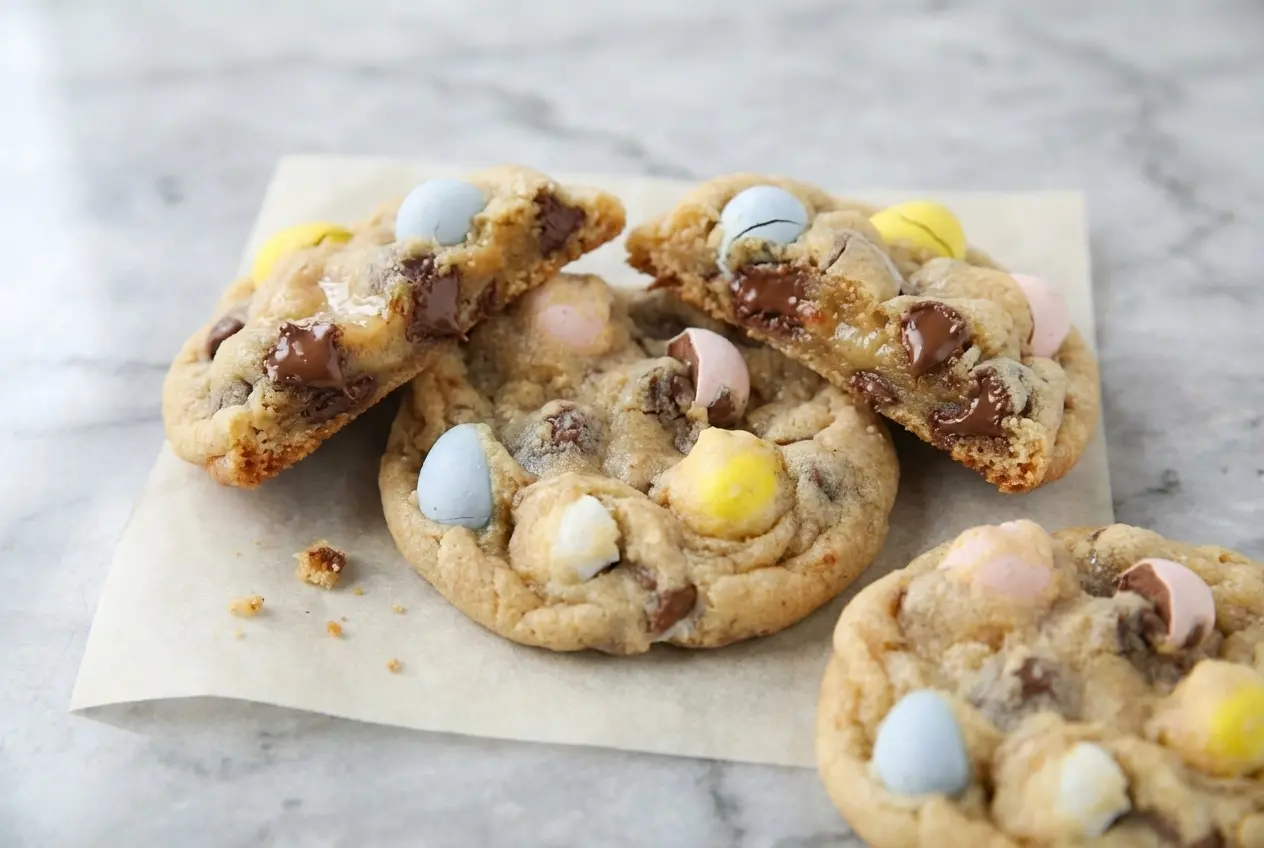
Easter morning always brings out the kid in me, especially when a bag of pastel Cadbury Mini Eggs starts rattling around on the counter. In my kitchen, that usually means one thing, a batch of Cadbury Egg Cookies that feels a little more special than the usual chocolate chip routine.
These cookies are for the baker who wants that candy-coated crunch, but also wants a deeper, bakery-style flavor. Brown butter and a touch of malted milk give them crisp edges, chewy centers, and a toasty sweetness that makes every bite feel like the grown-up version of a childhood favorite.
Why You’ll Love This Recipe
Deep, toasty flavor: Brown butter changes the whole personality of the dough. Instead of tasting simply sweet, these cookies have a nutty richness that balances the sugary snap of Cadbury Mini Eggs beautifully.
The malted milk edge: I discovered that 2 tablespoons of malted milk powder quietly make the chocolate taste fuller and creamier. It gives the dough that old-fashioned soda-shop finish that makes people ask what your secret is.
Texture that actually delivers: Between the crunchy candy shell, soft centers, and pockets of semi-sweet chocolate chips, every bite has contrast. The Creaming Method helps build that classic chewy cookie structure without turning the dough cakey.
Bakery-worthy looks: Pressing the candy pieces on top instead of burying all of them in the dough keeps the colors bright and pretty. In my kitchen, that one simple move makes these cookies look polished enough for an Easter dessert table or gift box.
Ingredients and Substitutions
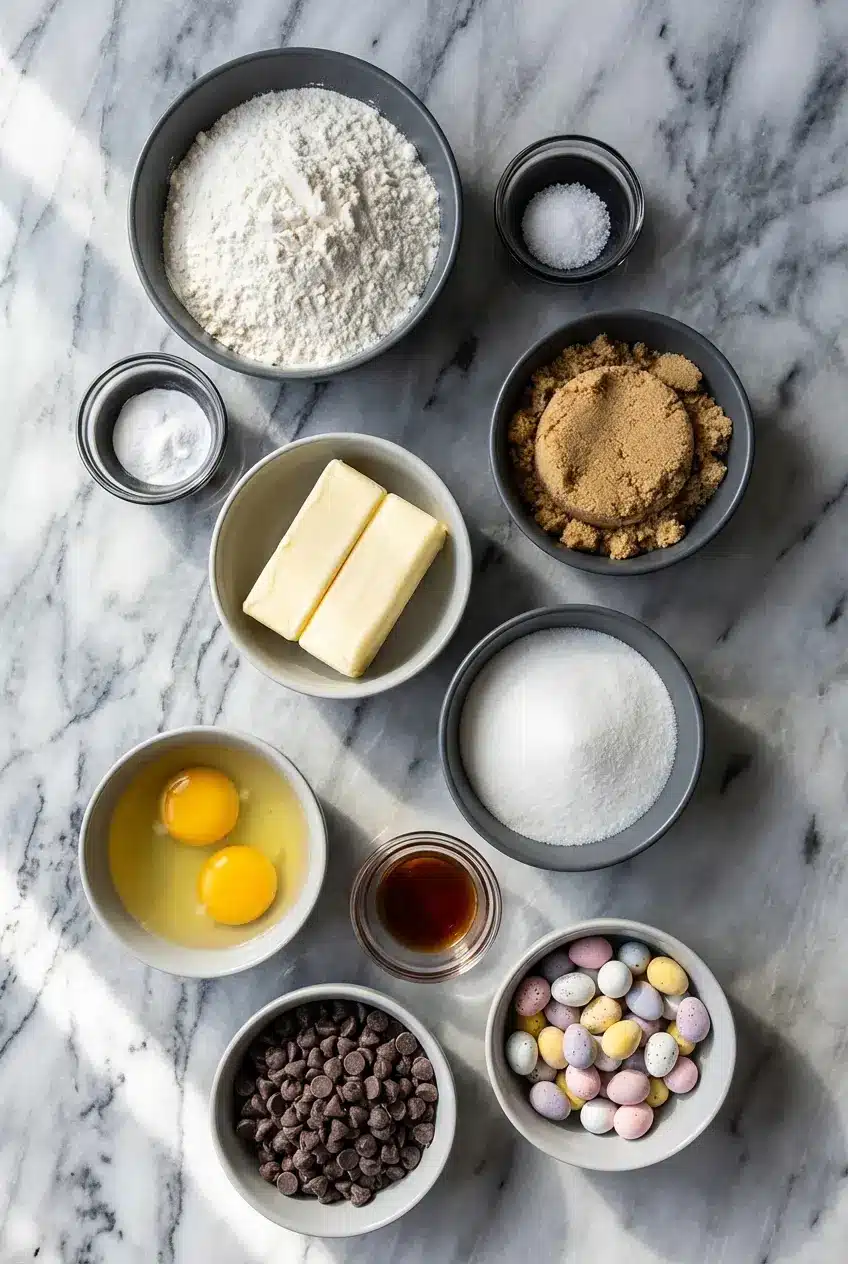
This lineup is simple, but each ingredient pulls its weight, from the sturdy all-purpose flour to the candy-coated eggs that bring crunch, color, and that unmistakable Easter nostalgia.
Ingredients
- 3 1/4 cups (390 g) all-purpose flour
- 1 teaspoon salt
- 1 teaspoon baking soda
- 1 cup (226 g) unsalted butter, (2 sticks) room temperature
- 1 cup (200 g) light brown sugar, gently packed
- 3/4 cup (150 g) granulated sugar
- 2 large eggs
- 1 Tablespoon vanilla extract
- 1 cup (170 g) semi-sweet chocolate chips
- 9 ounces (255 g) Cadbury mini eggs
Ingredient Notes & Substitutions
Unsalted Butter: For the best brown butter flavor, start with a good-quality unsalted butter. It gives you better control over the salt level, and when you brown it gently, the milk solids develop that toasted, almost hazelnut-like aroma these cookies are known for.
Cadbury Mini Eggs: These really do bake better than many generic candy-coated eggs. Store brands often have thicker, harder shells that stay tough after baking, while Cadbury Mini Eggs tend to crack pleasantly and melt into the dough more naturally.
Malted Milk Powder: This is the quiet bakery trick that makes the cookies taste more layered and nostalgic. If you do not have it, you can leave it out, but the flavor will be a little less rounded and you will miss that subtle malt-shop finish.
All-purpose Flour: Weighing flour gives the most reliable texture, especially if you want chewy rather than cakey cookies. If you measure by cups, spoon it in gently and level it off instead of scooping straight from the bag.
Chocolate Chips: Semi-sweet chocolate chips keep the sweetness in check and pair especially well with brown sugar and vanilla extract. If you like a sweeter cookie, white chocolate is a pretty Easter-friendly variation, and a darker chocolate chip gives an even richer contrast.
Creme Eggs vs Mini Eggs: Cadbury Creme Eggs are not a direct swap here. Their soft filling behaves very differently in the oven, so for this recipe, the crisp shell and solid chocolate center of Mini Eggs are what keep the texture right.
How to Make Cadbury Egg Cookies
Prep the candies and pans
- Tip the Cadbury mini eggs into a zip-top bag and crush them with a rolling pin, mallet, or the bottom of a sturdy glass. Aim for a mix of textures, some rough chunks, some halved pieces, because that gives the finished cookies a prettier top and keeps the candy from disappearing into the dough.
- Heat the oven to 350°F and line your cookie sheets with parchment paper or a silicone baking mat. Giving the dough a nonstick surface helps the bottoms bake evenly while the centers stay soft.
Mix the dough
- In a large bowl, whisk together the flour, salt, baking soda, and the malted milk powder if you are using it. Mixing the dry ingredients well now helps the Baking Soda distribute evenly, so the cookies rise and spread the way they should.
- In the bowl of a stand mixer fitted with the paddle, cream the browned and cooled butter with the light brown sugar and granulated sugar for 1 to 2 minutes, until the mixture looks lighter in color and slightly fluffy. Add the eggs and vanilla extract, then mix until smooth and scrape down the bowl so no buttery streaks are left behind.
- Add the dry mixture to the butter mixture and blend just until the flour disappears, about 1 minute. You want a thick, soft dough here, not an overworked one.
- Fold in the semi-sweet chocolate chips and all but 1/2 cup of the crushed candy pieces on low speed for about 30 seconds, just until evenly dispersed. At this point, the dough should smell deeply buttery and sweet, with that warm vanilla note coming through.
Portion and top the cookies
- Use a #30 Cookie Scoop, about 2 Tablespoons, to portion the dough onto the prepared baking sheets, leaving about 3 inches between each mound. Press the reserved Cadbury pieces into the tops of the dough balls, keeping each one nicely rounded so the baked cookies look full and tidy.
- This topping step matters more than most people think. When the prettiest candy shards stay on top rather than getting overmixed into the dough, the colors stay brighter and the shells are less likely to bleed.
Bake and shape
- Bake at 350°F for 10 minutes, until the edges are just beginning to turn golden while the centers still look a little soft. That slight underdone look is exactly what gives you chewy middles once the cookies finish setting on the pan.
- For thicker, rounder cookies, use the cookie scoot trick as soon as the tray comes out of the oven. A round cutter or glass slightly larger than the cookie can be swirled around each one while they are still warm, which pulls the edges into a neater circle.
- Let the cookies rest on the tray for 1 to 2 minutes, then transfer them to a wire rack to cool completely. This short rest helps the bottoms firm up without drying out the centers.
The Secret to Bakery-Style Easter Cookies
Bakery-style cookies are not just bigger, they are more balanced. Brown butter brings a toasted depth that keeps these Cadbury Egg Cookies from tasting overly sugary, which matters when you are folding candy-coated chocolate into an already rich dough.
Malted milk powder works like a flavor amplifier for chocolate and dairy notes. It does not make the cookie taste obviously malted, but it rounds out the sweetness and gives the semi-sweet chocolate chips a fuller, creamier finish.
Texture comes down to precision as much as flavor. In my experience, cookies like these are at their sweet spot when their internal temperature lands around 175 to 185°F, warm enough to set the structure but not so far baked that they turn hard the next day.
That nutty taste from browned butter is rooted in the Maillard reaction, the same browning chemistry that gives baked goods their deep, complex flavor. Once you know that, it makes perfect sense why brown butter can tame the candy sweetness and make the whole cookie taste more polished.
Understanding the Science of the Candy Shell
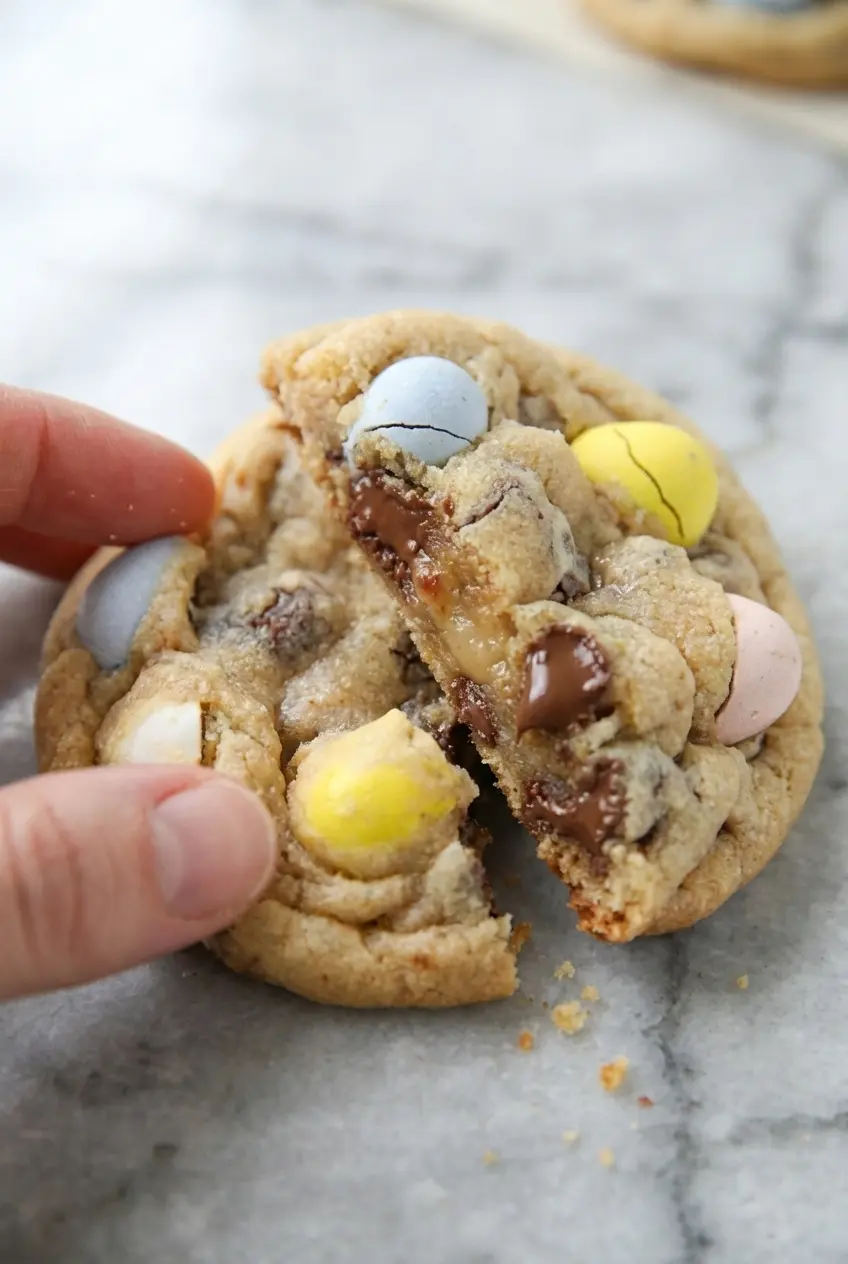
If your candy shells have ever melted into streaks or leaked sticky syrup, the culprit is usually over-crushing. Once the shell turns to fine dust, that sugar dissolves quickly in the oven and can seep into the dough instead of staying in bright, crunchy pockets.
Cadbury Mini Eggs also tend to behave better than some generic brands because the shell texture is slightly less aggressive after baking. Many store-brand versions have harder sugar shells, so they stay tougher to bite through and can weigh down the cookie rather than blending into it.
The Creaming Method matters here too. When butter and sugar are beaten together properly, they trap tiny air pockets that help support the weight of the candy pieces, while Baking Soda encourages spread and browning without making the centers dense.
There is real chemistry behind that spread. The role of pH and protein coagulation helps explain why cookies brown faster and set differently depending on the balance of sugar, fat, and leavening, especially once those crushed candy bits are folded into the dough.
High-Altitude Baking Adjustments for Sugar-Dense Doughs
At higher elevations, this dough can spread more than expected because it is rich in sugar from both the dough and the candy. If you bake in the mountains, adding 2 to 3 tablespoons of extra flour and reducing the granulated sugar by 1 to 2 tablespoons usually helps the cookies hold their shape.
I also consider chilling the dough for at least 60 minutes non-negotiable at altitude. That extra rest gives the butter time to firm up again, so the cookies bake thicker and the candy pieces stay suspended instead of sliding outward.
Keep an eye on visual cues rather than waiting for deep browning. The edges should look set and faintly golden, while the centers still seem a touch soft, because high-altitude cookies can go from perfect to overbaked in a hurry.
Pro Tips & Troubleshooting
Pro Tips
- Use a kitchen scale for the flour whenever possible. Accurate flour measurement is one of the easiest ways to keep the cookies chewy instead of dry or cakey.
- Brown the butter, then let it cool back to a soft, room temperature texture before creaming with the sugars. If it is still warm or liquid, the dough will spread too fast in the oven.
- Use the cookie scoot immediately after baking, while the cookies are still hot and flexible. That short window is what gives you those neat, bakery-style rounds.
- If the dough feels greasy or too loose from the butter, chill it for 30 to 60 minutes before scooping. A colder dough gives you thicker cookies and cleaner edges.
- Leave some Cadbury pieces large instead of crushing them all finely. Bigger chunks give better texture and a prettier finish across the top.
For bakers who like playing with cookie textures, I find the same measuring discipline pays off in other chewy bakes too. Recipes like butterscotch chip cookies reward the same careful flour handling, especially when you want soft centers and crisp edges instead of puffy, dry rounds.
Common Mistakes to Avoid
- Over-mixing the dough after the flour goes in. Once the All-purpose Flour is hydrated, too much mixing builds gluten and turns tender cookies tough.
- Using brown butter that is still hot or fully melted. That is one of the fastest ways to end up with flat cookies that spread into thin puddles.
- Crushing the Cadbury Mini Eggs into powder. Fine candy dust melts and streaks, while chunks stay crisp and colorful.
- Crowding the baking sheet. These cookies need about 3 inches of space so the edges can set properly without running into each other.
- Tasting raw dough. Flour and raw eggs are best treated carefully, and basic official food safety practices are worth keeping in mind whenever cookie dough is on the counter.
Serving & Storage
Creative Serving Ideas
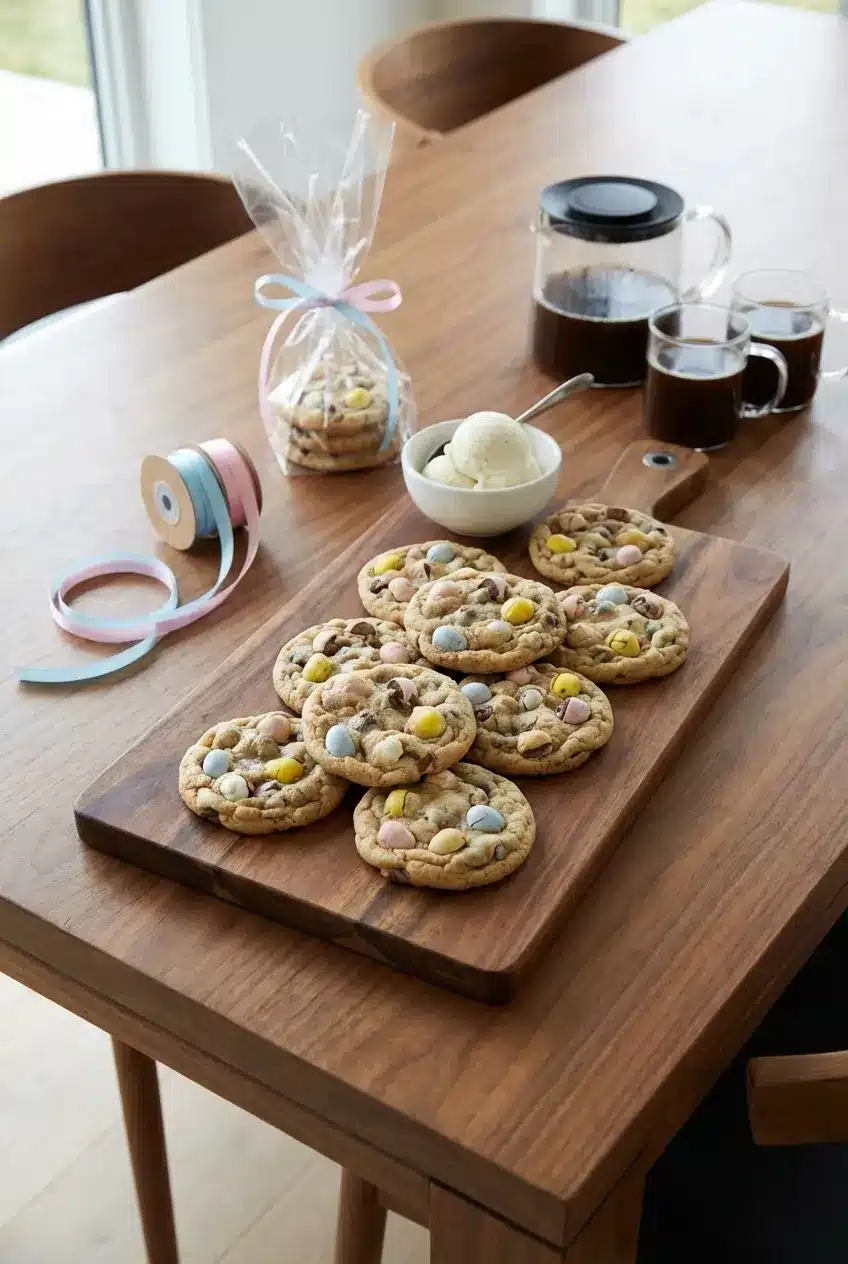
My favorite way to serve these is warm, with a small scoop of vanilla bean ice cream for an easy Easter sundae. The cookie turns fudgy at the center, the candy shell stays crisp, and the whole thing tastes like spring break in dessert form.
They also look beautiful tucked into clear bags with pastel ribbon for baskets, hostess gifts, or brunch favors. On a bigger dessert tray, I like pairing them with bright, creamy sweets such as strawberry cheesecake cookies, which add a fruity contrast to all that chocolate and malt.
If you are putting together a fuller Easter sweets spread, a soft chilled dessert can balance the chewy richness nicely. Something like cream mousse cups brings a lighter spoonable element that works beautifully beside these crisp-edged cookies and a pot of coffee.
Storage and Make-Ahead Instructions
At room temperature, keep the cookies in an airtight container for up to 5 days. They stay surprisingly soft thanks to the moisture in the brown sugar and butter-rich dough, though the edges are best on the first two days.
For make-ahead baking, scoop the dough balls with the Cadbury eggs already mixed in and freeze them on a tray until firm, then transfer to a freezer bag. That gives you bake-on-demand cookies whenever the Easter candy craving hits, and the guidance in these USDA shelf-life standards lines up well with treating frozen dough carefully and keeping it well wrapped.
You can bake the dough straight from frozen, just adding 1 to 2 minutes to the baking time. If you are reheating baked cookies, 5 to 10 seconds in the microwave brings back that gooey center and wakes up the chocolate without making the shells soggy.

Cadbury Egg Cookies

Equipment
- Stand mixer
- Cookie Scoop (#30)
- Baking Sheets
- Parchment Paper
Ingredients
- 3 1/4 cups (390 g) all-purpose flour
- 1 teaspoon salt
- 1 teaspoon baking soda
- 1 cup (226 g) unsalted butter, (2 sticks) room temperature
- 1 cup (200 g) light brown sugar, gently packed
- 3/4 cup (150 g) granulated sugar
- 2 large eggs
- 1 Tablespoon vanilla extract
- 1 cup (170 g) semi-sweet chocolate chips
- 9 ounces (255 g) Cadbury mini eggs
Instructions
Prep the candies and pans
- Place the Cadbury mini eggs into a zip-top bag and crush them with a rolling pin or mallet. Aim for a mix of textures with some rough chunks and some halved pieces.
- Preheat your oven to 350°F and line cookie sheets with parchment paper or silicone baking mats to ensure the cookies bake evenly without sticking.
Mix the dough
- In a large bowl, whisk together the flour, salt, and baking soda. If you are using malted milk powder as a flavor booster, add it to the dry mixture now.
- Using a stand mixer fitted with the paddle attachment, cream the browned and cooled butter with both sugars for 1 to 2 minutes until the mixture is light and fluffy.
- Add the eggs and vanilla extract to the butter mixture, mixing until smooth and scraping down the bowl to ensure no streaks remain.
- Gradually add the dry ingredients and blend just until the flour disappears, about 1 minute. Avoid overworking the dough to keep the texture tender.
- Fold in the chocolate chips and all but 1/2 cup of the crushed candy pieces on low speed for about 30 seconds until evenly dispersed.
Portion and Bake
- Use a #30 cookie scoop (about 2 tablespoons) to portion dough balls 3 inches apart on the prepared sheets. Press the reserved candy pieces into the tops of the dough balls.
- Bake at 350°F for 10 minutes until the edges are golden while the centers still look slightly soft. Use a round cutter to scoot the cookies into neat circles immediately while hot.
- Let the cookies rest on the tray for 1 to 2 minutes to firm up, then transfer them to a wire rack to cool completely.
Notes
Nutrition
Conclusion
These cookies earn their keep with more than pretty Easter colors. Brown butter gives them depth, malted milk adds that subtle bakery flavor, and a few small techniques, especially topping the dough balls and using the cookie scoot, make the whole batch look and taste like it came from a professional pastry case.
If you are baking for a spring gathering, this is the kind of recipe that disappears fast and gets talked about later. Once you have the method down, it is easy to riff on the idea with different chips, candy mixes, or even other chewy styles like cake mix cookies when you are in the mood for something simpler and more casual.
Frequently Asked Questions
How do I prevent the Cadbury eggs from bleeding color into the dough?
Can I make these cookies ahead of time?
Why are my cookies cakey instead of chewy?
Is it better to use salted or unsalted butter?