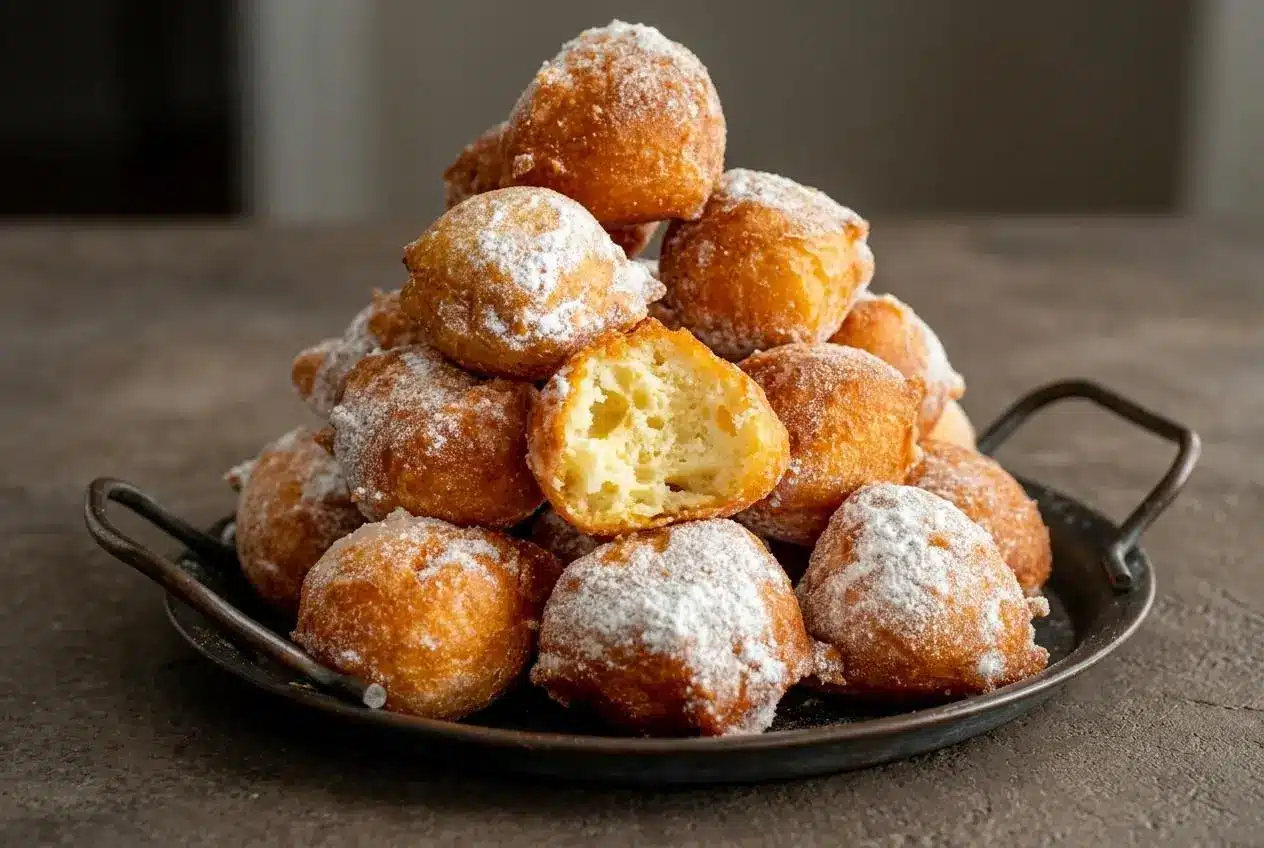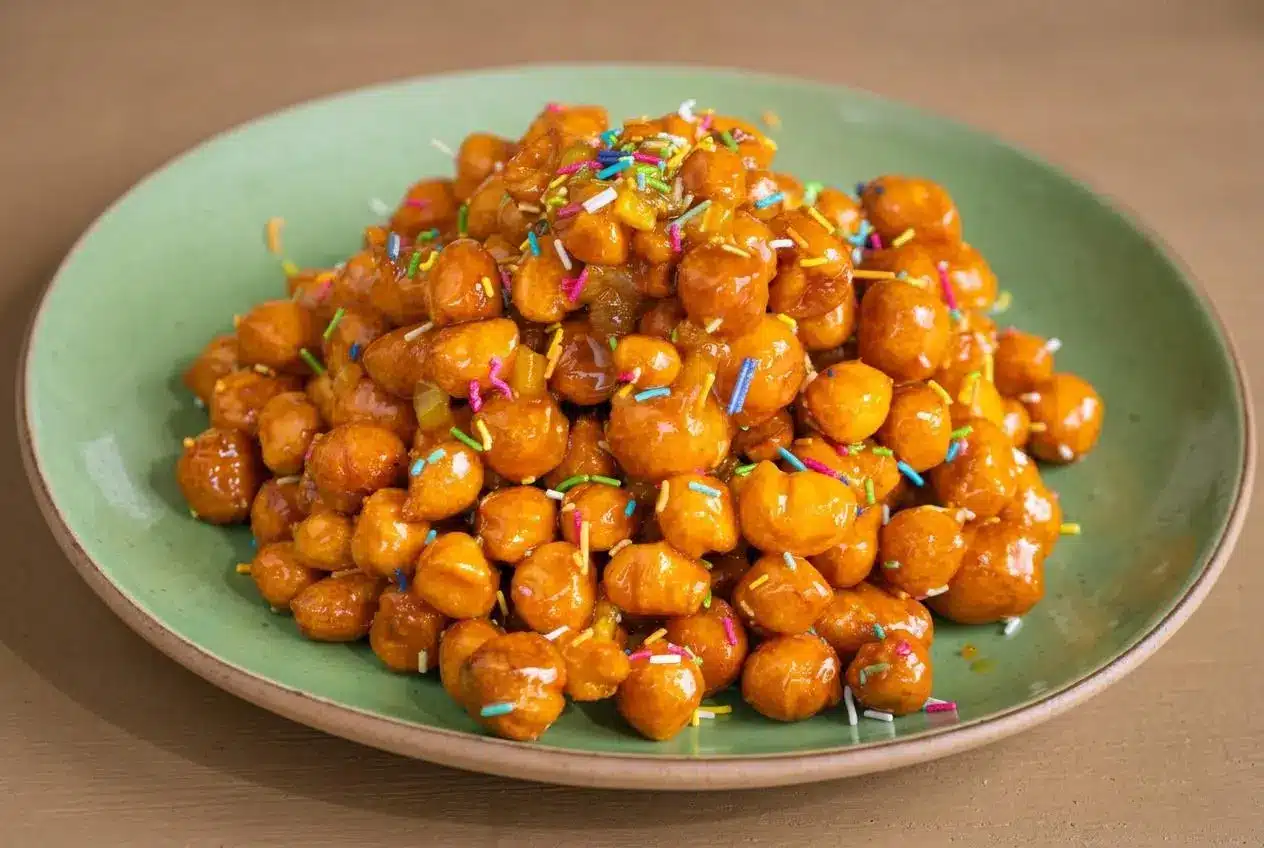
This struffoli recipe makes tiny, citrus-scented dough balls fried until golden, then coated in bubbling honey and sugar. Candied citrus and optional sprinkles finish a Neapolitan dessert with crisp edges, a sticky glaze, and plenty of holiday charm.
Struffoli are Italian honey balls made for sharing, whether you pile them on a platter or spoon them into cupcake liners. Lemon and orange zest keep their sweet coating fragrant and bright.
The dough comes together by hand or mixer, and the frying moves quickly once you finish cutting. The most useful trick happens before the oil: keep those little pieces small.
Set out your draining plate and serving platter before frying so you can move smoothly from hot oil to honey coating.
What Makes Authentic Neapolitan Struffoli Special
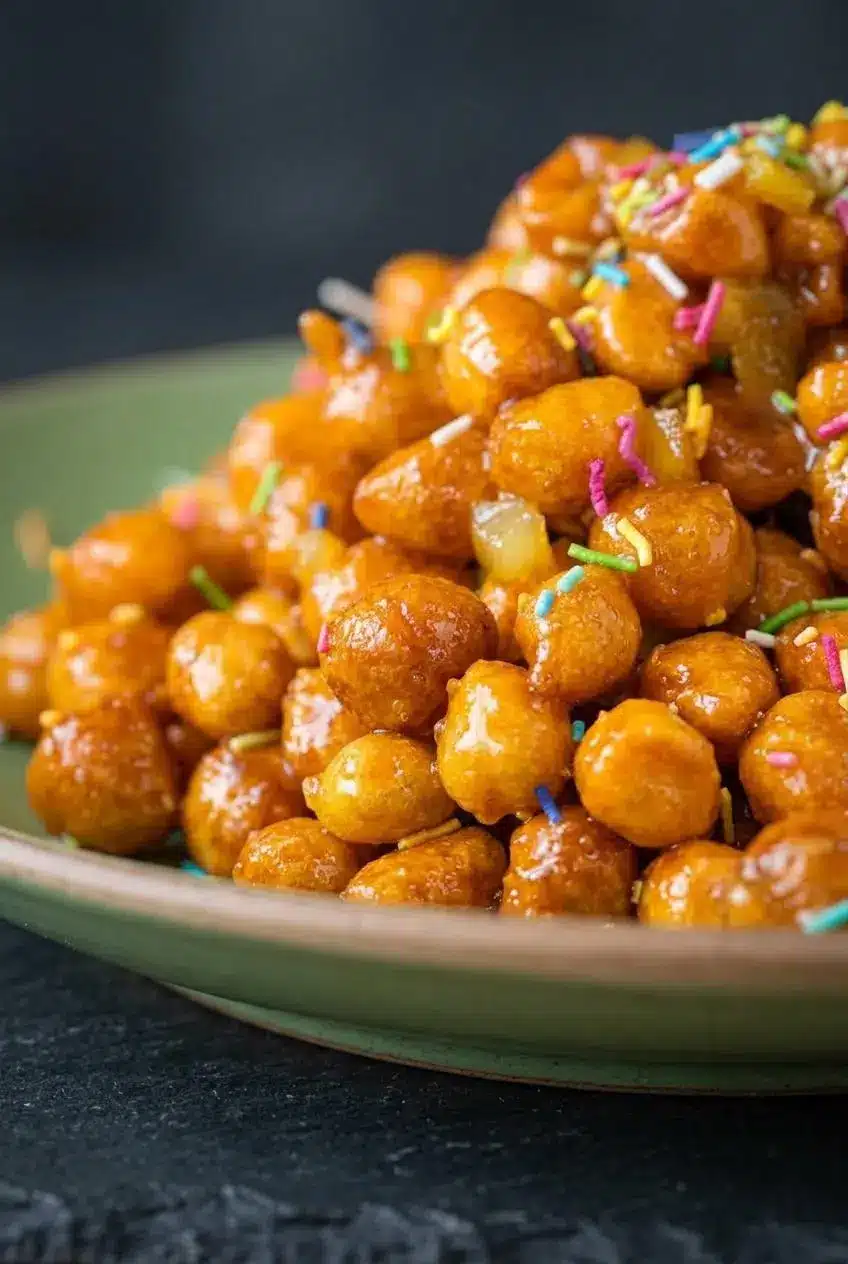
Struffoli, pronounced STROO-foh-lee, bring together two contrasting textures: freshly fried pastry and a glossy honey coating. Citrus zest perfumes the dough, while candied orange and lemon add chewy bursts of flavor.
They’re especially associated with Christmas in Naples. The finished balls soften somewhat as they sit in honey, so expect their crispest texture soon after preparation, not permanent crunch.
- Neapolitan struffoli: tiny fried dough balls coated in honey, often finished with candied citrus and colorful sprinkles.
- Messina-style pignolata: often larger fried dough pieces arranged in clusters with lemon and chocolate coatings.
- Regional overlap: other versions of pignolata use honey, so coating alone doesn’t distinguish every regional variation.
Key Ingredients and Smart Substitutions
Flour and eggs build the dough’s structure, oil adds tenderness, and citrus supplies aroma. Sugar balances the dough, salt sharpens its flavor, honey creates the glossy coating, and candied fruit and optional sprinkles add contrasting texture and color.
- 230 grams All-purpose flour, 8 oz
- 2 tbsp White sugar
- 2 Organic eggs
- 2 tbsp Limoncello, Preferably homemade
- 2 tbsp Peanut oil, Plus extra for frying
- 1 Lemon, medium sized
- 1 Orange, medium sized
- Pinch of salt
- 150 grams Honey, 5,29 oz
- Candied fruit, orange and lemon
- Sprinkles, Optional
Eggs bind the flour into a dough you can roll and cut. Limoncello reinforces the citrus aroma, while the oil helps keep the fried interior from becoming overly firm. Candied peel supplies a pleasantly chewy contrast to the small pastry pieces.
I grate just the colored citrus peel, stopping before the white pith so the zest tastes fragrant rather than bitter.
Before measuring: the dough uses the listed 2 tablespoons sugar, while the coating instructions call for another 1 tablespoon that isn’t included in the list. The honey is listed as 150 grams, 5,29 oz, but the coating instructions pair 150 grams with 5 oz; those ounce amounts differ.
Best Frying Oils and Peanut-Free Options
Choose an oil suitable for frying at approximately 180 °C (356 °F), with a neutral flavor that lets the citrus come through.
- Peanut oil: the listed choice for both the dough and frying.
- Sunflower oil: an optional alternative, provided the product is suitable for high-heat frying.
- Vegetable oil: another optional choice, but blends vary, so check their ingredients and frying suitability.
For a peanut-free adaptation, replace both the oil in the dough and the frying oil. Check labels, manufacturing warnings, and shared equipment for your guests’ specific allergies; don’t assume every vegetable oil blend is peanut-free.
Swapping Limoncello for Fresh Orange Juice
For an optional alcohol-free dough, replace the 2 tablespoons limoncello with 2 tablespoons freshly squeezed orange juice. The juice keeps the dough citrus-forward, although it won’t reproduce limoncello’s flavor exactly.
This substitution stays separate from the ingredient list and method below. Don’t assume frying removes all the alcohol from the limoncello version.
How to Make Struffoli Step by Step
This makes 10 servings. Allow at least 30 minutes for resting, plus mixing, shaping, frying, coating, and cooling; frying time depends on how much dough your pan comfortably holds.
To Make the struffoli dough
- Place 230 grams flour, 2 tablespoons sugar, and 2 eggs in a mixing bowl.
Keep the ingredients together in the bowl for mixing. - Add zest from half the lemon and half the orange, followed by 2 tablespoons limoncello, 2 tablespoons peanut oil, and a pinch of salt.
The zest should consist of fine colored shavings. - Work the ingredients together by hand or with a mixer on medium speed.
A mixer should gather them into dough in about 2 minutes. - Correct excessive stickiness with small additions of flour, mixing after each addition.
Stop when the dough gathers the remaining ingredients from the bowl and its sides. - Dust a wooden board or work surface lightly with flour.
A thin coating will help prevent sticking during kneading. - Turn the dough onto the prepared surface and knead gently, using extra flour only as needed.
Look for a smooth surface rather than a floury, stiff mass. - Leave the dough beneath a dry tea towel for at least 30 minutes.
The rest lets the gluten relax before rolling.
To cook the struffoli
- Uncover the rested dough and give it a few passes with a rolling pin to form a broad oval.
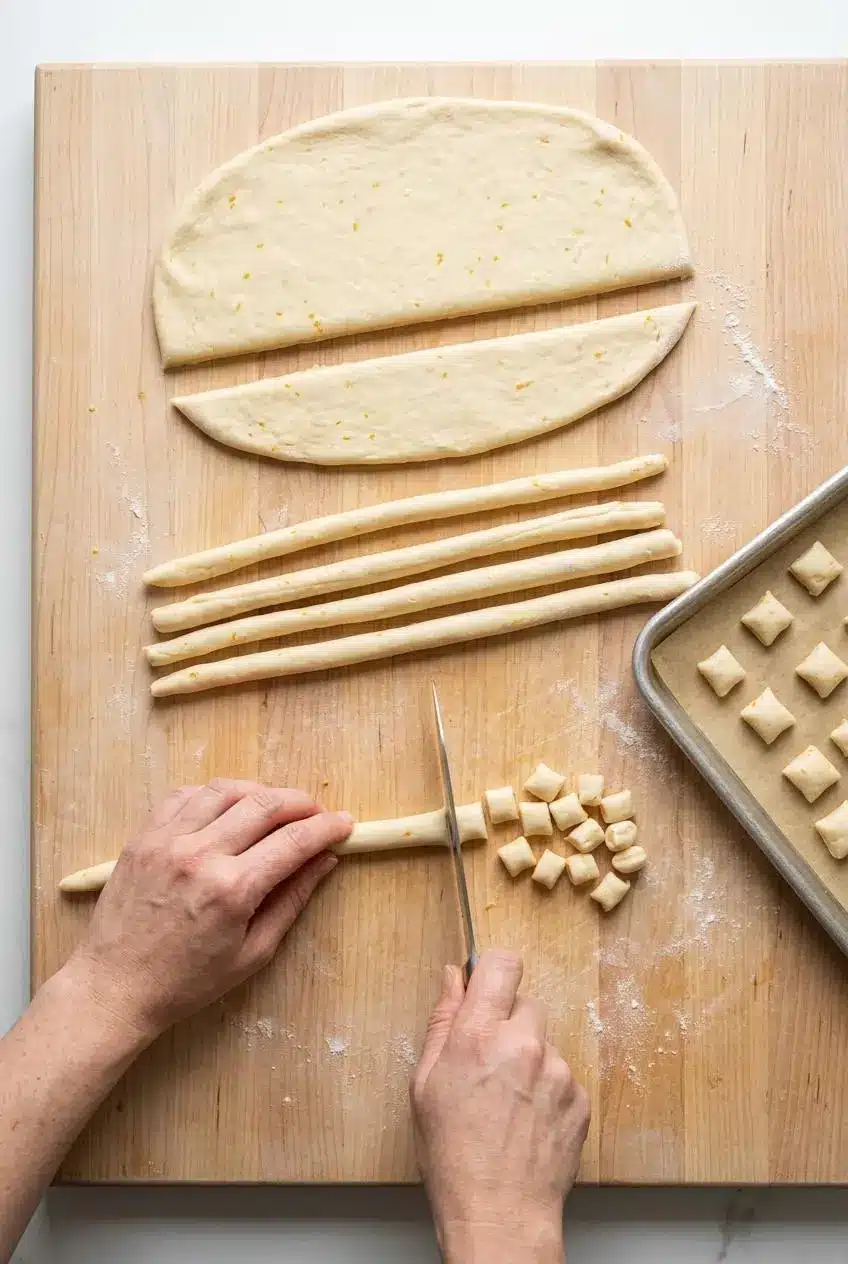
Keep it substantial rather than rolling a thin sheet. - Slice off a strip no wider than 1.5 cm and roll it beneath your palms into a long rope.
A consistent thickness will help the cut pieces cook evenly. - Move the rope onto a parchment-lined tray.
The paper keeps the dough from adhering to the tray. - Repeat the strip-cutting and rolling process with the remaining dough.
Aim for ropes of similar thickness. - Return up to 10 ropes at a time to the board and cut straight across them into pieces smaller than 1 cm.
The pieces should resemble tiny pillows. - Arrange the cut dough on the parchment-lined tray.
Keep the pieces distinct rather than pressing them into a mound. - Bring peanut oil in a deep saucepan to approximately 180 °C (356 °F).
A frying thermometer can help you check the temperature. - Release the dough pieces into the oil individually.
Separate entry helps prevent sticking without requiring you to fry only one piece at a time. - Turn the pieces gently as they fry for about 1 minute.
Remove them when every side looks golden brown. - Scoop out the cooked balls, let the oil drain away, and place them on a paper towel-lined plate.
The paper absorbs oil remaining on their surfaces.
To decorate the struffoli
- Warm a large saucepan for the coating.
Use a pan with enough room to turn the fried balls through the honey. - Stir together 150 grams honey, given here as 5 oz, and 1 tablespoon sugar in the heated pan.
Watch for bubbling as the mixture heats. - Fold the fried balls through the bubbling honey mixture.
Continue until their surfaces look glossy and coated. - Mix in lemon and orange zest to taste.
Distribute the fragrant shavings throughout the coated balls. - Switch off the heat, fold in the candied fruit and optional sprinkles, and promptly transfer to a platter or cupcake holders.
The coating becomes harder to arrange as it cools. - Finish with more optional sprinkles or leave the surface undecorated.
The honey coating should remain visible beneath any decorations. - Allow the struffoli to cool before serving.
The honey will become less fluid as it sets around the balls.
Mixing and Resting the Citrus Dough
Use corrective flour sparingly. A sticky dough needs a little help, but repeated heavy additions can make the finished balls dense. Smooth and workable is the goal, not dry. Resting also makes the dough easier to roll without springing back.
Rolling Ropes and Cutting Tiny Pillows
Roll from the center outward with your palms to even out thick spots. The strip width and final piece size are different measurements: strips can be up to 1.5 cm wide, but the cut pillows must be smaller than 1 cm. Small, uniform pieces cook more evenly.
Frying Until Golden and Coating with Honey
Use golden color alongside the approximate frying time. The oil cools when dough enters, so avoid crowding and check its temperature between additions. For the coating, bubbling honey is your cue to add the balls; there’s no extra boiling stage. Transfer promptly once you finish mixing.
Essential Tips and Troubleshooting for Crispy Honey Balls
Most texture problems begin with too much flour, uneven cutting, or oil that has drifted away from the intended temperature.
- Dough sticks everywhere: mix in flour a little at a time, stopping as soon as it becomes workable.
- Dough feels hard or resists rolling: excessive flour or an incomplete rest can make shaping difficult; avoid flouring heavily and give it the full rest.
- Centers stay doughy: oversized pieces can brown before their middles cook; keep the pillows uniformly smaller than 1 cm.
- Exteriors feel oily: check the oil temperature and reduce crowding so the dough fries briskly rather than lingering in cooler oil.
- Balls turn hard or dark: remove them at the golden stage; the approximate minute is a guide, not a reason to keep frying browned pieces.
- Pieces clump in the oil: add them separately instead of tipping in a pile.
- Honey darkens or smells scorched: watch closely once it bubbles and follow the heat-off sequence rather than continuing to boil.
- Coating sticks firmly to the pan: delayed transfer lets the honey set around the balls; have the serving dish ready before glazing.
Avoid tasting or touching hot honey. Use utensils to stir and transfer it.
Optional Citrus and Honey Flavor Ideas
Keep these optional changes separate from the main method so you can choose the flavor you want.
- Citrus sugar: rub the dough’s allocated zest into its existing sugar before mixing to release aromatic citrus oils, without adding extra sugar or changing the zest allocation.
- Cinnamon honey: add a pinch of ground cinnamon to the warm honey for a warmer spice flavor.
- Festive toppings: try toasted pine nuts, slivered almonds, or dark chocolate curls, choosing additions around guests’ specific allergies.
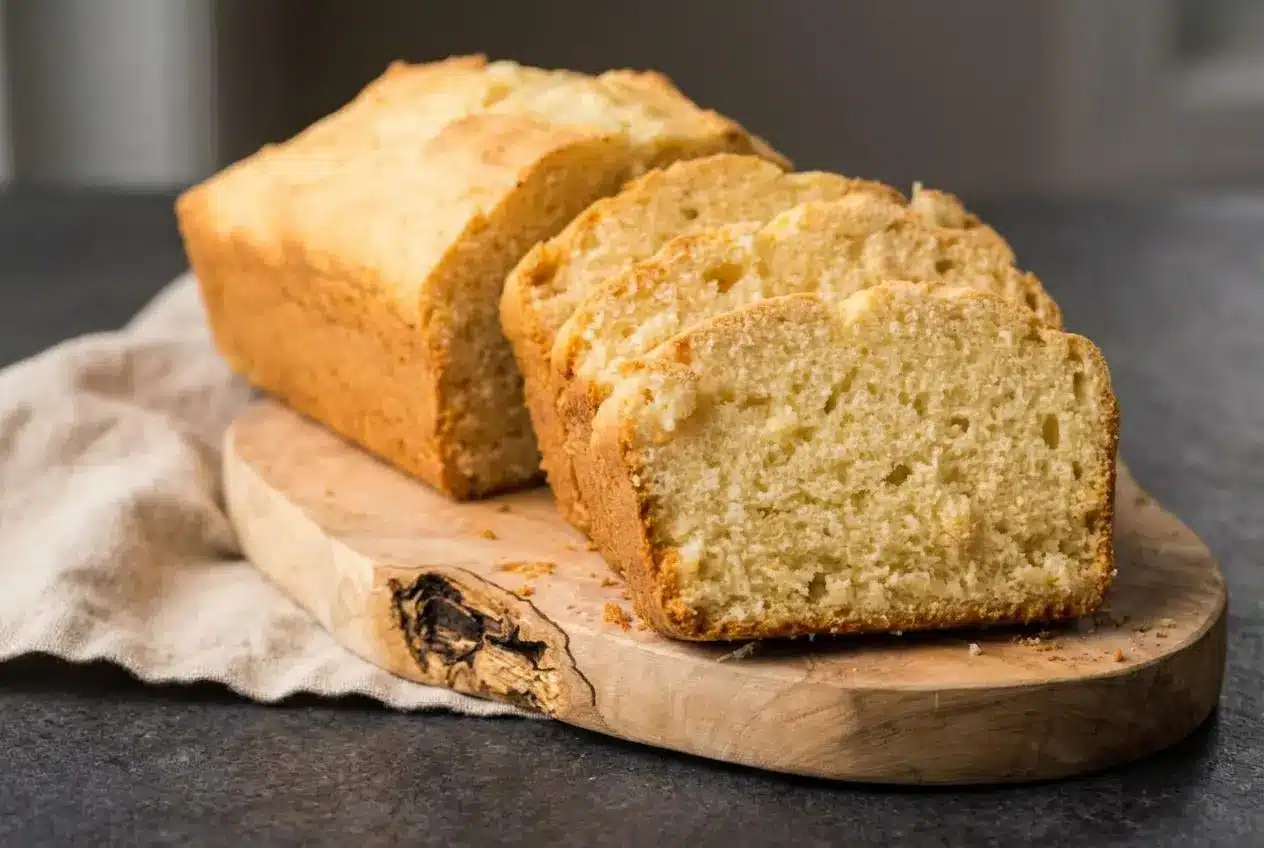
If fresh citrus is your favorite part, a bright lemon loaf offers another dessert built around that fragrant flavor.
Festive Serving Ideas, Make-Ahead, and Storage
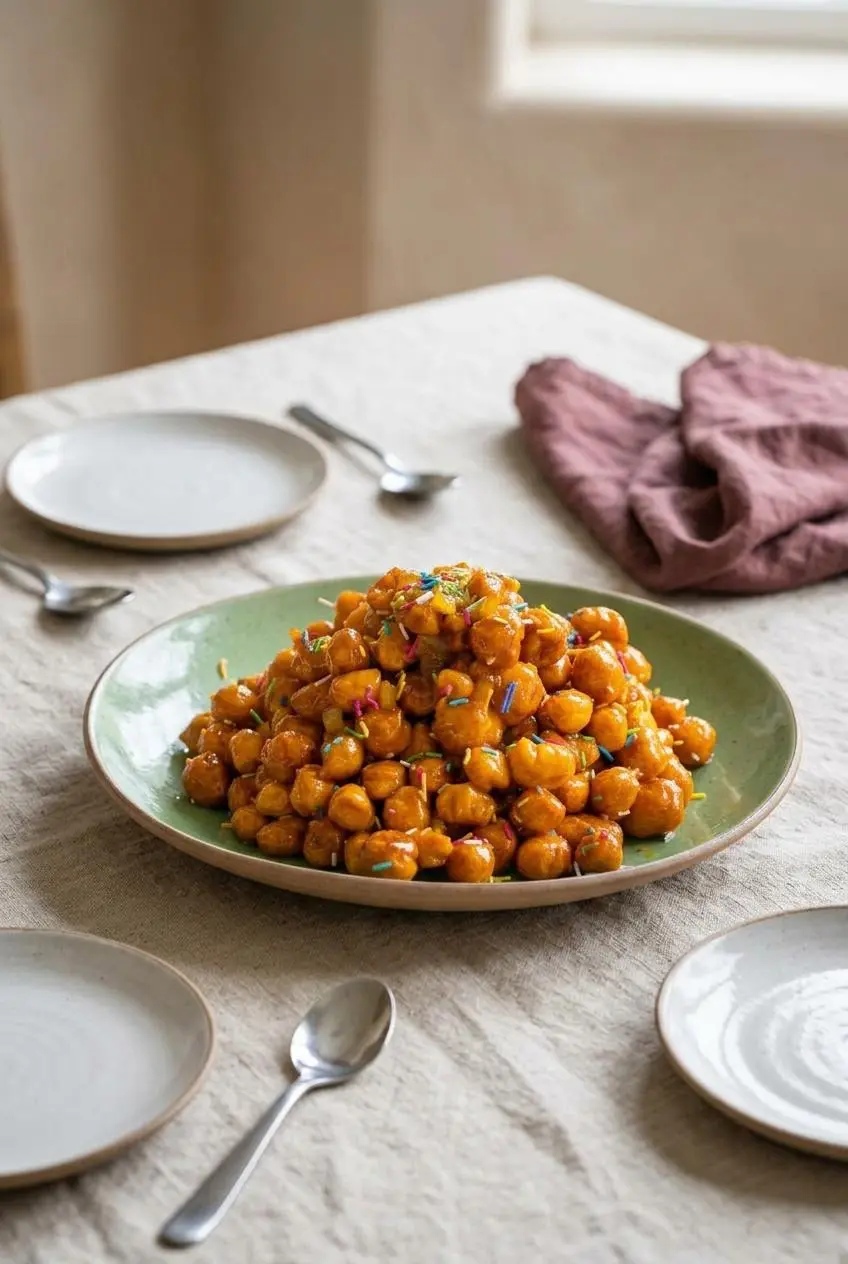
Choose your serving shape before coating the balls, because warm honey gives you a limited window for arranging them.
A Honey-Ball Mountain, Holiday Wreath, or Individual Portions
- Mountain: use a spoon or spatula to mound the coated balls on a platter.
- Wreath: arrange them around a greased glass, then remove it once the shape holds.
- Individual portions: spoon clusters into paper cupcake liners for easy sharing.
Shape with utensils while the coating remains workable. Hot honey can burn, so don’t handle it directly; serve the finished portions cooled. For another portioned party treat, consider festive cake pops.
Keep Fried Balls Separate Until Glazing
For texture-conscious preparation, keep the frying and coating stages separate. Let fried balls cool completely before placing them in an airtight container, since trapped warmth creates condensation. Apply the coating closer to serving rather than leaving the balls soaking in honey unnecessarily.
Keeping Honey-Coated Struffoli from Turning Soggy
Keep cooled, glazed struffoli covered and protected from humidity during serving. For texture, room-temperature presentation is preferable to refrigeration, which can change the honey coating. This is serving guidance, not a verified room-temperature shelf life.
Expect the fried shell to soften after coating and holding. Glazing close to serving offers the best contrast between crisp pastry and sticky honey.
Conclusion
Golden citrus bites, fragrant honey, and chewy candied peel give struffoli their festive character. Cut the dough small and watch the oil temperature for the most even results.
Choose a shared platter or individual clusters, then arrange them promptly after coating. Have the serving dish ready, and enjoy them cooled.
Frequently Asked Questions
What Is the Best Oil for Frying Struffoli?
Peanut oil is the listed choice. High-heat sunflower oil or a suitable vegetable oil can replace it. For peanut-free preparation, replace the dough oil too, and check labels and shared equipment.
Can I Make Struffoli with Orange Juice Instead of Limoncello?
Yes. As an optional substitution, use 2 tablespoons fresh orange juice instead of 2 tablespoons limoncello. It preserves the citrus character without tasting identical to the liqueur version.
What Is the Main Difference Between Struffoli and Pignolata?
Struffoli are tiny Neapolitan honey-coated balls. Messina-style pignolata often has larger pieces with lemon and chocolate coatings, although other regional pignolata variations also use honey.
Can You Make Struffoli Ahead of Time Without Them Getting Soggy?
Keep fried balls unglazed, cool them completely before enclosing them, and coat closer to serving. This helps protect their texture, but doesn’t establish a storage duration. Honey-coated balls gradually soften as they sit.
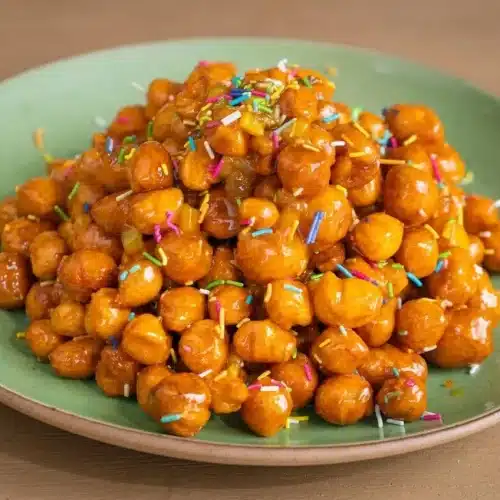
Struffoli Recipe

Equipment
- Stand mixer (or your hands)
- Rolling Pin
- Cutting board
- Knife
- Zester or Grater
- Dry tea towel for resting the dough
- Baking Tray for the dough
- Large plate for cooling
- Parchment Paper
- Medium saucepan
- Skimming ladle for frying
- Paper towels
- Large frying pan
- Spatula suitable for frying
- Serving platter or Cupcake holders
Ingredients
- 230 grams All-purpose flour 8 oz
- 2 tbsp White sugar
- 2 Organic eggs
- 2 tbsp Limoncello Preferably homemade
- 2 tbsp Peanut oil Plus extra for frying
- 1 Lemon medium sized
- 1 Orange medium sized
- Pinch of salt
- 150 grams Honey 5,29 oz
- Candied fruit orange and lemon
- Sprinkles Optional
Instructions
To Make the struffoli dough
- Place 230 grams flour, 2 tablespoons sugar, and 2 eggs in a mixing bowl. Keep the ingredients together in the bowl for mixing.
- Add zest from half the lemon and half the orange, followed by 2 tablespoons limoncello, 2 tablespoons peanut oil, and a pinch of salt. The zest should consist of fine colored shavings.
- Work the ingredients together by hand or with a mixer on medium speed. A mixer should gather them into dough in about 2 minutes.
- Correct excessive stickiness with small additions of flour, mixing after each addition. Stop when the dough gathers the remaining ingredients from the bowl and its sides.
- Dust a wooden board or work surface lightly with flour. A thin coating will help prevent sticking during kneading.
- Turn the dough onto the prepared surface and knead gently, using extra flour only as needed. Look for a smooth surface rather than a floury, stiff mass.
- Leave the dough beneath a dry tea towel for at least 30 minutes. The rest lets the gluten relax before rolling.
To cook the struffoli
- Uncover the rested dough and give it a few passes with a rolling pin to form a broad oval. Keep it substantial rather than rolling a thin sheet.
- Slice off a strip no wider than 1.5 cm and roll it beneath your palms into a long rope. A consistent thickness will help the cut pieces cook evenly.
- Move the rope onto a parchment-lined tray. The paper keeps the dough from adhering to the tray.
- Repeat the strip-cutting and rolling process with the remaining dough. Aim for ropes of similar thickness.
- Return up to 10 ropes at a time to the board and cut straight across them into pieces smaller than 1 cm. The pieces should resemble tiny pillows.
- Arrange the cut dough on the parchment-lined tray. Keep the pieces distinct rather than pressing them into a mound.
- Bring peanut oil in a deep saucepan to approximately 180 °C (356 °F). A frying thermometer can help you check the temperature.
- Release the dough pieces into the oil individually. Separate entry helps prevent sticking without requiring you to fry only one piece at a time.
- Turn the pieces gently as they fry for about 1 minute. Remove them when every side looks golden brown.
- Scoop out the cooked balls, let the oil drain away, and place them on a paper towel-lined plate. The paper absorbs oil remaining on their surfaces.
To decorate the struffoli
- Warm a large saucepan for the coating. Use a pan with enough room to turn the fried balls through the honey.
- Stir together 150 grams honey, given here as 5 oz, and 1 tablespoon sugar in the heated pan. Watch for bubbling as the mixture heats.
- Fold the fried balls through the bubbling honey mixture. Continue until their surfaces look glossy and coated.
- Mix in lemon and orange zest to taste. Distribute the fragrant shavings throughout the coated balls.
- Switch off the heat, fold in the candied fruit and optional sprinkles, and promptly transfer to a platter or cupcake holders. The coating becomes harder to arrange as it cools.
- Finish with more optional sprinkles or leave the surface undecorated. The honey coating should remain visible beneath any decorations.
- Allow the struffoli to cool before serving. The honey will become less fluid as it sets around the balls.