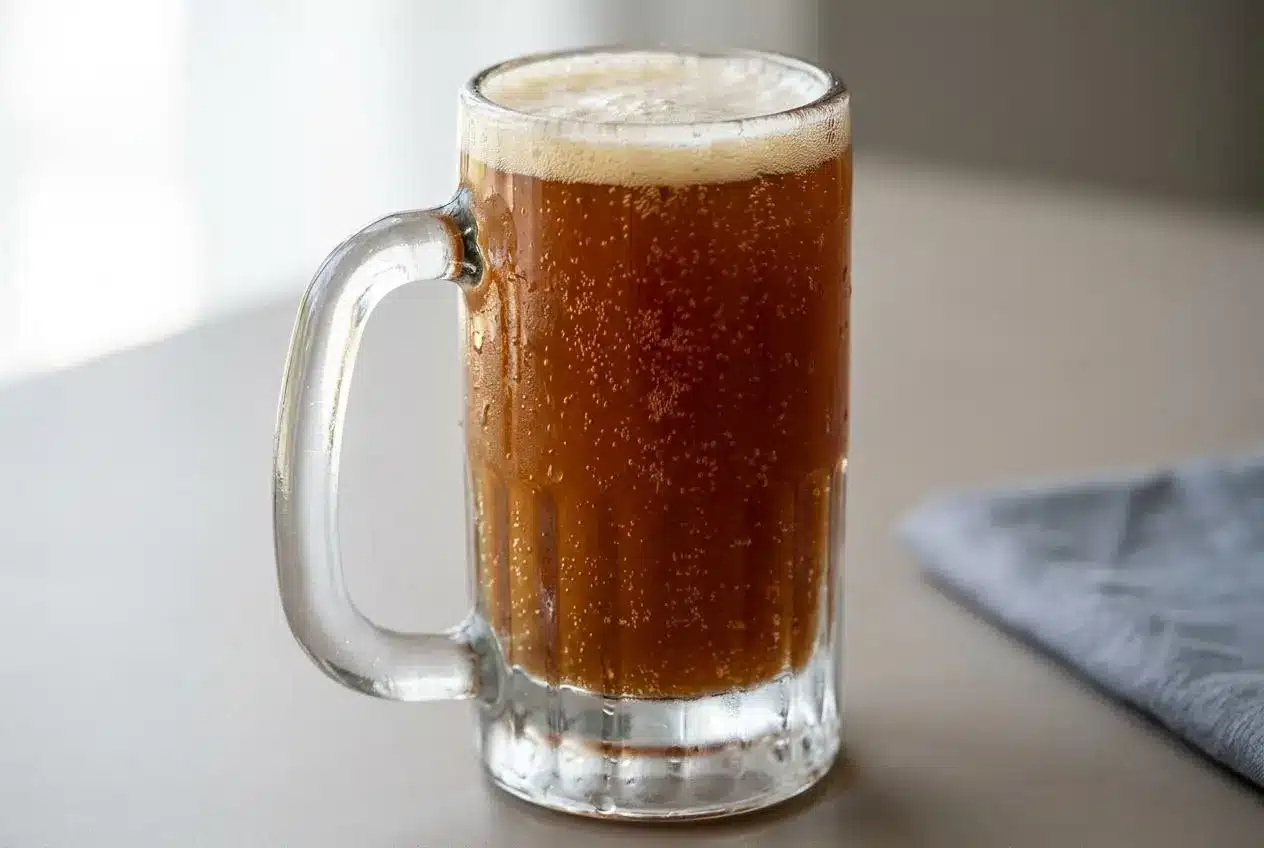
Make bread kvass by steeping deeply toasted rye bread and raisins in boiled water, adding sugar and yeast after cooling, then fermenting briefly before bottling and chilling. This three-day method produces an amber, malty drink with sweet-tart flavor and gentle fizz.
This Bread Kvass Recipe makes a traditional Slavic fermented beverage with the aroma of toasted crackers and a crisp, sparkling finish. Dark bread gives the drink its rich color, while sugar and active dry yeast help develop its sweetness and carbonation.
Most of the work happens while the pot rests or the bottles chill. You’ll move from fragrant toast to amber infusion, then to cold glasses of tangy refreshment. The flavor starts with the toast.
Clear refrigerator space before starting, and check that your bottles can hold the batch without filling them to the brim.
Choosing the Right Bread and Ingredients for This Bread Kvass Recipe
Bread supplies roasted aroma and color, water carries those flavors, sugar balances tartness and feeds fermentation, and yeast develops carbonation. Raisins contribute fruity sweetness, while the soda bottles provide containers suited to a sparkling drink.
- 2.5 gallons or 10 qt of water
- 1 lb or 9 slices of classic black, dark or rye bread
- 1 handful of raisins
- 1.8 lb 4 cups of sugar
- 1.5 tablespoons of active dry yeast
- 3 large plastic soda bottles
Toasting matters as much as choosing the loaf. Deep browning adds roasted, caramel-like notes to the infusion; scorched bread contributes bitterness instead. Aim for dark toast that still smells appetizing, rather than charred edges and an acrid smell.
Sugar has two jobs here: it sweetens the drink and fuels the yeast. As fermentation progresses, the balance can shift toward less sweetness and more fermented character. Cutting the sugar changes that balance, so follow the listed amount for this method.
Raisins may carry wild microorganisms, but this recipe relies on the measured active dry yeast, not on raisins alone. Floating raisins can accompany bubbling, although their position doesn’t prove that fermentation is complete.
I’d judge the toast by its roasted-cracker aroma as well as its color; an acrid smell is a reason to stop browning.
Dark Rye vs Other Breads
Dense dark rye gives kvass a stronger grain flavor than a pale wheat loaf. Russian Borodinsky is especially distinctive, with rye depth and coriander aroma. A rye loaf containing caraway will bring that seasoning into the finished drink, too.
Dark pumpernickel bread offers another rich-flavored choice, though different loaves vary in sweetness and color. Choose one whose flavor you enjoy, because steeping carries its character into the drink.
Regular sandwich rye works within the listed bread choices, but it may produce a lighter infusion. Pale wheat bread can make a milder beverage, yet it won’t deliver the same roasted rye character. Don’t compensate for a lighter loaf by burning it.
Bread kvass also differs from beet kvass. This version starts with a toasted grain infusion and added yeast; beet versions commonly use vegetables and a salt-brine fermentation. Their ingredients and fermentation methods aren’t interchangeable.
Water Quality and Yeast Choices
Use water that tastes clean, since unwanted flavors will carry into the batch. Filtered water can help if your tap water has a noticeable chlorine taste. Check what your filter removes rather than assuming that boiling eliminates every municipal disinfectant.
Active dry baker’s yeast is the yeast specified for this method. Brewer’s yeast strains can produce different aromas and fermentation behavior, so they aren’t automatically equivalent substitutions. Keep the listed yeast when following this schedule.
The most important checkpoint comes before adding yeast: the infusion should have cooled to room temperature, with no lingering warmth from the steep. Hot liquid can damage yeast. A large covered pot may cool more slowly than its surface suggests, so check the liquid itself.
How to Make Bread Kvass Step by Step
Plan for bread steeping on day one, fermentation and bottling on day two, and chilled kvass on day three. The steep and room-temperature fermentation total at least 14 hours, followed by overnight refrigeration. The batch yields approximately 20 to 24 servings.
Gather a large stockpot, or two large pots, a medium bowl, a large spoon, and a strainer or cheesecloth. Use clean equipment throughout. Bottle sizes vary, so confirm that the listed bottles have sufficient combined capacity and leave room above the liquid.
DAY 1
- Bring 2.5 gallons of water to a boil in a stockpot large enough to contain it, or distribute the water between two large pots.
Look for a full boil before beginning the steep. - Run the bread through two toasting cycles at the darkest setting while the water heats, watching closely and using a suitable, well-ventilated area because heavy browning can create smoke.
The slices should smell like deeply toasted crackers, not burnt ash. - Take the boiling water off the heat, immerse the toast and raisins, and cover the pot for an overnight steep of at least 8 hours.
The bread will soften as the liquid develops an amber-brown color.
DAY 2
- Lift out the soaked bread carefully and discard it.
The softened slices may break apart, leaving small particles in the infusion. - Once the liquid has cooled to room temperature, combine 4 cups of sugar with 1.5 tablespoons of active dry yeast in a medium bowl, then stir this mixture into the bread infusion.
The sugar should disperse through the liquid without leaving a gritty layer at the bottom. - Cover the pot with a lid or plastic wrap and keep it on the counter for 6 hours, stirring every couple of hours.
Small bubbles and a pale foam ring may appear as the yeast becomes active. - Scoop out and discard the floating raisins, strain the liquid through a strainer or cheesecloth into the bottles, and refrigerate overnight with the caps loosely fitted.
The strained kvass may remain slightly cloudy even after the bread particles are removed.
DAY 3
- Tighten the bottle caps only after the kvass has chilled completely, then pour and enjoy it cold.
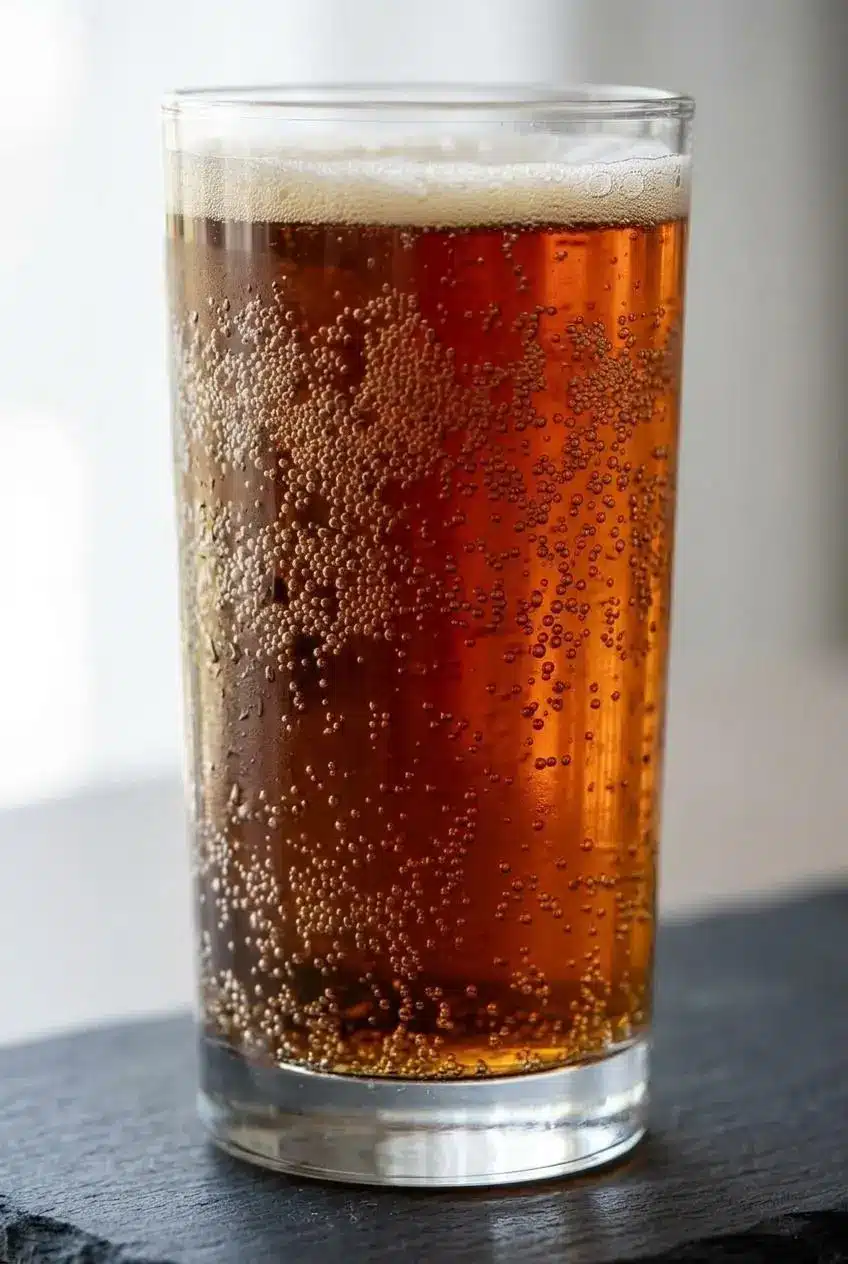
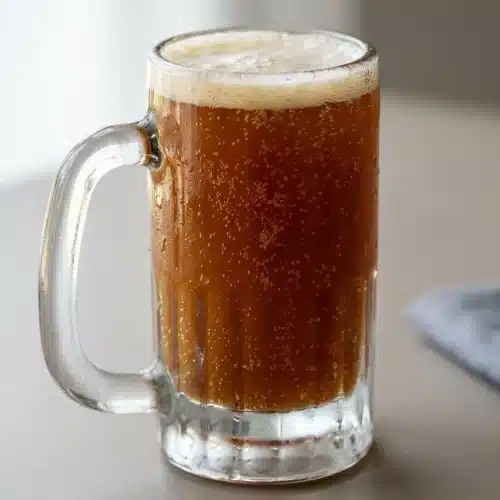
The finished drink should have a malty aroma, sweet-tart flavor, and a gentle sparkling sensation.
The warm steep extracts bread flavor; the later counter rest allows the added yeast to ferment. Refrigeration is a separate stage, not a substitute for that counter rest. Keep those stages distinct rather than adding yeast to hot steeping water or leaving filled, tightly capped bottles warm.
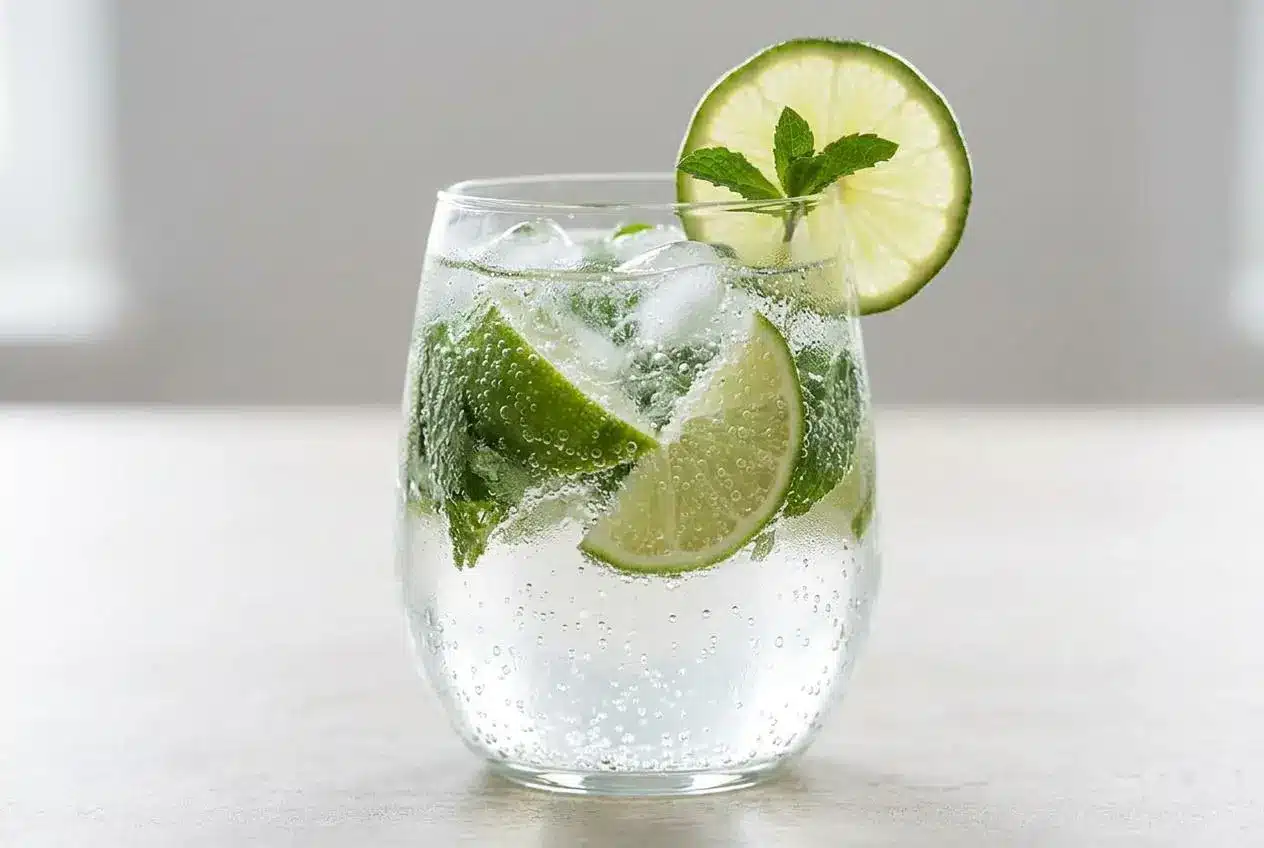
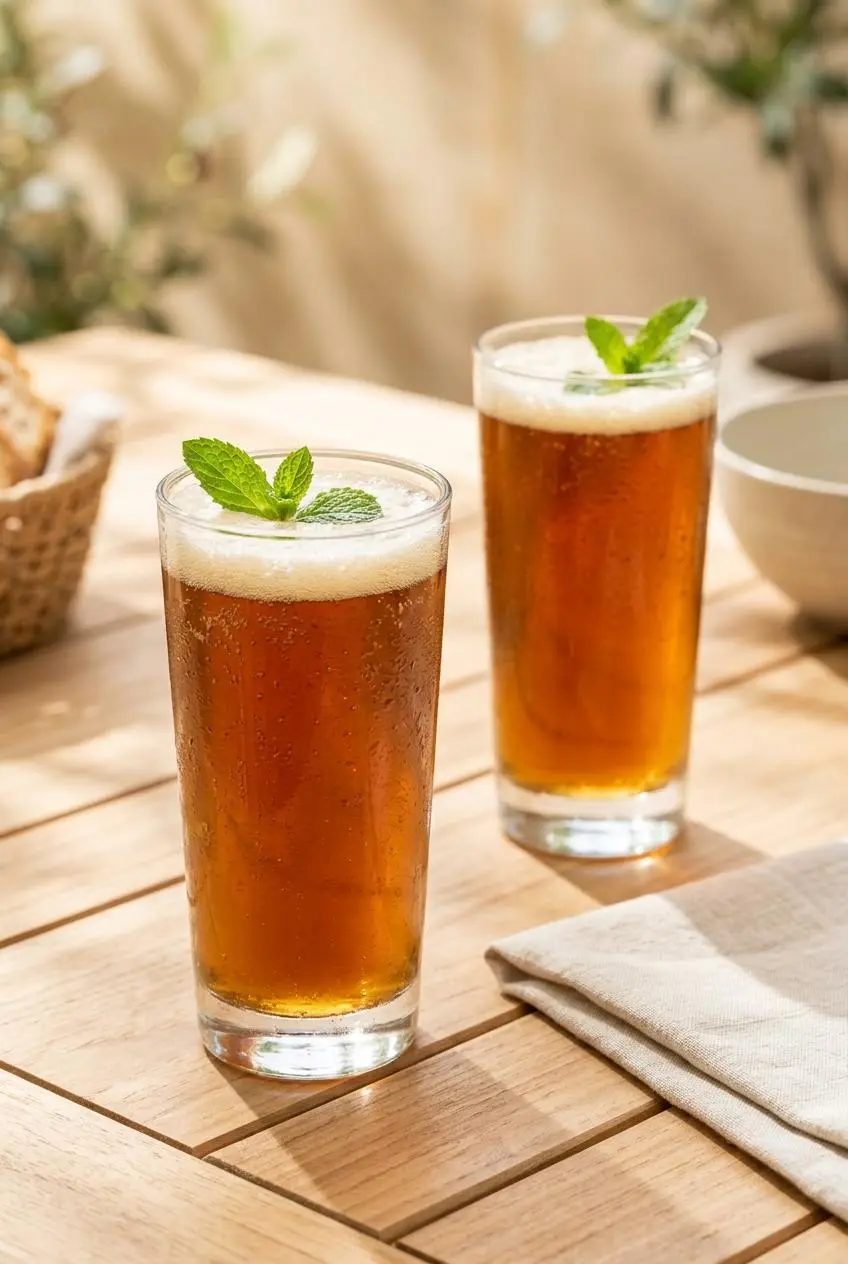
Serve the finished kvass cold in tall glasses. A fresh mint sprig is an optional garnish. A tart batch can also suit okroshka, the chilled summer soup, though a distinctly sweet batch may not give the soup the balance you want.
Fermentation Safety and Safe Bottling Rules
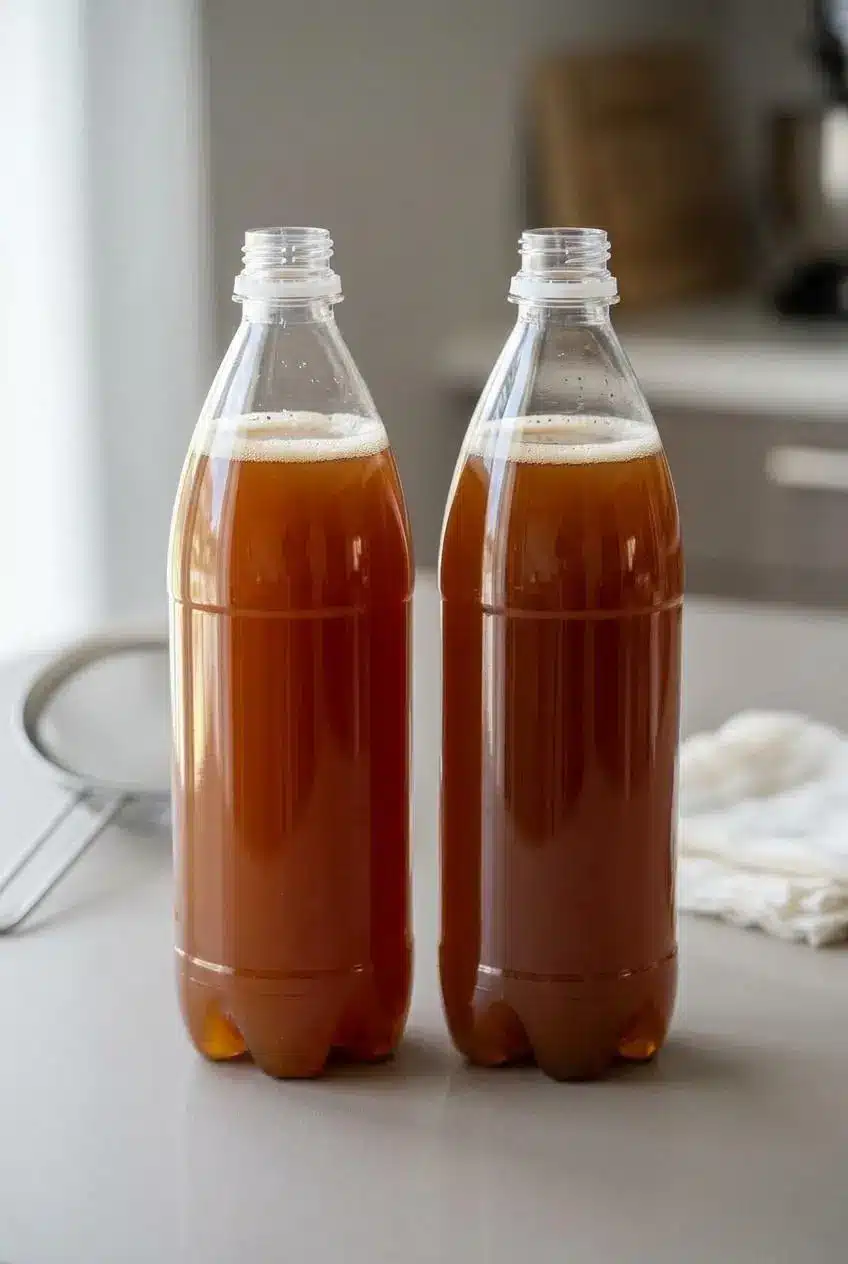
Pressure deserves attention even after the bottles go into the refrigerator. Chilling slows fermentation; it doesn’t reliably stop it. Tight caps can trap gas that continues to develop.
Choose clean, food-grade PET bottles made for carbonated soda rather than ordinary glass jars or thin water bottles. PET lets you notice changes in firmness by touch and avoids the additional hazard of shattered glass. It does not make overpressurization harmless.
- Keep the initial caps loose. Follow the overnight chilling step before tightening them, and keep bottles upright to reduce leaks.
- Leave space above the liquid. Don’t fill to the brim or force the batch into containers that lack sufficient capacity.
- Check capped bottles regularly. A daily firmness check is a useful routine, but increasing pressure may require attention sooner.
- Vent cautiously when pressure builds. Keep the bottle cold, stand it upright in the sink, point the cap away from your face, and loosen it gradually so gas escapes without a sudden spray.
- Respond to excessive firmness. Treat a very hard or visibly distorted bottle as a warning, not as proof of ideal carbonation, and avoid shaking or squeezing it.
- Keep bottled kvass refrigerated. Don’t move tightly capped bottles to a warm counter to chase stronger fizz.
A hiss tells you gas has collected, but neither the hiss nor bottle firmness measures alcohol content or confirms food safety. Clean handling, refrigeration, and pressure awareness matter together. No home bottling routine can promise a risk-free result.
Flavor Variations and Herb Additions
Optional flavorings can complement the rye, but they don’t belong in the ingredient list or method above. Start with the unflavored version so you know its toasted-grain character before changing it.
For a spiced variation, crushed coriander seeds and orange peel can flavor the warm bread steep. Strain them out with the other solids. Coriander echoes the seasoning of Borodinsky, while orange peel adds aroma without turning the drink into a fruit beverage.
- Dried sour cherries: Add a tart, dark-fruit note that complements roasted rye.
- Cranberries: Bring a sharper fruit accent, particularly useful as a contrast to sweetness.
- Lemon peel: Adds citrus fragrance; avoid the bitter white pith.
For fruit or berry accents, a separate chilled infusion strained into a serving glass is easier to manage than putting sugary fruit into a tightly capped bottle. Extra fermentable ingredients change pressure behavior, so don’t assume that flavored bottles will behave like the plain batch.
Traditional Mint and Herb Kvass
Fresh peppermint or spearmint brings a cooling aroma that works well with kvass’s sweet-tart finish. For an optional mint version, steep clean leaves in the cooling bread infusion and remove them during straining.
Peppermint gives a more assertive, cooling impression; spearmint tastes softer and sweeter. Keep the herb flavor restrained so the toasted rye still comes through. You can also garnish an individual glass instead of flavoring the entire batch.
Sourdough Starter Rye Kvass
Sourdough kvass uses an active culture containing wild yeasts and lactic acid bacteria rather than relying solely on commercial baker’s yeast. It can develop a sharper tang and a more complex fermented aroma.
An active starter used for classic sourdough bread introduces different organisms from the dry yeast listed here. The starter’s strength, acidity, and hydration affect how it behaves in a bread infusion.
This is not a spoon-for-spoon swap. Use a dedicated sourdough kvass method with established starter proportions and fermentation checkpoints rather than applying this recipe’s yeast quantity and schedule. A sourdough version is free from added commercial yeast, but it is not literally yeast-free.
Troubleshooting Common Kvass Brewing Problems
Check the stage of the process before trying to fix the batch. A quiet steep is expected before yeast is added, and modest bubbling can be easy to miss in a large pot.
- No visible bubbles after the counter fermentation: The yeast may be inactive, the infusion may have been too hot when you added it, or the room may be cool. Check the yeast’s freshness and the cooling conditions; don’t keep extending a questionable batch’s warm rest indefinitely.
- The liquid is still very sweet: Sweetness alone doesn’t prove failure because this recipe includes substantial sugar. If sweetness accompanies no bubbling or fermented aroma, review yeast activity rather than repeatedly adding more yeast or sugar.
- The kvass is sharply sour: Excess warmth or a longer-than-planned ferment can shift the flavor. Chill it rather than continuing warm fermentation; adding sugar to a sealed bottle can restart pressure buildup.
- The drink tastes burnt: Scorched bread is the likely cause, and extra sweetener won’t remove that flavor. For the next batch, stop toasting when the aroma changes from roasted grain toward acrid smoke.
- There is white foam on top: Small bubbles or a pale foam ring can accompany yeast activity. A persistent surface film is different from bubbly foam and shouldn’t automatically be dismissed as normal.
- There is fuzzy growth or an unusual colored patch: Discard the batch rather than skimming it and drinking the liquid underneath. Don’t taste a questionable ferment to investigate it.
- The bottled drink seems flat: Loosely capped chilling allows gas to escape, so a restrained sparkle is possible. Don’t try to correct it by warming tightly sealed bottles.
- The kvass looks cloudy: Fine bread particles and suspended yeast can remain after straining. Cloudiness alone doesn’t identify spoilage, and straining cannot rescue a batch with suspicious growth.
If the batch remains inactive or develops a sharply unpleasant odor, restarting is a more cautious choice than improvising a prolonged warm ferment. For the next attempt, focus on fresh yeast, cooled liquid, clean equipment, and the stated sequence.
Alcohol Content and Health Considerations
Homemade bread kvass can contain alcohol because yeast fermentation produces both carbon dioxide and alcohol. This recipe does not include measurements that establish the finished alcohol by volume, so a precise percentage would be misleading.
Don’t treat it as guaranteed alcohol-free soda. Sweetness, tartness, fizz, and a short fermentation schedule cannot tell you the alcohol concentration. Keeping it cold also doesn’t remove alcohol already produced.
Enjoy kvass for its roasted-grain flavor rather than treating it as a health supplement. This batch has no verified nutrition analysis or demonstrated probiotic benefit, and fermentation doesn’t establish how much sugar remains. Claims about digestive benefits, vitamin content, or calories would need separate evidence.
If you’re pregnant, serving children, or avoiding alcohol for medical, personal, or religious reasons, choose a beverage with verified alcohol labeling rather than relying on this homemade batch. Ask a qualified healthcare professional if you’re uncertain about suitability.
Conclusion
Homemade kvass turns toasted rye into a cold, amber drink with malt depth, gentle tang, and a sparkling finish. Brown the bread carefully, let the infusion cool before adding yeast, and follow the steeping and chilling stages in order.
Keep the bottles cold and pay attention to developing pressure. Then pour a chilled glass and enjoy the contrast between roasted bread aroma and crisp summer refreshment.
Frequently Asked Questions
Is Homemade Bread Kvass Alcoholic?
Yes, it can contain alcohol from yeast fermentation. This batch has no verified alcohol percentage, so don’t assume it is alcohol-free or suitable when alcohol must be avoided.
What Kind of Bread Works Best for Traditional Kvass?
Dense dark rye or Russian Borodinsky gives a rich grain aroma and deep color. Lighter loaves produce a milder infusion; careful browning helps develop flavor without adding burnt bitterness.
Why Are Plastic Bottles Recommended Over Glass Bottles?
Food-grade plastic soda bottles let you monitor changing firmness by touch and avoid shattered-glass hazards. They still require refrigeration and pressure monitoring; plastic does not eliminate the risk of excessive pressure.
How Long Does Homemade Bread Kvass Last in the Fridge?
There is no verified refrigerated shelf life for this batch, so a fixed number of days would be misleading. Keep it refrigerated in clean bottles, monitor pressure, and discard a batch with suspicious growth or an unusual odor rather than tasting it to check.
Bread Kvass Recipe

Equipment
- Giant stock pot
- Strainer or cheesecloth
- 3 large plastic soda bottles
Ingredients
- 2.5 gallons water or 10 qt
- 1 lb classic black, dark or rye bread or 9 slices
- 1 handful raisins
- 4 cups sugar 1.8 lb
- 1.5 tablespoons active dry yeast
- 3 large plastic soda bottles
Instructions
DAY 1
- Bring 2.5 gallons of water to a boil in a stockpot large enough to contain it, or distribute the water between two large pots. Look for a full boil before beginning the steep.
- Run the bread through two toasting cycles at the darkest setting while the water heats, watching closely and using a suitable, well-ventilated area because heavy browning can create smoke. The slices should smell like deeply toasted crackers, not burnt ash.
- Take the boiling water off the heat, immerse the toast and raisins, and cover the pot for an overnight steep of at least 8 hours. The bread will soften as the liquid develops an amber-brown color.
DAY 2
- Lift out the soaked bread carefully and discard it. The softened slices may break apart, leaving small particles in the infusion.
- Once the liquid has cooled to room temperature, combine 4 cups of sugar with 1.5 tablespoons of active dry yeast in a medium bowl, then stir this mixture into the bread infusion. The sugar should disperse through the liquid without leaving a gritty layer at the bottom.
- Cover the pot with a lid or plastic wrap and keep it on the counter for 6 hours, stirring every couple of hours. Small bubbles and a pale foam ring may appear as the yeast becomes active.
- Scoop out and discard the floating raisins, strain the liquid through a strainer or cheesecloth into the bottles, and refrigerate overnight with the caps loosely fitted. The strained kvass may remain slightly cloudy even after the bread particles are removed.
DAY 3
- Tighten the bottle caps only after the kvass has chilled completely, then pour and enjoy it cold. The finished drink should have a malty aroma, sweet-tart flavor, and a gentle sparkling sensation.