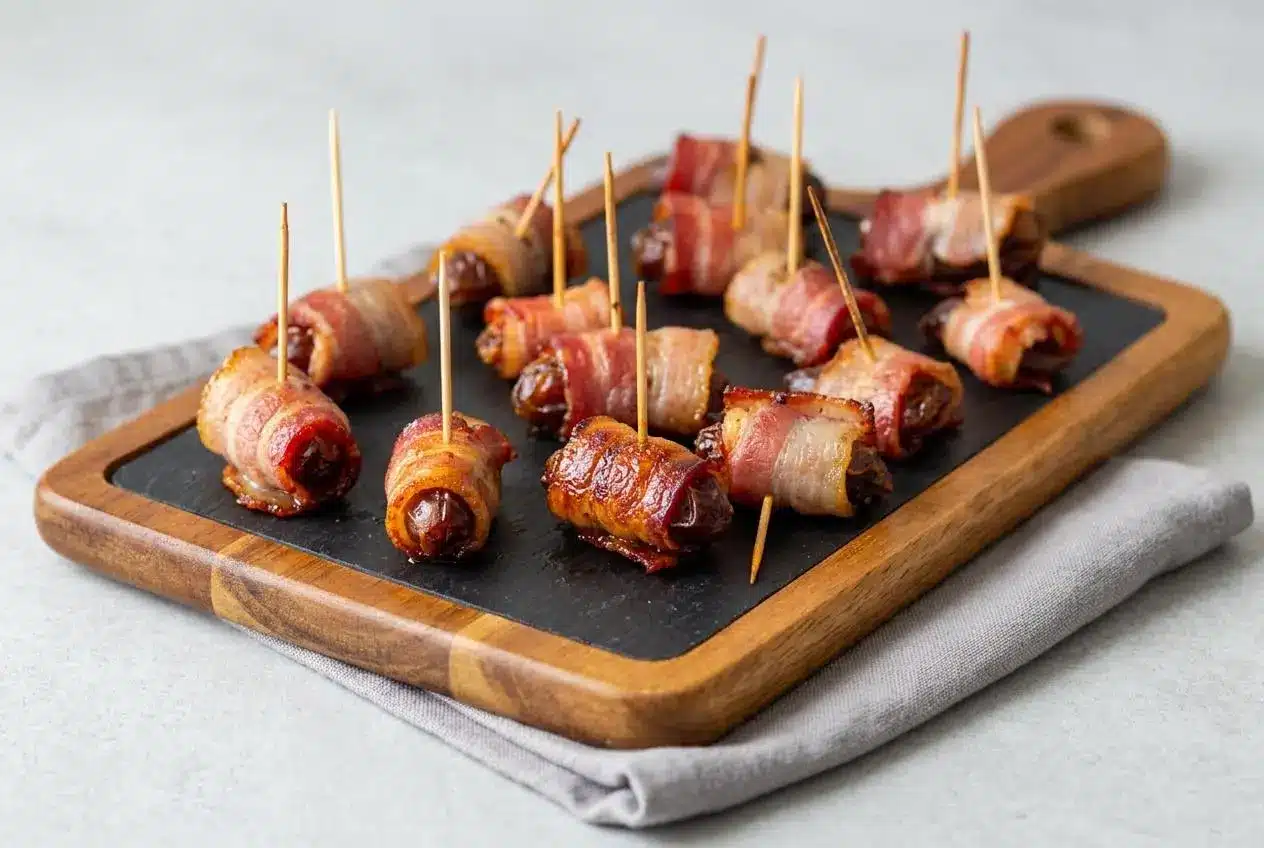
Bake bacon wrapped dates at 375°F for 12 to 15 minutes, until the bacon browns and crisps without burning the fruit. Thin-cut bacon works best because it cooks quickly around the sweet, tender dates.
Bacon Wrapped Dates pair salty, smoky bacon with warm fruit that tastes richly caramel-like. Each bite has a crisp outer layer and a soft center, making them a satisfying appetizer for a holiday spread or a casual gathering.
This version leaves the dates unstuffed, so assembly moves quickly. You can also add cheese or a roasted almond for a different texture. The crunch starts with the bacon cut.
Check that each half-strip of bacon wraps around its date with only a small overlap; extra layers tend to stay chewy.
Essential Ingredients and Choosing the Right Dates
Dates supply sweetness and a tender center, bacon adds smoky saltiness and a crisp wrapper, and toothpicks hold each bundle together as the fat renders. Their contrasting roles create the balance in every bite.
- 14 dates (pitted)
- 7 bacon strips (cut in halves)
- 14 toothpicks
The date edges deepen in color as their natural sugars heat, bringing out toasted caramel flavors. Bacon releases fat as it cooks, coating the fruit while its outer edges brown. You don’t need to season the plain version separately.
Use plain wooden toothpicks rather than decorative picks with plastic tops. A brief soak in cold water can help limit scorching, but it won’t make the exposed ends burnproof. Keep them away from direct heating elements and avoid switching to the broiler.
I favor dates that feel pliable but still hold their shape, because they’re easier to wrap without squeezing the fruit out of the bacon.
Medjool vs. Deglet Noor Dates
Choose the variety based on whether you want a compact plain bite or room for a filling.
- Deglet Noor: Usually smaller and firmer, these dates hold a tidy shape and work especially well for unstuffed appetizers.
- Medjool: Plumper and softer, these dates offer a larger cavity for cheese or nuts and make a more substantial bite.
Size matters as much as variety. A half-strip may barely reach around a very large Medjool date, while a small date can end up buried under overlapping bacon. Choose reasonably uniform fruit so the batch cooks evenly, and wrap snugly without compressing the center.
Selecting the Best Bacon Cut
Thin-cut or regular sliced bacon is the best match for the stated baking time. It bends easily around the fruit and has less thickness to cook through before the date edges become too dark.
Thick-cut bacon needs more attention. Its outside can brown while the inner overlap stays soft, particularly where it presses against the moist fruit. If that’s what you have, use the optional par-baking technique below rather than simply baking the wrapped dates much longer.
How to Make Crispy Bacon Wrapped Dates Step-by-Step
This batch yields 14 pieces, with about 7 minutes of preparation and 15 minutes of cooking. Gather a baking sheet, parchment paper, and toothpicks before starting.
Even pitted dates deserve a quick check for remaining pit fragments. For plain dates, keep the fruit intact; if you’re adding an optional filling, make a slit along one side without cutting all the way through.
- Set the oven to 375°F/190°C and let it reach temperature.
A fully heated oven helps the bacon begin rendering as soon as the tray goes in. - Wind a half-strip of bacon snugly around each date, pin the overlap with a toothpick, and arrange the bundles on a parchment-lined baking sheet.
Leave space between the pieces so the bacon edges remain exposed to the oven heat. - Cook the tray for 12 to 15 minutes, checking toward the end and removing it when the bacon has browned and crisped.
Look for sizzling rendered fat and dark golden bacon edges while keeping the date tips free of blackened spots. - Transfer the finished dates to a serving dish and offer them warm or cold.
The fruit should feel tender inside its browned bacon wrapper.
Let the dates rest for 2 to 3 minutes before handling or serving them warm. The bacon firms slightly as it cools, and the fruit centers won’t be quite so fiercely hot. If you’ve added cheese, this pause also lets the softened filling settle.
Use the clock as a starting point, then check the batch itself. Bacon thickness, date size, and oven performance all affect the finish. Sizzling signals rendering, but it isn’t enough on its own: check that the bacon at the overlap has cooked through rather than remaining soft and pale.
Expert Tips for Extra-Crispy Texture and Troubleshooting
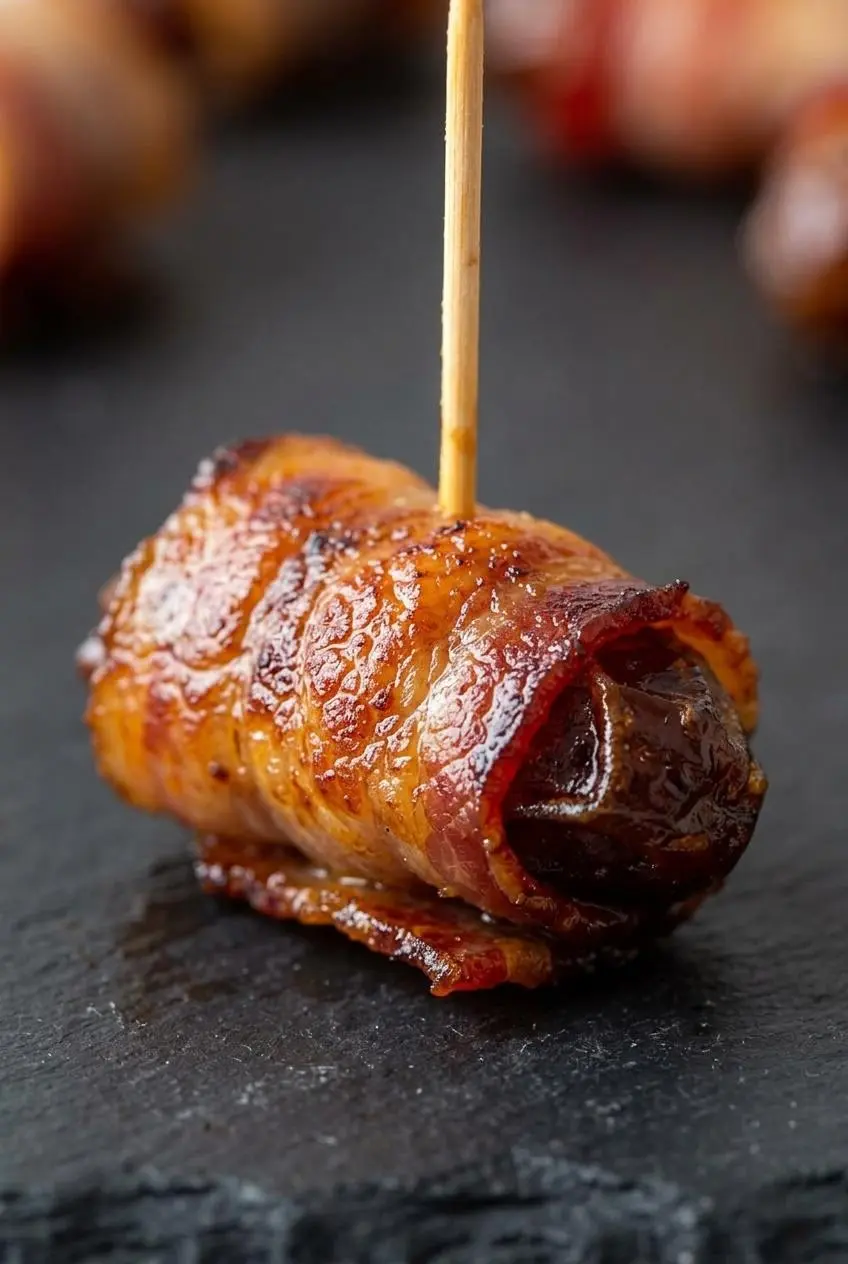
Grease pooling beneath the dates is a common reason the bottoms stay soft. Parchment makes cleanup convenient, while an oven-safe wire rack set inside a rimmed baking sheet lets fat drain away and exposes more of the bacon to hot air.
Use a rack specifically rated for oven use, not any cooling rack from the cupboard. Keep the rimmed sheet underneath to catch drips.
- Limp bottoms: Bacon sitting in rendered fat can stay soft underneath. Turn the dates halfway through cooking on parchment, or use the optional rack setup.
- Chewy overlaps: Multiple bacon layers cook slowly. Use only enough overlap to secure the wrap, and avoid winding a long strip around the fruit repeatedly.
- Dark fruit with pale bacon: The bacon may be too thick for the date size. Choose thinner slices next time or par-bake thicker ones.
- Leaking filling: Too much cheese can push out as it softens. Use a modest amount of chilled filling and bring the slit edges together before wrapping.
- Scorched toothpick ends: Long exposed ends can darken near a heating element. Use plain picks, soak them briefly, and avoid direct broiler heat.
How to Par-Bake Bacon for Maximum Crispness
Par-baking is an optional workaround for thicker bacon, not a required step for thin slices. It starts rendering the fat before the sweet fruit enters the oven.
Arrange the halved strips on a rimmed sheet, preferably on an oven-safe rack, and bake at 375°F for 6 to 8 minutes. Stop while they’re still flexible rather than crisp. Drain excess grease on paper towels and let the strips cool enough to handle before wrapping the dates.
Check the final bake closely because the bacon has already had a head start. Don’t par-bake it until rigid: brittle strips crack instead of wrapping neatly.
Popular Variations and Stuffing Ideas
Keep these additions optional and choose one flavor direction per batch. A filling changes the center’s texture, while a glaze adds sweetness to the outside.
- Almond crunch: Slip a whole roasted salted almond into each date cavity before wrapping for a firm, nutty contrast.
- Cheese filling: Add chilled goat cheese, cream cheese, or blue cheese for a creamy center that balances the fruit.
- Sweet smoky glaze: Brush on maple syrup with smoked paprika near the end of baking for a glossy finish.
For a separate sweet, nutty option on a date platter, try pistachio stuffed dates. They offer a different filling approach without changing this bacon appetizer.
Goat Cheese or Blue Cheese Stuffed
Cut a slit down one side of each pitted date and gently open the cavity. Spoon or pipe in a modest amount of chilled cheese, then press the fruit closed and wrap it with bacon.
Goat cheese brings tang, cream cheese gives a milder creamy center, and blue cheese adds a stronger salty flavor. Keep the filling below the opening rather than mounding it above the fruit. Cold cheese is easier to handle neatly, though it can still escape if you overfill the date.
Air Fryer Method
For an optional small-batch method, preheat the air fryer to 375°F. Arrange the wrapped dates in a single layer with space between them, then cook for 8 to 10 minutes, turning each piece halfway through.
Check for bubbling rendered fat and browned bacon edges before removing them. Air fryers vary, so inspect early and avoid crowding the basket. Leave enough room to turn the dates without catching their toothpicks on neighboring pieces.
Maple and Smoked Paprika Glaze
Mix pure maple syrup with smoked paprika and brush a light coating over the wrapped dates during the final 3 minutes of oven baking. This optional finish adds sweetness and smoky aroma.
Keep the coating thin and watch closely. The glaze sugars brown quickly, and a heavy layer can turn sticky or burn before the bacon finishes crisping.
Make-Ahead, Storage, and Reheating Instructions
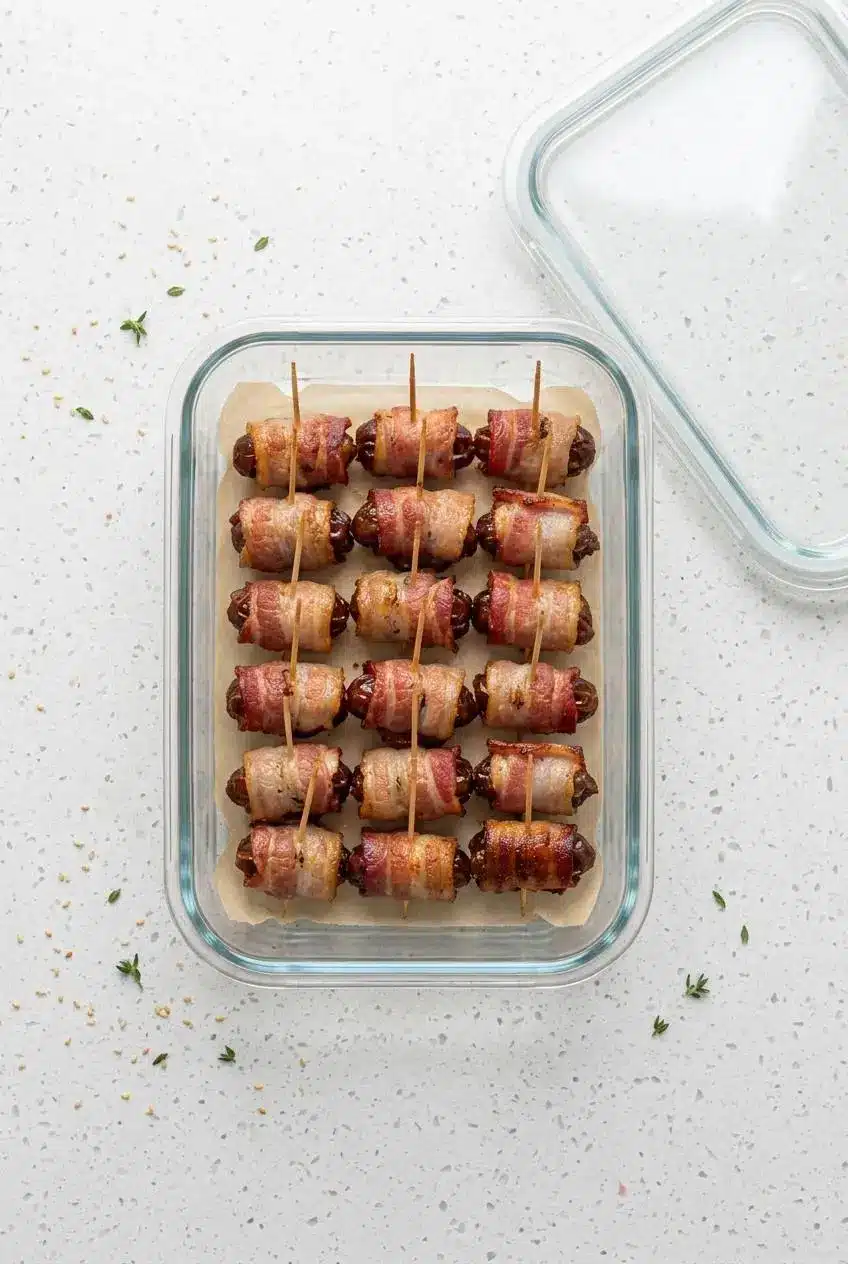
For the best texture, bake the dates close to serving. If you organize the assembly beforehand, keep the wrapped pieces covered and refrigerated while you finish your other preparations rather than leaving raw bacon on the counter.
Keep chilled fillings refrigerated until you need them, and wash your hands and work surface after handling raw bacon. Follow the bacon package’s handling and storage directions; this recipe doesn’t establish a separate extended storage window for assembled dates.
Refrigerate leftovers promptly in a covered container. Keep dipping sauces separate so they don’t soak into the bacon.
To reheat, arrange the dates with space around them in an oven or air fryer and warm until hot, checking frequently to avoid scorching the fruit. A rack helps excess moisture escape. The microwave can warm them, but it tends to soften the bacon rather than restore its crisp edges.
Serving Suggestions and Dip Pairings
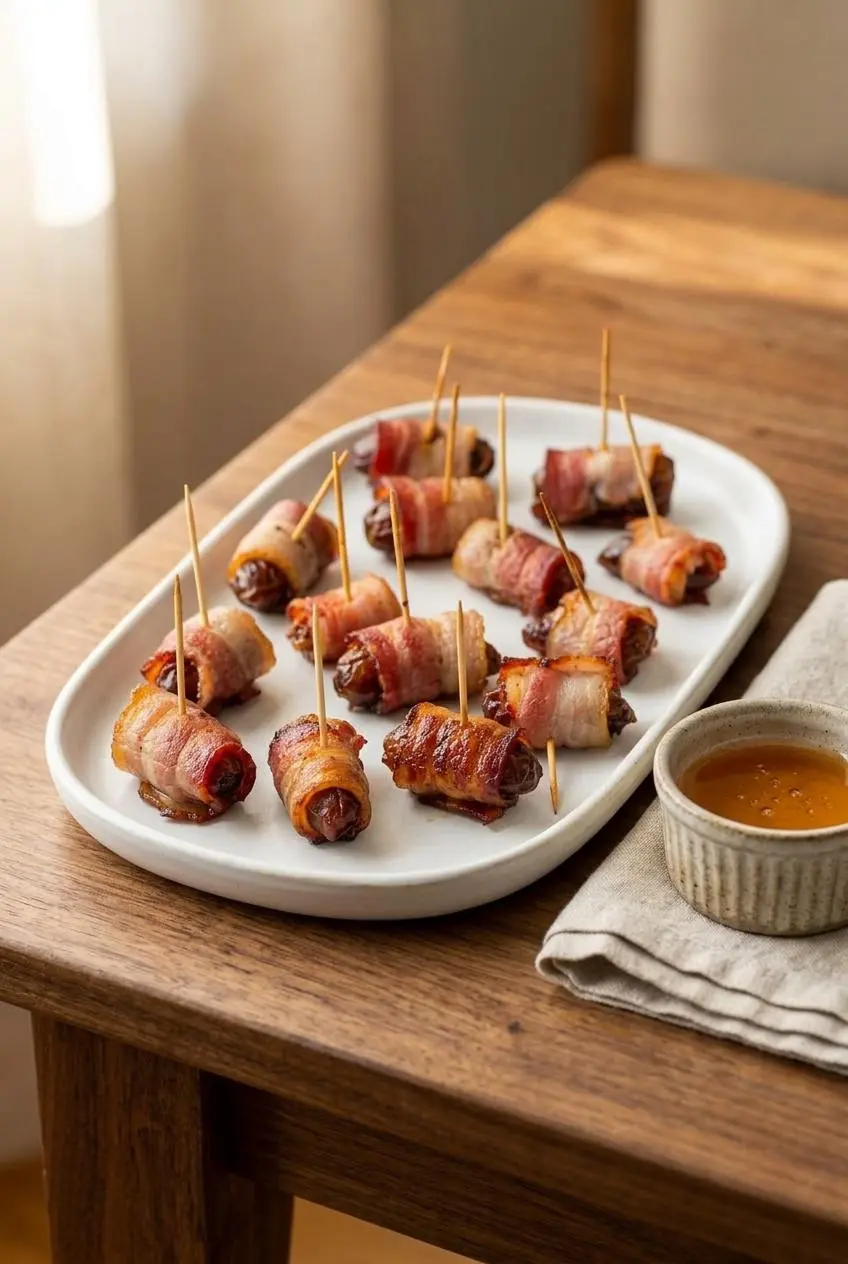
Serve the dates slightly warm instead of straight from the tray, since their centers hold heat. They’re flavorful on their own, so a dip is optional.
- Sweet heat: Offer sweet chili dipping sauce on the side, or add a light drizzle of warm hot honey.
- Appetizer board: Arrange them beside cheeses, crackers, and crisp vegetables for contrasting textures.
- Fresh contrast: Pair with sparkling water or citrus seltzer to balance the rich, sweet bites.
For a spicy companion on a finger-food spread, bacon wrapped jalapeno poppers provide a savory contrast to the dates.
Conclusion
Sweet dates and smoky bacon make a satisfying combination without needing a filling or glaze. Thin bacon, modest overlap, and attention to browning help the wrapper crisp before the fruit scorches.
Use an oven-safe rack if soft bottoms have been a problem, then try a cheese filling or maple finish when you want a change. Give the hot centers a brief rest before passing the platter.
Frequently Asked Questions
How Long Do You Cook Dates Wrapped in Bacon?
Bake them at 375°F for 12 to 15 minutes with thin-cut bacon. Look for browned, crisp edges and rendered fat, and check that the overlapping bacon has cooked through without burning the date tips.
Can You Make Bacon Wrapped Dates Ahead of Time?
You can organize the assembly before baking, keeping the wrapped dates covered and chilled while you complete your preparations. Bake close to serving for the best texture, and follow the bacon package’s storage directions rather than assuming an extended holding time.
Should I Use Medjool or Deglet Noor Dates?
Deglet Noor dates are a good choice for compact, unstuffed bites because they’re generally firmer and smaller. Medjool dates are softer and roomier, making them useful for optional cheese or almond fillings.
Can You Cook Bacon Wrapped Dates in an Air Fryer?
Yes. Use the optional air fryer method at 375°F for 8 to 10 minutes, turning halfway through. Keep the pieces in a single layer without crowding, and check early for crisp bacon and fruit edges that haven’t blackened.
Bacon Wrapped Dates

Equipment
- Baking tray
- Baking parchment paper
- Toothpicks
Ingredients
- 14 dates pitted
- 7 bacon strips cut in halves
- 14 toothpicks
Instructions
- Set the oven to 375°F/190°C and let it reach temperature. A fully heated oven helps the bacon begin rendering as soon as the tray goes in.
- Wind a half-strip of bacon snugly around each date, pin the overlap with a toothpick, and arrange the bundles on a parchment-lined baking sheet. Leave space between the pieces so the bacon edges remain exposed to the oven heat.
- Cook the tray for 12 to 15 minutes, checking toward the end and removing it when the bacon has browned and crisped. Look for sizzling rendered fat and dark golden bacon edges while keeping the date tips free of blackened spots.
- Transfer the finished dates to a serving dish and offer them warm or cold. The fruit should feel tender inside its browned bacon wrapper.