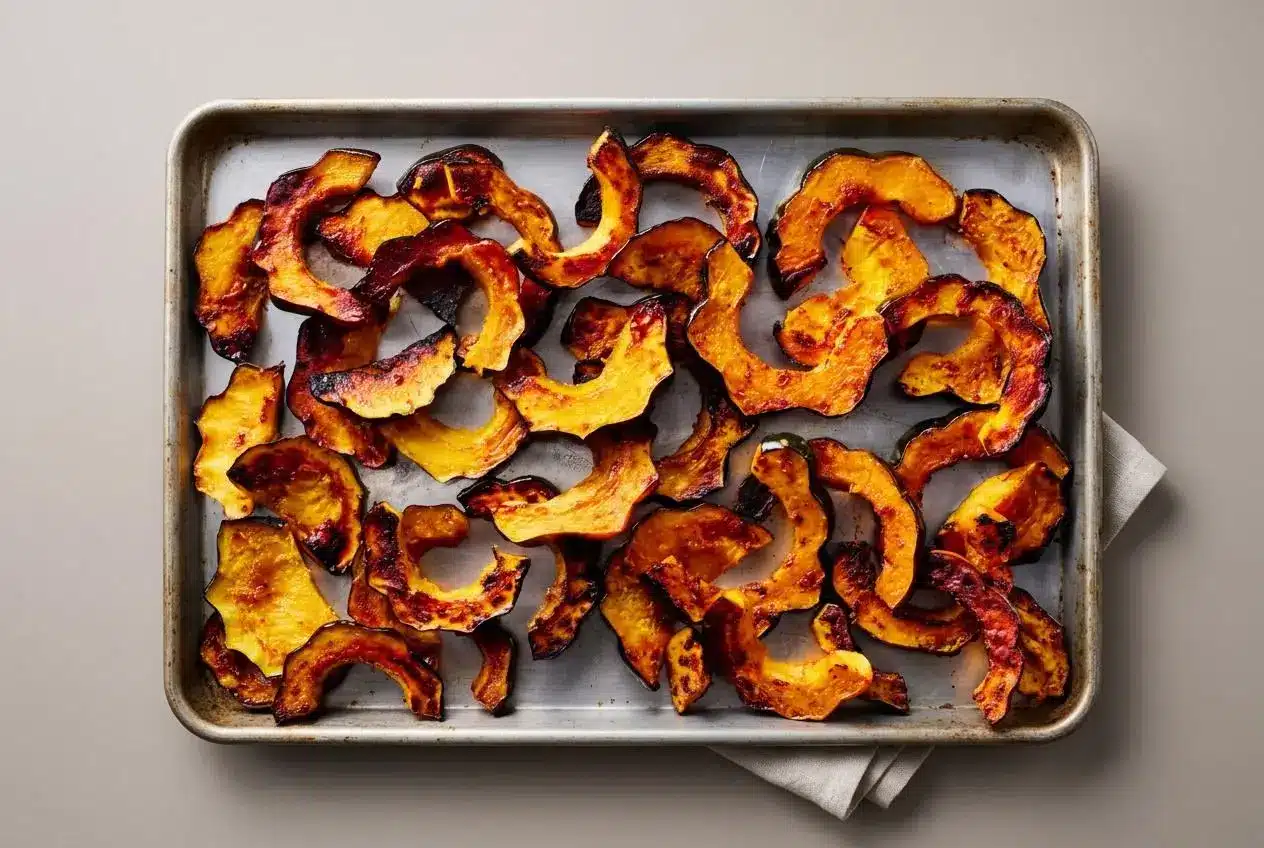
Roast acorn squash at 450°F in 3/4-inch slices for 15 to 20 minutes, until the flesh is tender and the cut sides are deeply caramelized. Leave the skin on because it softens nicely in the oven.
Acorn squash turns buttery sweet and nutty when its ridges meet a hot bare sheet pan. Choose the savory garlic-paprika seasoning or the warm brown sugar-cinnamon version for crisp edges and a tender center.
The kitchen starts to smell especially cozy once the butter and brown sugar turn toasty and fragrant. Those browned undersides are worth waiting for.
Set the sheet pan in the oven while it preheats if you want an extra-strong sear on the first side of the squash.
Selecting, Storing, and Safely Cutting Acorn Squash
A stable squash and a secure cutting board make the prep work much less stressful. Acorn squash has a thick, ridged rind, so take a moment to create a flat surface before bringing out the knife.
How to Pick a Ripe Acorn Squash
Choose a squash with dull, deep green skin and a modest orange patch. A little orange is normal, but a squash that is mostly orange can have stringier flesh. Skip squash with soft spots, deep cuts, or a loose stem.
It should feel heavy for its size, with a firm rind and an intact woody stem. A medium squash weighing about 1 1/2 lb. fits this roasting method well and gives slices that cook at the same pace.
The Microwave Trick for Easy Slicing
For a slightly softer rind, microwave the whole squash for 1 to 2 minutes, then let it sit briefly until it is comfortable to handle. This does not cook the flesh through, but it can make the first cut easier to control.
Place a damp paper towel under the cutting board so it cannot slide. Trim a thin sliver from one side of the squash to make a flat base, stand it securely on that base, and cut down through the center with a sharp chef’s knife. Scoop out the seeds and fibrous strands before slicing.
Long-Term Pantry Storage
Keep whole, uncut squash in a cool, dry, dark place with good airflow. Avoid the refrigerator for raw whole squash, since damp cold conditions can encourage soft spots. Once cut, cover the exposed flesh and chill it until you are ready to cook.
Key Ingredients and Seasoning Choices
Each ingredient supports the finished squash: butter adds richness and browning, brown sugar deepens caramel flavor, salt sharpens sweetness, and spices bring warmth or savory contrast.
Main
- 1 medium acorn squash (about 1 1/2 lb.)
Savory Seasoning
- 3 tbsp. unsalted butter, melted
- 1 tbsp. light brown sugar
- 1 1/2 tsp. kosher salt
- 1 tsp. garlic powder
- 1/2 tsp. paprika
- 1/4 tsp. freshly ground black pepper
Sweet Seasoning
- 2 tbsp. light brown sugar
- 1/2 tsp. kosher salt
- 1/4 tsp. ground cinnamon
The rind is edible and becomes more tender as it roasts, so peeling is unnecessary. Unsalted butter carries the seasonings over every ridge, while its milk solids help the edges brown. Brown sugar adds a molasses-like depth that works especially well with the squash’s natural sweetness.
For a plant-based version, use melted extra-virgin olive oil for a peppery finish or refined coconut oil for a subtle sweetness. Keep the savory path with garlic powder, paprika, salt, and pepper, or choose the sweet blend of brown sugar, salt, and cinnamon.
I run a spoon firmly around the inner cavity to remove the wet fibers while keeping the sweet golden flesh intact.
How to Make Roasted Acorn Squash
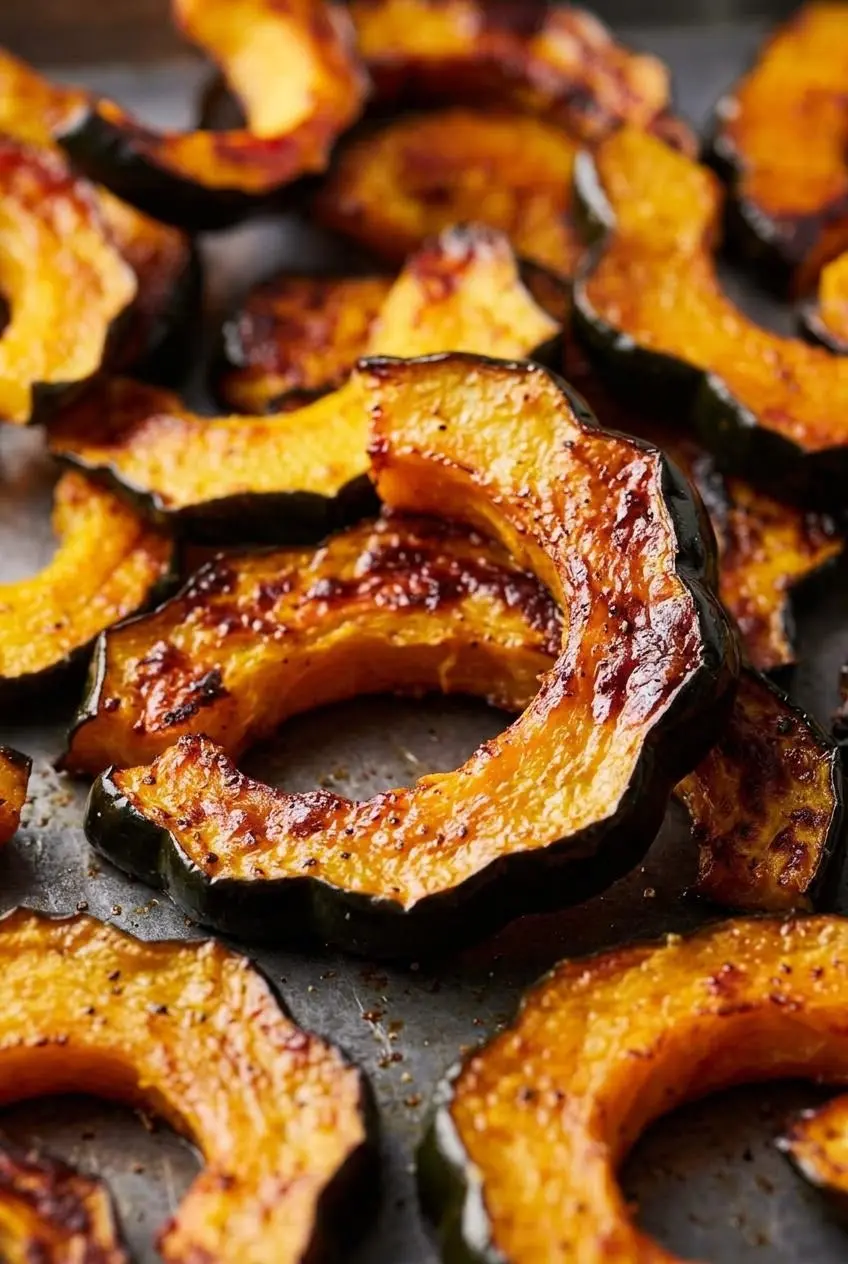
This high-heat method gives the squash enough time to soften while concentrating its natural sugars on the pan-facing side. A dark metal sheet pan generally browns more aggressively than a pale, reflective one, so check it a little early if your pan runs hot.
- Position an oven rack in the center and heat the oven to 450°F, then halve, seed, and cut the unpeeled squash crosswise into 3/4-inch slices; place the slices in a large bowl.
Keep the slices close in thickness so their centers turn tender at the same time. - Whisk the melted butter with the savory seasoning ingredients, or with the sweet seasoning ingredients, then toss the squash until each piece is coated.
The butter should lightly gloss the ridges without leaving dry patches of seasoning. - Arrange the slices cut-side down on a bare sheet pan in one uncrowded layer and roast for 15 to 20 minutes.
Look for deep golden-brown blistering underneath and flesh that yields easily when pierced with a fork. - Lift and turn the slices with a thin metal spatula, then let them rest for 5 minutes before serving.
The caramelized surface should release cleanly, and the melted sugar will settle slightly as the squash cools.
The bare pan matters here. Parchment makes cleanup easier, but direct contact with metal gives the cut sides their best chance to develop a rich browned crust. If a slice sticks, give it another moment rather than forcing it up too soon.
How Shape and Cut Affect Cooking Time
Cutting style changes both the presentation and how much surface can caramelize. Thin crescents are the fastest route to browned edges, while larger pieces hold their shape for filling and serving at the table.
Traditional Baked Acorn Squash Halves
Halves make a handsome edible bowl for grain, sausage, or vegetable fillings. Roast them cut-side up at 400°F until the flesh is fully tender, usually 35 to 45 minutes, with seasoned butter in the cavity to baste the interior as it melts.
If a half wobbles on the pan, shave a very thin piece from the rounded underside before roasting. Remove only enough skin to create stability, not enough to expose a large area of flesh.
Slices, Rings, and Diced Cubes
- Scalloped rings: Crosswise rings roast in about 20 minutes and make a striking arrangement on a platter.
- 3/4-inch crescents: These roast in 15 to 20 minutes at 450°F and offer the most browned edges per bite.
- 1-inch cubes: Cubes need roughly 25 minutes and work well stirred into warm salads or a nourishing buddha bowl.
Cut cubes as evenly as possible, since small pieces can darken before larger ones soften. For rings, remove seeds first, then slice crosswise through the squash’s natural ridges.
Flavor Variations and Seasoning Ideas
These optional finishes offer different directions without changing the main roasting method. Start with well-spaced squash on the pan, then add delicate toppings late enough to keep them from scorching.
Classic Brown Sugar and Cinnamon
The sweet seasoning creates a familiar holiday-style side with buttery caramel notes. Add a light grating of fresh nutmeg after roasting if you want a deeper warm-spice aroma without overpowering the squash.
For a maple-cinnamon finish, brush hot slices with pure maple syrup and a little melted butter, then add cinnamon and a small pinch of salt. The salt keeps the sweetness from tasting flat.
Savory Garlic and Smoked Paprika
The savory seasoning balances the squash’s sweetness with garlic, pepper, and paprika. Sweet paprika keeps the flavor gentle, while smoked paprika gives the squash a deeper, campfire-like character.
Serve this version with roast chicken, pork chops, or steak. The browned butter and paprika also make it a good match for a hearty weeknight plate.
Parmesan, Toasted Hazelnuts, and Sage
For a more savory finish, add finely grated Parmigiano Reggiano, chopped fresh sage, and crushed hazelnuts during the final moments of roasting. Watch closely as the cheese melts and the nuts toast, then pull the pan when the topping smells fragrant and looks lightly golden.
This combination brings salty richness, herbal freshness, and crunch to the soft squash. It is especially nice when the main meal is simply roasted poultry or a pork roast.
Maple Rosemary Brown Butter Finish
For an optional finishing sauce, cook butter until it foams and smells nutty, then stir in finely minced rosemary and pure maple syrup. Brush it over hot wedges and finish with flaky sea salt for a sweet-savory glaze.
Keep the brush light. Too much syrup can mask the roasted flavor and soften the crisp pan-seared edges.
Troubleshooting, Storage, and Reheating Cues
Most roasted squash problems come down to trapped moisture or uneven cuts. A hot oven and enough space between slices do more for texture than adding extra seasoning ever will.
Preventing Soggy Texture and Uneven Browning
- Mushy slices: Low heat encourages moisture to collect around the squash. Roast at 450°F for this sliced method so the surface dries and browns before the center collapses.
- Pale undersides: A crowded pan traps steam. Leave about 1/2 inch of room around each slice and keep the cut sides against bare metal.
- Uneven tenderness: Mixed slice thickness is usually the culprit. Aim for consistent 3/4-inch pieces, especially near the stem end where the flesh is denser.
- Tough skin: The rind needs enough time at high heat to soften. Check the thickest slice with a fork before serving rather than judging by color alone.
Storing and Reheating Leftovers
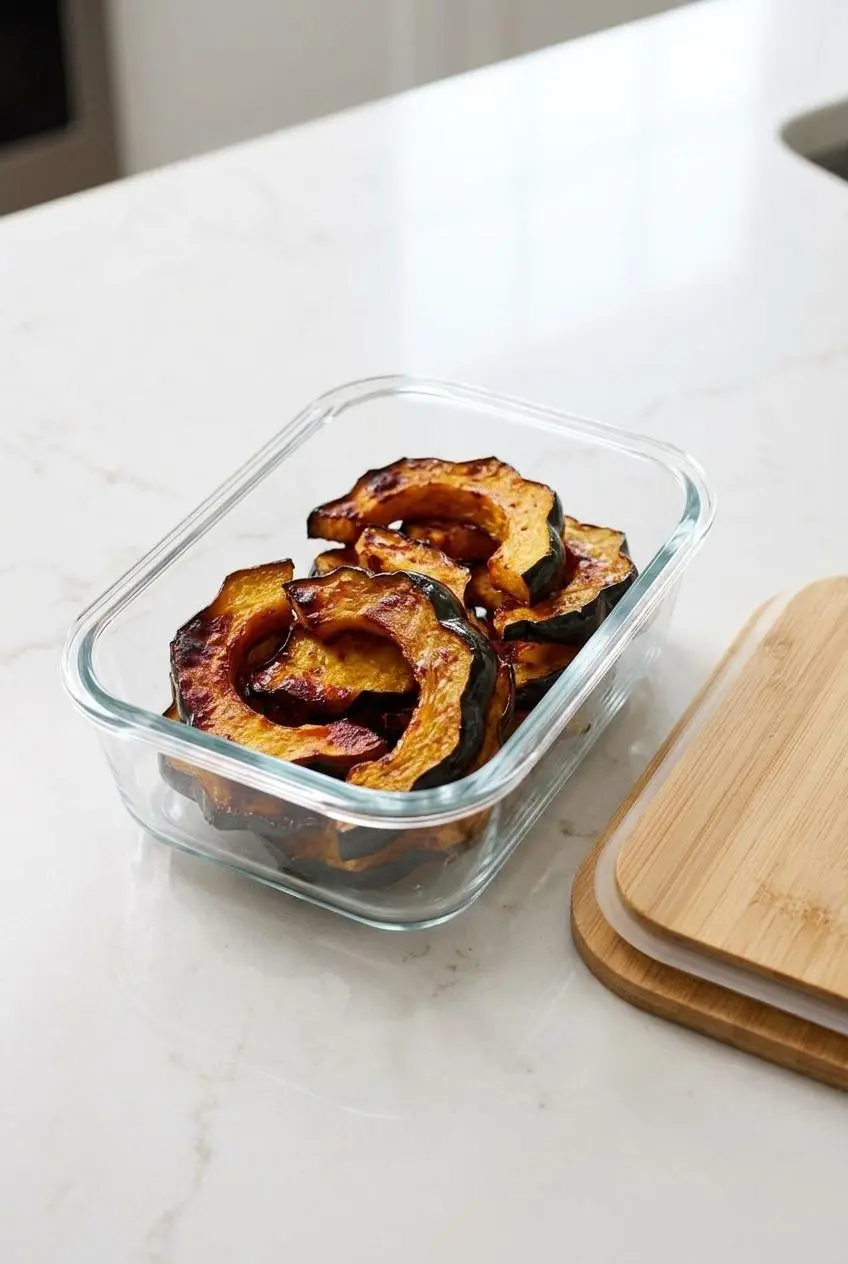
Cool leftover roasted squash before placing it in an airtight glass container and refrigerate it promptly. Reheat only the portion you plan to eat, using a hot oven or air fryer to bring back some browned edge texture. A microwave works in a pinch, but it tends to make the crust softer and chewier.
If leftover squash becomes very soft, blend it into a warm butternut squash soup or stir it into a grain bowl. The caramelized flavor still adds depth even when the original crisp edges are gone.
What to Serve with Roasted Acorn Squash
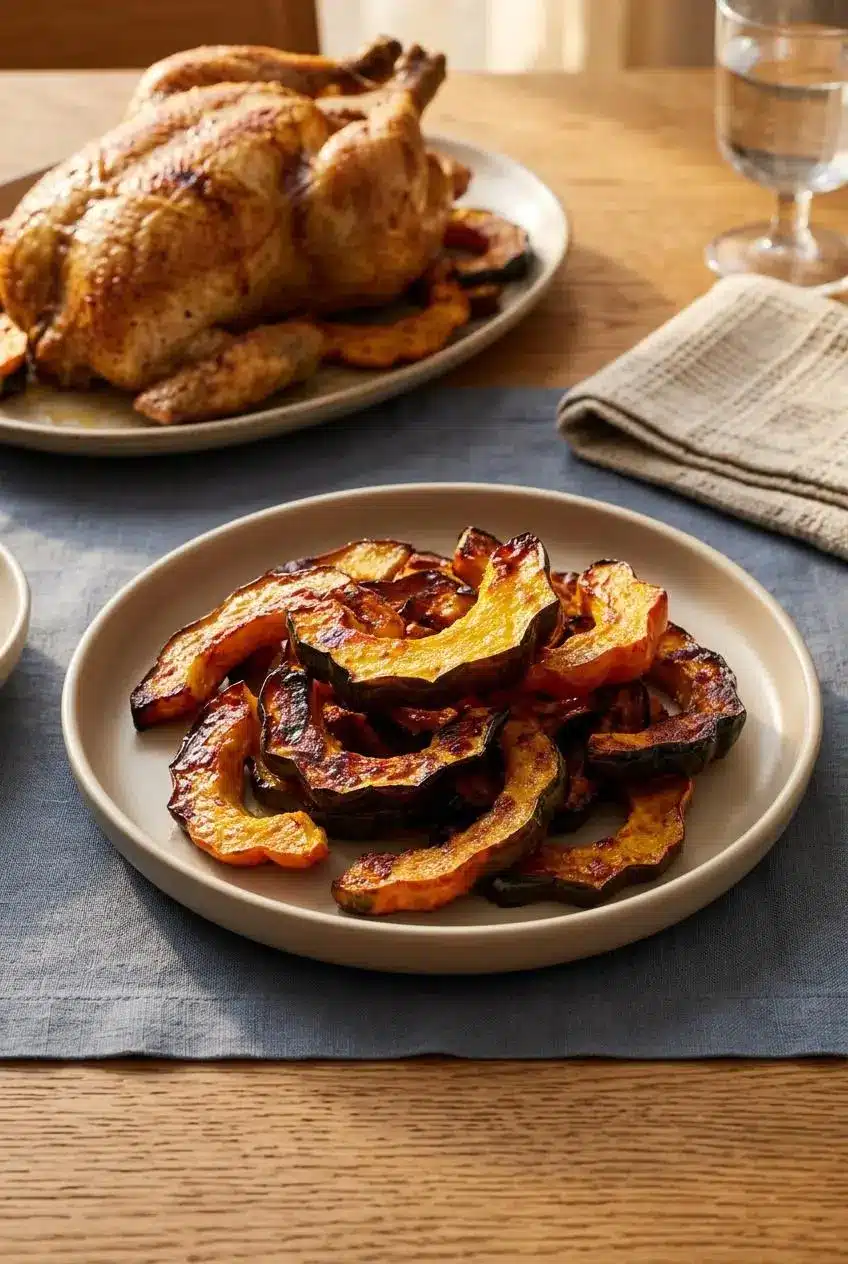
Roasted squash can anchor a cozy dinner plate or add sweetness to a lighter meal. Match the seasoning style to the rest of the meal for the most balanced result.
- Serve savory garlic-paprika slices beside roast chicken, grilled pork chops, or savory roast beef.
- Pair brown sugar-cinnamon squash with roasted turkey and a tart cranberry relish.
- Add warm cubes to baby kale with goat cheese, dried cranberries, and toasted pecans.
- Use roasted halves as bowls for farro, wild rice, sautéed greens, or a savory sausage filling.
For a dinner with several rich components, the savory squash blend is usually the better fit. Choose the cinnamon version when you want the vegetable to play a softer, sweeter role alongside turkey or ham.
Conclusion
High-heat roasting transforms sliced acorn squash into a tender, caramelized side with a nutty, buttery sweetness. Leave the edible skin on, use a bare metal pan, and give every slice enough room to brown.
Choose cinnamon and brown sugar for a sweeter plate or garlic and paprika for a savory one. Either way, those golden edges will make dinner feel a little more special.
Frequently Asked Questions
Do You Have to Peel Acorn Squash Before Roasting?
No. The skin is edible and softens during high-heat roasting, especially on 3/4-inch slices. Peeling the hard ridges before cooking is unnecessary and can make prep more difficult. If you do not enjoy the rind’s texture, scoop the cooked flesh away from it after roasting.
How Do You Know When Acorn Squash Is Done Cooking?
The thickest section should yield easily to a fork or the tip of a paring knife. It should feel tender without turning watery or collapsing into mush. Check the pan-facing side too. Deep golden-brown blistering and caramelized cut edges signal that the squash has roasted properly.
Why Is My Roasted Acorn Squash Mushy Instead of Caramelized?
Mushy squash usually means the oven was not hot enough or the pan was too crowded. Both issues trap moisture and make the squash steam instead of roast. Use a 450°F oven, a bare metal sheet pan, and space between the slices. Keep the cut sides down until they release easily from the pan.
Can You Eat the Seeds From an Acorn Squash?
Yes. Rinse away the stringy pulp, dry the seeds thoroughly, toss them with olive oil and salt, and roast them at 300°F for 15 to 20 minutes. Stir once or twice and remove them when they smell nutty and crisp. They make a crunchy snack or a good topping for soups and salads.
Acorn Squash

Equipment
- bare metal sheet pan
- Chef’s knife
- thin metal spatula
- Mixing Bowl
Ingredients
Main
- 1 medium acorn squash (about 1 1/2 lb.)
Savory Seasoning
- 3 tbsp. unsalted butter melted
- 1 tbsp. light brown sugar
- 1 1/2 tsp. kosher salt
- 1 tsp. garlic powder
- 1/2 tsp. paprika
- 1/4 tsp. freshly ground black pepper
Sweet Seasoning
- 2 tbsp. light brown sugar
- 1/2 tsp. kosher salt
- 1/4 tsp. ground cinnamon
Instructions
- Position an oven rack in the center and heat the oven to 450°F, then halve, seed, and cut the unpeeled squash crosswise into 3/4-inch slices; place the slices in a large bowl. Keep the slices close in thickness so their centers turn tender at the same time.
- Whisk the melted butter with the savory seasoning ingredients, or with the sweet seasoning ingredients, then toss the squash until each piece is coated. The butter should lightly gloss the ridges without leaving dry patches of seasoning.
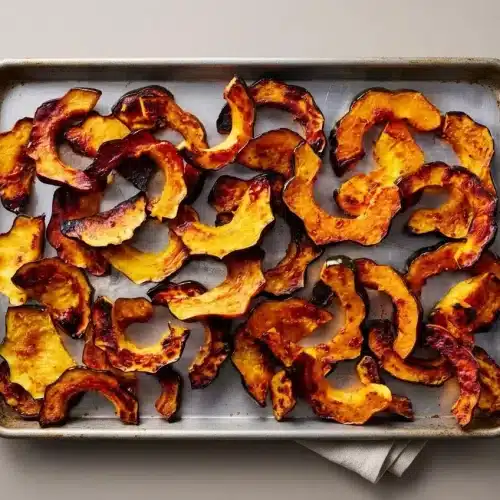
- Arrange the slices cut-side down on a bare sheet pan in one uncrowded layer and roast for 15 to 20 minutes. Look for deep golden-brown blistering underneath and flesh that yields easily when pierced with a fork.
- Lift and turn the slices with a thin metal spatula, then let them rest for 5 minutes before serving. The caramelized surface should release cleanly, and the melted sugar will settle slightly as the squash cools.