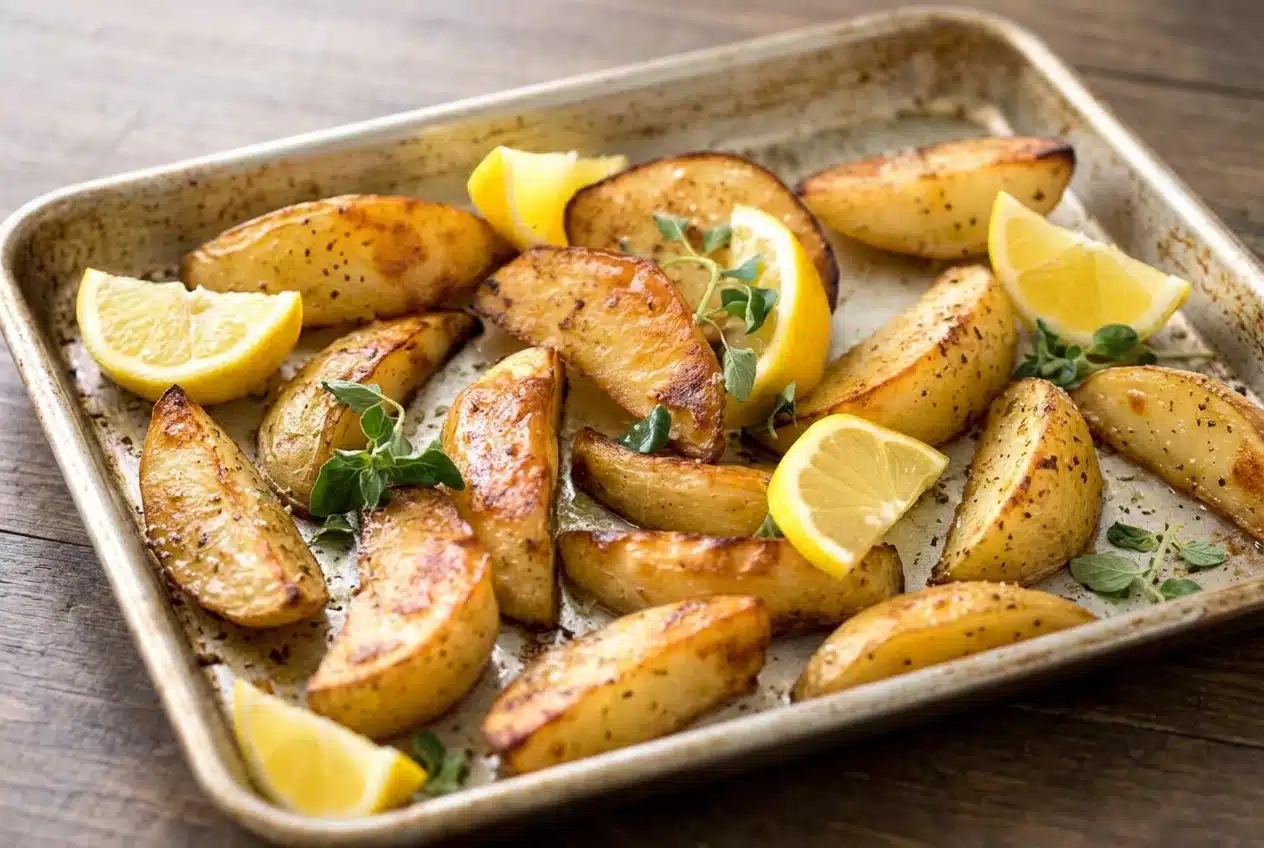
Greek lemon potatoes, or patates lemonates, roast in lemon, garlic, oregano, olive oil, and broth until tender, then finish with golden edges. The liquid seasons the wedges as it reduces, giving them creamy centers and a glossy, garlicky finish.
Unlike dry-roasted wedges, greek lemon potatoes take on flavor while they soften in the roasting pan. Expect bright citrus, fragrant oregano, and tender potato beneath lightly crisped edges.
The real payoff comes from managing the pan juices, especially once the broth disappears. A separate tray gives the potatoes room to brown while protecting the garlic-rich finishing drizzle. Watch for that shimmer of oil.
Choose a roasting pan that lets the wedges sit in a single layer rather than piling them on top of one another.
Key Ingredients and Potato Selection
Potatoes provide the creamy texture, broth supplies savory moisture, and olive oil supports browning. Lemon brings acidity, garlic and oregano add aroma, and salt sharpens the flavors. Lemon wedges and fresh oregano give the finished dish a bright accent; use the amounts below.
- 1.2 kg / 2.5lb potatoes ((Aus: Desiree, US: Yukon Gold, UK: Maris Piper)
- 1 1/2 cups chicken stock/broth (, low sodium
- 1/2 cup olive oil
- 1/3 cup lemon juice
- 5 garlic cloves (, finely grated using microplane
- 1 tbsp dried oregano
- 2 tsp salt
- Lemon wedges, fresh oregano leaves
Choosing and Prepping the Best Potatoes
Yukon Gold potatoes offer a useful balance: creamy flesh that takes on the lemon-garlic broth while retaining enough structure for turning. Desiree and Maris Piper are the listed regional alternatives.
- Russets: Their fluffier flesh makes a softer wedge, so handle them gently as they become tender.
- Red potatoes: Their waxier texture holds its shape well but gives a firmer, less broth-infused bite.
- Baby potatoes: These vary by variety, and their proportion of skin to exposed flesh can produce a different result from peeled wedges.
The method below uses peeled potatoes. Peeling exposes more flesh to the seasoned liquid and gives a smooth exterior. Thin skins are an optional rustic choice, but they change the texture. Whichever potato you choose, consistent thickness matters more than making every wedge look identical.
Lemon, Olive Oil, Broth, and Aromatics
Broth and oil do different jobs. Broth provides the moist cooking environment that tenderizes and seasons the potatoes; olive oil remains as that moisture reduces, helping the exposed surfaces brown. Reducing the oil changes that balance.
Low-sodium chicken broth leaves more control over seasoning as the liquid concentrates. Lemon supplies tang, finely grated garlic spreads through the pan juices, and dried oregano contributes its earthy, distinctly Mediterranean aroma.
I’d choose freshly squeezed lemon juice here for its clean citrus flavor, and an extra virgin olive oil whose taste you enjoy.
How to Make Greek Lemon Potatoes
The roasting happens in two stages: first the wedges soften in seasoned liquid, then their surfaces brown as moisture recedes. This makes enough for 5 servings.
Braising in the Lemon-Garlic Broth
Roast uncovered throughout this method. The early stage needs evaporation as well as tenderness, so follow the liquid cue rather than expecting browned edges immediately.
- Set the oven to 200°C/390°F, or 180°C for a fan oven.
The oven should reach temperature before the roasting pan goes in. - Remove the potato skins, then divide large potatoes into wedges about 3 cm / 1.2 inches thick and medium potatoes into thirds.
Aim for similar thicknesses so the pieces soften evenly. - Combine the potatoes, broth, olive oil, lemon juice, grated garlic, dried oregano, and salt directly in a roasting pan, tossing to distribute everything.
The wedges should look evenly coated, with seasoned liquid surrounding them. - Bake for 20 minutes, turn the wedges, then continue for another 25 to 30 minutes.
By the end of this stage, most of the broth should have soaked in or evaporated, leaving predominantly oil around the potatoes. - For the optional separate-tray crisping stage, move the wedges to another tray and spoon oil from the tilted roasting pan over them, leaving the garlic-rich juices behind.
A little juice carried over with the oil is fine, and the potato surfaces should look glossy. - Continue roasting for 35 to 40 minutes, turning the potatoes once or twice during this stage.
Look for golden surfaces with lightly crisped edges rather than a thick, crunchy crust. - If desired, place the pan holding the garlic juices back in the oven during the final 5 to 10 minutes of roasting.
The juices should concentrate and the garlic should turn golden, not dark brown. - Arrange the potatoes on a platter and coat them with the reduced garlic juices, either by drizzling or by tossing them in the pan, then add lemon wedges and fresh oregano if desired.
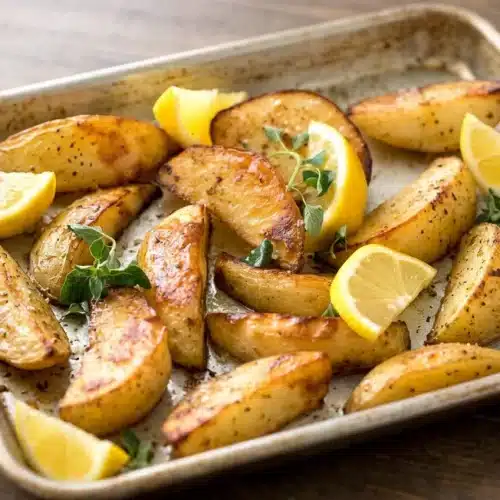
The finished wedges should have a glossy coating with golden edges still visible.
Crisping the Edges and Finishing With Pan Juices
The separate tray is optional, but it gives you more control over browning. The potatoes can continue roasting without leaving finely grated garlic exposed to heat for the entire finishing stage.
Keep the garlic juices separate until serving. Their concentrated lemon, oregano, and savory flavor supplies the finishing coat, so they need to taste fragrant rather than scorched.
Tips for Crispy Edges Without Burnt Garlic
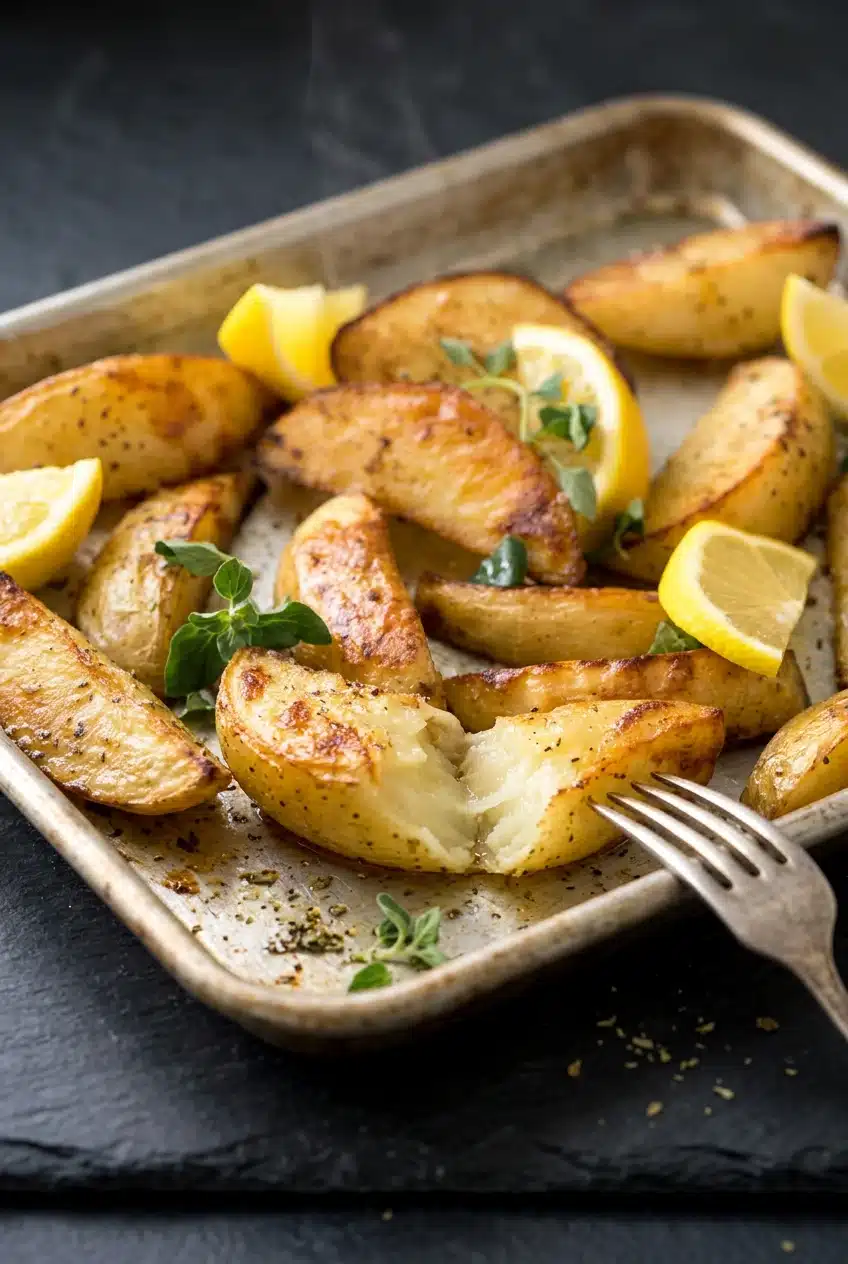
A tender, flavor-filled center is the goal here. The edges can become golden and lightly crisp, but broth-braised wedges won’t develop the same crust as potatoes roasted dry.
Preventing Scorched Pans and Bitter Garlic
- Garlic turns bitter: Once the watery liquid recedes, fine garlic can darken quickly in the remaining oil; use the optional tray transfer to separate the potatoes from those juices.
- The pan develops dark patches: Concentrated lemon juice and garlic can scorch where the pan runs dry; watch closely as a pool of broth changes to mostly shimmering oil.
- Wedges tear during turning: Their surfaces may not have released yet; follow the turning stages and ease a spatula underneath rather than pulling at a stuck edge.
- The finishing juices darken: Reduction has gone beyond fragrant and golden; don’t scrape blackened residue into the serving drizzle.
Fixing Soggy or Unevenly Cooked Wedges
- Pale, wet surfaces: Crowding traps moisture between the potatoes; arrange the wedges in a single layer with room around them.
- Some pieces stay firm: Uneven thickness causes uneven cooking; cut consistent wedges rather than mixing thin slivers with large chunks.
- Little browning despite tenderness: Broth may still surround the potatoes; check the reduction cue before expecting crisp edges.
Parboiling, soaking, and covered-then-uncovered roasting belong to other approaches. They aren’t part of this method, which relies on uncovered cooking to soften the potatoes and reduce the broth.
Easy Variations and Flavor Additions
Keep these optional ideas separate from the measured ingredients above. Each shifts the flavor or texture without being necessary for the lemon-garlic result.
Mustard-Emulsified and Feta Upgrades
Mustard leans into tangy, restaurant-style flavor, while feta and herbs bring salty richness and freshness. Choose the direction that suits the rest of the meal.
Mustard-Emulsified Marinade (Dijon or Yellow Mustard)
Optional Dijon offers sharper mustard flavor; yellow mustard has a rounder, familiar tang. Either suggests a more cohesive mustard-style lemon-oil coating, distinct from the mixture used above.
Crumbled Feta and Fresh Herb Finish
Crumbled feta with parsley or dill makes an optional serving finish with a salty, creamy contrast. Parsley tastes clean and grassy, while dill adds a more pronounced herbal note.
Optional Herb and Spice Additions
- Fresh lemon zest: An optional finishing accent for citrus aroma without another splash of juice.
- Fresh herbs: A brighter, greener contrast to the roasted garlic and dried oregano.
- Thyme or rosemary: A woodsy aromatic direction, especially alongside lamb.
- Paprika: A warmer flavor and deeper color, with a smoky note if you choose smoked paprika.
Unpeeled Wedges or Baby Potato Sheet-Pan Shortcut
Skin-on wedges and baby potatoes offer a rustic alternative with less peeling. Treat the baby-potato sheet-pan idea as a different texture choice, not a guaranteed faster version: less exposed flesh can mean lighter broth infusion, and a shallow pan changes evaporation.
Dietary Adaptations and Ingredient Swaps
The chicken broth determines the main dietary distinction, while packaged broth and optional toppings deserve a label check.
Vegan and Vegetarian Broth Options
A plant-based direction keeps the lemon, olive oil, garlic, and oregano profile. The choice between stock and water mainly changes savory depth.
Vegetarian and Vegan Broth Swap (Vegetable Stock or Water)
Vegetable stock or water can replace the chicken broth as an optional adaptation. Vegetable stock contributes its own seasoning; water leaves the potato, lemon, and garlic flavors more prominent. Confirm that the stock and any toppings meet your vegetarian or vegan requirements.
Gluten-Free and Dairy-Free Checks
No flour or dairy appears in the measured preparation, but check the broth label before describing the finished dish as gluten-free or dairy-free. Look for gluten-free certification when that distinction matters.
Optional feta changes the dairy-free status. Plant-based feta is another topping direction, but its ingredients still need checking against your dietary needs.
What to Serve With These Potatoes
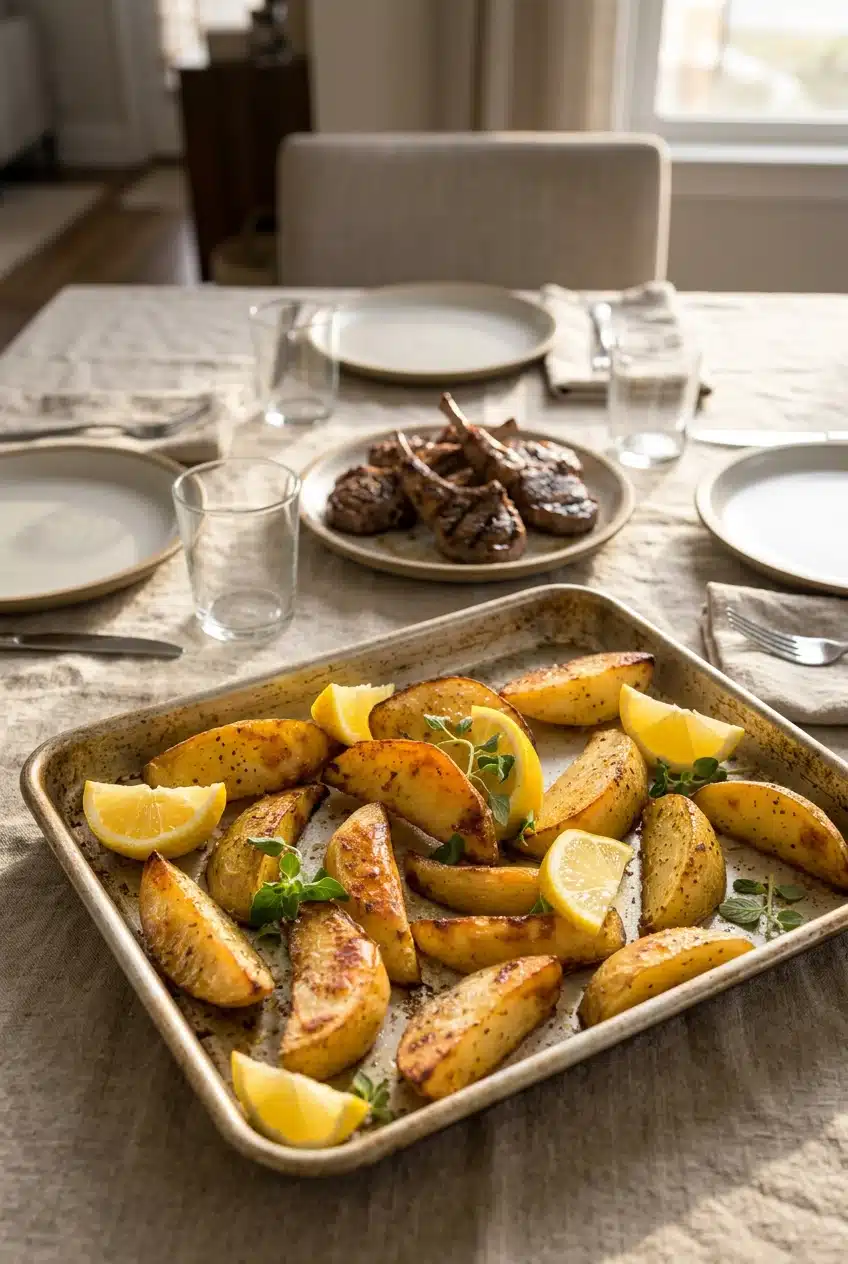
These tangy wedges work especially well beside savory mains and fresh, crunchy salads.
- Chicken or souvlaki: Pair with this lemon chicken recipe or skewered souvlaki for a citrus-and-herb dinner.
- Lamb: Grilled lamb chops or roasted leg of lamb balance the potatoes’ bright acidity.
- Fish: Baked or grilled salmon and white fish make lighter main-course partners.
- Vegetarian mains: Stuffed vegetables or a chickpea salad add substance without competing with the lemon-garlic flavor.
- A Greek spread: Add horiatiki, pita, and dips such as tzatziki, melitzanosalata, or tirokafteri.
Make-Ahead, Storage, and Reheating Tips
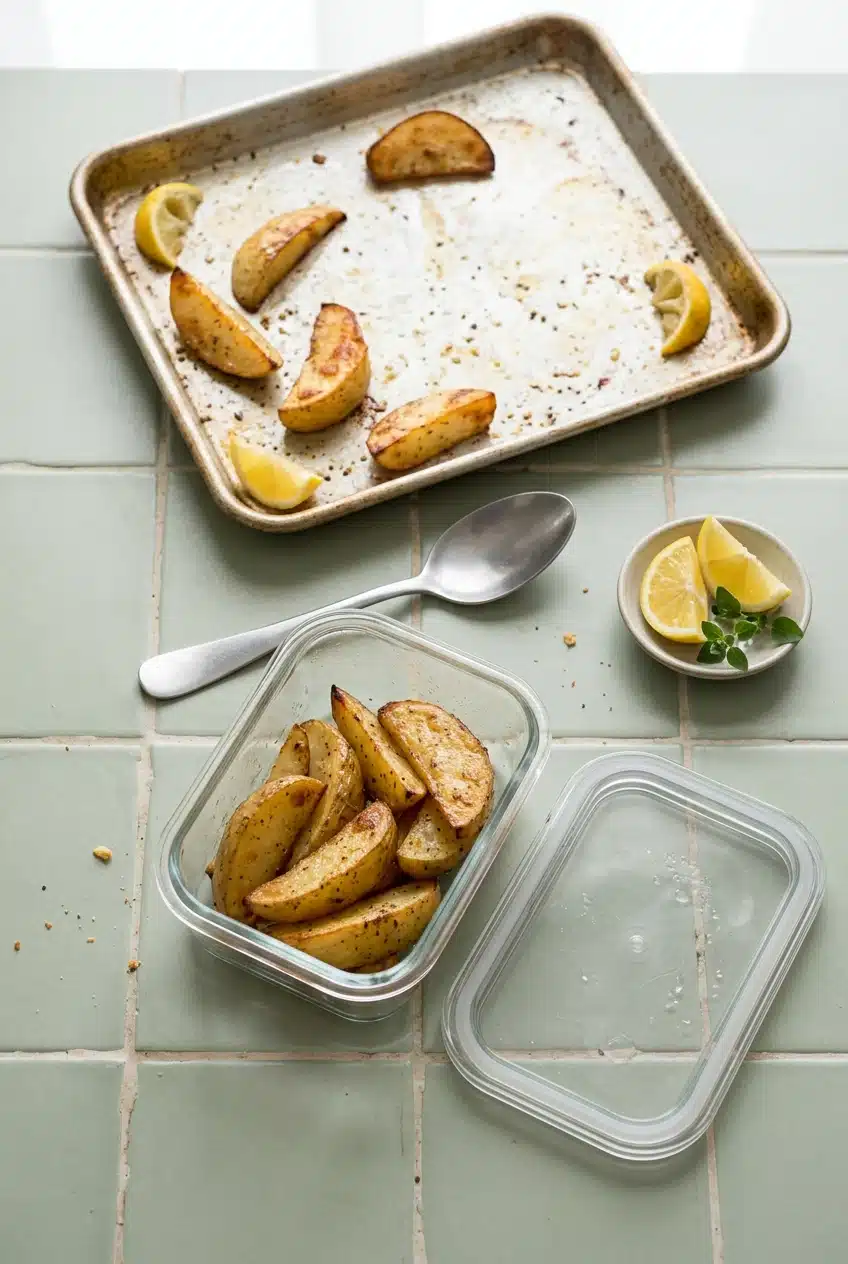
Plan to finish the roasting near serving time for the clearest contrast between tender centers and golden edges.
- Advance planning: Gather the ingredients and arrange your roasting pans before starting; keep the potato preparation tied to the cooking session rather than relying on an unverified holding time.
- Leftover storage: Refrigerate leftovers promptly in a covered container, and keep fresh garnishes separate where practical.
- Reheating: An oven or air fryer is an option when exterior texture matters; avoid crowding and check that the potatoes heat thoroughly without letting the garlic coating darken.
Don’t expect reheating to reproduce freshly roasted edges exactly. Optional fresh lemon or herbs can brighten the serving, but they don’t replace proper chilled storage.
Final Thoughts
The appeal is in the combination: tender potatoes seasoned with lemon-garlic broth, golden edges, and concentrated pan juices.
Watch for the broth to give way to shimmering oil, then keep a close eye on the garlic. Those cues help you bring a glossy, flavorful platter to the table.
Frequently Asked Questions
What Kind of Potatoes Are Best for Greek Lemon Potatoes?
Yukon Gold is the listed US choice for creamy centers and wedges that hold together. Russets give a fluffier result, while red potatoes generally stay firmer.
Do I Need to Peel the Potatoes Before Roasting?
Yes, the method above uses peeled potatoes for exposed flesh and a smooth texture. Thin skins are an optional rustic variation, with a different exterior texture.
Why Did My Garlic or Pan Bottom Burn, and How Can I Avoid It?
Garlic and concentrated lemon juices can scorch after the broth evaporates. Use the optional separate tray for crisping, and watch the garlic juices closely during their shorter reduction.
Can I Make Greek Lemon Potatoes Vegan or Gluten-Free?
Vegetable stock or water is an optional alternative to chicken broth for a plant-based version. Check broth and topping labels for vegan suitability or gluten-free certification as needed.
Are Greek Lemon Potatoes Meant to Be Super Crunchy?
No, expect tender, broth-seasoned centers with golden, lightly crisped edges. The moist cooking stage creates a different texture from dry-roasted or deep-fried potatoes.
How Should I Store and Reheat Leftover Greek Lemon Potatoes?
Keep leftovers covered and refrigerated promptly, with fresh garnishes separate when practical. Reheat thoroughly in an oven or air fryer without crowding, watching the garlic coating for excess browning.
Greek Lemon Potatoes

Equipment
- Roasting pan
- Baking tray
- Microplane
Ingredients
- 1.2 kg potatoes / 2.5lb ((Aus: Desiree, US: Yukon Gold, UK: Maris Piper)
- 1 1/2 cups chicken stock/broth (, low sodium)
- 1/2 cup olive oil
- 1/3 cup lemon juice
- 5 garlic cloves (, finely grated using microplane)
- 1 tbsp dried oregano
- 2 tsp salt
- Lemon wedges, fresh oregano leaves
Instructions
- Set the oven to 200°C/390°F, or 180°C for a fan oven. The oven should reach temperature before the roasting pan goes in.
- Remove the potato skins, then divide large potatoes into wedges about 3 cm / 1.2 inches thick and medium potatoes into thirds. Aim for similar thicknesses so the pieces soften evenly.
- Combine the potatoes, broth, olive oil, lemon juice, grated garlic, dried oregano, and salt directly in a roasting pan, tossing to distribute everything. The wedges should look evenly coated, with seasoned liquid surrounding them.
- Bake for 20 minutes, turn the wedges, then continue for another 25 to 30 minutes. By the end of this stage, most of the broth should have soaked in or evaporated, leaving predominantly oil around the potatoes.
- For the optional separate-tray crisping stage, move the wedges to another tray and spoon oil from the tilted roasting pan over them, leaving the garlic-rich juices behind. A little juice carried over with the oil is fine, and the potato surfaces should look glossy.
- Continue roasting for 35 to 40 minutes, turning the potatoes once or twice during this stage. Look for golden surfaces with lightly crisped edges rather than a thick, crunchy crust.
- If desired, place the pan holding the garlic juices back in the oven during the final 5 to 10 minutes of roasting. The juices should concentrate and the garlic should turn golden, not dark brown.
- Arrange the potatoes on a platter and coat them with the reduced garlic juices, either by drizzling or by tossing them in the pan, then add lemon wedges and fresh oregano if desired. The finished wedges should have a glossy coating with golden edges still visible.